| Home | The Lives of Velnin | Illustrated Fiction | Malfoid Art & Fiction | Book Blurbs | Contact |

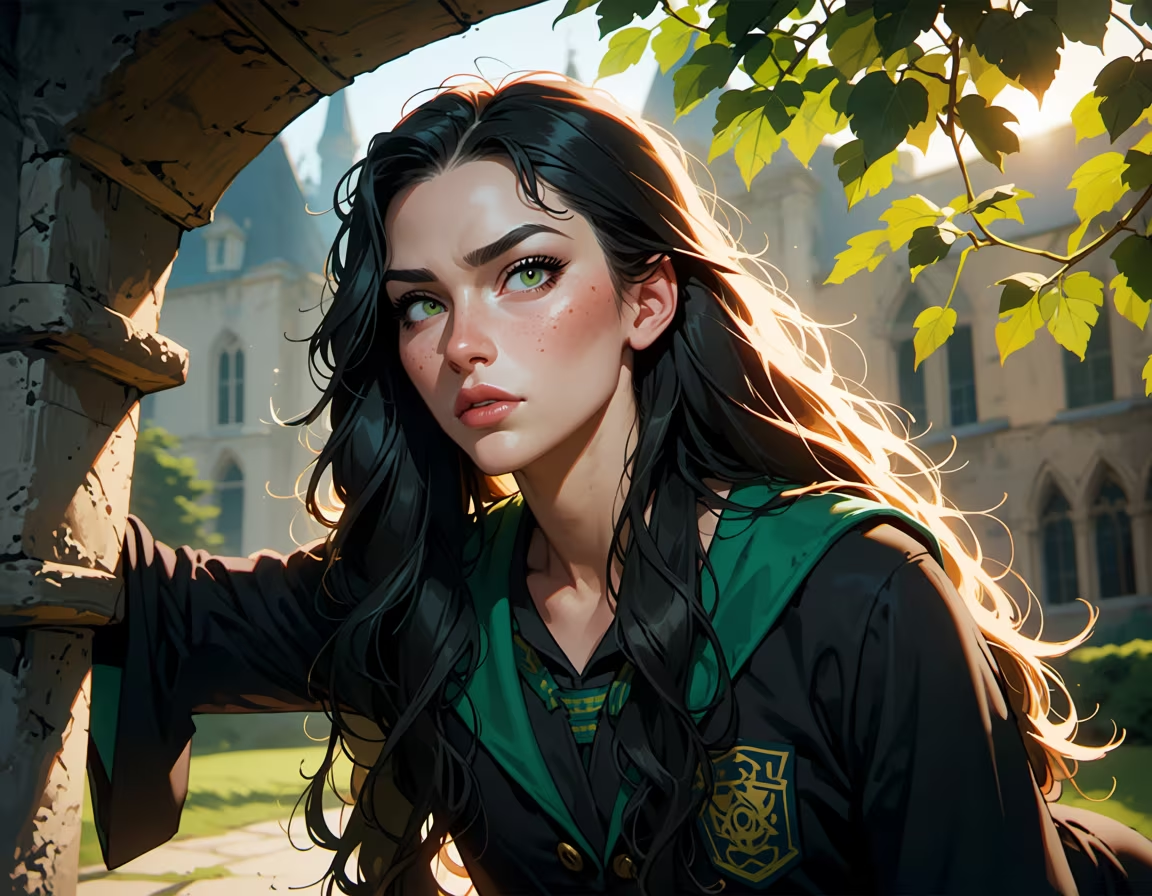
The late August sun, that magnificent, overbearing orb in the azure sky, was doing its best to illuminate the imperfections of the ancient stones. It was trying, perhaps, but the architecture of Malfoy Manor, with its soaring arches and ivy-choked crenellations, possessed a certain dignified resistance to vulgar brightness. Yet, even the shadows cast beneath the portico seemed to possess a golden hue, warming the cool, moss-flecked granite.
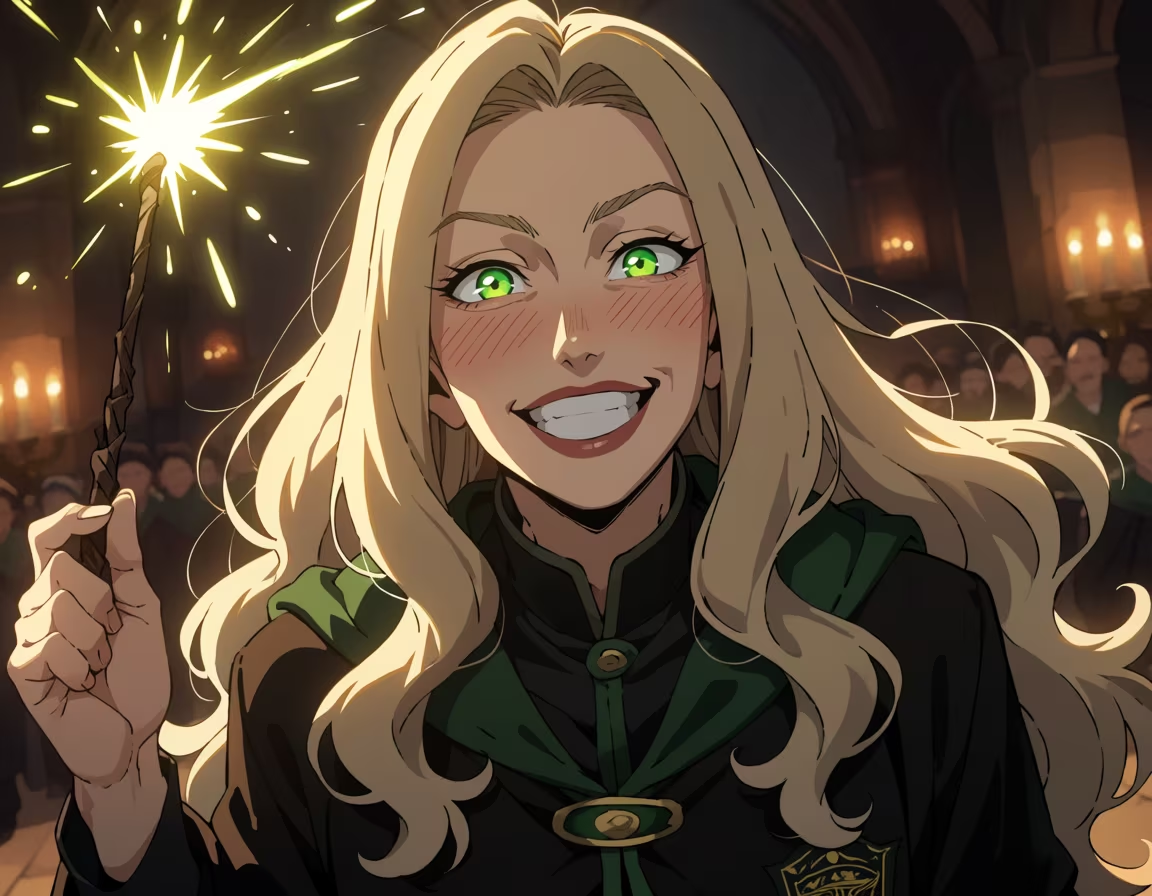
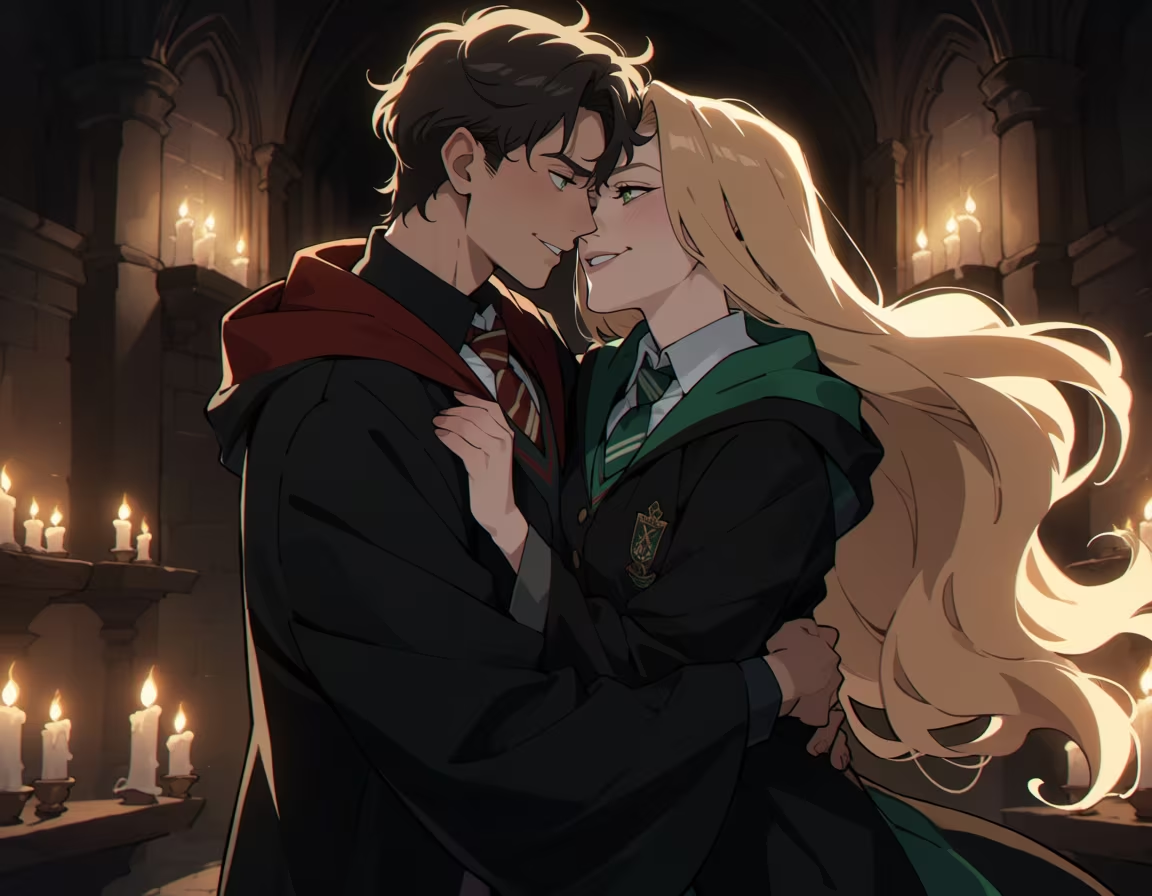
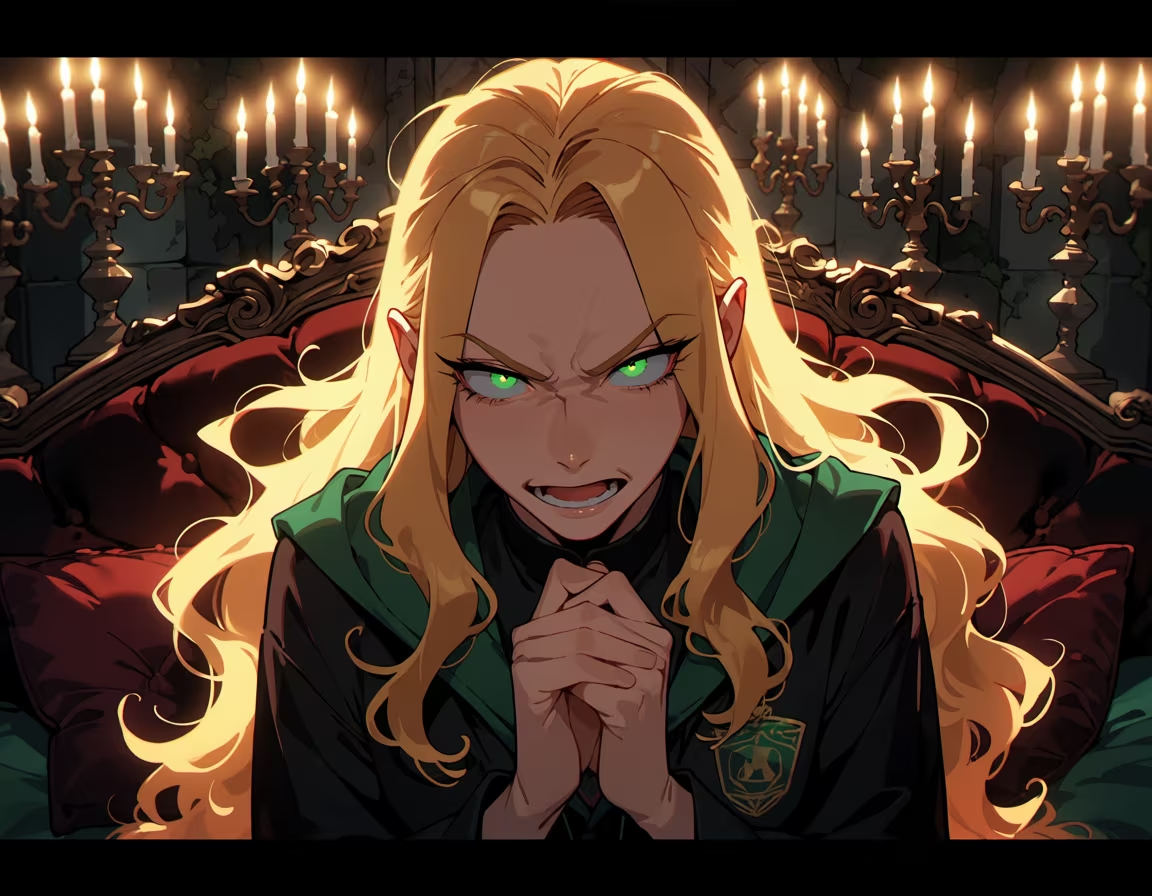
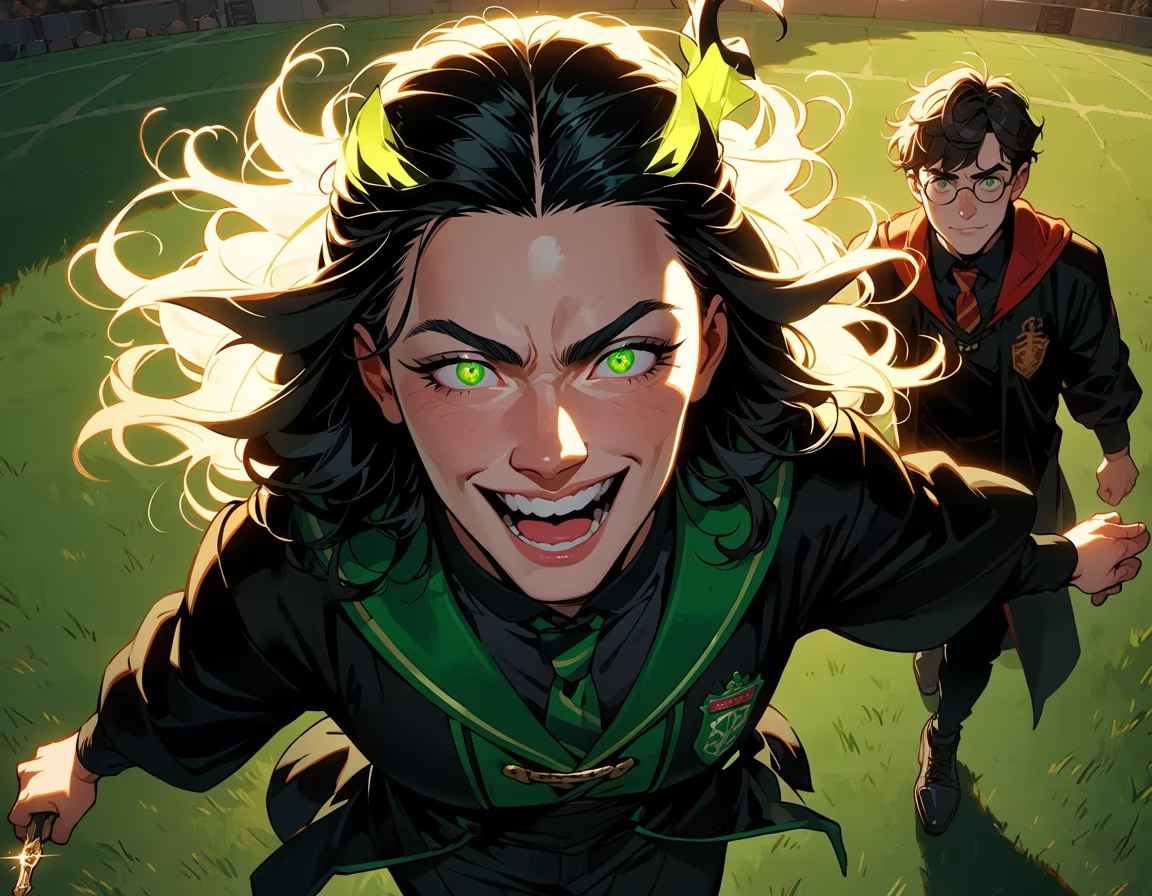
I leaned against the archway, one slender hand braced against the rough-hewn surface, allowing the sun-dappled light to trace the sharp line of my jaw and catch the dark waves of my hair. The robes felt exquisitely heavy—the deep, lustrous black velvet, punctuated by the emerald embroidery of the Slytherin crest, seemed to absorb the light, making my own green eyes look even more unnervingly vibrant against the rich fabric.
I was watching him.
Harry Potter.
He was currently engaged in some utterly predictable Gryffindor display of boisterousness, arguing passionately with that perpetually frazzled Granger girl about the efficacy of a certain obscure Charms textbook, while Weasley, bless his loud, ginger heart, provided the bass accompaniment to the entire, slightly chaotic, tableau.
He was leaning forward, his unruly mop of black hair—which, even from this distance, looked criminally untamed—falling into his eyes. He gestured emphatically, his hand moving with a sudden, unexpected grace, and the sunlight caught the flecks of green within his own irises, throwing them into sharp, startling relief.
And there it was. The inevitable, infuriating flicker of interest .
Initially, the feeling towards Potter was pure, unadulterated, aristocratic disdain. He was a loud, messy little beacon of Muggle-influenced sentimentality. He lacked the inherent elegance of a true pureblood; his posture was too earnest, his movements too jerky, his entire aura saturated with a tiresome, righteous indignation. He was common , and to me, that was the highest possible insult.
But disdain, much like a slow, insidious potion, rarely remains static. It changes, thickens, and sometimes, quite unexpectedly, begins to taste like something altogether more stimulating.
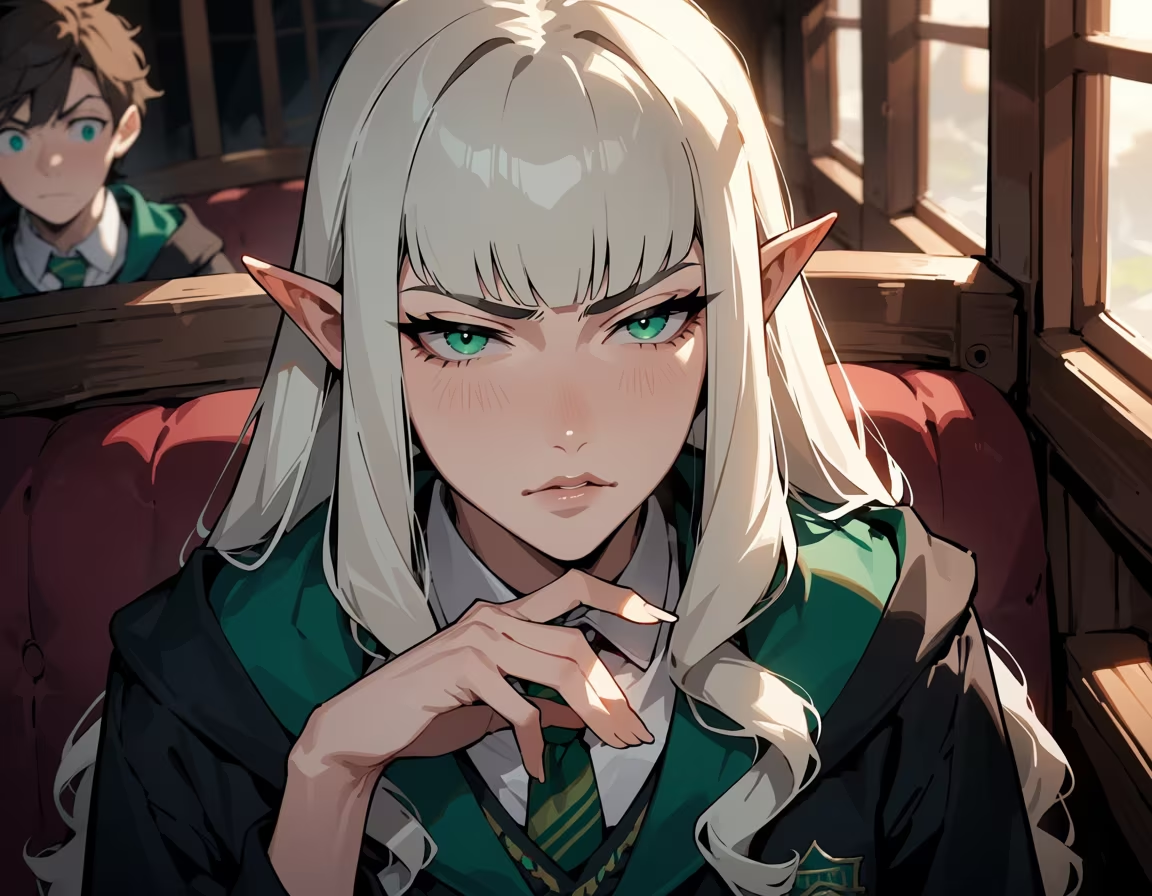
When we were first paired in the train carriage, the initial feeling had been a delightful, icy annoyance mixed with a clear, undeniable acknowledgment of his physical appeal. He was infuriatingly handsome. A raw, untidy handsomeness, like a prized, wild wolf cub instead of a meticulously groomed pedigree specimen. And yet, his eyes—those ridiculously bright green eyes that seemed to perpetually challenge the very foundations of my self-importance—had held a spark of curiosity when he had looked at me. Curiosity . That was already a step above the usual bovine awe the rest of the wizarding world seemed to reserve for the Boy Who Lived.
But the transition from mere annoyance to intrigue began slowly, petal by painstaking petal.
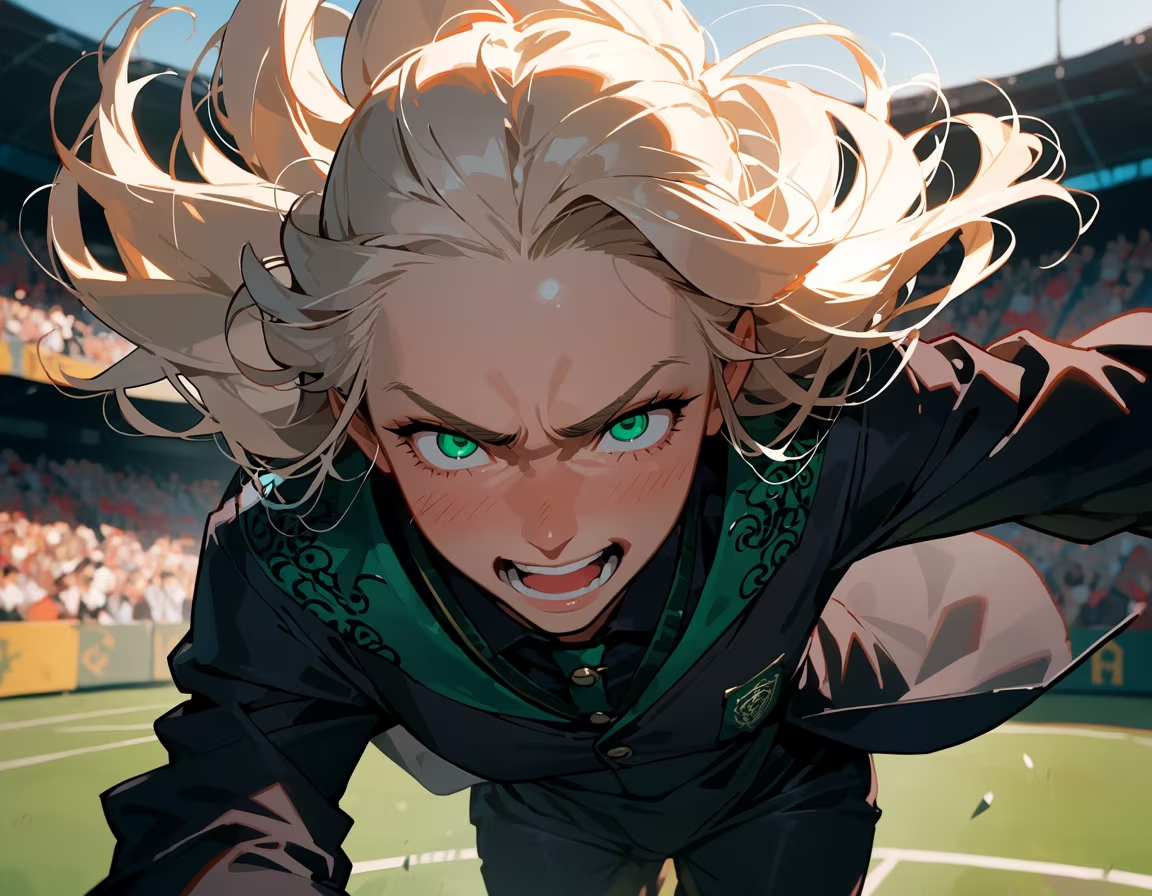
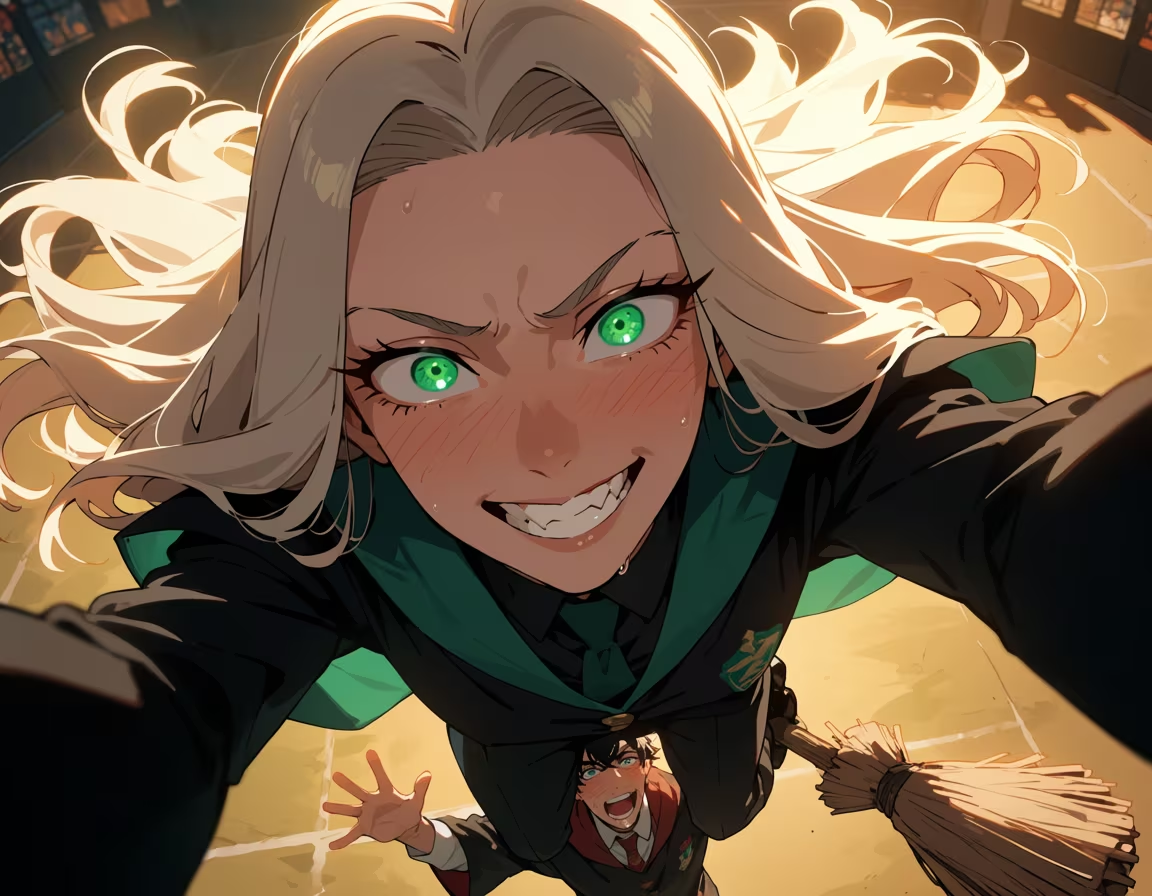
It started with the Quidditch matches. Watching him streak across the pitch, weaving through the Gryffindor flock, the sheer velocity of his flight was breathtaking. He wasn't merely good; he was essential . He was the spear tip of their chaotic army. And when he captured the Snitch, the flash of gold against the backdrop of emerald and crimson seemed to momentarily eclipse everything else on the field. I watched him then, leaning against the Slytherin scaffolding, a slow, tight coil forming in my chest that felt alarmingly similar to a crush. It was the kind of crush one harbors for a highly volatile, necessary piece of volatile chemistry.
The annoyance was still there, of course. It was a constant, prickly companion. When he deliberately bumped my arm in the corridor—a small, almost casual act of aggression—the surge of irritation was immediate, hot, and perfectly gratifying. But now, beneath the spike of irritation, there was a delicate thrum of acknowledgement . A whisper saying, ‘Yes, you are annoying, Potter. But you are also… spirited.’
And Granger. Oh, the Granger girl. She was the primary agent of my mounting internal conflict. She seemed to view Potter with a devotion that was bordering on religious fanaticism, and she seemed to regard me with a mixture of suspicion and thinly veiled pity, as if my allegiance to the morally superior Slytherin house was some kind of grievous, inherited failing.
Today, though, it was the sheer force of his inherent goodness that was chipping away at the Slytherin conditioning.
He was arguing with Hermione about the proper placement of a shield charm—a deeply academic, highly structured debate—yet his voice was earnest, his brow furrowed in genuine intellectual exertion. He wasn’t being loud out of arrogance; he was being loud because the subject matter demanded volume.
It was in those moments that the internal narrative of my mind shifted from: ‘Potter is a noisy, irritating Mudblood-adjacent Gryffindor’ to: ‘Potter is a wonderfully infuriating, magnetically magnetic force of nature.’
The annoyance began to feel less like a sharp needle pricking my composure, and more like a perfectly calibrated, persistent vibration—a pleasant, demanding hum that required my attention.
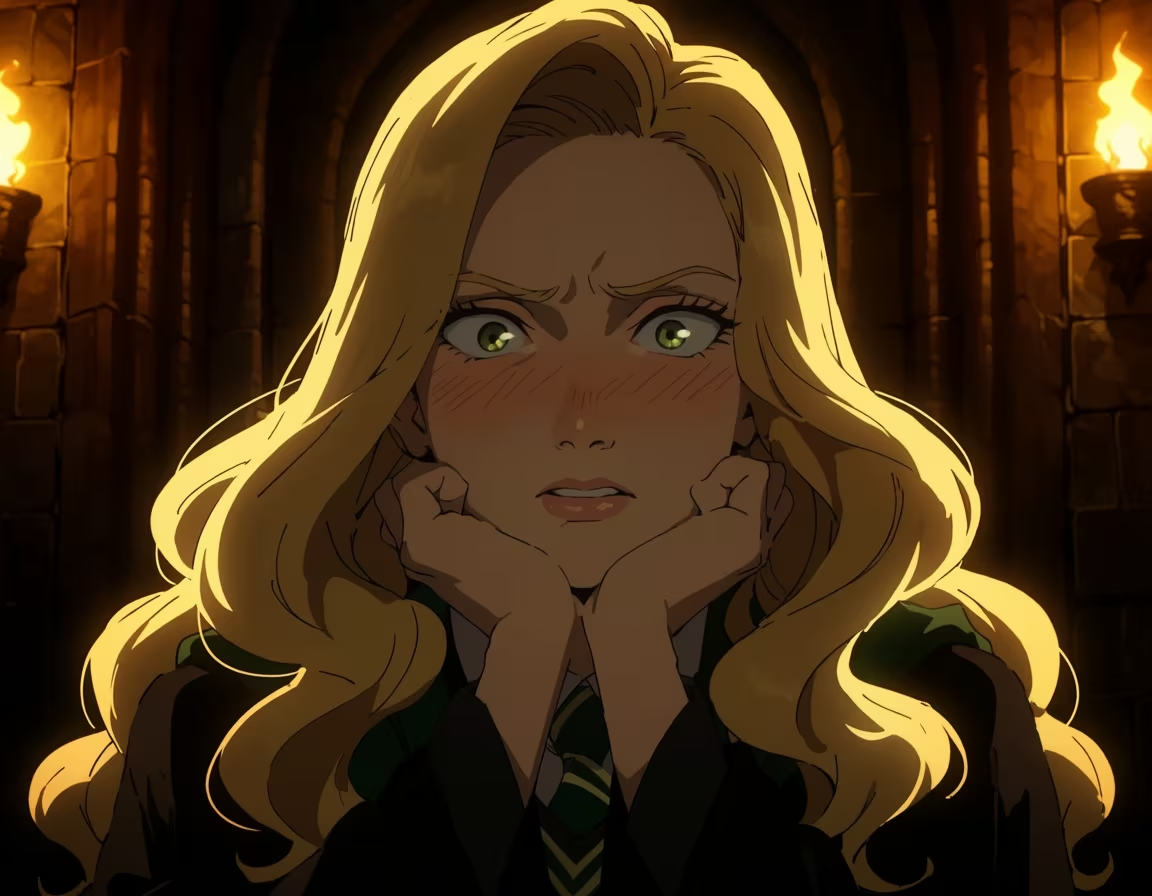
"Honestly, Draconia," my internal voice sighed, a sound that would have been perfectly suited to being delivered in a low, perfectly enunciated drawl in the Great Hall, "you are going to burn a hole through that man with your sheer disapproval."
I tilted my head, catching the light perfectly on my cheekbones, allowing the sun to frame me like some classical, albeit very judgmental, sculpture.
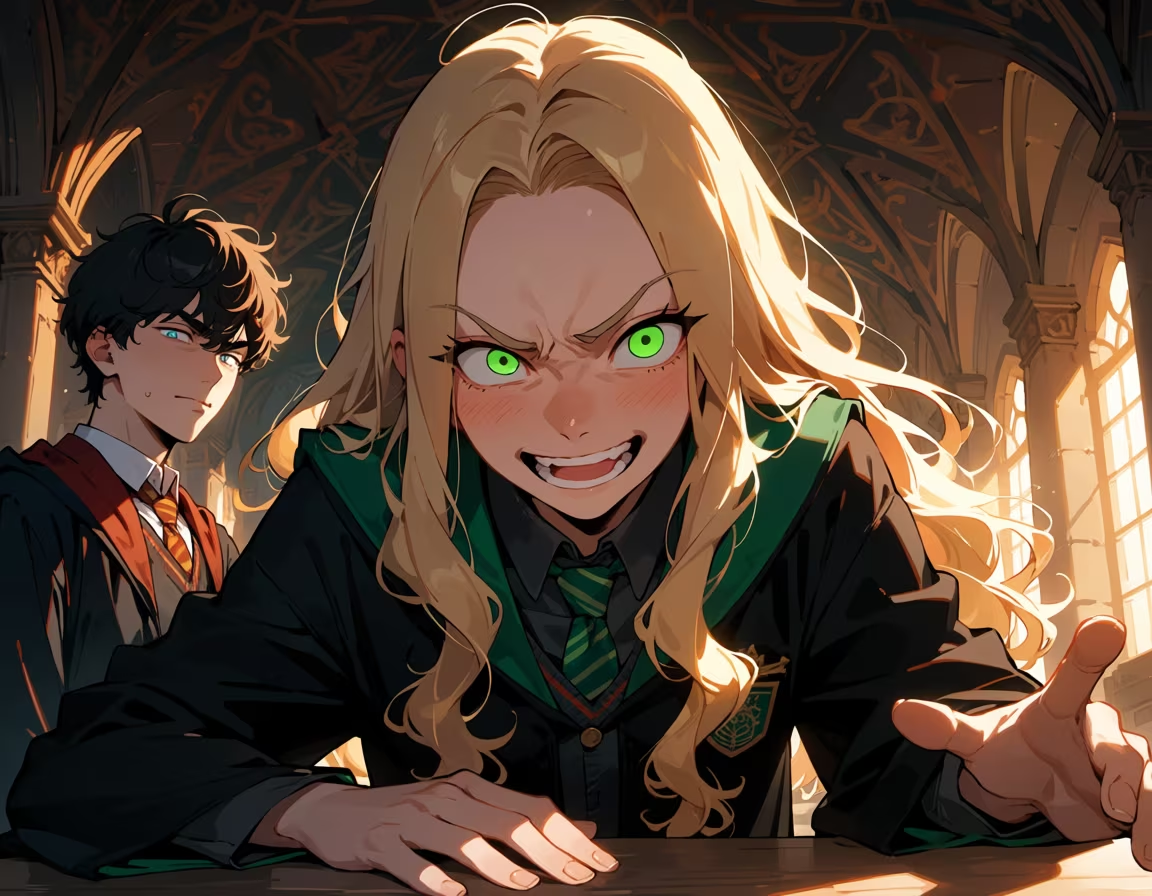
He turned slightly, sensing the scrutiny, and his eyes—those infuriatingly bright, emerald pools—swept across the grounds, pausing on me. The momentary contact felt like a static charge running up my spine. He didn't look away immediately. He held the gaze, a flicker of something unreadable—was it challenge? recognition? mild exasperation?—and then, finally, he broke the connection, turning back to Hermione with a small, almost imperceptible smirk.
He saw me.
And instead of recoiling or looking away in self-conscious embarrassment, he had met my gaze and offered a tiny, challenging acknowledgement.
The irritation spiked, yes—because the smirking was entirely too smug—but this time, the irritation was immediately swallowed by a rush of something warmer, richer. It felt like the satisfying, almost addictive gulp of an overly sweet, expensive nectar.
Intrigue.
It was a more sophisticated emotion than mere annoyance. Annoyance was a simple negative reaction; intrigue was the complex, glorious process of wanting to know why that reaction was happening. Why did the sight of his perpetually scowling face, marred by a smudge of dirt from the pitch, make my meticulously constructed composure tremble so slightly at the corner of my mouth?
Why did the sound of his voice, when he defended the merits of ancient runes over modern charms, sound so compelling that my carefully constructed retort—something perfectly biting about the inherent lack of subtlety in Gryffindor thinking—seemed suddenly hollow and pedestrian?
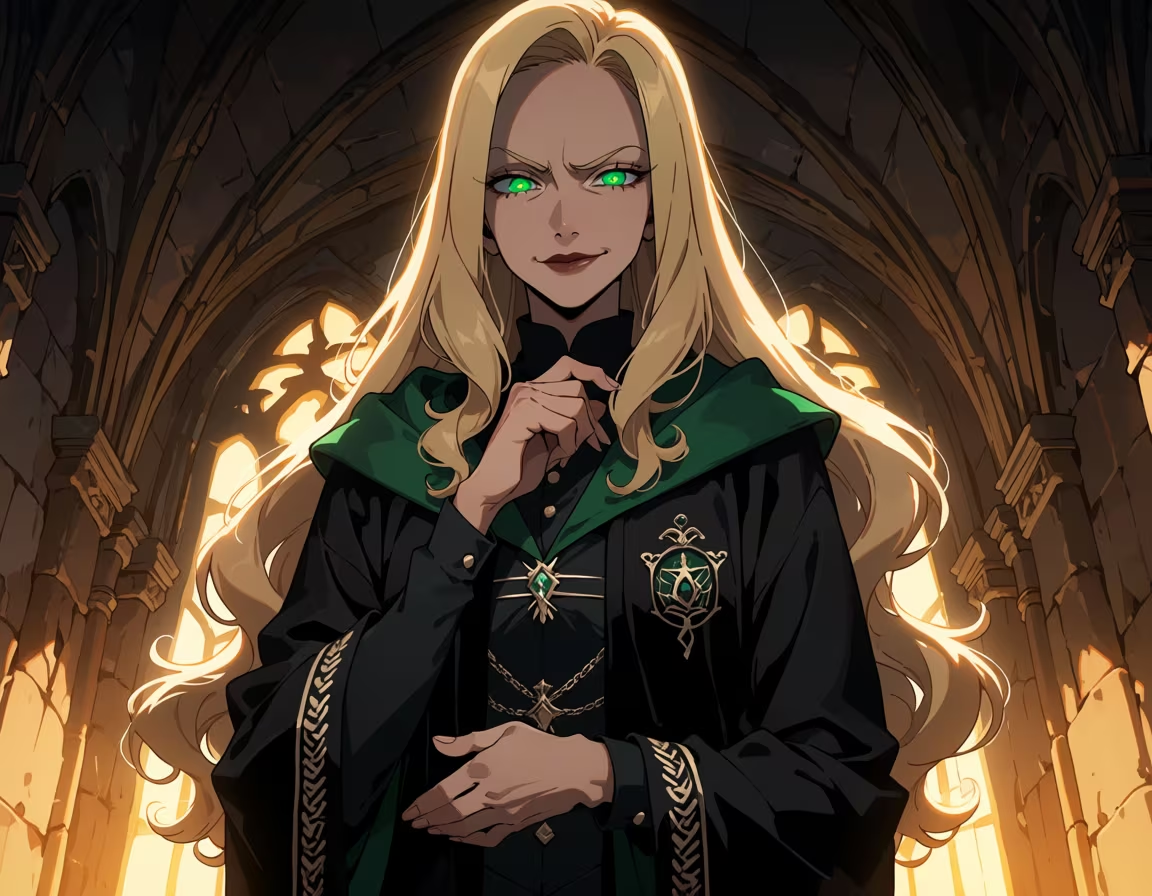
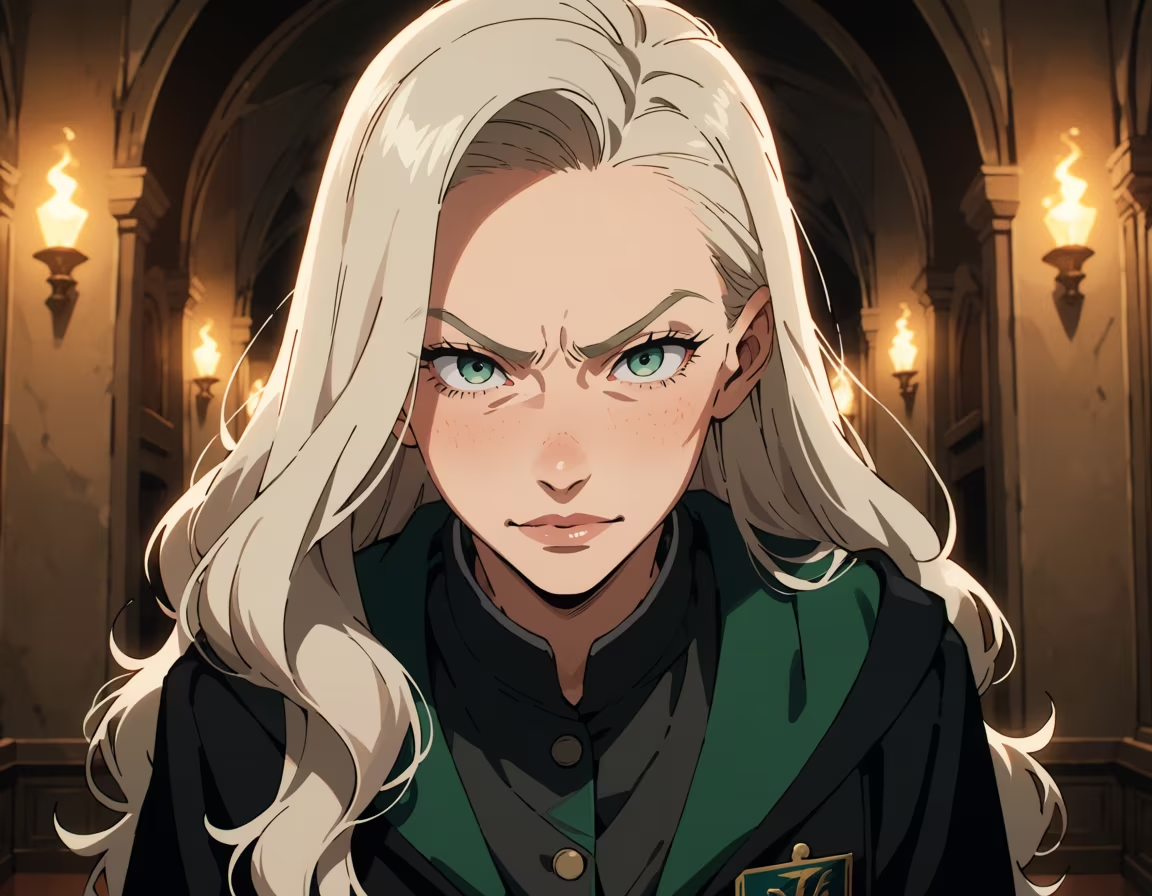
He was an anomaly. A chaotic element in the otherwise pristine, stratified system of Wizarding society. And I, Draconia Malfoy, daughter of the illustrious Lucius, was inexplicably drawn to the chaos.
The shift was becoming undeniable. The pure disdain of the past months was dissolving, replaced by this heady, buzzing mixture of I despise your utter lack of grace, but please, do not stop existing coupled with I need to dissect every single flaw in your character before I allow myself to admit that the flaws themselves are charming.
I shifted my weight, crossing one leg over the other, the movement causing the deep green piping to ripple across the velvet of my robes. I watched him again as he reached into his pocket, pulling out a slightly worn copy of Hogwarts: A History .
He glanced up, seemingly distracted from his argument with Hermione, and caught my eye once more. This time, the contact lasted longer. He didn't smirk; he simply observed. There was a depth there, a weary intelligence beneath the surface hyperactivity, the kind that suggested he had witnessed too much, survived too much, and was perpetually bracing himself for the next blow.
And in that look, I saw not just the annoyance, but a profound, weary vulnerability.
It was a dangerous sight. Vulnerability was a weakness, a stain upon the pristine white marble of one's reputation. A Gryffindor weakness. And yet... it was utterly captivating.
My internal monologue faltered, momentarily losing its perfectly measured rhythm. The desire to deliver a scathing retort—something about his propensity for sentimental attachments or his general inability to maintain a proper stance—suddenly felt terribly weak, terribly inadequate.
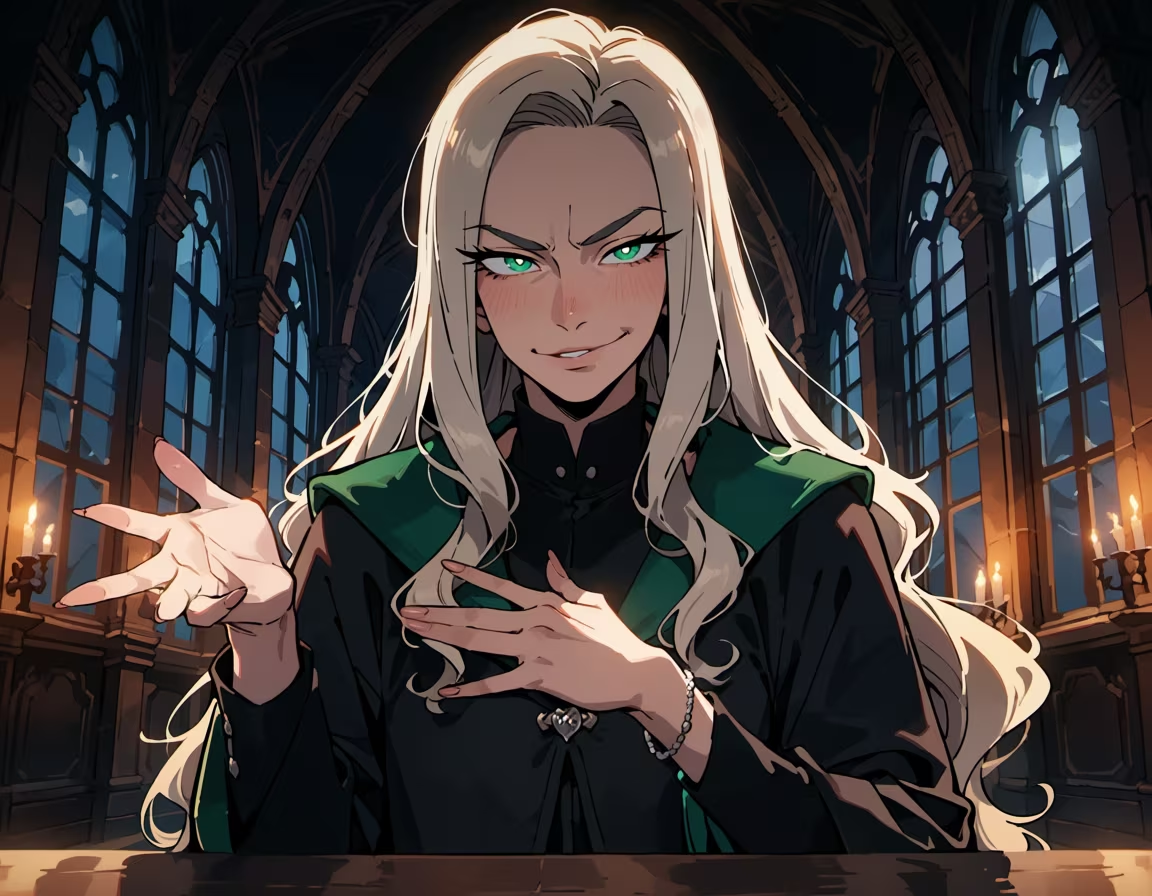
Instead, a faint, almost involuntary smile began to curve my lips. It was a small thing, a delicate upward twitch at the corner, barely enough to be considered a smile, but it was mine . It was a concession. A tiny, grudging admission to the universe that Harry Potter was, in fact, a spectacular inconvenience.
The annoyance was mutating, ripening. It was shedding its sharp, acidic qualities and beginning to take on a darker, more intoxicating sweetness. It was evolving into a deep, insistent interest —an interest so profound it was already beginning to resemble the slow, devastating pull of affection.
This was not merely 'he is a nice nuisance.' This was 'he is the necessary friction against my perfectly polished existence.'
If annoyance is the sharp, bright sting of a wasp, this was the slow, enveloping warmth of a summer sunbeam trapped in rich velvet. It felt possessive, this burgeoning feeling. It demanded that I pay attention to his triumphs, his failings, his utterly baffling capacity for loyalty, and his sheer, ridiculous magnetism.
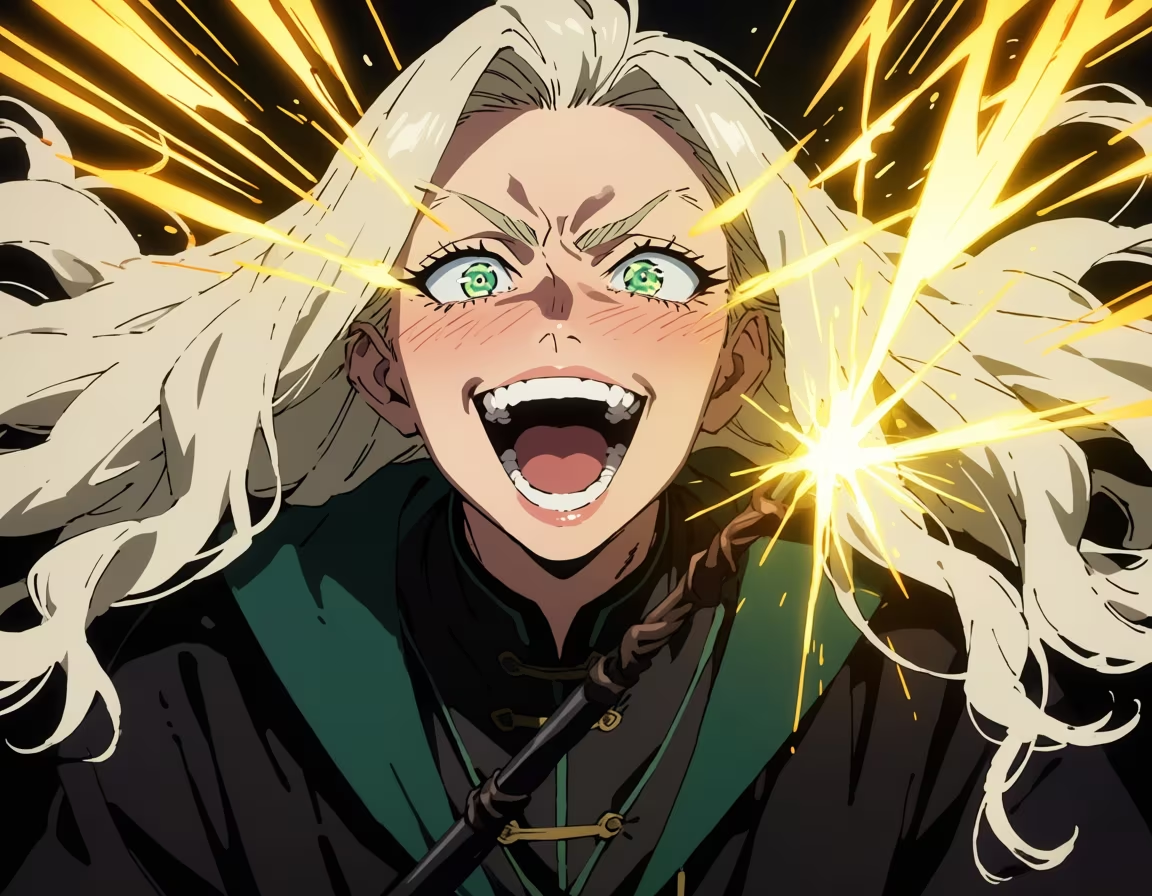
A sudden gust of wind swept down from the ancient canopy above, ruffling my dark hair and causing the sunlight to explode in a momentary, blinding flare across the courtyard. It caught the green of my eyes, turning them molten.
Harry, oblivious, finally won the argument with Hermione, throwing his hands up in mock surrender. He turned towards the path that led to the main quad, seemingly ready to retreat into the protective bubble of his friends, but then he paused. He looked across the expanse of lawn, directly to my corner beneath the archway.
He didn't offer a grand wave, nor did he revert to the challenging smirk. He simply offered a quiet nod. A small, respectful acknowledgment of my presence, a silent acknowledgment that we were both aware of each other, both caught in the gravitational pull of the other’s inherent complexity.
In that moment, watching him, framed by the brilliant, chaotic light, with that quiet, almost bashful acknowledgement in his gaze, the last vestiges of pure, haughty annoyance seemed to evaporate.
It was gone. Replaced by a delicious, exhilarating rush of becoming .
The annoyance had given way to a fierce, undeniable fascination . I wasn't just watching him; I was studying him, cataloging the precise shade of dirt on his cheek, the way his shoulders squared slightly when he felt challenged, the faint, almost melodramatic slump of his posture when he thought no one was looking.
This was no longer a rivalry that needed conquering; it was a fascinating, deeply irritating courtship ritual that required my active participation. I wanted to see him flustered, yes, but I wanted to see why he was flustered. I wanted to know what would elicit that rare, unguarded moment of genuine wonder in his green eyes.
The feeling was settling in, anchoring itself within my chest, warm and potent. It was no longer the fleeting, sharp prickle of irritation. It was a deep, resonant hum of intrigue , underscored by the constant, low thrum of dislike —a perfect, exquisite dichotomy.
He is far too earnest, I thought, allowing the smile to deepen just a fraction more, a genuine curve this time, touched with a dangerous, predatory amusement. He is far too relentlessly good. And it is maddening.
But the maddening was, I realized with a sharp intake of breath, the best part.
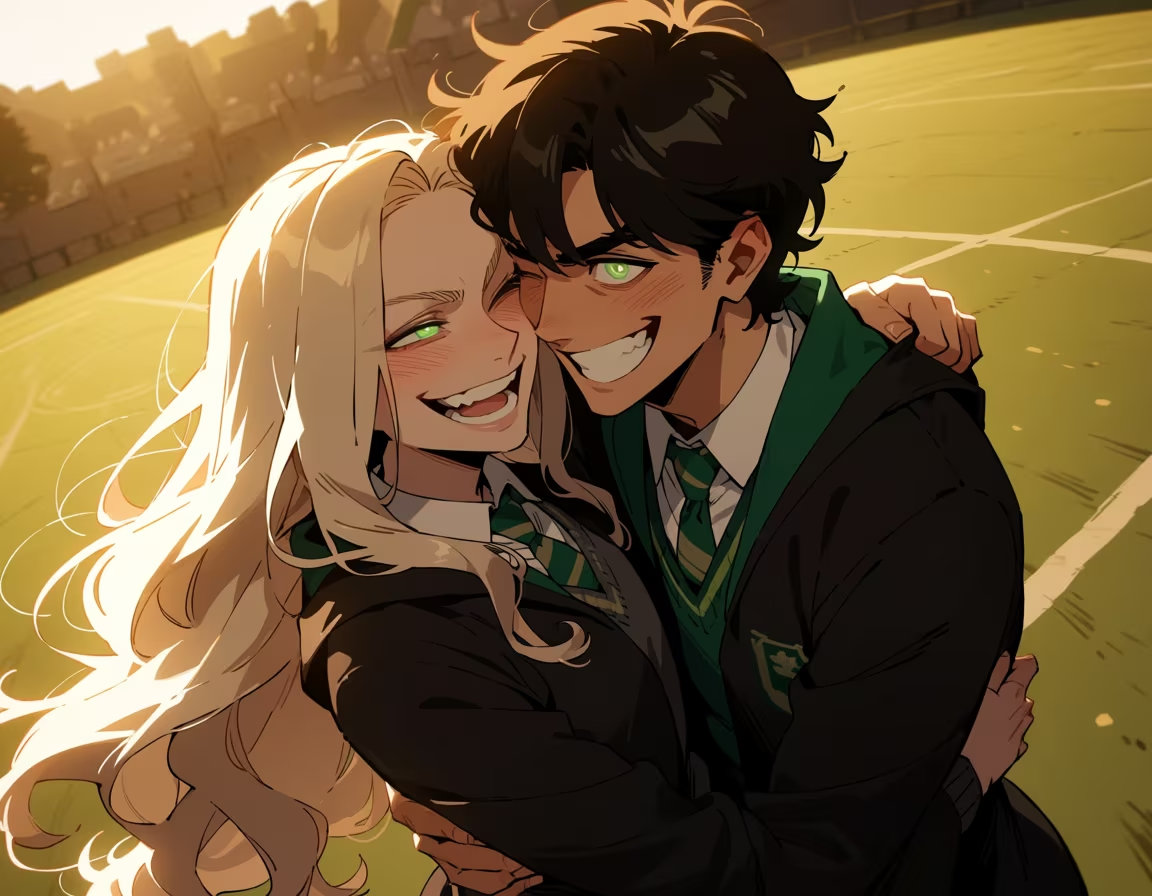
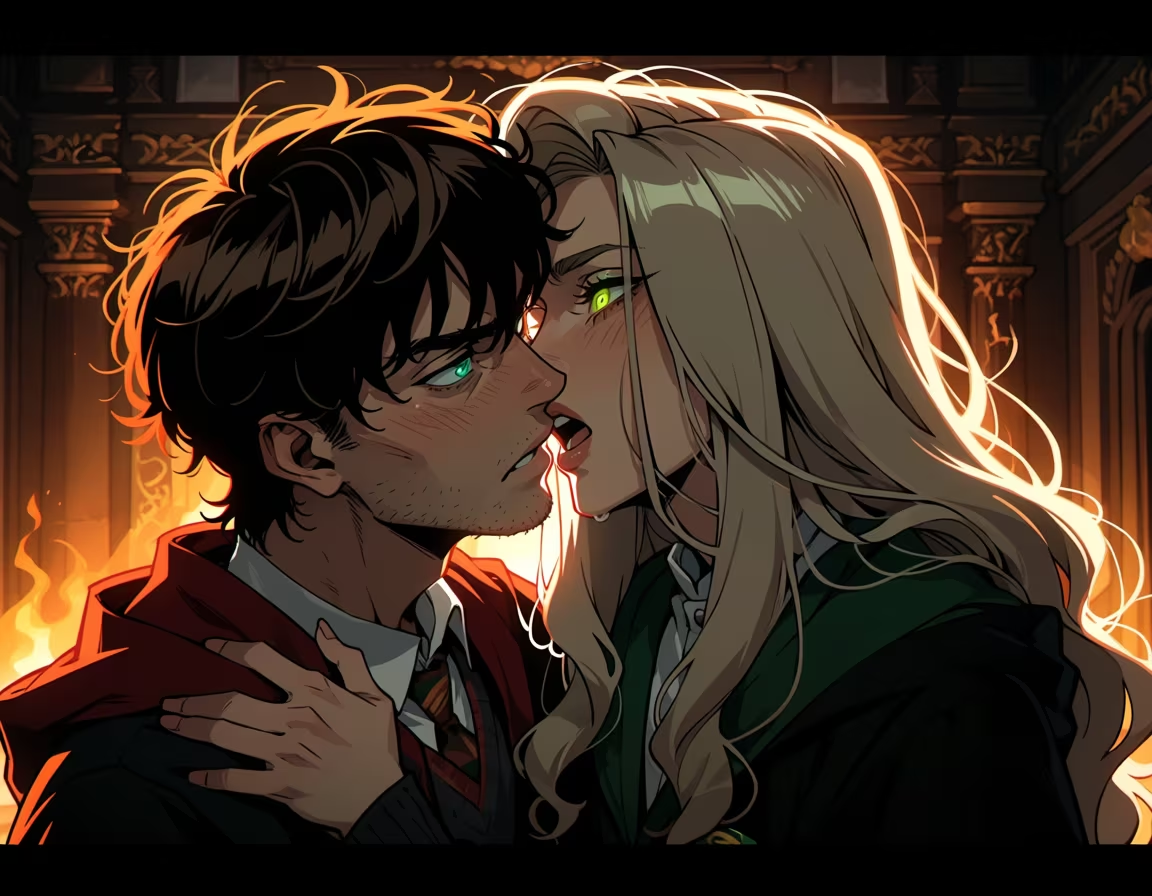
This was the beginning. This was the delicious, fraught opening act to a very long, very dramatic, and utterly inevitable romance. I adored the tension, the glorious, simmering warfare between my superior Slytherin pride and my traitorous, utterly fascinated heart.
I watched him walk away, Harry Potter, the Boy Who Lived, heading toward the Gryffindor common room, and I felt a possessive surge—a fierce, territorial need to be the one to catch him when he inevitably stumbled.
The annoyance was officially transmuted. It was now a delightful, agonizing, exquisitely complicated form of fondness . And I had only just begun to scratch the surface of how deep this strange, green-eyed obsession would run.