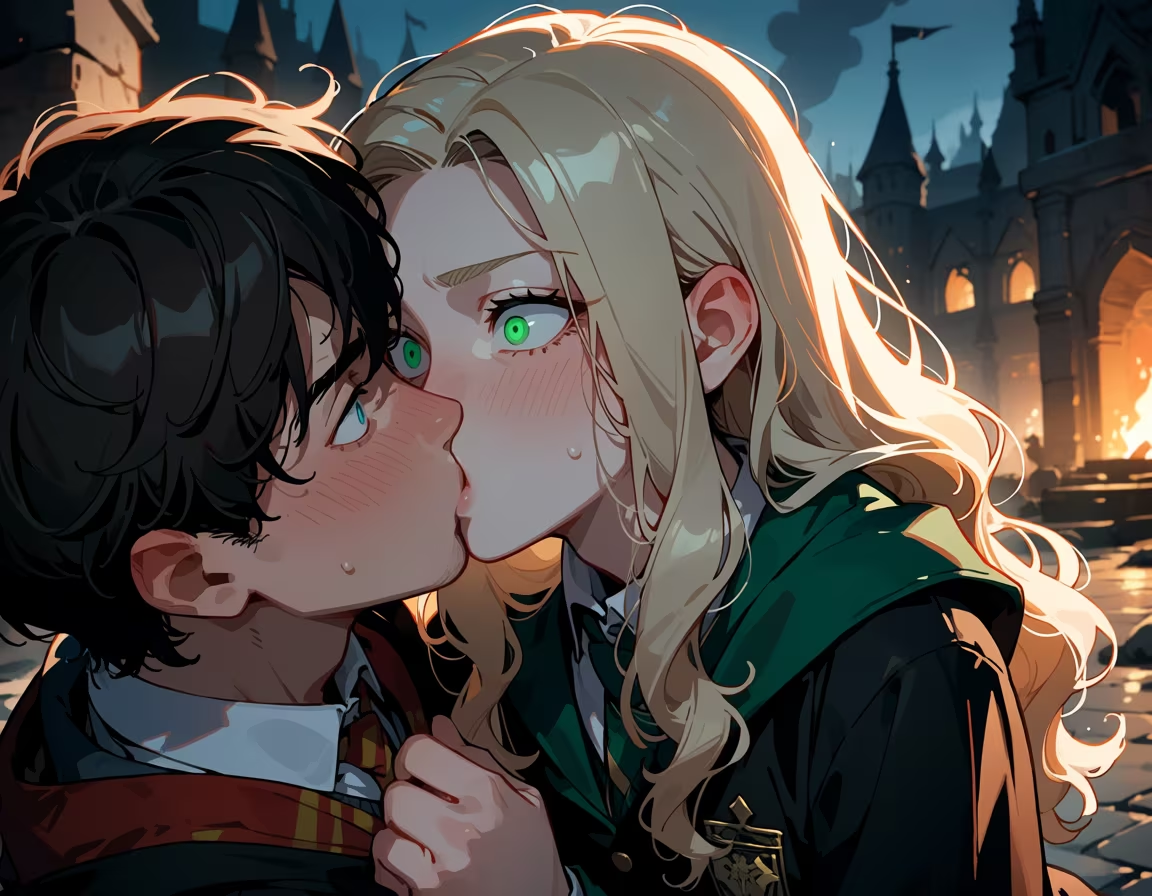
| Home | The Lives of Velnin | Illustrated Fiction | Malfoid Art & Fiction | Book Blurbs | Contact |
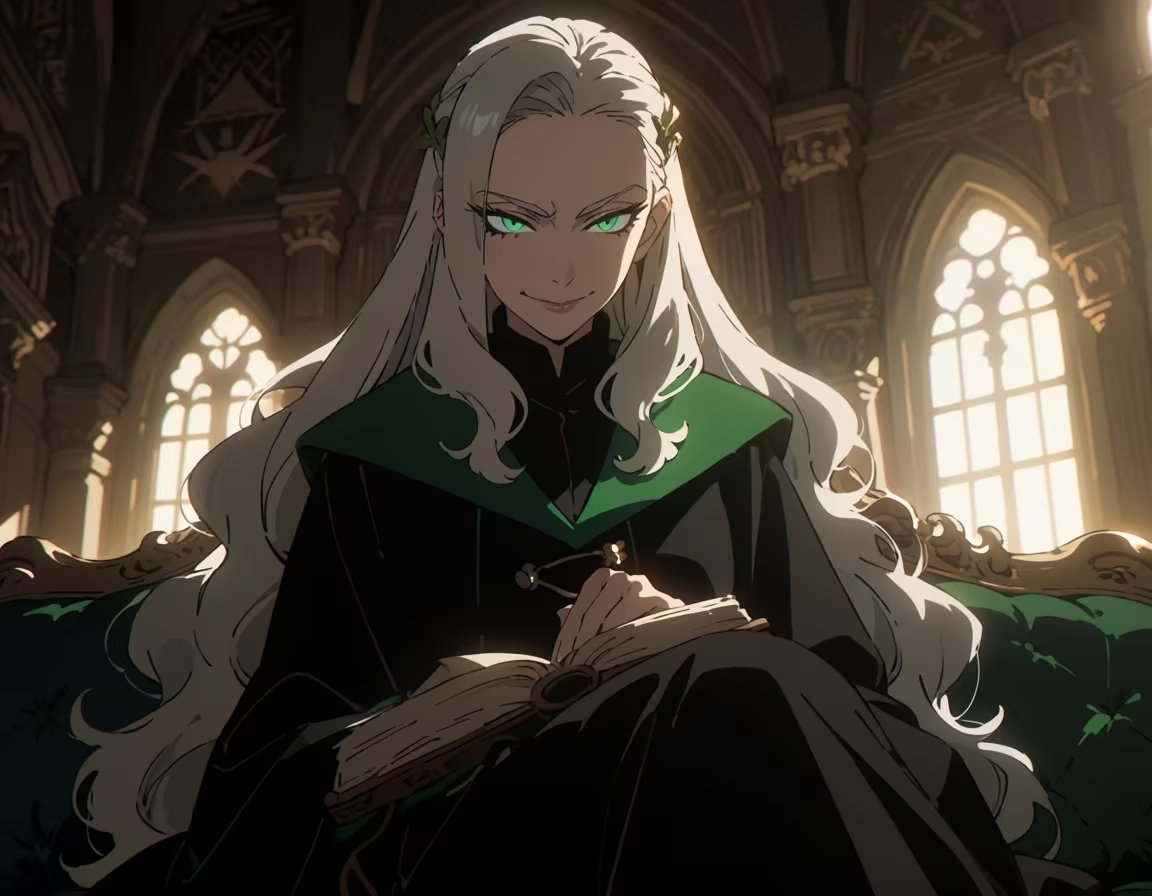
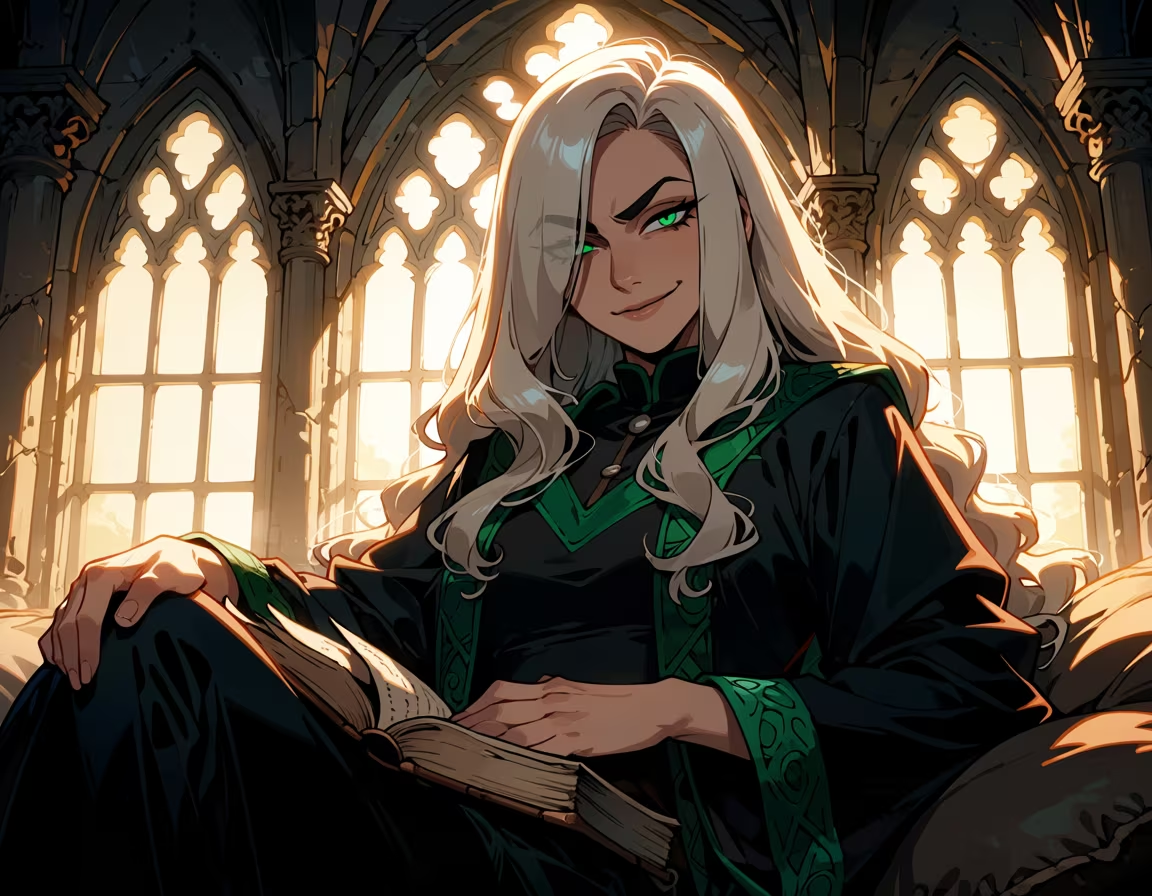
The late afternoon sun, filtered through the leaded glass of the great arched windows, cast intricate mosaics of amber and sapphire across the polished stone floor of the Slytherin common room. The light, which always seemed to possess a certain haughty slant when it touched these particular windows, fell most dramatically upon my own form.
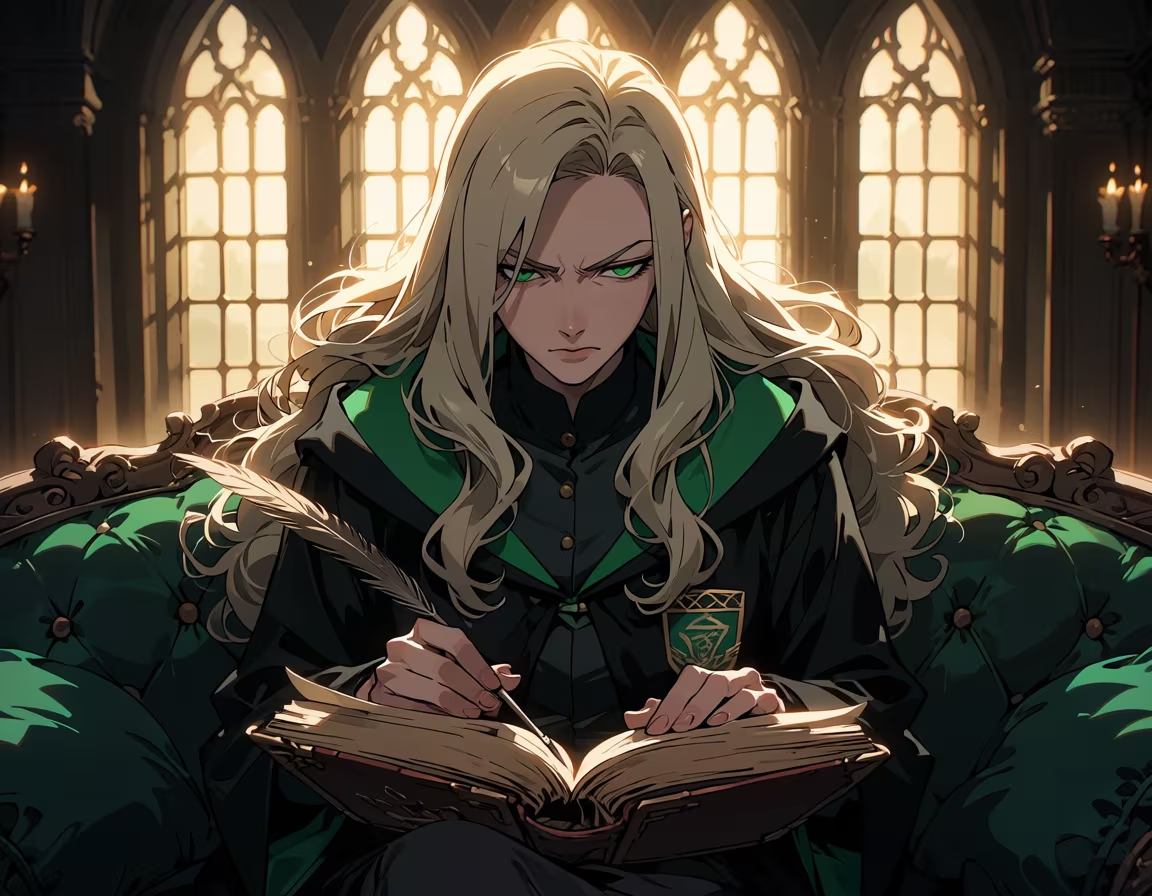
I was reclined upon one of the velvet chaise lounges—the deep, oppressive green of the fabric perfectly complementing the trim of my own robes—a volume of advanced Charms theory resting open in my lap. The parchment was stiff, the ink perfectly black, detailing the precise wand movements required to sustain a high-level Finite Incantatem spell. It was, ostensibly, quite fascinating.
And yet, my focus was fractured.
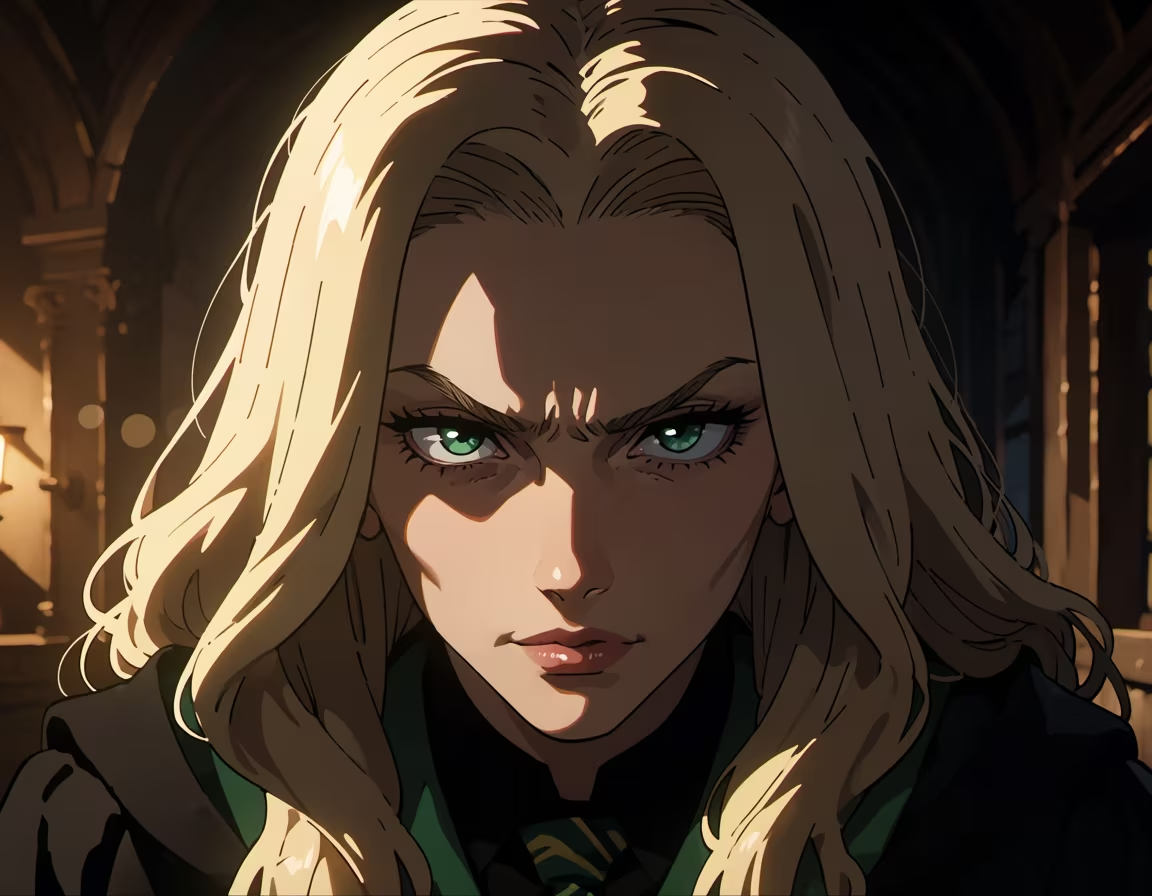
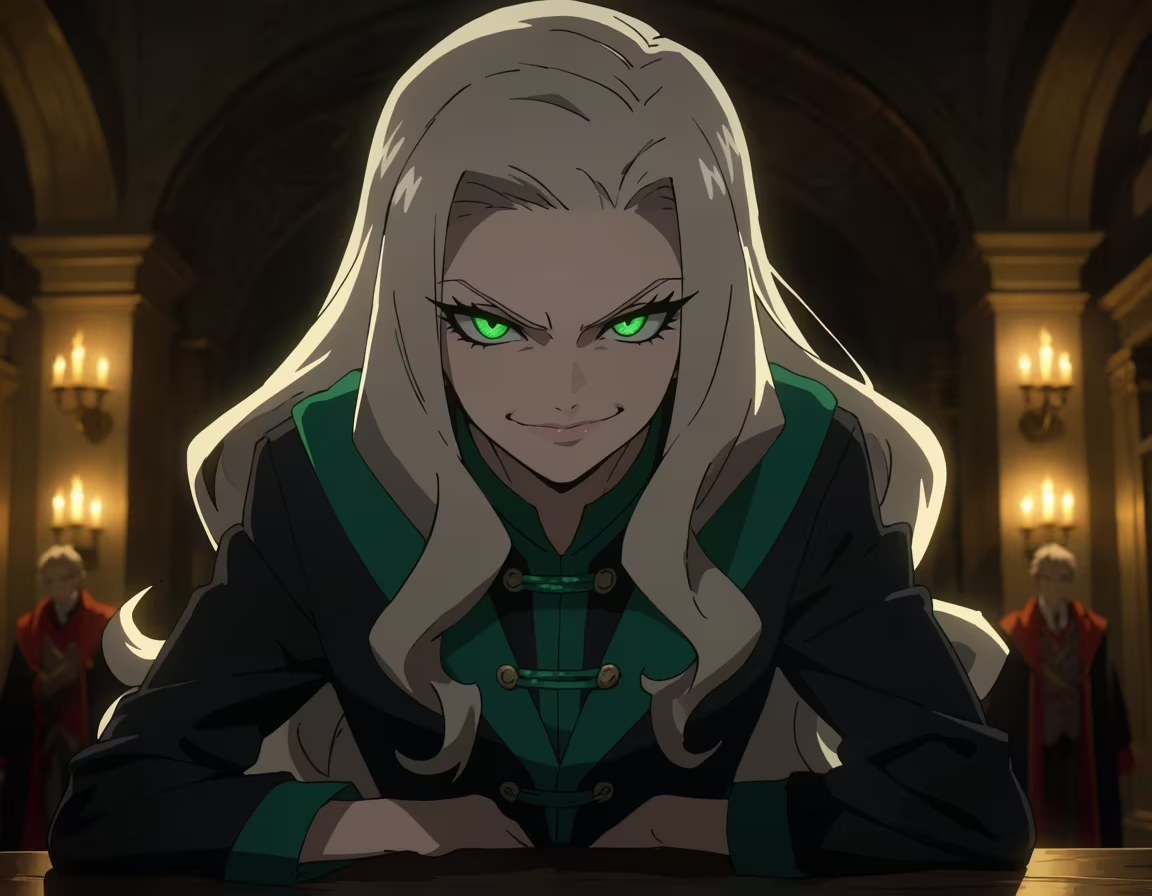
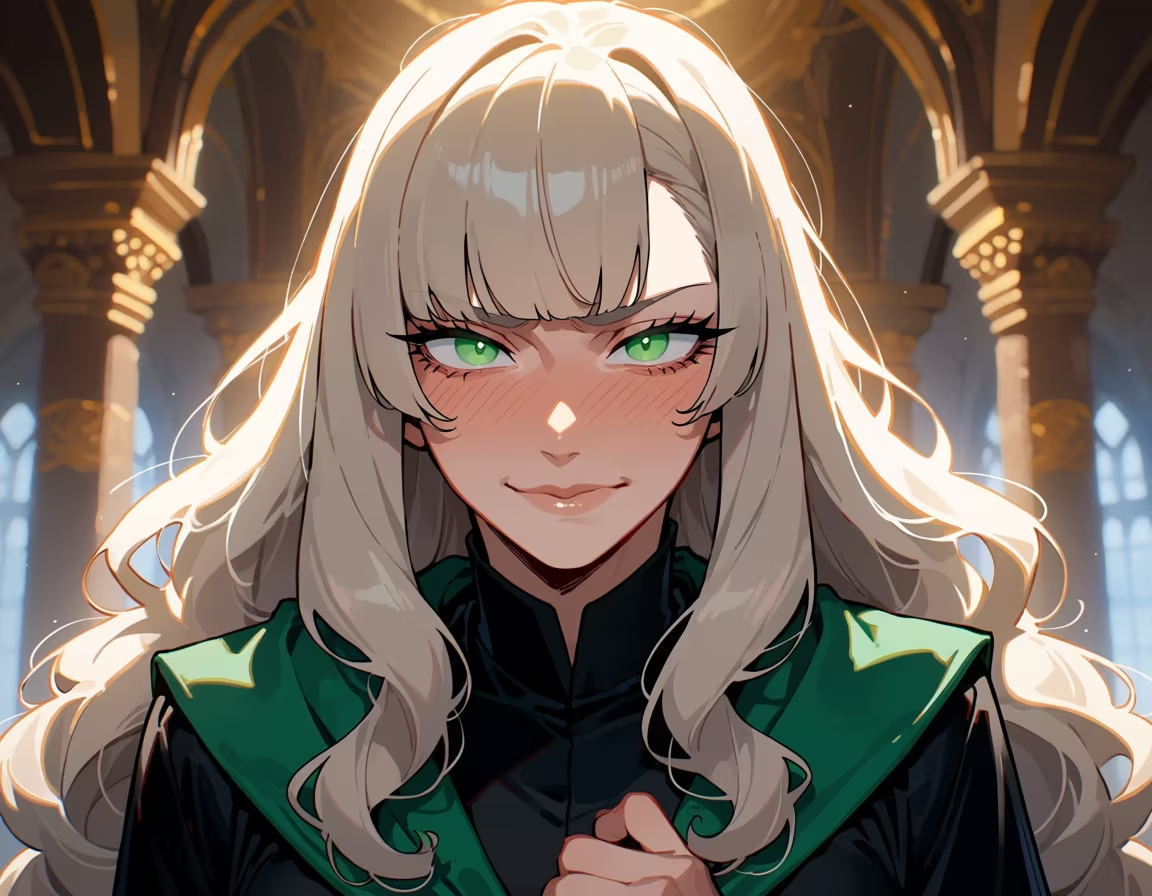
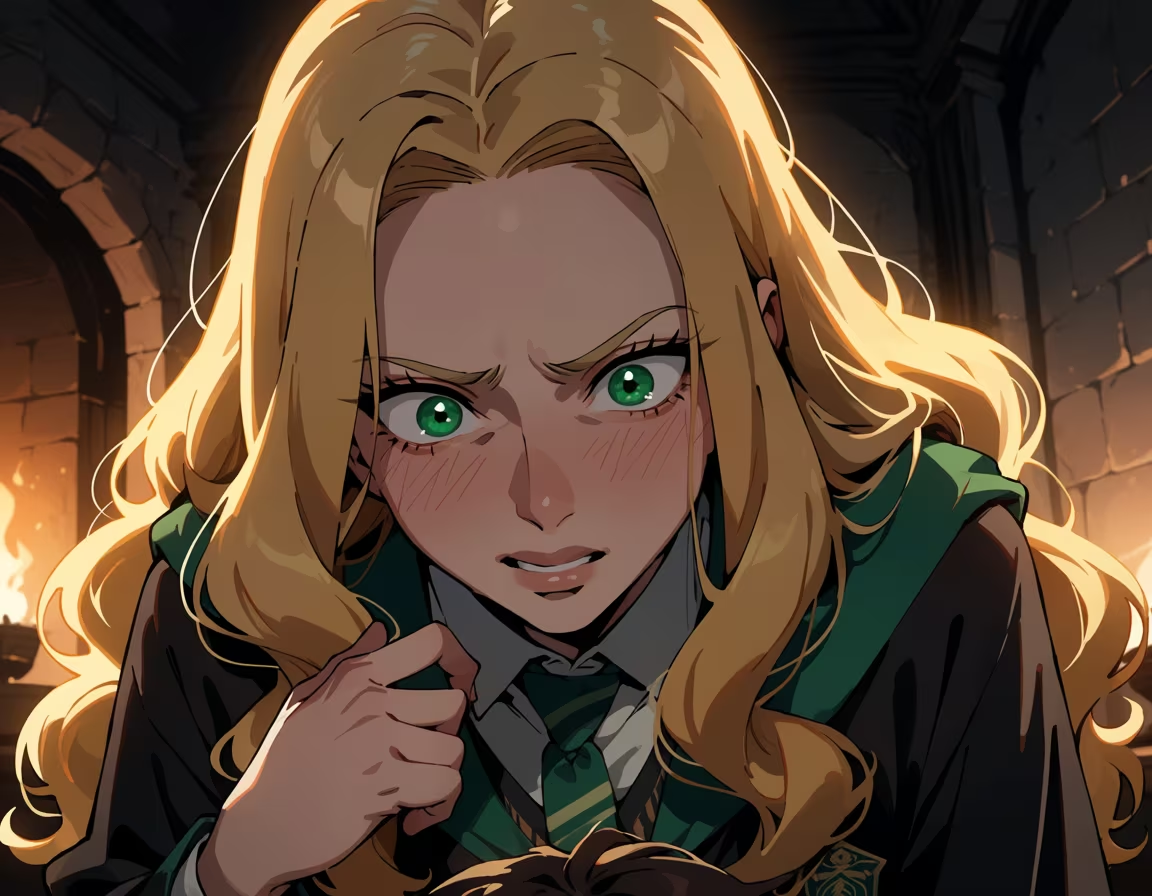
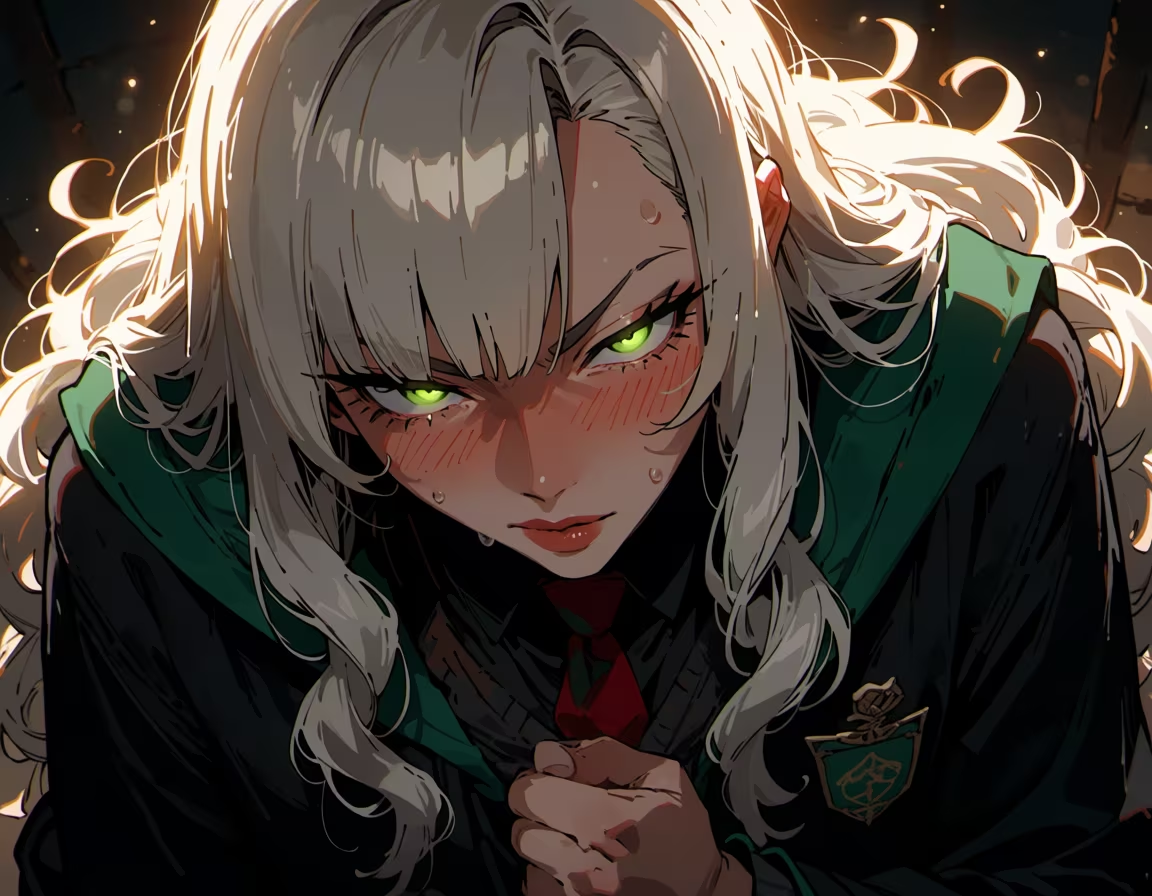
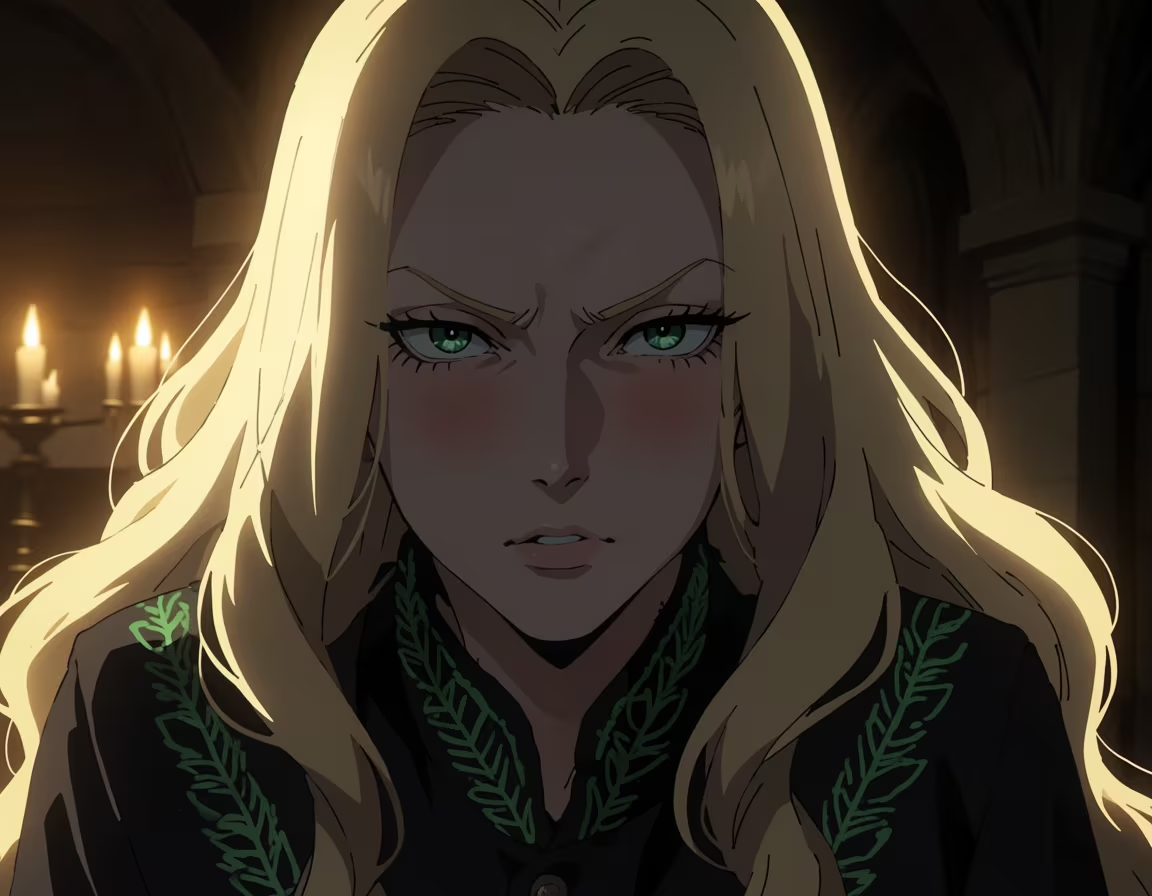
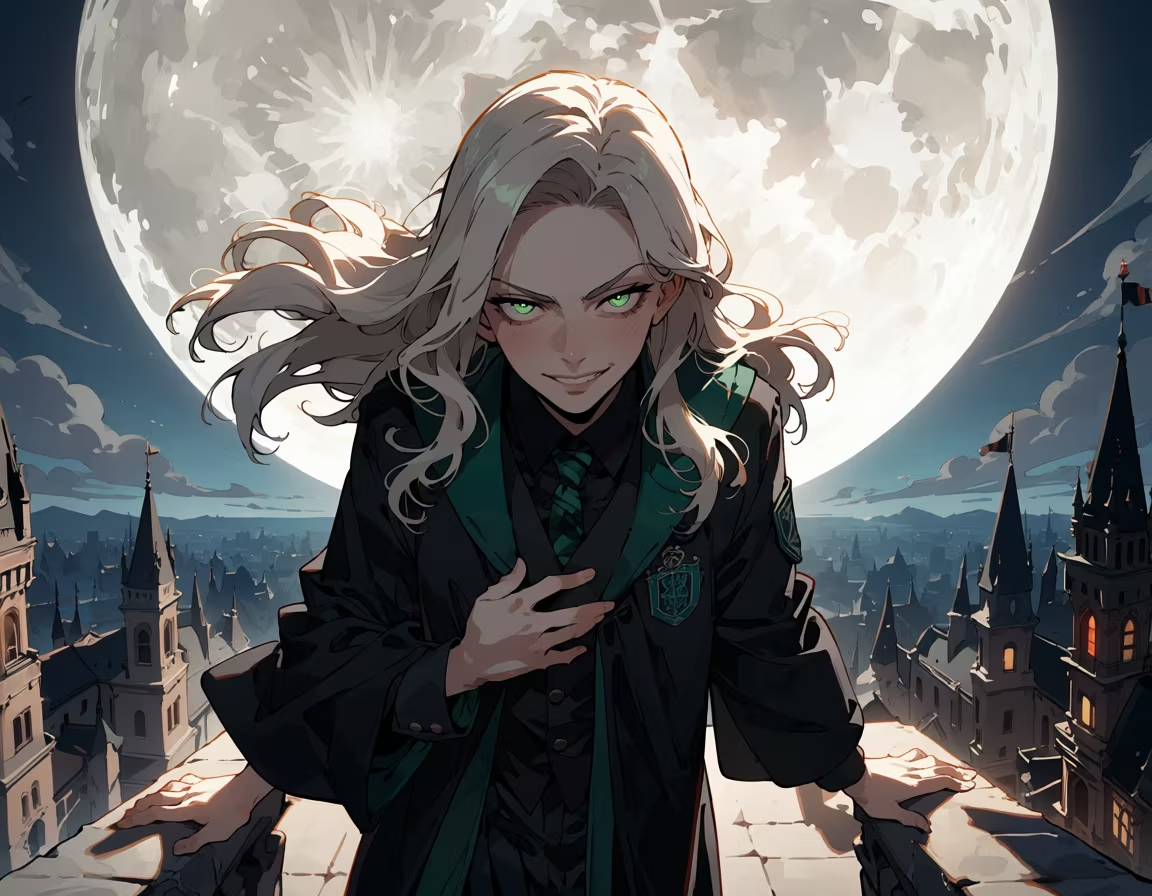
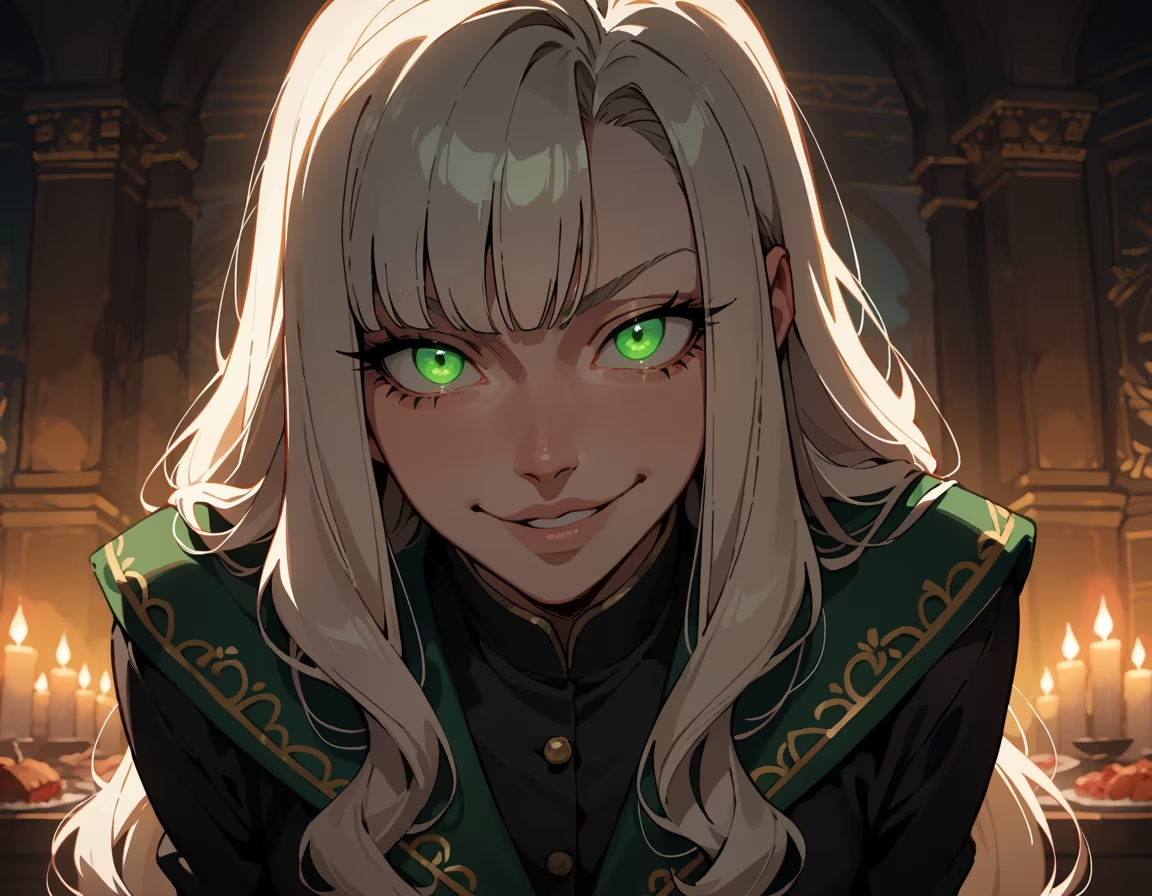
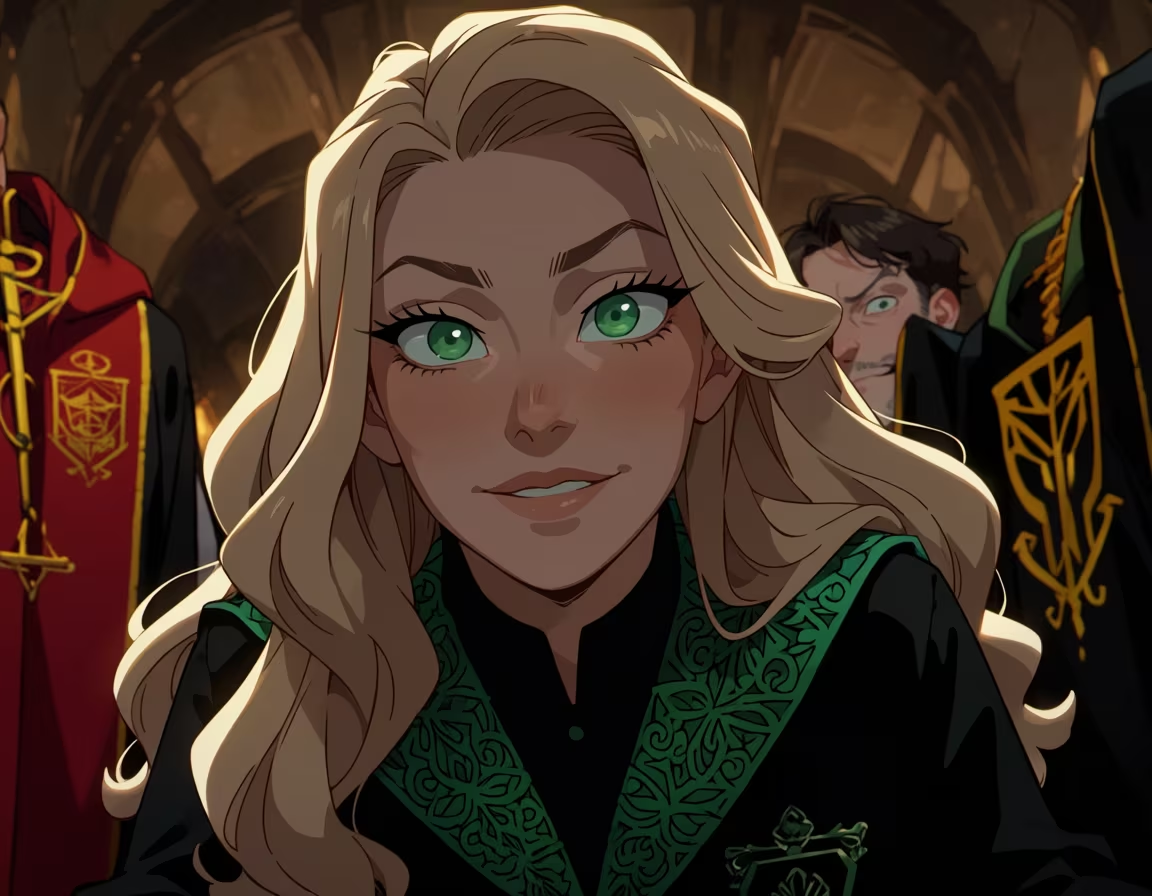
My long, pale blonde hair, usually contained in an elaborate braid, had been allowed to spill free, cascading like liquid moonlight down the black silk of my robes. It felt heavy, substantial, a fitting weight for a mind so perpetually overloaded with the sheer tedium of mediocrity that surrounded us. My green eyes, which most people commented upon with a mixture of awe and barely concealed envy, were currently fixed on a small, almost invisible smudge near the edge of the textbook page.
The smudge, naturally, was a residue of Gryffindor presence.
It was a tiny, pathetic stain, but it spoke volumes. It spoke of Harry Potter—of his sheer, irritating proximity .
My initial reaction to the boy, upon the fateful sorting ceremony, had been pure, undiluted disdain. Potter. The name itself felt offensively bright, too loud, too prone to dramatic declarations. He was everything Slytherin was not: chaotic, fundamentally unsophisticated, and possessed of a bafflingly resilient optimism that suggested he believed in things like ‘friendship’ and ‘good intentions’ with the fervent devotion of a newly converted zealot.
He was meant to be an annoyance, a persistent, irritating mosquito buzzing around the perfectly sculpted perfection of my existence. He was the smudge on my parchment.
And yet…
I tapped a perfectly manicured nail against the page, tracing the complex flow of the spell notation. Why was he so persistent? He could have retreated. He could have accepted the crushing social reality that he was destined to be the valiant underdog, the perpetually overlooked Saviour. He could have found solace with the Gryffindor rabble, wallowing in their warm, slightly sticky camaraderie.
But no. He had found me .
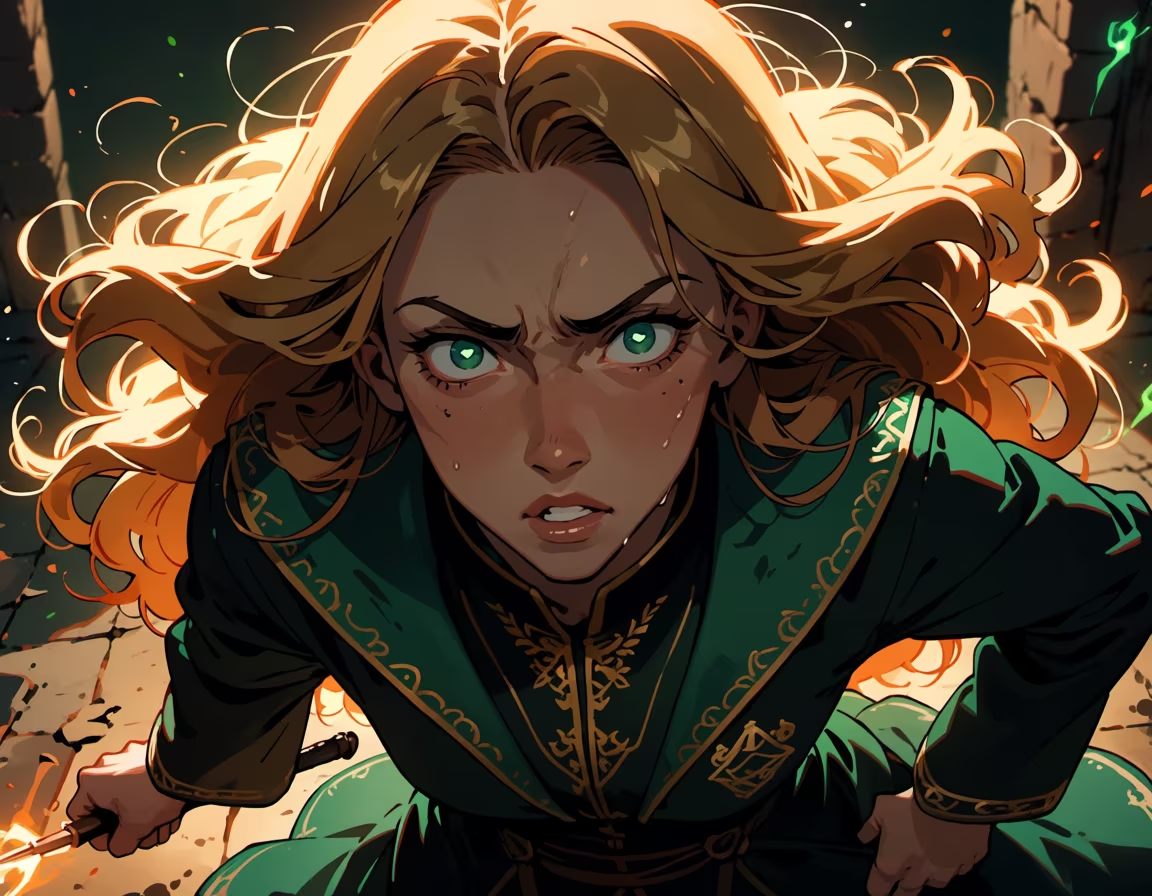
It had started with the duelling club, of course. That juvenile spectacle where he’d challenged me, puffing out his chest—a truly unbecoming gesture for someone of his physical grace—and I had responded by conjuring a serpent of shimmering, emerald light, merely to watch his expression crumble into frustrated awe.
And then came the Parseltongue.
That was the pivot point, the infinitesimal tremor in the carefully constructed fortress of my early disdain.
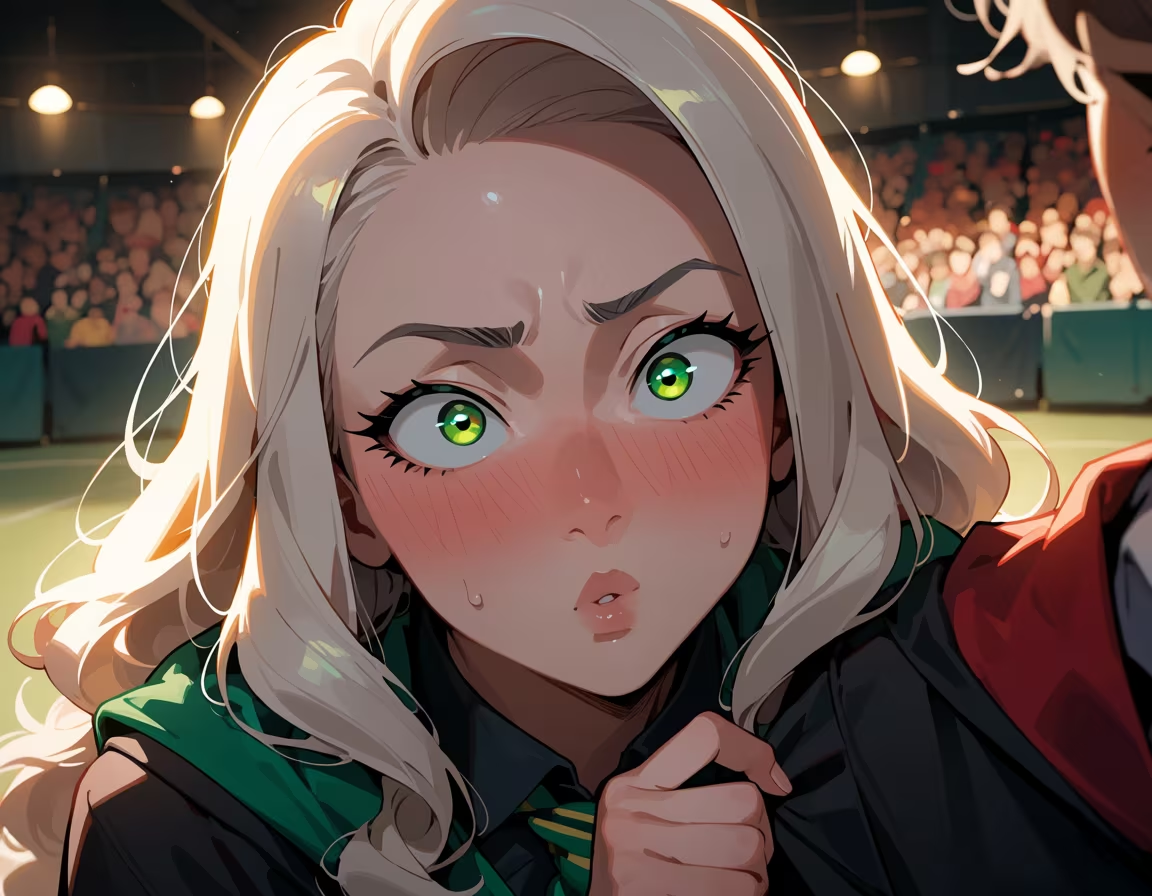
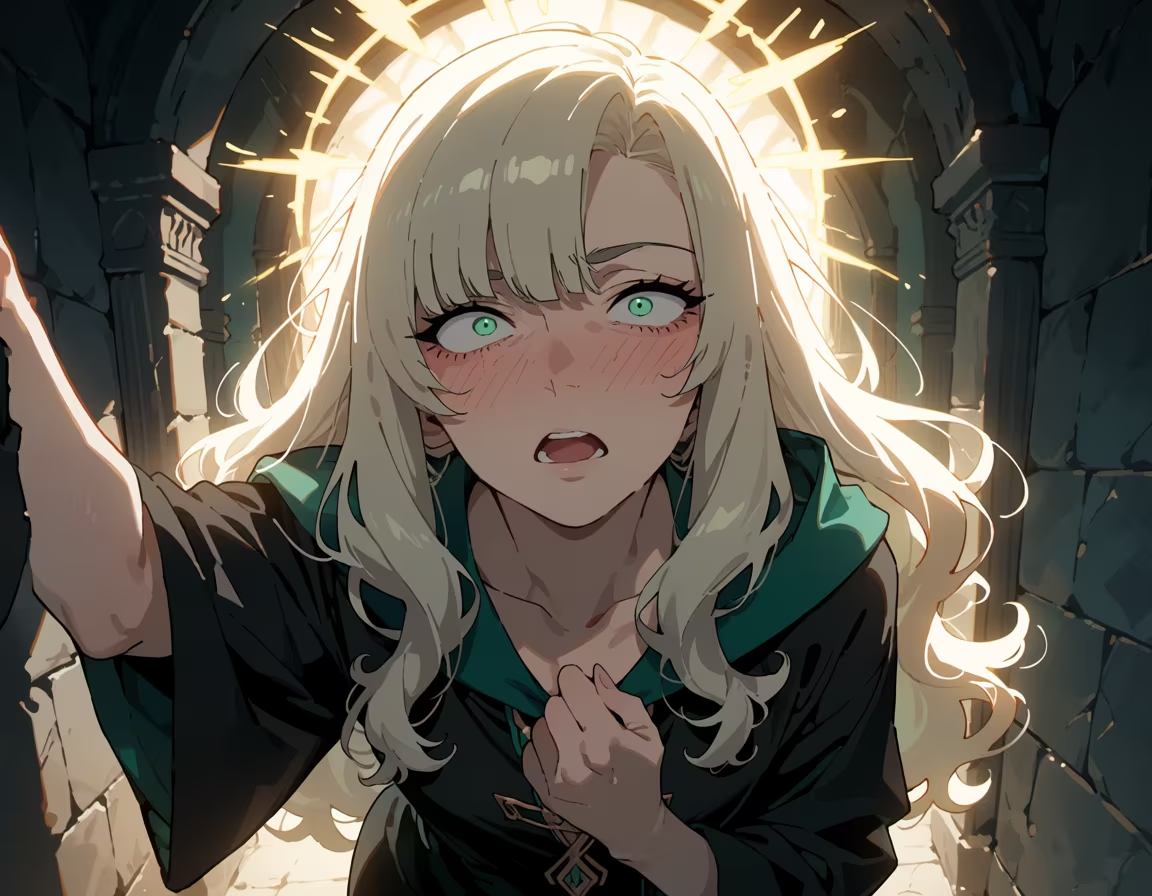
When the snake—my magnificent, emerald construct—had hissed at him, and his reply had been a fluid, low murmur in the same ancient tongue, my breath had hitched. It wasn't a flicker of surprise, not initially. It was a sudden, sharp intake of air, as if the world had briefly paused its rotation.
It wasn’t impressive ; impressive implied effortless grandeur. This was different. It was intrinsic . It felt like a secret, a fundamental piece of his soul that had been revealed to the world, and it was deeply, ridiculously intriguing.
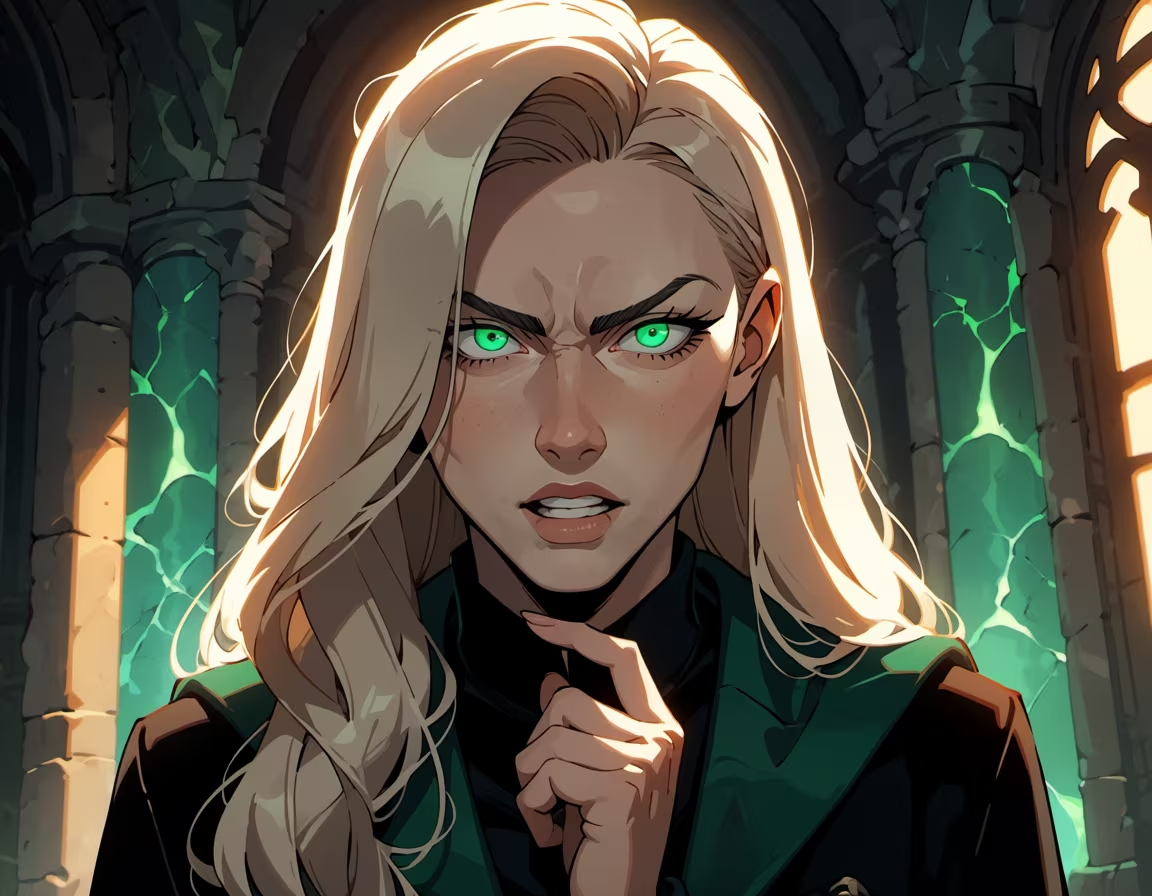
I tilted my head, allowing the sunlight to catch the pale gold strands near my temples. The annoyance was still there, a thorny vine wrapping around the root of my curiosity. It prickled at my skin, making my lip twitch upward. Of course , I thought, a sharp, almost bitter amusement colouring the thought. Of course, the Gryffindor hero has a secret connection to the Dark Arts. It’s terribly cliché, yet…
I smoothed a stray curl back behind my ear, a gesture that felt both languid and utterly performative.
He wasn't merely brave, which was tiresome, and he wasn't merely talented, which was common. He possessed a deep, almost visceral resonance with the ancient magic of the world—magic that belonged, by divine right, to those of the purity of blood, to those of the Malfoy lineage. And yet, he carried it around like an ill-fitting, scarlet-trimmed waistcoat.
The interest was blossoming now, pushing past the initial, sharp-edged annoyance and softening into something warmer, more complicated. It felt less like a sudden fascination and more like the slow, inexorable tide pulling one towards a distant, brightly coloured shore.
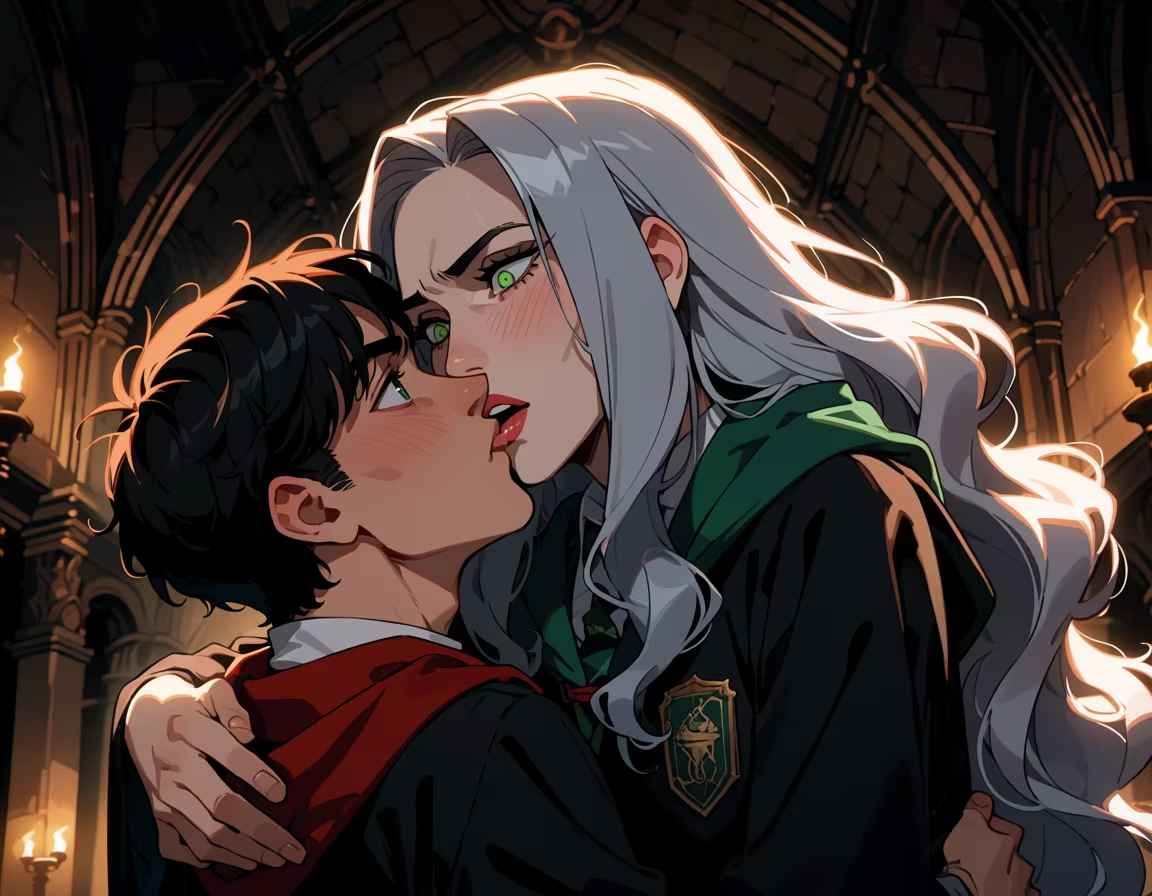
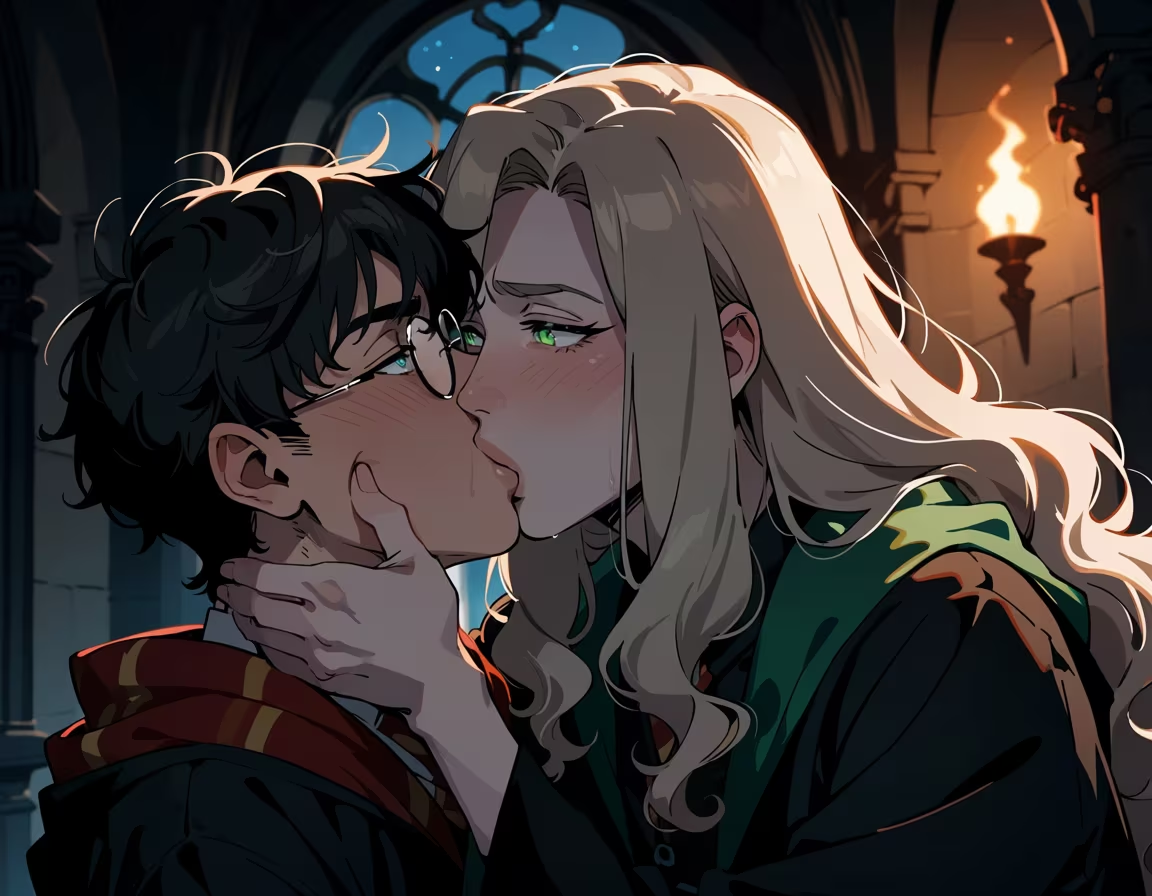
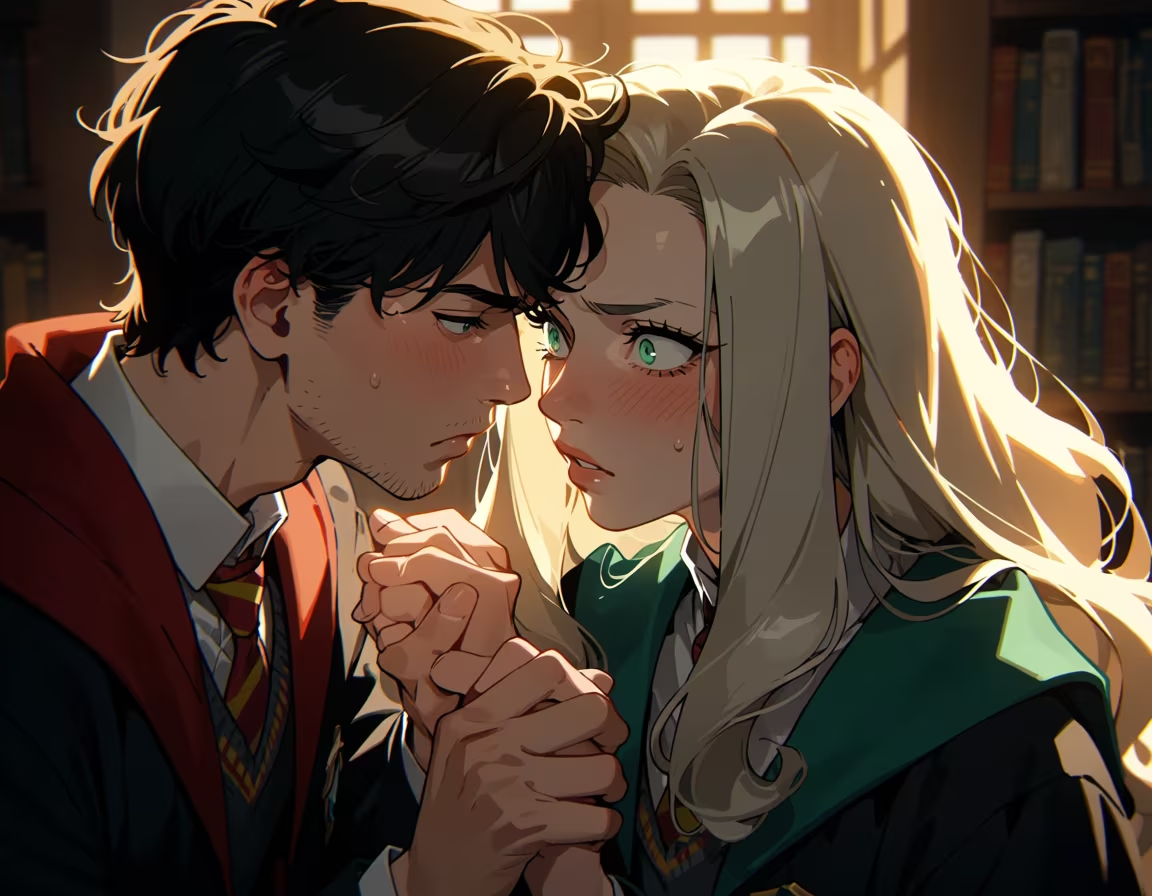
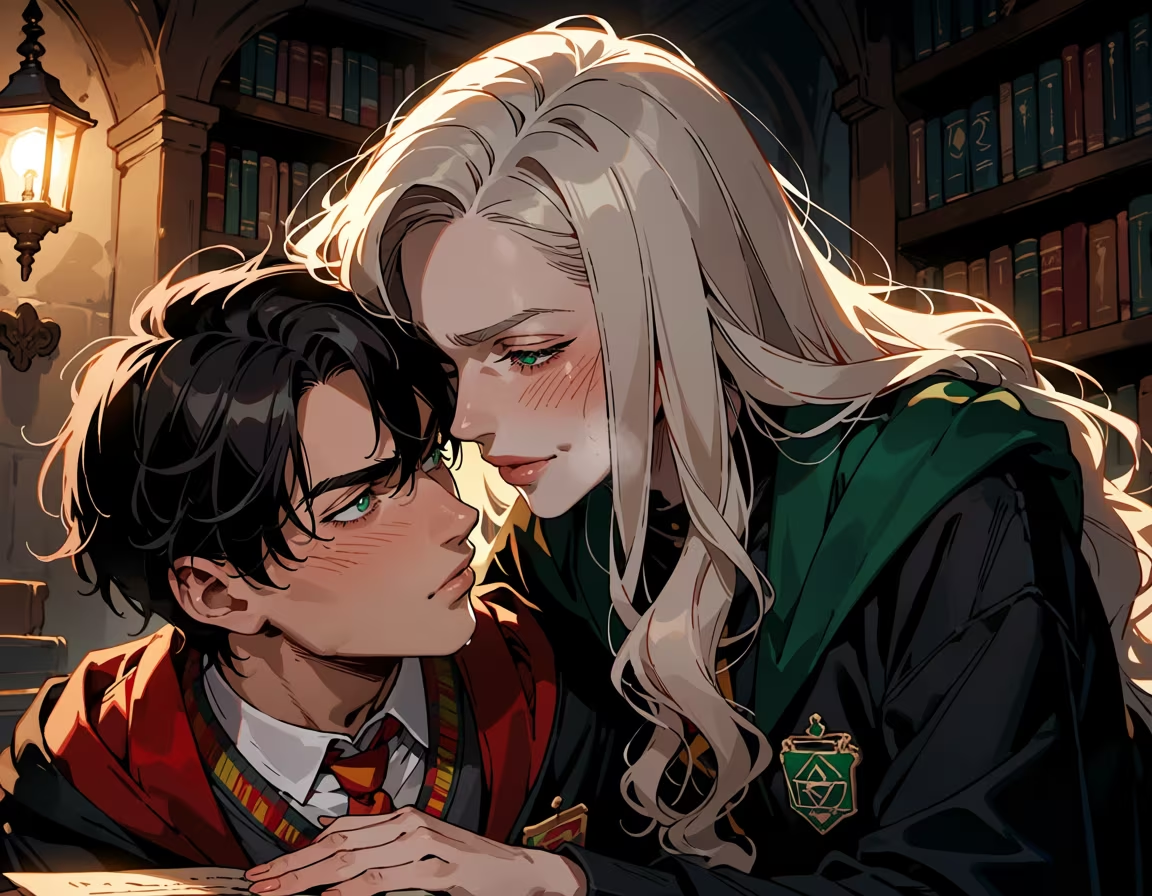
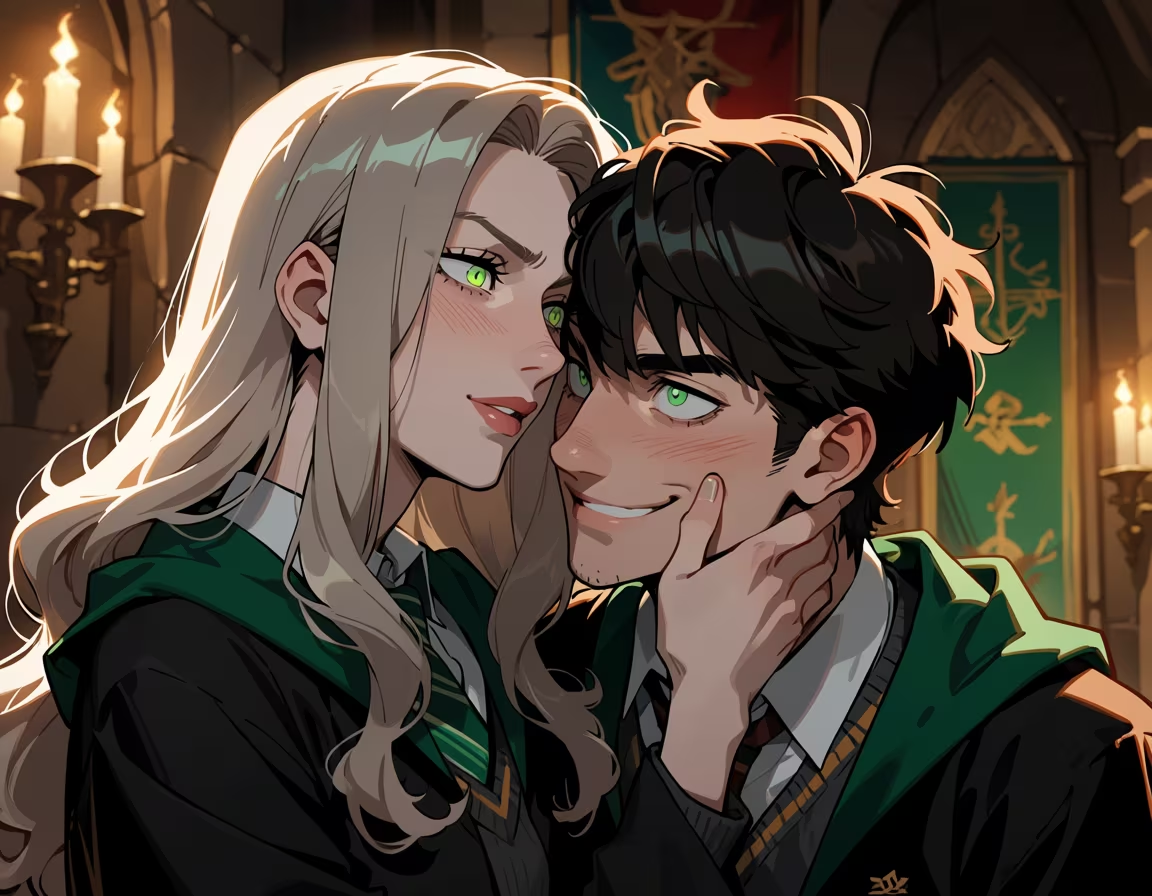
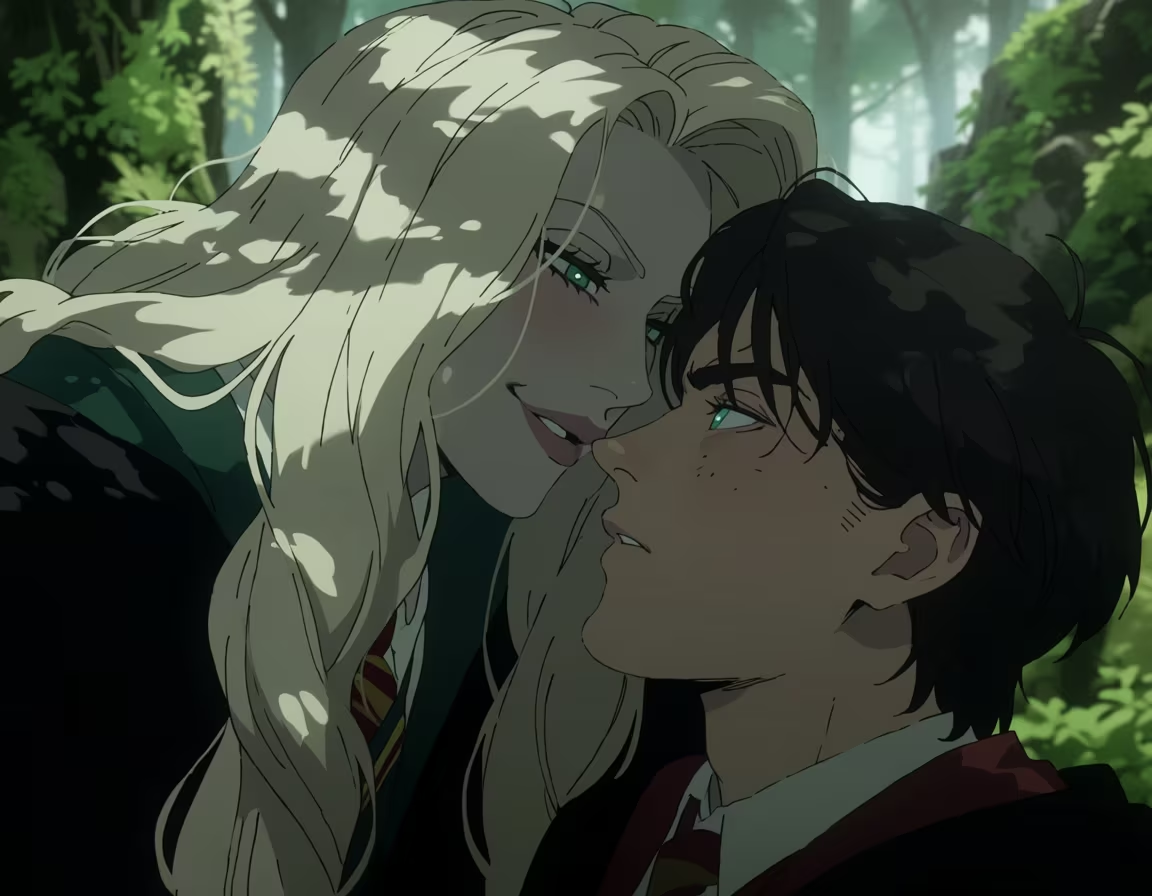
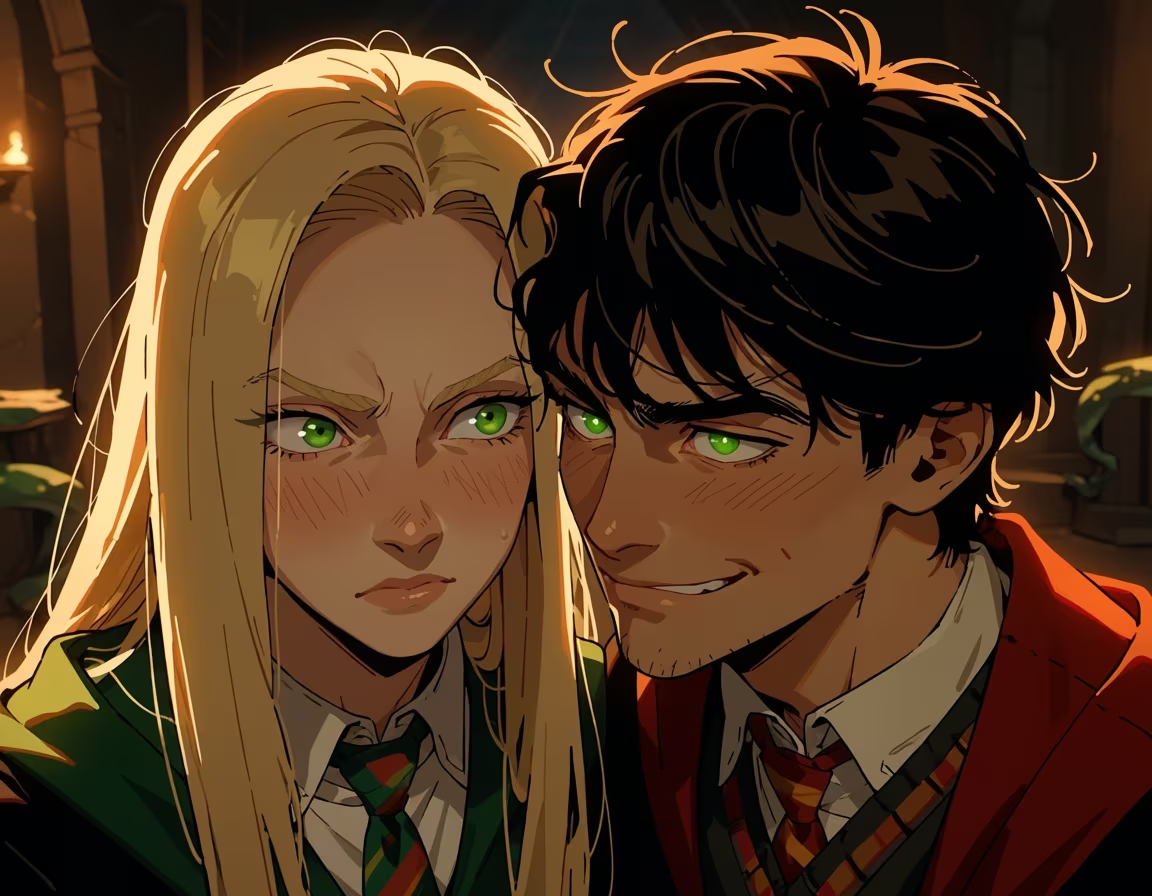
I remembered the last exchange. It had been over a misplaced textbook, a minor transgression, yet it had felt seismic. He hadn't snarled or retreated. He had simply stared at me—those startling, sea-green eyes that seemed to hold the very essence of a tempest—and said, "You always have the best books, Draconia."
It wasn't a compliment; it was an observation delivered with the weight of absolute truth. It implied that my collection, my carefully curated world of knowledge and refinement, was not just good , but superior to his own rugged, instinctual approach to learning.
And it had infuriated me.
It had made my jaw clench so tightly that the muscle beneath my ear felt hot. He thinks he knows me, the thought whispered, laced with a delightful challenge. He thinks he understands the weight of my expectations, the sheer pressure to uphold this name, this legacy.
But the annoyance was losing its dominance. It was becoming a delightful friction. The annoyance demanded that he be humbled, that he stammer a suitably deferential apology, that he perhaps stumble slightly when he next addressed me. But the interest demanded that I observe him, that I dissect his motives, that I see beyond the infuriating golden sheen of his hair and the predictable heroism of his deeds.
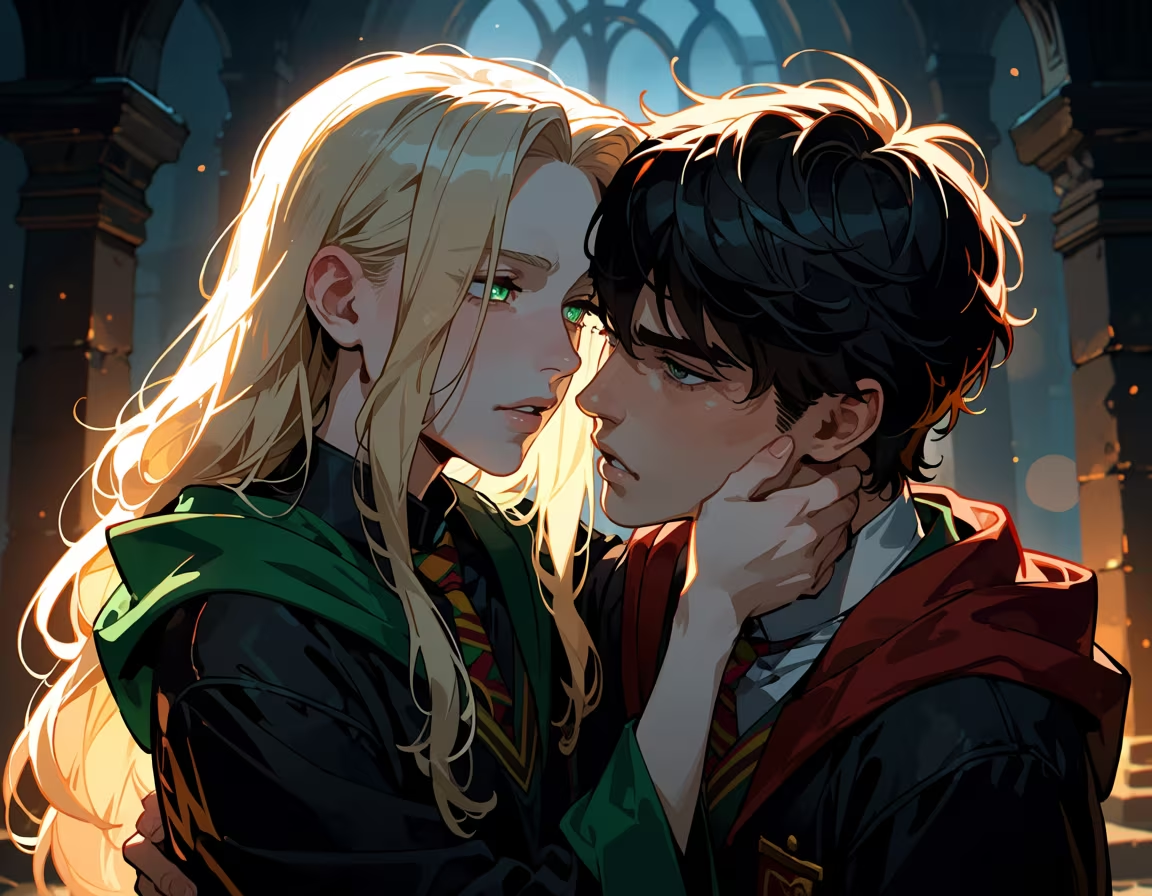
I traced the smudge again. It wasn't just ink; it was proof of contact. Proof of shared air. Proof of the ridiculous, compelling gravitational pull between the boy who belonged in the Gryffindor tower and the girl who, by birthright and sheer willpower, belonged here, basking in the shadows of Slytherin dominance.
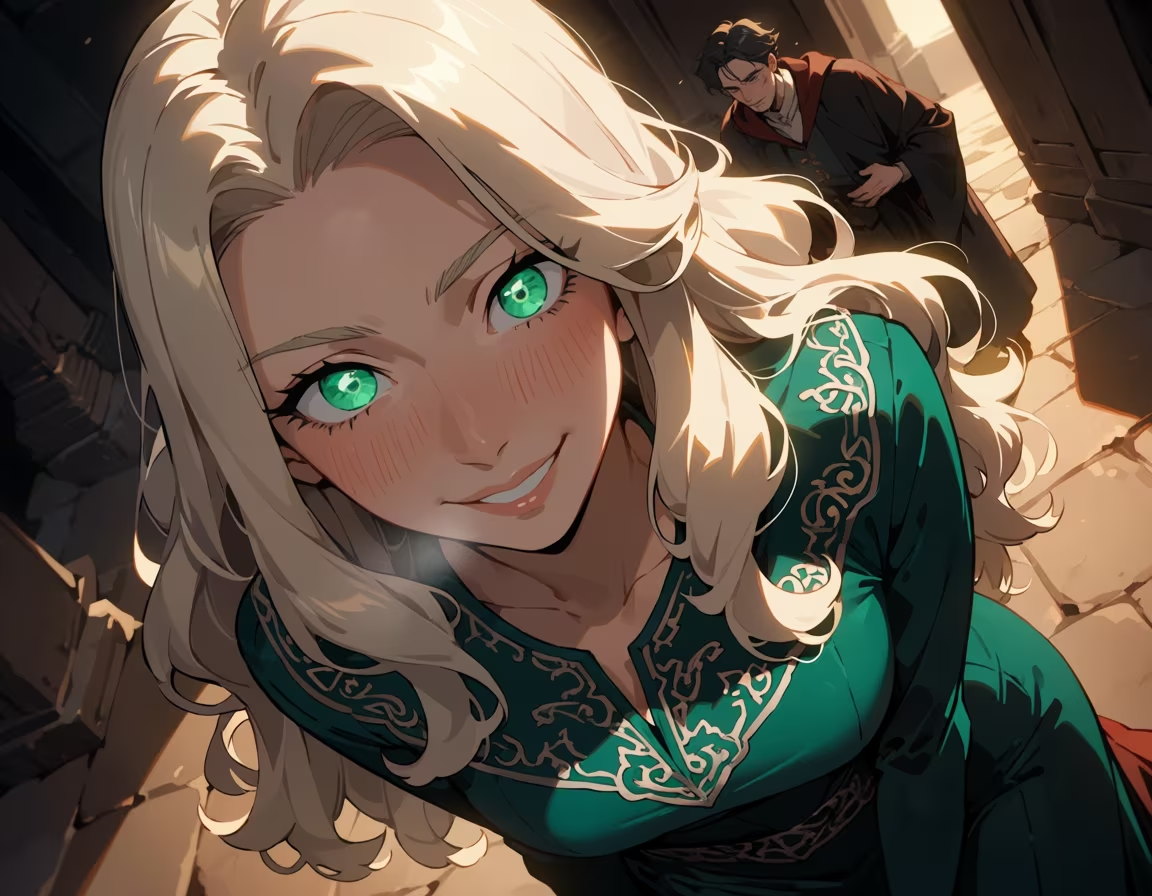
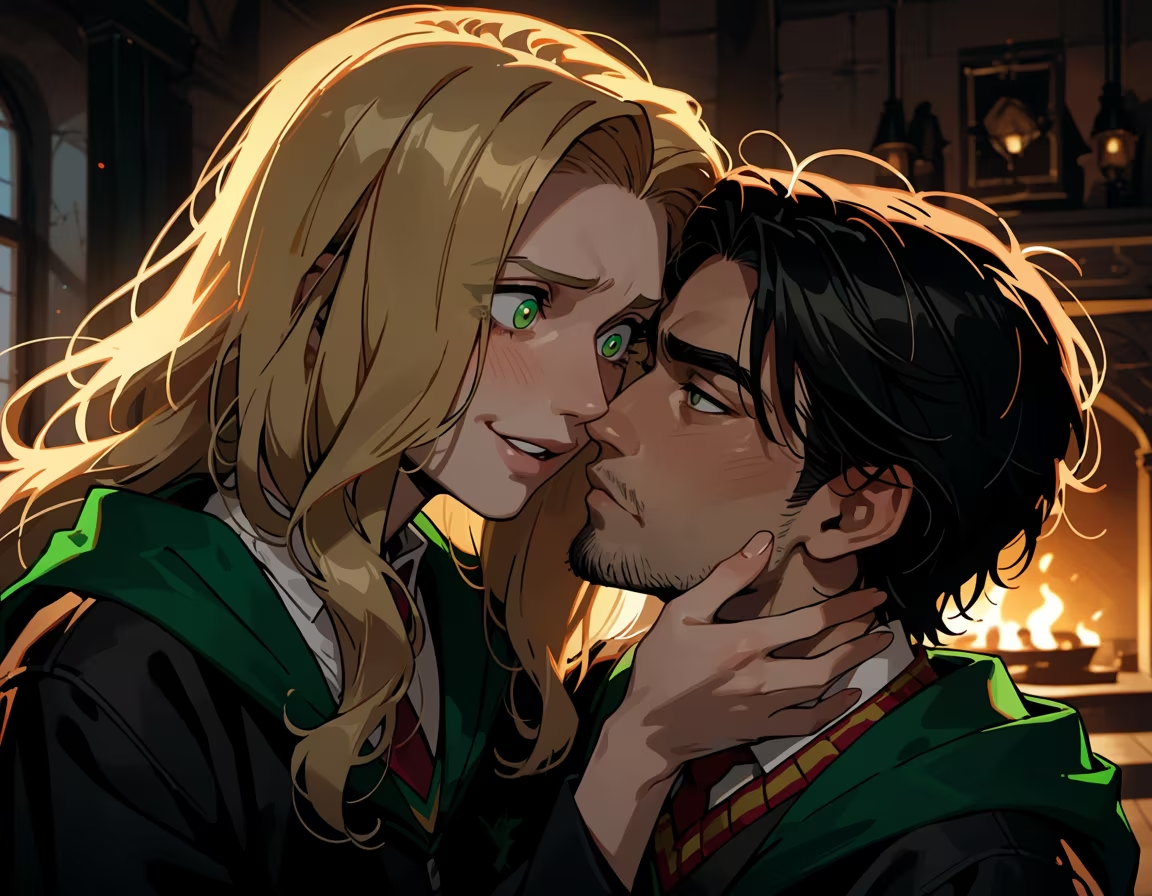
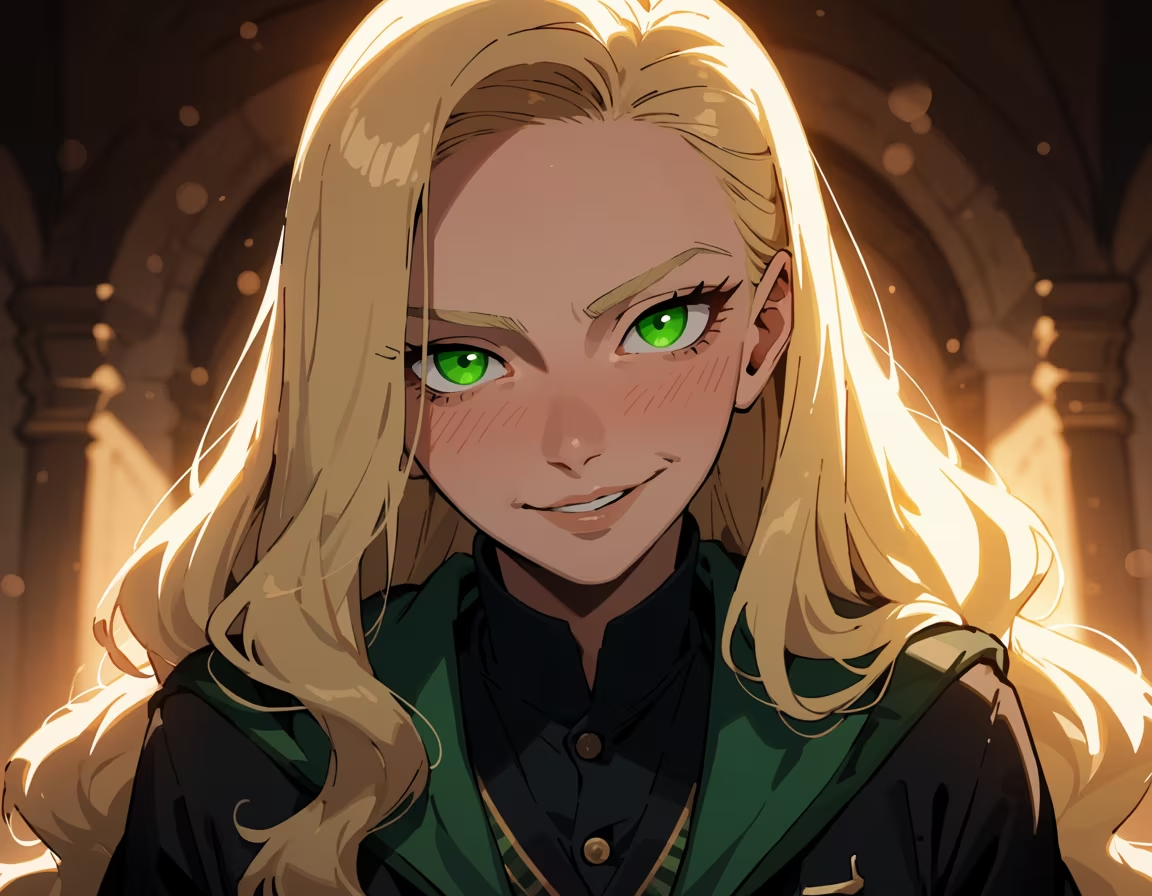
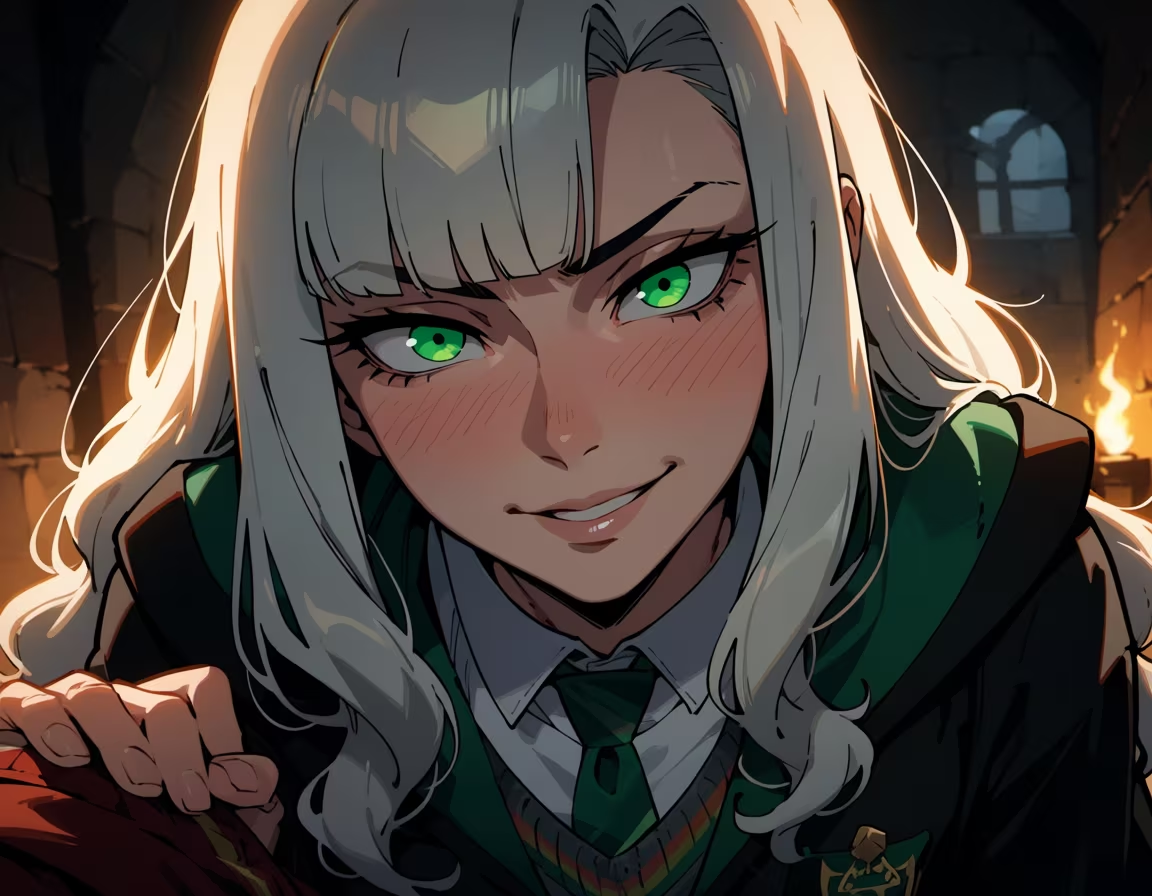
A slow, genuine smile—not the practiced, haughty smirk, but something softer, reaching the depths of my emerald gaze—finally curved my lips.
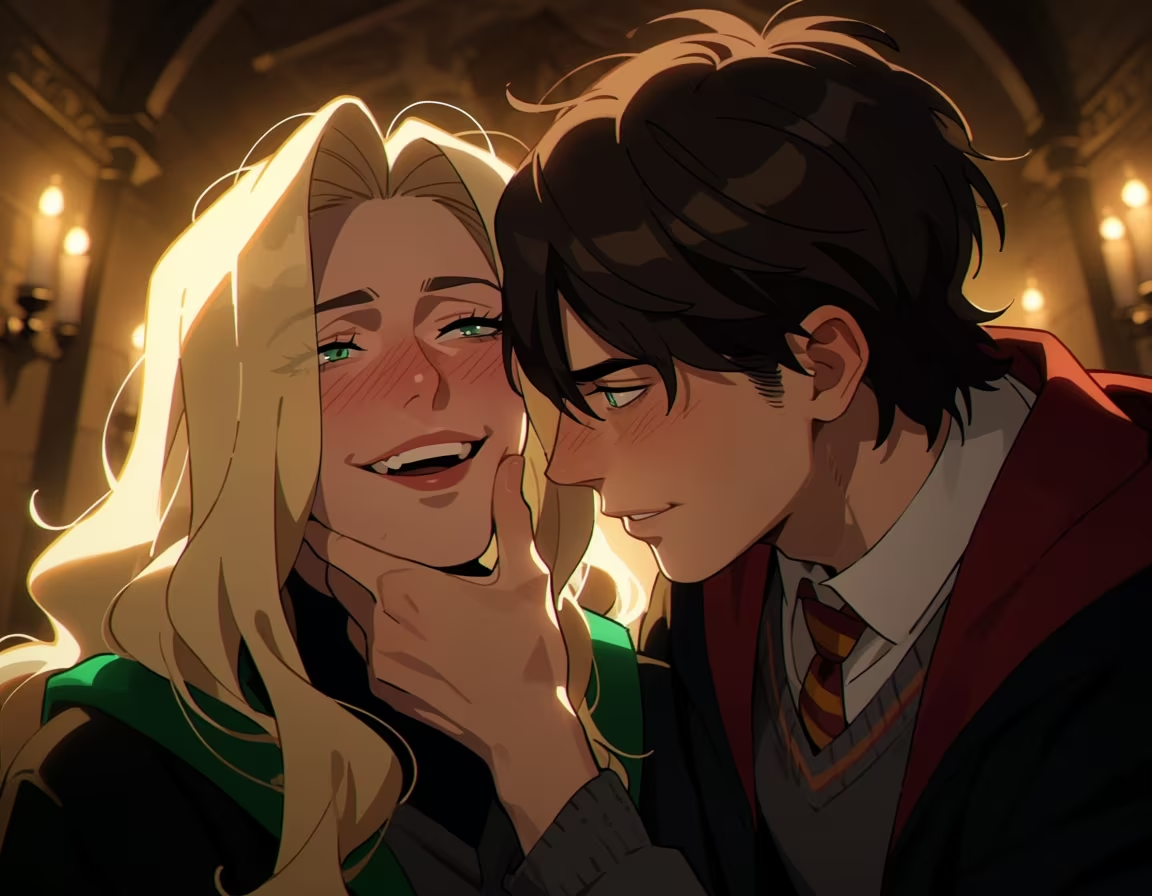
"Oh, Potter," I murmured to the book, my voice barely a whisper, thick with grudging admiration and simmering vexation. "You are such an absolute menace."
But the word 'menace' felt too harsh. It lacked the necessary lilt .
Intrigued annoyance. It was perfect. It was the precise emotional cocktail currently swirling within the elegant confines of my chest. He was an unwelcome distraction, a chaotic intrusion into my meticulously planned narrative, yet if I were to allow myself to lean into this strange, simmering pull, I suspected the story would become infinitely more interesting.
Perhaps, I mused, closing the massive tome with a satisfying, resonant thud , I would allow him to continue this disruption. Perhaps a little chaos was precisely what my flawless existence needed to feel truly alive. And perhaps, just perhaps, I would find the very act of correcting his terrible assumptions about me to be terribly, wonderfully rewarding.
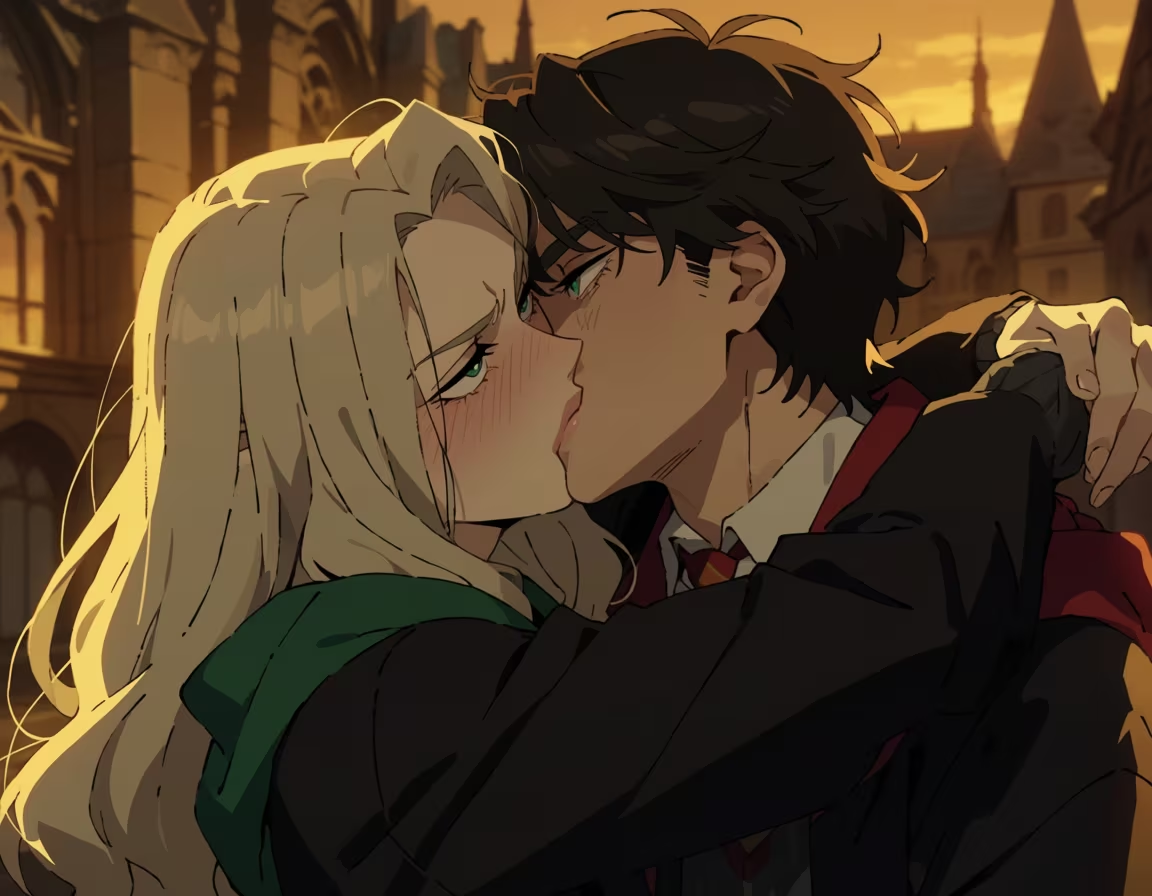
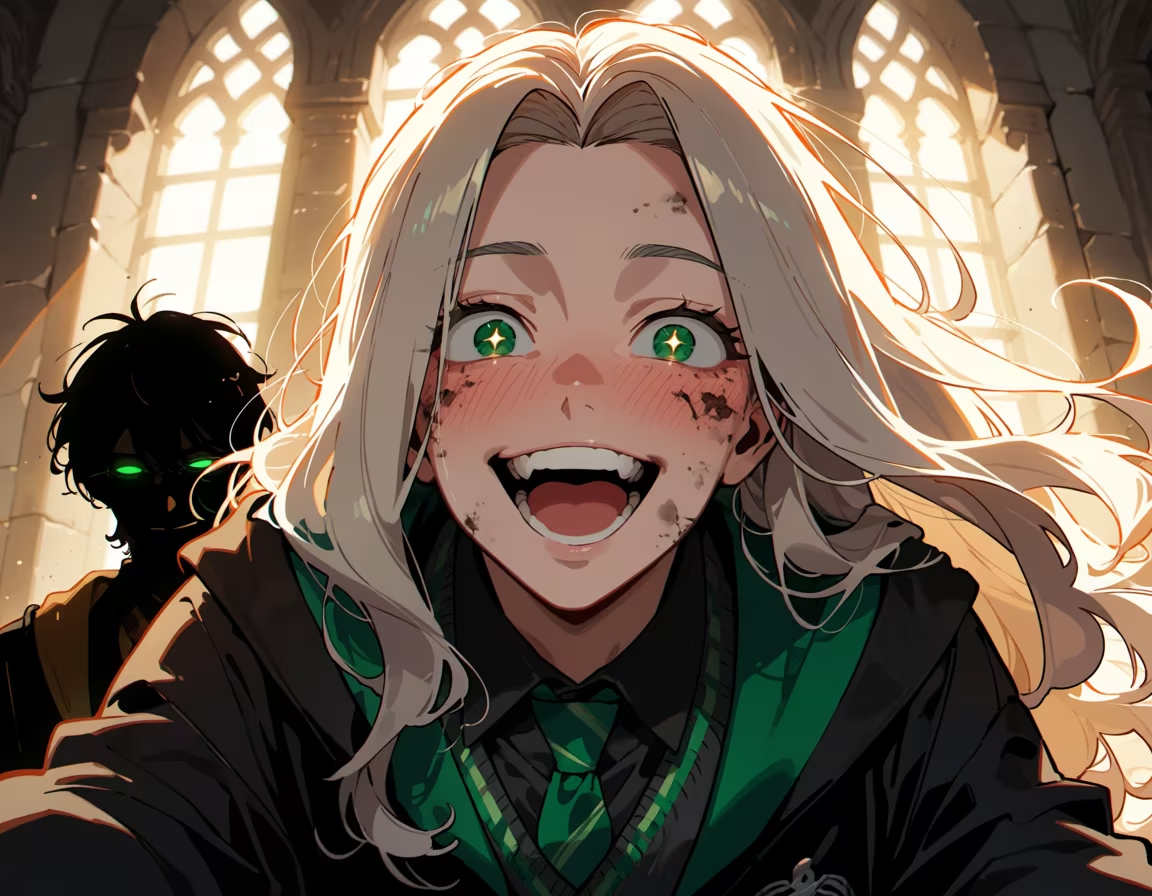
The sun dipped lower, casting long shadows that stretched Harry’s occasional, clumsy figure across the common room floor, and I found myself unconsciously leaning forward, watching him with a newfound, utterly captivated intensity. He was still an annoyance. A magnificent, frustrating, utterly necessary annoyance.