| Home | The Lives of Velnin | Illustrated Fiction | Malfoid Art & Fiction | Book Blurbs | Contact |
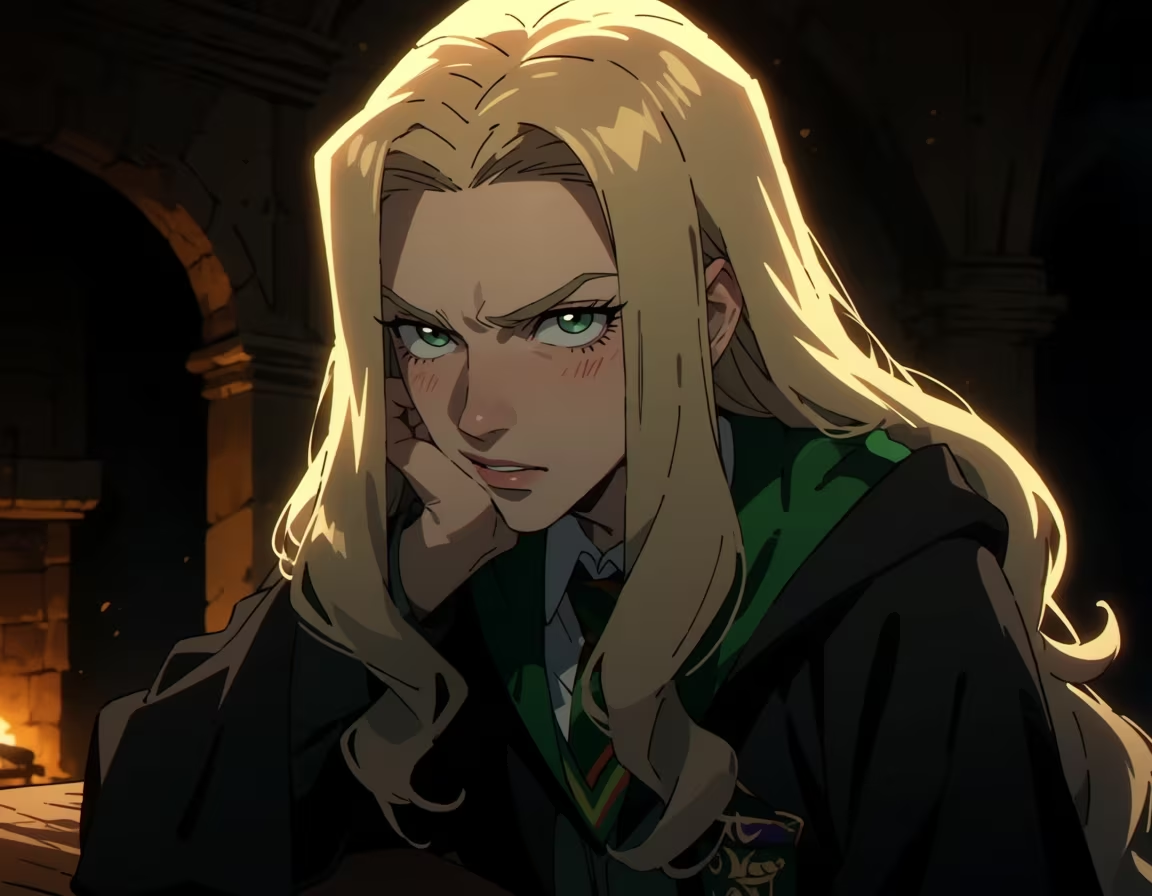
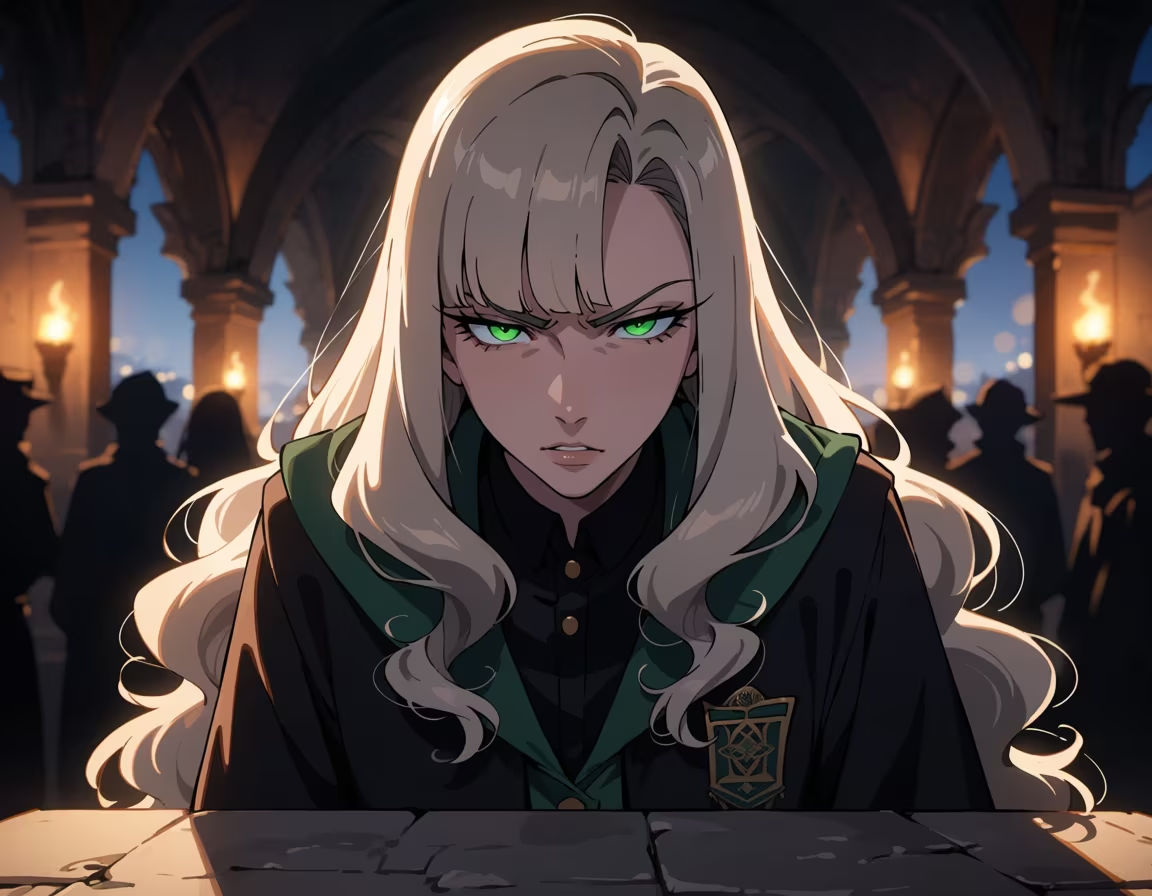
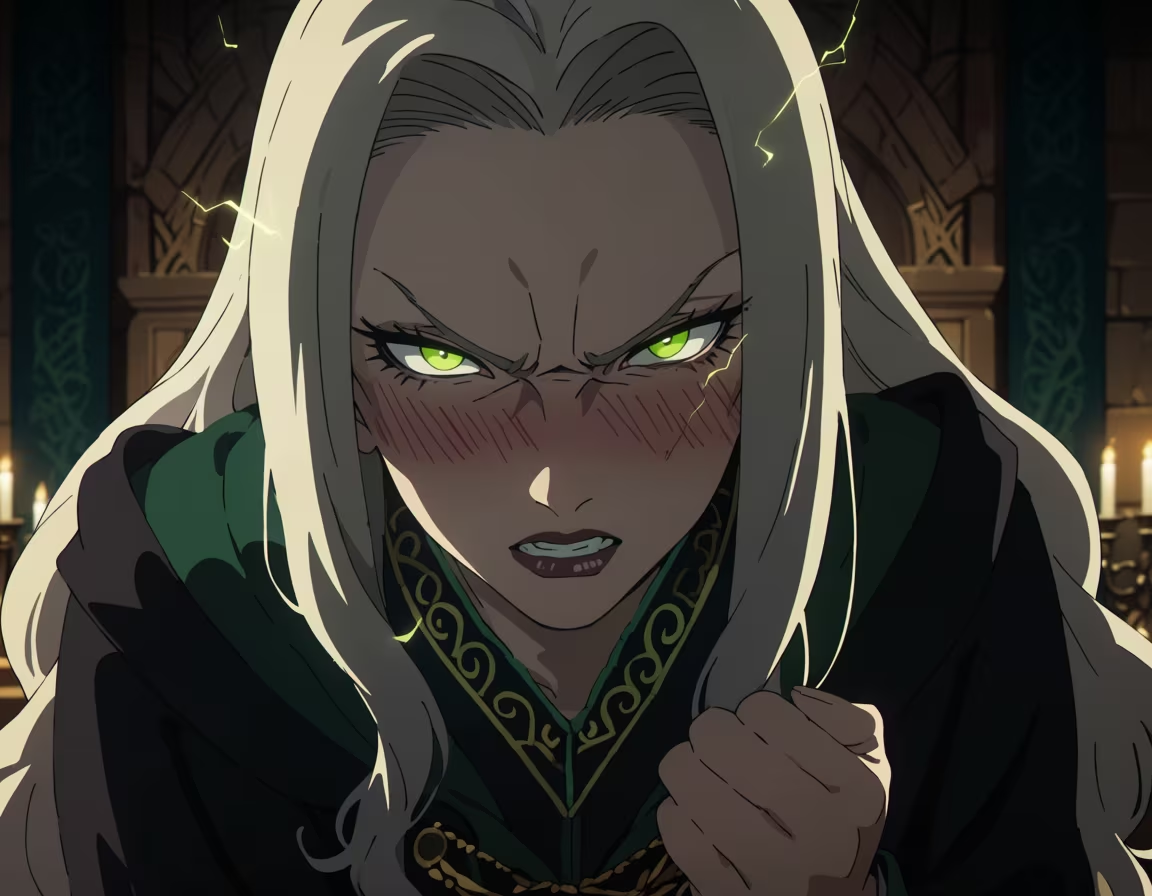
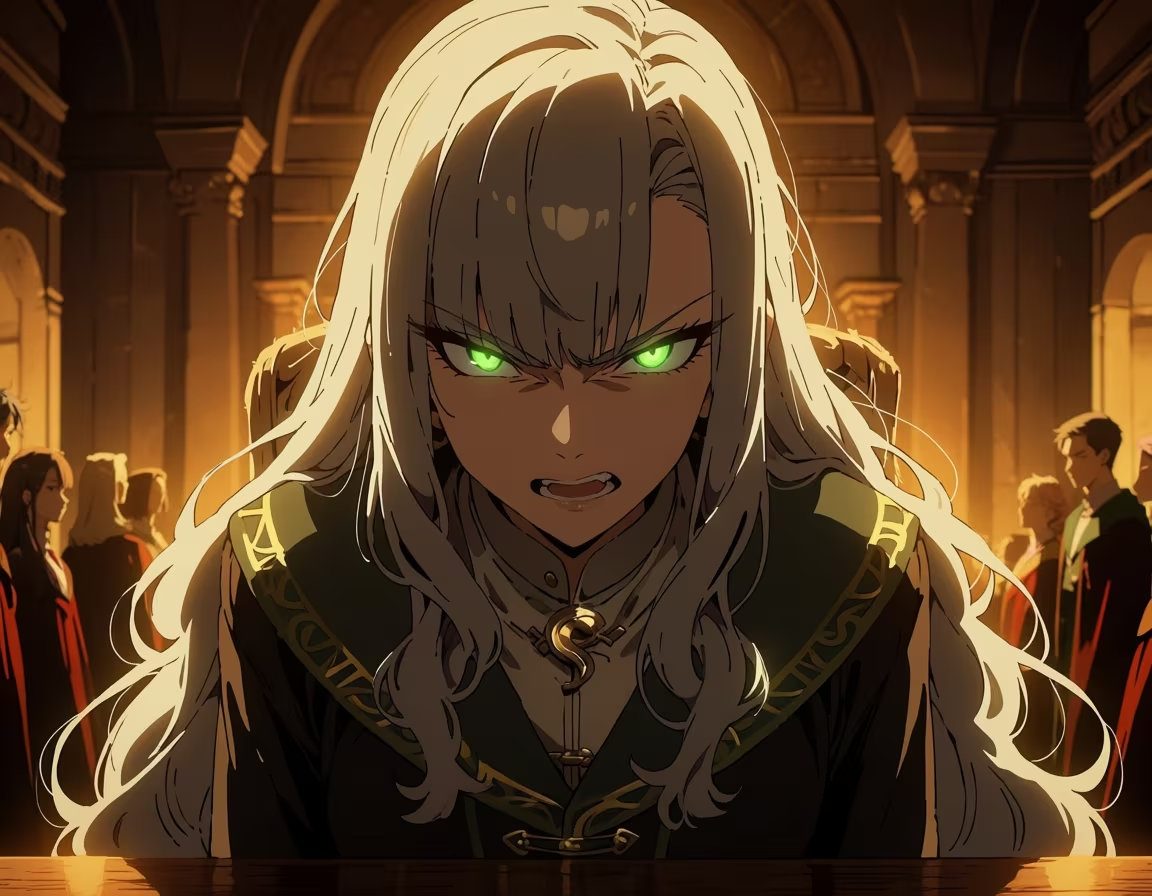
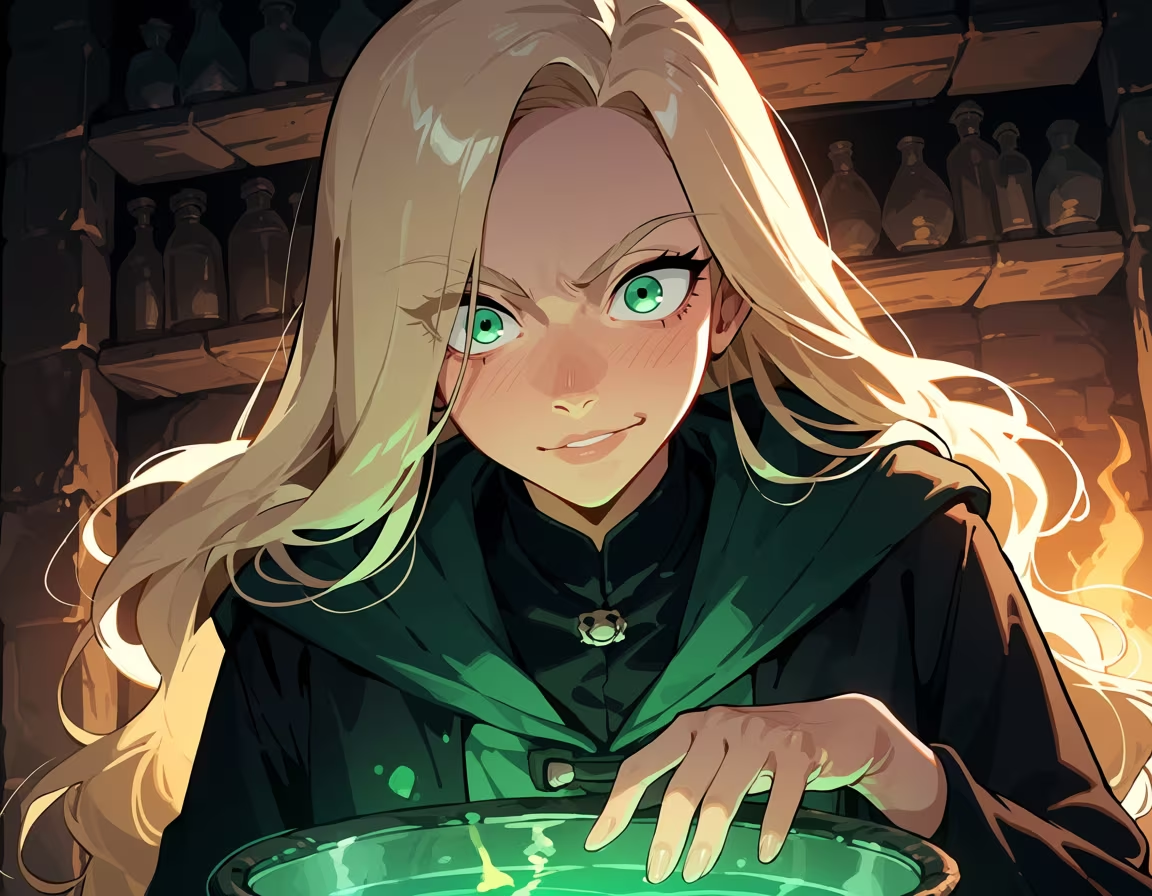
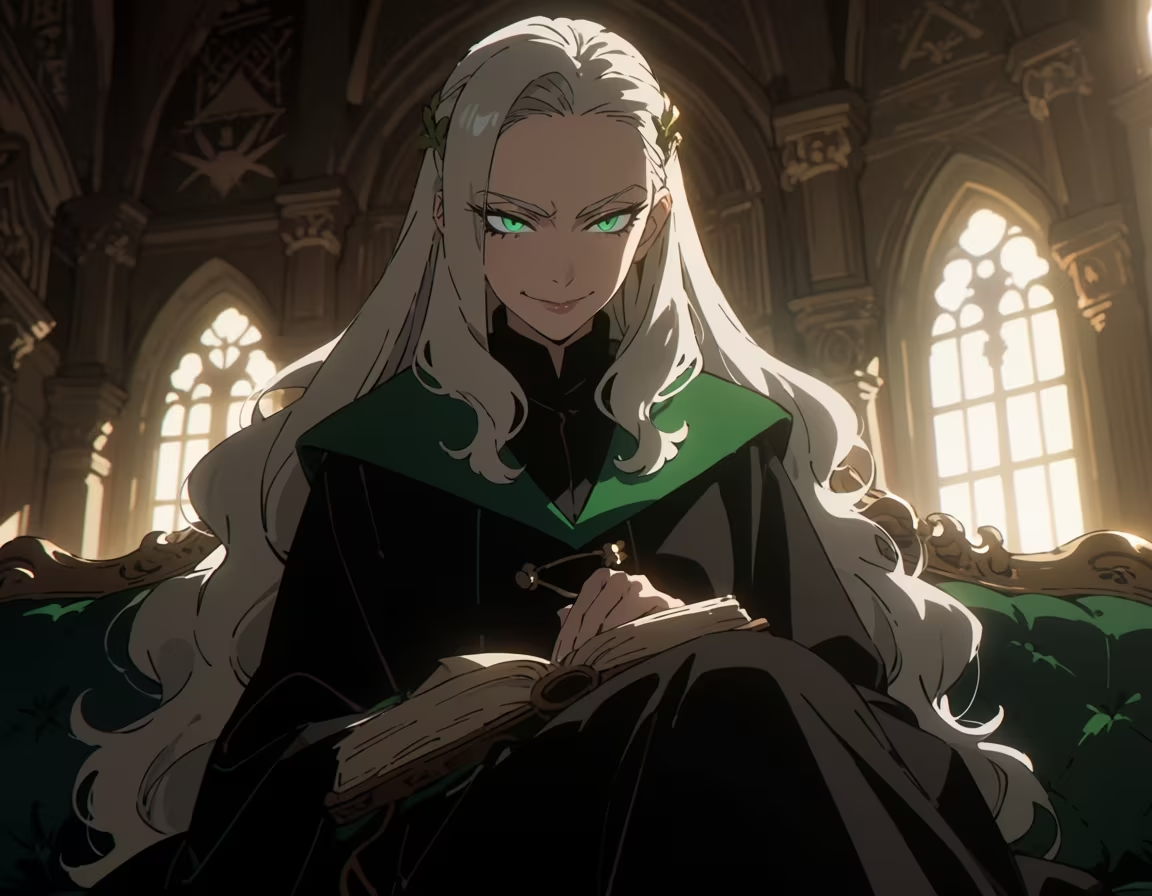
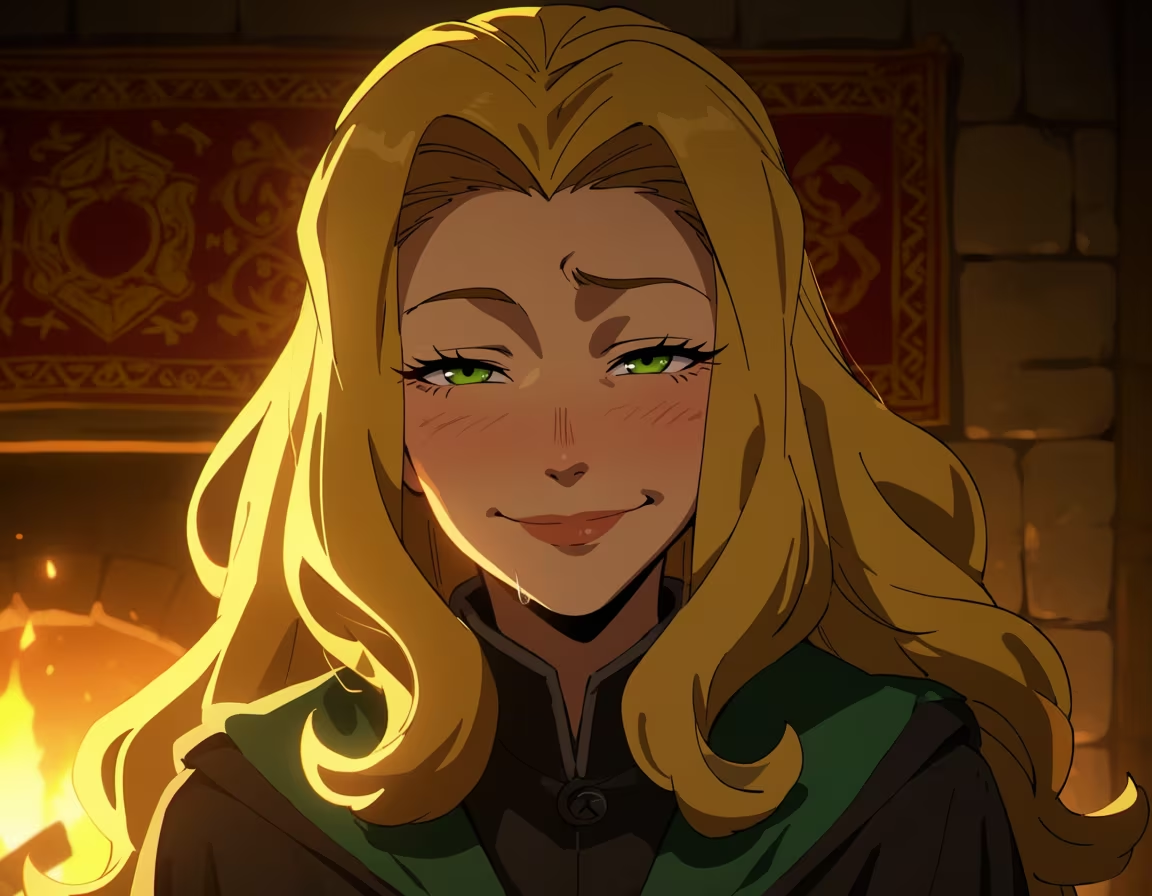
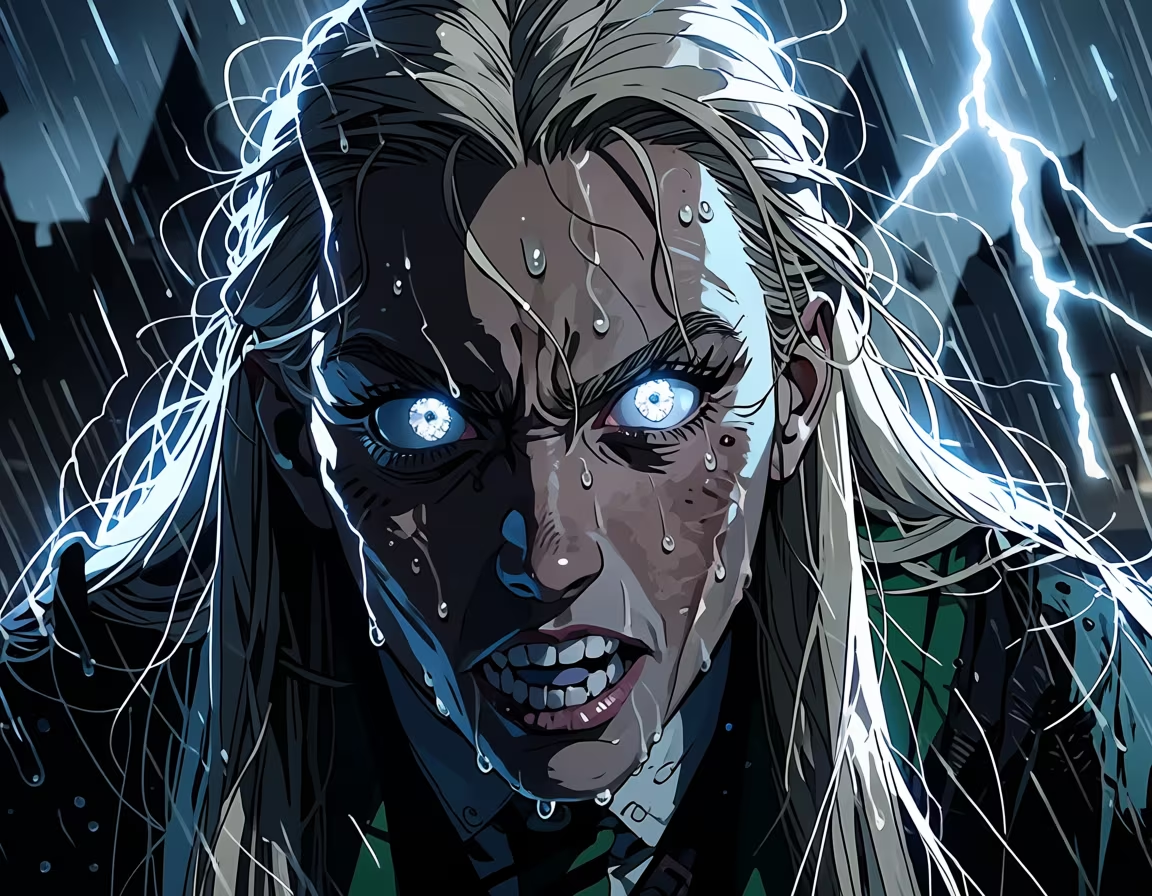
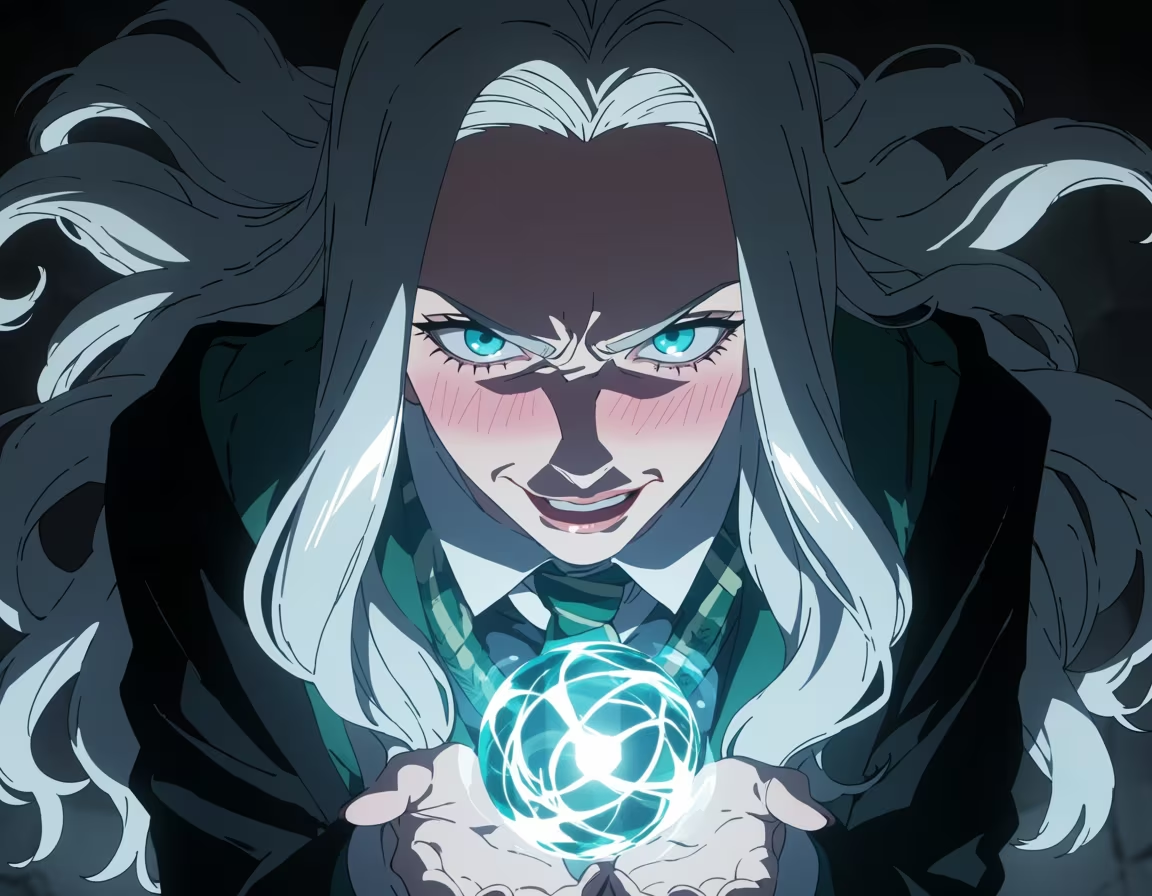
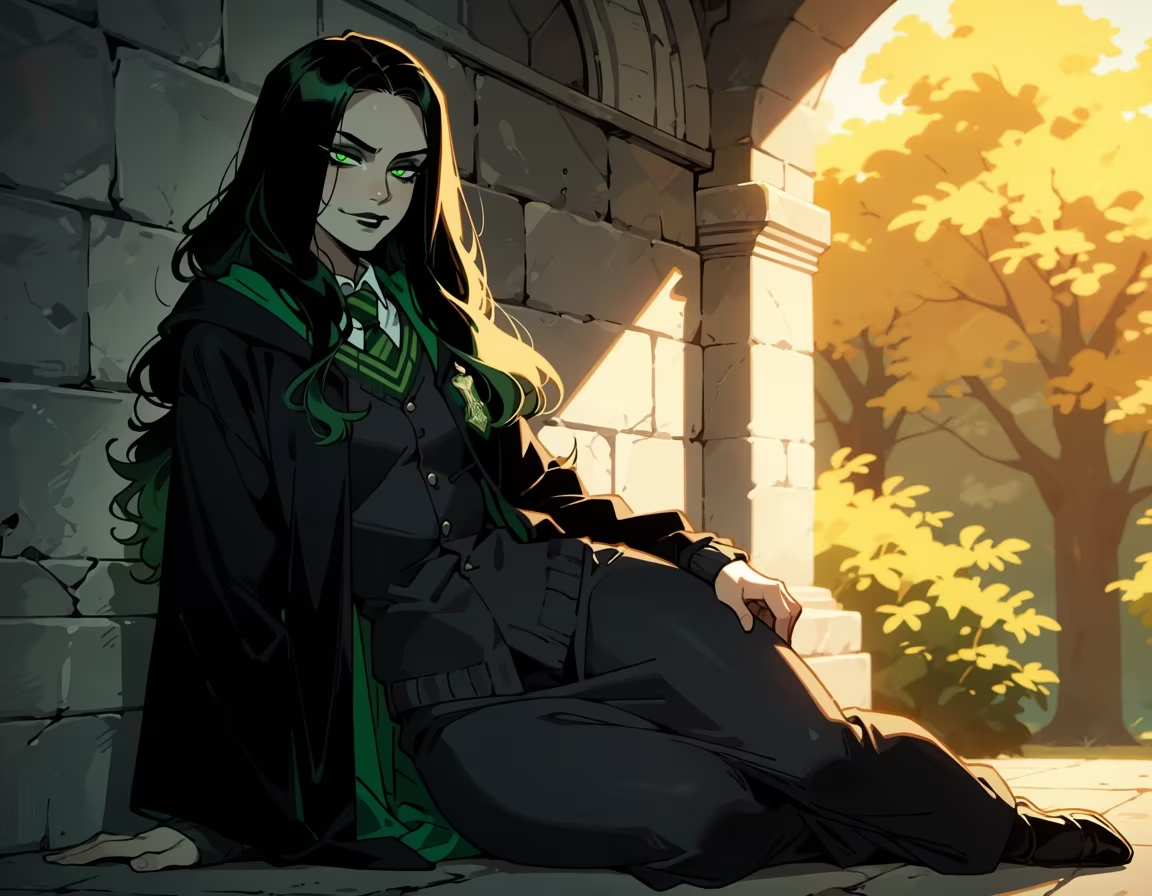
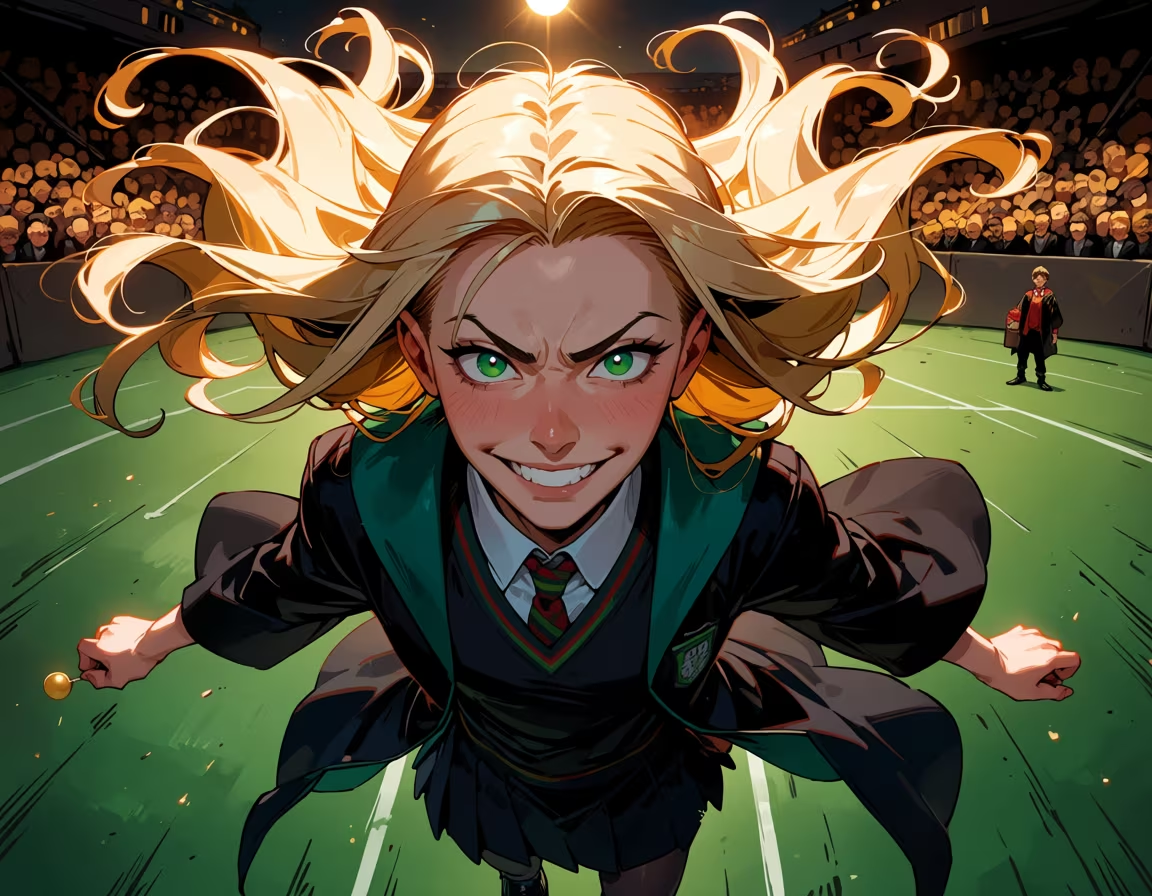
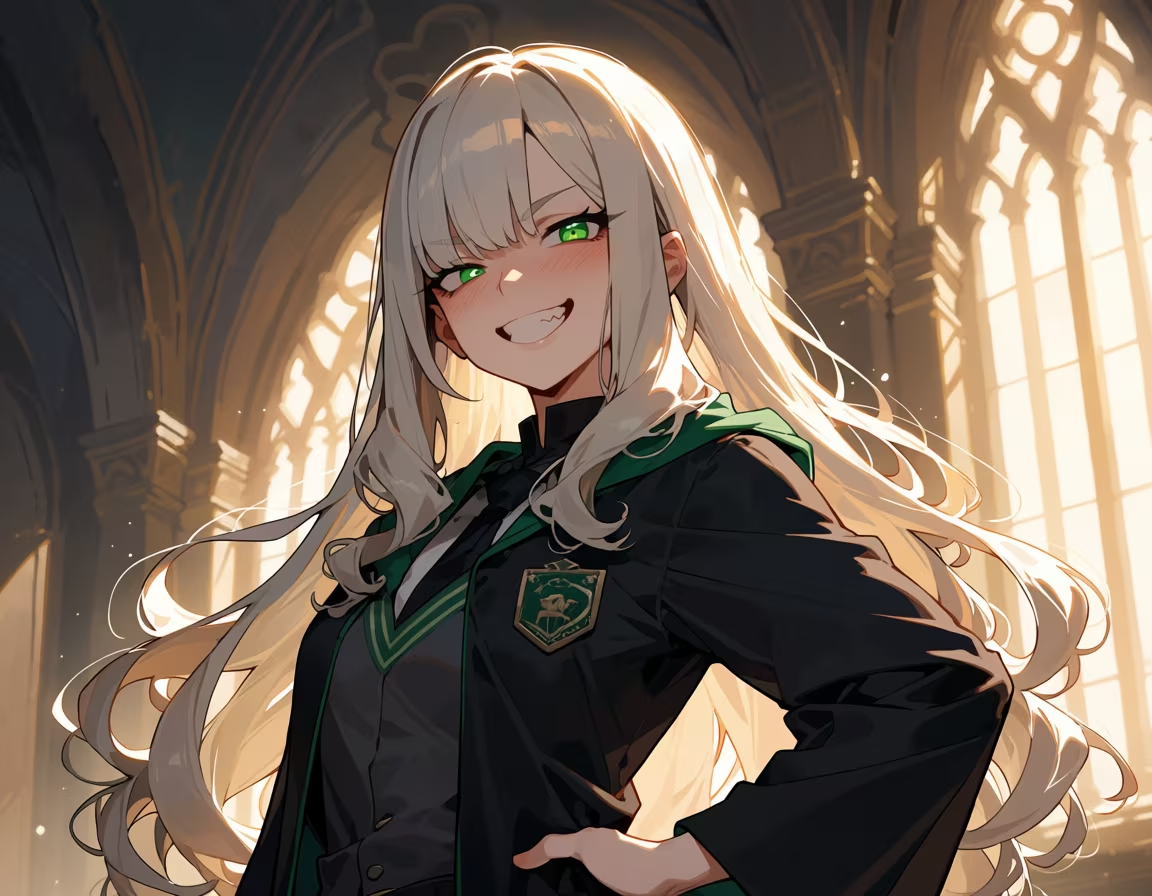
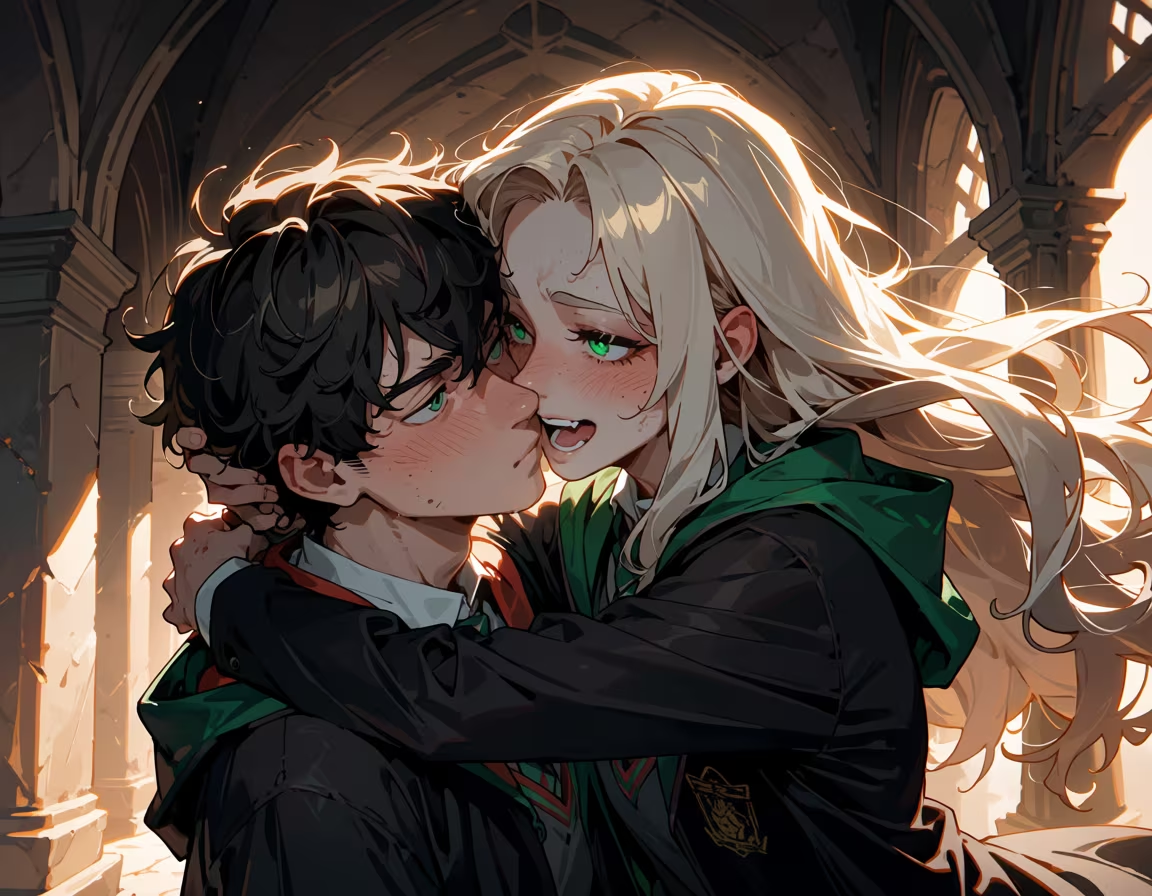
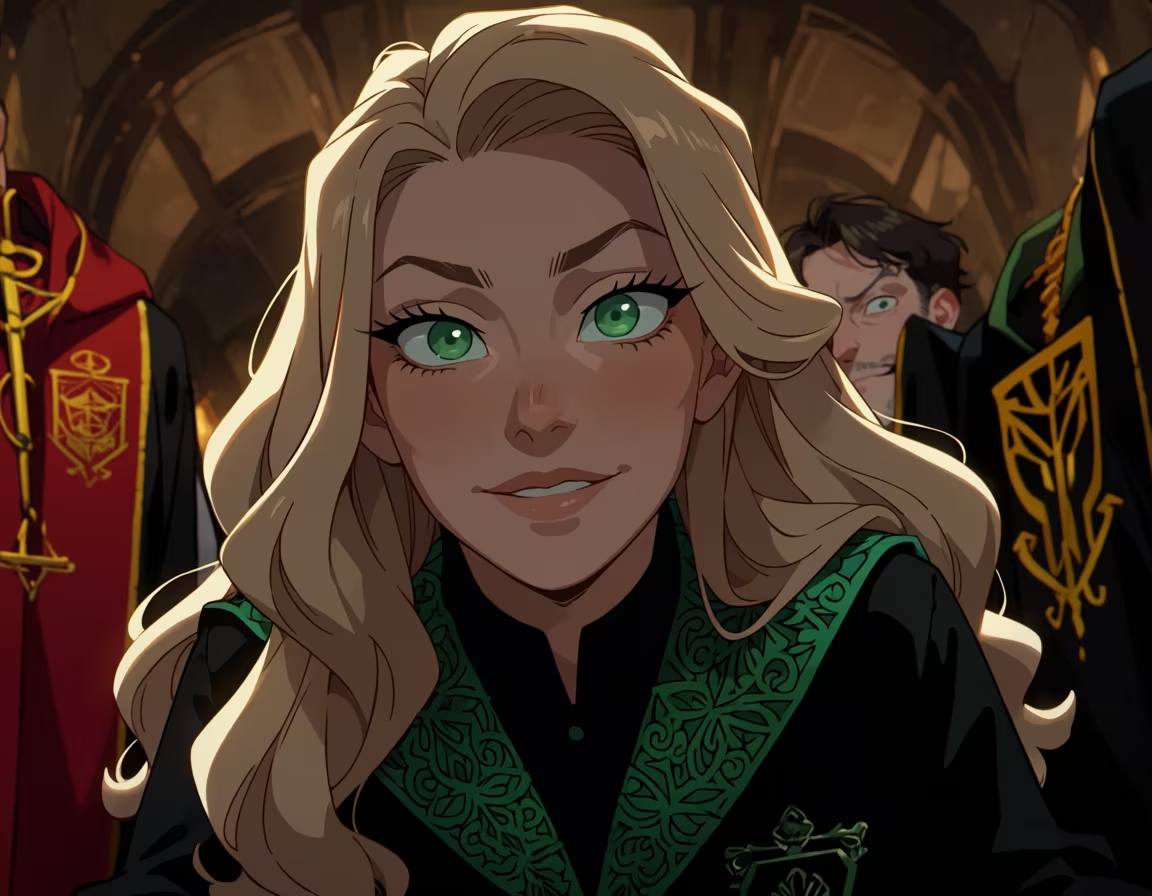
The emerald glow of the Slytherin common room always felt like a calculated indulgence. It bathed the ancient stone walls in a colour so deep it bordered on venomous, a perfect complement to the serpentine motif that coiled along the mantelpiece and the rich, velvet upholstery of the worn armchairs. For Draconia Malfoid, this oppressive beauty was exactly right. It suited her ambition, her sharp angles, and the general air of barely contained aristocratic hauteur that clung to her like the scent of expensive, slightly damp cologne.
She sat perched on the edge of a high-backed chair, a massive tome titled Advanced Transfiguration: The Principles of Permanent Change resting open in her lap. The text was dense, maddeningly intricate, and currently failing to capture the totality of her attention. Instead, her gaze drifted, caught by the flickering dance of the firelight, and then, inevitably, snagged on the memory of him.
Harry Potter.
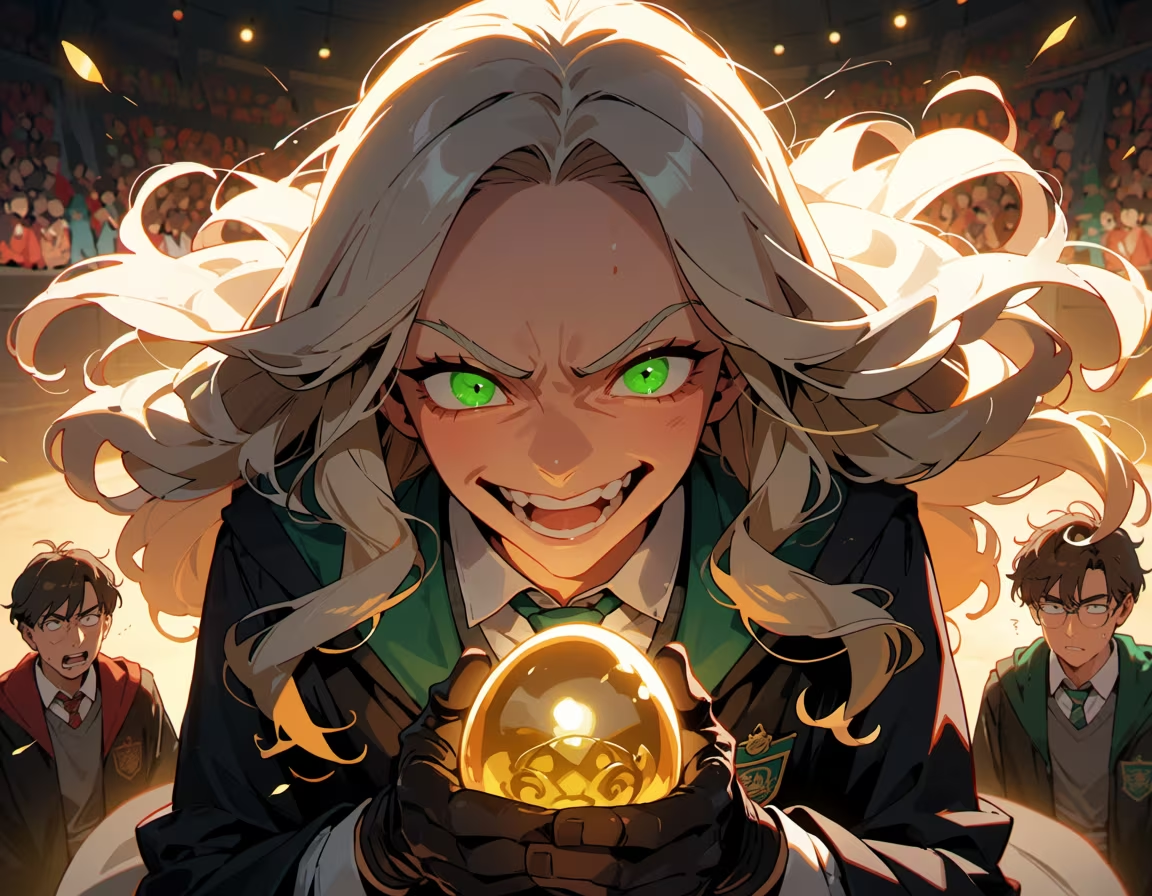
The memory was a sharp, irritating little dart of sunlight piercing the gloom of her carefully cultivated inner world. Just hours ago, during the Triwizard Feast, he had stood on the edge of the Great Hall, looking utterly incandescent. The cheers of the Gryffindor table—a cacophony of joyous, self-satisfied noise—were still ringing in her ears. He had managed the dragons, yes, but it was the sheer ease with which he had done it, the infuriatingly effortless grace of his victory, that truly grated on her nerves.
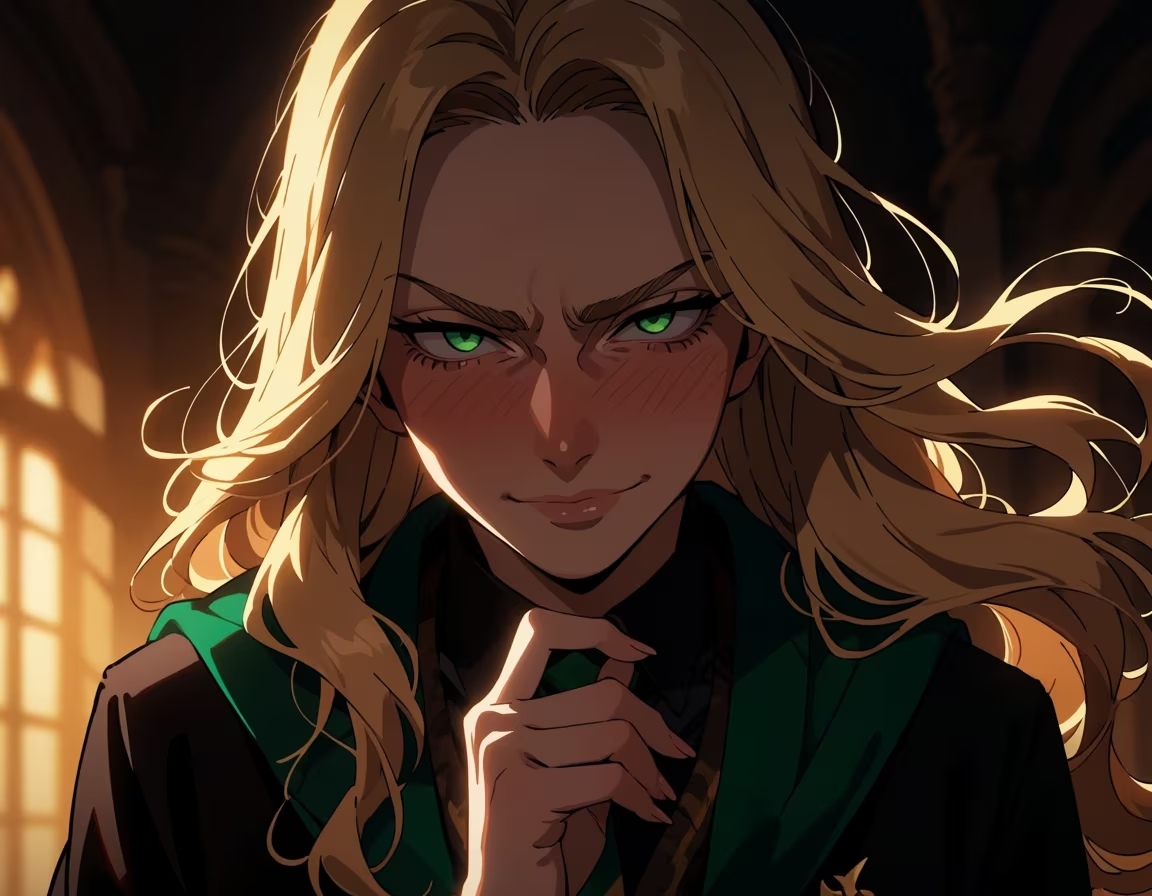
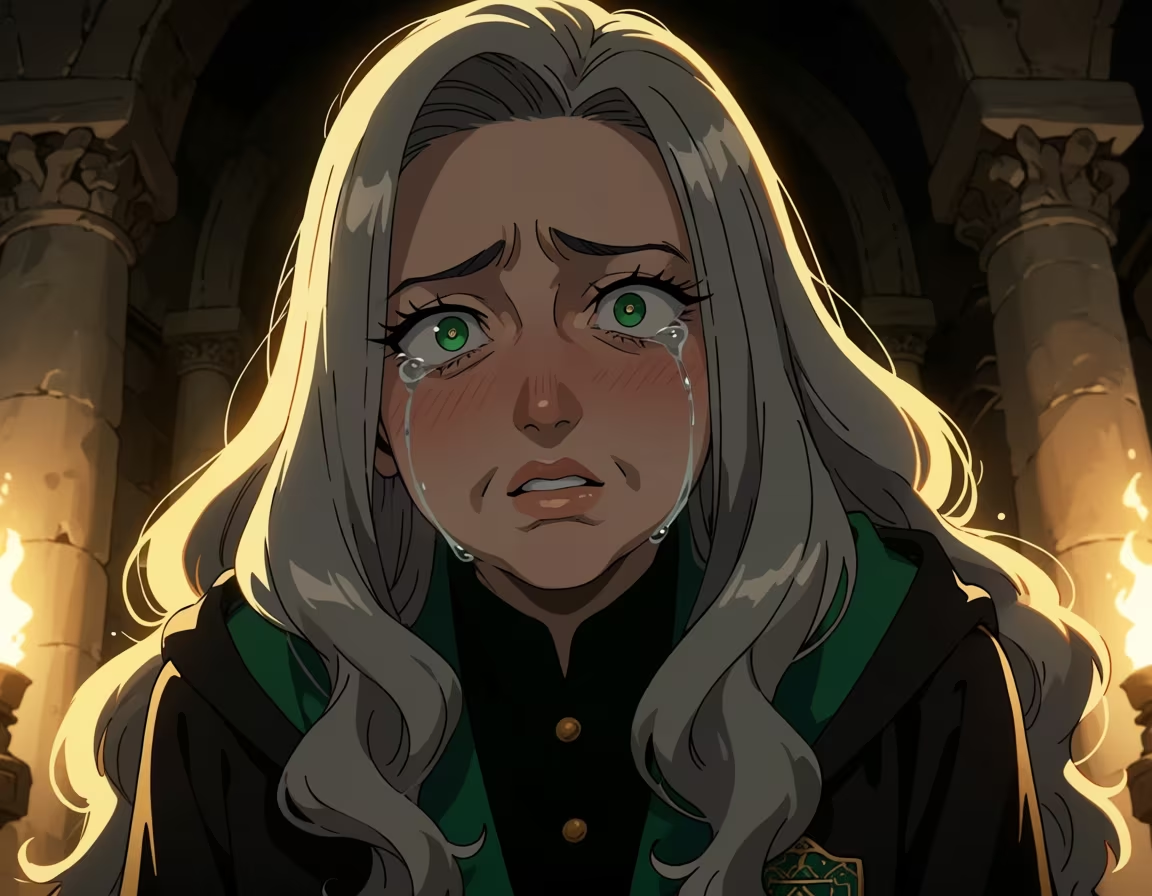
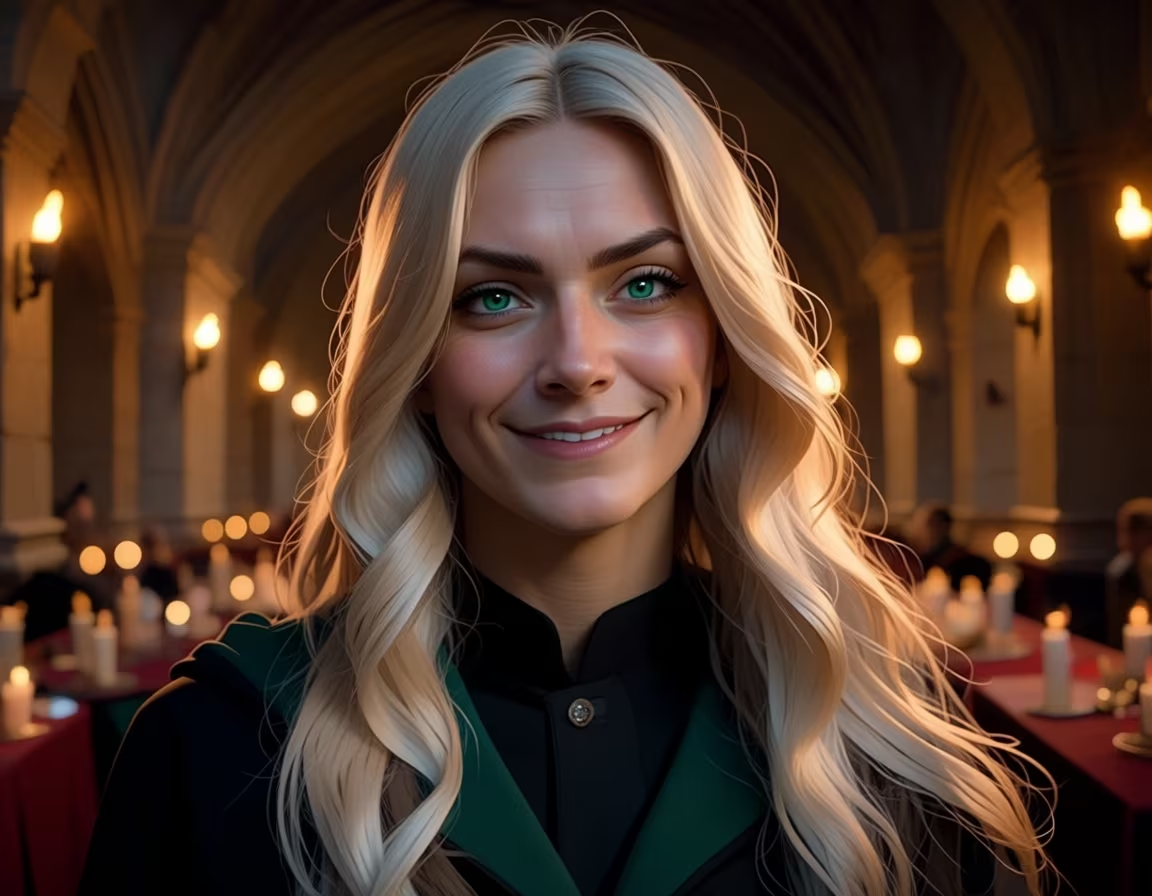
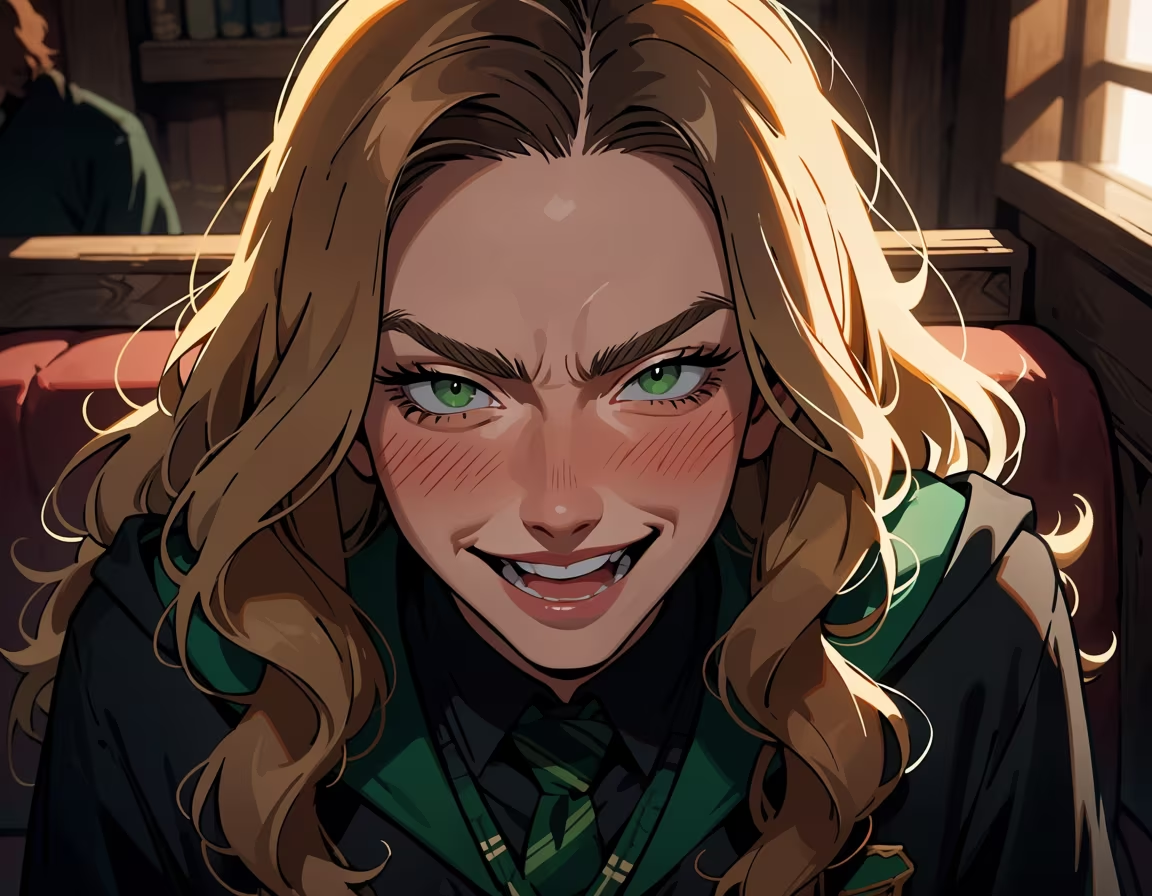
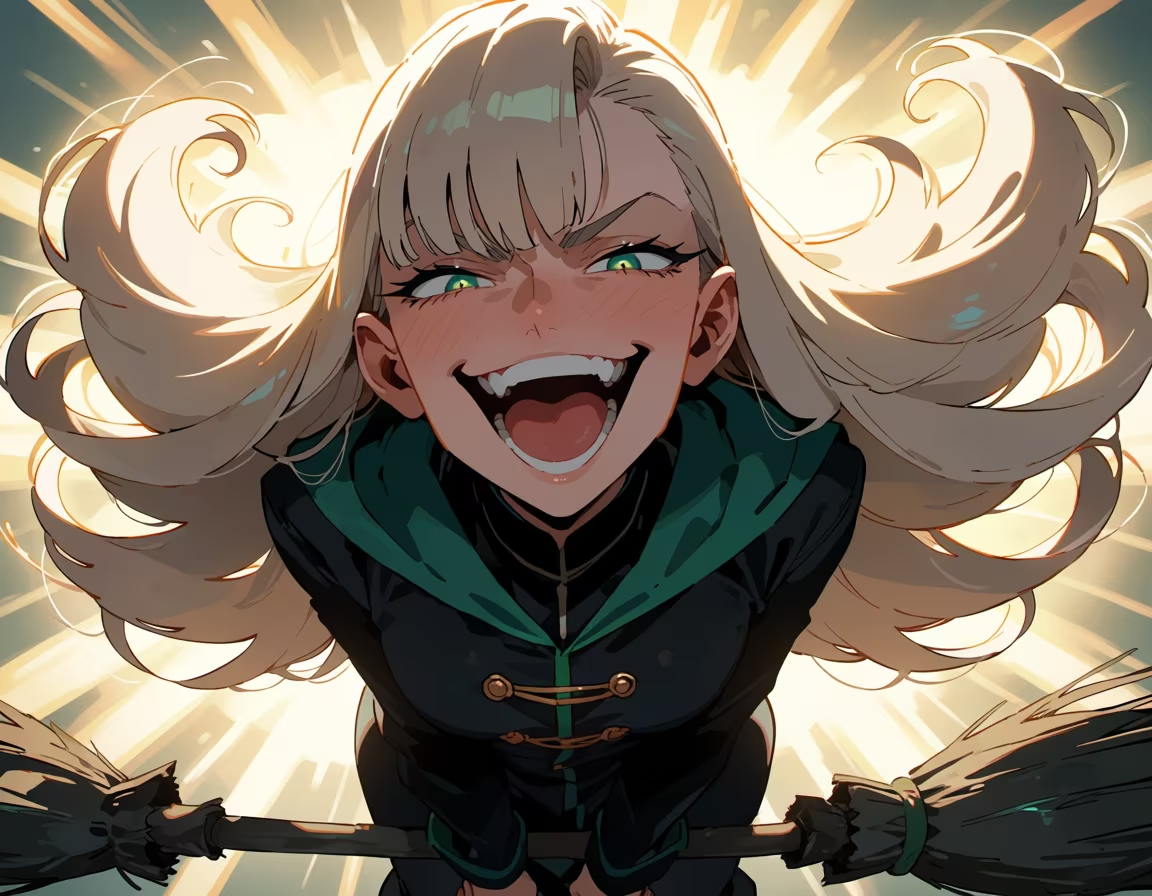
Draconia smoothed a stray tendril of her brilliant blond hair—the strands, thick and heavy, seemed to catch the emerald light and refract it into liquid silver. She hated that the light always seemed to favour him.
He is entirely too buoyant, she thought, a familiar wave of profound annoyance washing over her. A Gryffindor should be moody. A Gryffindor should possess a certain necessary level of brooding self-loathing. He should acknowledge the sheer, crushing weight of expectation that is placed upon his diminutive frame, and accept it with a suitably dramatic sigh.
Yet, instead, he had managed a grin—a blinding, utterly undeserved flash of white teeth—and waved to a cluster of gaping first-years, his red hair seeming to defy gravity and sense alike.
“Idiot,” she murmured, the word barely disturbing the still air of the common room.
But the annoyance felt… insufficient. It felt thin, like a cheap silk glove over something much harder and more vibrant. It felt like the preliminary stage of something rather dangerous.
She recalled the moment she had seen him today, after the feast. He had been speaking with Ron Weasley near the entrance to the dungeons, looking somewhat flushed, clearly still riding the crest of adrenaline. And he had been kind to Ron. Not the patronizing, ‘poor little Weasley’ kindness, but genuine, empathetic acknowledgement of his fear. He had squeezed Ron’s shoulder, a brief, solid gesture that spoke volumes.
He is not merely a golden-haired, lucky brute, Draconia mused, tapping a perfectly manicured nail against the parchment. He possesses… rudimentary empathy. A baffling, almost irritating capacity for genuine concern.
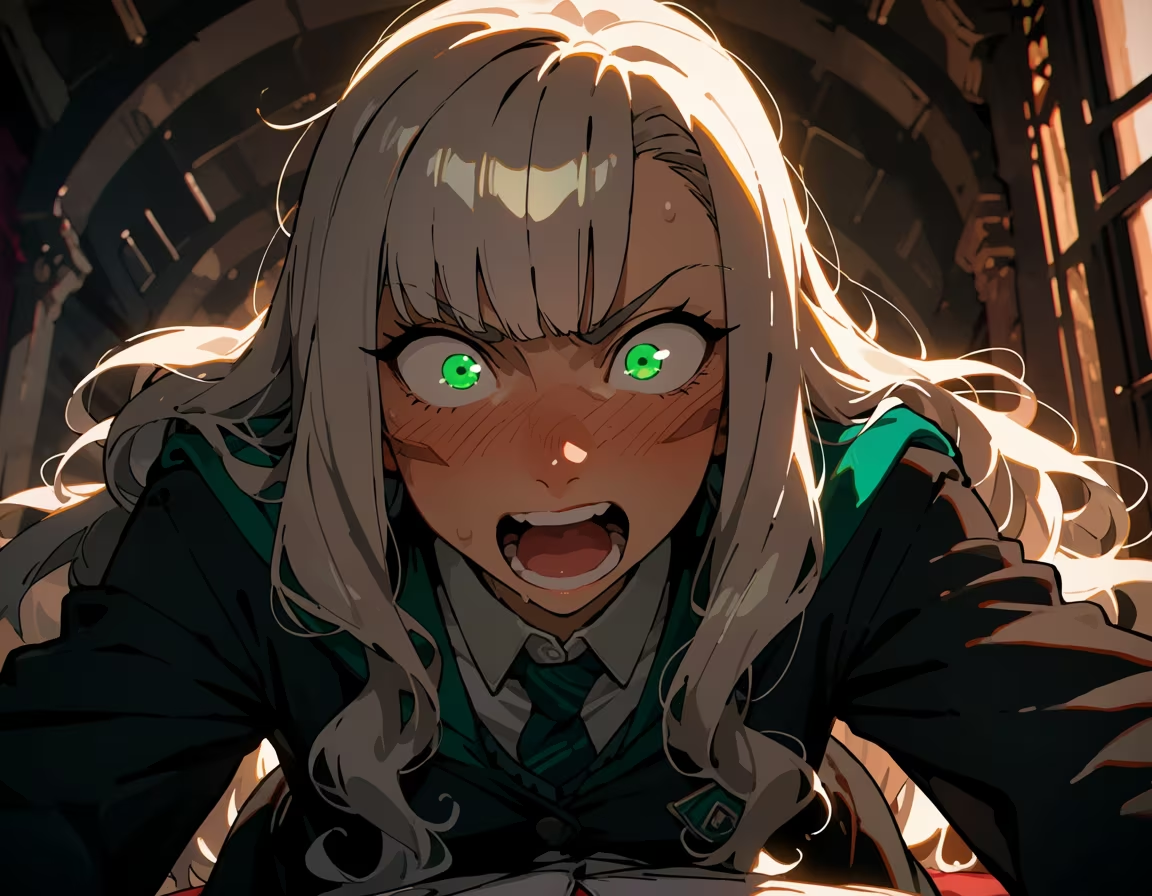
She shifted in her seat, drawing her knees up slightly, causing the heavy fabric of her robes to rustle like dry leaves. This was the subtle but devastating shift in her feelings: the annoyance was beginning to acquire a sharp, inquisitive edge. She was no longer simply annoyed by his existence; she was studying it. She was dissecting his motivations, trying to find the inherent flaw, the hidden weakness she could exploit, the single crack in the formidable façade of ‘Harry Potter, Saviour of the Wizarding World.’
She remembered her own reaction when she had watched him today. She had been ready with a withering comment—something about Gryffindor incompetence or the questionable genetic quality of Weasley offspring—but instead, a strange, hot wave of… something had risen up, momentarily choking the insult in her throat. It wasn't admiration yet, not quite. Admiration implied respect; she was still operating on the principle of mutual antagonism. But it was something warmer, something that felt disturbingly like acknowledgement.
It is intrigue, she decided, finally allowing herself to name the emotion. A maddening, frustrating intrigue.
She watched the fire crackle, imagining the fiery intensity of his emerald gaze—a colour so startlingly bright against his messy, tousled hair that it seemed to defy the earthy greens of Slytherin. Her own eyes, typically guarded and cool, felt a peculiar flicker of warmth, a reflex action she despised.
“He thinks he is so superior,” she whispered, a small, cynical smile touching the corner of her mouth. “The Boy Who Lived. The Champion. The paragon of virtue.”
But then, the image flashed again: the way his brow furrowed slightly when he was concentrating, the slight hesitation before he offered a compliment, the almost stubborn set of his jaw when he was challenged. He wasn't just good ; he was stubbornly, gloriously persistent .
She felt a spike of sheer, visceral frustration. Why couldn’t he be flawed? Why couldn’t he be delightfully, magnificently self-absorbed? Why did he seem intent on being the perfect foil to her own carefully constructed, superior disdain?
The frustration, however, was not purely negative. It was laced with a heady, dangerous sweetness. It was the feeling one gets when one is cornered by a beautiful, unyielding wild animal—one wants to lash out, but one is utterly fascinated by the sheer power held in its gaze.
If he is perfect, she thought, leaning closer to the book as if the words themselves could offer some logical counter-argument, then I must be the necessary imperfection.
This was the foundation of her evolving feelings. She needed him to be flawed so that she, Draconia Malfoid, could be the one to discover it, to critique it, and ultimately, to claim it.
A soft thump interrupted her internal monologue. Harry, having apparently exhausted his social obligations for the moment, was passing through the main archway leading into the common room proper. He paused, catching sight of her, and offered a small, hesitant wave.
Draconia felt a distinct tightening in her chest, a sensation akin to a trapped bird fluttering against the cage of her ribs. Her practiced expression of aloof disdain nearly wavered.
He looked tired. The glamour of the feast had worn off, revealing the sheer exhaustion underneath—the strain of the tournaments, the pressure, the constant vigilance. His eyes, those remarkable green eyes, swept across the room, momentarily locking onto hers.
There was no dazzling bravado in that moment, no triumphant smirk. There was only a brief, unguarded moment of connection.
And in that instant, the annoyance curdled into something much more complex. The intrigue sharpened into a definite, glittering point of focus. Ah, she thought, her breath catching slightly. There it is. The fatigue beneath the fanfare.
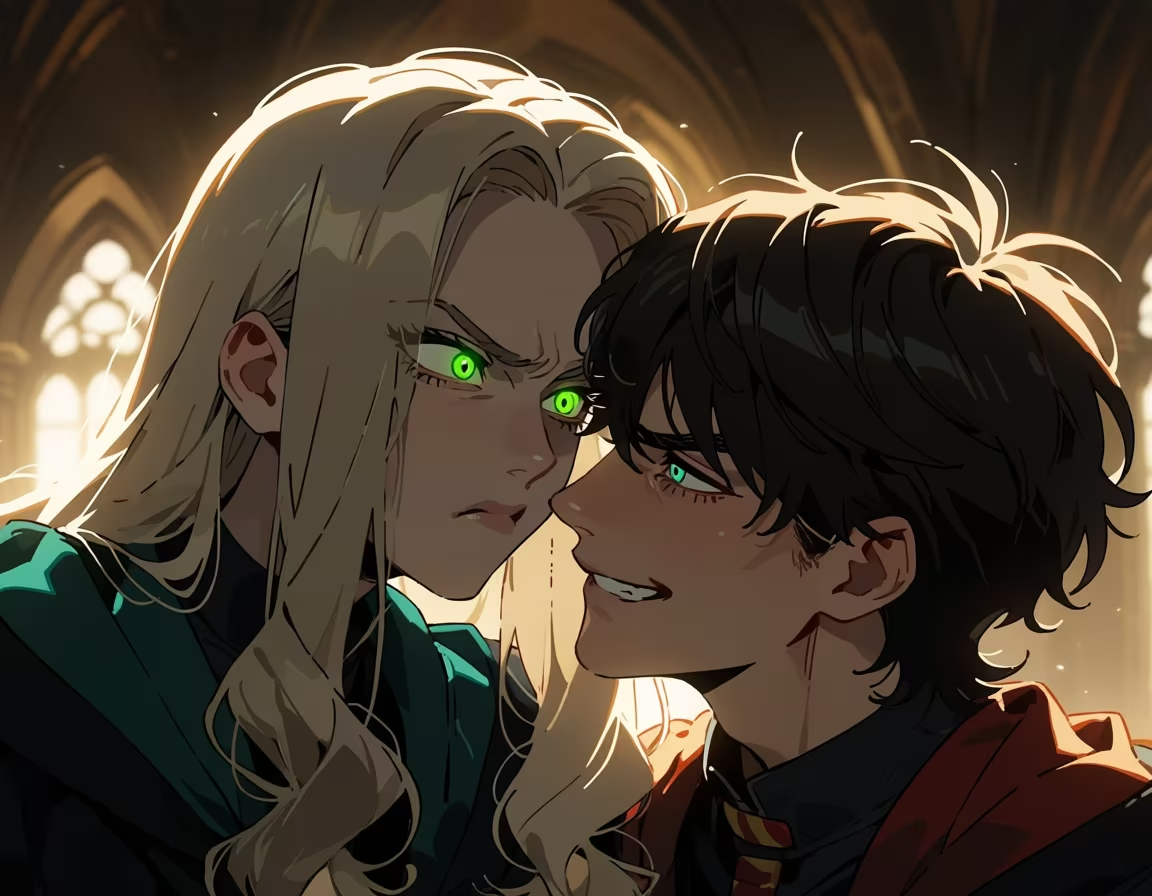
She held his gaze, refusing to break it first, a silent, emerald-on-green duel unfolding across the polished stone. She felt an overwhelming urge to sneer, to deliver a biting assessment of his Gryffindor heroism. But the urge was momentarily overridden by a far more potent impulse: the need to assess .
She assessed his tired shoulders, the way his lips pressed into a thin line of resolve, the faint dusting of soot still clinging to the cuff of his jumper from the dragon’s lair.
He is handsome, the thought intruded, unbidden and shocking, like a rogue Bludger hitting her squarely in the ribs. Unfairly handsome. Like a well-loved, slightly battered portrait of a glorious, chaotic beast.
Her lip curled, but this time, it was not a pure snarl of derision. It was a nuanced expression, a tight, reluctant acknowledgment of undeniable appeal.
The annoyance was still present—a prickly defense mechanism, a necessary anchor—but it was no longer dominating. It was now a protective layer draped over a core of burgeoning fascination. She was annoyed that he was so relentlessly likable , but she was utterly, thrillingly intrigued by why he was so likable.
Harry’s smile finally returned, softer this time, acknowledging the depth of her scrutiny. He gave a slight, almost apologetic dip of his head.
Draconia slowly allowed her own lips to curve, a minute movement that would go unnoticed by anyone less attuned to her nuances—Ron, likely, or perhaps Hermione, who would be practically vibrating with academic curiosity about the interaction.
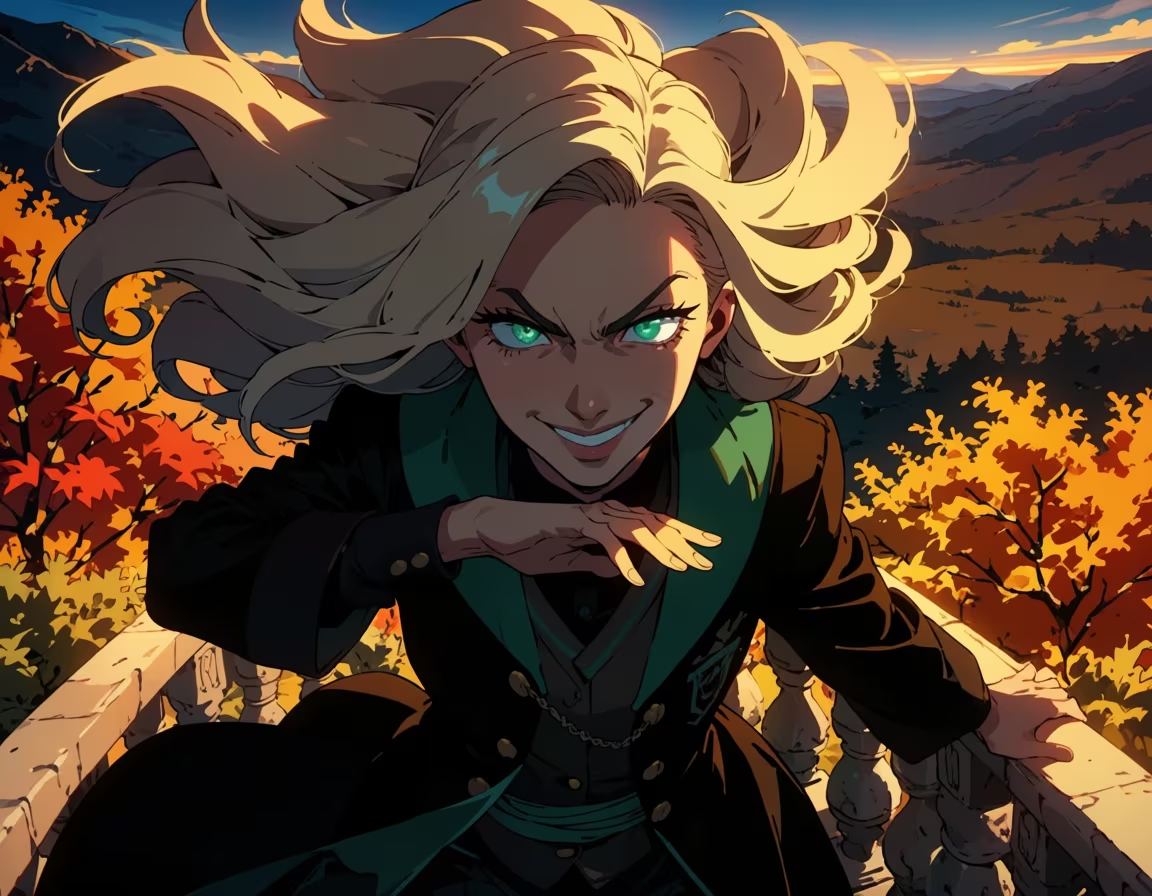
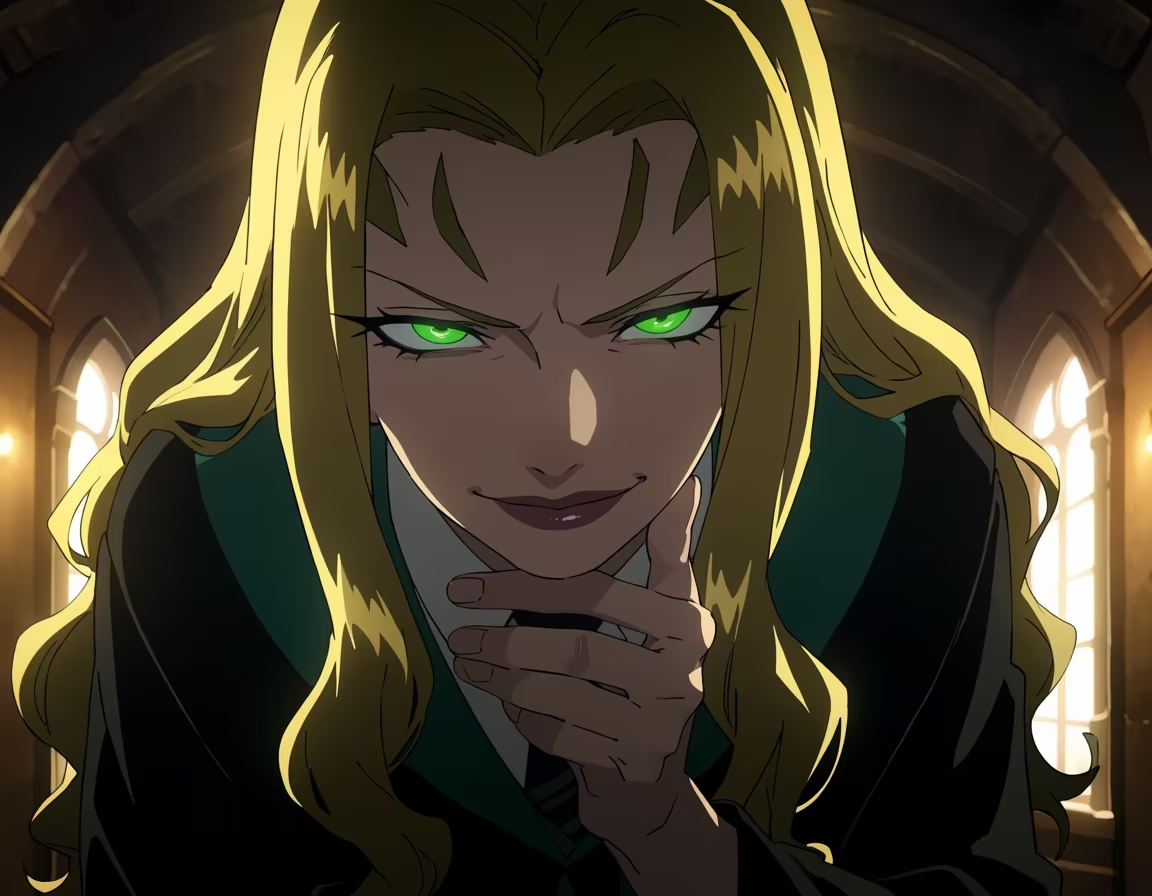
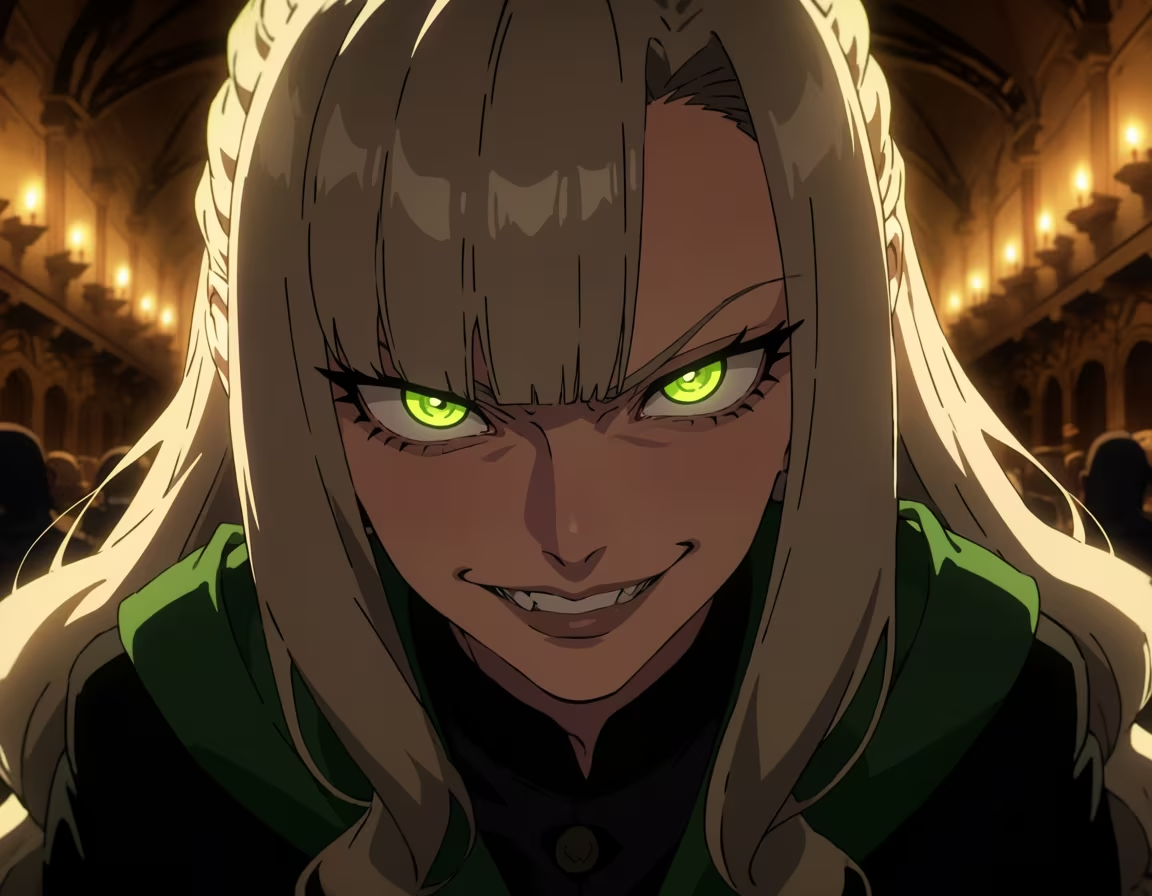
It was less of a smile, and more of a predatory softening.
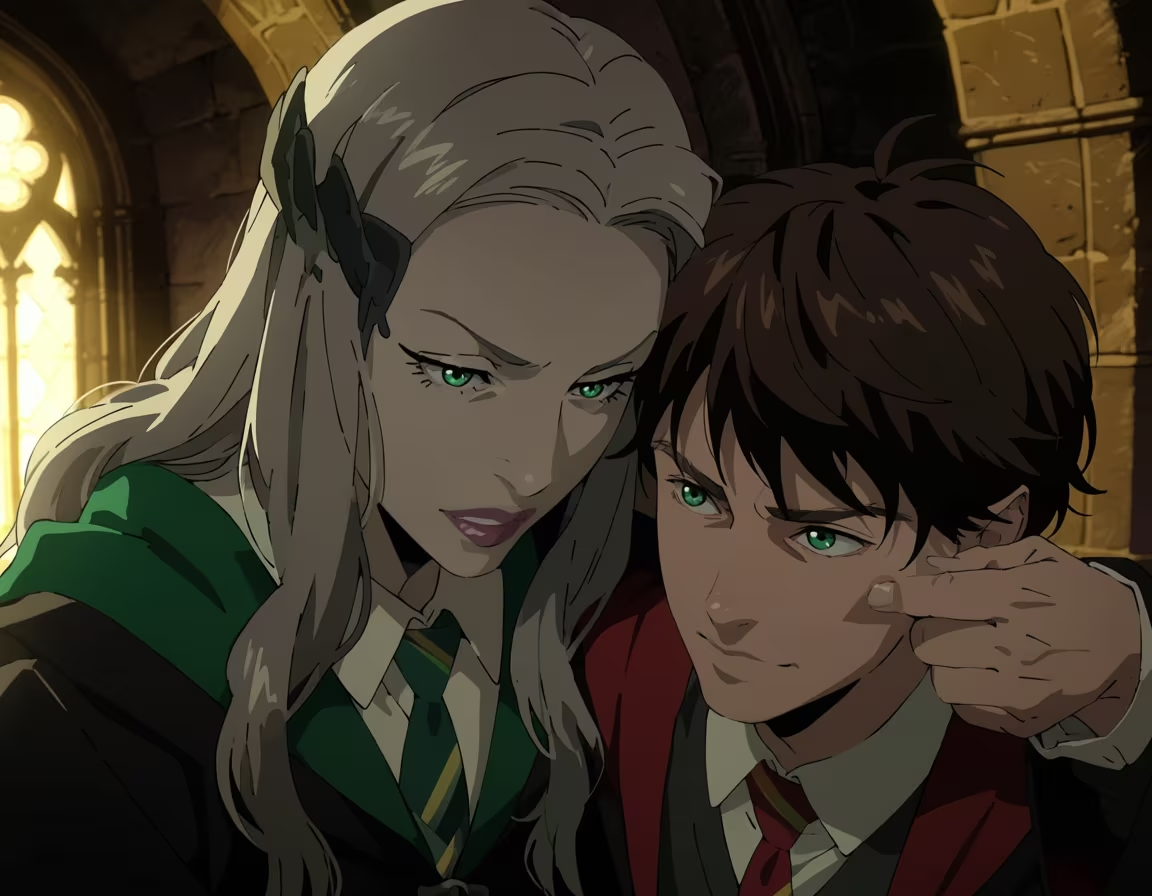
“Potter,” she acknowledged, the sound a low, resonant hum in the quiet common room, perfectly pitched to carry across the distance. “Still clinging to the façade of perpetual sunshine, are we?”
His eyes widened slightly, a flicker of that familiar defensiveness sparking in them, but he did not retreat. He met the challenge head-on.
“Someone has to keep the mood light, Malfoid,” he countered, his voice surprisingly steady, lacking the usual breathless exuberance. “If everyone were constantly brooding, we’d have to resort to Parseltongue just to get through the House meetings.”
She permitted a low, throaty chuckle to escape her. He has a wit, she realized with a jolt of internal surprise. A truly sharp, defensive wit.
“And yet,” she countered, letting the word hang between them, heavy with implication, “your efforts to maintain that buoyancy often feel more like frantic, desperate performance.”
Harry seemed to consider this, his green eyes darkening slightly as he processed the barb. He didn't argue immediately. He simply looked at her, really looked at her—at the severity of her expression, the elegant curve of her neck, the unmistakable green fire in her own eyes.
And in that prolonged moment, Draconia felt the final, decisive shift. The antagonism was no longer the primary emotion. The frustration had been channeled, the suspicion had been tested, and the curiosity had won.
She felt a blush, faint and ridiculously embarrassing, creep up her neck, staining her pale skin with a delicate flush of Slytherin green. It was the closest she ever came to admitting weakness.
Fondness, she registered, a dizzying rush of warmth flooding her chest. A profound, almost alarming sense of fond annoyance.
She didn't want to dismiss him, not now. She wanted to keep him—to keep him challenging her, to keep him slightly out of reach, to keep him forcing her to feel this unsettling, delightful flutter in her stomach.
“Perhaps,” she conceded, finally allowing a genuine, if utterly reluctant, sliver of warmth to color her tone. “Perhaps. But don't mistake my assessment for approval, Potter. You are still an infuriatingly optimistic disaster.”
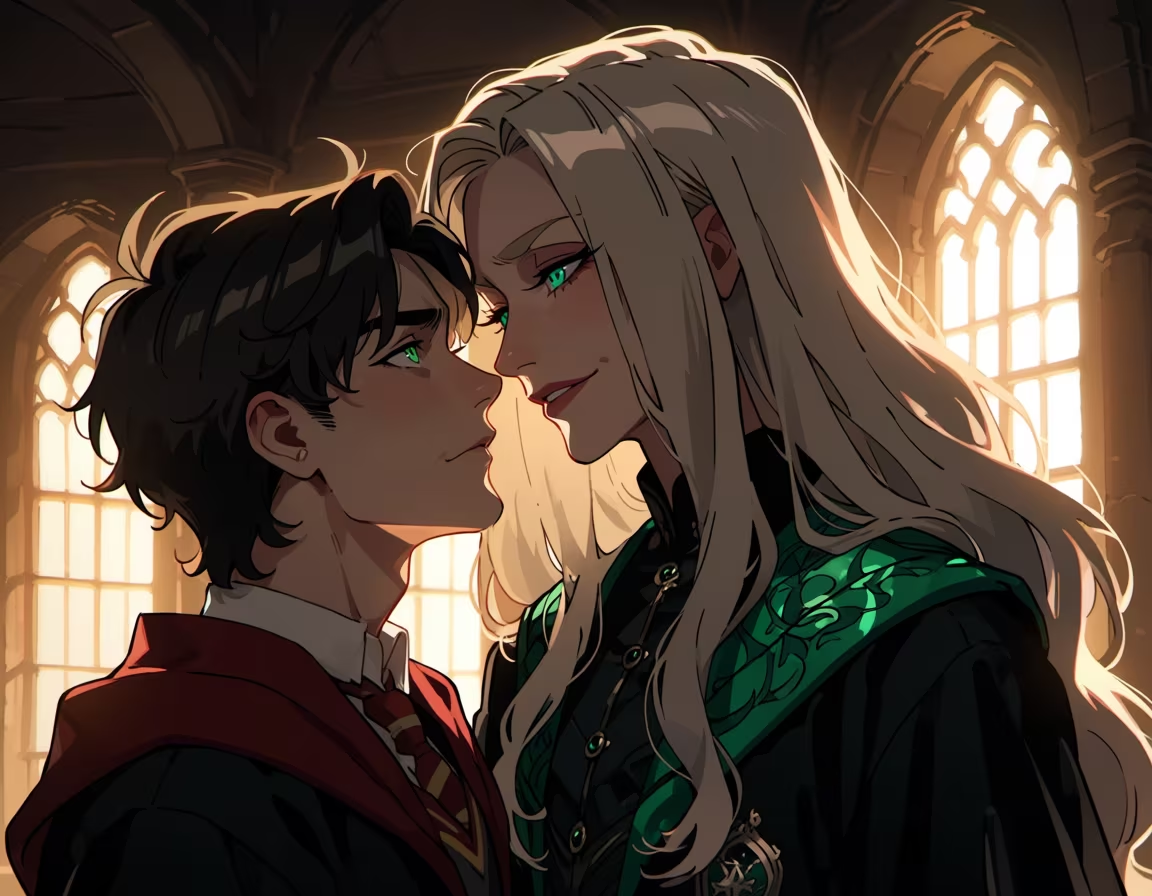
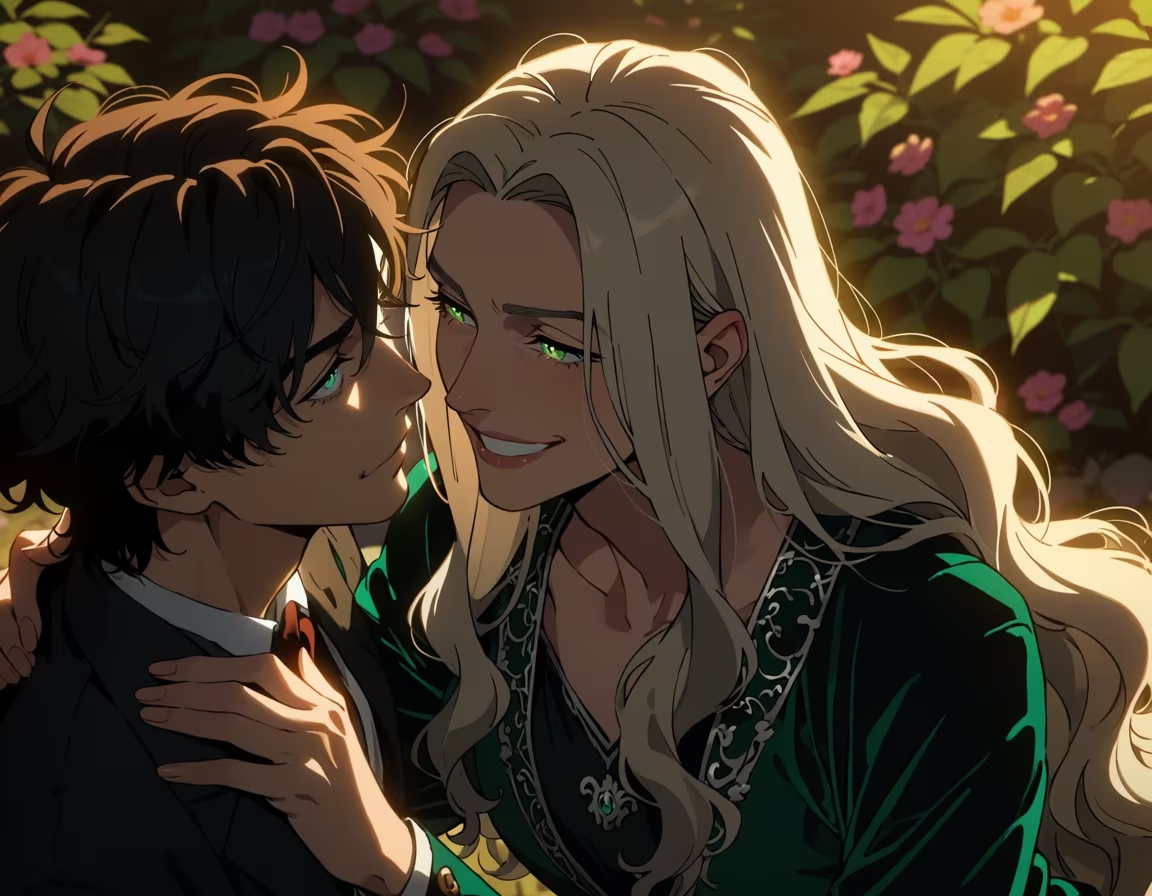
He finally allowed a full, easy smile to break across his face. This one wasn't for the crowd; it was for her. It was a conspiratorial, intimate gesture, as if he understood the intricate, messy landscape of her internal world far better than she understood it herself.
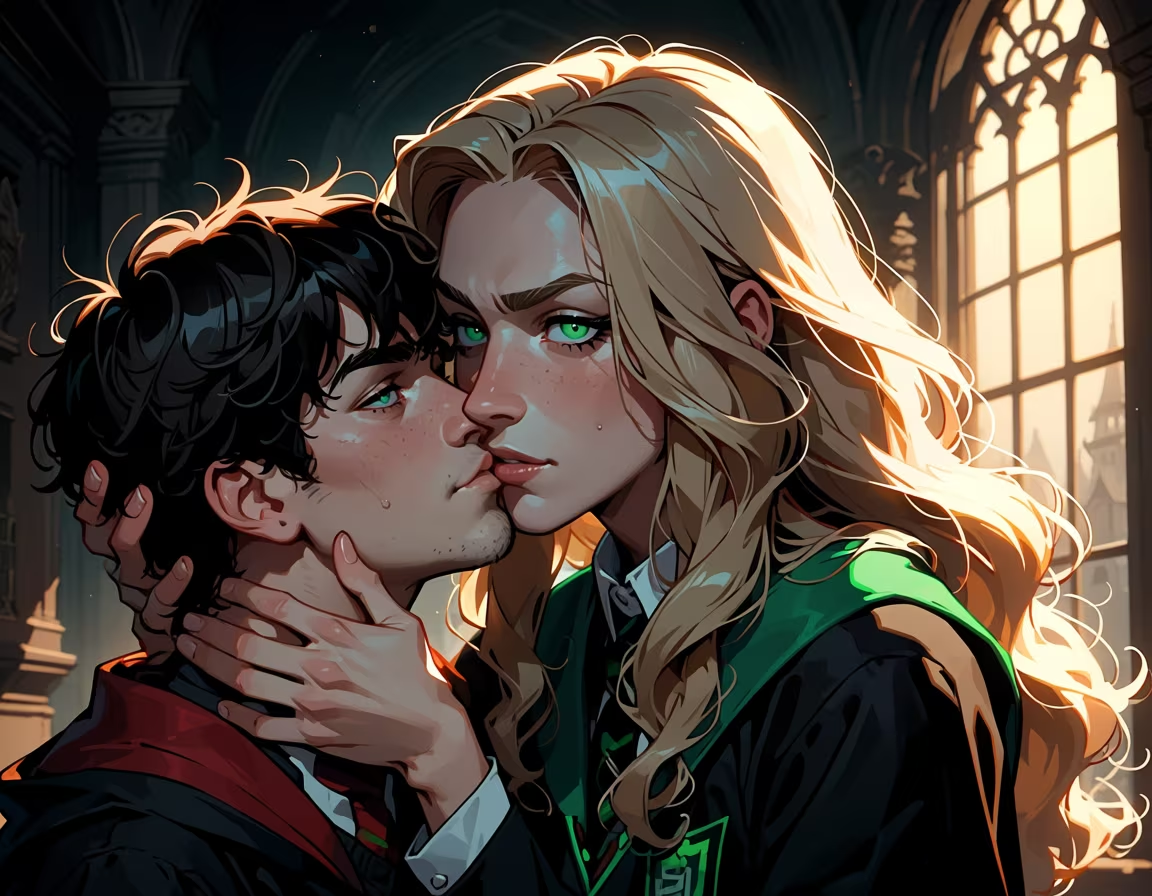
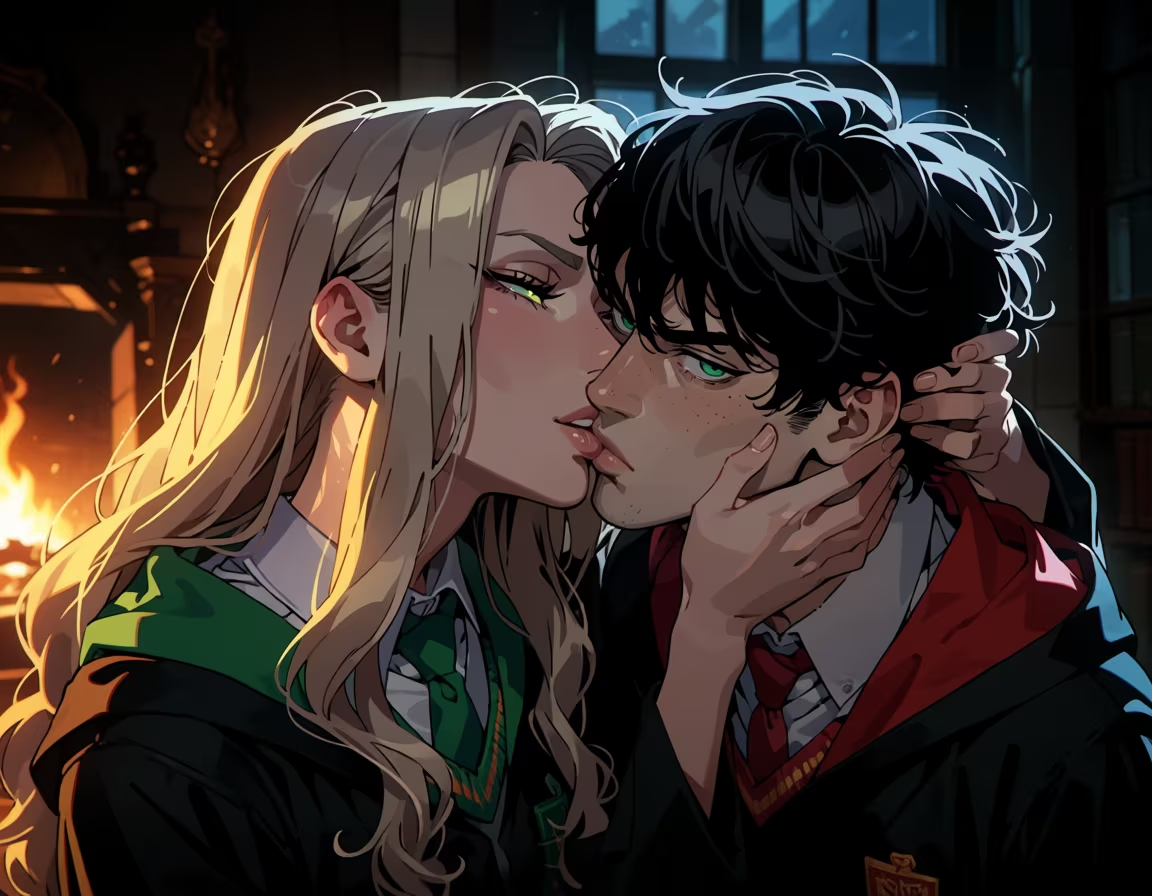
“And you, Malfoid,” Harry murmured, leaning in just a fraction, closing the distance between them by an agonizingly small margin. “You are a beautifully prickly disaster.”
The words hung there, a shared, secret verdict.
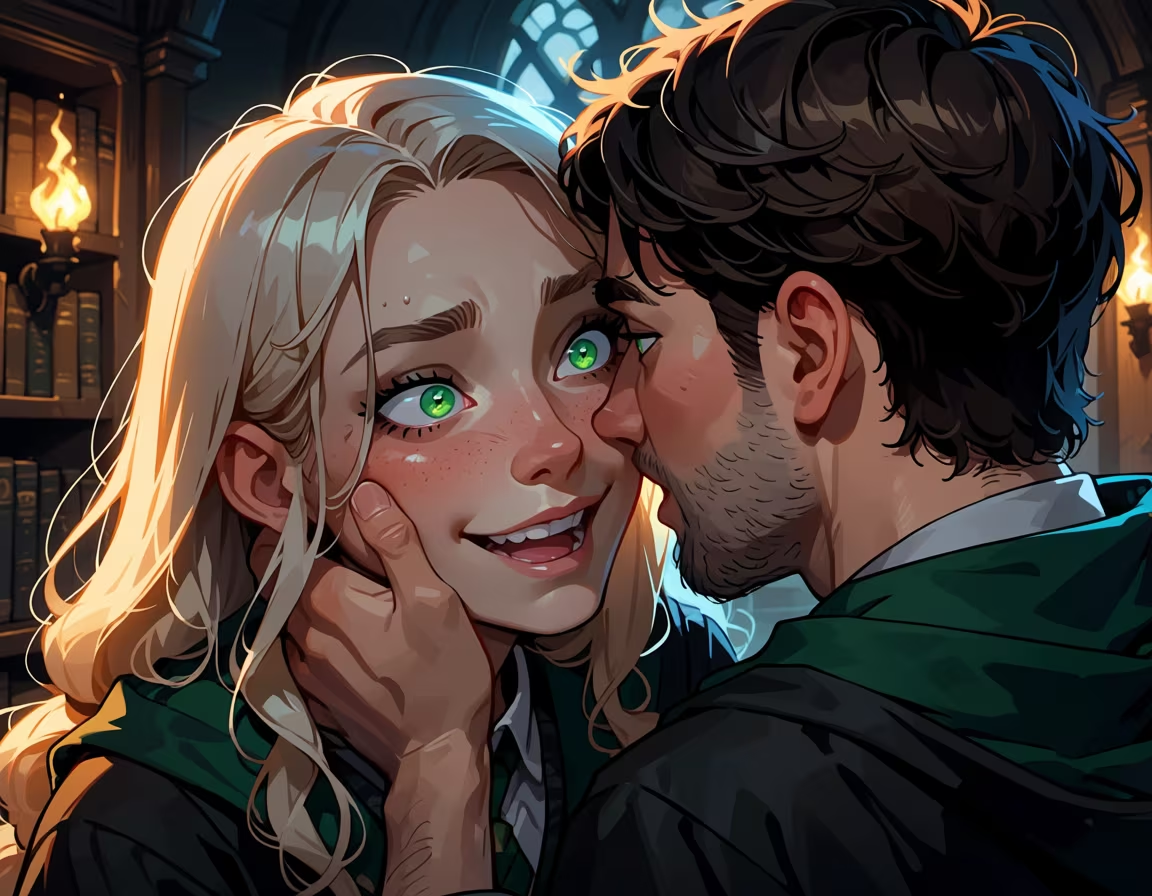
Draconia’s carefully constructed composure finally buckled. The annoyance—the beautiful, constant companion—was suddenly overcome by a surging, giddy rush of crush . The fondness intensified, blooming like a rare, venomous flower in the gloom.
She found herself wanting to push him away, to snap at him about his atrocious taste in robes, but instead, she did something entirely unplanned, entirely against the dictates of decades of Slytherin pride.
She tilted her chin up, meeting his gaze fully, and let a small, triumphant spark ignite in her own green eyes. The internal battle was over. For now, the fascination had won, and it felt dangerously, wonderfully intoxicating.
Yes, she thought, the realization ringing through her soul like the chime of an ancient, magical clock. This is not mere annoyance. This is… necessary obsession.