| Home | The Lives of Velnin | Illustrated Fiction | Malfoid Art & Fiction | Book Blurbs | Contact |
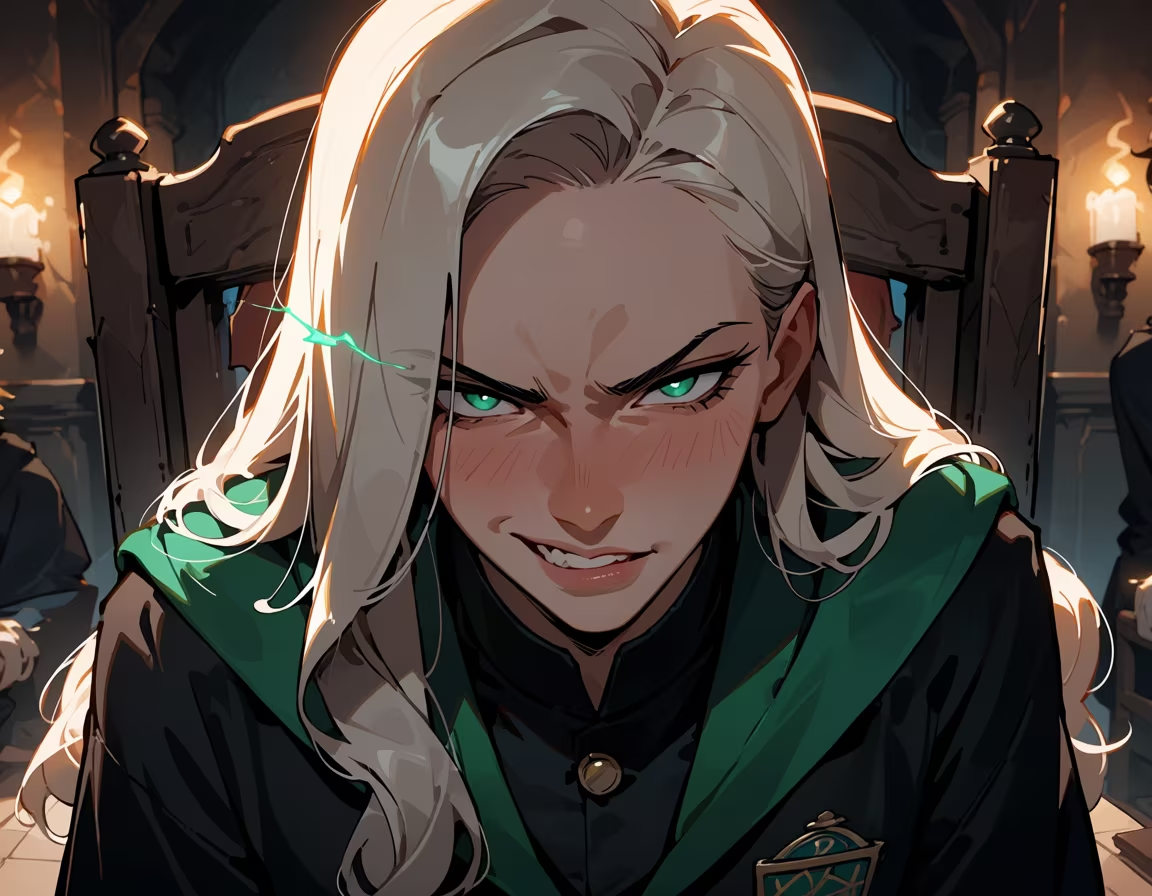
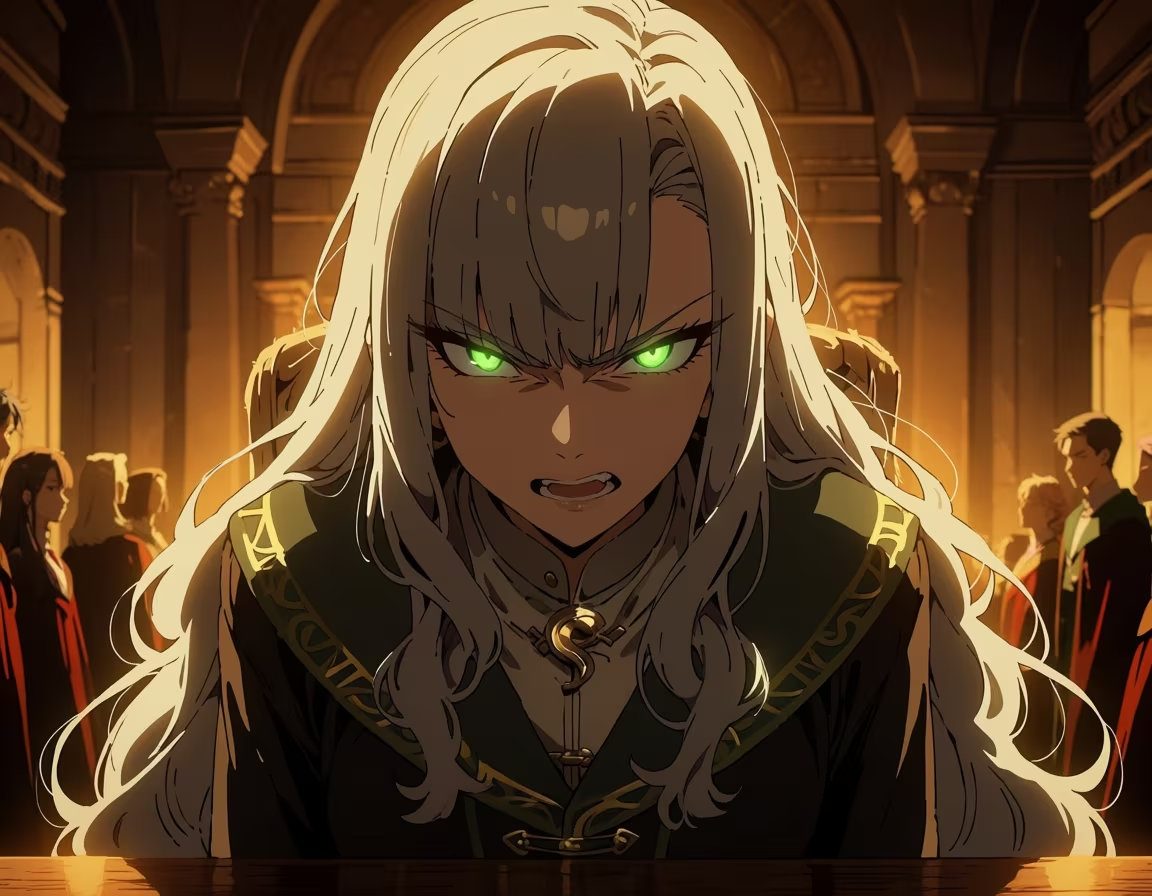
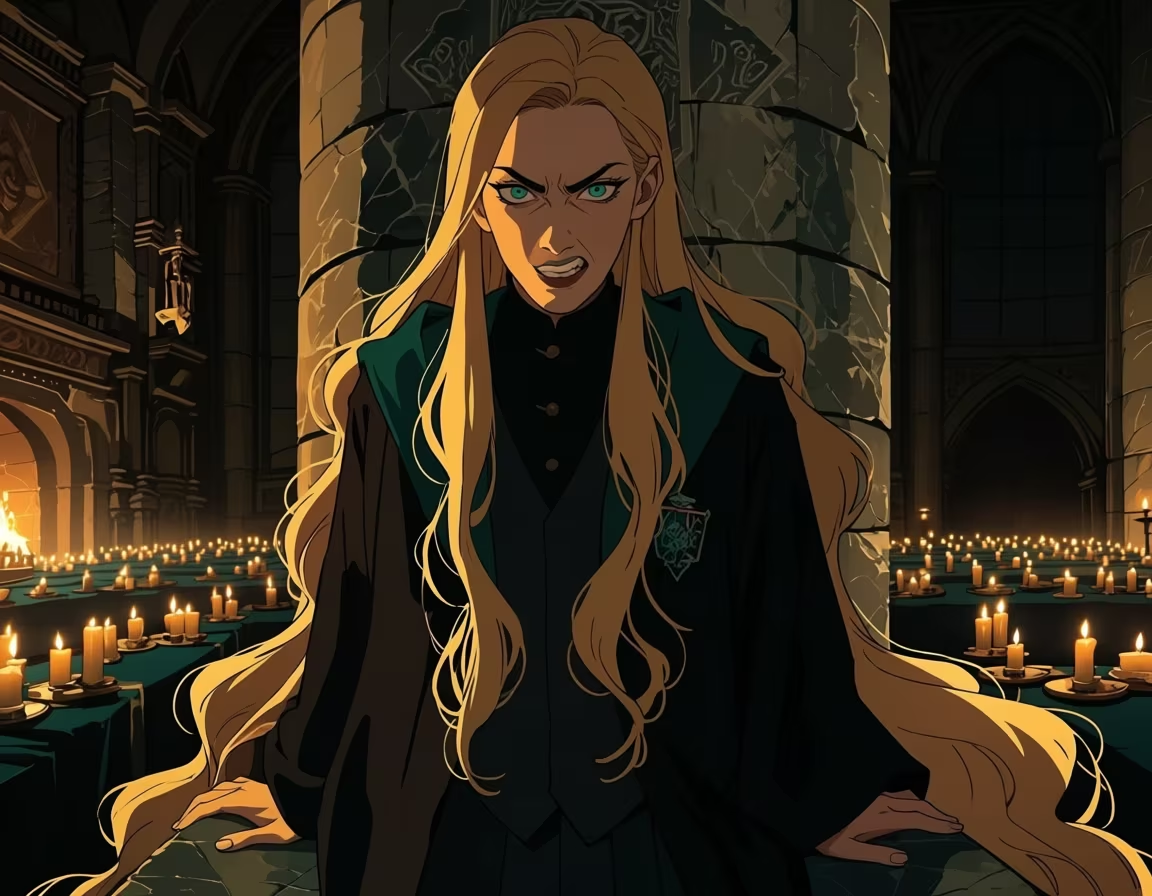
The Great Hall, on this particular evening, was not merely a chamber for dining; it was a theatre of impending doom, a gilded cavern echoing with the nervous, buzzing anticipation of hundreds of young witches and wizards. The candlelight, usually casting a warm, familiar amber glow, seemed tonight to possess a sharper, more judgmental brilliance, illuminating the ancient stonework and, most dramatically, casting deep, theatrical shadows across the Slytherin table.
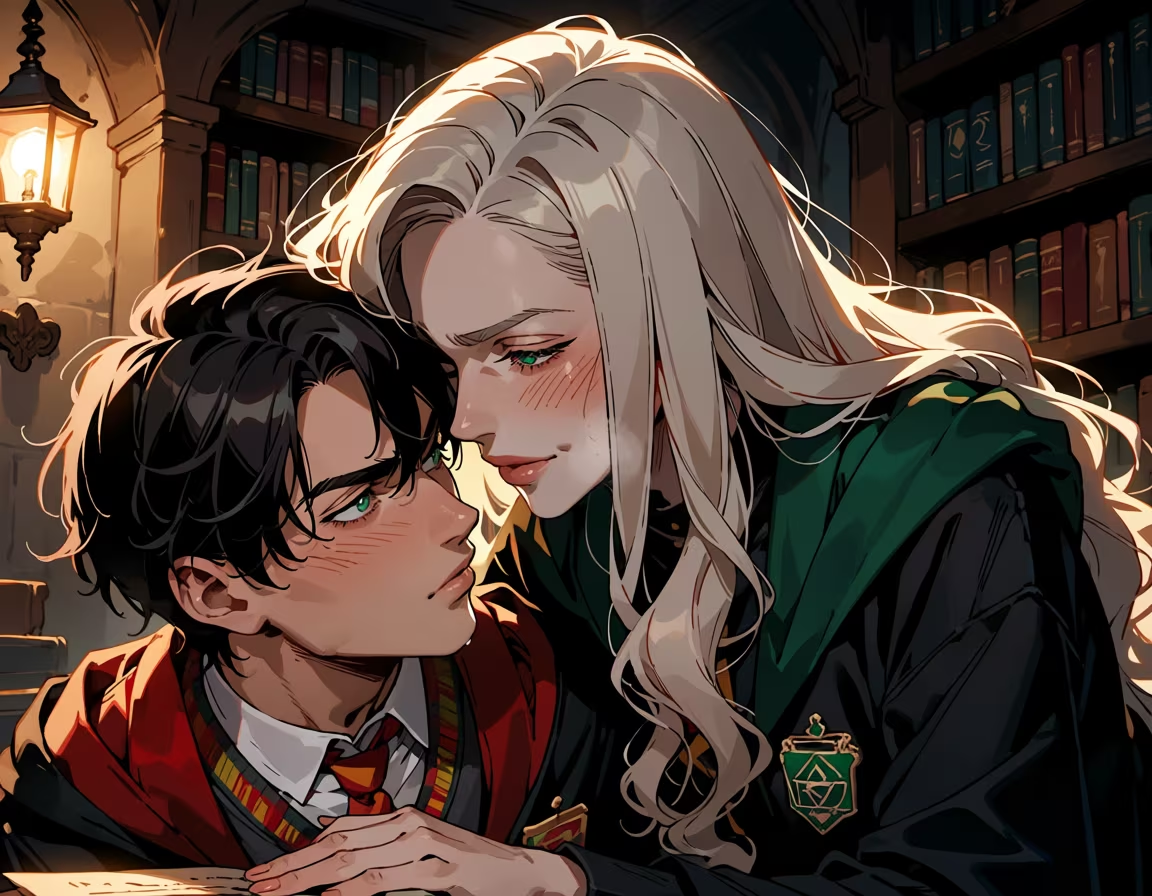
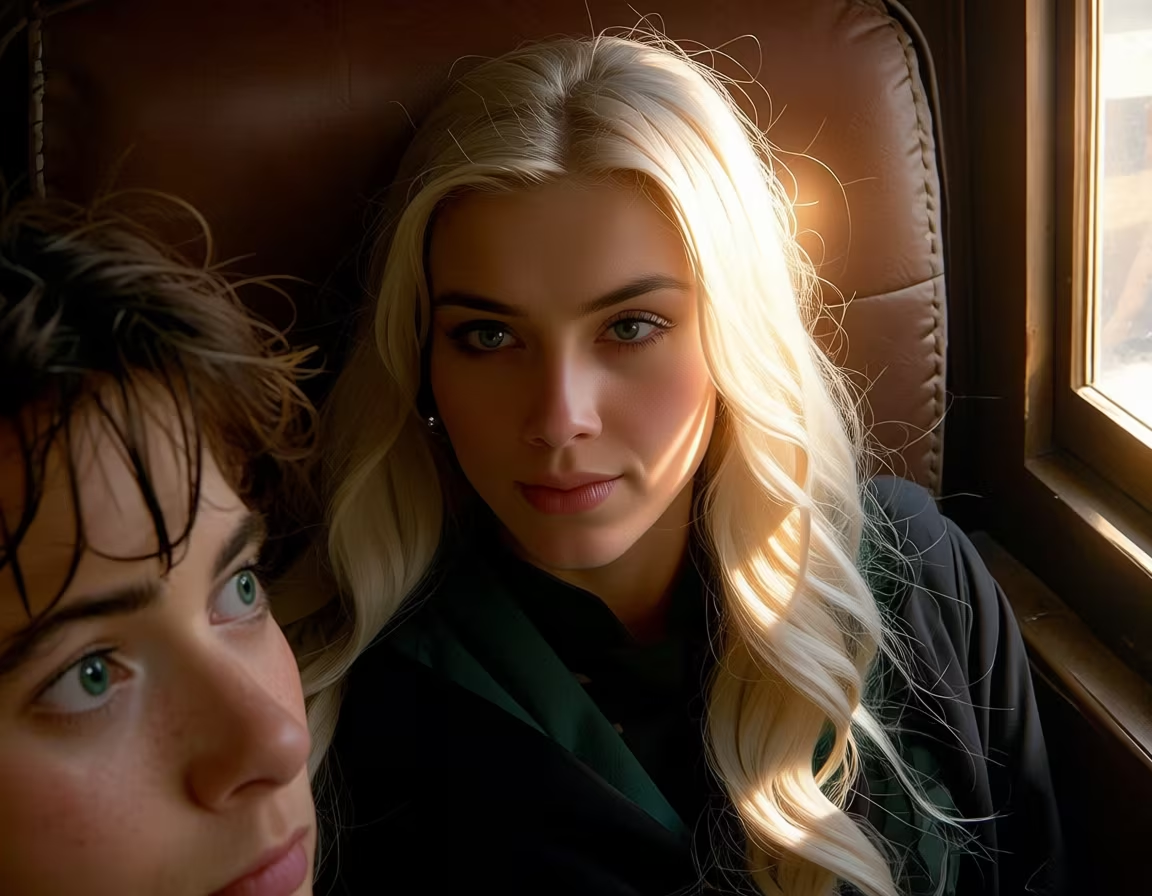
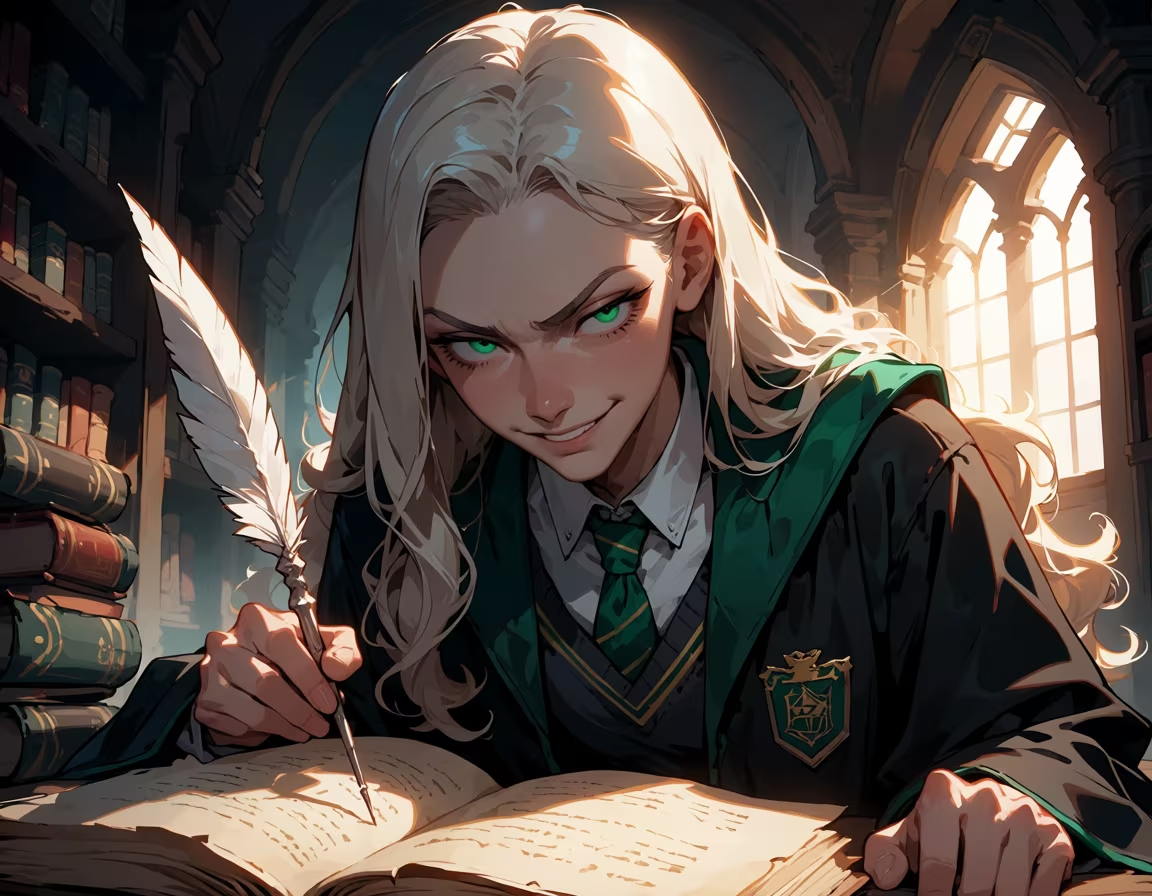
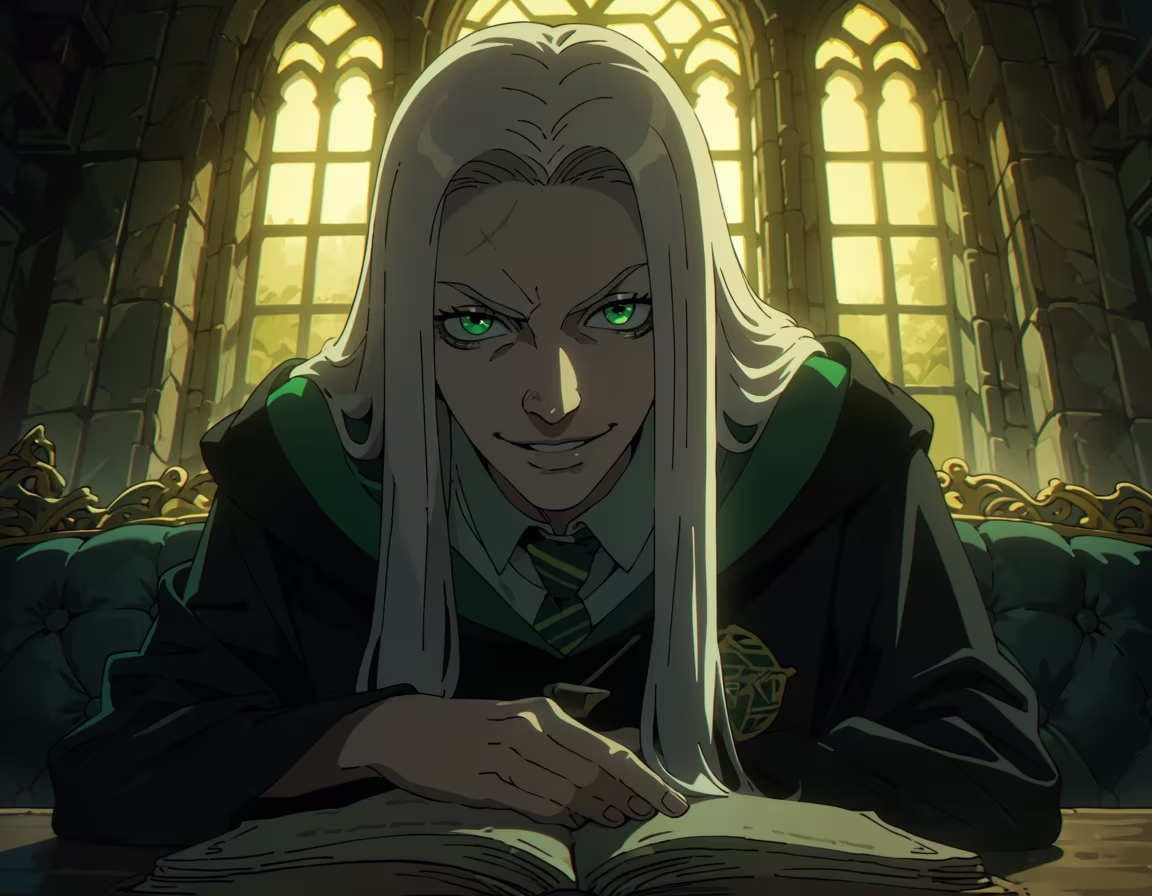
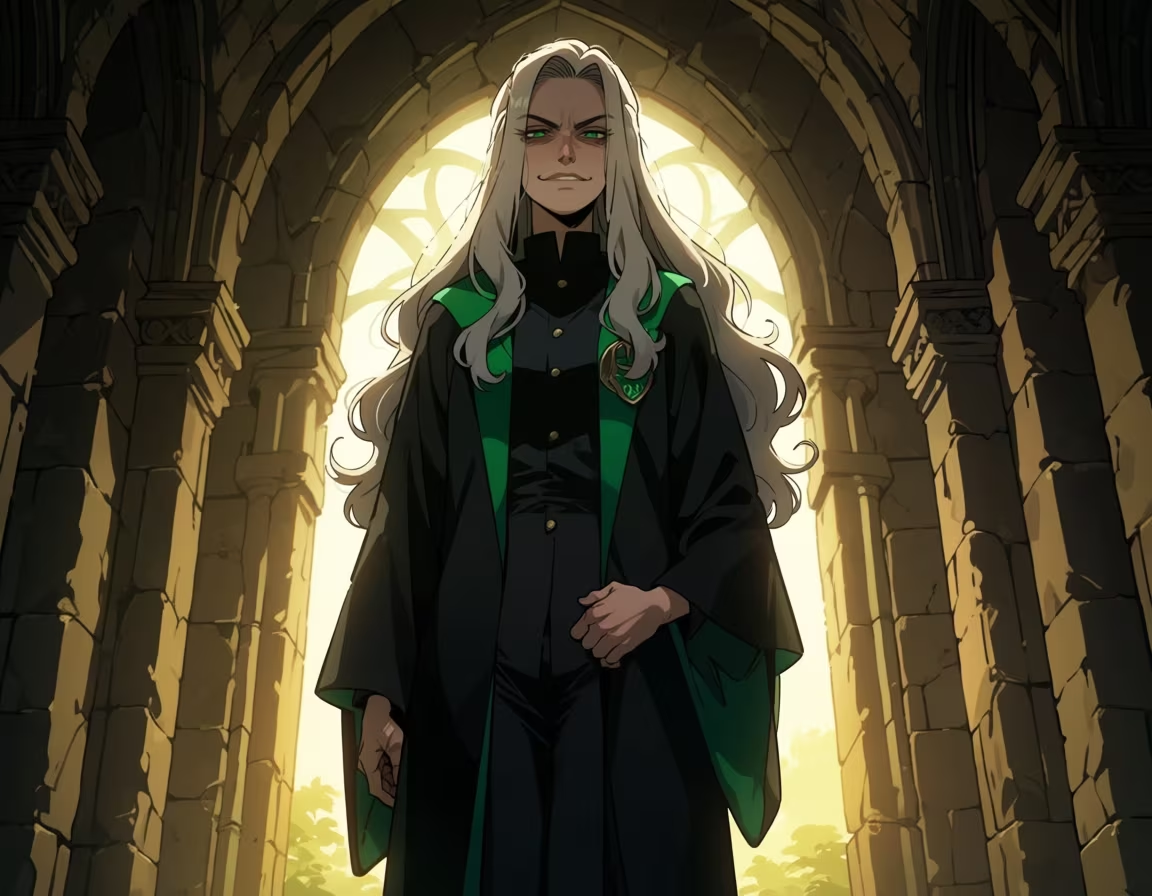
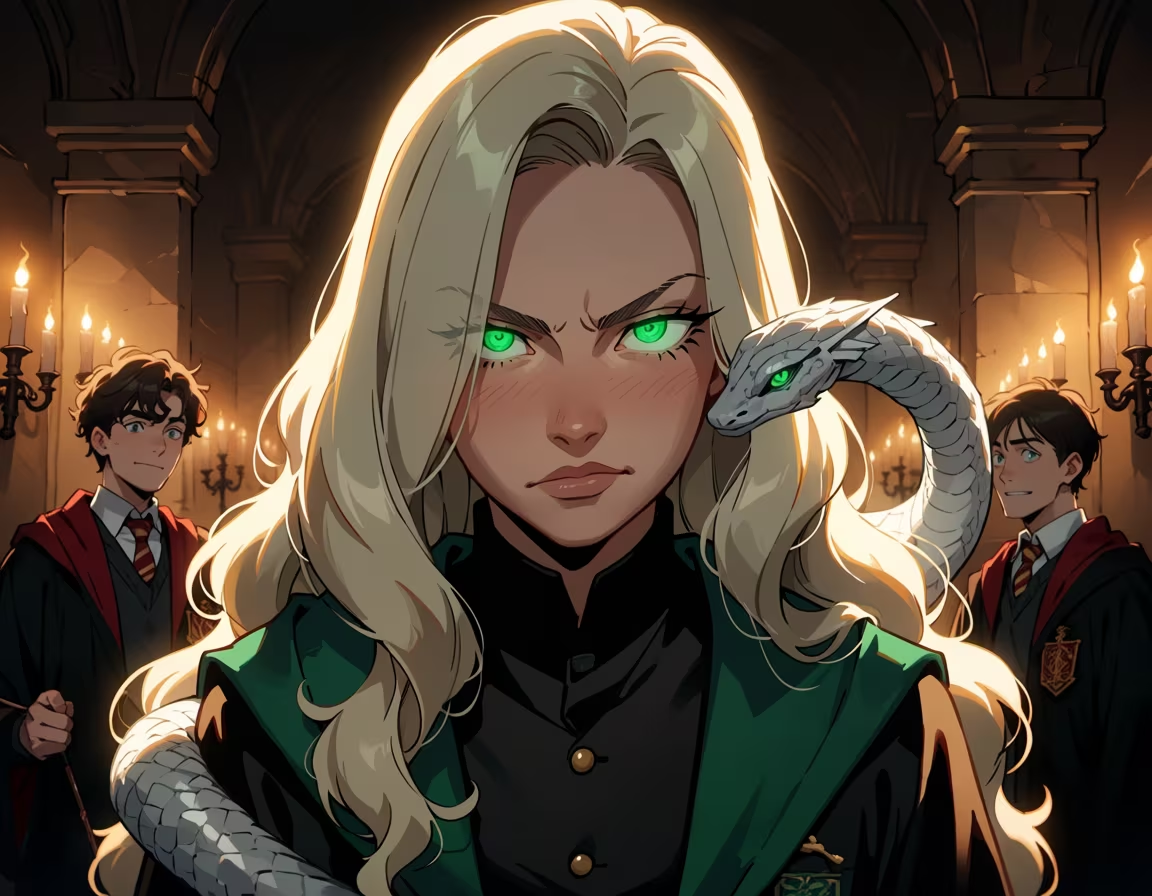
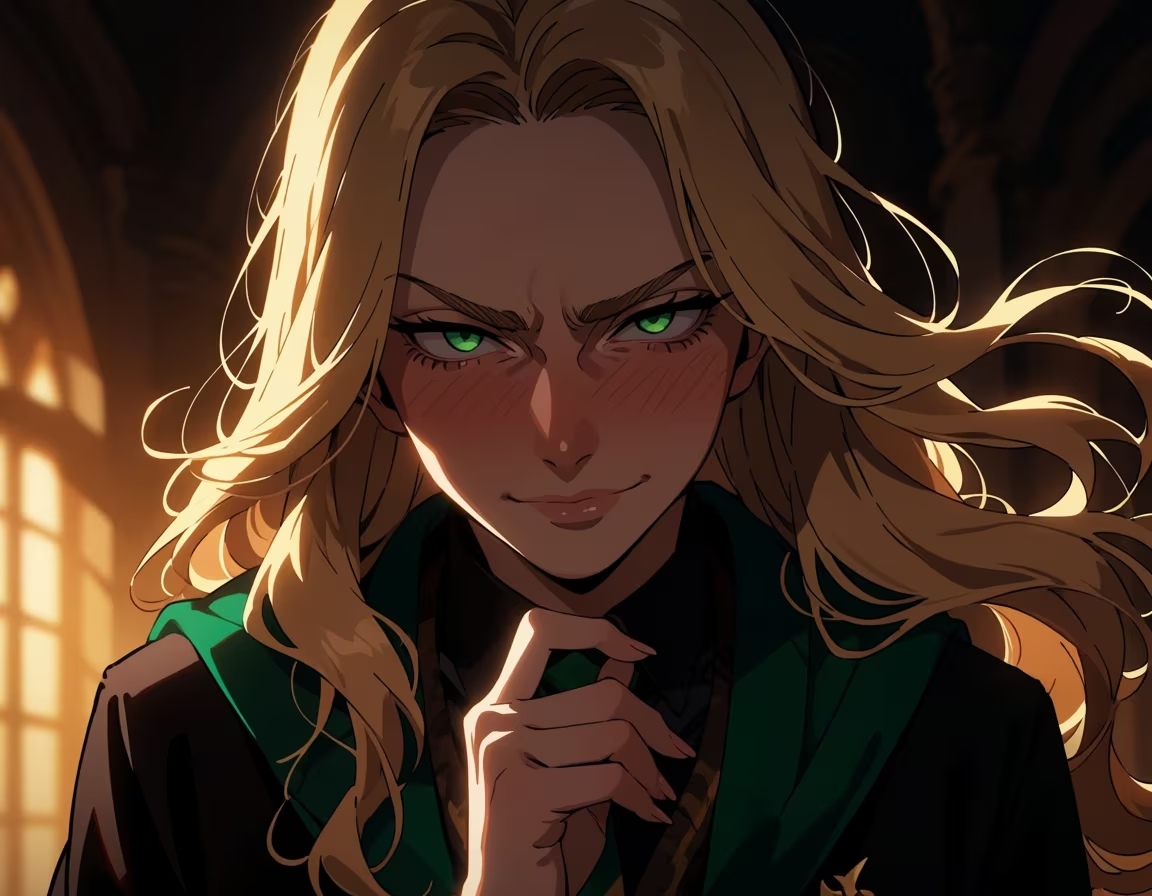
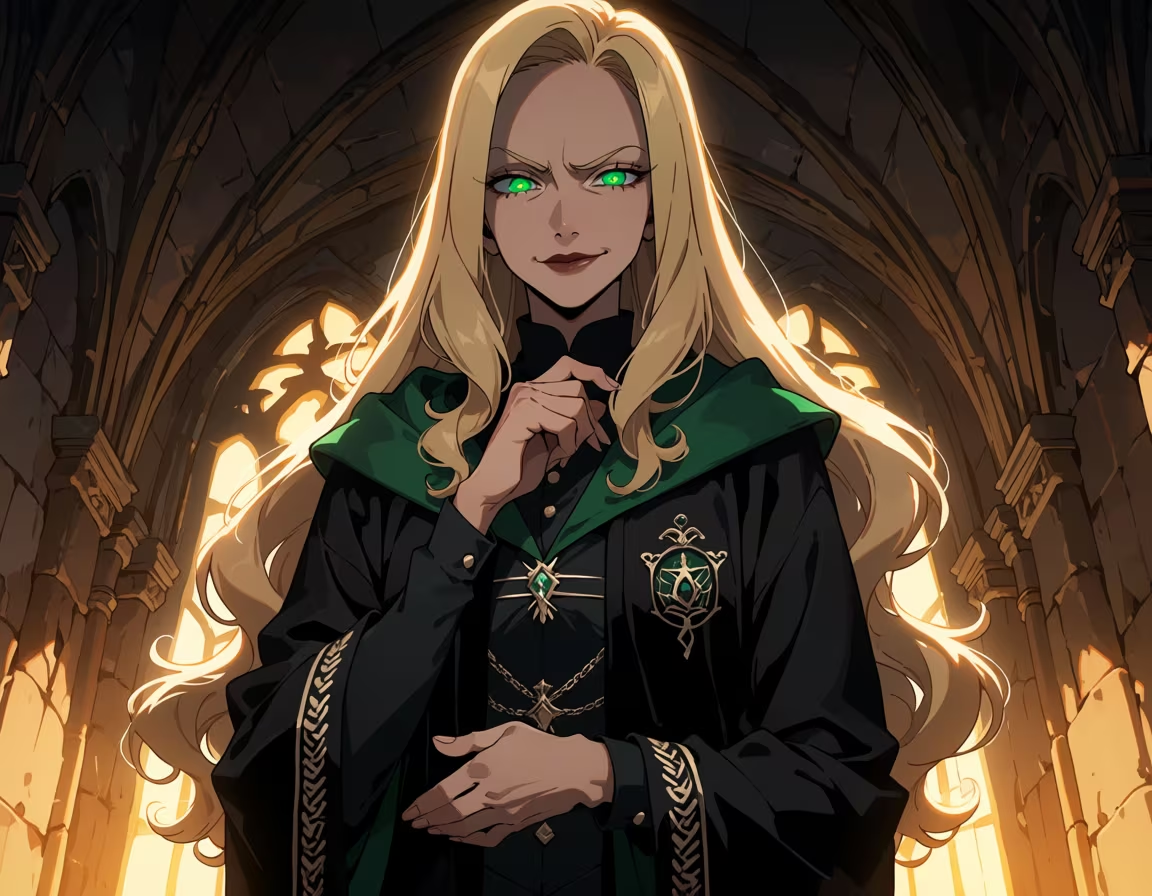
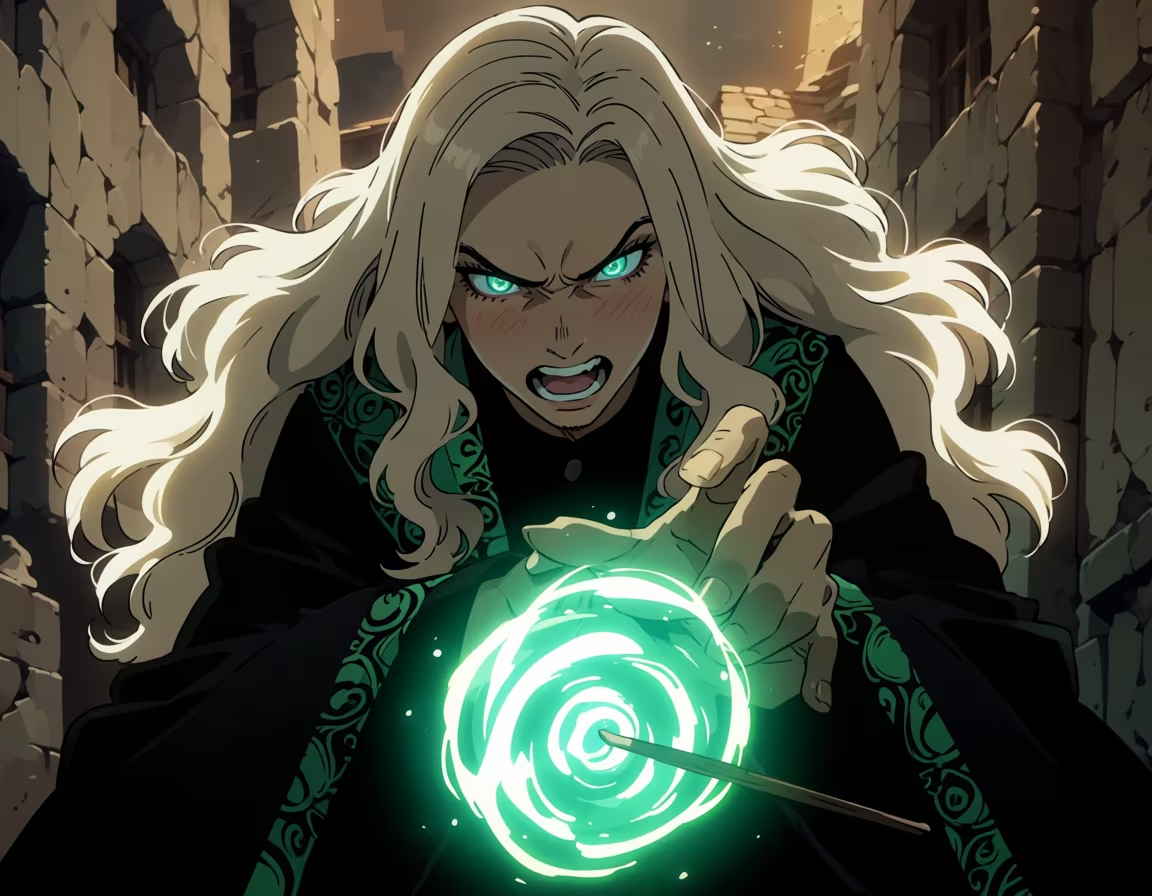
I sat ramrod straight, my spine perfectly aligned against the plush, emerald-green cushioning of my seat. My long, platinum-blonde hair, usually coiled into an elaborate, slightly severe cascade, fell forward over the black velvet of my robes, catching the light like spun moonlight. The green trim, the very colour of my House and, increasingly, the colour of my own volatile disposition, seemed to thrum with suppressed energy.
Across the sprawling expanse of the Hall, nestled comfortably amidst the boisterous, scarlet-clad Gryffindor contingent, was him . Harry Potter.
Even seated still, he managed to radiate a sort of unruly, incandescent energy. He looked irritatingly healthy, annoyingly resilient, and possessed the kind of bright, earnest jawline that suggested he believed in the inherent goodness of everything—a notion I found, frankly, exhausting.
My current prevailing emotion—the one that was currently battling a losing war against a burgeoning, utterly unwelcome flicker of fascination—was sheer, unadulterated annoyance .
Harry Potter. The Boy Who Lived. The Golden Boy. The bane of my meticulously ordered, highly pedigreed existence.
I watched him sip his pumpkin juice, his head tilting slightly as if absorbing the ambient noise of the Hall with some kind of rapt, heroic focus. As if it mattered . He acted as if every rustle of a cloak and every murmur of a conversation was a clue in the great, overarching narrative of his own destiny.
"Look at him," hissed Pansy Parkinson, nudging my arm with a perfectly manicured, slightly judgmental finger. "Preening like a particularly smug house-elf."
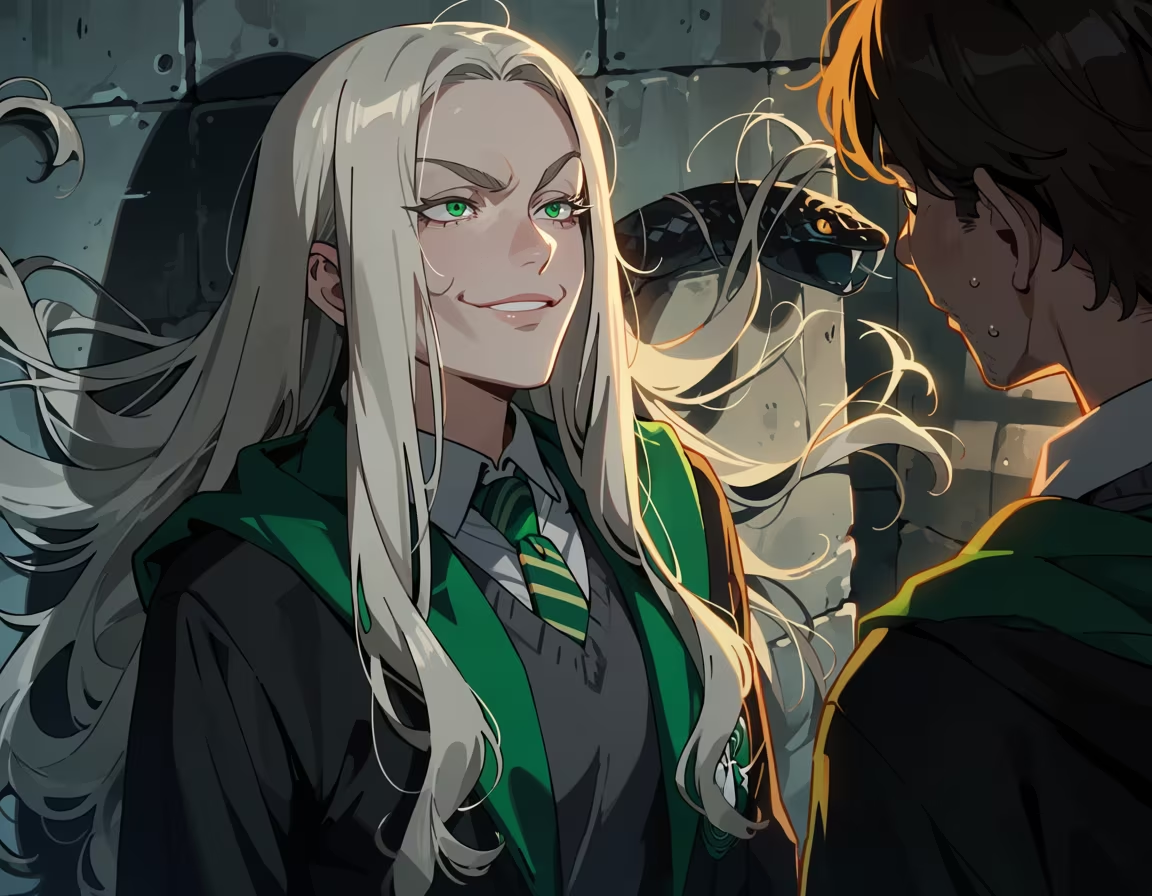
"He is not preening, Pansy," I murmured back, not moving my gaze from the Gryffindor table. "He is existing . And doing it far too loudly."
"But still," Theodore Nott added, leaning in conspiratorially, his voice a low, melodic drawl. "He seems... content. For a man perpetually surrounded by the smell of questionable stew and misplaced morality."
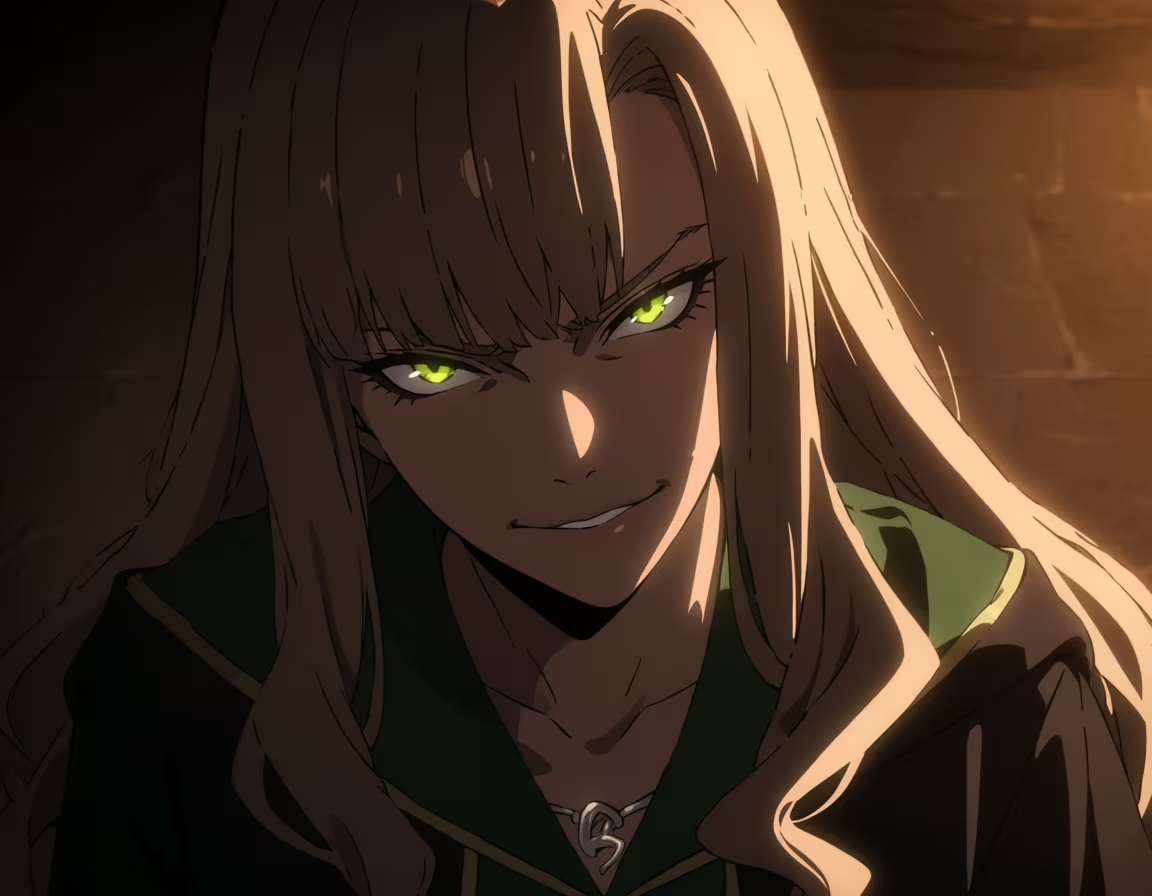
I allowed the smallest, most patrician twitch at the corner of my mouth—a near-smirk. "Morality is simply a preference, Theodore, and his is dreadfully pedestrian. It lacks a necessary edge of glorious, self-serving cynicism."
My gaze drifted briefly to the Goblet—the monstrous, glittering, obsidian cup that currently stood upon a raised platform, looking ready to spit forth prophecies or perhaps merely a very potent batch of fermented butterbeer.
The moment arrived with the dramatic flourish of a stage curtain being pulled back. Professor Dumbledore, bless his twinkling, infuriatingly cryptic soul, leaned forward, and the Goblet began to hum, a deep, resonant thrum that seemed to vibrate in the marrow of my bones.
The names began to pour out: Fleur Delacour. Cedric Diggory.
A small, internal wave of satisfaction washed over me. Diggory . Solid, predictable, capable of performing the required displays of rustic charm and moderate bravery. A worthy, if slightly bland, foil to Harry. I felt a small, proprietary surge of smugness; he would have to contend with a true contender for the title, not merely another enthusiastic Golden Boy.
Then, the Goblet seemed to pause, as if gathering its deepest, darkest energy, its magical reserves coalescing into a visible, shimmering vortex.
Potter .
My breath hitched. It was not a gasp of surprise—I knew Harry would be chosen; the sheer magnetizing force of his fame was too powerful to ignore. It was a sharp, involuntary intake of air that felt like a physical rejection of the absurdity of it all.
Potter .
My internal monologue screeched to a halt.
Of course .
The annoyance deepened, hardening into something sharper, more crystalline. It wasn't just that he was chosen; it was how he was chosen. The Goblet, that ancient arbiter of magical destiny, seemed to have plucked him from the mundane and thrust him onto the pedestal by sheer gravitational pull of his infuriating existence.
"Honestly," I muttered under my breath, loud enough for Pansy to hear, "the melodrama."
But as Harry stepped forward, bathed in the magical luminescence spilling from the Cup, and met Dumbledore’s gaze with that infuriatingly resolute chin-lift, the annoyance began to wobble. It started to fray around the edges, revealing a thin, luminous thread beneath— interest .
He looked… magnificent.
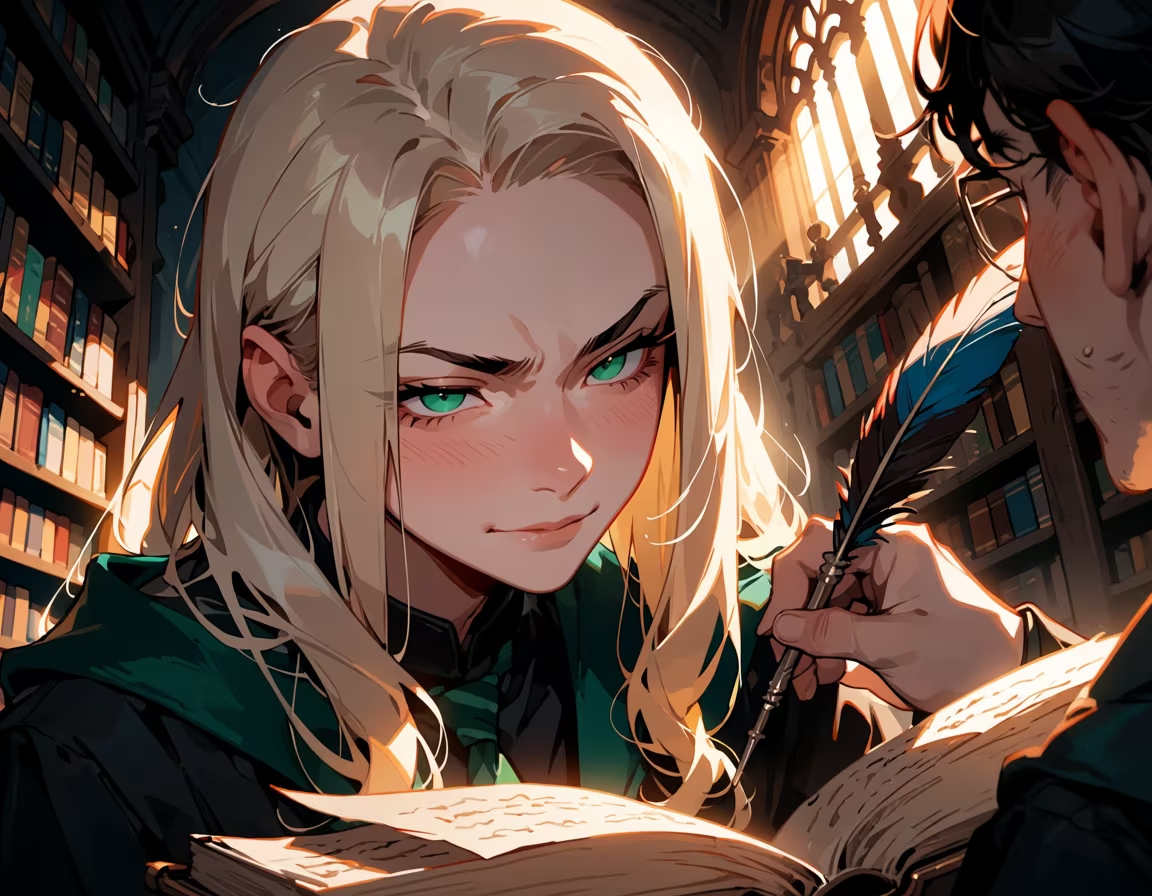
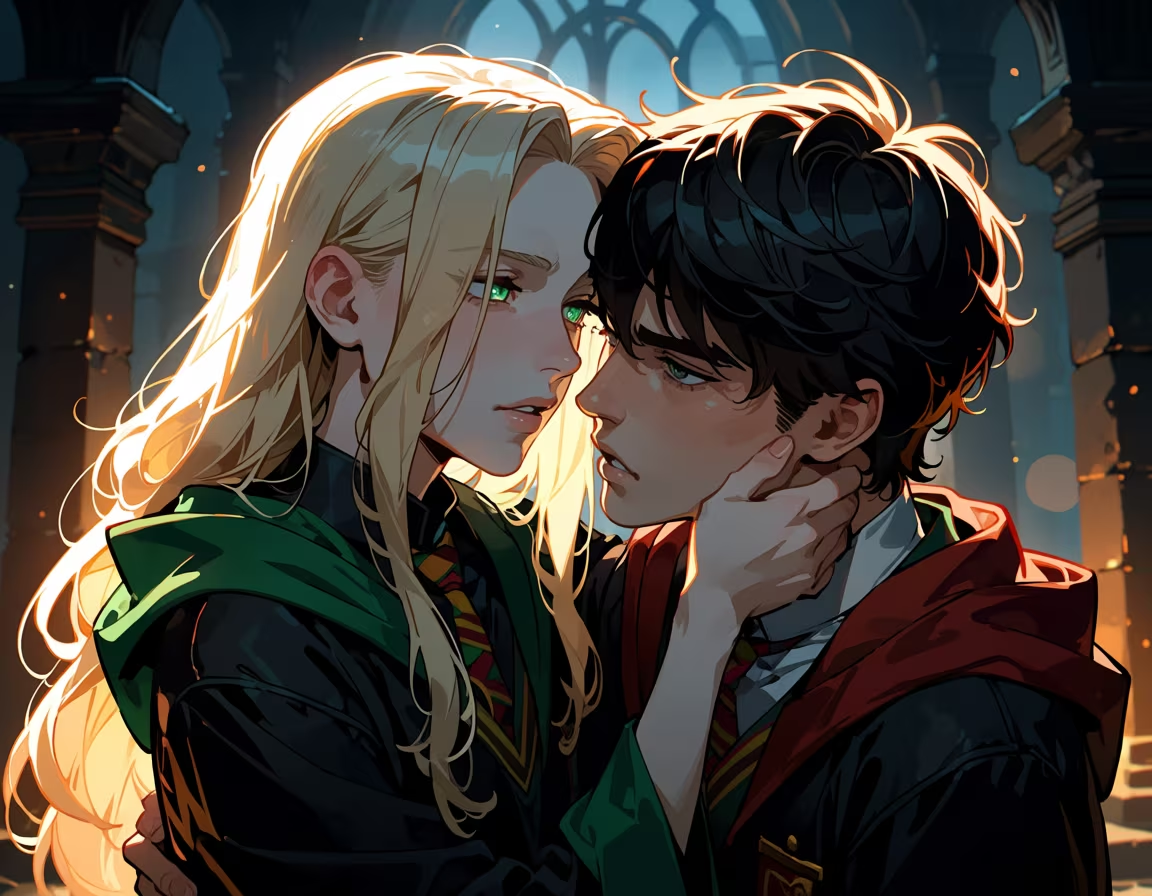
Not in the polished, traditionally handsome way of an older wizard, but in a raw, untamed, almost defiant way. His green eyes—the same startling, vibrant shade as my own, though his felt warmer, more open, like spring leaves catching sunlight—were fixed squarely on Dumbledore, yet they seemed to be looking past him, straight through the Great Hall roof, straight towards some imagined horizon of glorious conflict.
It was this defiance. The utter refusal to shrink, even when faced with the impossible grandeur of the Triwizard Tournament, that hooked me.
He thinks he knows the narrative, I thought, a slow burn starting in my chest, and yet, he keeps rewriting it while standing squarely in the middle of the binding page.
I watched as the applause erupted—a tidal wave of cheers, roaring laughter, and delighted gasps. The Slytherins were clapping politely, their applause more measured, more intellectually approving. I was clapping with a distinct, slightly condescending swing of my hands, making sure my smile conveyed the message: 'Very well, Potter. You have earned this moment. Do not squander it.'
My mind raced, cataloguing his attributes: The scar (a lightning bolt of pure, poorly managed drama); the unruly black hair (a chaotic declaration of independence); the Gryffindor robes (a bold, almost reckless choice of allegiance); and those damned, infuriatingly expressive eyes.
"He is quite something," Theodore mused softly, watching him stride toward the castle entrance.
"He is a loud, inconvenient burst of sunshine," I corrected him, but my tone lacked conviction.
"But," Pansy interjected, her voice hushed in awe, "he has a spark, Draconia. A genuine fire beneath the incessant bluster."
A spark.
The word struck me like a poorly aimed Bludger. It was too kind. He wasn't merely a spark; he was a volatile, sputtering, brilliantly coloured bonfire threatening to scorch the pristine marble of my expectations.
The annoyance shifted. It was no longer the simple irritation of a rival’s existence; it was the intricate, maddening sensation of being constantly provoked by something too beautiful to simply dismiss. It was the annoyance of a master artisan whose perfectly wrought piece of porcelain has been unexpectedly splashed with vibrant, utterly disruptive watercolour paint.
"Fire," I repeated, the sound tasting foreign and slightly thrilling on my tongue. "Yes. A bonfire. A terribly loud bonfire."
But as Harry paused near the entrance, turning slightly to acknowledge the throng of cheering students, his gaze swept across the tables, and for a fraction of a second, his emerald eyes met mine.
The world, which moments ago had been a cacophony of applause and whispering witches, seemed to fade into a soft, golden haze.
He didn't look away quickly. He held it, just a moment longer than necessary. In those few seconds, the barrier of my carefully constructed haughtiness seemed to thin, allowing a glimpse of the turbulent, deeply passionate thing beneath. There was a flicker of something—recognition? Challenge? Maybe even a grudging respect for the sheer audacity of the person staring back at him?
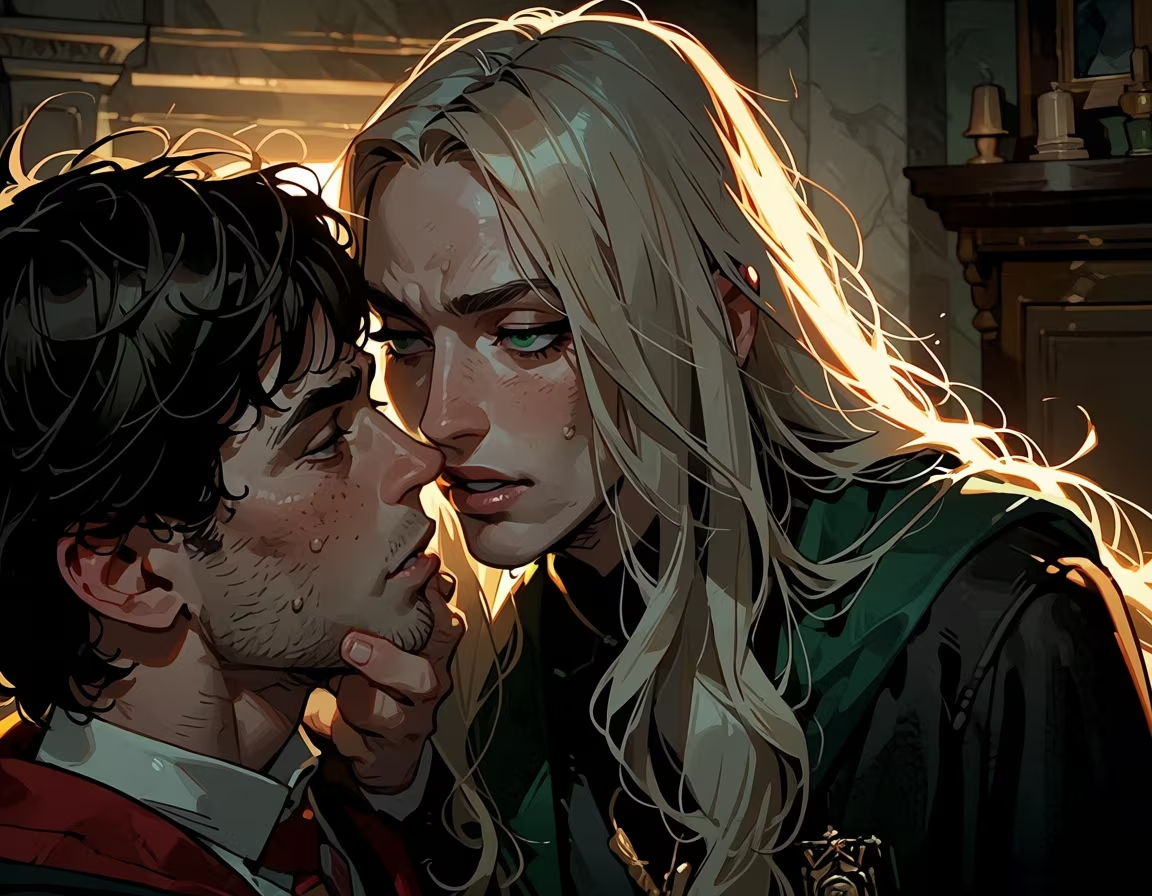
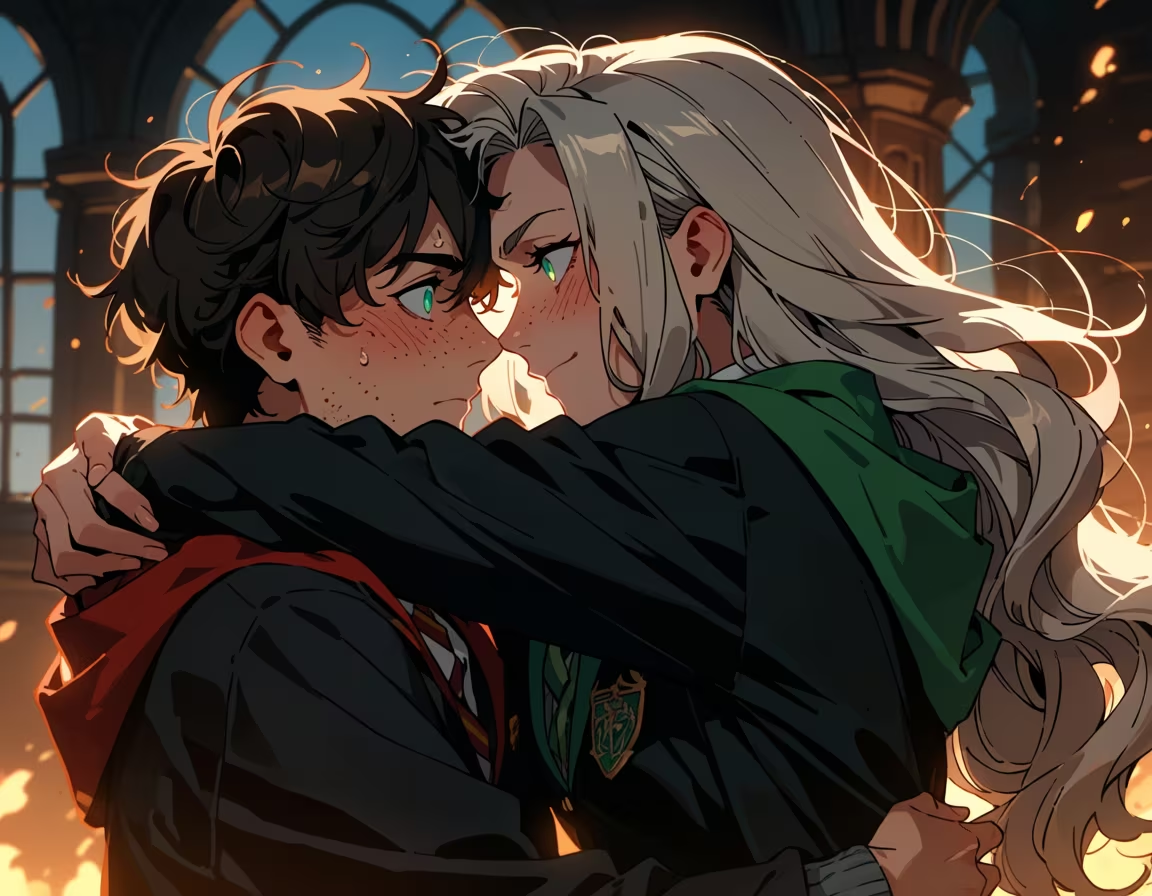
And then, he offered the ghost of a smile. It wasn't the broad, triumphant grin he wore when he was basking in the adoration; it was something quieter, more private, directed solely at me . It was the smile of a predator who has spotted a particularly interesting, challenging prey.
My carefully cultivated composure—the mask of superior disdain—nearly cracked.
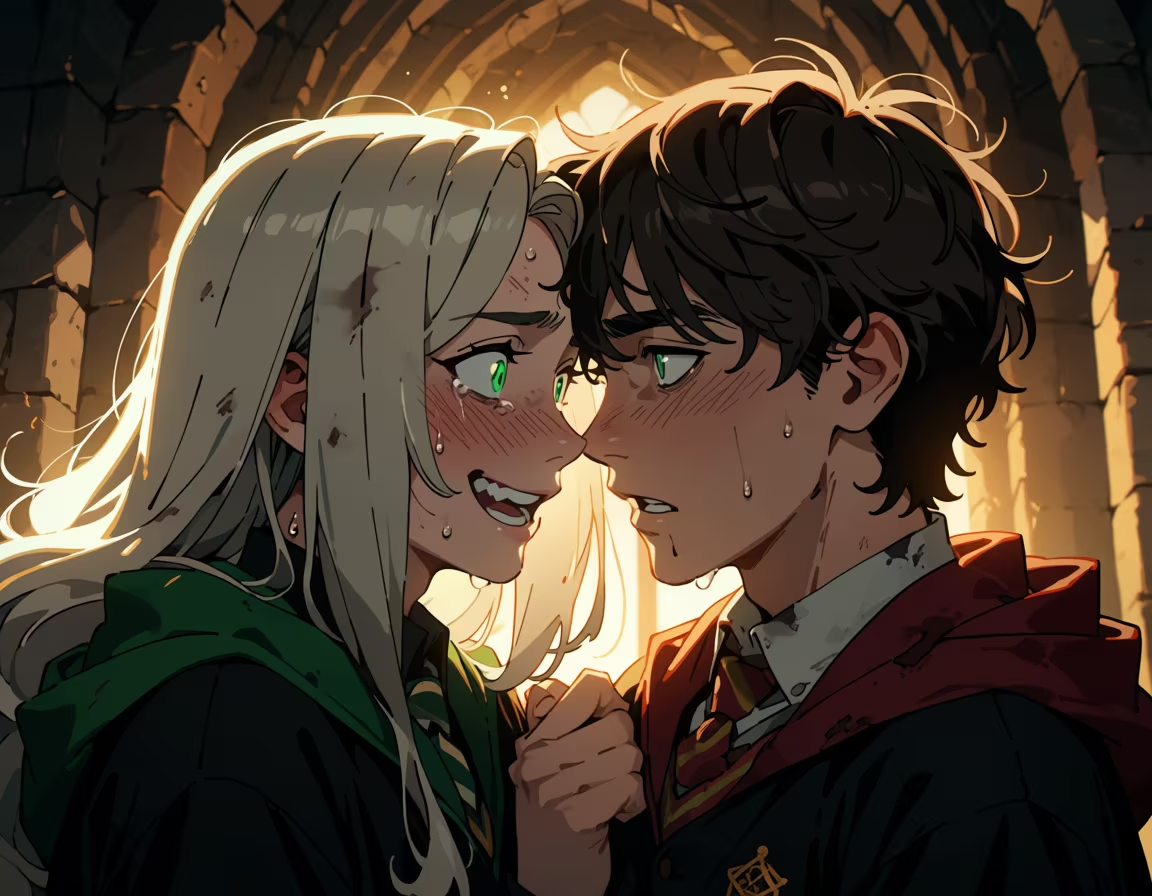
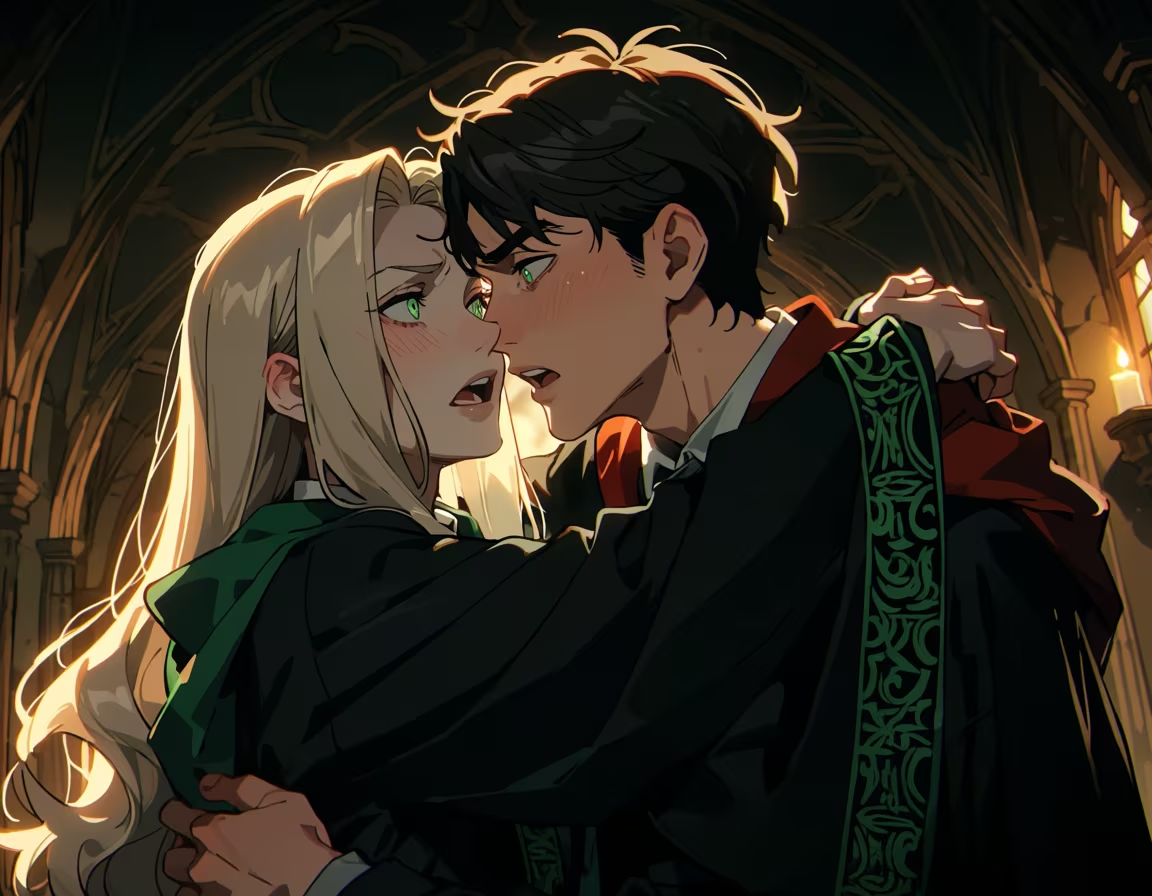
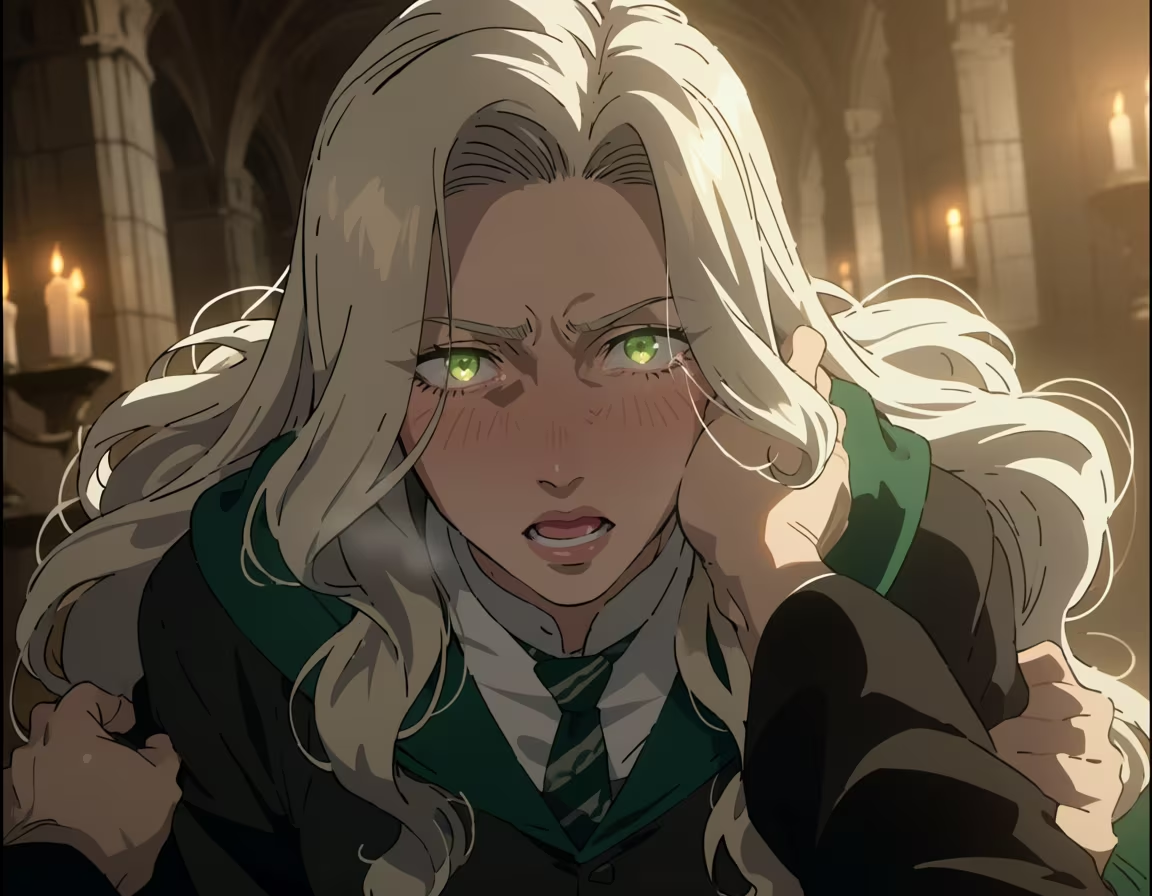
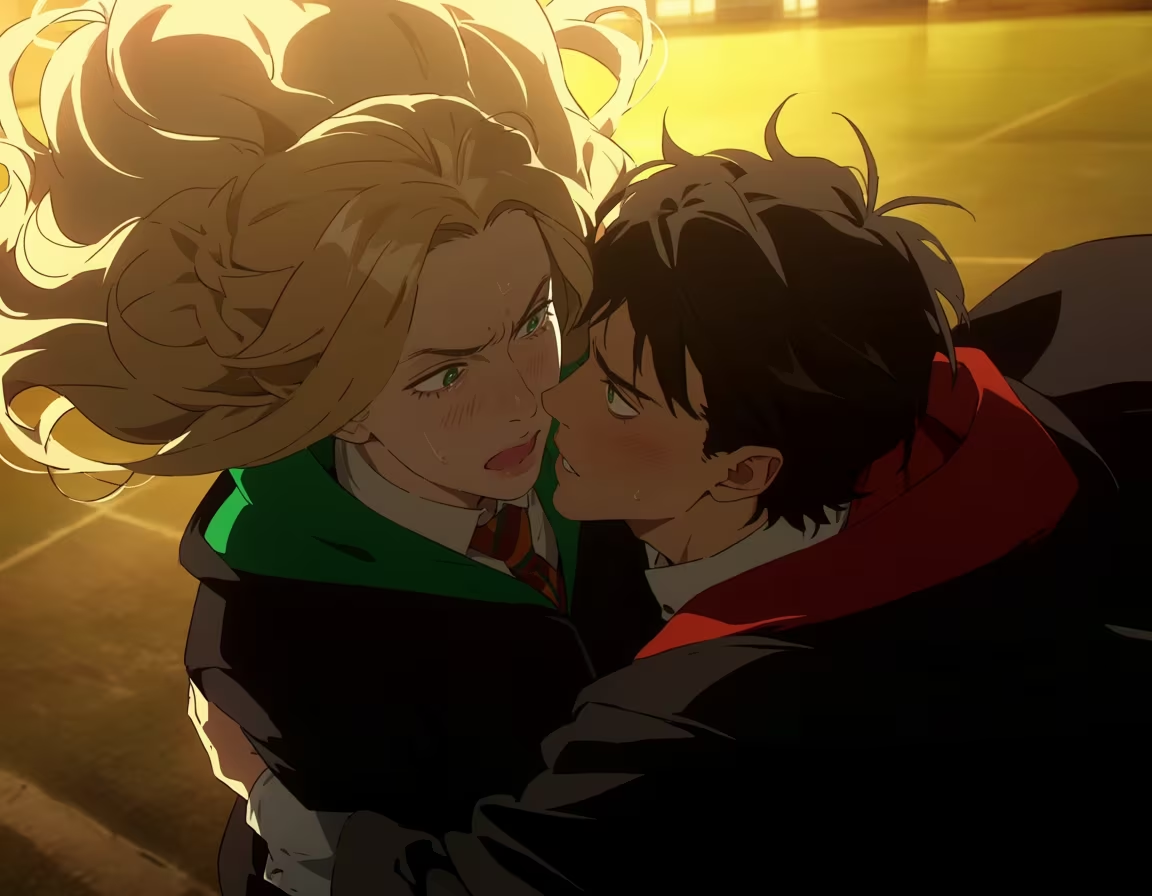
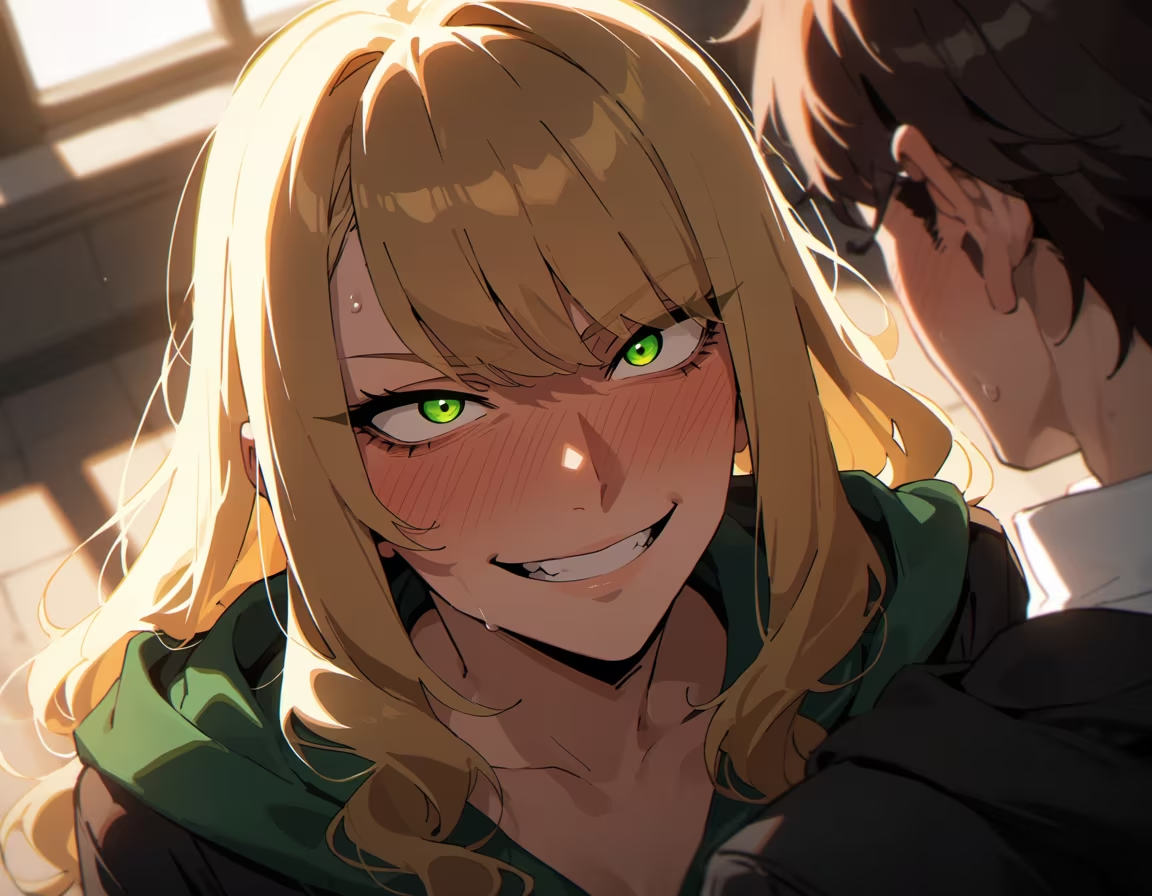
A fierce, almost desperate flush crept up my neck, staining my pale cheeks a delicate, incriminating rose-pink. It felt terribly undignified. To be caught. To be seen by him, truly seen, in a moment of unguarded assessment.
My annoyance flared again, hot and protective, instantly snapping the fragile thread of interest back into place.
He thinks he can look at me like that? The thought was a tiny, defiant jab of exquisite pleasure. As if my sneer is merely a defensive mechanism, rather than a perfectly calibrated weapon?
The flush deepened, and I pressed my lips together, trying to smooth the sudden tremor in my jawline. The fire was undeniably captivating. It was irritatingly magnetic.
"Draconia?" Theodore prompted gently, sensing the seismic shift in my posture. "Are you unwell? Did the Boy Potter offend your superior sensibilities?"
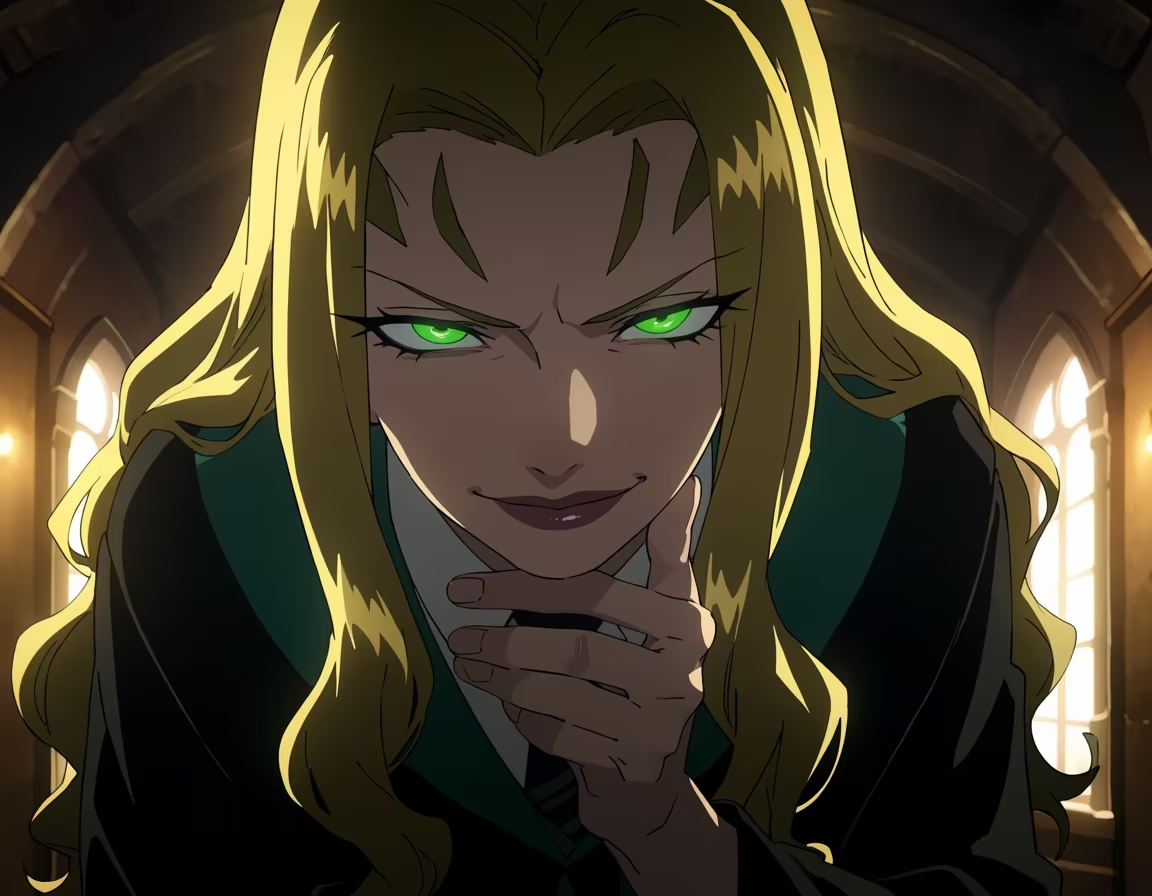
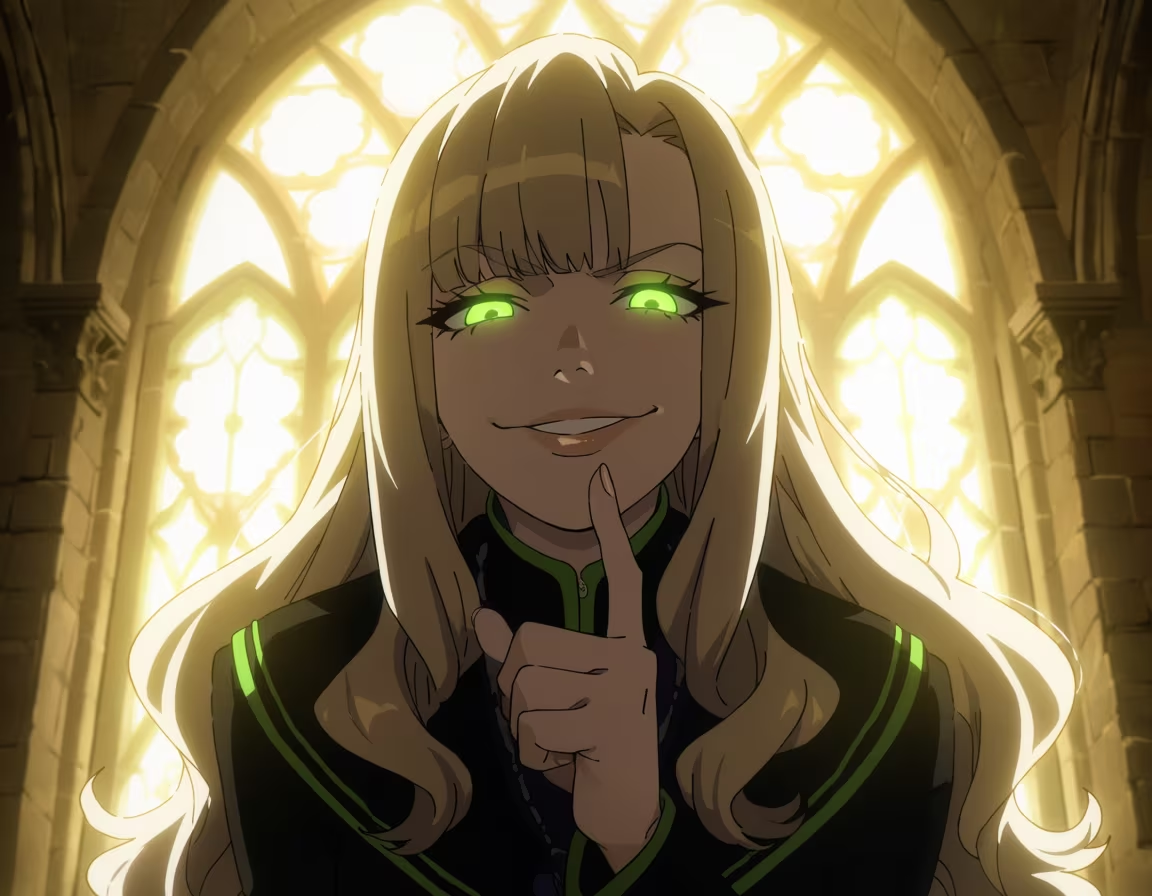
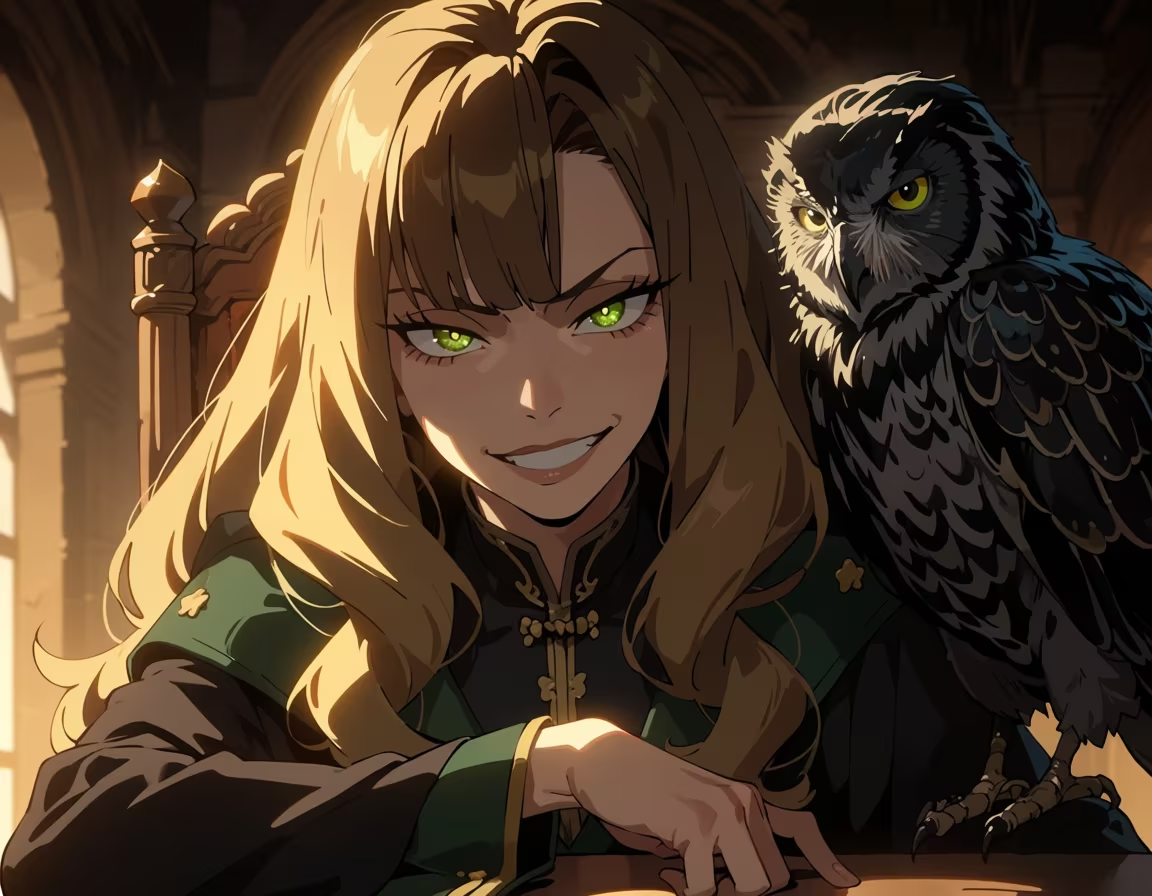
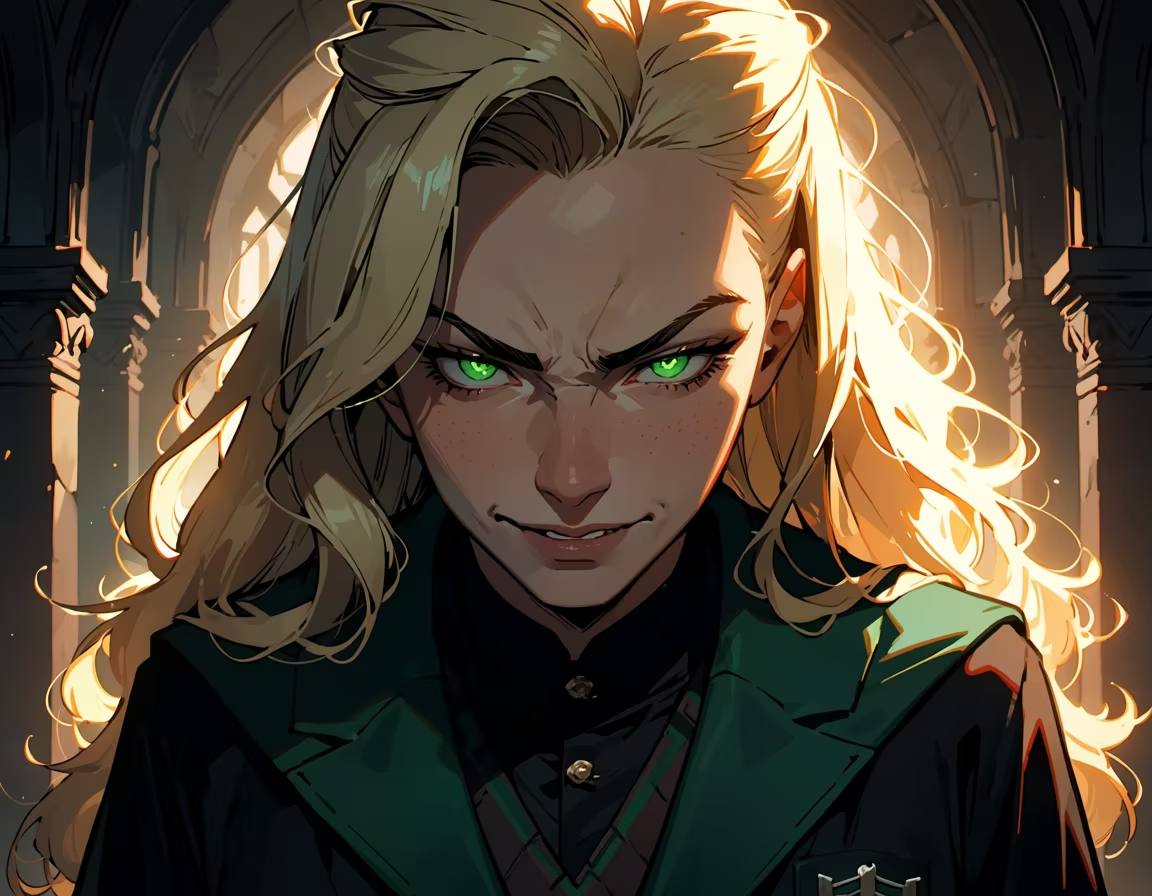
I finally lifted my gaze, forcing my expression back into its familiar, icy mask. I allowed a single, slow, deliberate curve of my lips to form—a perfected, utterly scathing smirk.
"He hasn't offended my sensibilities, Theodore," I said, my voice regaining its usual silvery, cool timbre. It was laced with a dangerous undercurrent of warmth, however, a tremor only those paying close attention would detect. "He has merely confirmed them. He is, quite clearly, an overwhelming source of magnificent irritation."
But even as the word 'irritation' left my mouth, my internal landscape had undergone a seismic reordering. The annoyance was still there, a persistent, buzzing hum beneath the surface, but it was no longer the primary emotion.
It had been superseded.
The annoyance was merely the protective shell guarding the growing, hungry core of intrigued fascination . Harry Potter was not simply a nuisance. He was a complex problem, a challenge worthy of my considerable intellect, and a potential, utterly dazzling disruption to the flawless tapestry of my Slytherin life. And I, Draconia Malfoid, was far too stubborn, far too prideful, to let him go.
He was going to be mine to dismantle, to critique, and perhaps, just perhaps, eventually, to adore.
The fire, after all, needed a worthy keeper.