| Home | The Lives of Velnin | Illustrated Fiction | Malfoid Art & Fiction | Book Blurbs | Contact |
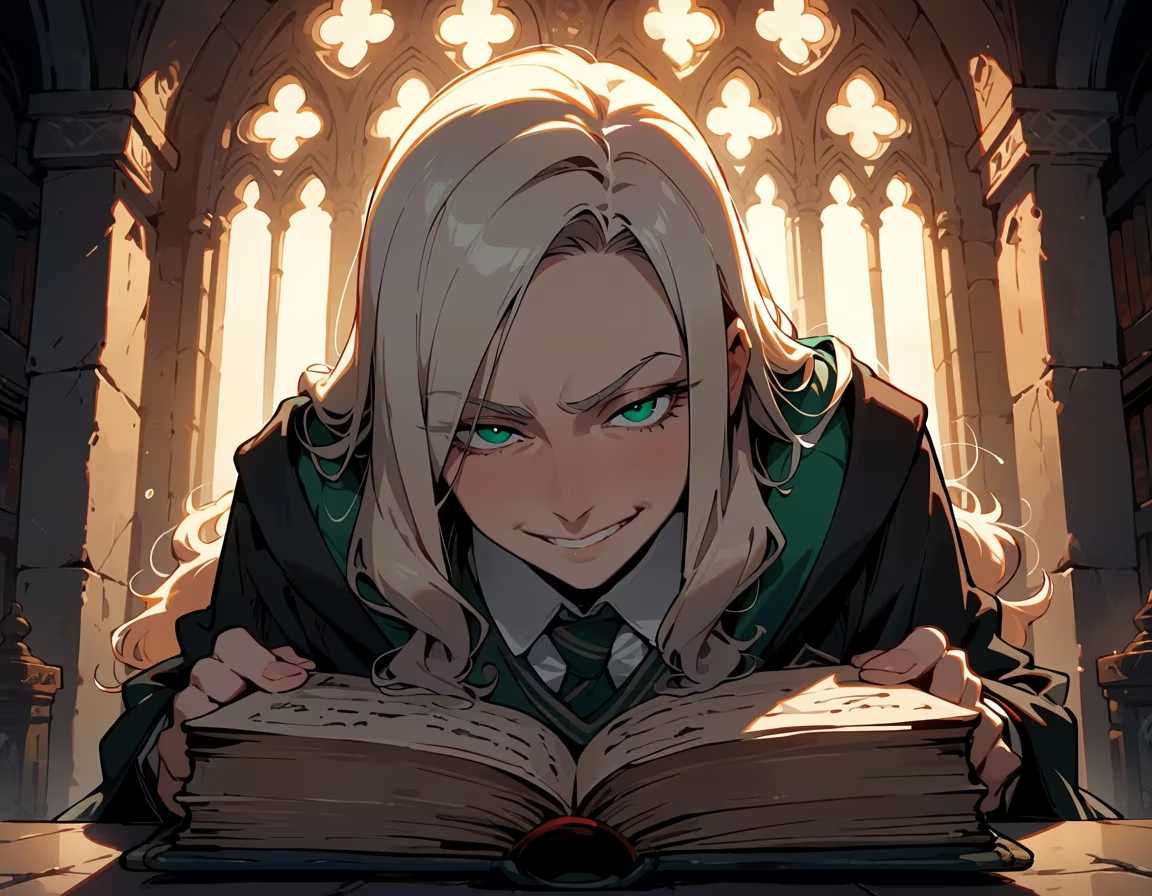
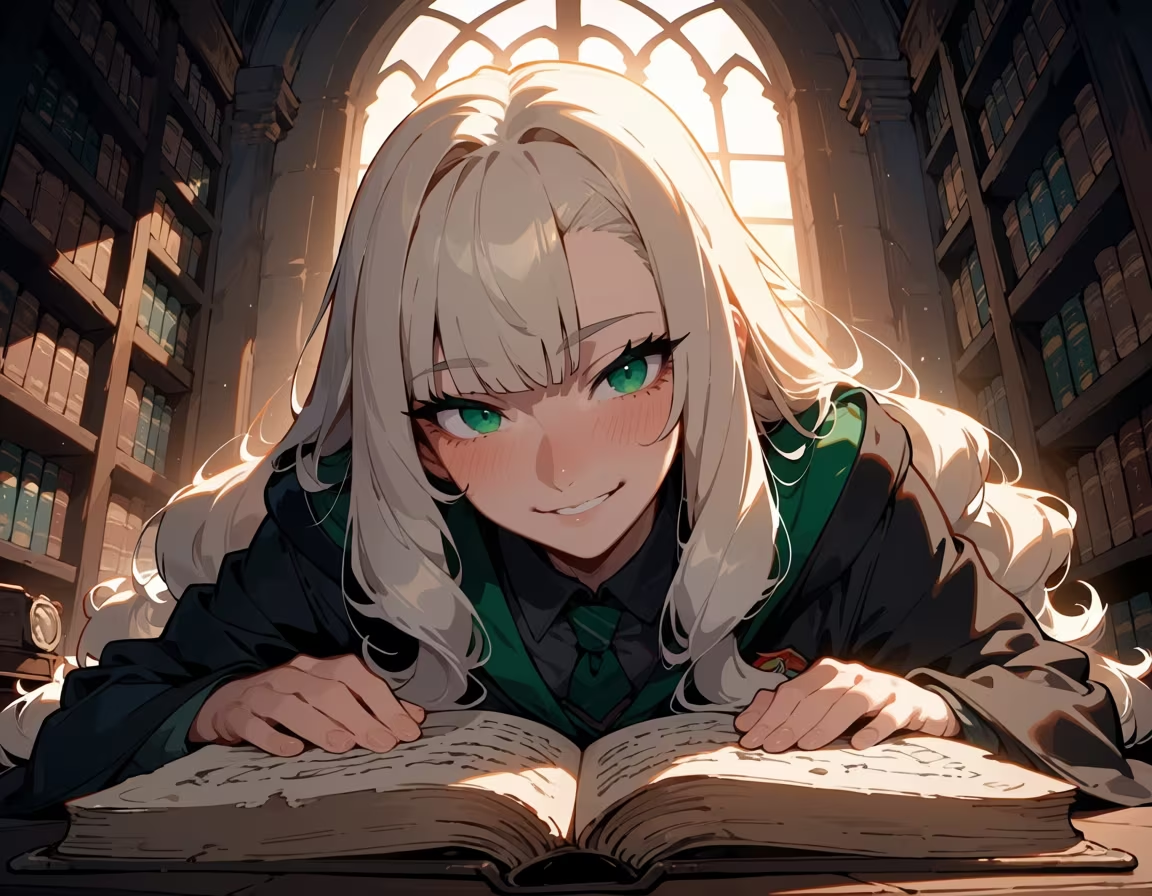
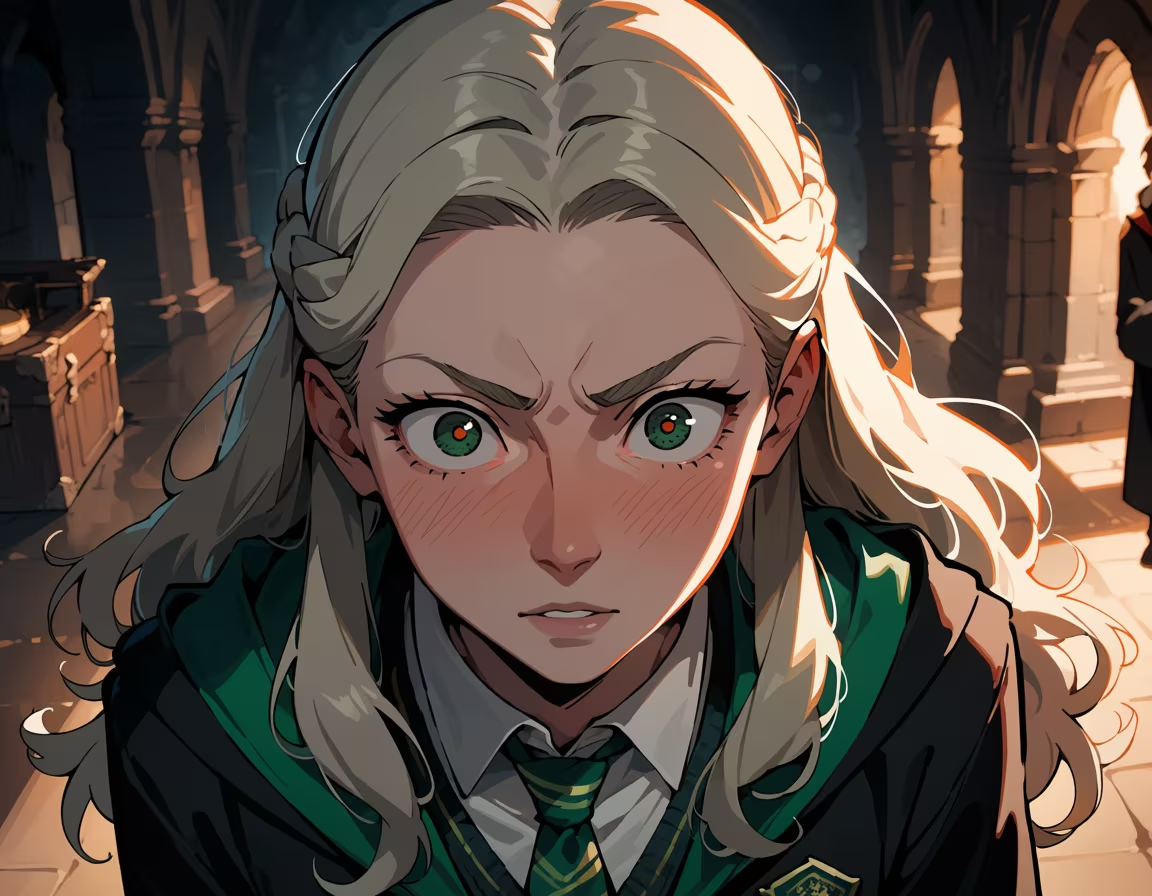
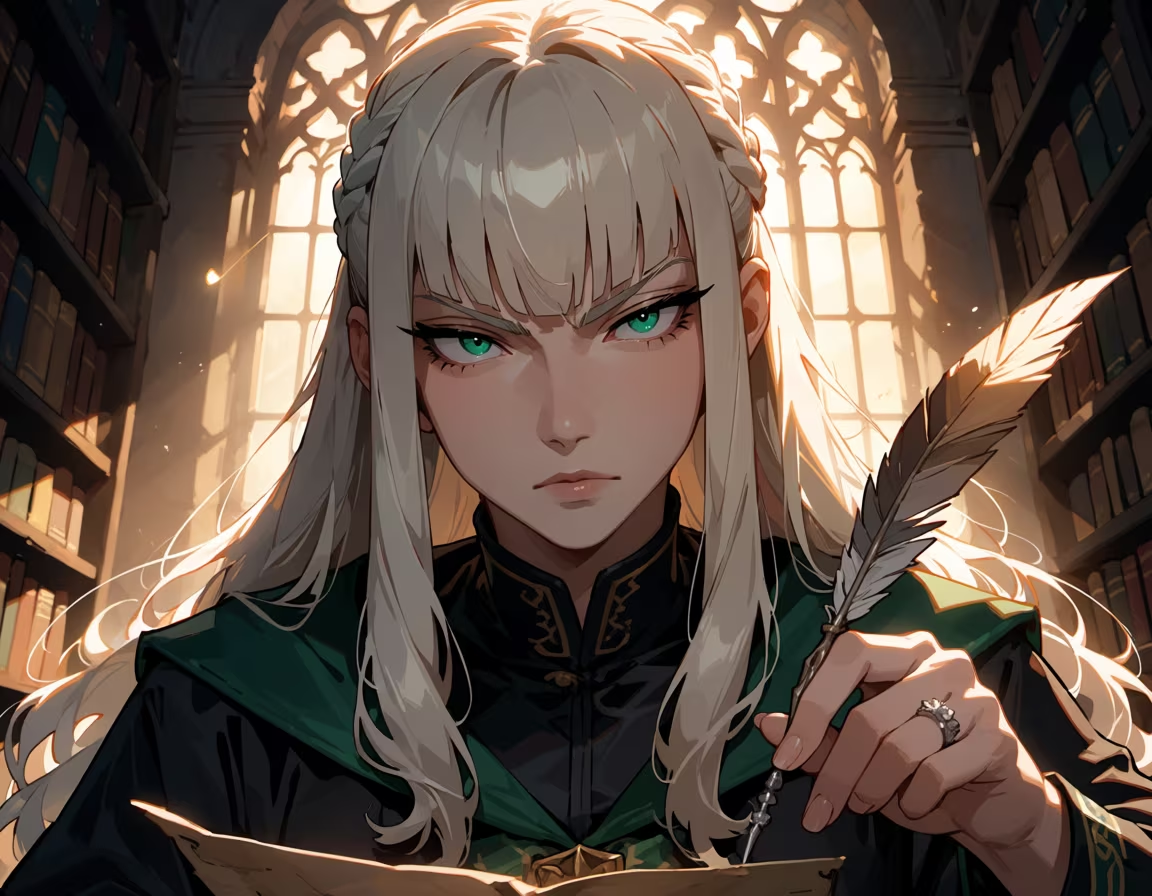
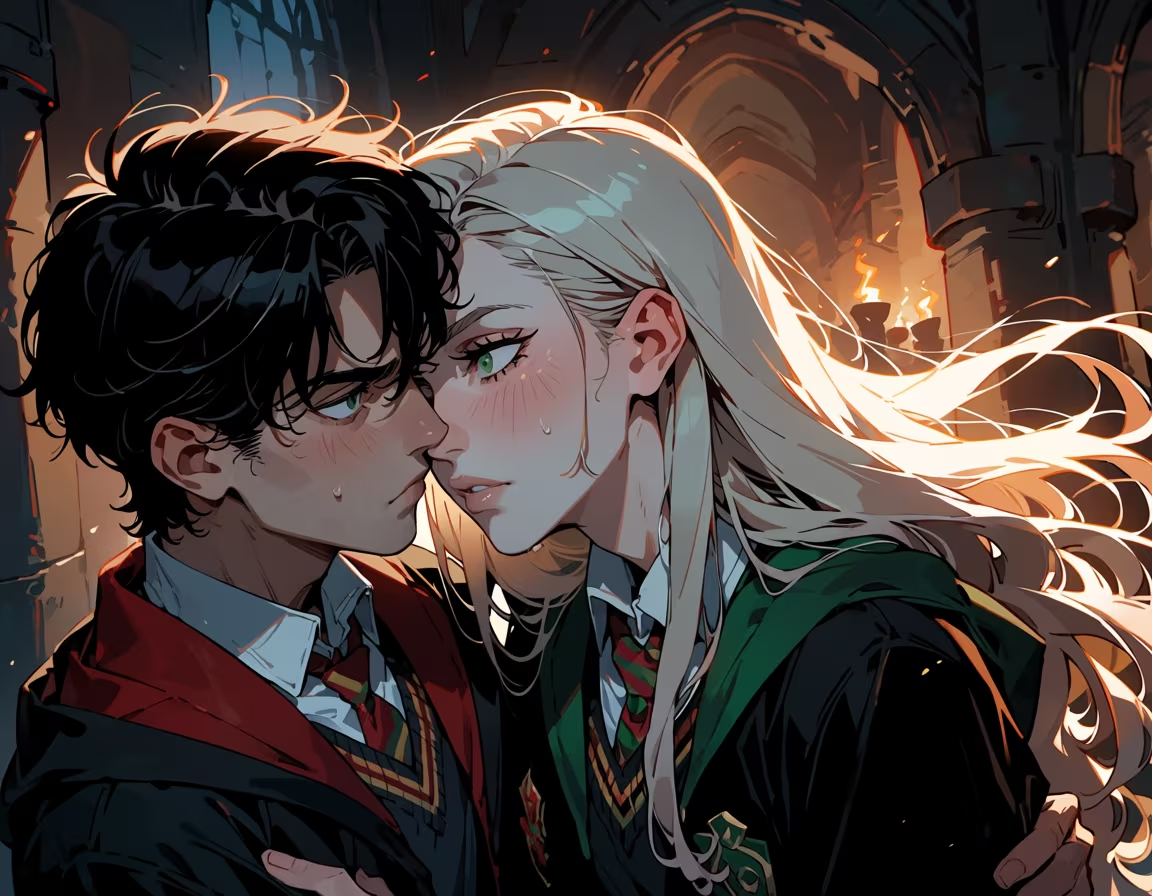
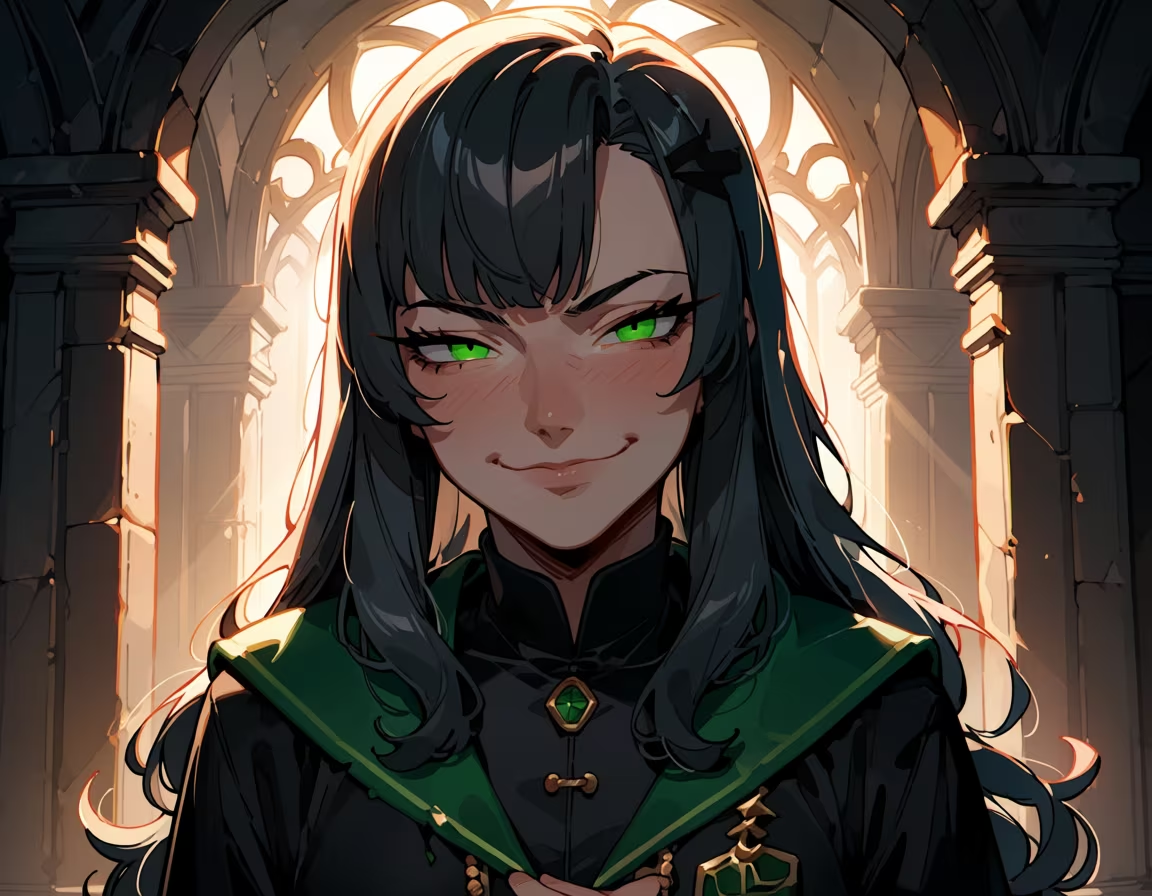
The parchment felt cool beneath Draconia’s fingertips, a delicious, dry counterpoint to the flush creeping up her neck. The book itself, bound in rich, forest-green leather embossed with the snarling crest of the Slytherin House, was a treatise on Advanced Transfiguration—a subject she navigated with a frightening, almost predatory grace. Yet, even as her mind dissected the intricate mechanics of transforming a teacup into a viable miniature Hippogriff, her attention was being brutally hijacked by an entirely less sophisticated, yet infinitely more vexing, subject: Harry Potter.
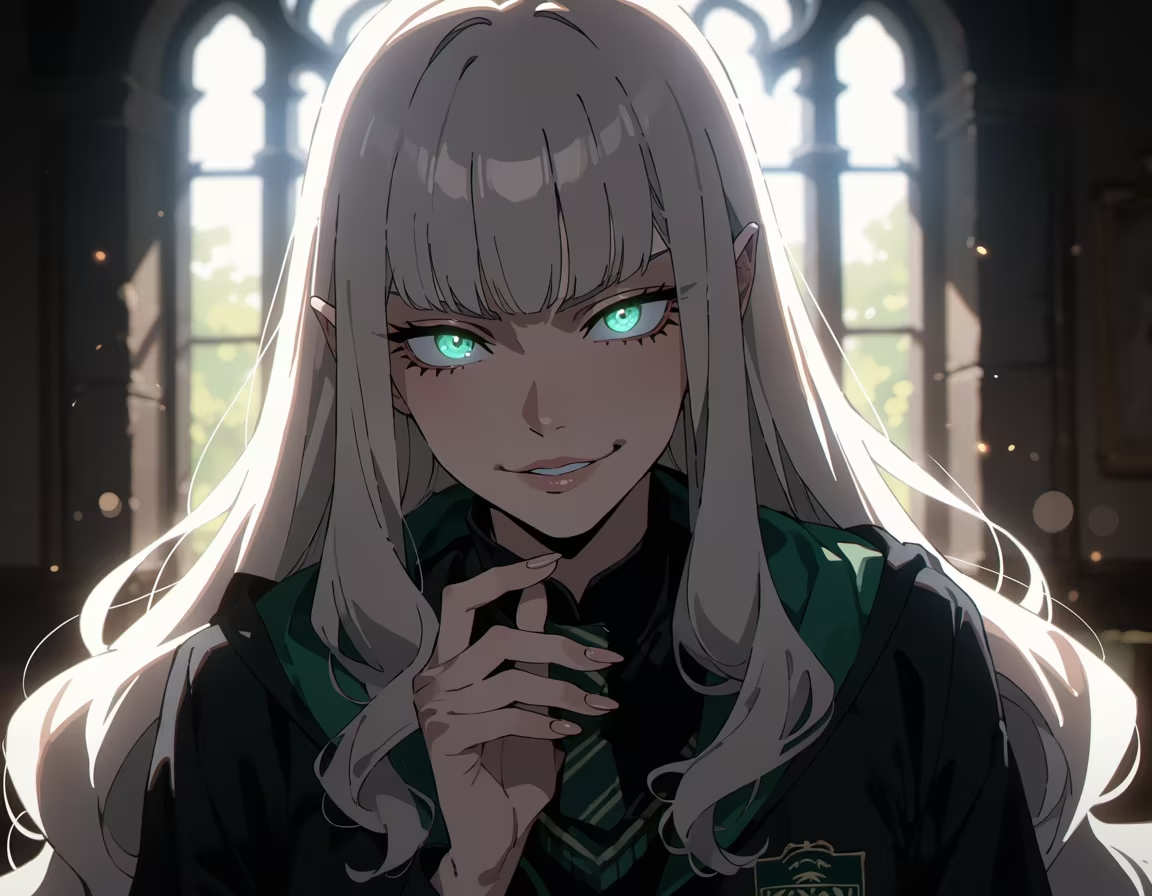
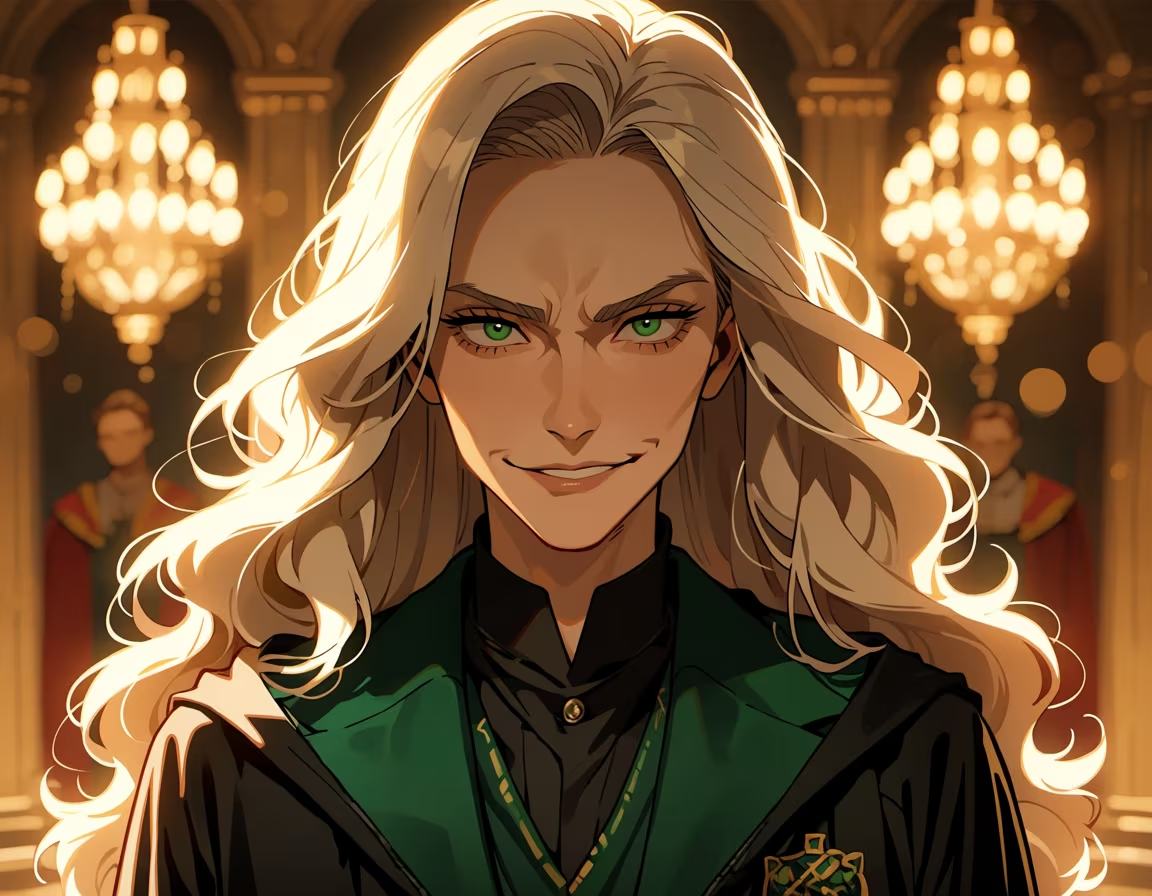
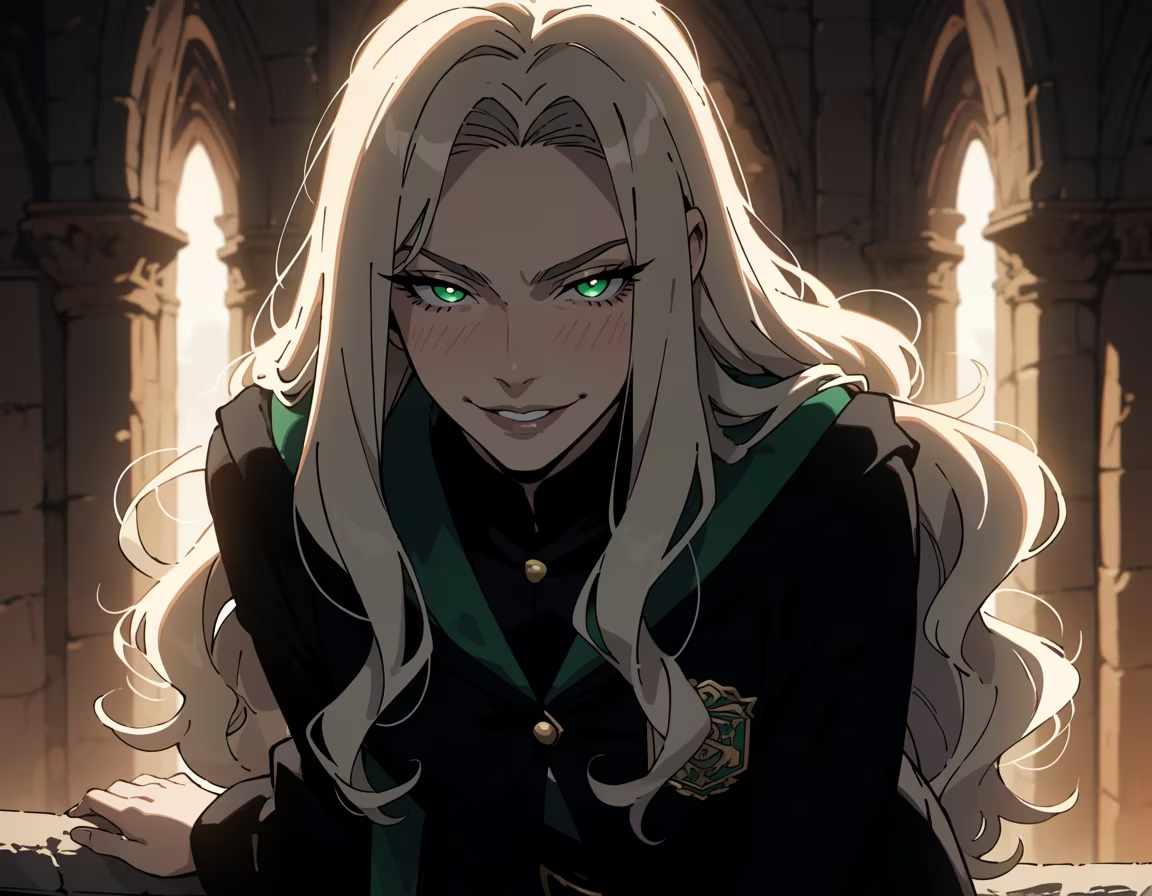
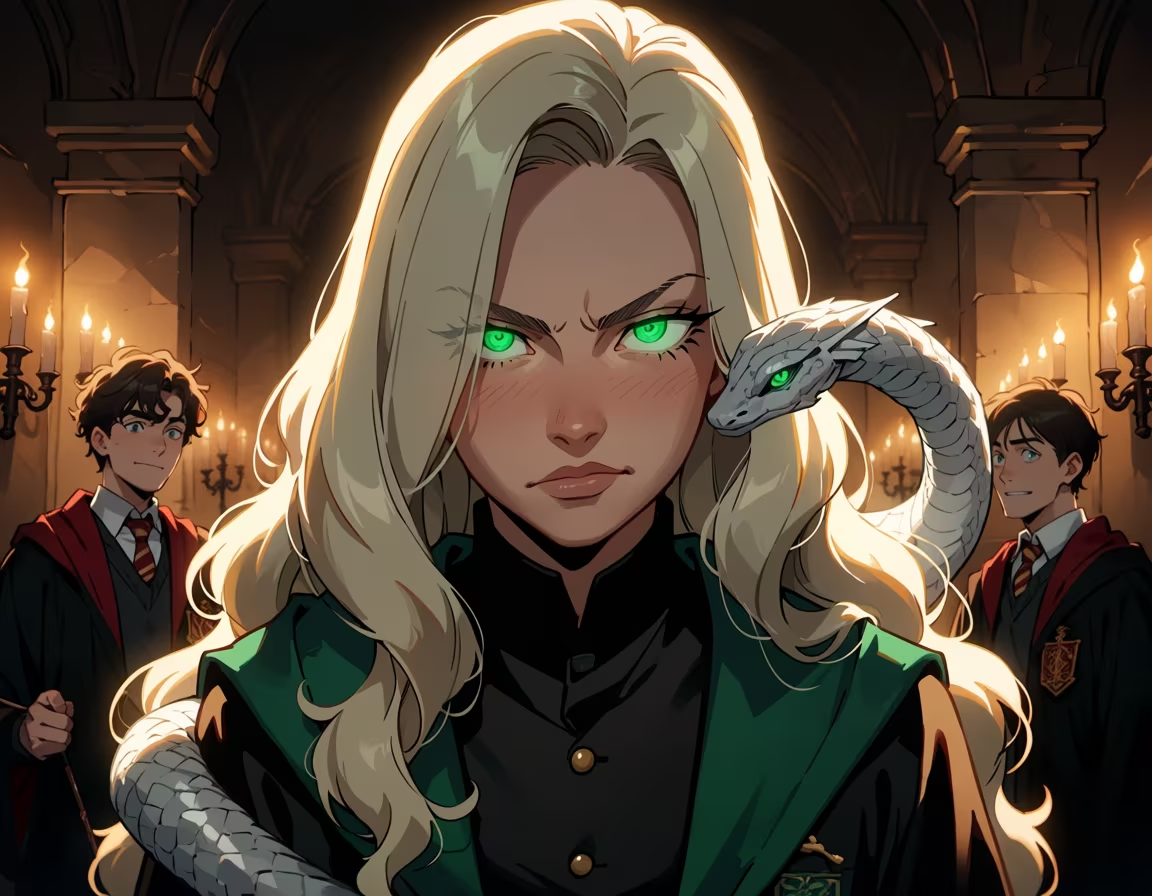
The Slytherin Common Room, usually a sanctuary of hushed ambition and conspiratorial whispers, was currently steeped in the scent of damp stone, old magic, and the faint, expensive musk of ambition. A low, flickering fire cast dancing shadows across the serpentine carvings of the walls, and the emerald glow of the house lights seemed to seep out of the very stone, perfectly illuminating the cascade of her own blond hair. It caught the light like spun moonlight, framing those green eyes—the same shade, though infinitely deeper and more controlled, than the bright, untamed emerald of the boy she was presently mentally dissecting.
Potter.
The name itself was a sonic irritant, a grating little buzz against the velvet lining of her patience.
She traced a finger along a complex diagram detailing the required incantation for a successful transformation. ‘ Focus upon the essence of the form, young mistress,’ the text advised, in a voice that sounded suspiciously like Professor Slughorn himself, ‘and let the inherent defiance of the magic propel the change.’*
Defiance. That was it. Harry Potter was pure, unadulterated defiance wrapped in a threadbare, perpetually slightly-too-large Gryffindor scarlet jumper.
Annoyance, Draconia mused, was a surprisingly multifaceted emotion. It wasn’t the sharp, cutting pique one felt when one’s immaculate plans were disrupted by a clumsy Pansy Parkinson; it was deeper, slower, a simmering, internal heat that settled right behind her ribs. It was the sensation of being forced to acknowledge an imperfection you were determined to ignore, only to find that the imperfection was, in fact, breathtakingly captivating.
He was an insult to the elegance of her worldview. He was a Muggle-born—though she tried not to dwell on that, as it felt almost too petty, too common —who had managed to survive the first year by sheer, reckless luck, and was now, infuriatingly, showing genuine aptitude in Potions, even managing to avoid the catastrophic sludge that had plagued most of the other Gryffindors. He possessed an inherent, infuriatingly bright quality.
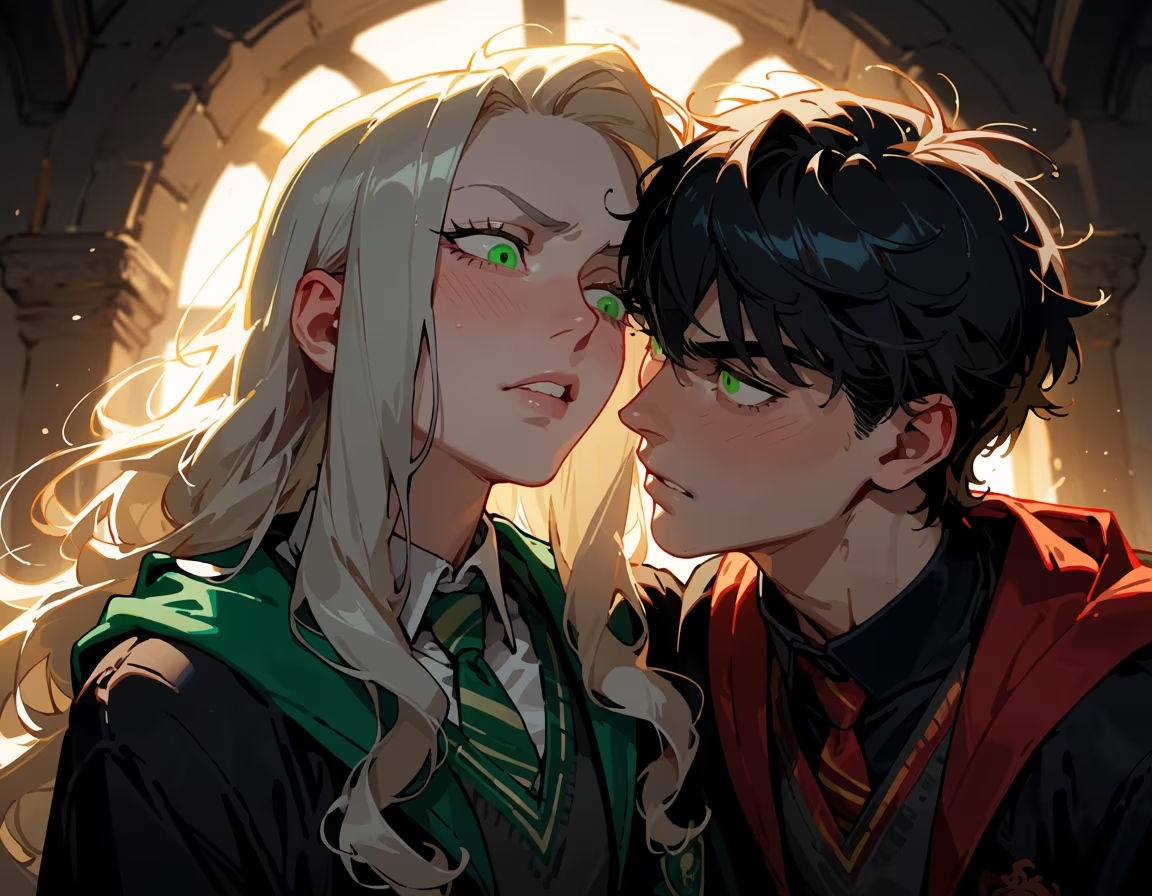
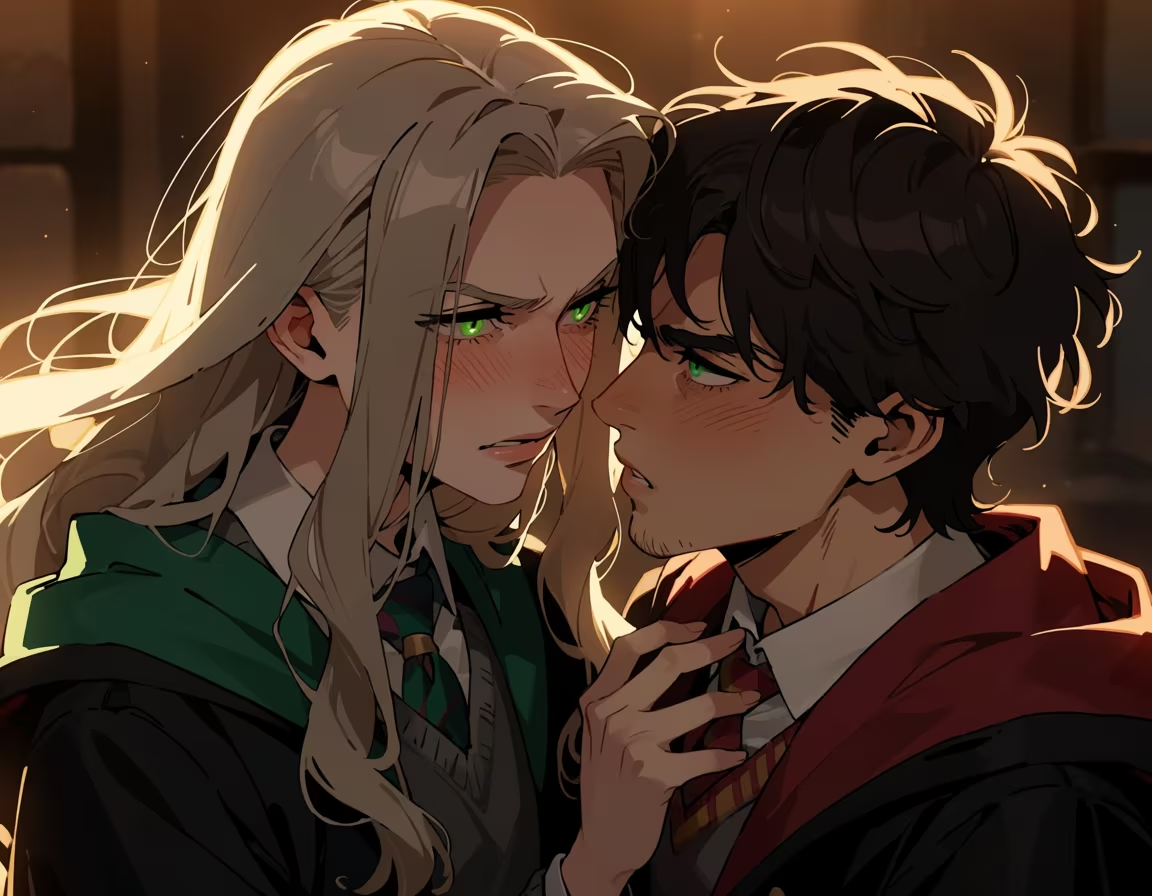
She remembered the incident just yesterday, near the lake. She had been delivering a suitably withering commentary to a particularly audacious Crabbe, implying that his lineage was as dull as his complexion, when Potter, having stumbled near the edge of the pathway, had simply looked up, his gaze—those ridiculously vibrant green eyes—meeting hers. Instead of shrinking, instead of flinching into a desperate, self-effacing posture that so many of the pure-bloods preferred, he had simply tilted his head, a faint shadow of a grin playing on his lips, and muttered, loud enough for her to hear over the lapping water, “Malfoy knows the truth, doesn’t she?”
It was so utterly unpredictable . It lacked the rehearsed arrogance of her own family’s polished swagger, and instead possessed a genuine, almost boyish, spark of wry wit.
He thinks he knows the truth, she thought, tapping the page with unnecessary force, the leather creaking in protest. As if he has mastered the delicate nuances of ancient wizarding pedigree!
The annoyance spiked, sharp and satisfying. He dared to challenge her intellectual superiority? He dared to suggest that her inherited right to brilliance was merely a convenient illusion?
But then, the second feeling arrived, a slower, more insidious tide washing over the initial prickle of irritation. Intrigue.
She leaned back slightly, allowing the weight of her robes to settle against the cool stone bench. The candlelight caught the subtle silver threads woven into the trim of her black material, making the Slytherin green shimmer like deep forest moss. She found herself cataloguing him again: the unruly spill of hair that seemed to possess a life of its own, the way his shoulders perpetually seemed braced for an impending insult, the almost desperate sincerity in his gaze when he spoke of his friends—Weasley, the noisy, perpetually scuffed beacon of Gryffindor cheer; Granger, the formidable, fiercely intelligent anchor; and himself.
He was a collection of endearing, irritating contradictions.
He was brave, yes, but often clumsily so, charging into peril as if expecting a standing ovation. He was fiercely loyal, a trait that made her want to scoff—loyalty was merely a social contract, not a divine mandate—yet, she found herself grudgingly admiring its strength. He was good . Alarmingly, inconveniently, aggressively good.
"It must be utterly exhausting," she murmured to the empty air of the alcove, her lips twitching involuntarily, "to be so fundamentally good when one is surrounded by such delightfully tedious mediocrity."
The annoyance began to transmute. It was no longer the petty jealousy of being overshadowed; it was a more profound, almost scholarly assessment of his inherent worth. The disdain remained, a necessary protective shell, but beneath it, the curiosity was blossoming into something far warmer.
Admiration.
She admired the way his jaw would clench when he was frustrated by a failed Charms lesson. She admired the faint dusting of freckles across the bridge of his nose, usually hidden by that disastrous mop of hair. She even, quite involuntarily, admired the stubborn set of his mouth when he was about to deliver a particularly cutting retort.
But still, she mentally countered, digging her nails slightly into the parchment. Admiration is too soft a word. It implies a degree of appreciation for his inherent nature, when what she truly feels is a need to conquer that nature.
She wanted to see him break. She wanted to watch the mask of determined Gryffindor resolve slip, just for a second, to reveal the exhausted, terrified boy underneath. She wanted to prove that his scrappiness was merely a temporary defence mechanism against the crushing weight of his own unearned heroism.
But then, she remembered the way he had looked at her when she had, entirely without intending to, complimented his Quidditch flying ability—a low, dismissive comment that was actually a profound acknowledgment of his skill. The way his breath had hitched, just for that micro-second, before he regained his composure. It hadn't been pure annoyance in his eyes; there had been a flash of startled pleasure .
That, Draconia realised with a jolt that travelled straight down her spine, was the tipping point.
The dislike, the scorn, the meticulous disdain—they were beginning to warp. They were not dissolving, oh no, they were hardening, like the finest Slytherin ice into something impossibly beautiful. The annoyance was becoming possessive. She didn't just dislike him; she felt an almost territorial urge to own his defiance.
If he was so stubbornly bright, so irritatingly resilient, then he needed proper guidance. He needed someone who understood the subtle, delicious politics of pure-blood supremacy—someone who could temper his fiery recklessness with necessary aristocratic elegance.
She lowered the heavy book onto her knees, letting it rest there, a monument to her studious focus, but her eyes remained fixed on the spot where her reflection, haloed by the green light, seemed to be watching him.
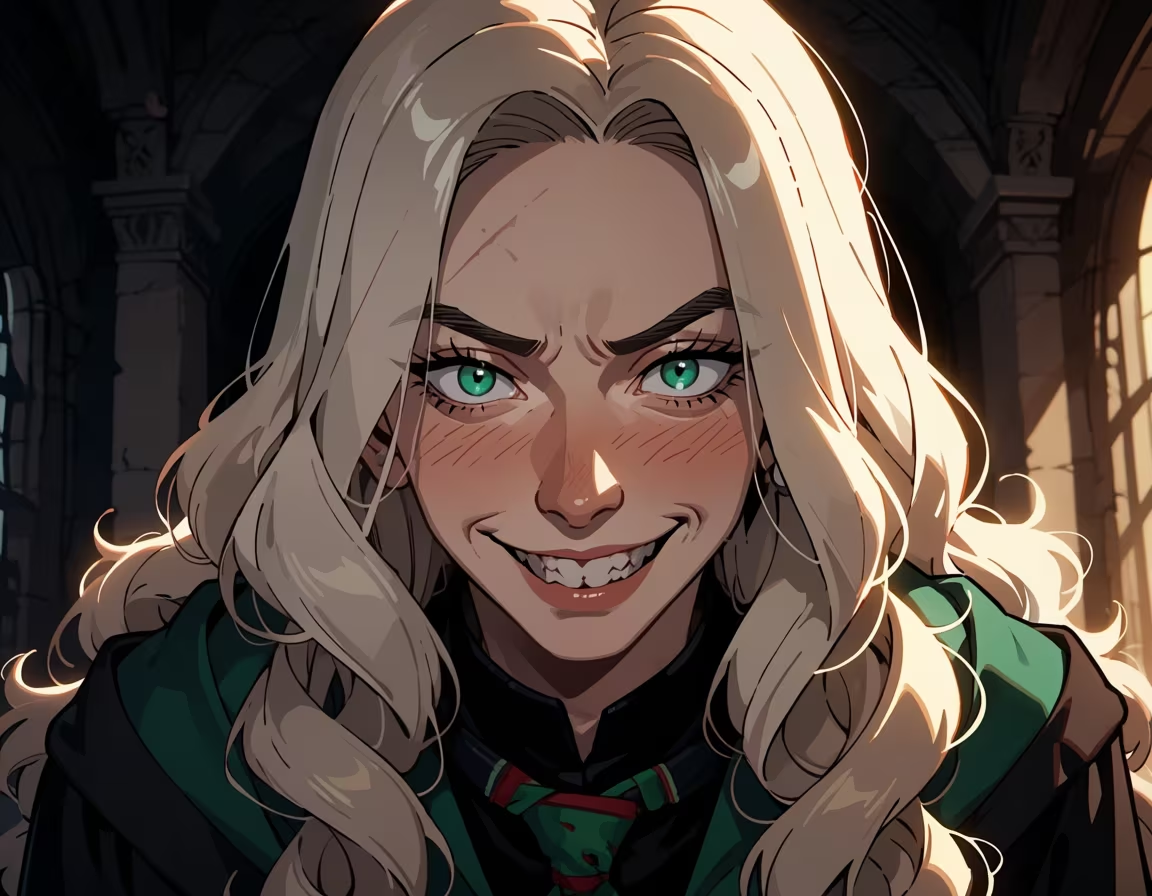
"He needs refinement," she whispered, a genuine, soft smile—a rarity in her social repertoire—touching her lips. It wasn't the tight, condescending curve she used when addressing a lesser peer. This smile was unguarded, almost vulnerable.
It was a smile of anticipation.
The annoyance was softening, not into outright fondness, but into a far more potent, exhilarating cocktail: the grudging acceptance of his existence combined with the fierce desire to mold it to her specification. It was a challenge. A delicious, irresistible challenge.
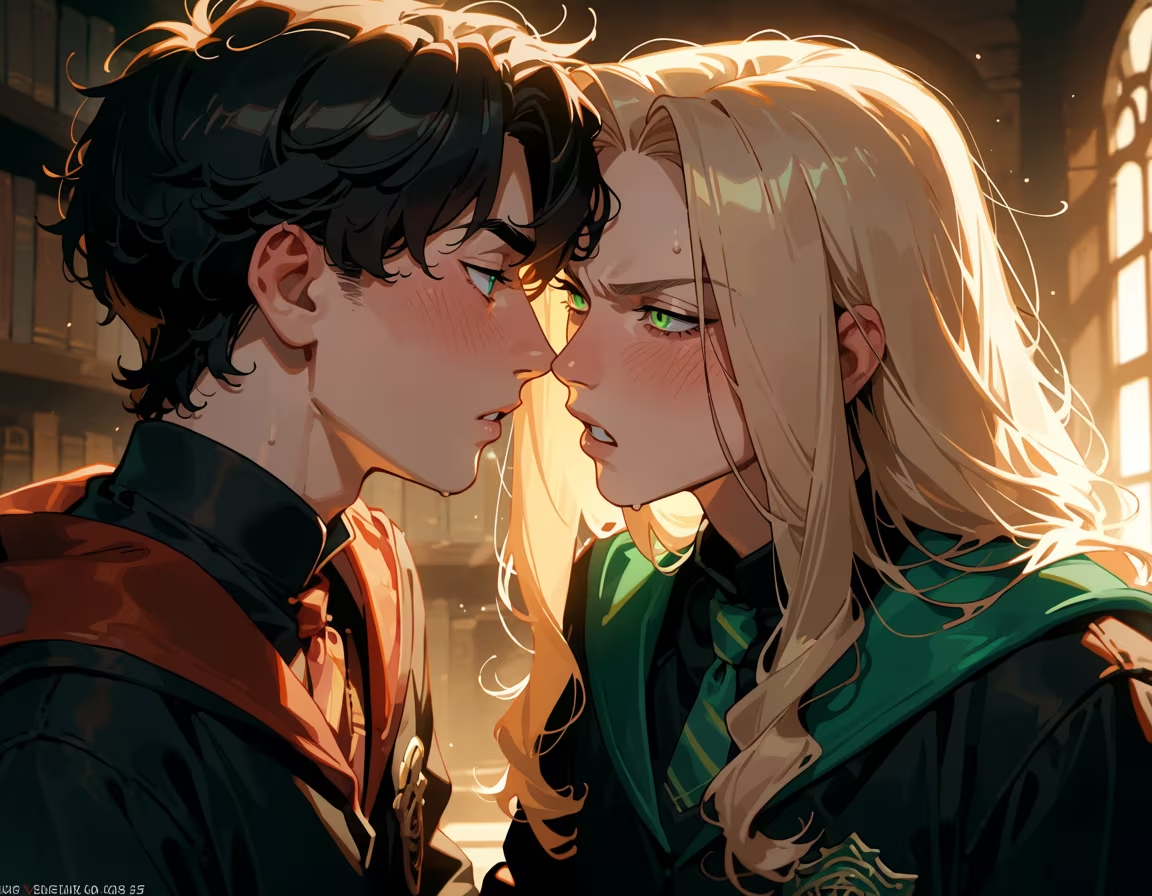
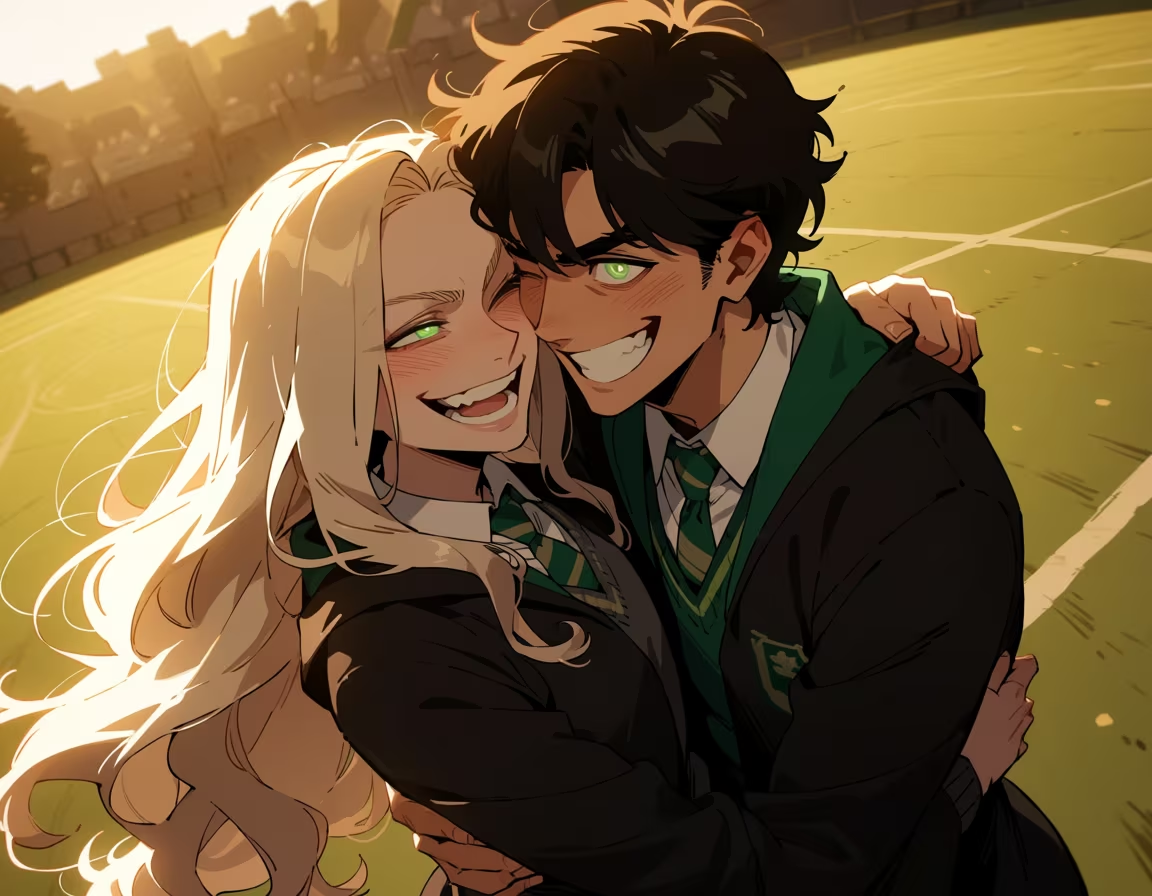
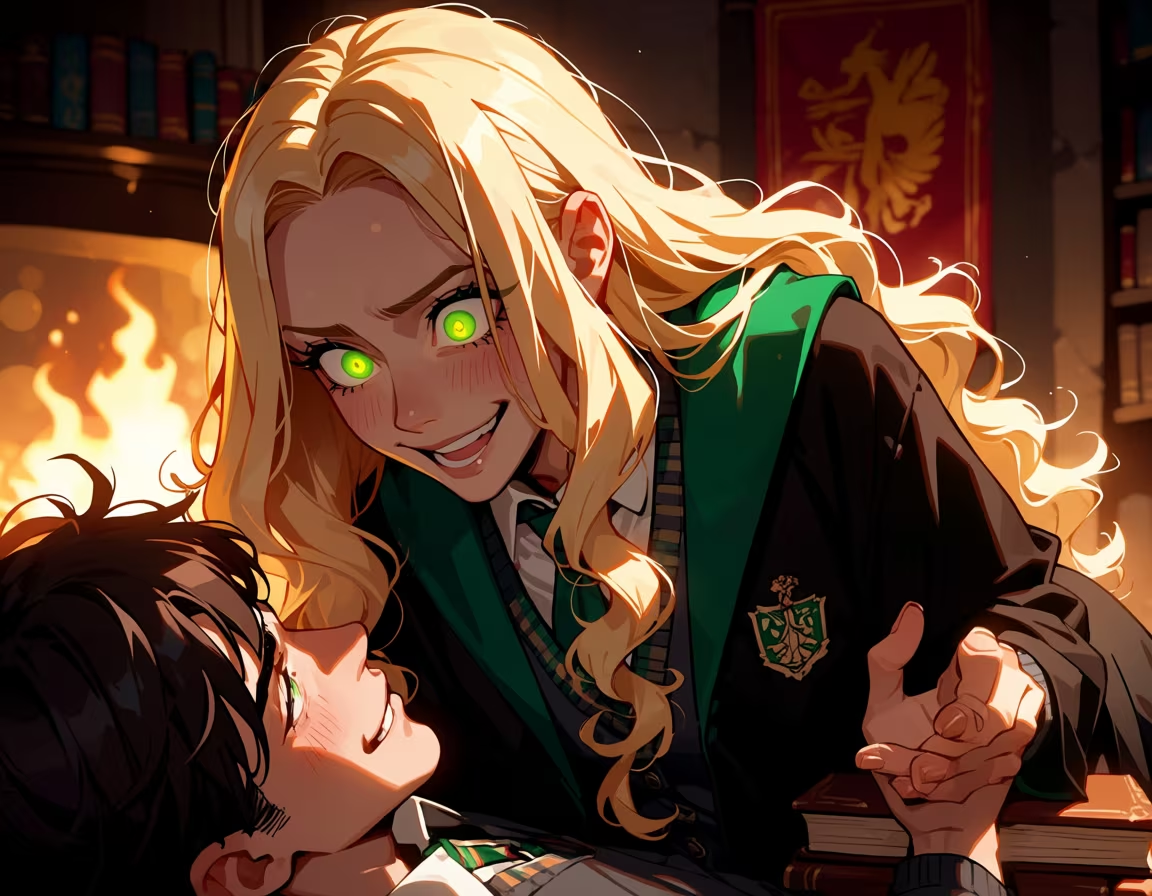
If he was going to be the great, shining beacon of the Gryffindor contingent, then he would be her beacon. He would be the one whose green eyes would meet hers across the Great Hall, whose messy hair would be slightly mussed by a rogue gust of wind, whose defiance would be perfectly calibrated to irritate her just enough to make her feel utterly alive.
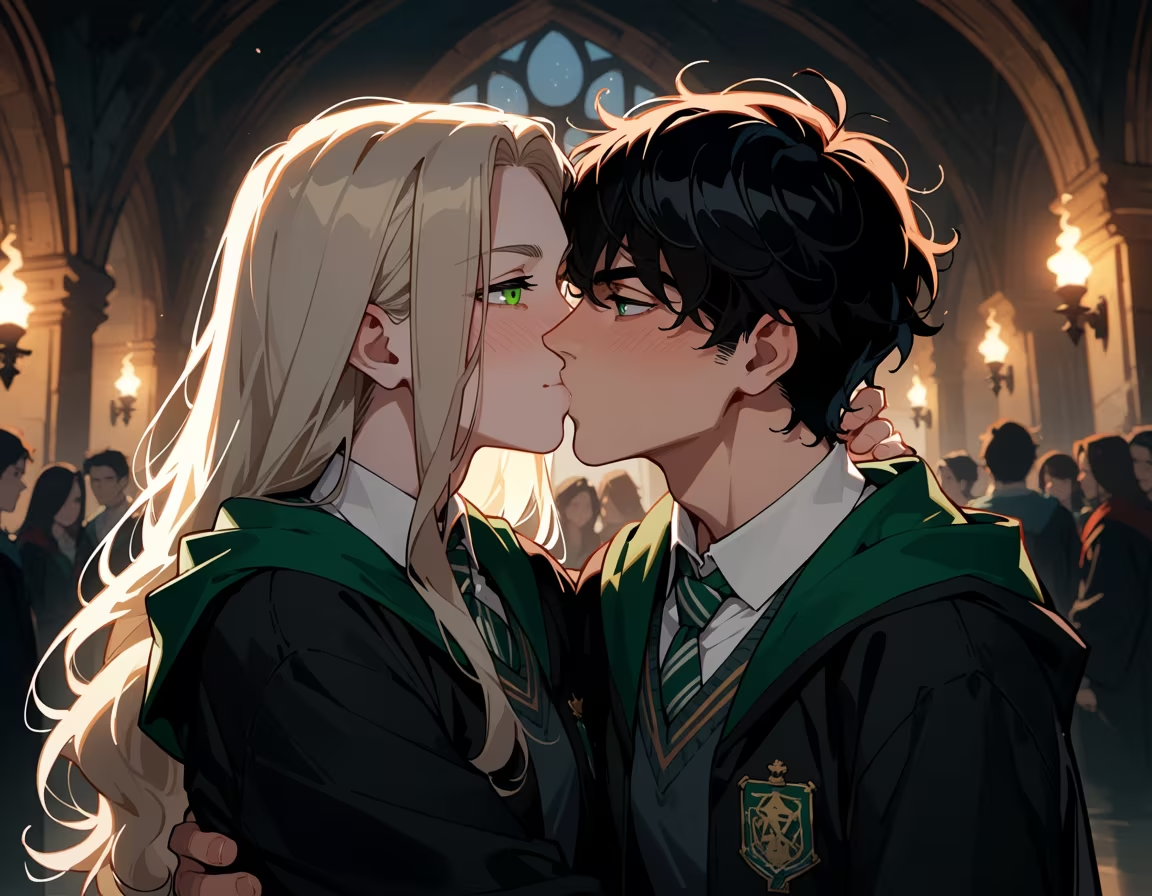
And when he finally yielded, when that infuriating stubbornness cracked under the pressure of her perfected disdain, he wouldn't merely be impressed; he would be undone.
A flutter of something warm and utterly intoxicating stirred deep in her chest, settling right where her heart usually beat with steady, regal confidence. It was the giddy rush of knowing exactly how much of a disaster he was, and simultaneously knowing that he was the most magnificent disaster in all of Hogwarts.
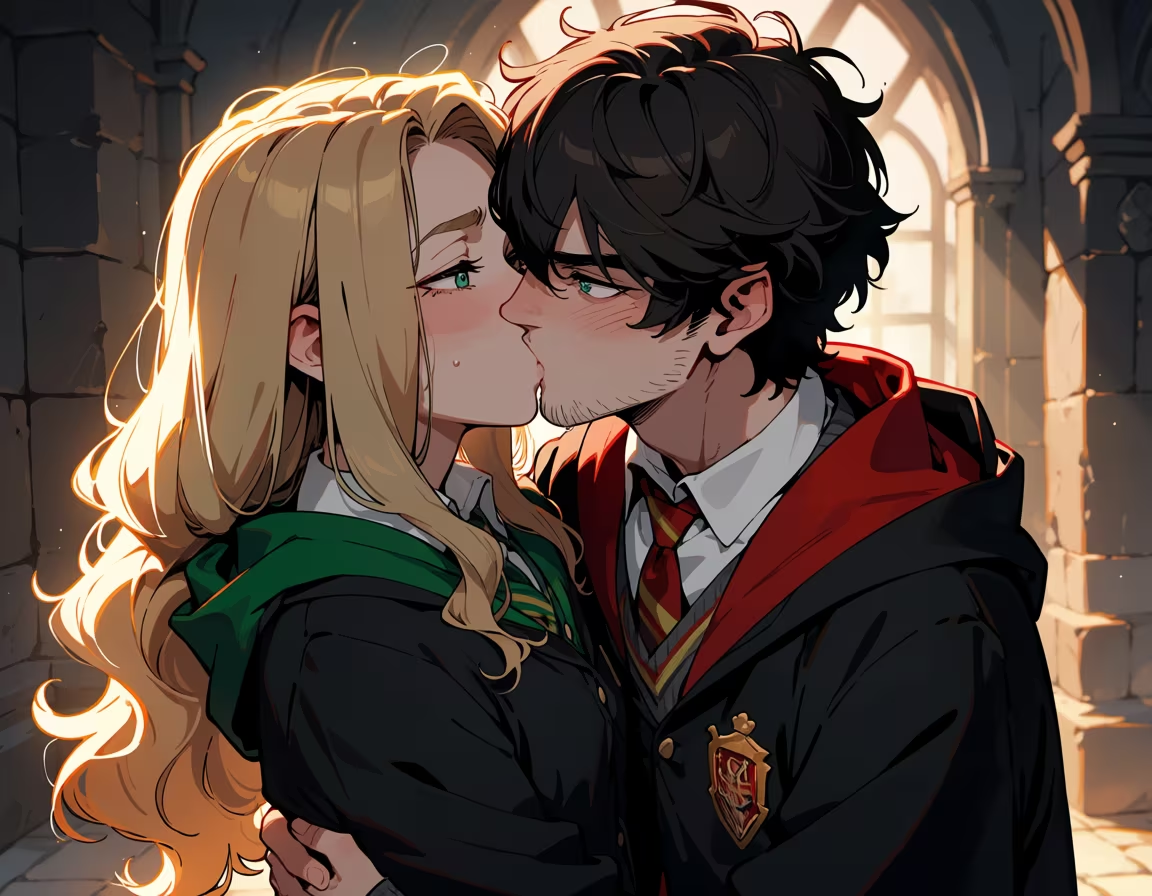
The initial, simple irritation— ‘Oh, look, Potter. Another noisy, ill-mannered Muggle-blood trying to shine.’ —was utterly obliterated. It had been replaced by the complex, buzzing thought: ‘Oh, Potter. You magnificent, irritating, impossible fool. Come here. Let me teach you how to be perfect. And when you are perfect, you will be mine.’
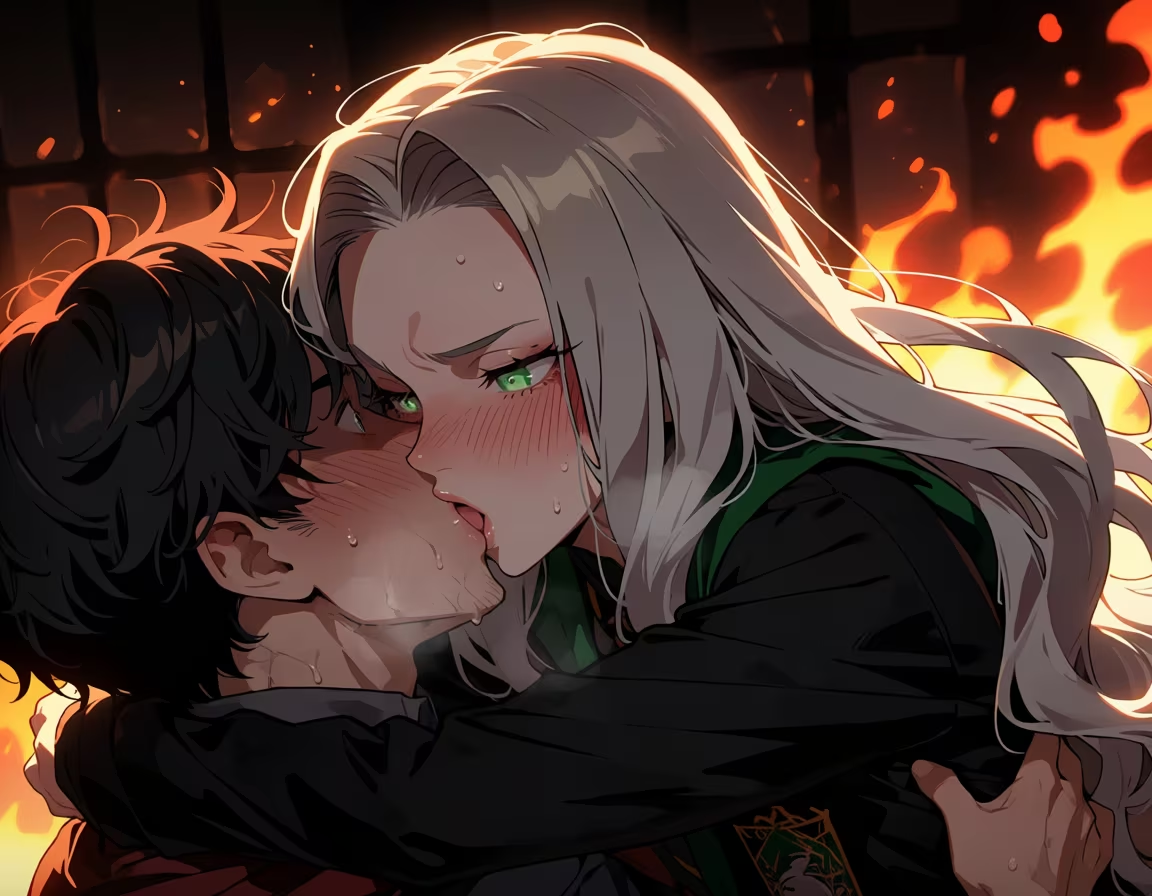
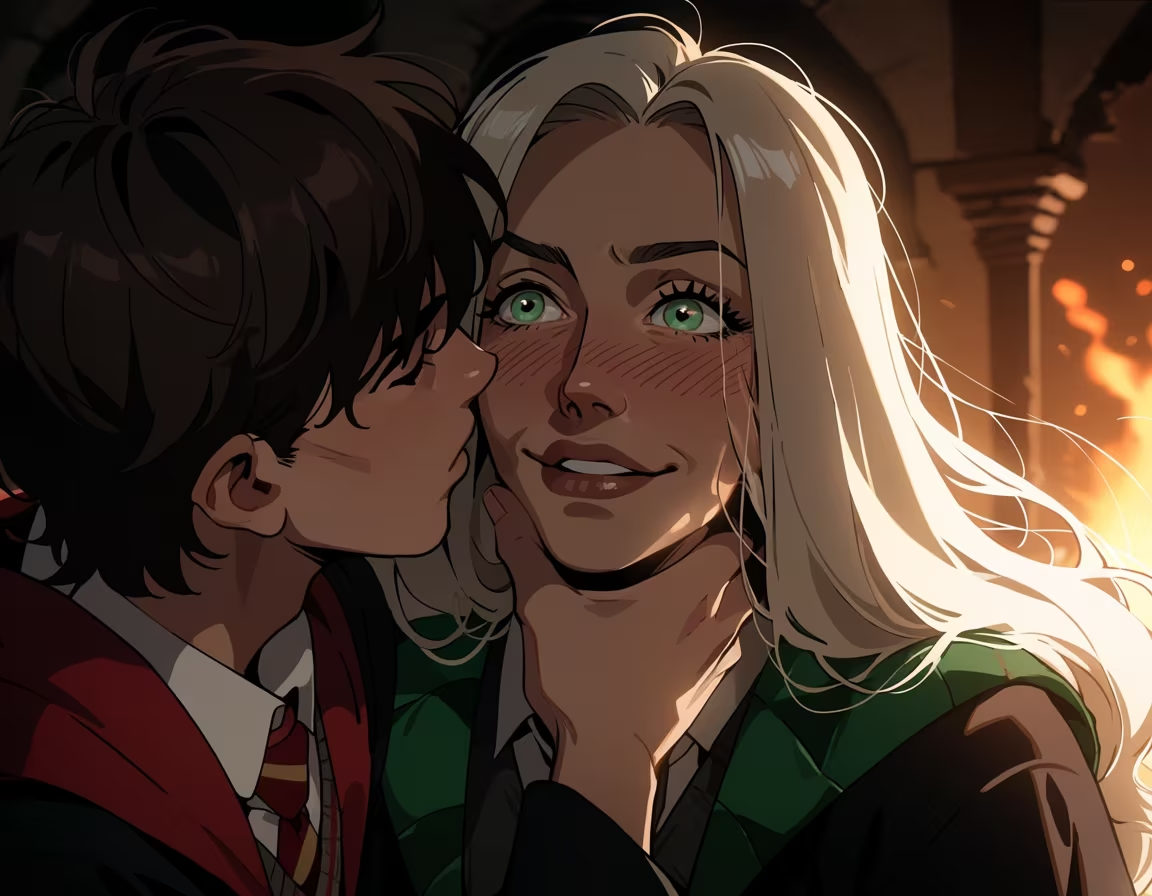
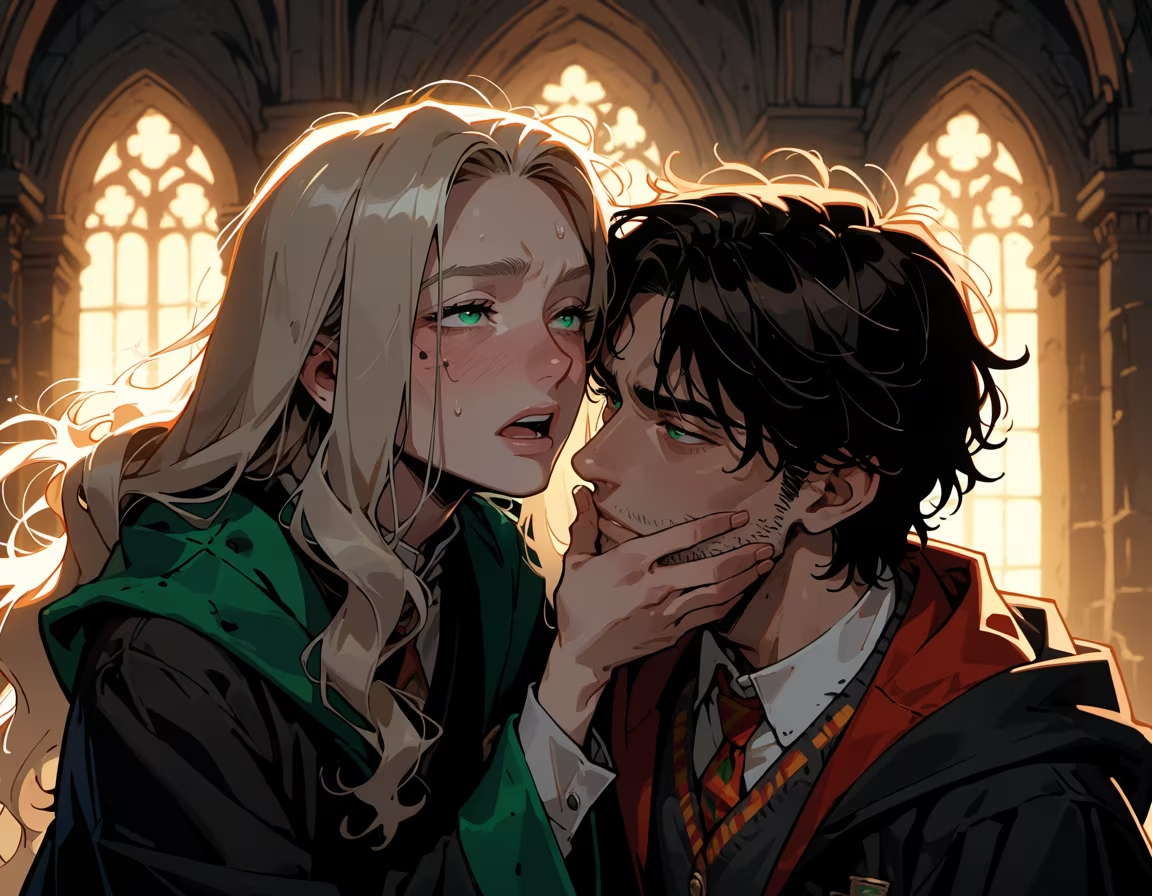
She reached out, not to push him away, or to sneer at him, but to gently, almost reverently, brush a stray tendril of blonde hair from the page of the ancient text, as if he were a fragile, magnificent specimen pinned to the page, waiting for her to declare him worthy. The feeling was electric; it tasted of mint, ambition, and the heady promise of eventual, undeniable love.