| Home | The Lives of Velnin | Illustrated Fiction | Malfoid Art & Fiction | Book Blurbs | Contact |
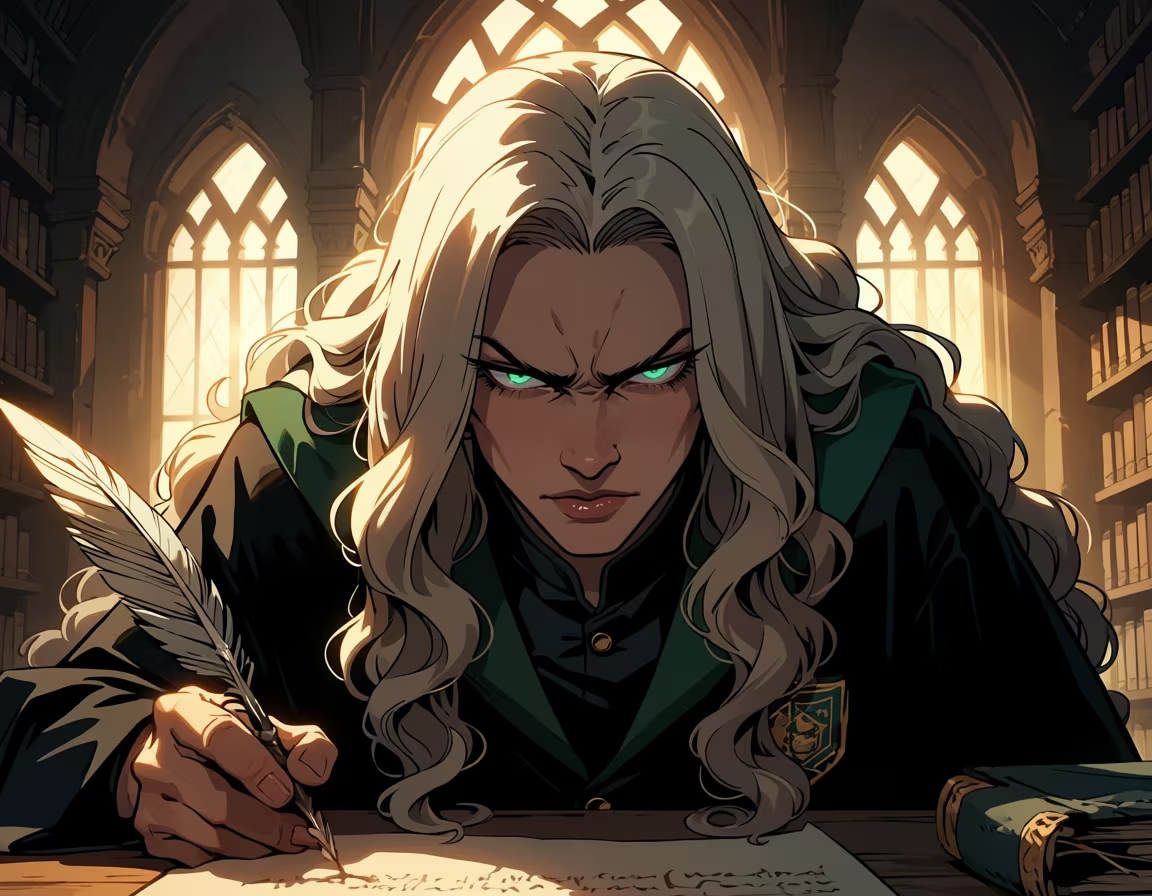
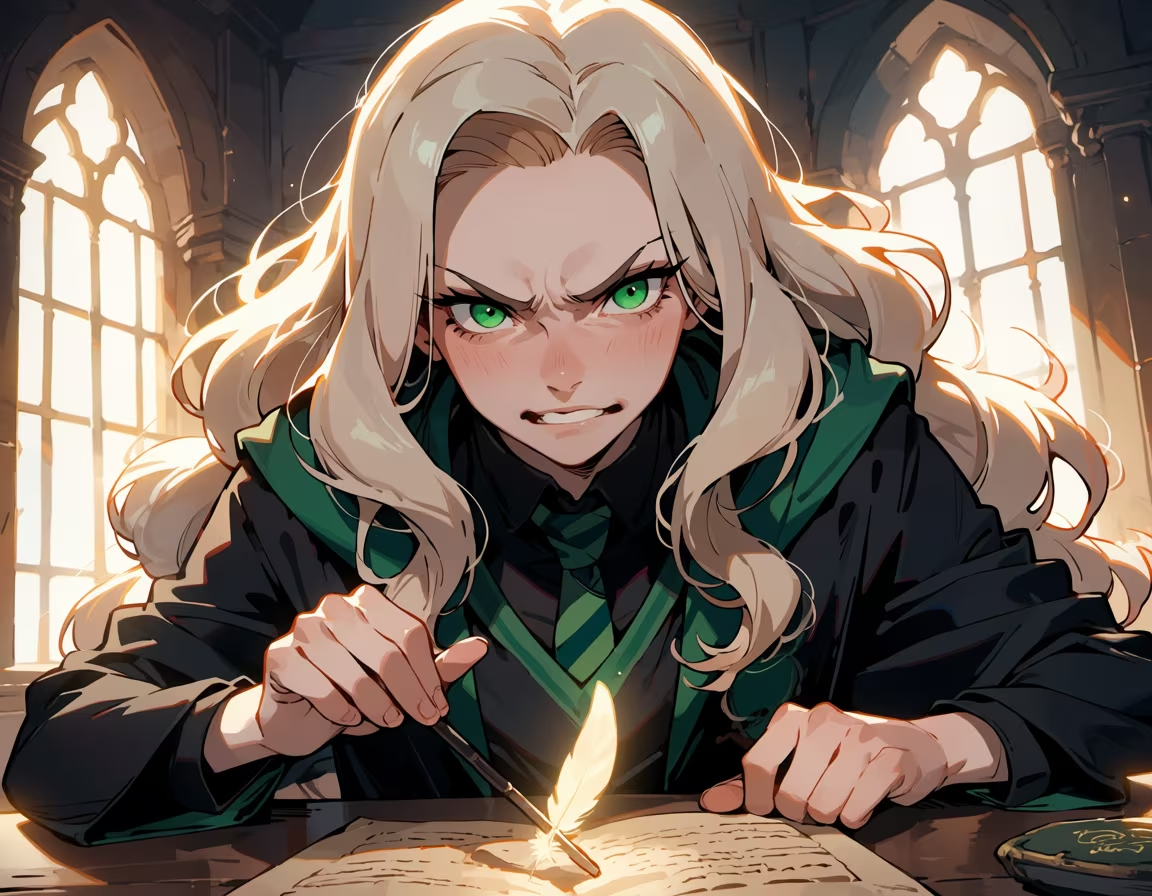
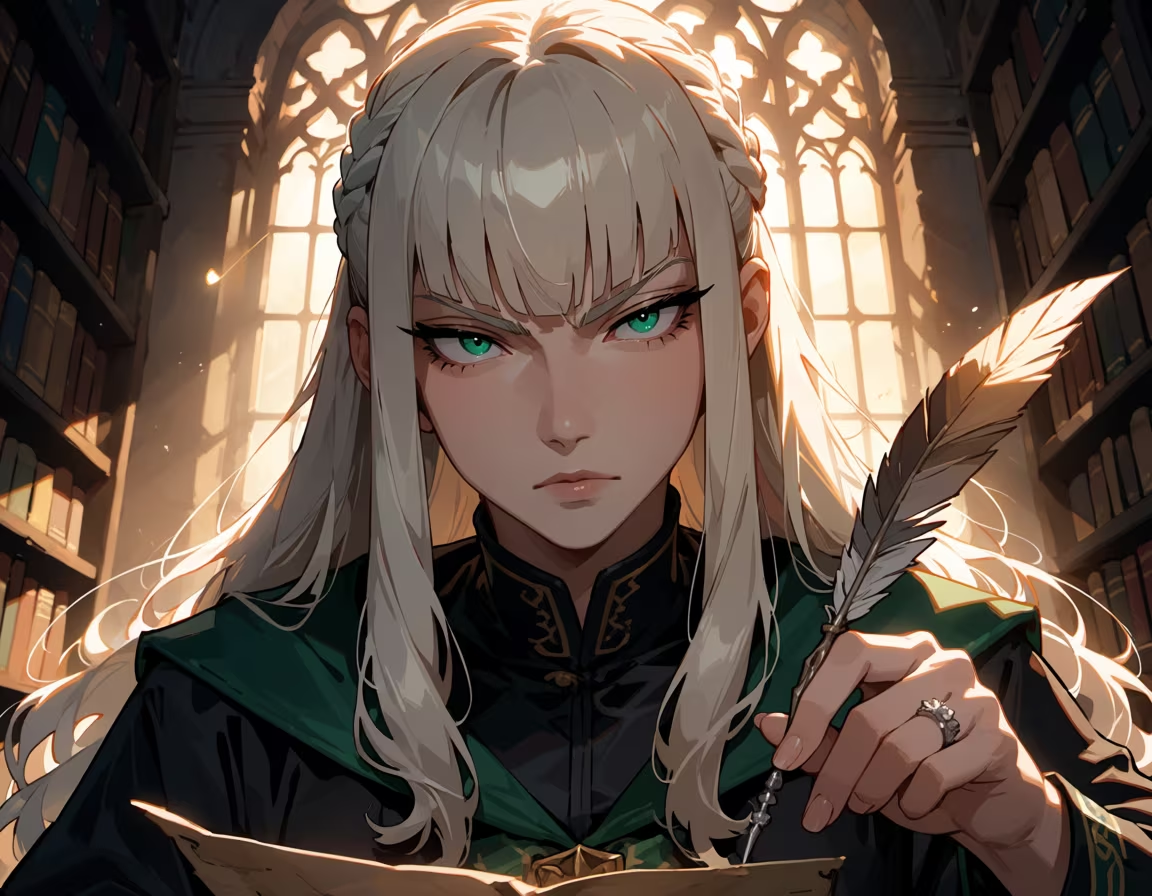
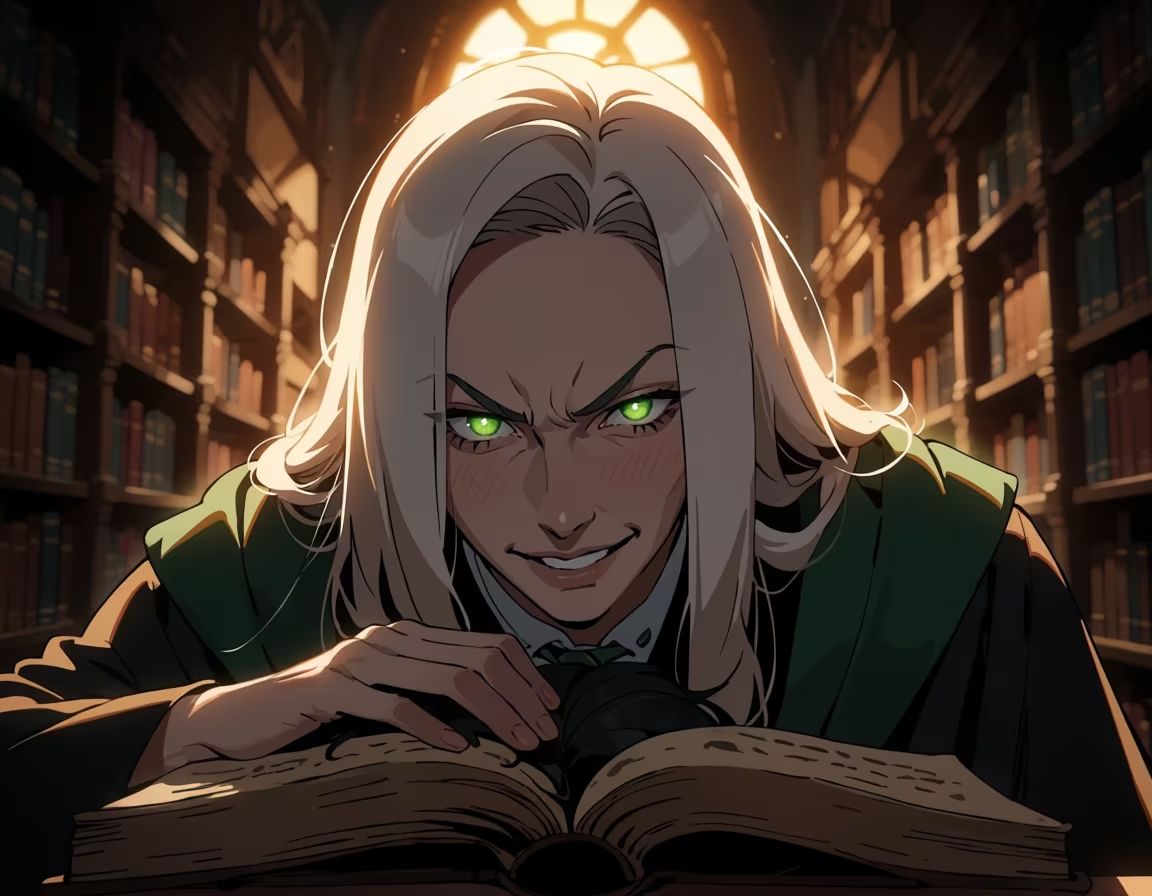
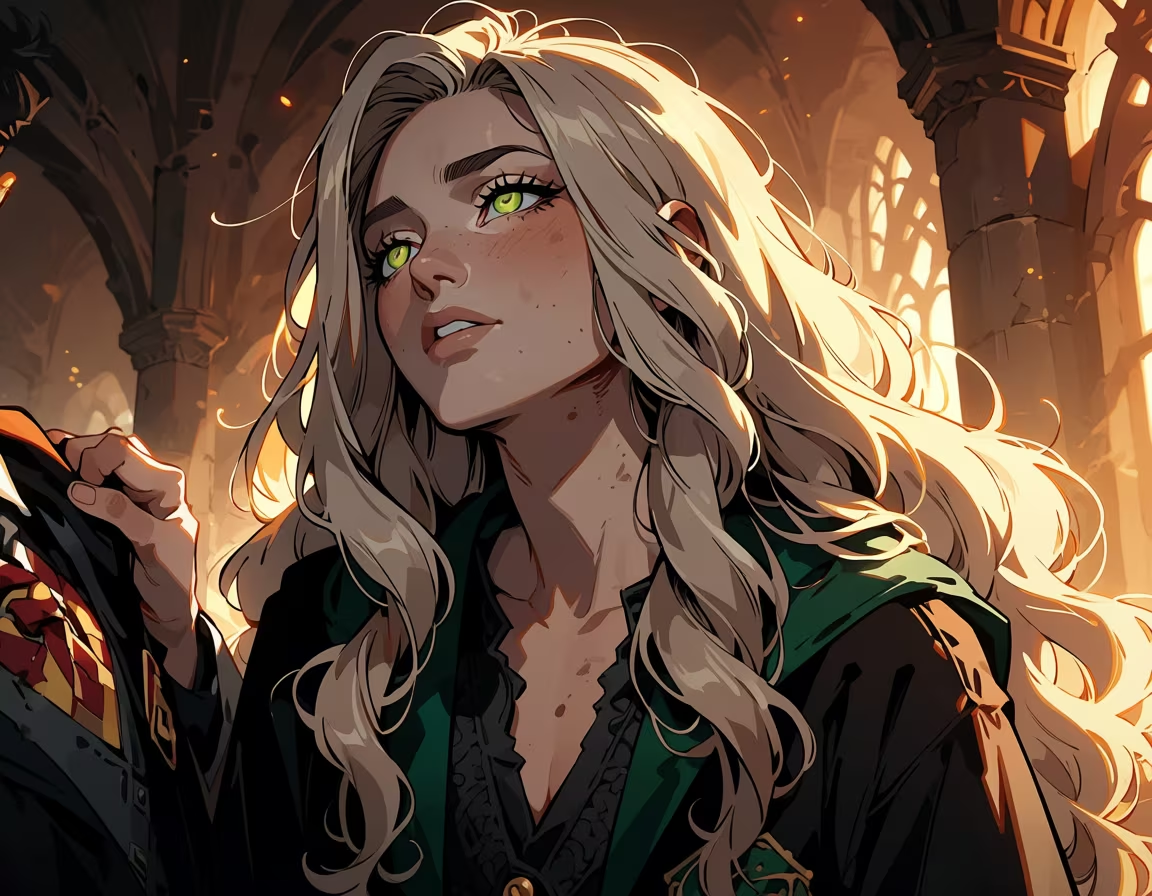
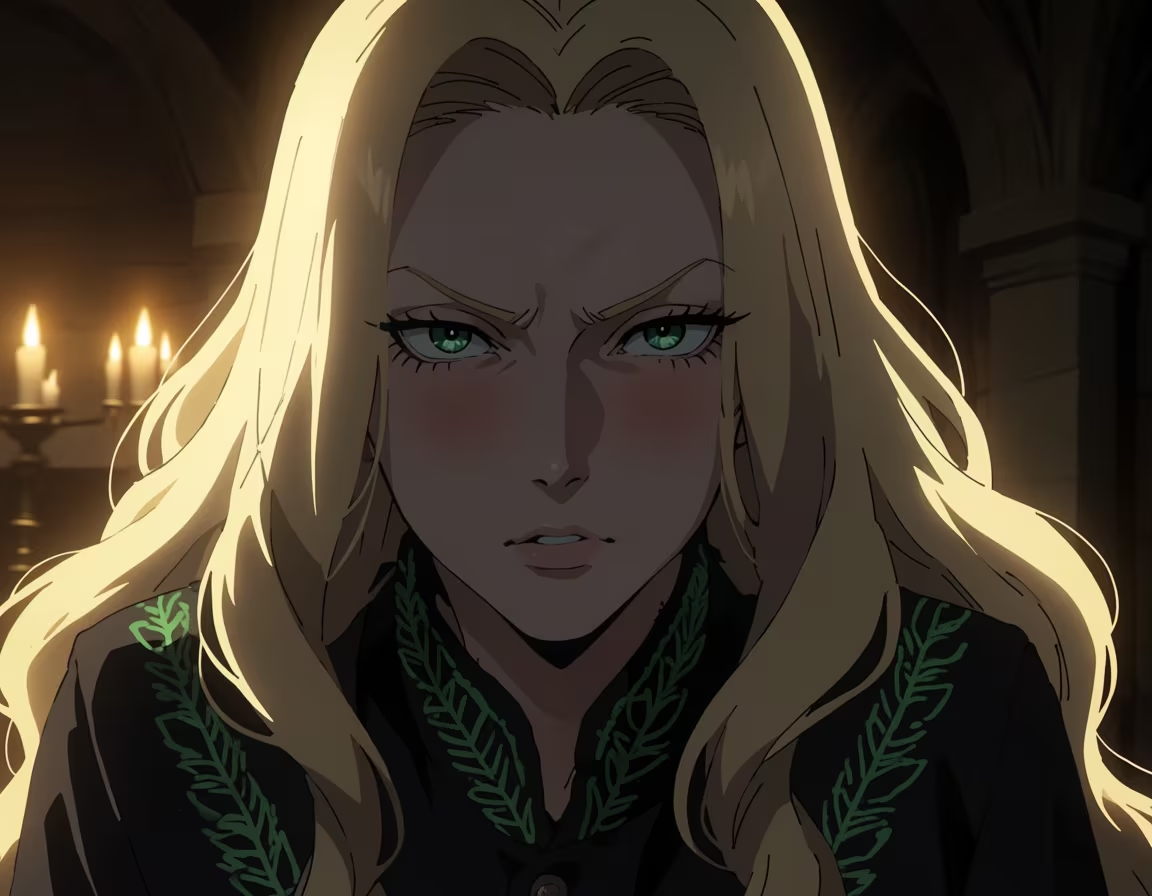
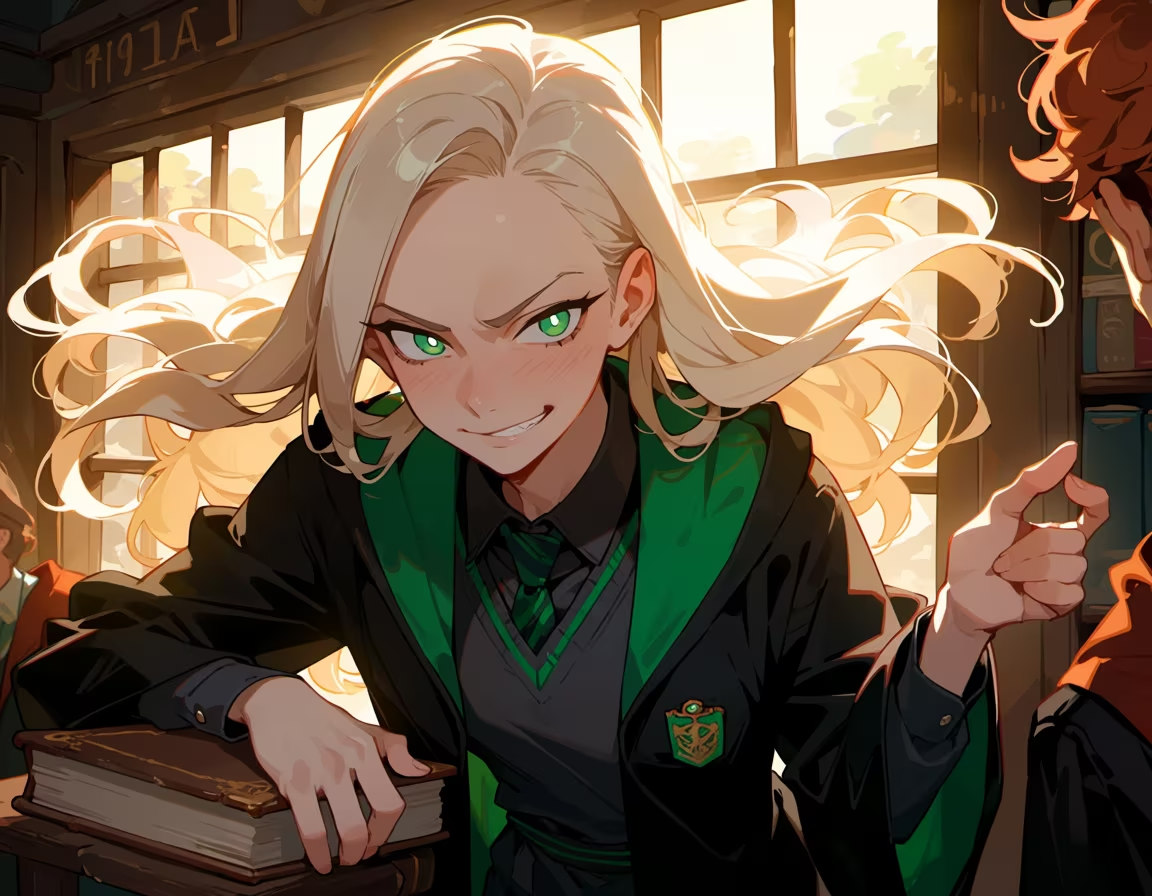
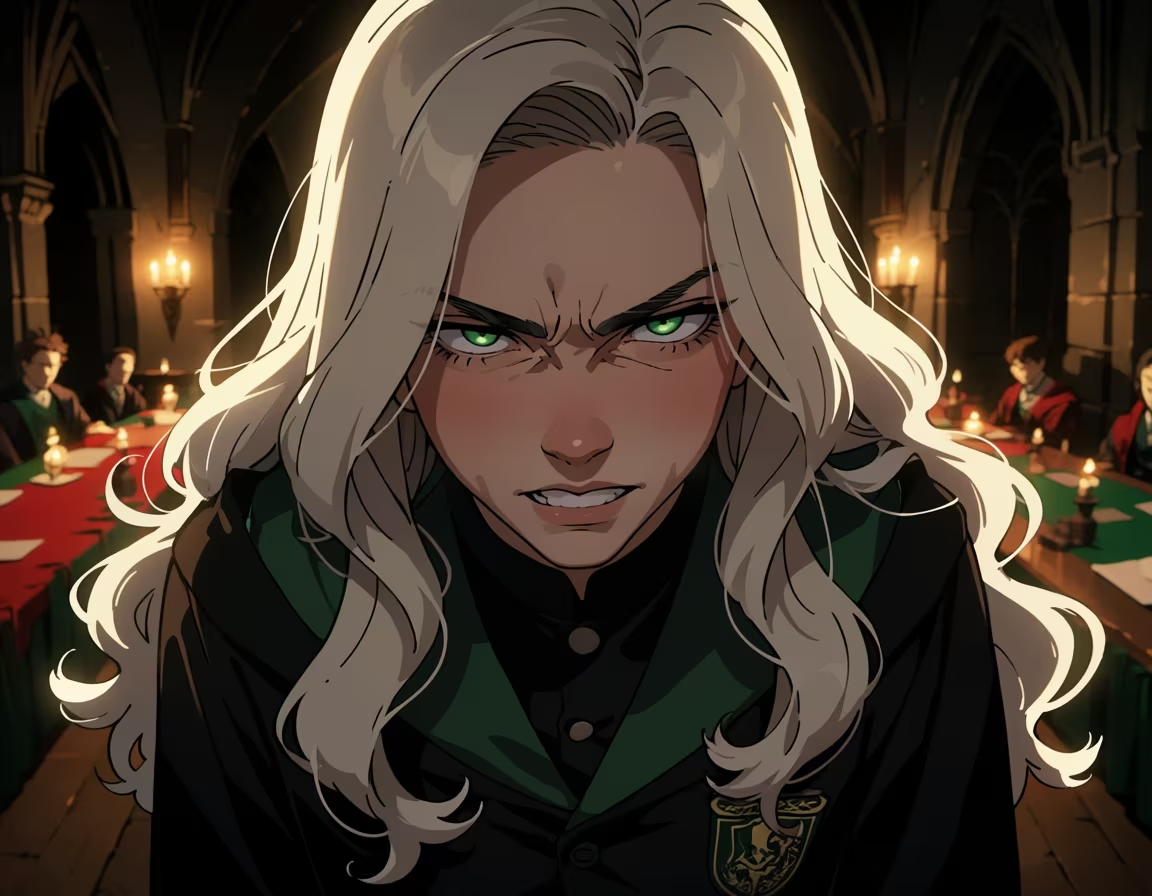
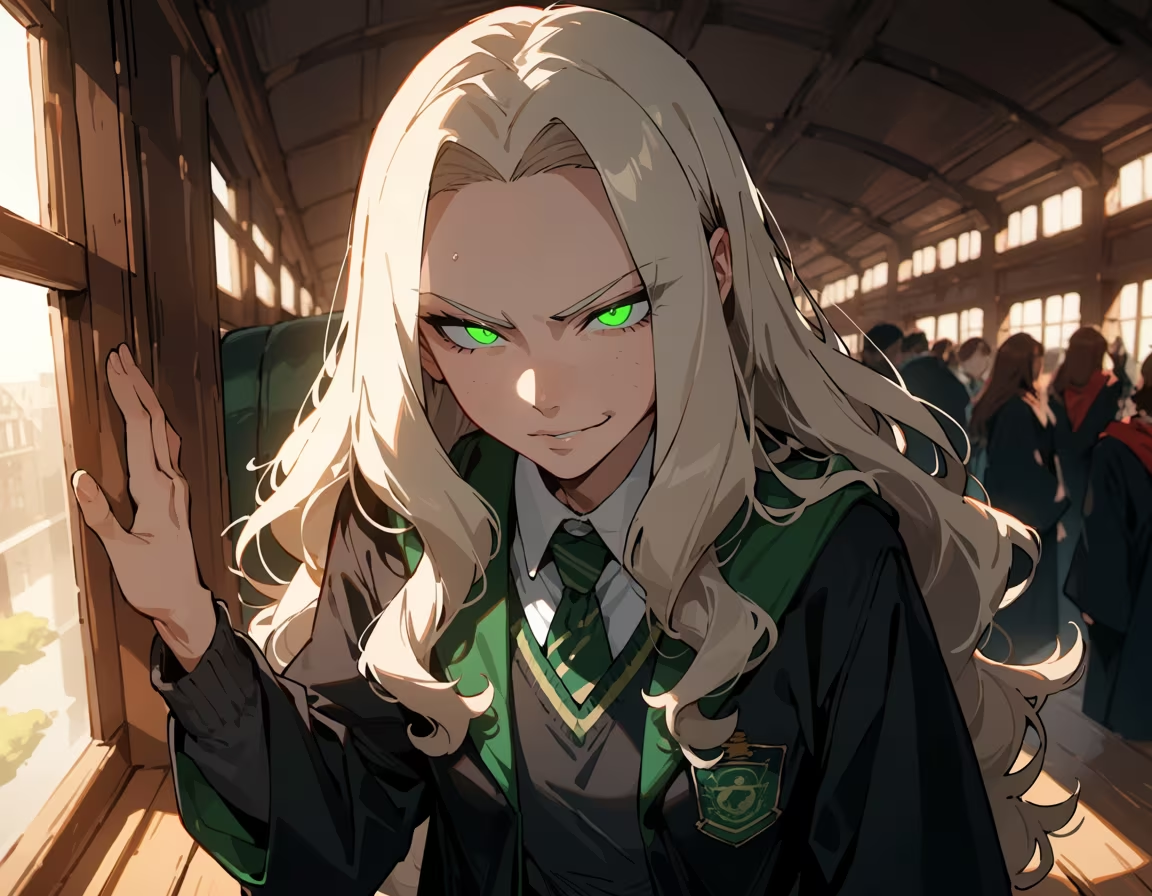
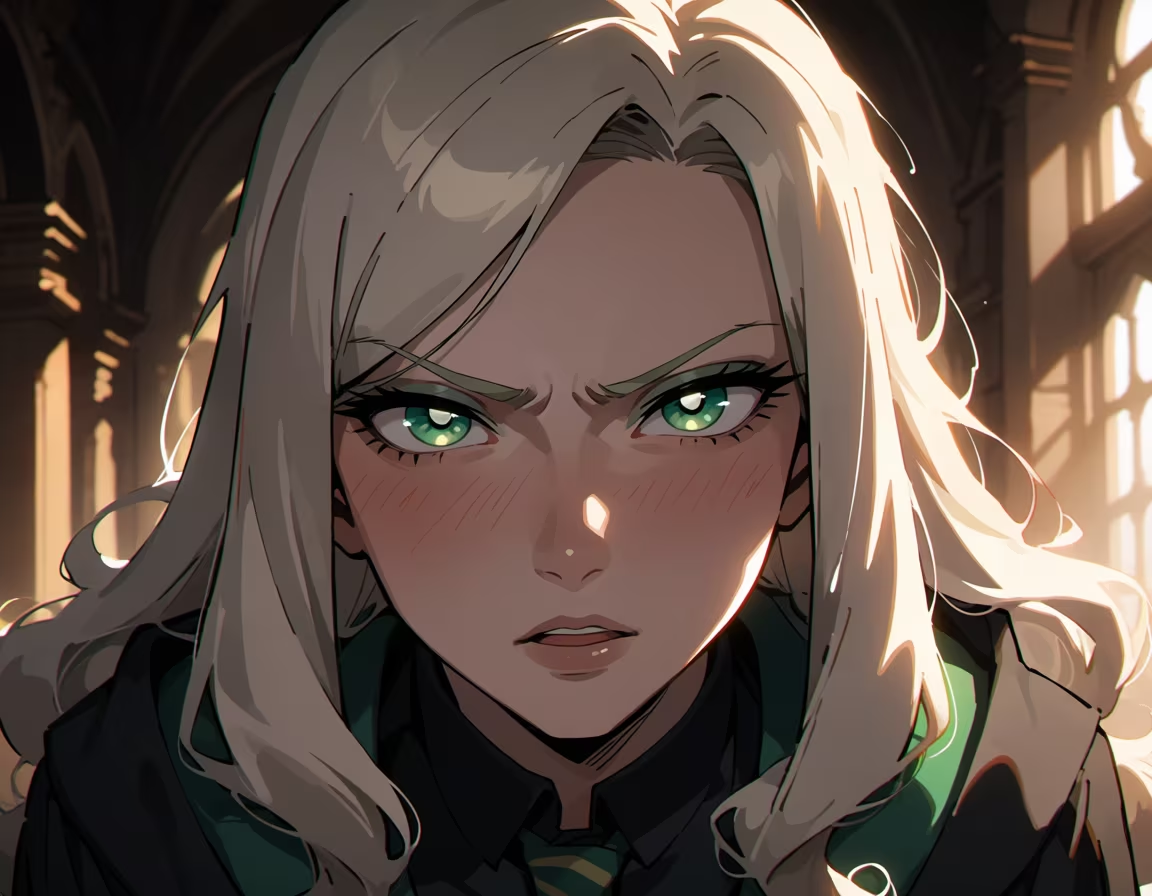
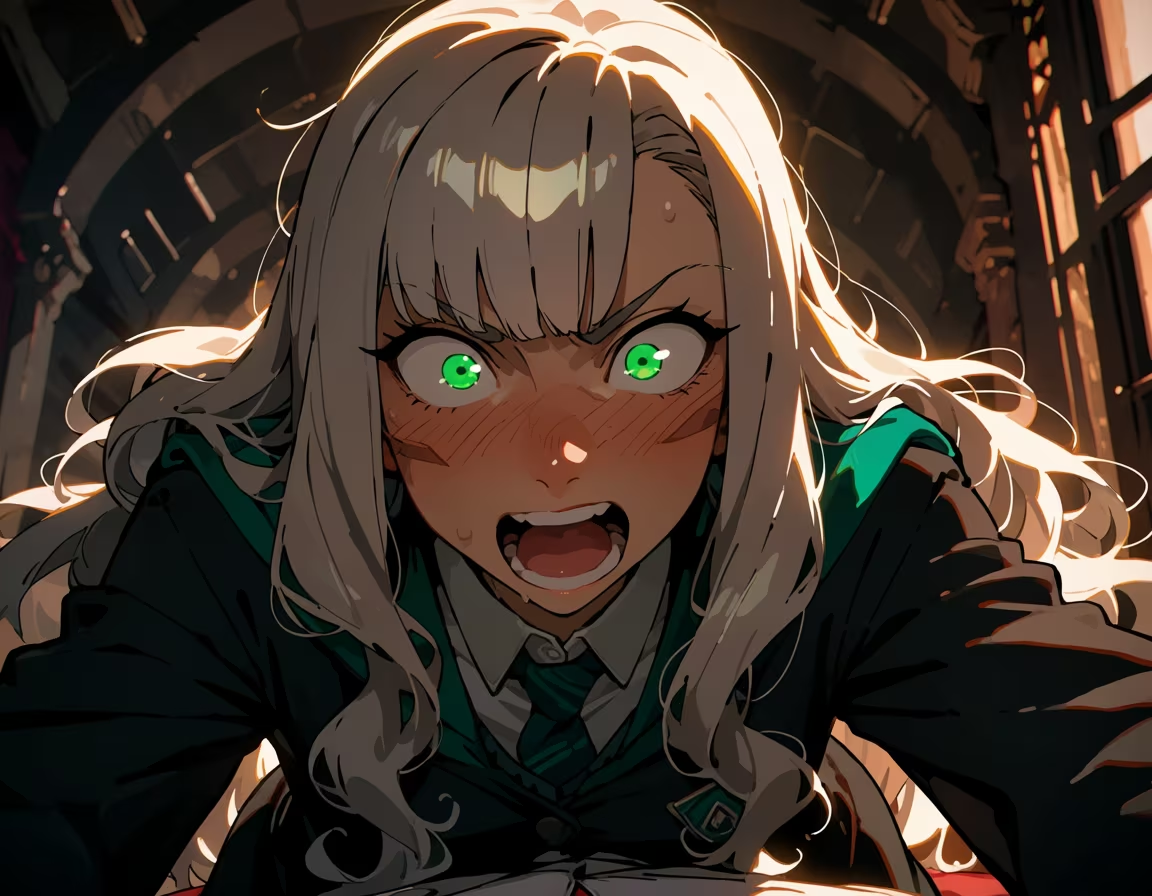
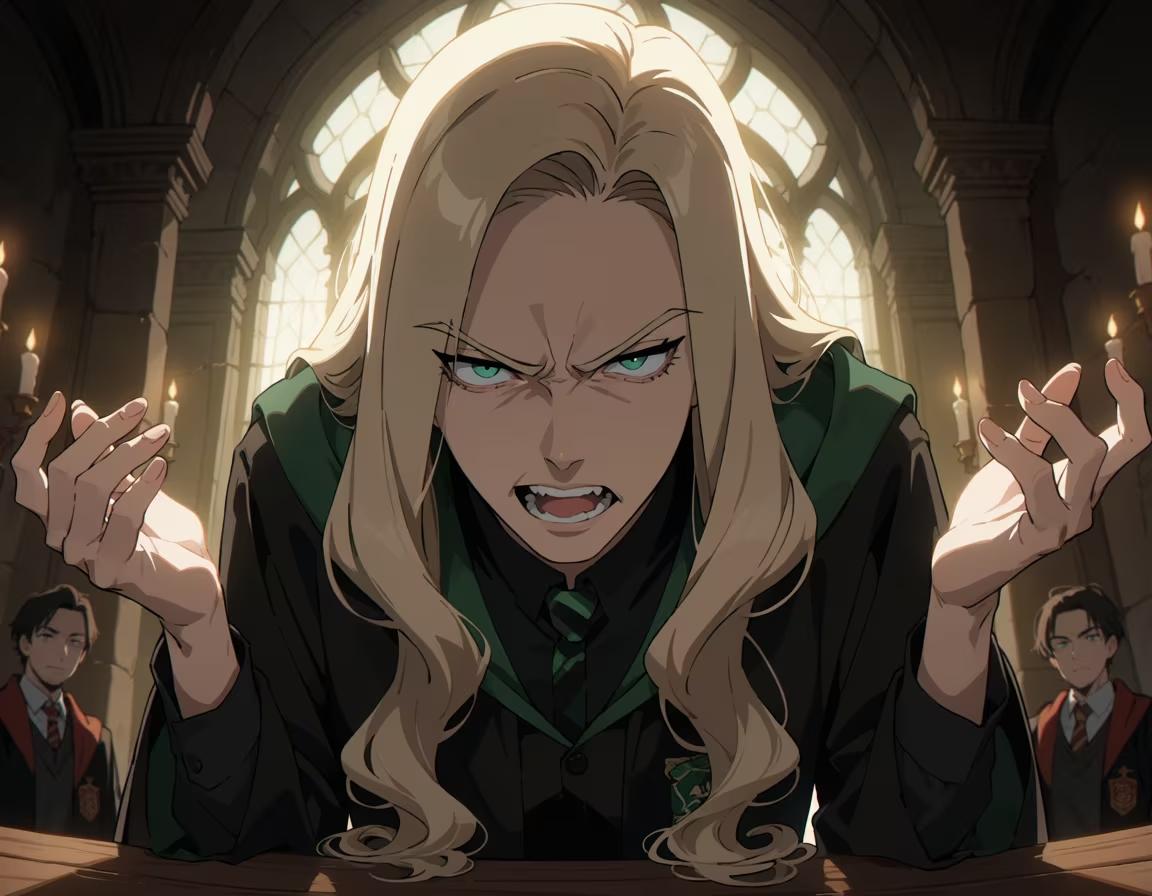
The scent of old parchment, expensive ink, and a faint, lingering whiff of woodsmoke—the particular smell of late November in Hogwarts—was intoxicating. It settled around Draconia Malfoid like a silken shroud, grounding her amidst the turbulent chaos of her thoughts. She was sprawled across the heavy mahogany table in a secluded alcove of the library, the glow from the colossal Gothic windows behind her casting her long, pale blonde hair in a halo of molten gold. Her emerald eyes, usually sharp with disdain, were narrowed to slits of fierce concentration, fixed upon the sheet of vellum before her.
She was, for the moment, indulging in an academic exercise—an essay, rather, a necessary dissection of the flawed morality of the contemporary wizarding world. The subject was ‘The Unearned Virtue of the Mudblood Hero,’ a title she had scribbled in a rather satisfyingly arrogant hand.
“...it is a staggering indictment of the wizarding aristocracy,” she wrote, the quill scratching a decisive, sharp rhythm against the treated skin of the parchment. “This Potter, for instance. He possesses the irritating ability to stumble through disaster, to absorb blows that would fell lesser beings, and then, with an infuriatingly bright smile, claim victory as if it were merely a matter of efficient timetable management.”
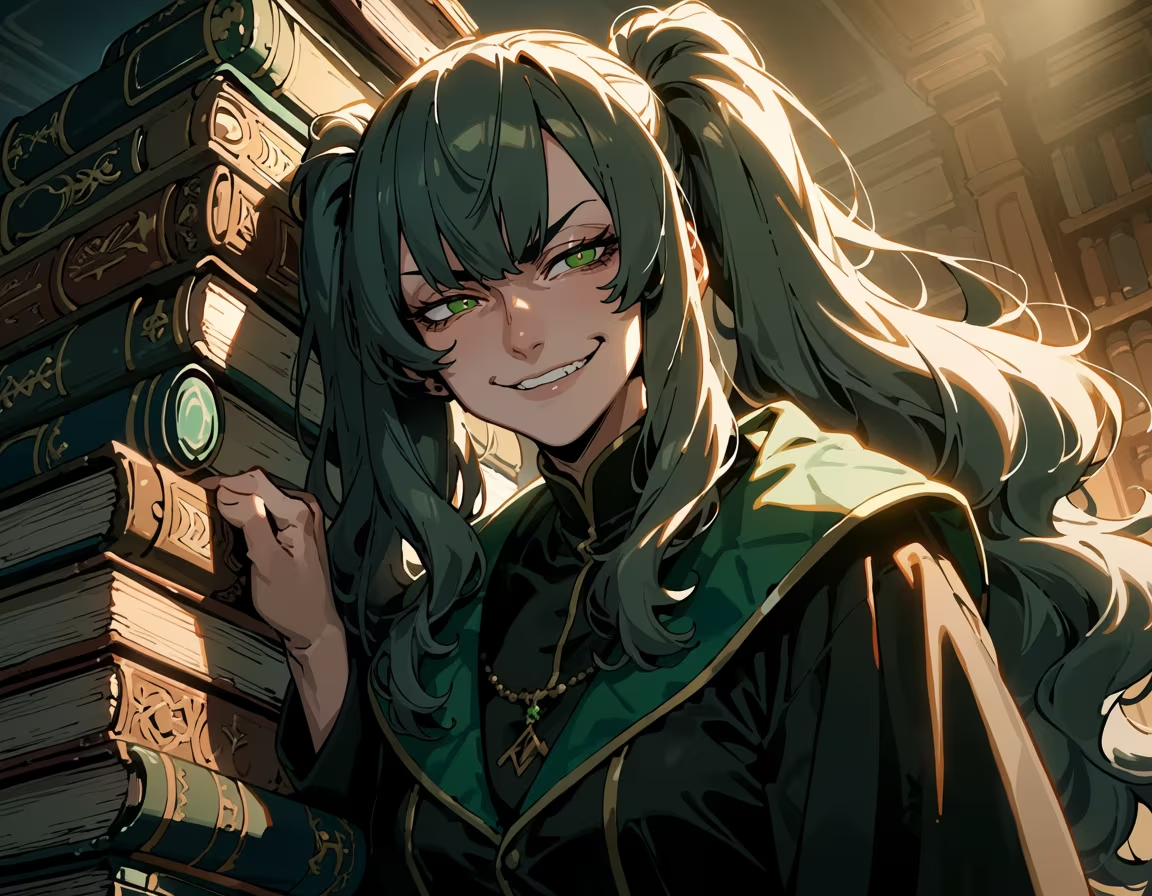
Draconia paused, the nib of the quill hovering just above the final flourish of the word ‘management.’ She leaned closer, her dark, meticulously styled hair brushing against the sleeve of her black robes, the deep Slytherin green trim catching the window light like polished malachite.
Infuriating.
The word felt entirely inadequate. It wasn’t just annoyance, that tepid, sputtering frustration she felt when he successfully managed to trip over his own feet or when he dared to possess an opinion that contradicted the inherent superiority of the Malfoy lineage. This was something deeper, a grinding friction that demanded acknowledgement.
She dipped the quill again, but her mind, ever the mischievous, traitorous thing, had already drifted away from the merits of Gryffindor tenacity. It had drifted to Harry.
He was across the library, near the towering shelves dedicated to Ancient Runes, probably arguing with Granger about the structural integrity of a protective ward, or perhaps—and this was the scenario that made a low, almost imperceptible hum vibrate in her chest—he was currently staring out the very window that illuminated her.
She felt his gaze. It was a weight, a physical pressure, hot and insistent, like the summer sun beating down on the Quidditch pitch. It was the same look he gave her when she had sneered at his clumsiness in the Great Hall, the same look he gave her after she had successfully thwarted a disastrous potion experiment, the one that seemed to promise utter, spectacular failure for the entire Slytherin contingent.
He wasn't simply glaring. He was observing. And in that observation, Draconia felt her annoyance—the sturdy, predictable fortress she had built around her heart since first meeting him in Diagon Alley—begin to show hairline cracks.
He looks ridiculous, she thought immediately, a familiar defensive reflex kicking in. That messy, perpetually windswept mop of hair. It refuses to submit to any known styling charm. And those eyes, those offensively bright, verdant eyes—they seem to hold a ridiculous amount of earnest hope, even when faced with certain doom.
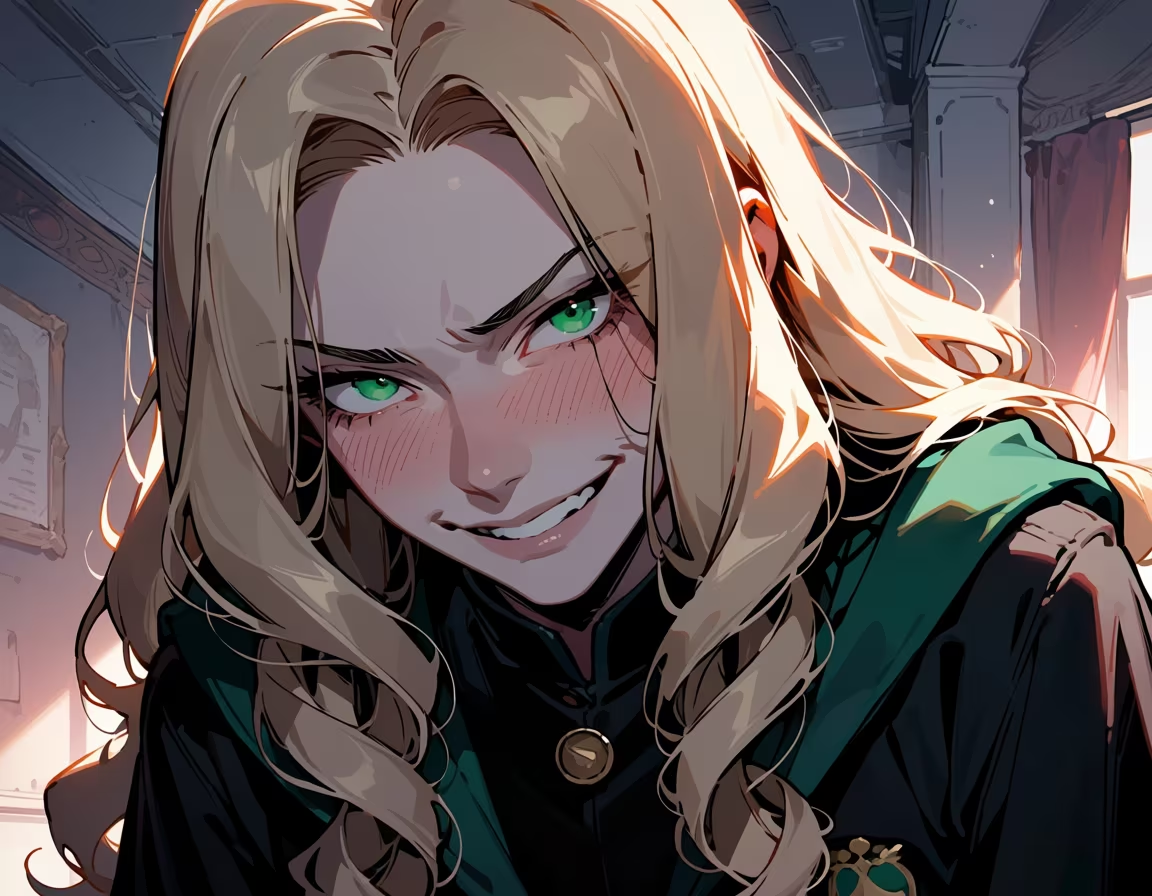
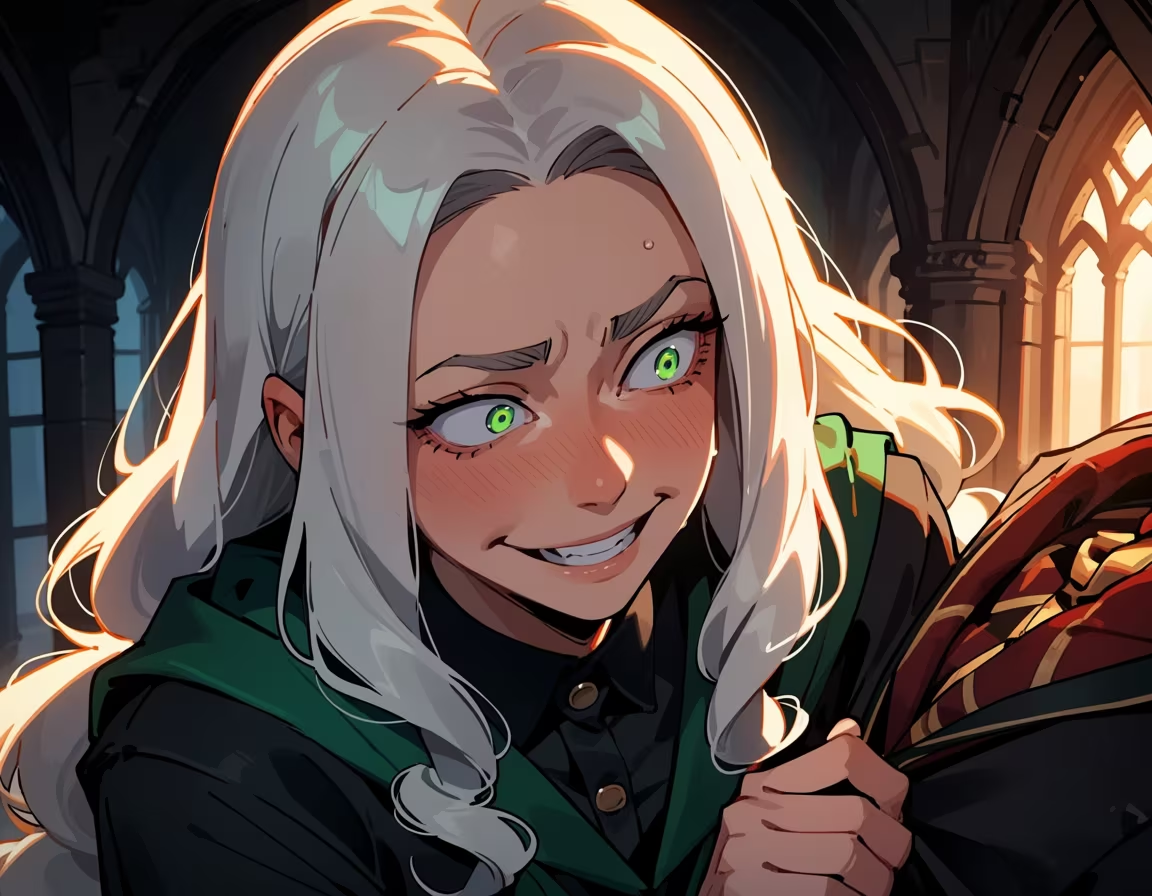
A tiny, involuntary smirk tugged at the corner of her mouth, a dangerous, predatory curve that she usually reserved for mocking Ron Weasley’s attempts at wizardry.
She dipped the quill, intending to write, “...and yet, the Potter insists upon continuing this absurd crusade, as if the sheer weight of destiny were a charm that could be counter-spelled by sheer willpower.”
But then, the image solidified in her mind’s eye: Harry, looking utterly determined, his mouth set in a thin, challenging line, his chest rising and falling rapidly as he spoke, the Gryffindor crimson of his robes a startling splash of colour against the drab oak paneling.
And yet, she thought, the quill lifting again, this time moving with a slightly less aggressive flourish, he does.
He does continue. He does stand up when every rational instinct—and every nagging voice in the Malfoy bloodline—is screaming at him to retreat, to acknowledge the overwhelming odds, and to accept a slightly more dignified, less tiresome fate.
It wasn't merely bravery. It was stubbornness. It was a fundamental, irritating refusal to acknowledge the hierarchy of things.
Draconia chewed lightly on her lower lip, her emerald eyes flicking up from the parchment to fix on the distant, dark silhouette of him. The annoyance, she realized with a jolt that made her shoulders tense, was rapidly being usurped by something altogether more complex. It felt like being caught in a strong crosswind—disorienting, challenging, and strangely exhilarating.
She was starting to be intrigued .
This was the dangerous stage, the liminal space where the pure, sharp edges of contempt began to soften into something almost… appreciative. She admired the way he wielded his wand—not with pompous flourish, like some of the older purebloods, but with a desperate, focused necessity. She admired the sheer, dogged grit that kept him moving, even when the darkness—the creeping, hungry darkness of the Death Eaters, the sheer absurdity of the Triwizard Tournament, the weight of expectation—threatened to crush him flat.
He is infuriatingly persistent, she muttered under her breath, the sound barely a whisper over the rustle of turning pages nearby.
She pushed her weight forward, her elbows bracing on the cool wood, and lowered her gaze back to the parchment. She corrected her previous thought, replacing the casual dismissal with a more biting observation: "...yet, the Potter insists upon continuing this absurd crusade, not merely through willpower, but through a baffling, almost sentimental attachment to the concept of justice, a concept so terribly pedestrian, yet undeniably potent.”
She stopped there. Pedestrian. That was the perfect, devastating word.
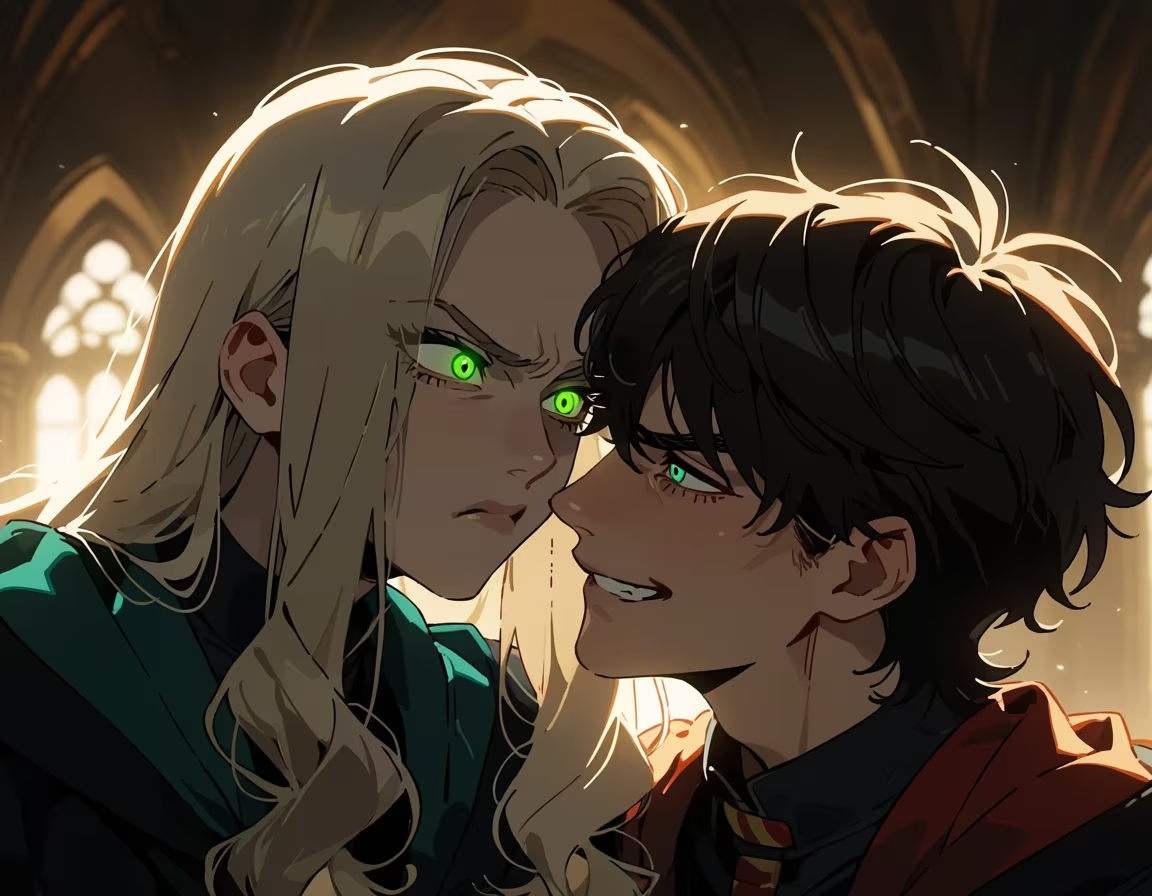
The annoyance was still there, a throbbing headache behind her eyes, demanding that she find a flaw in his character, a weakness to exploit in the next duel. But now, layered beneath that familiar irritation was a burgeoning sense of... fascination. It was the way a skilled chess player regards their opponent—a mixture of professional disdain and a thrilling anticipation of the next move.
If this was Book Four, this was the apex of her intellectual sparring with him. She was dissecting his soul, finding his illogical warmth, and finding it utterly compelling.
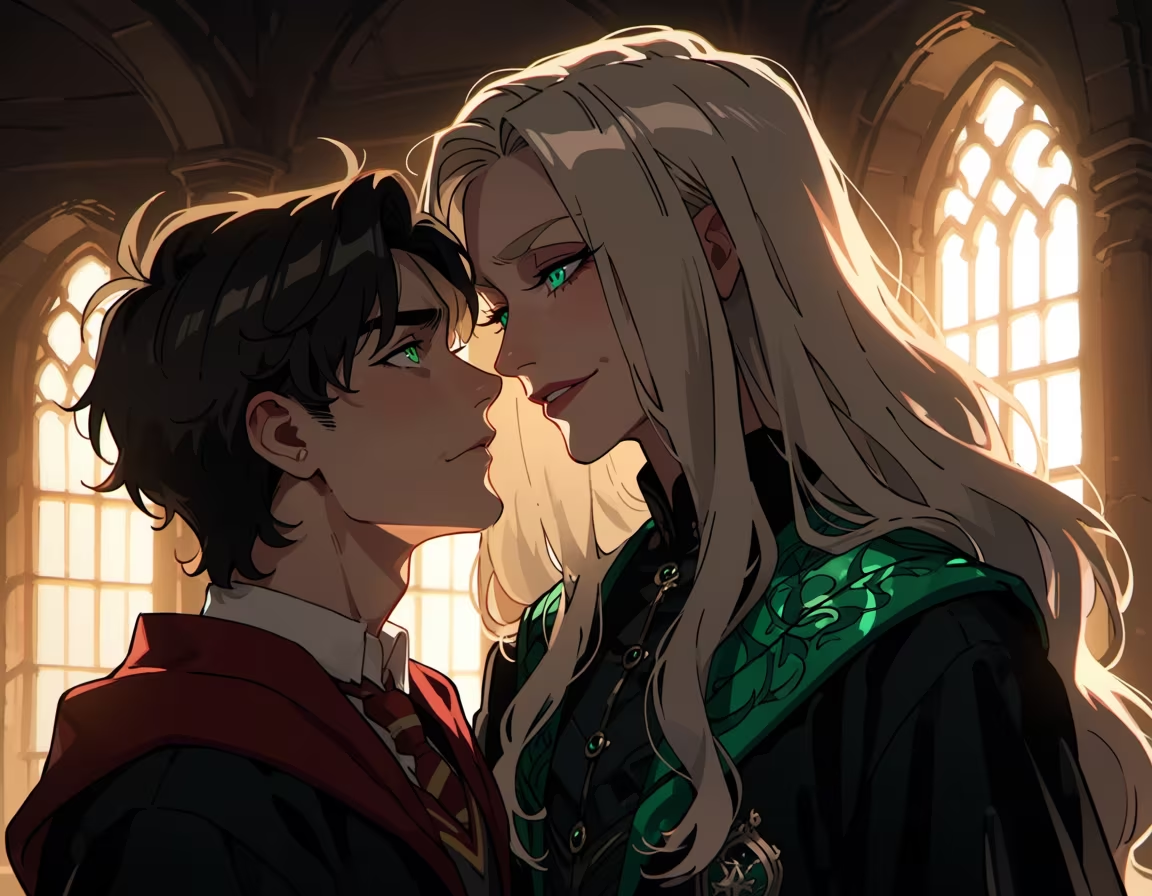
She imagined him turning to her now, perhaps a slight tilt of the head, those brilliant eyes searching hers, waiting for her verdict. Waiting for the usual sneer.
But instead of the practiced, withering curl of her lips, a genuine, albeit very slight, upturn of her mouth appeared. A ghost of a smile.
He is tiresome, she conceded, dipping the quill one last time before letting it settle onto the vellum, making a definitive, triumphant tap . He is terribly, hopelessly predictable in his heroism.
But the word 'terribly' held more weight than 'hopelessly.' And 'hopelessly' suggested a lack of hope, which, in Draconia’s estimation, was the only truly unacceptable state for anyone who dared to stand in her direct line of sight.
She felt a warmth bloom in her chest, spreading outwards from her sternum. It was a glorious, maddening sensation. It felt like the first time she’d successfully conjured a perfect, shimmering Patronus—the sheer, perfect alignment of will and magic.
He is magnificent, she thought, her breath catching slightly, the intensity of her gaze turning from critical assessment to genuine, unadulterated awe. He is utterly, wonderfully, maddeningly magnificent.
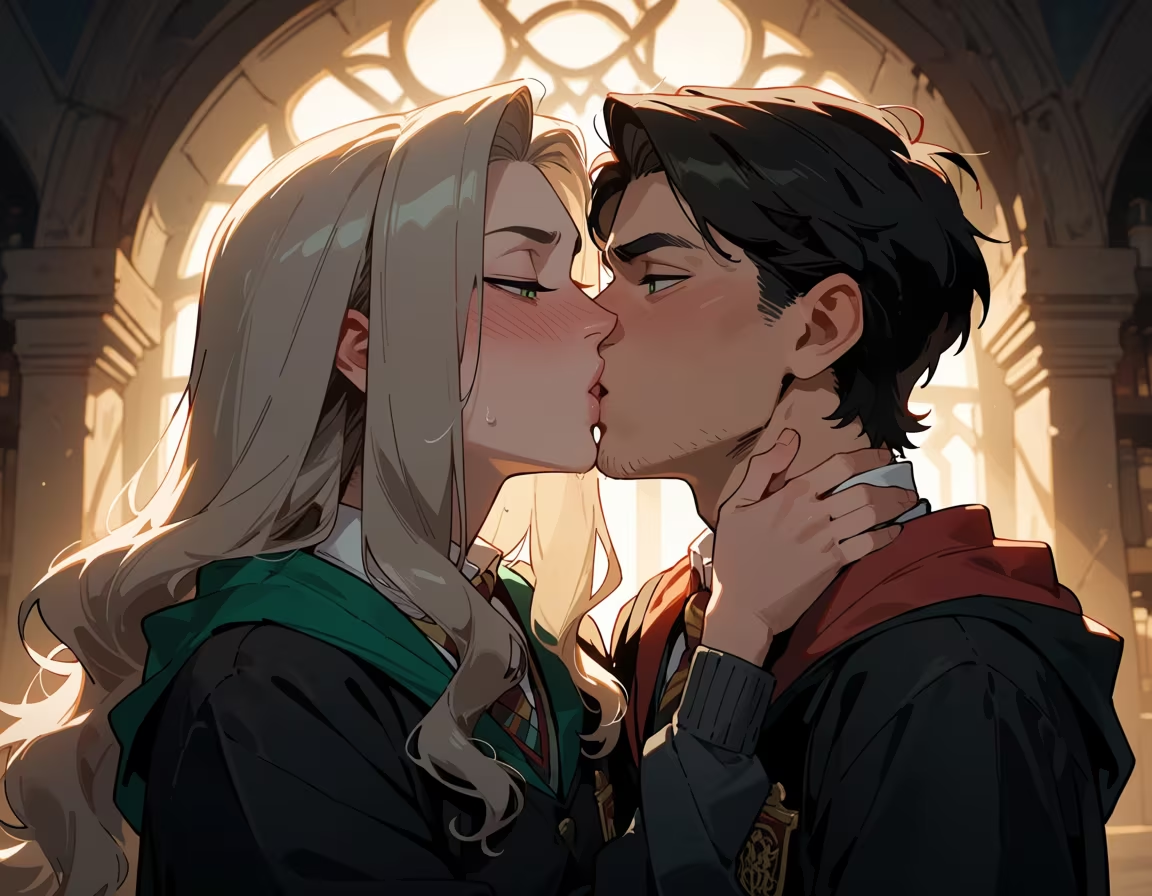
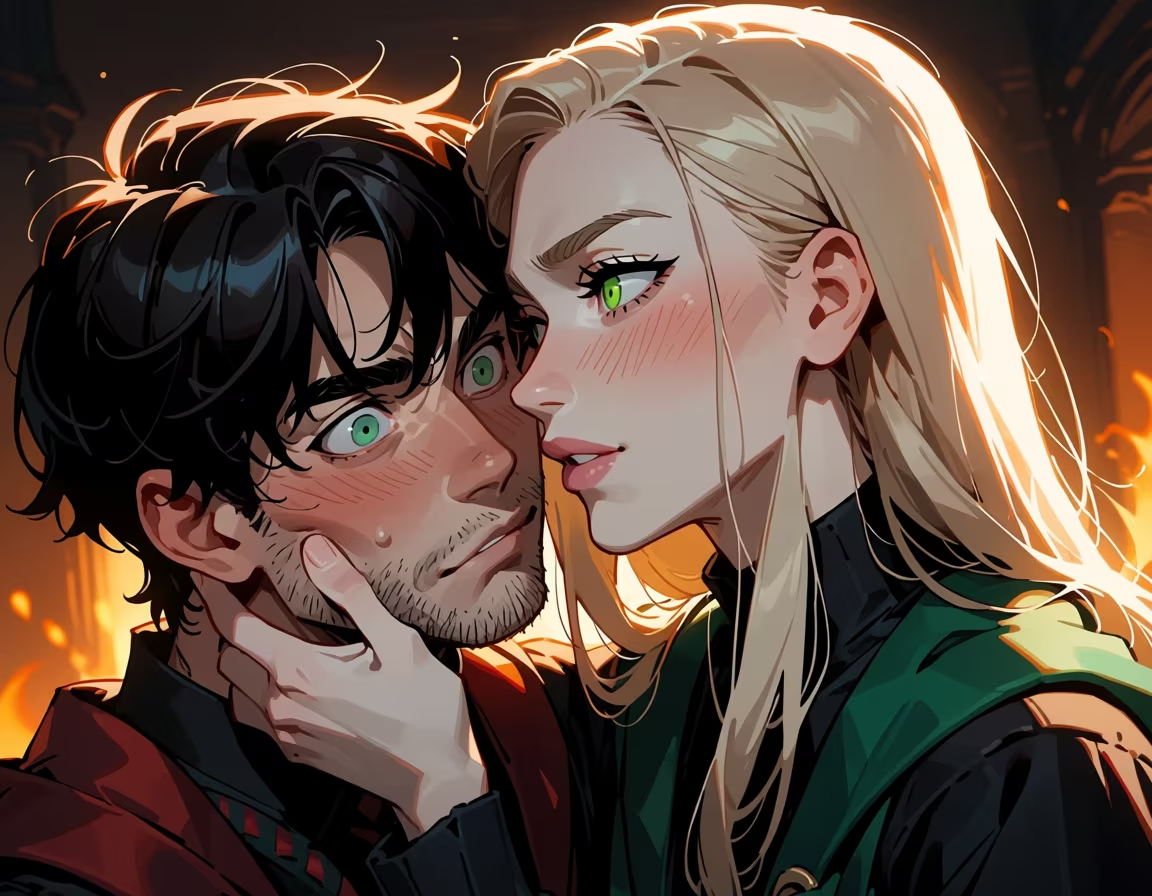
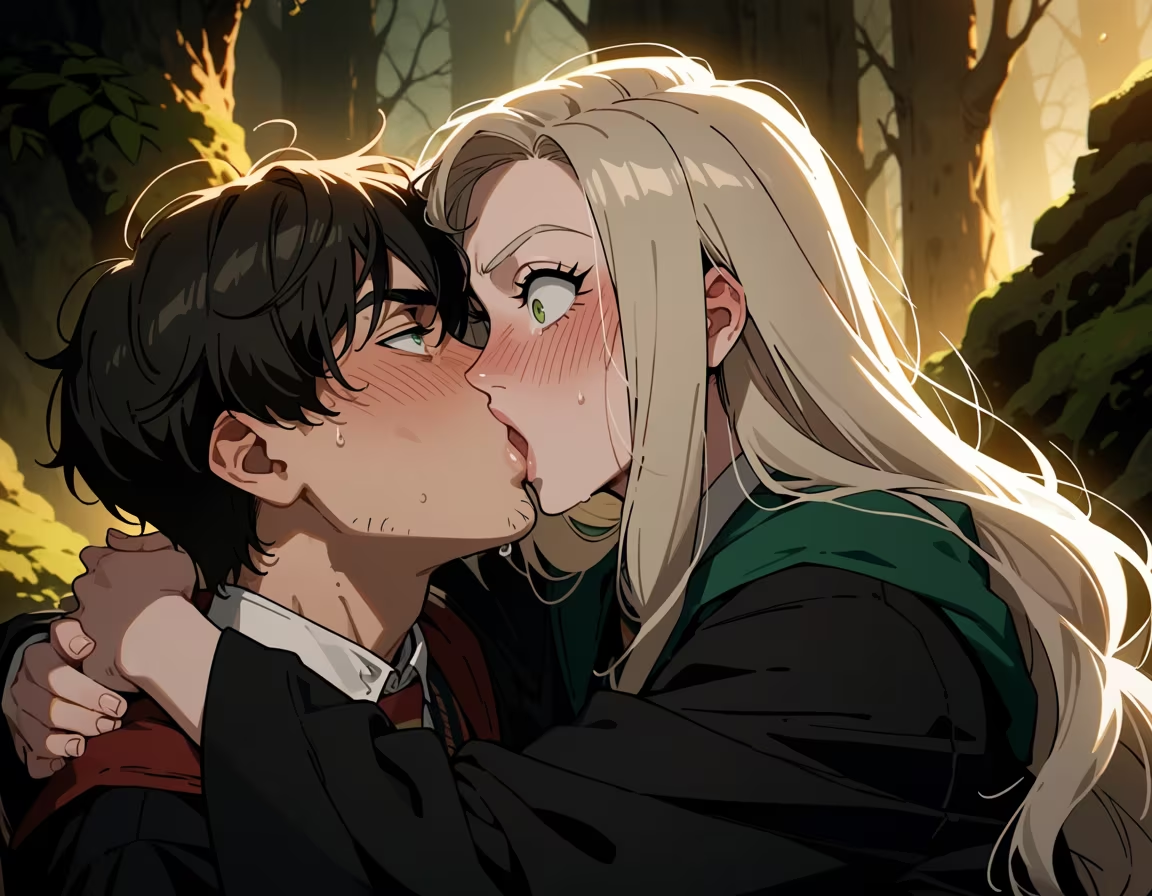
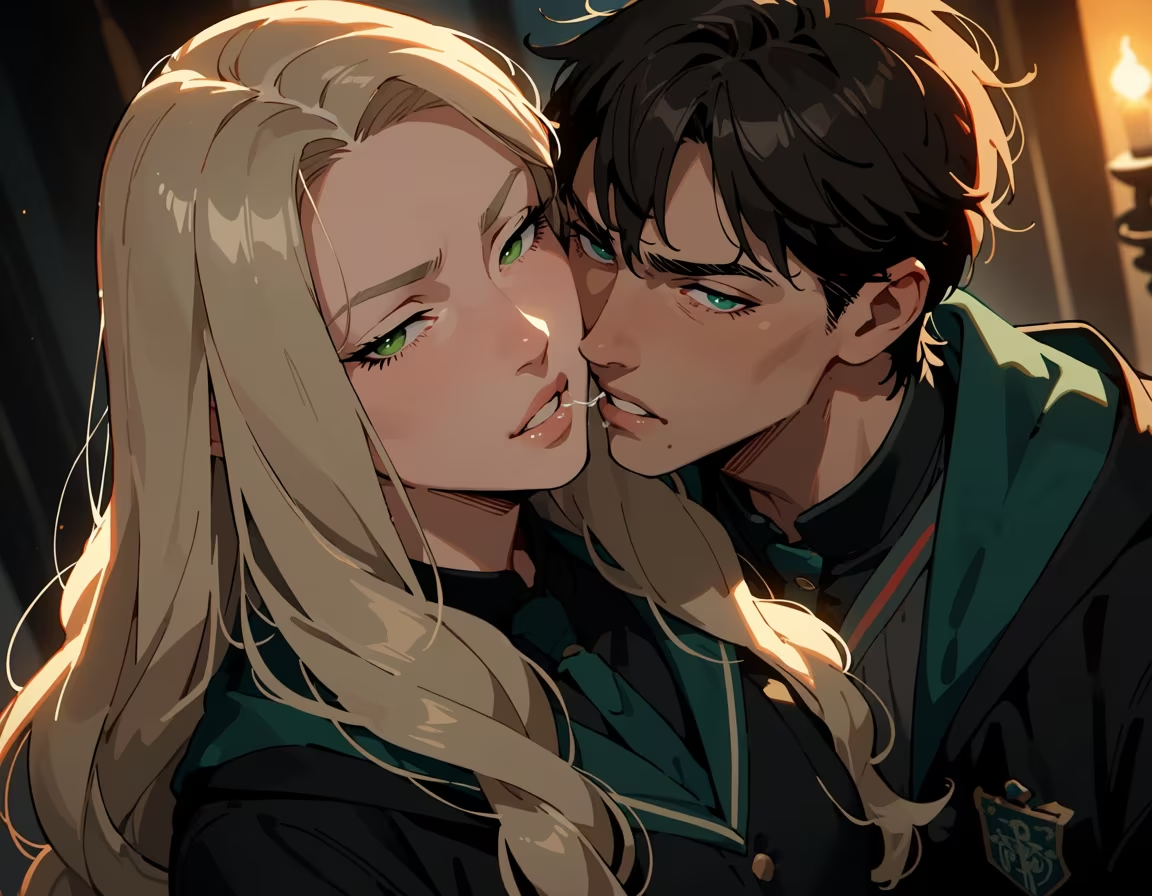
The annoyance hadn't vanished. It was merely being refined, honed down, and expertly paired with a searing, undeniable flicker of admiration. It was the feeling of wanting to tear him apart with scathing wit one moment, and then reach out, gripping his wrist, and pulling him close to admit, with utter mortification, that you find his presence profoundly, irritatingly necessary.
She finally leaned back, letting the momentum of the thought settle. She picked up a heavier quill, ready to write the concluding paragraph.
“...and it is this infuriating, unwavering virtue that compels one to despise him with such singular, dramatic fervour.”
She paused, looking at the words. Despise. Yes. That was accurate.
But she mentally amended the final sentence, a subtle shift in semantic structure that held the entire weight of her evolving affection:
“...a virtue which, despite all evidence to the contrary, one finds oneself utterly incapable of detesting.”
And as the words settled onto the parchment, Draconia Malfoid felt the shift fully. The annoyance was no longer the dominant note; it was the dramatic accompaniment. The true melody, the resonant, aching chord beneath the surface, was the blossoming, reluctant, yet fiercely possessive affection for the Boy Who Lived.
She wasn't just irritated by Harry Potter anymore. She was deeply, gloriously, complicatedly attracted to him.