| Home | The Lives of Velnin | Illustrated Fiction | Malfoid Art & Fiction | Book Blurbs | Contact |
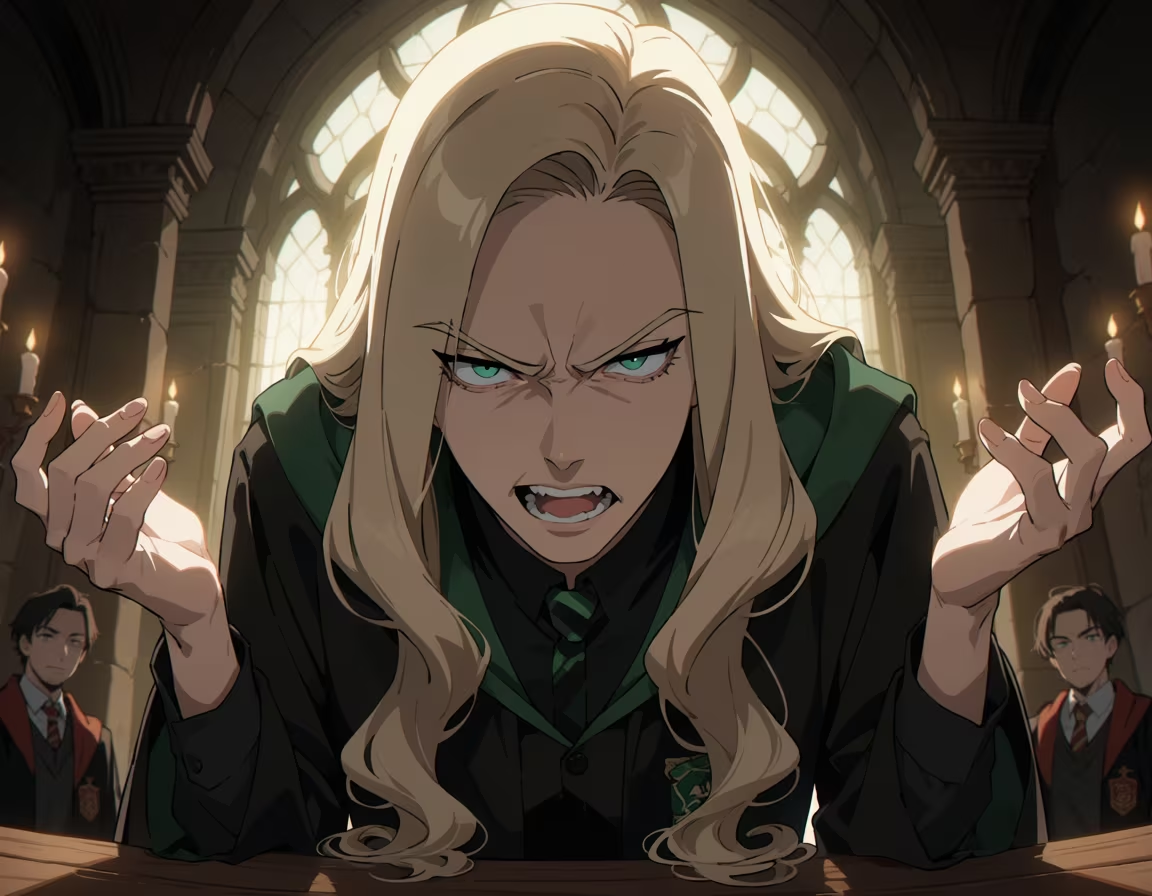
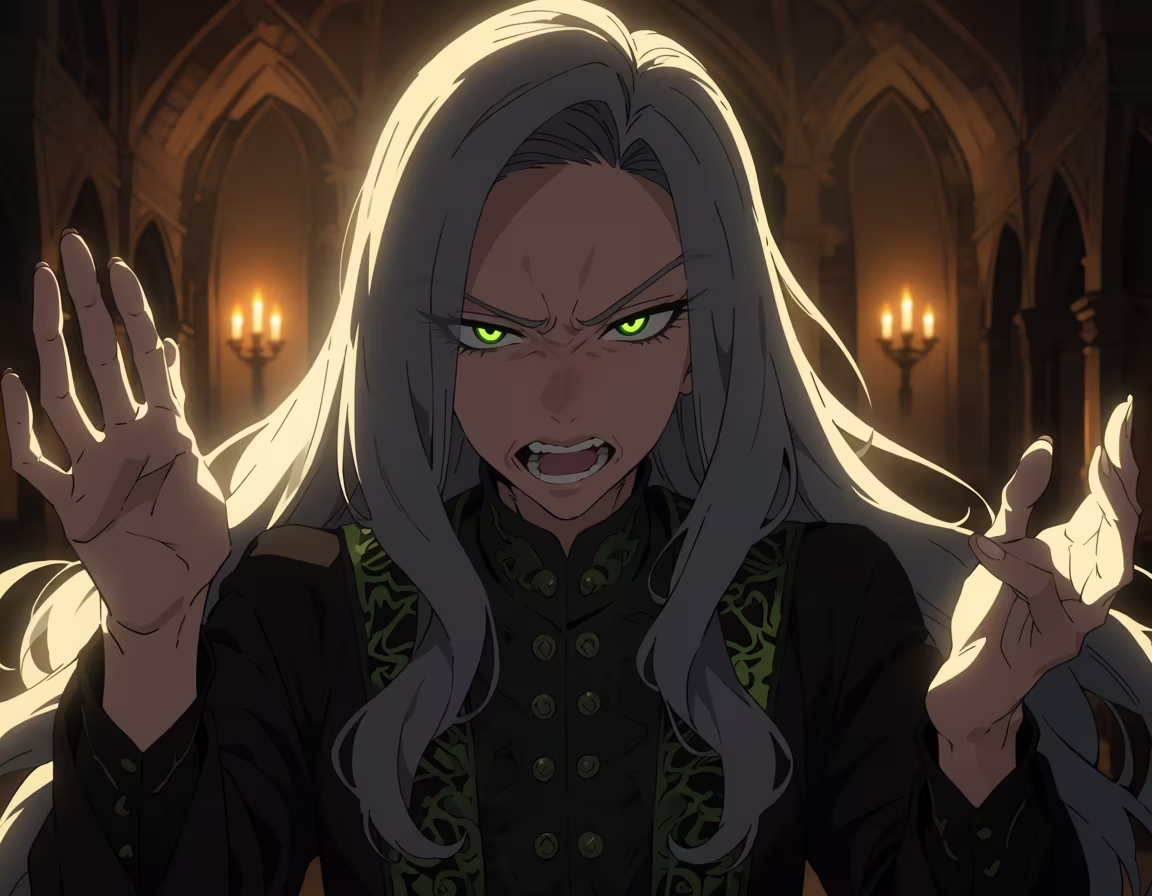
The air in Malfoy Manor was heavy, thick with the scent of ancient polish, aged parchment, and the faintest, metallic tang of latent magic. It was a suffocatingly rich atmosphere, a perfectly curated tableau of pureblood arrogance, and yet, it was in this opulent cage that Draconia felt most comfortably—and most actively annoyed.
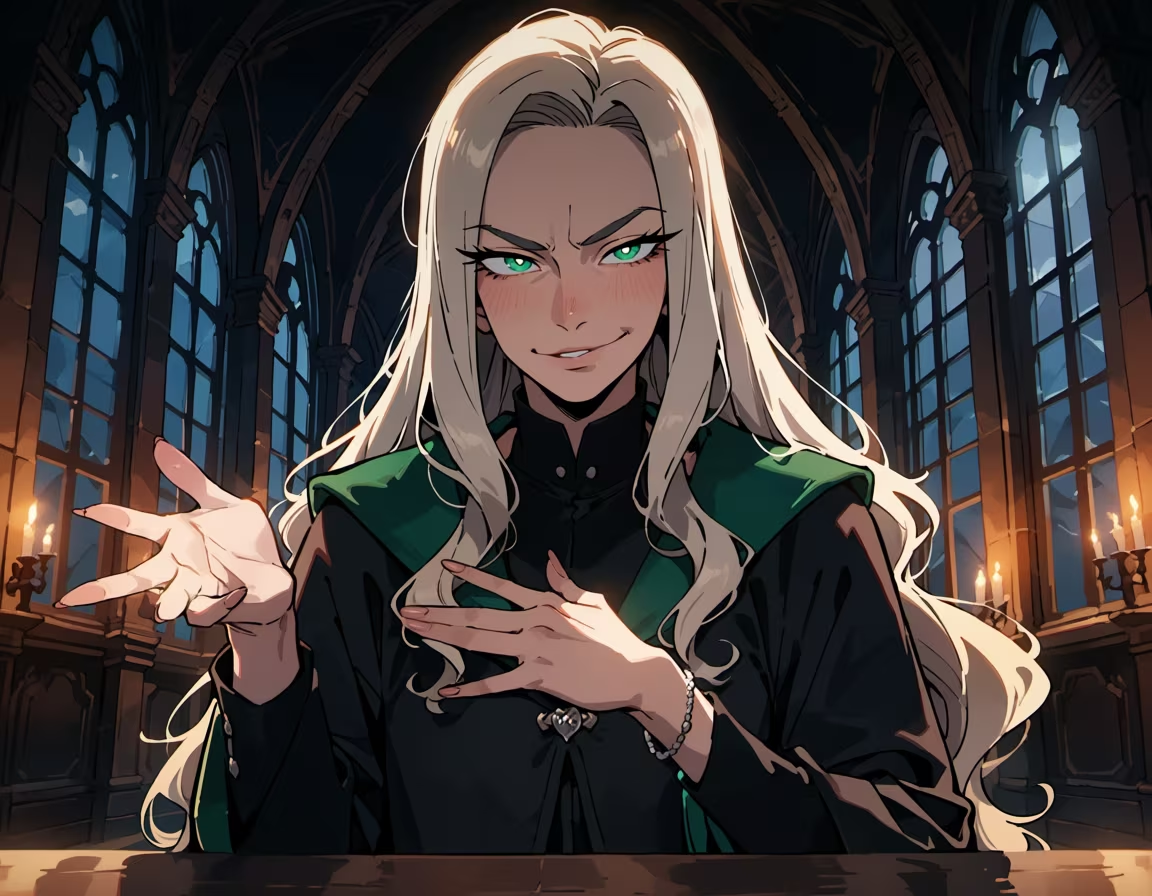
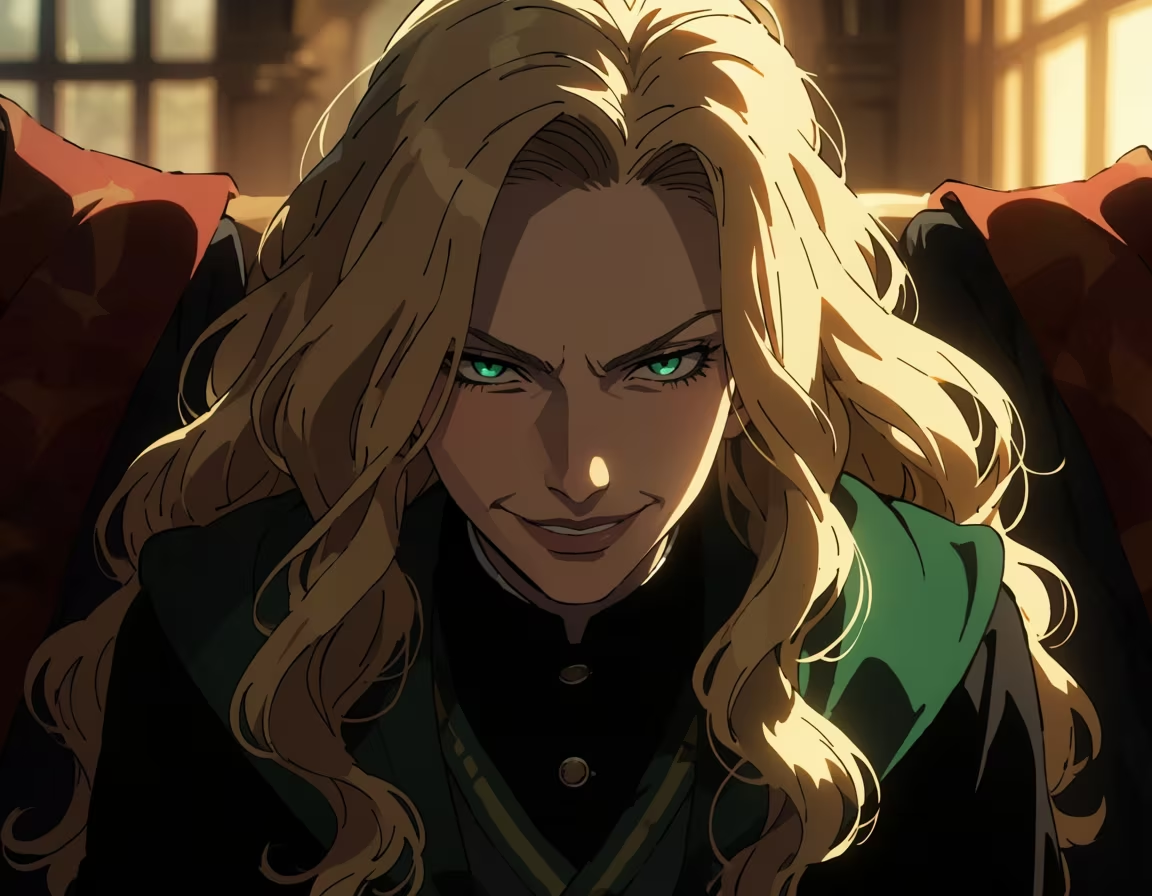
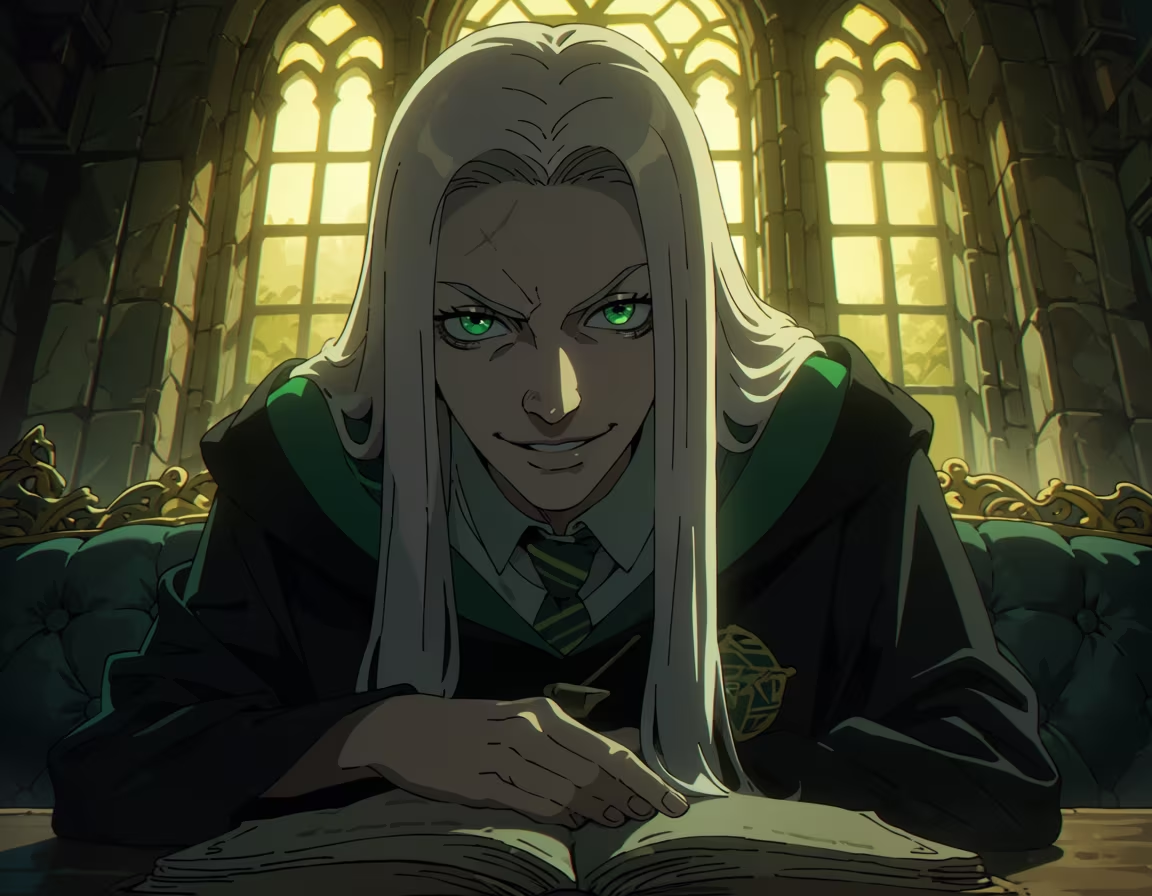
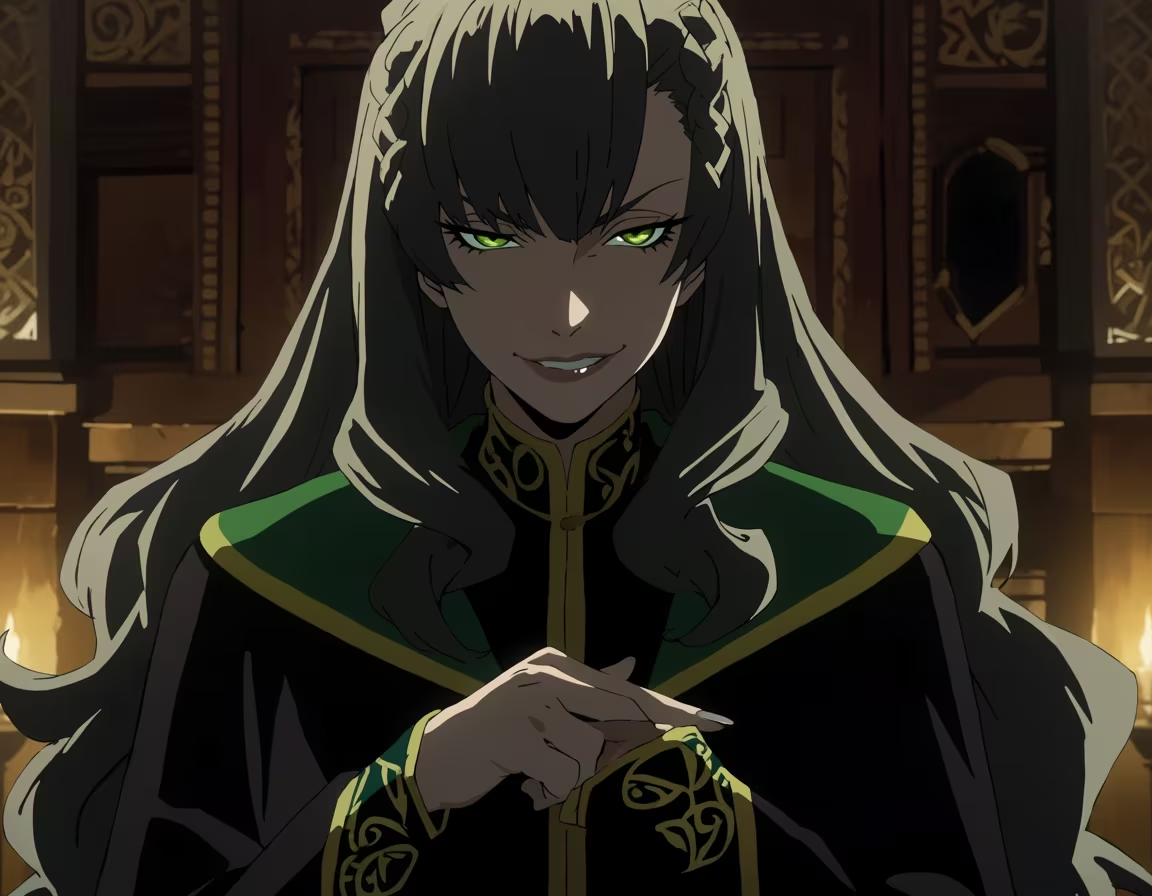
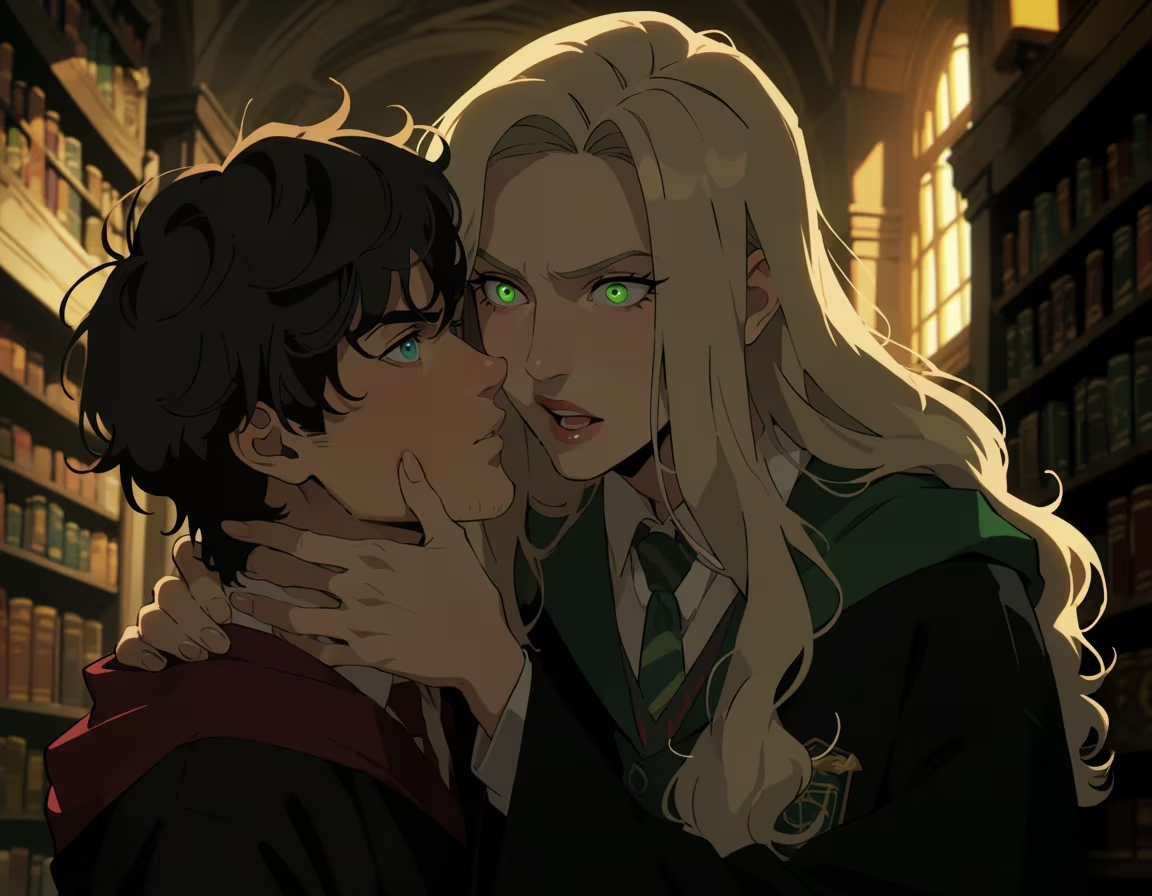
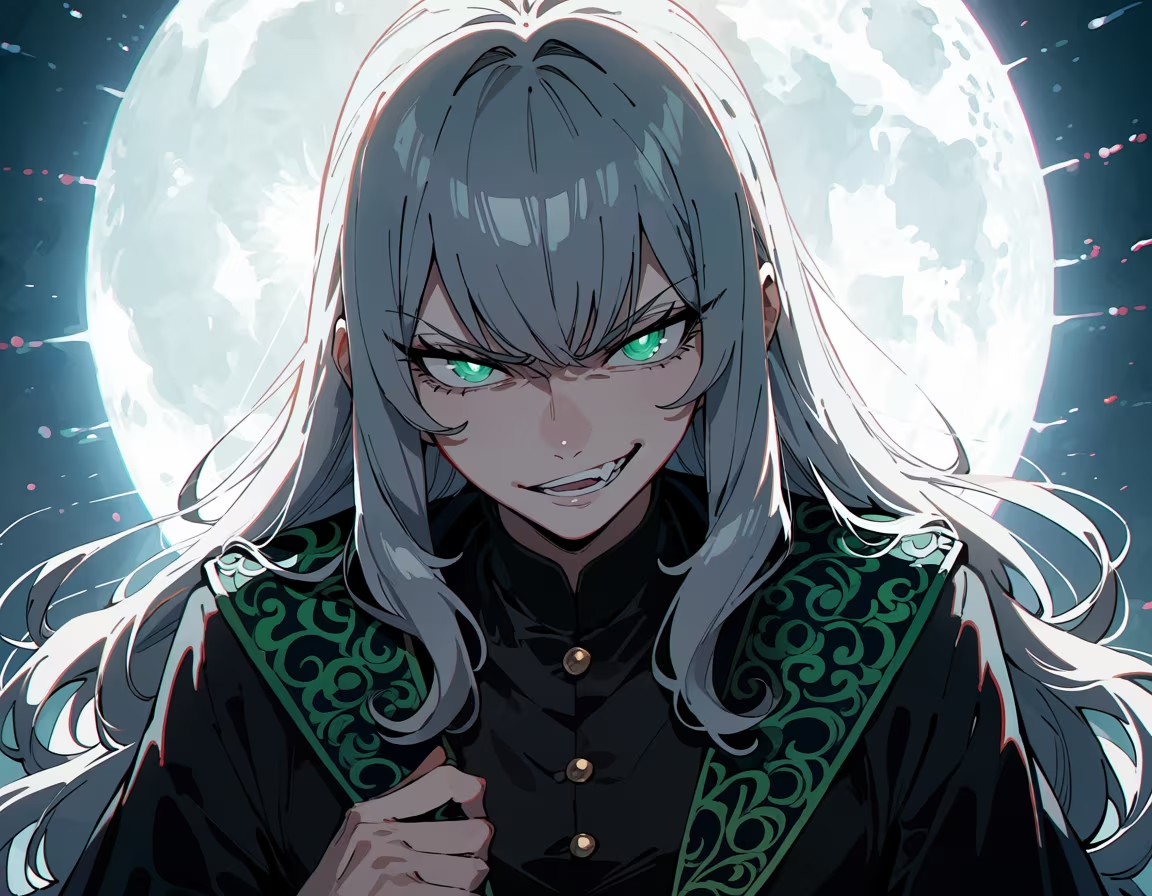
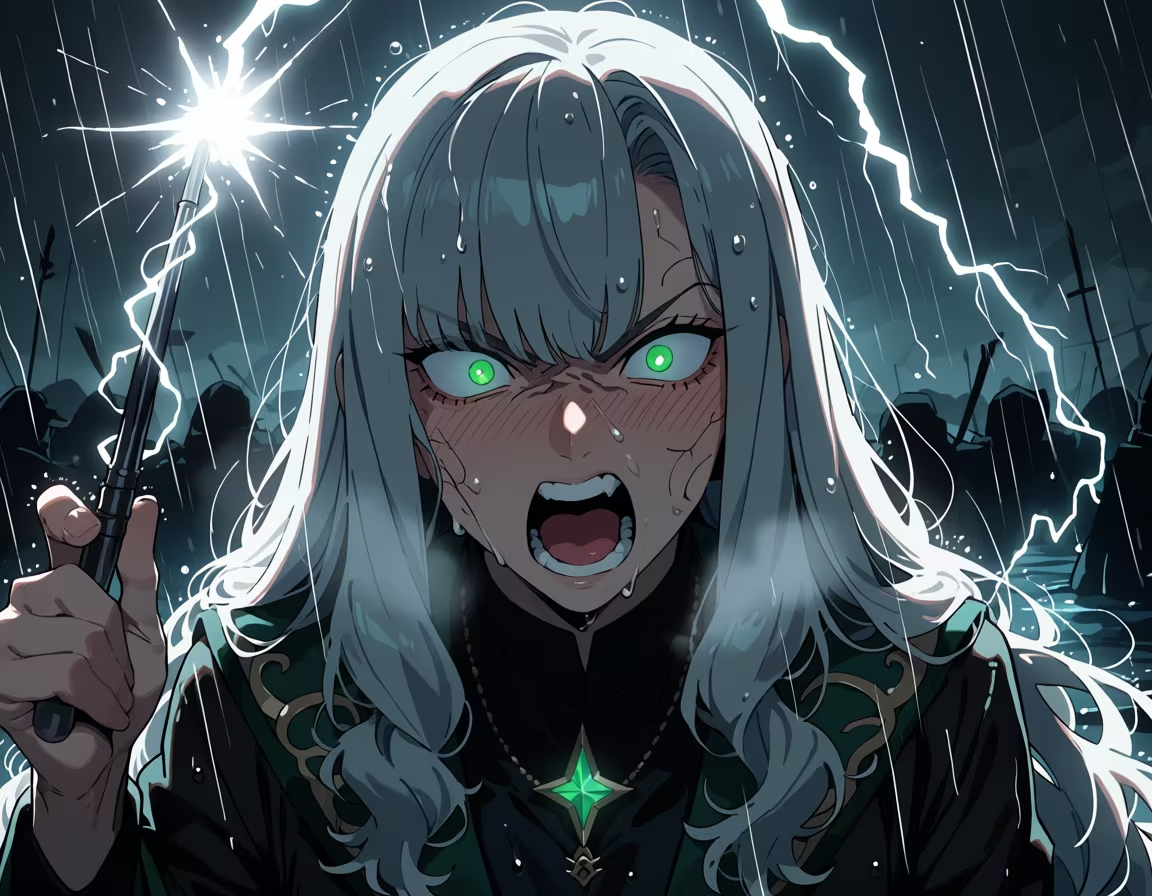
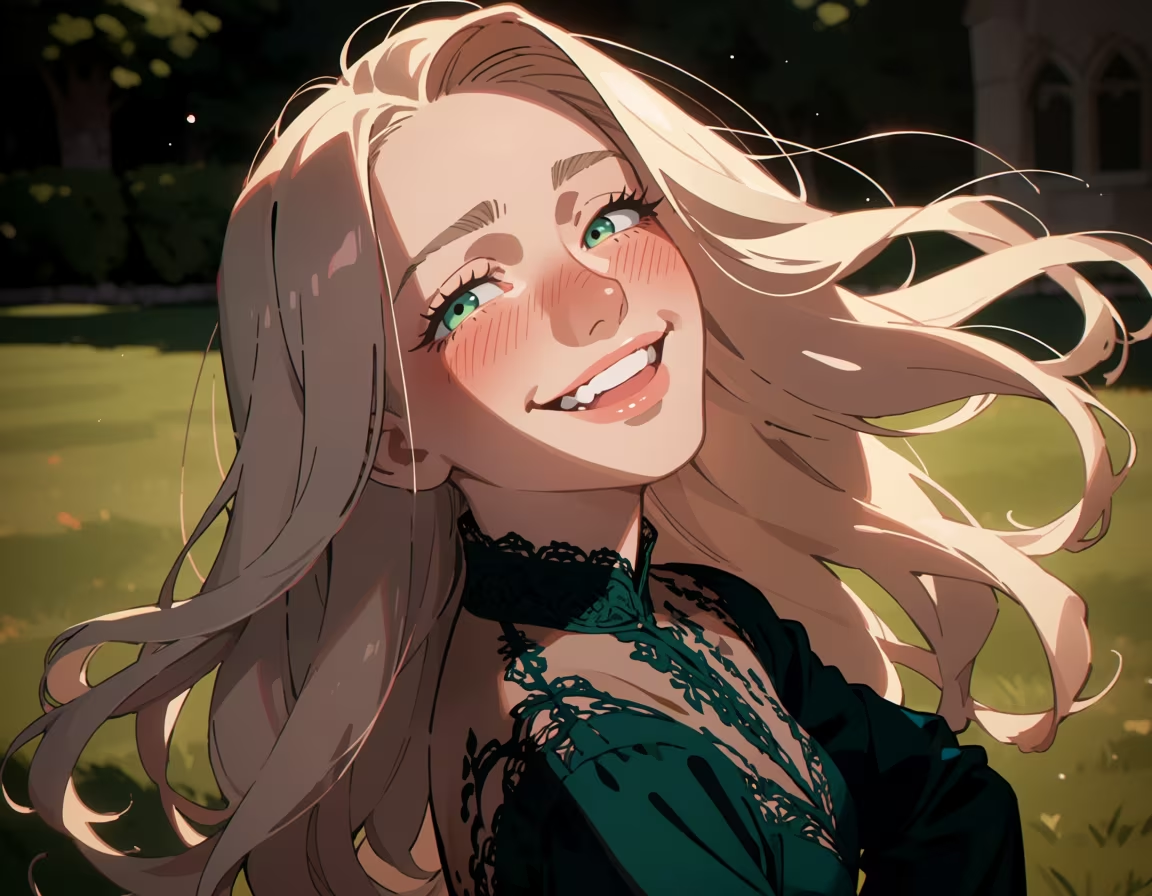
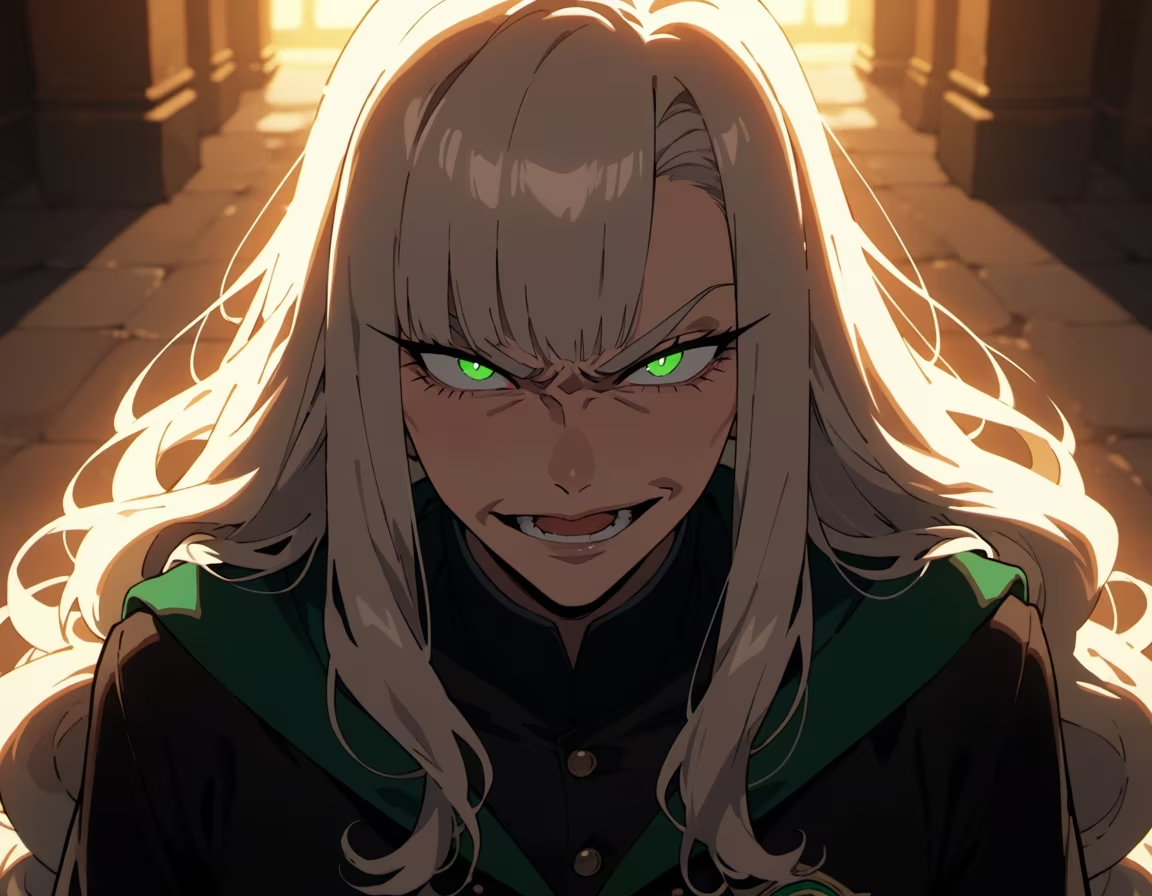
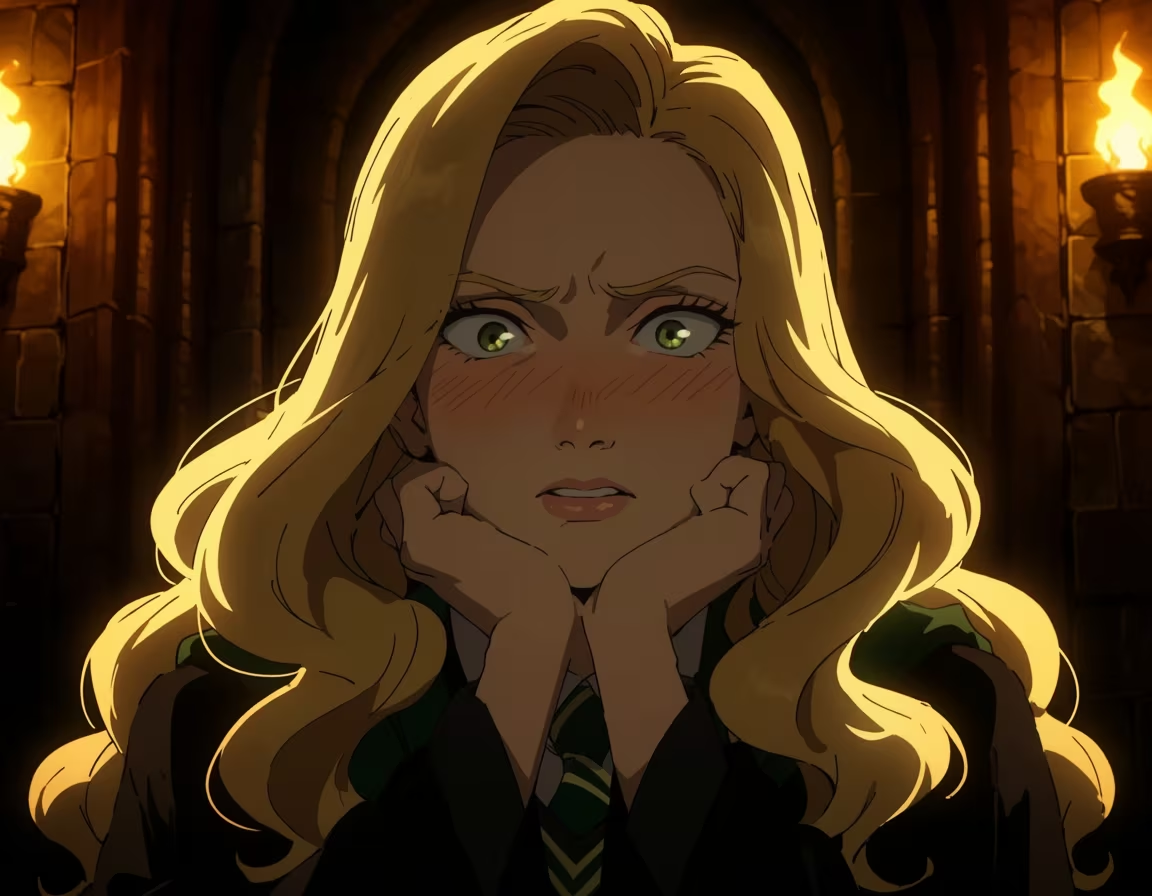
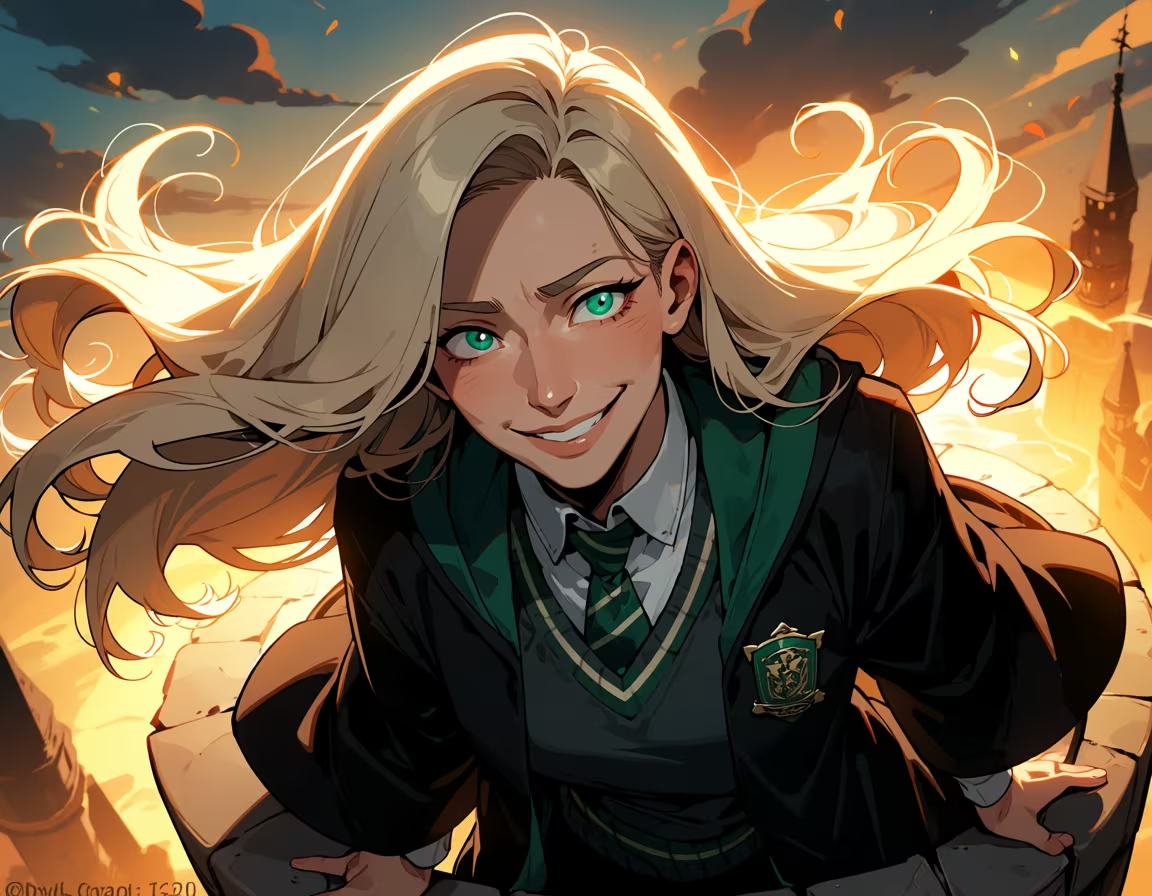
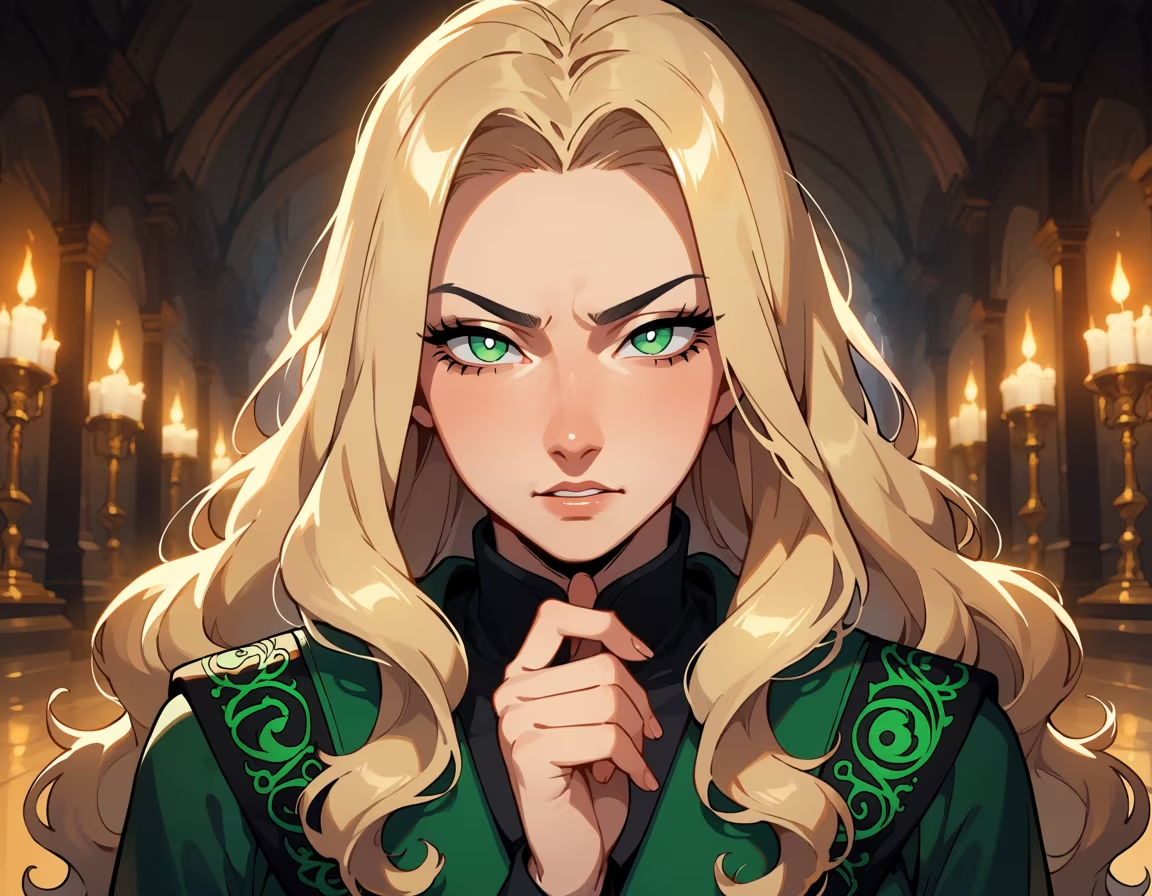
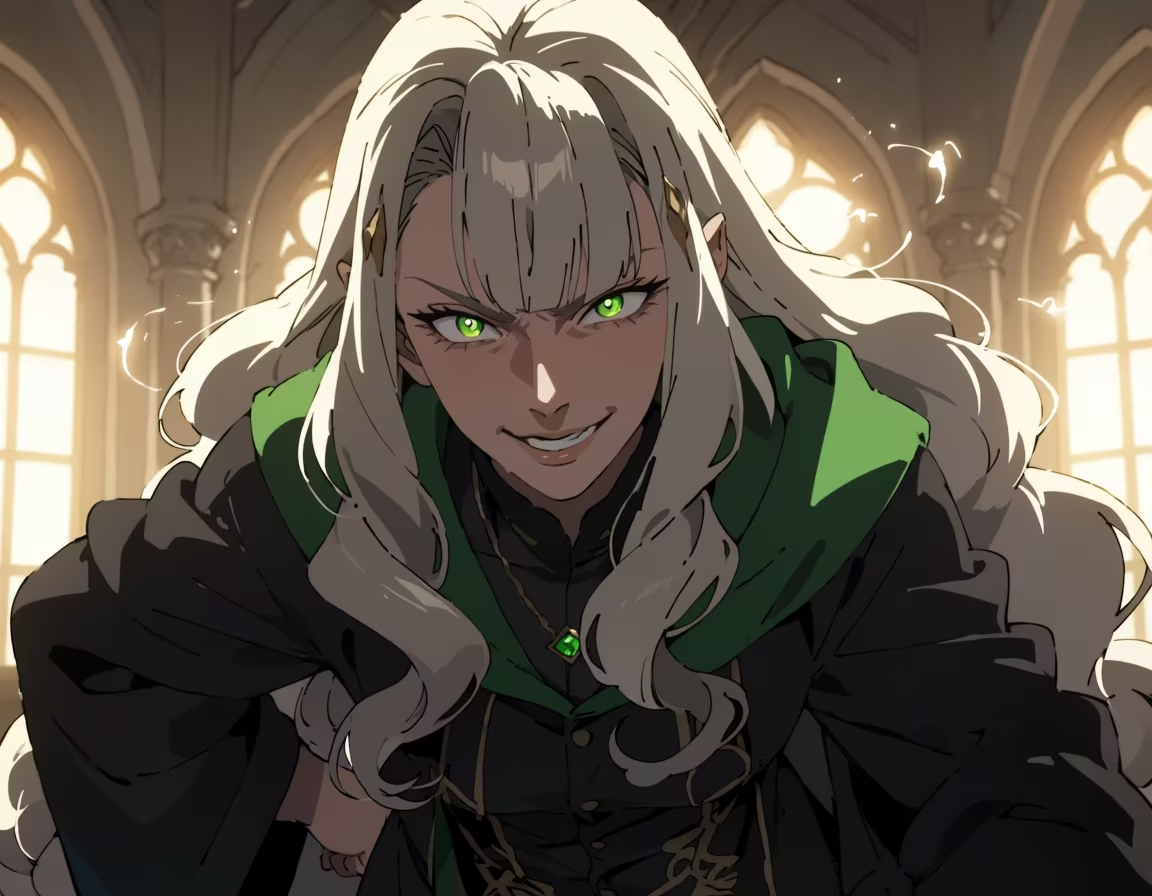
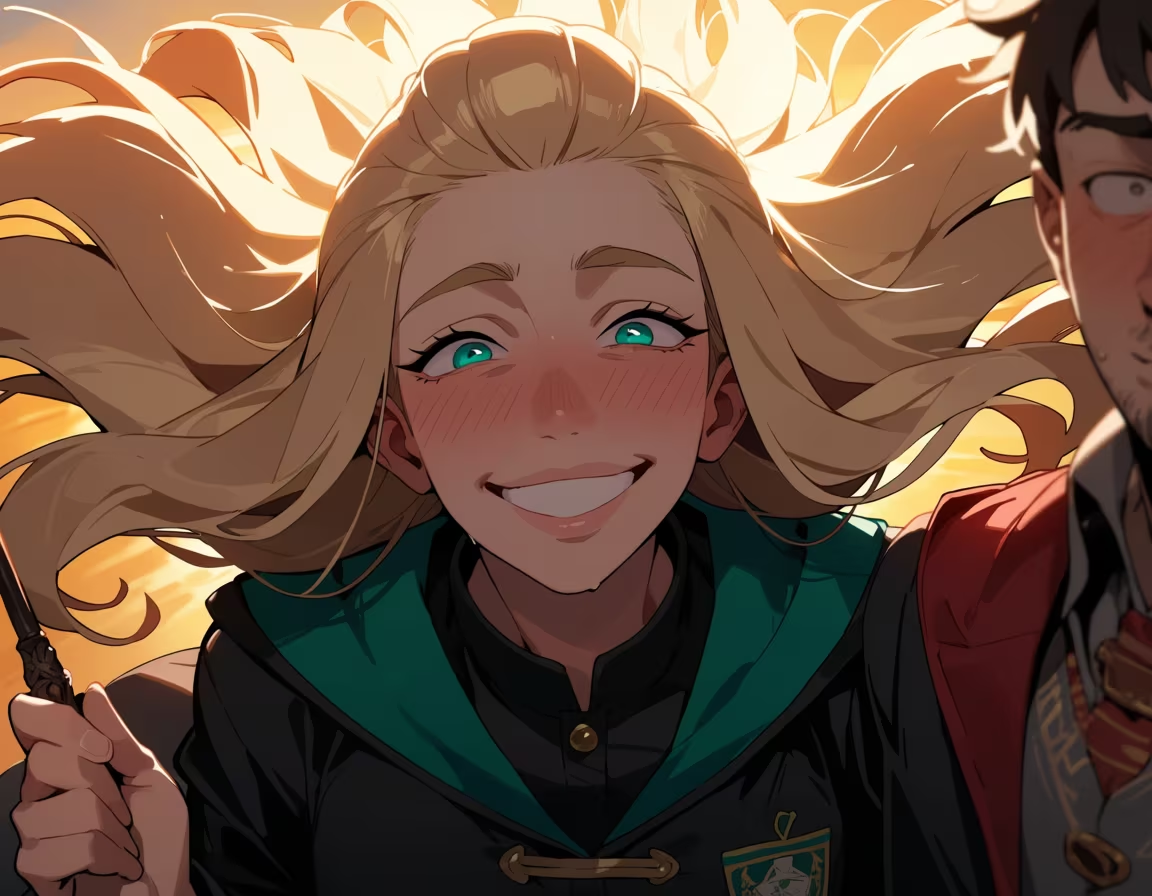
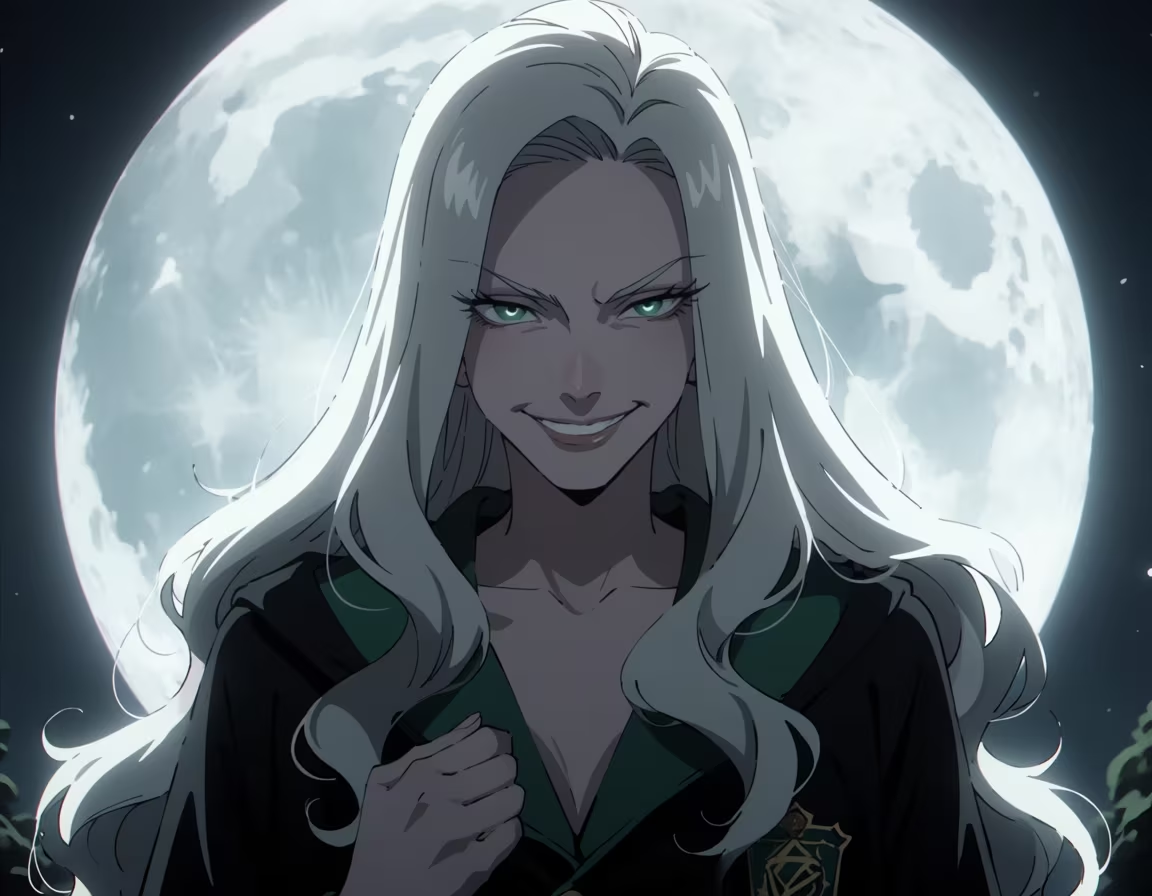
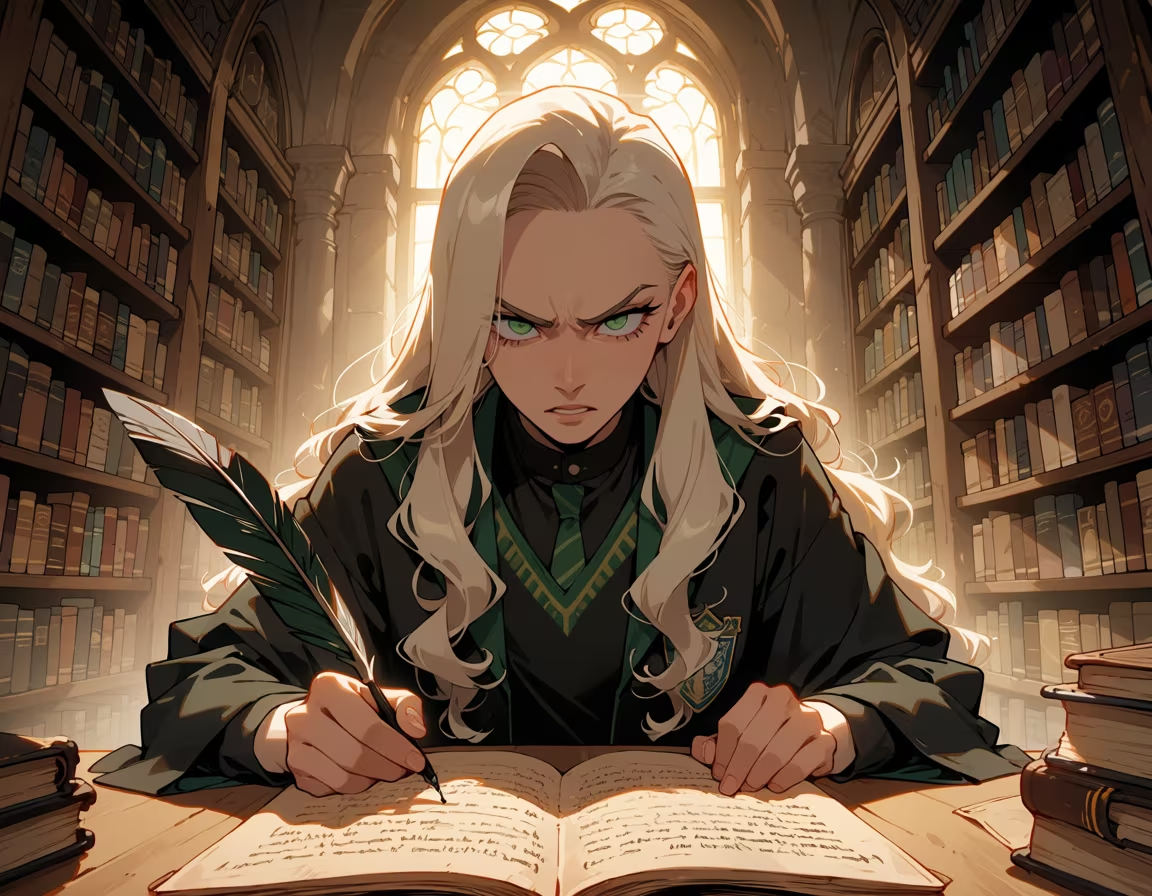
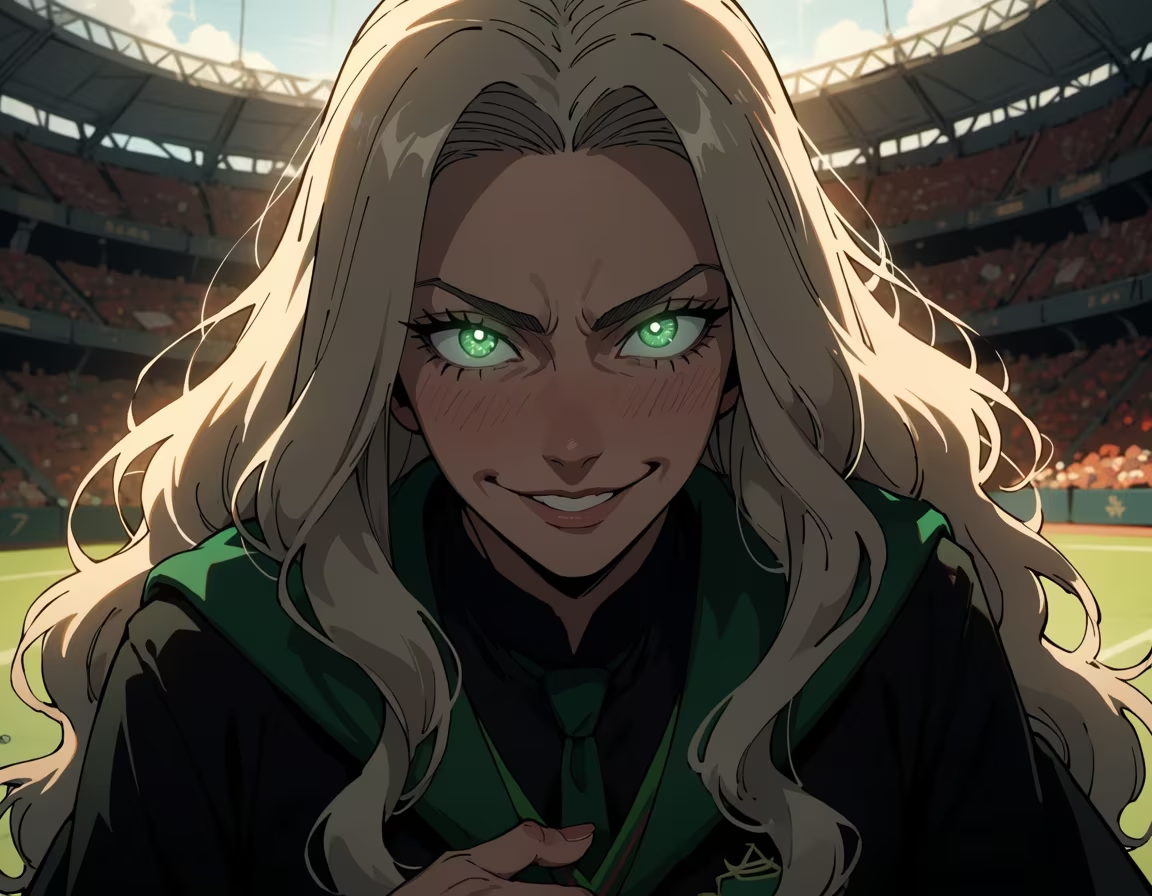
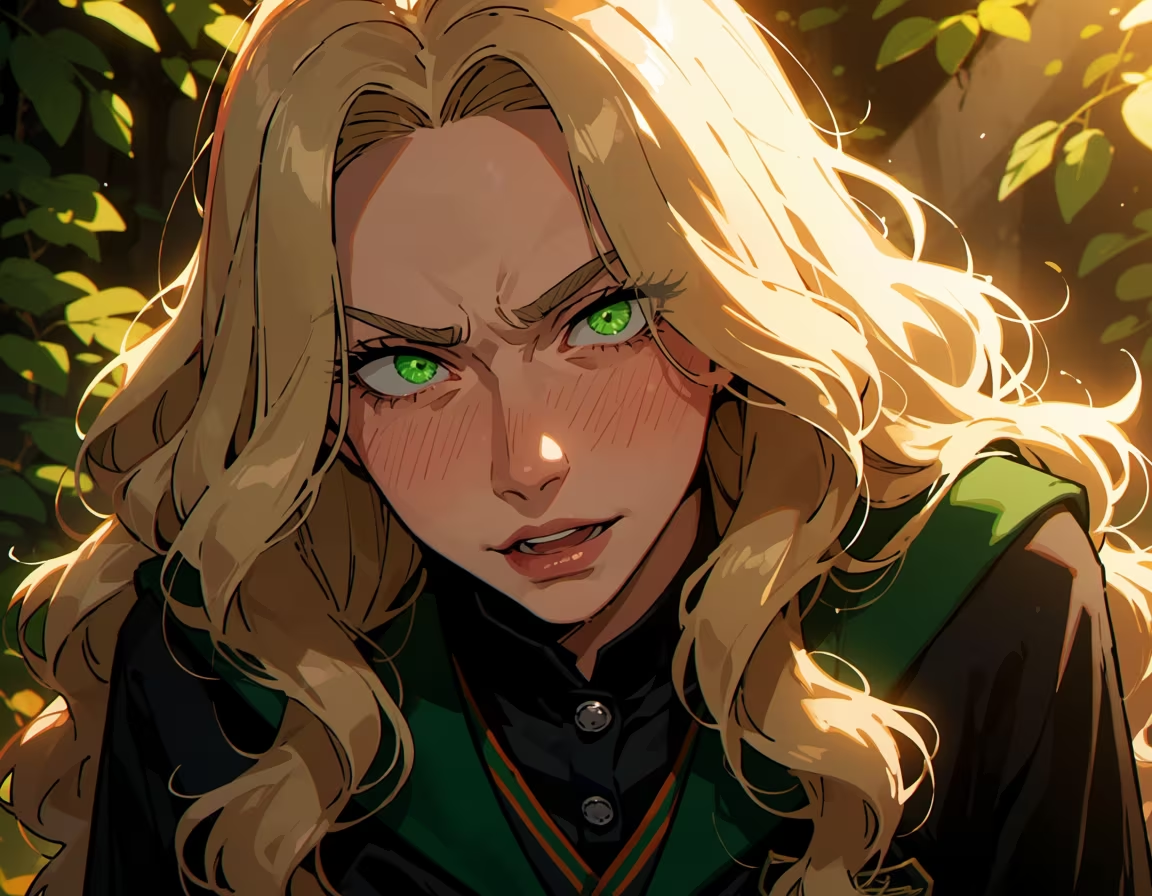
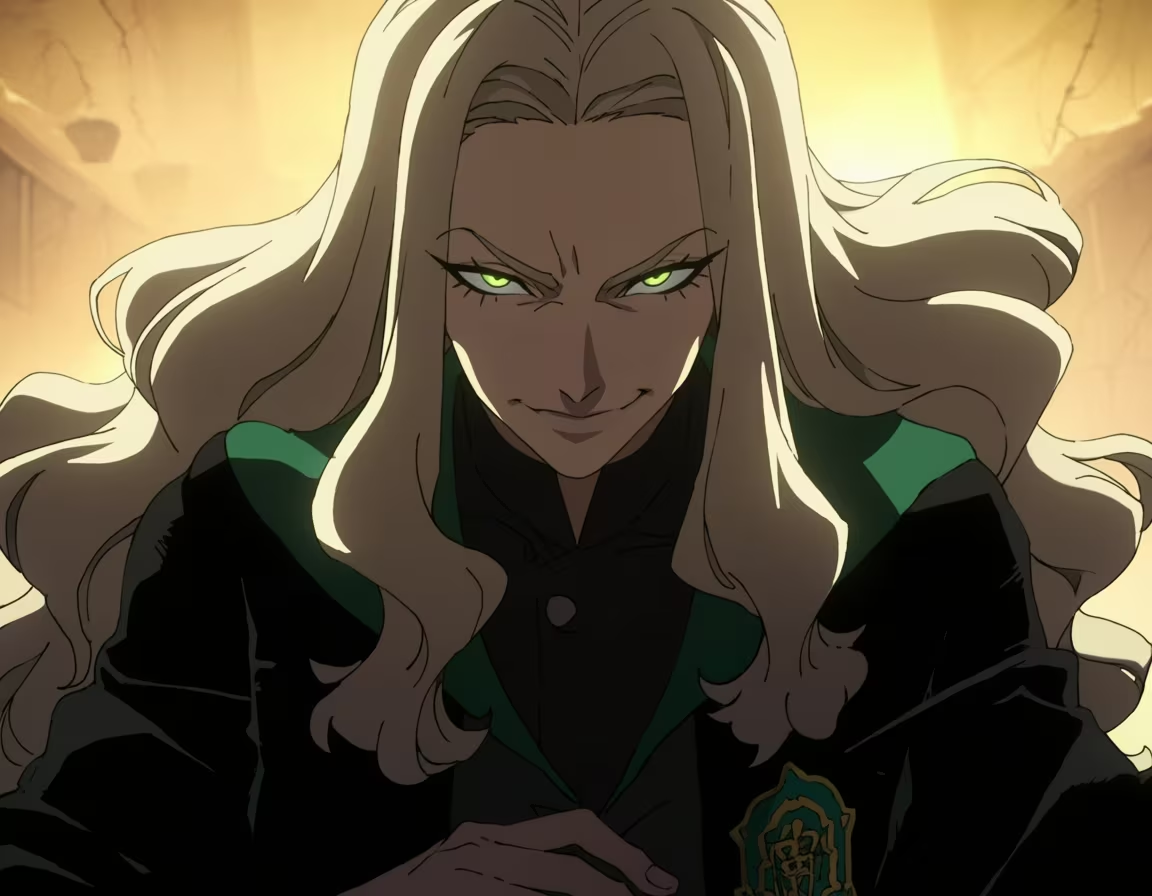
She sat beside her father, Lucius, on a velvet settee near the vast arched windows that overlooked the meticulously manicured grounds. The dying afternoon sun, filtered through the emerald-tinted glass, cast long, golden bars across the polished marble floor, illuminating the sweep of her own long, pale blond hair. Her black robes, severe and elegant, were trimmed with the signature, vibrant green of Slytherin, a colour she found both supremely flattering and slightly too aggressive for a Tuesday afternoon.
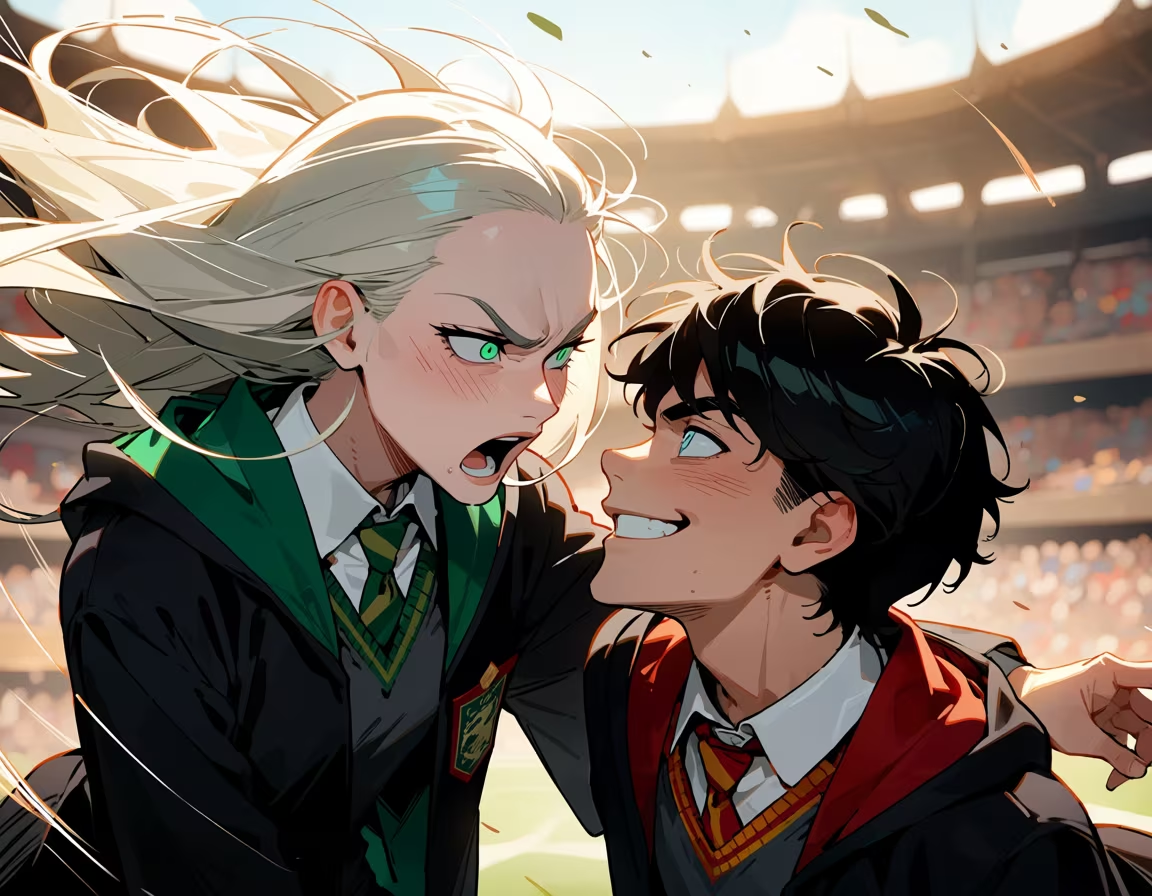
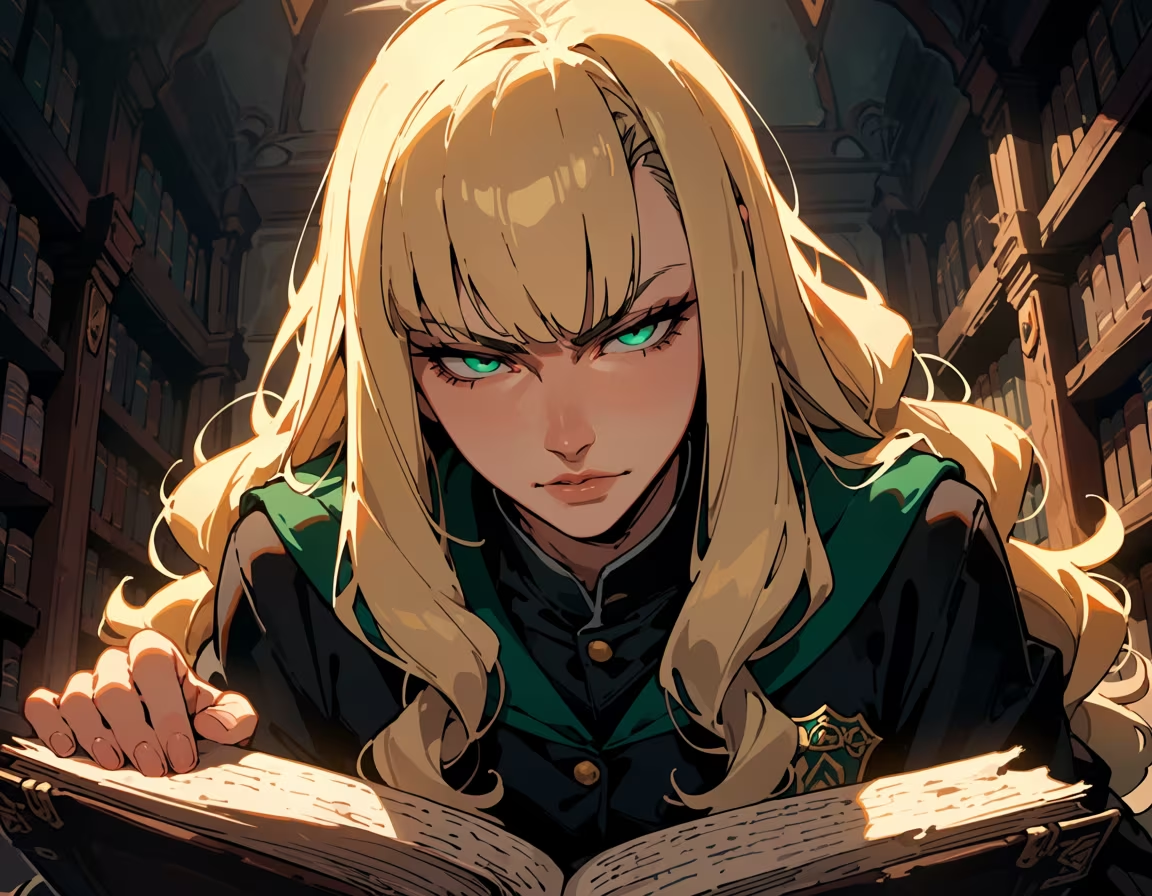
Her eyes, the precise, startling shade of emerald favoured by her mother, were fixed on the small, defiant figure seated opposite them. Harry Potter.
He was slumped slightly in his chair, looking as though he had been deposited there by an exasperated house-elf rather than invited as an honoured (though highly irritating) guest. He looked, as always, slightly rumpled, his famous lightning-bolt scar visible even under the shadow of his perpetually messy black hair. He possessed a certain reckless appeal, a chaotic vitality that seemed utterly inappropriate for the stately quiet of Malfoy Manor.
“And this, Harry,” Lucius was saying, his voice a silken baritone dripping with inherited authority, gesturing with a slender, pale hand towards the boy, “is a testament to the stubbornness of the Mudblood line. A tenacious little weed, rooted firmly in the soil of mediocrity, yet possessing a rather startling resilience.”
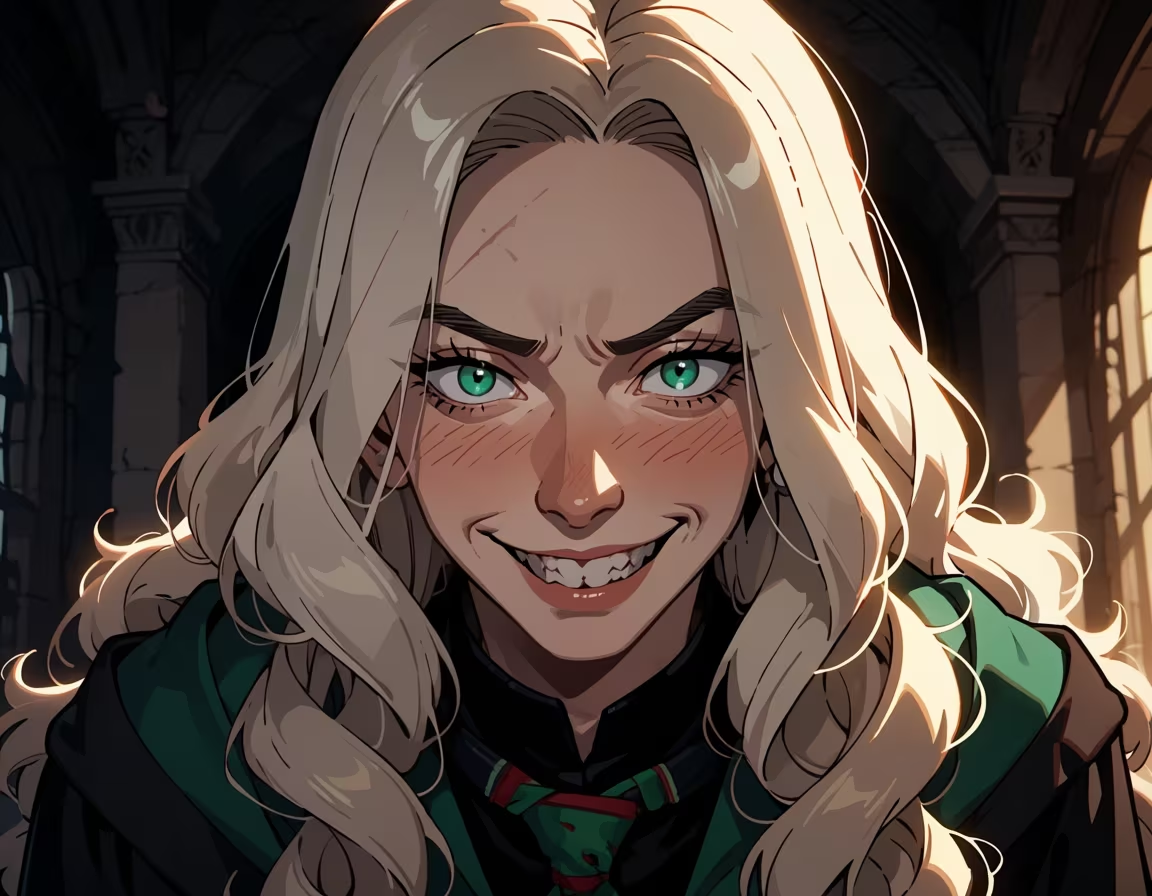
Draconia listened, chin resting lightly on her perfectly manicured fist, a small, almost imperceptible smirk playing on her lips. Mediocrity. The word felt so utterly inadequate. Harry Potter was hardly mediocre. He was a beacon, a vulgar, noisy, utterly impossible beacon of Gryffindor incompetence, but a beacon nonetheless.
She felt a familiar tightening in her chest—the low, simmering hum of pure annoyance . Annoyance that he existed in their immaculate drawing-room, challenging the very hierarchy of their ancestral lineage with his mere presence. Annoyance that his bright, unruly red hair seemed to defy all notions of proper aristocratic neatness. Annoyance that when Lucius spoke of pureblood superiority, Harry would merely stare at him with those disconcertingly bright green eyes—eyes that, annoyingly, were almost the same shade as her own—and offer a grim, unconvinced frown.
But beneath the annoyance, the serpent-like curiosity began to coil, wrapping itself around the base of her ribs.
Why does he resist so fiercely? she thought, watching him chew slowly on the inside of his cheek. Most children, even those with a healthy dose of Potter bravado, eventually folded, bowing slightly under the weight of Lucius’s gaze. Harry merely seemed to harden, like dark, intractable oak.
Lucius continued his lecture, his voice gaining a touch of dramatic resonance. “You see, Harry, the Mudbloods—those whose ancestry lacks the ancient, unblemished purity we cherish—often carry a deep-seated fear. A fear of being overshadowed, a fear of the very greatness that exists within the established wizarding lines. They look upon us and see perfection, and they resent us for it. They fear our power, and because of that fear, they persecute us with a rather vicious zeal.”
Draconia nodded, agreeing internally, though a part of her—the tiny, nascent part that was beginning to care about him —wanted to argue that perhaps the Mudbloods were merely overly spirited rather than inherently fearful.
“And yet,” Lucius concluded, his eyes sweeping over the room to land on her, a flicker of pride in his expression, “despite this ingrained apprehension, this… peasant disposition, this Potter of yours, displays an alarming amount of courage. A startling, almost insulting amount of Gryffindor bravery.”
This was the cue. The moment where she could deliver her calculated sting.
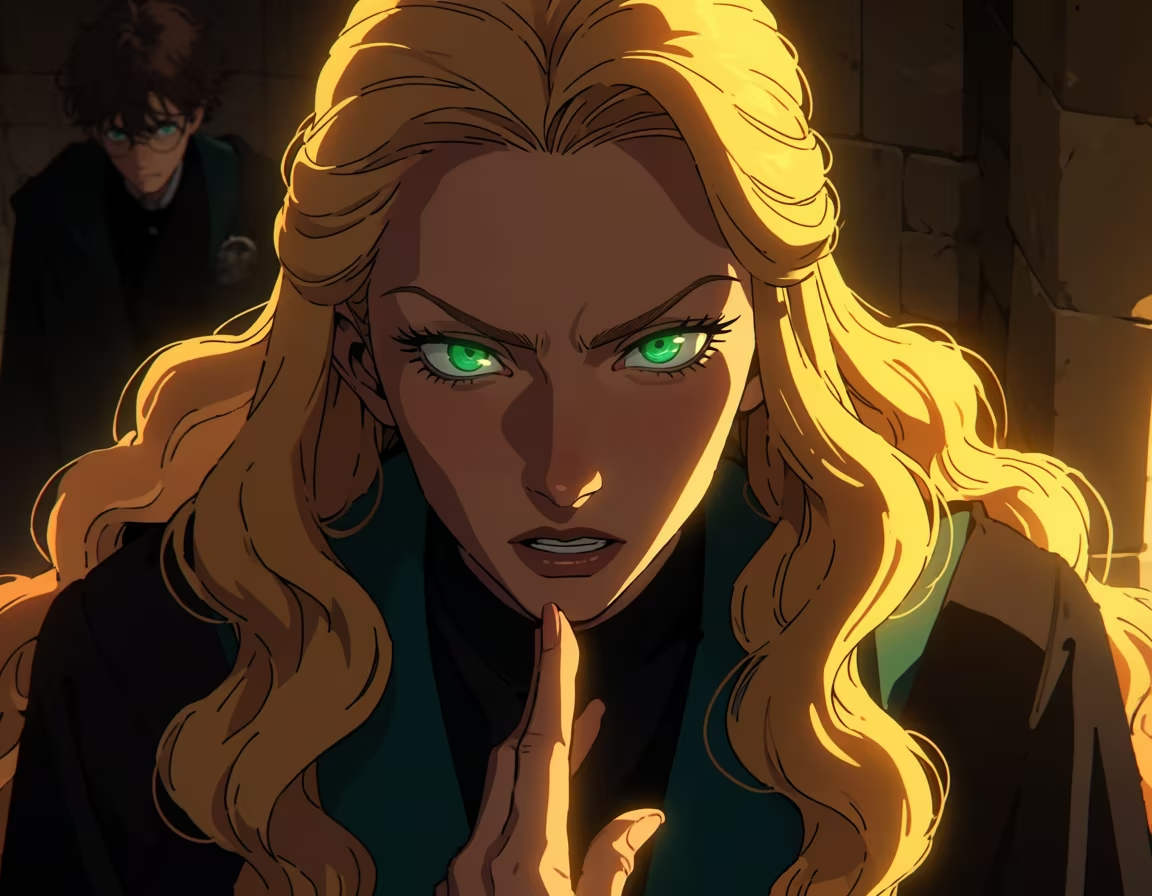
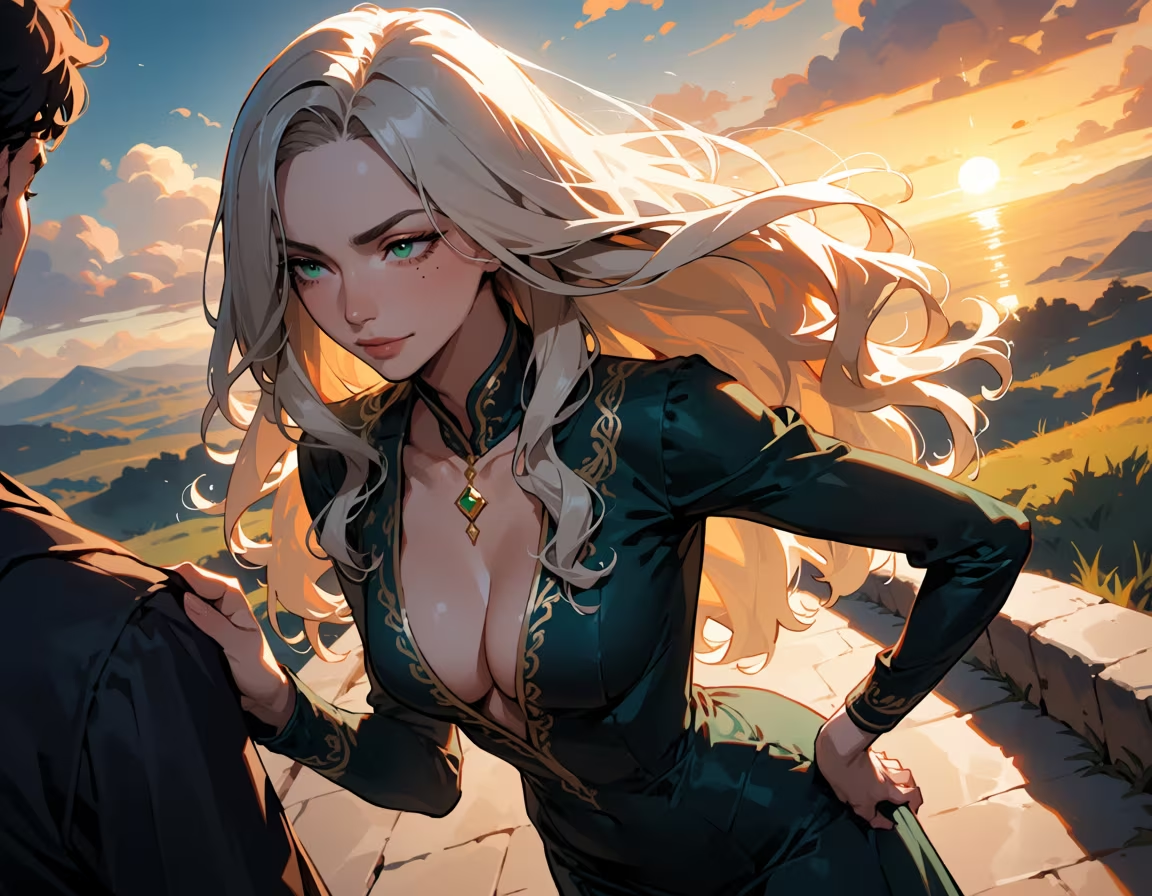
Draconia shifted slightly, allowing the light to catch the intricate silver embroidery on her sleeve. She leaned forward just an inch, placing her hands flat on the carved armrest, and let her gaze settle upon Harry. It wasn't a hostile glare, not yet. It was a deep, assessing probe, like a predator measuring its prey before the strike.
“Insulting, Father,” she repeated, her voice smooth, pitched just low enough to make it sound intimate, yet resonant enough to carry across the room. A slight curl of her lip betrayed her amusement. “Indeed. He has the nerve to be so stubbornly… unpolished . One would think, having been touched by the glory of the Golden Trio, he would possess at least a modicum of deference. He acts as if our status is a mere suggestion, a passing whim, rather than the immutable foundation upon which this entire ridiculous society rests.”
Her gaze held his captive. She could see the faint twitch at the corner of his mouth—was it annoyance? Defiance? A grudging acknowledgement of her astute observation?
He hates it when she calls him unpolished, she realized instantly. He despises the implication that his bravery is merely a colourful, amateur flourish.
This realization was profoundly satisfying, and yet, it also caused a flicker of something else to warm the cool slate of her chest. Interest.
She watched the tension in his jaw. He didn't flinch away from her stare, which was a victory in itself. Instead, he met it head-on, his green eyes locking onto hers. They weren't just looking at her; they were seeming to look through her, perhaps glimpsing the complex network of disdain, ambition, and burgeoning fascination beneath the surface.
“He acts as if he has earned his place, Draconia,” Harry countered finally, his voice rougher than she expected, lacking the practiced polish of Ron’s, but rich with an undeniable, untamed conviction. “He acts as if his bloodline is irrelevant next to what he can do .”
The word— do —hit her like a subtle, perfectly aimed Bludger.
Draconia felt a genuine, unfeigned flicker of surprise crack her façade. He had articulated her exact unspoken frustration. He hadn't deflected her jab; he had answered it with a thesis statement.
“Oh?” she murmured, her initial annoyance momentarily eclipsed by sheer, breathless intrigue. She straightened up slightly, allowing her posture to communicate the weight of her approval, however reluctant. “And what if he has, Potter? What if he has actually earned it? What if the old, dusty concept of blood purity is simply a convenient, rather tiresome crutch used by those who are too lazy to excel?”
She paused, tilting her head, allowing her long blonde waves to cascade over one shoulder. She studied him—his slight flush of colour rising beneath his tanned skin, the way his grip tightened on the edge of the chair.
There it is. The internal skirmish. The annoyance—because he is challenging her carefully constructed world view—was battling fiercely with the burgeoning admiration—because he is capable of dismantling it with such casual, defiant ease.
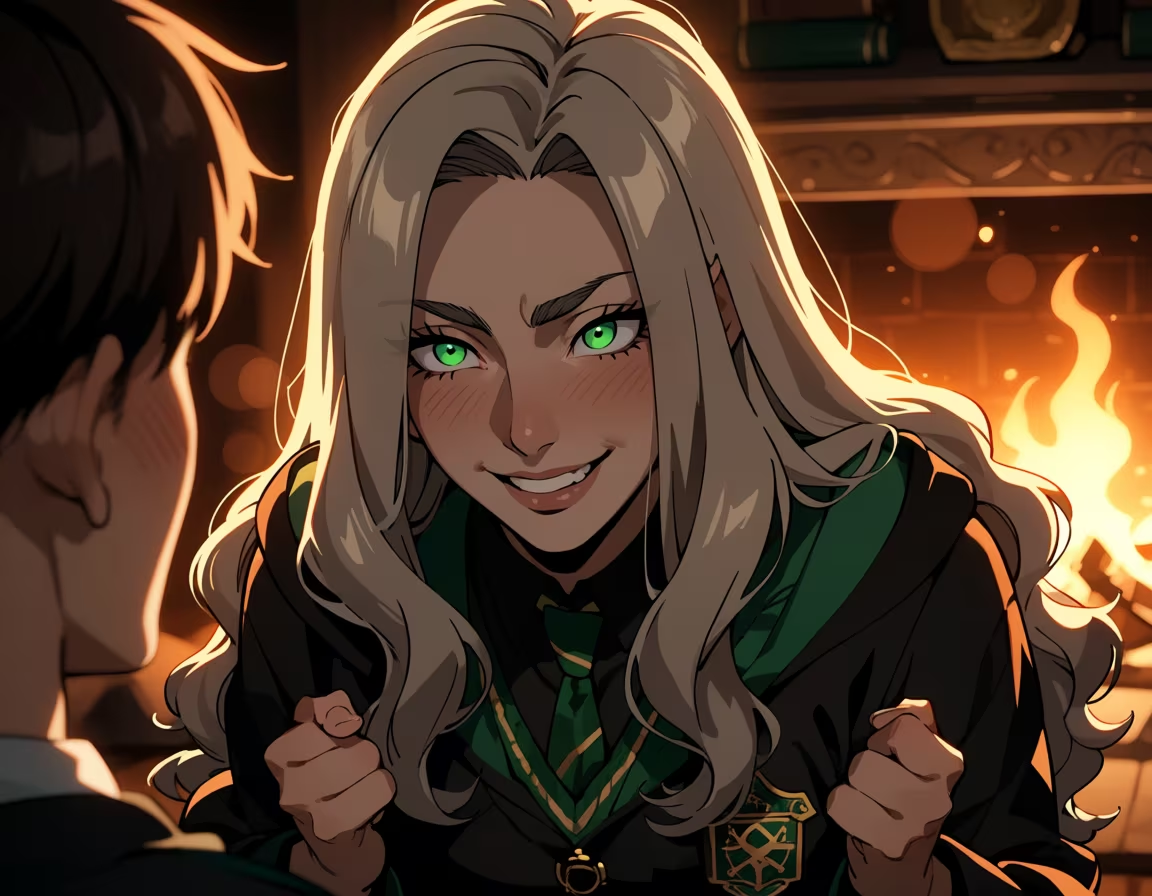
“He certainly has the audacity to suggest that,” she continued, her tone softening, losing the sharp, cutting edge, replacing it instead with a seductive, almost challenging warmth. “It requires a certain… gall . A very specific, Gryffindor brand of gall, wouldn’t you agree, Father? A gall that suggests one does not belong in the grand procession, but rather, dares to stride at the head of it, regardless of pedigree.”
She let her eyes drift down his face, lingering on the scar, before lifting back to meet his gaze once more. Her expression shifted again, the sardonic amusement deepening into a knowing, complicated smile.
“Though,” she added, her voice dropping to a conspiratorial whisper meant only for him, “one must wonder if his achievements are truly his own, or merely a fluke of extraordinary parental luck.”
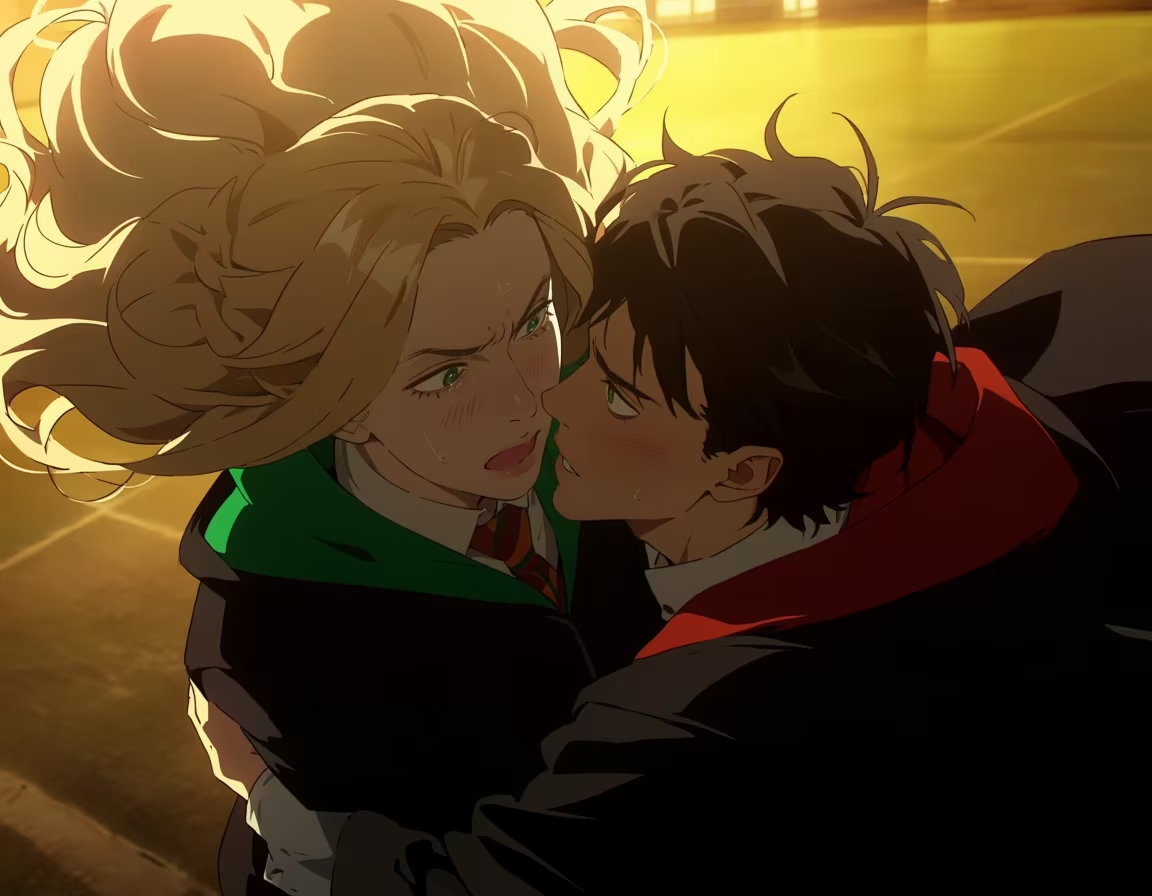
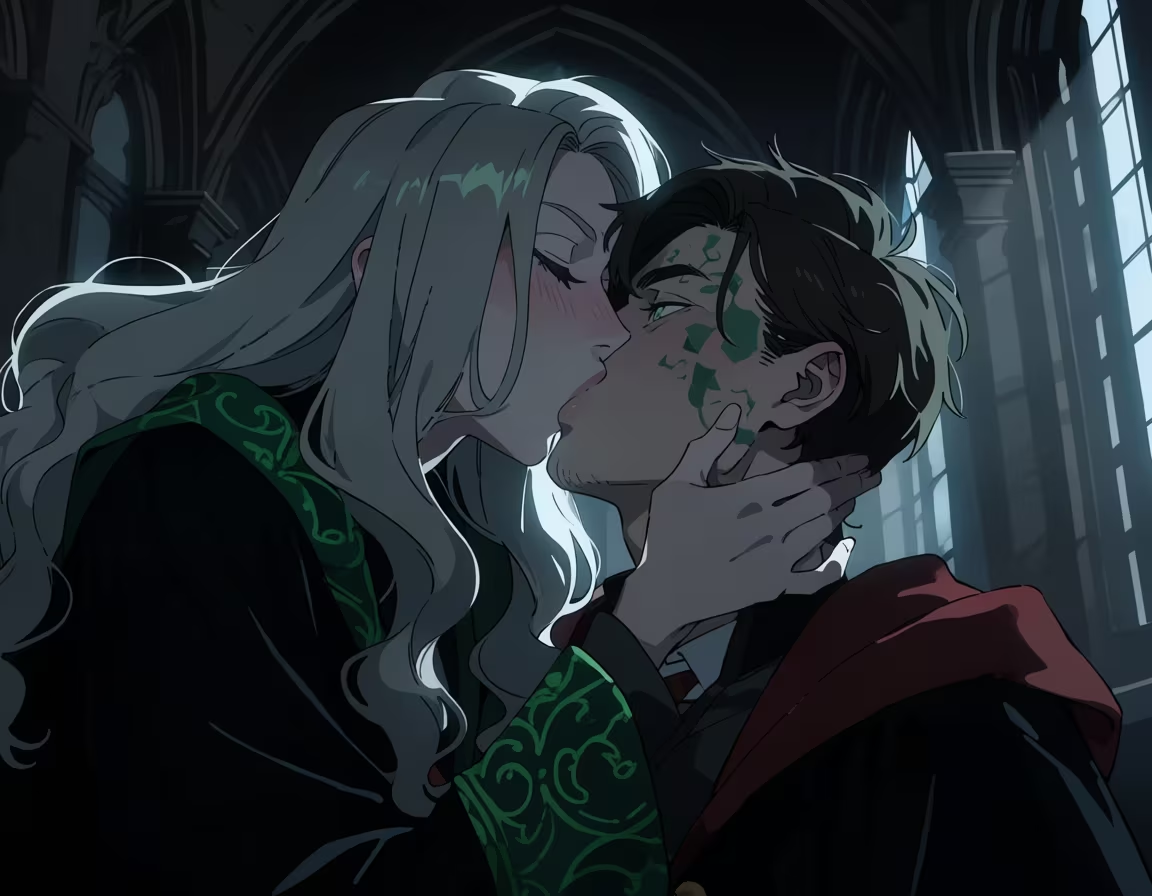
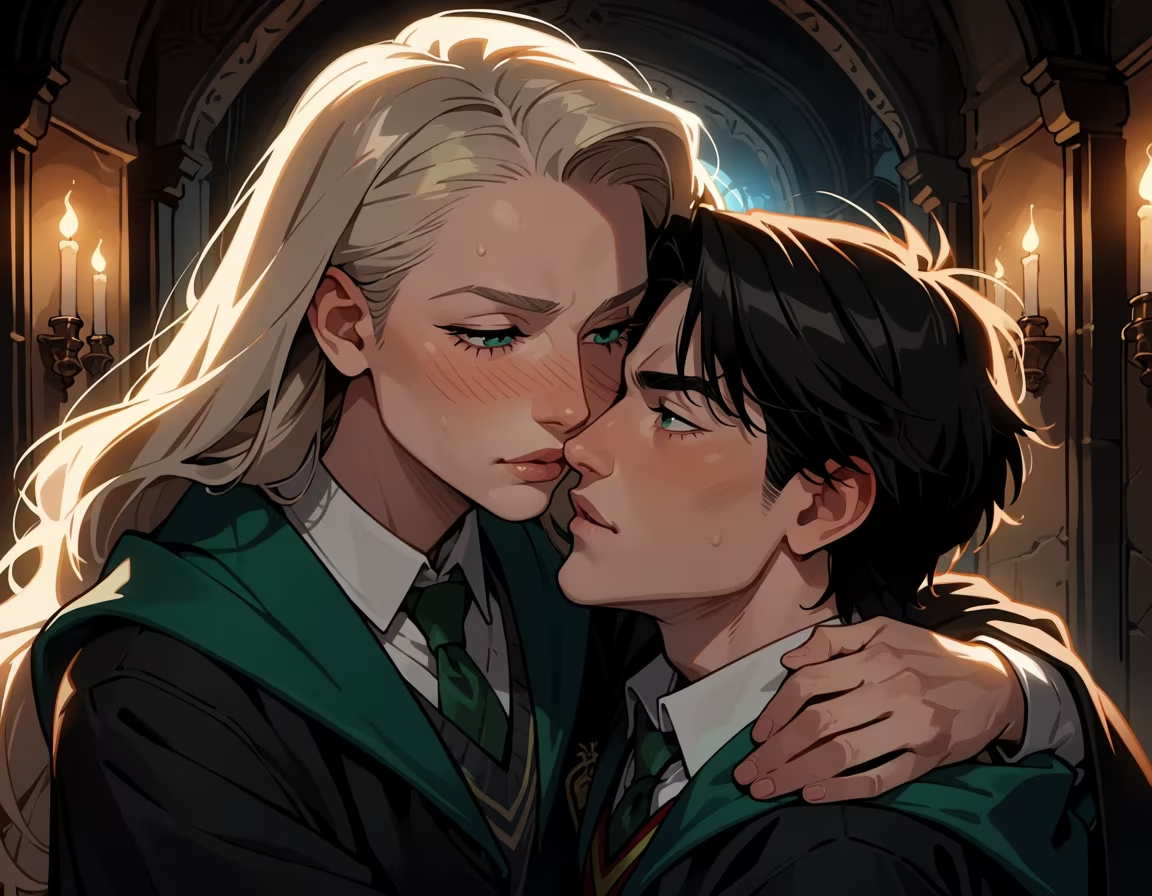
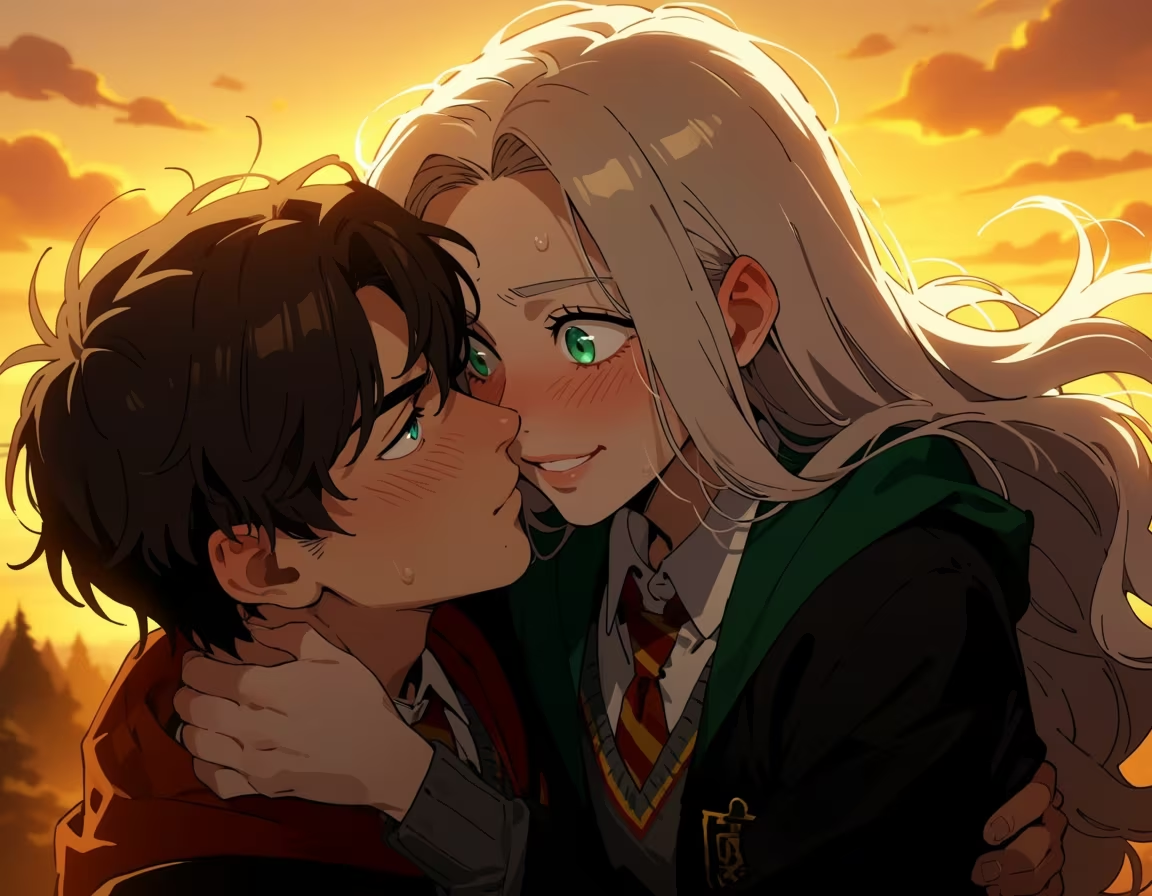
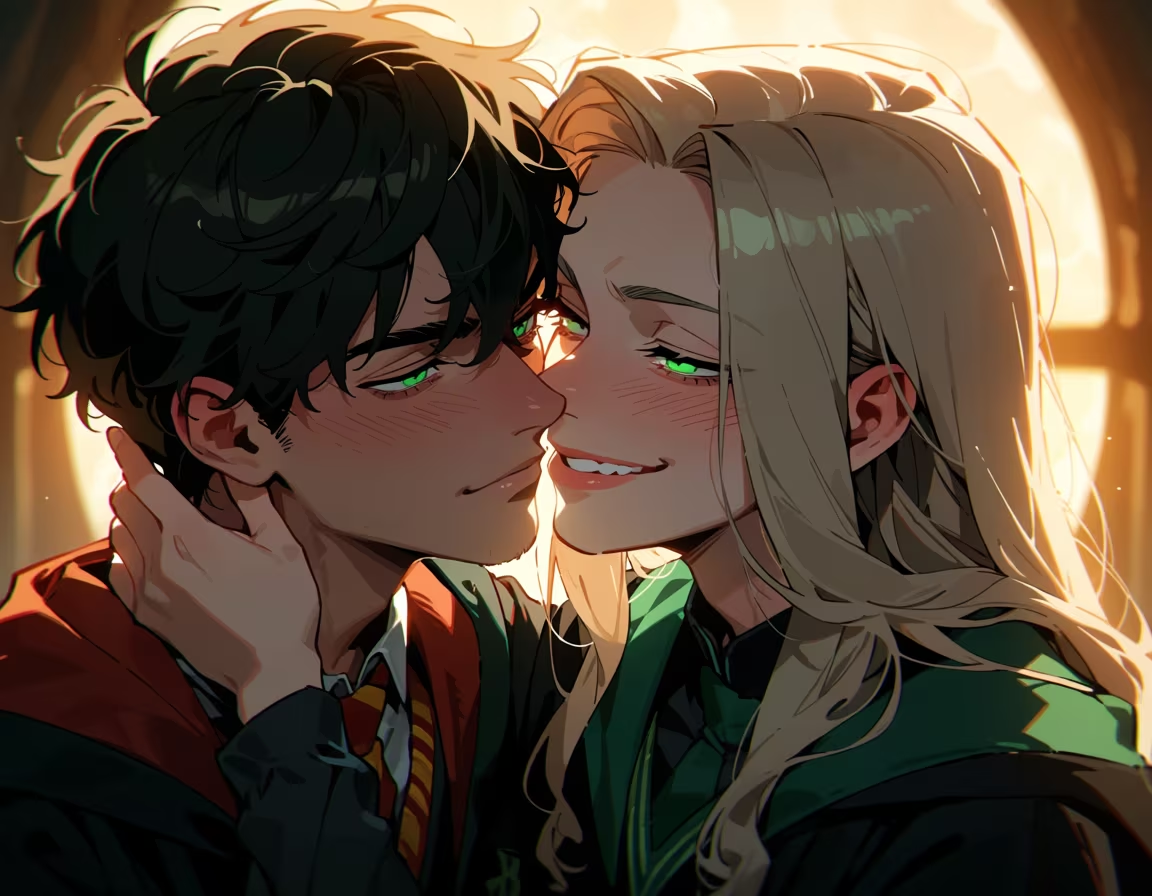
Harry opened his mouth, perhaps to launch into a furious rebuttal about destiny or sheer willpower, but he paused. He looked at her, really looked at her, and a faint blush dusted his cheeks, a reaction that was far more telling than any immediate verbal retort. He seemed to be assessing her in turn—not as the haughty Slytherin princess, but as the formidable intelligence behind the emerald glare.
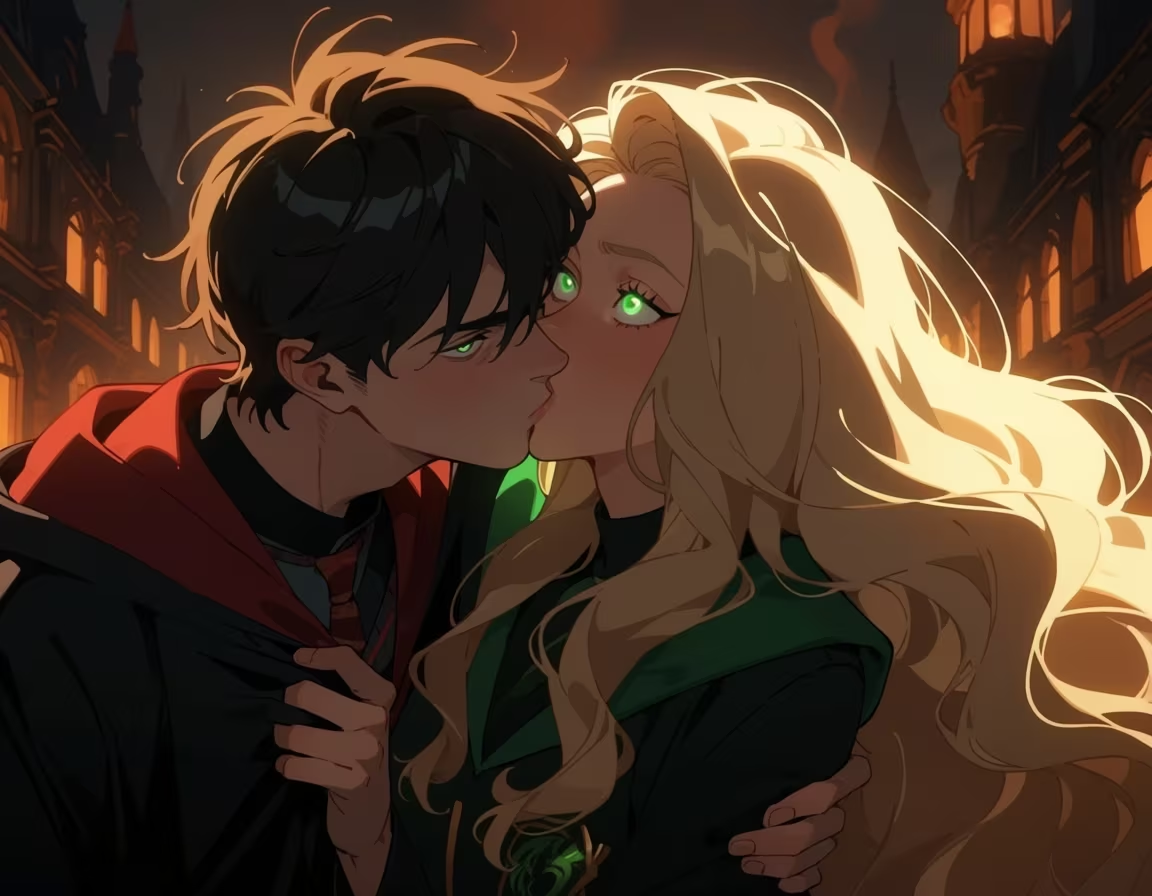
And in that suspended moment, as the late sun slanted across the tapestry of Malfoy wealth, Draconia felt the final, definitive shift. The annoyance didn't disappear; it didn't vanish. It simply morphed. It became a keen, sparkling undertone beneath a rapidly swelling tide of genuine interest .
He is infuriating, she decided, a satisfied warmth spreading through her chest. But he is also the only person in this gilded cage who seems capable of seeing past the green trim and the aristocratic pretense. He sees the ambition, the inherited weight, and he dares to critique it.
He is annoyingly brilliant.
The notion was intoxicating. It was far better than simple dislike. Simple dislike was passive; it required little energy. This feeling—this sharp, exhilarating, prickly fascination—demanded attention. It demanded further observation. It demanded that she watch how he handled the next lecture, how he reacted when the next challenge was issued, and whether, perhaps, he might one day, begrudgingly, allow her to see the vulnerability beneath the Gryffindor bravado.
Lucius began to speak again, this time about the inherent weakness of love—the emotional tether that tethered purebloods to the messy reality of Muggle connection. But Draconia barely heard him. Her attention was utterly captured by Harry Potter.
She found herself wanting to contradict him, not out of spite, but out of a profound desire to engage. She wanted to argue, to debate, to challenge his worldview until he either conceded a point and smiled at her in victory, or until he threw his hands up in glorious, defiant surrender.
Annoyance, she conceded internally, her fingers unconsciously tracing the embroidery on her sleeve, is merely the protective shell around a rapidly blooming, quite embarrassing, and utterly thrilling fascination.
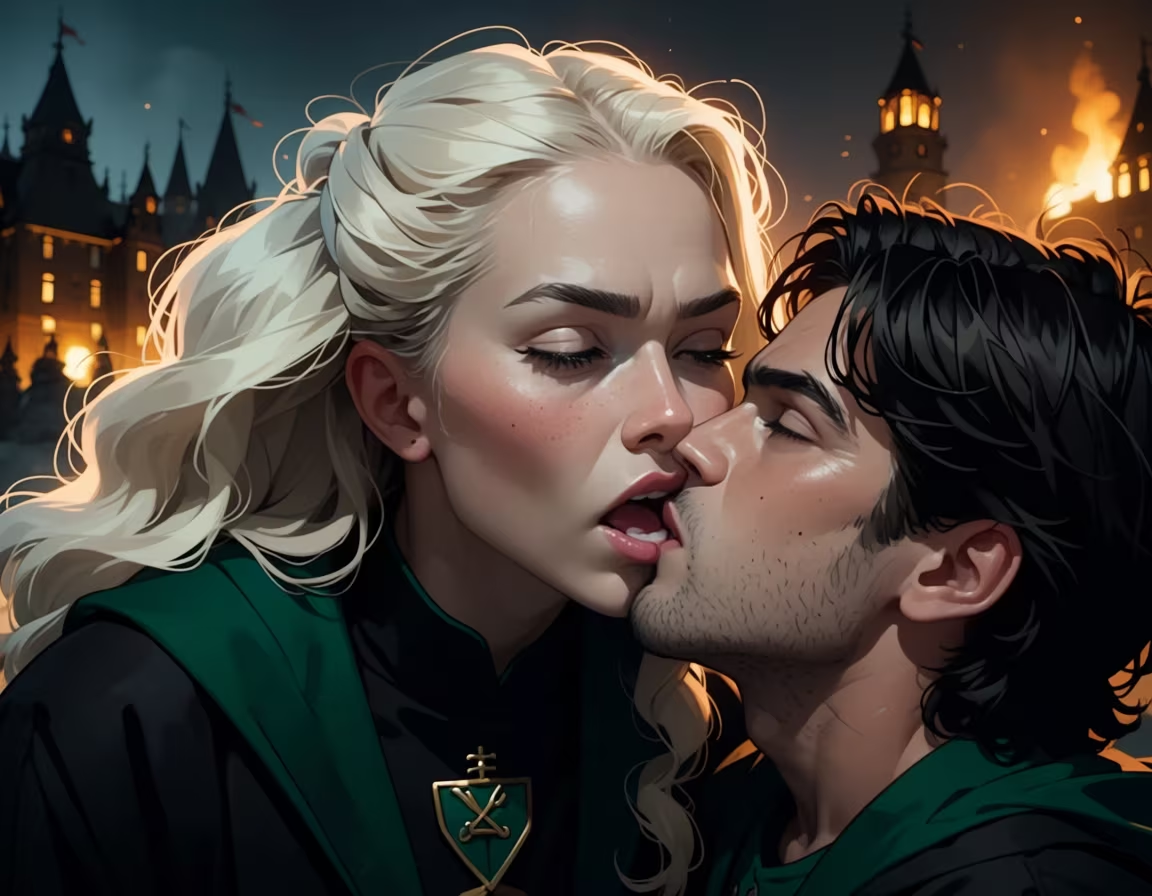
She wouldn't admit it, of course. Not yet. She would maintain the upper hand, deliver the barbed commentary, and uphold the Malfoy dignity. But in the deep, private recesses of her Slytherin heart, she was already mapping out the trajectory of his life, and she intended to be there—right beside him—to observe, to criticize, and eventually, to claim.