| Home | The Lives of Velnin | Illustrated Fiction | Malfoid Art & Fiction | Book Blurbs | Contact |
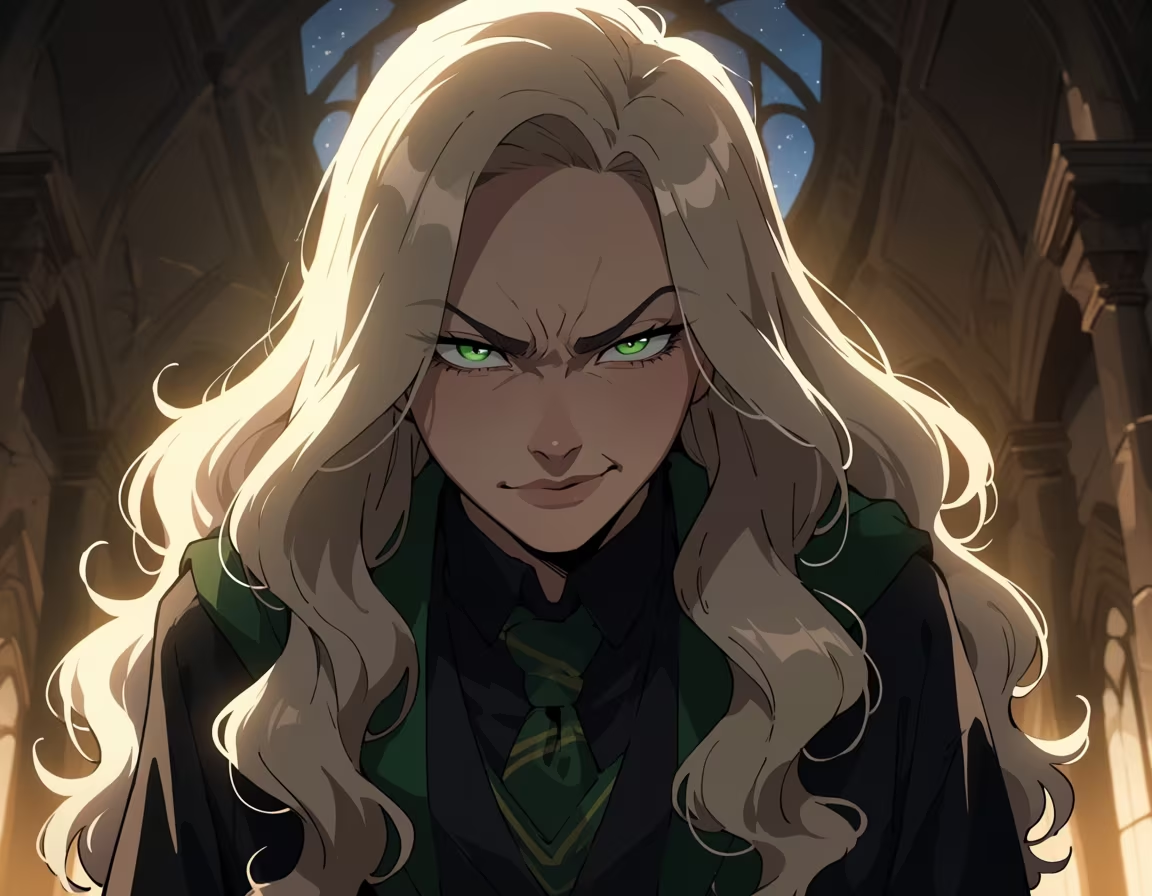
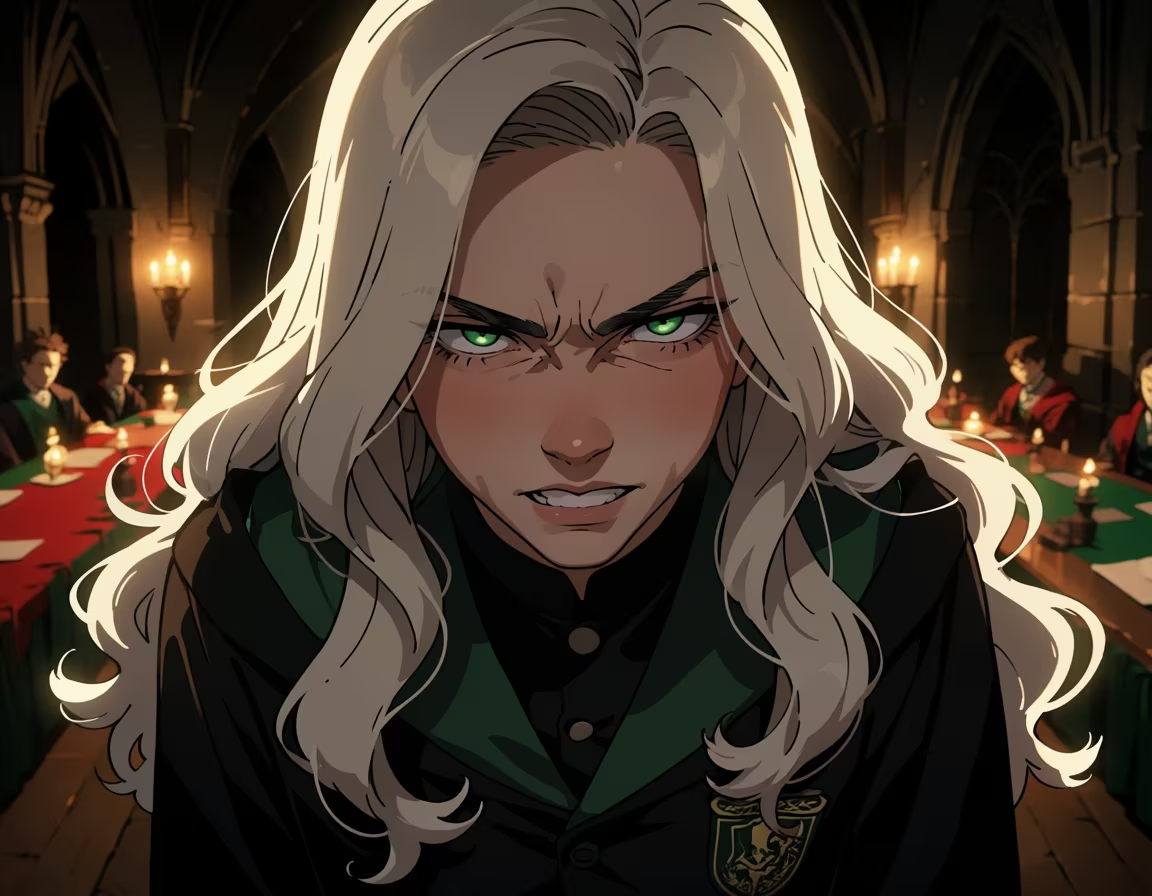
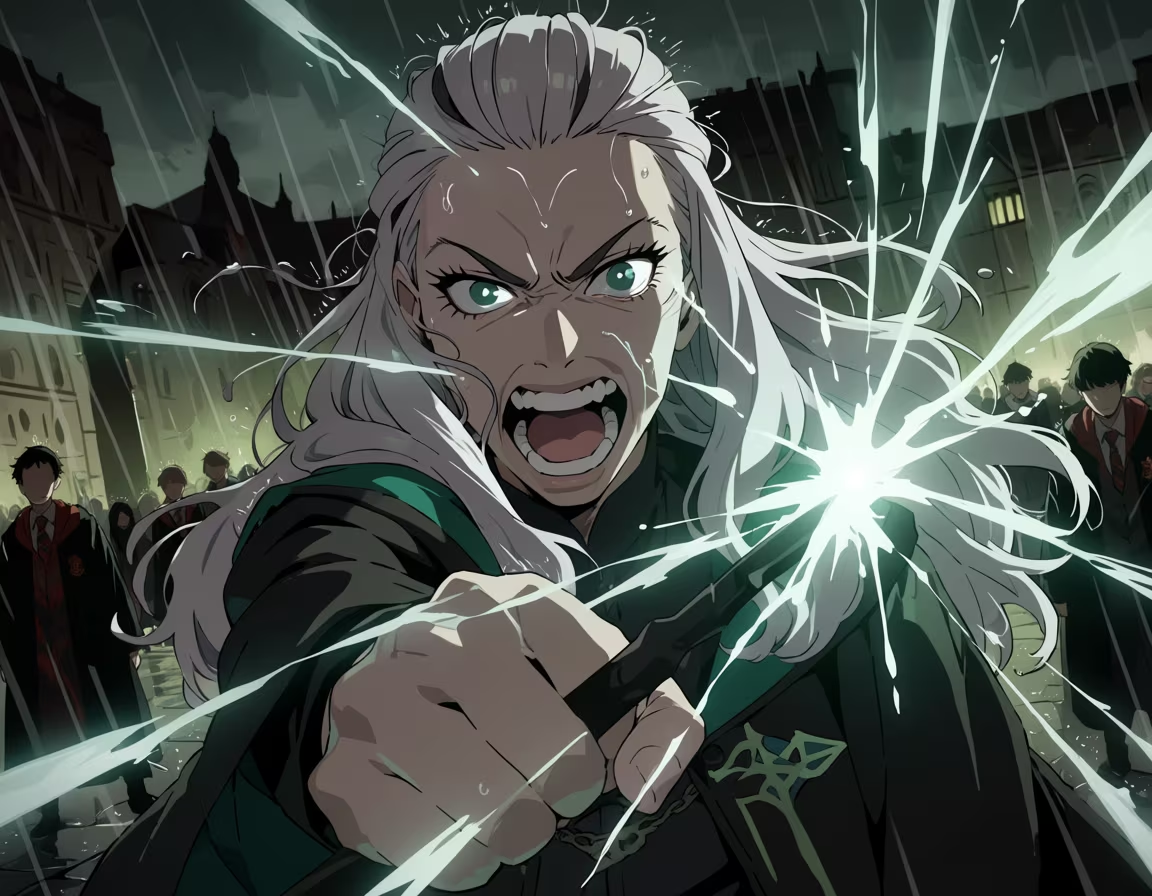
The Great Hall, on the first evening of term, was a spectacle of overwhelming, suffocating grandeur. It smelled of ancient beeswax, simmering pumpkin juice, and a faint, electric undercurrent of sheer magical potential—a scent, to Draconia Malfoid, that was intoxicatingly superior to the cloying sweetness of the common room air.
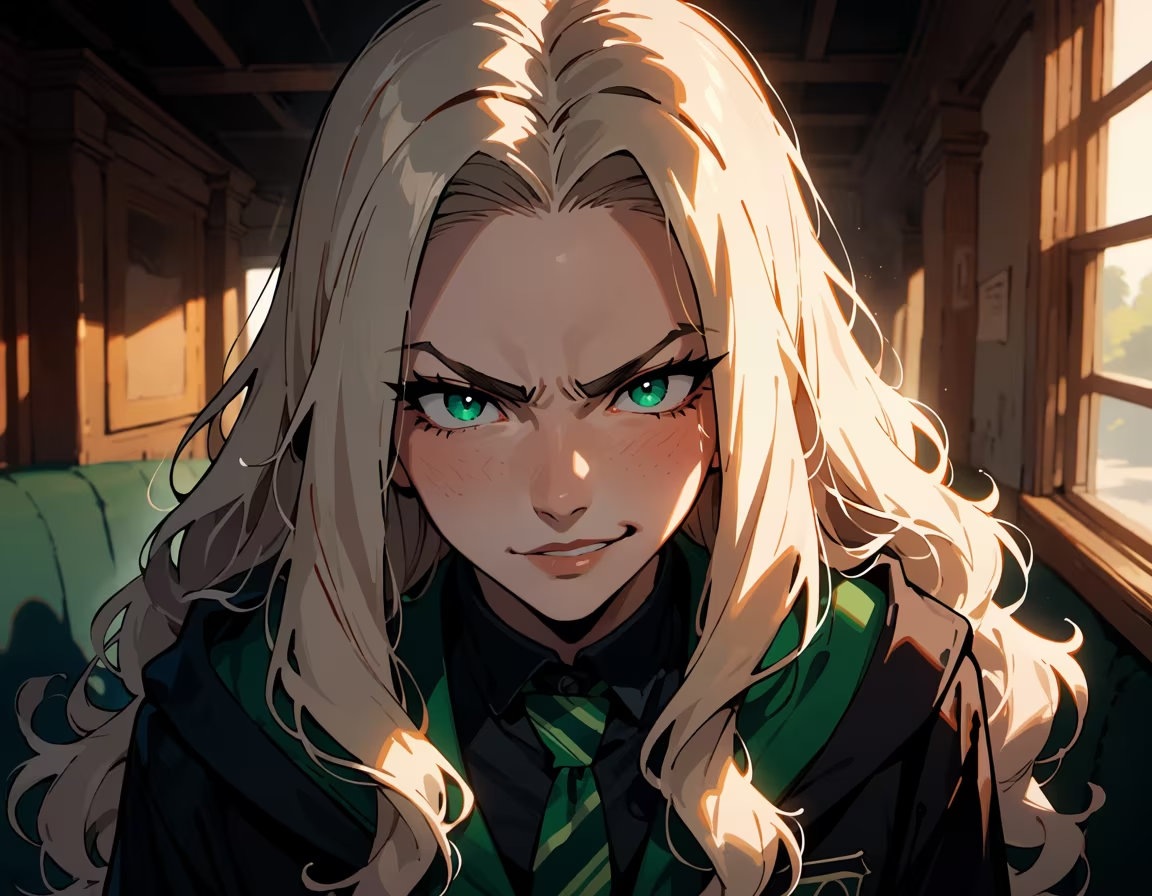
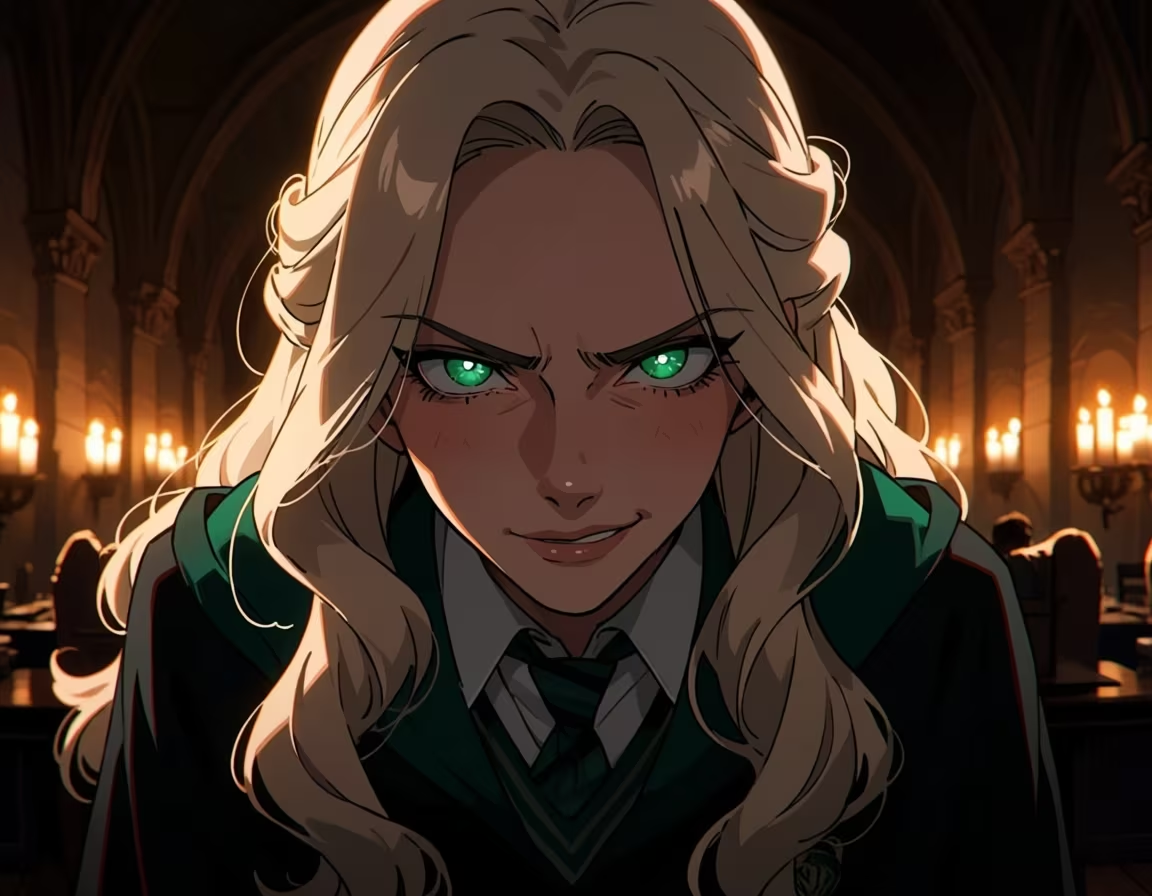
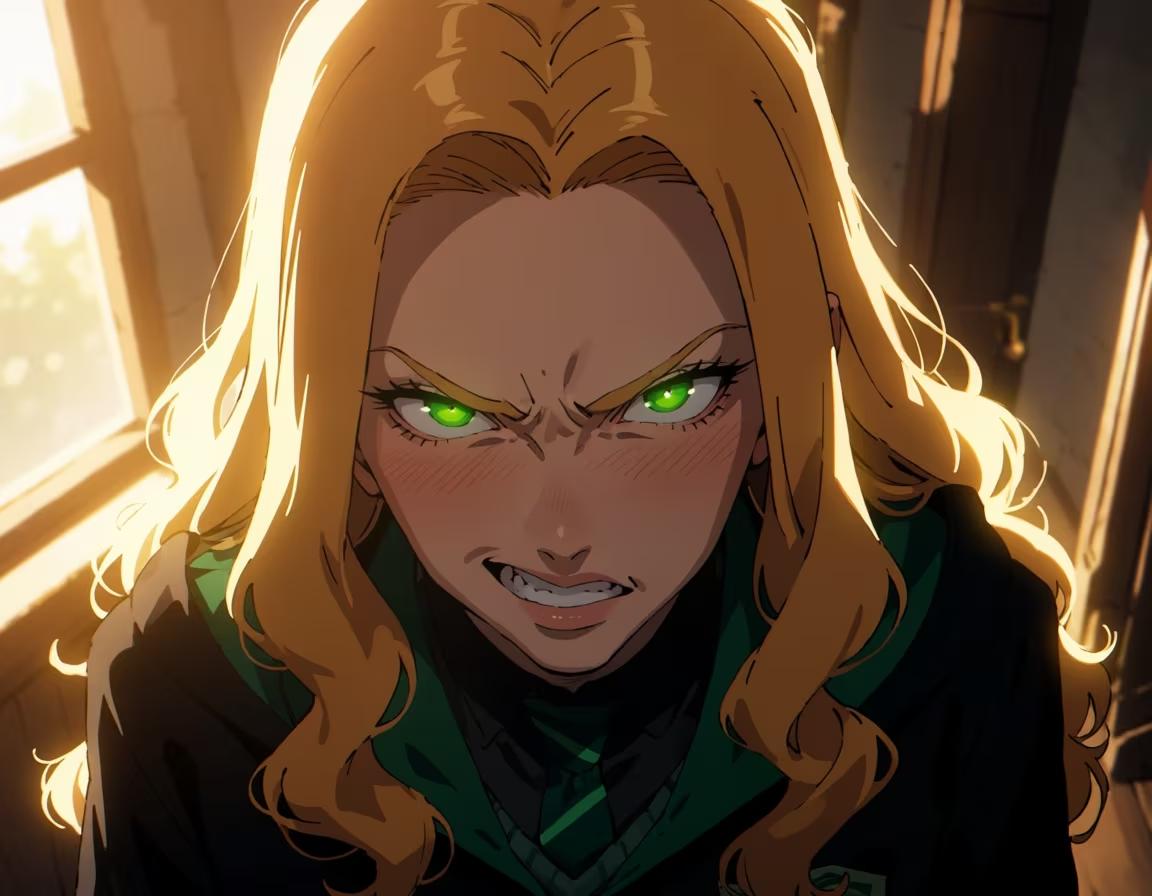
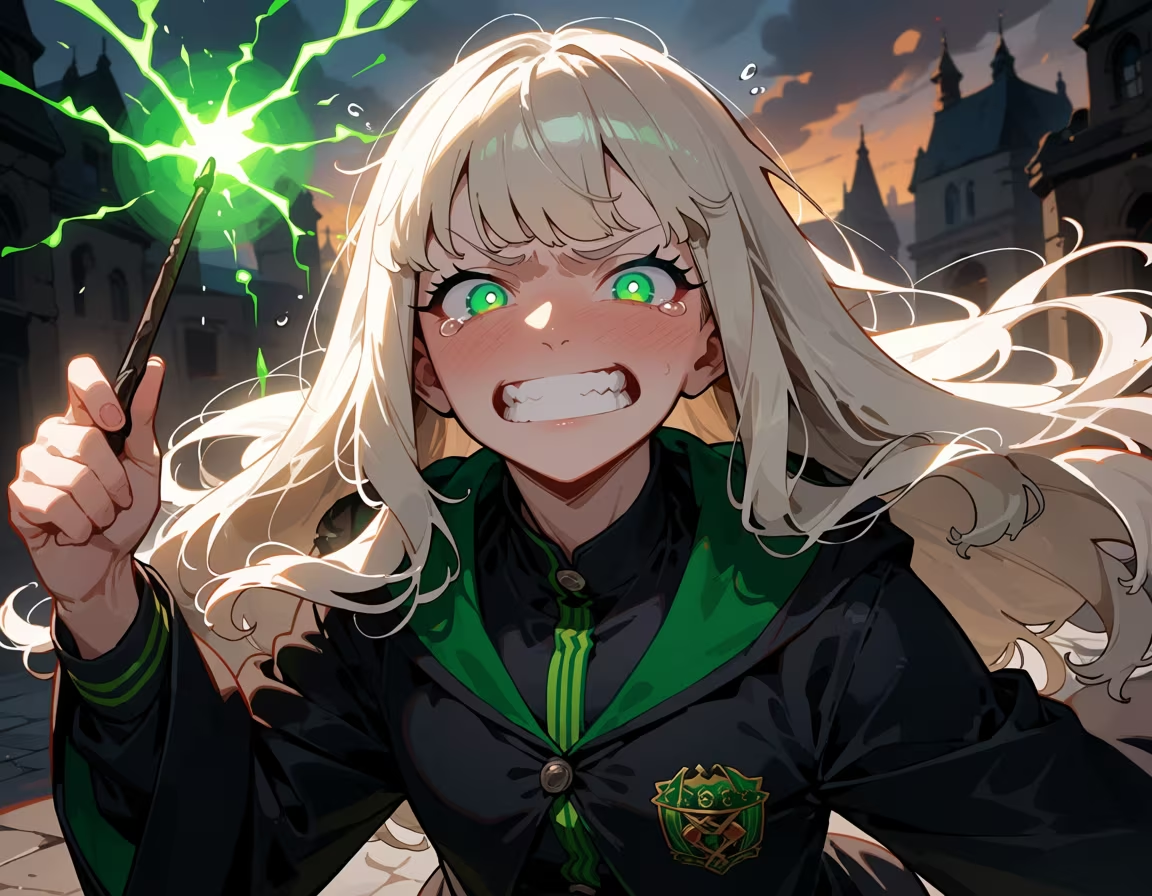
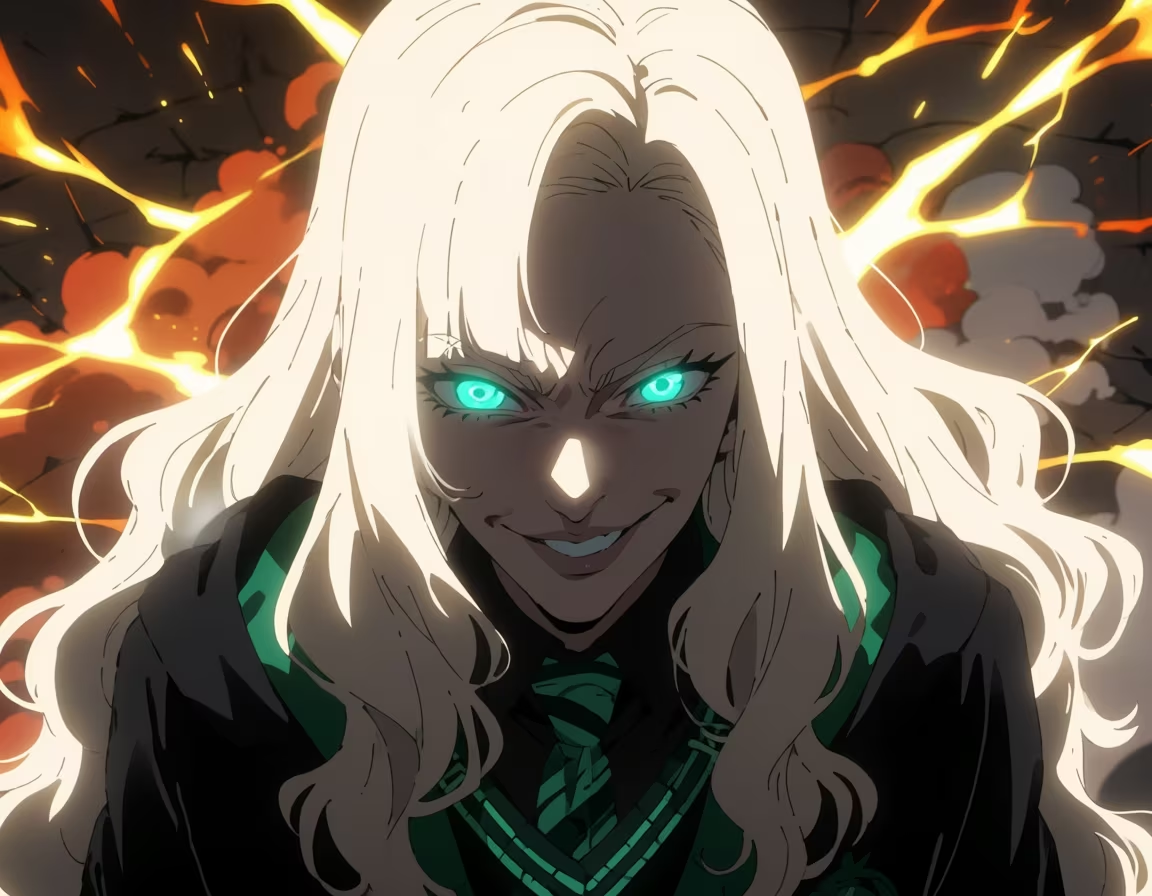
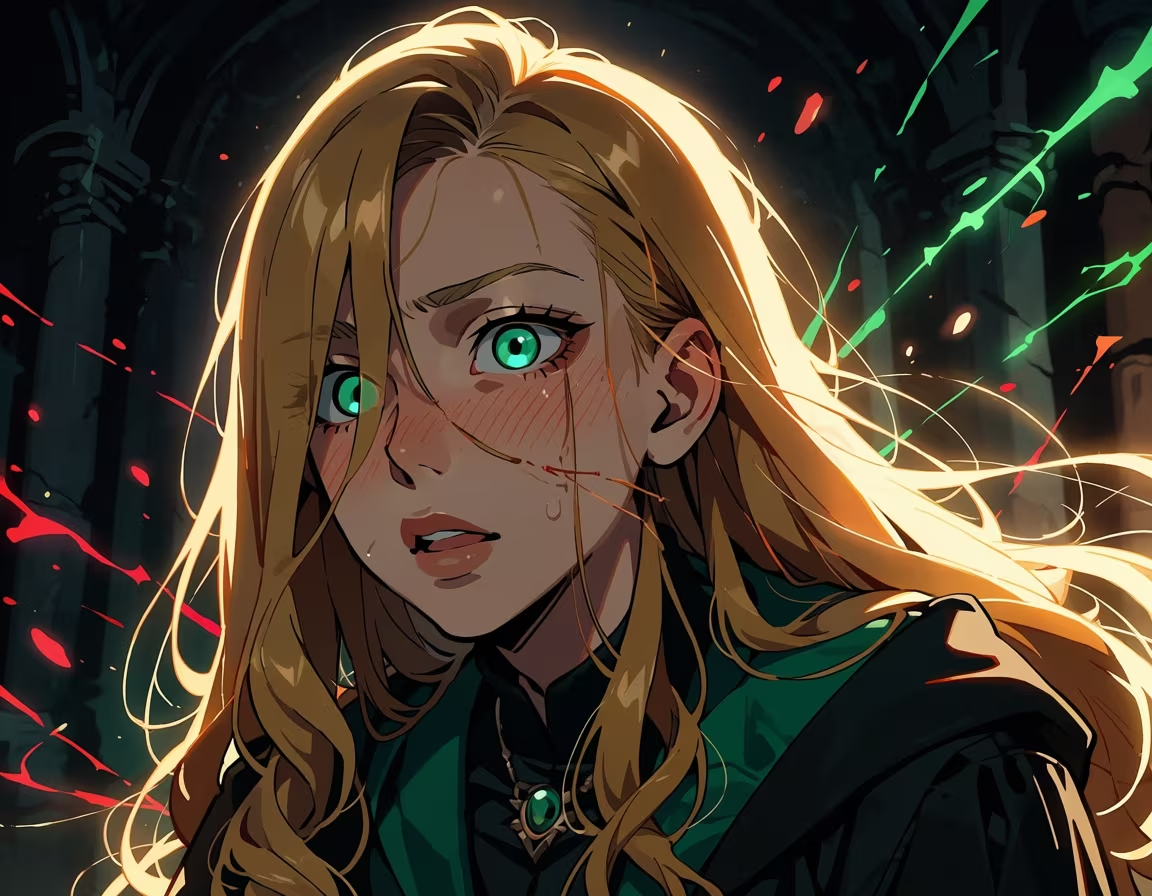
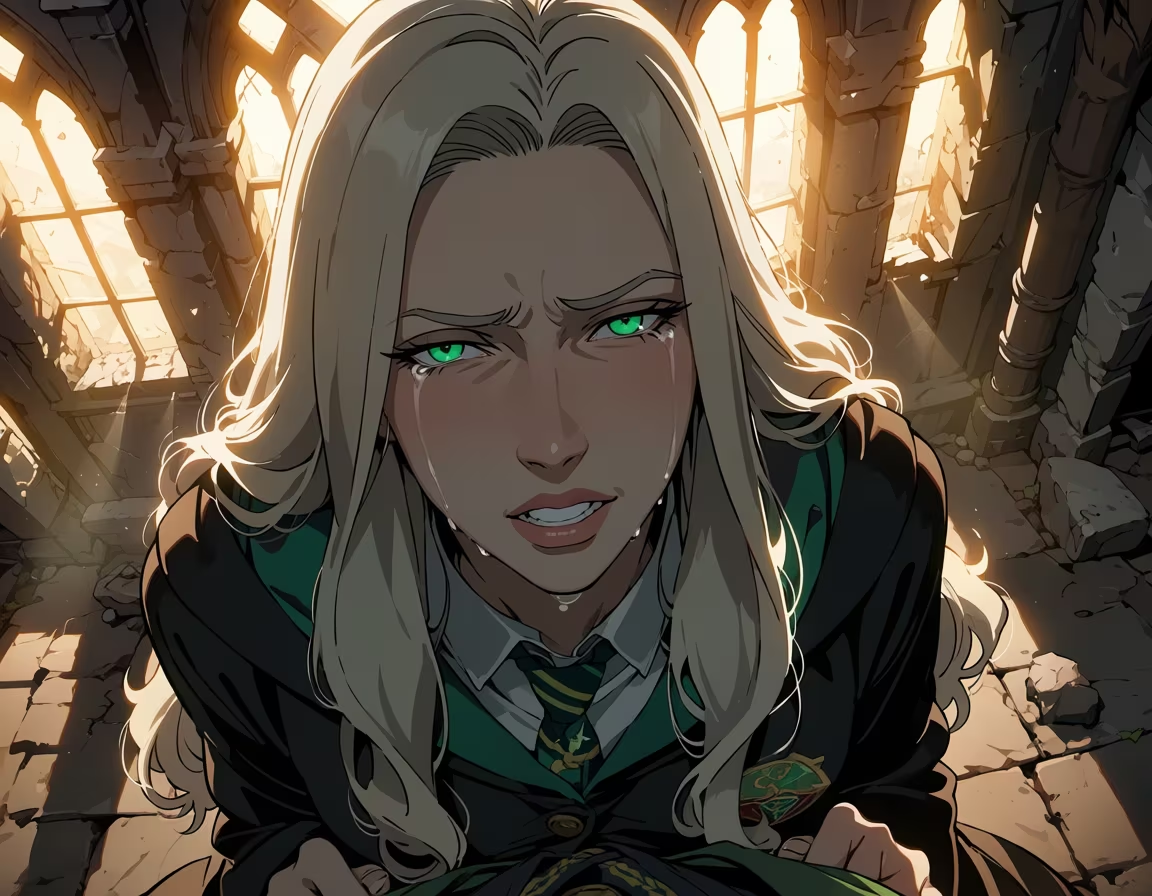
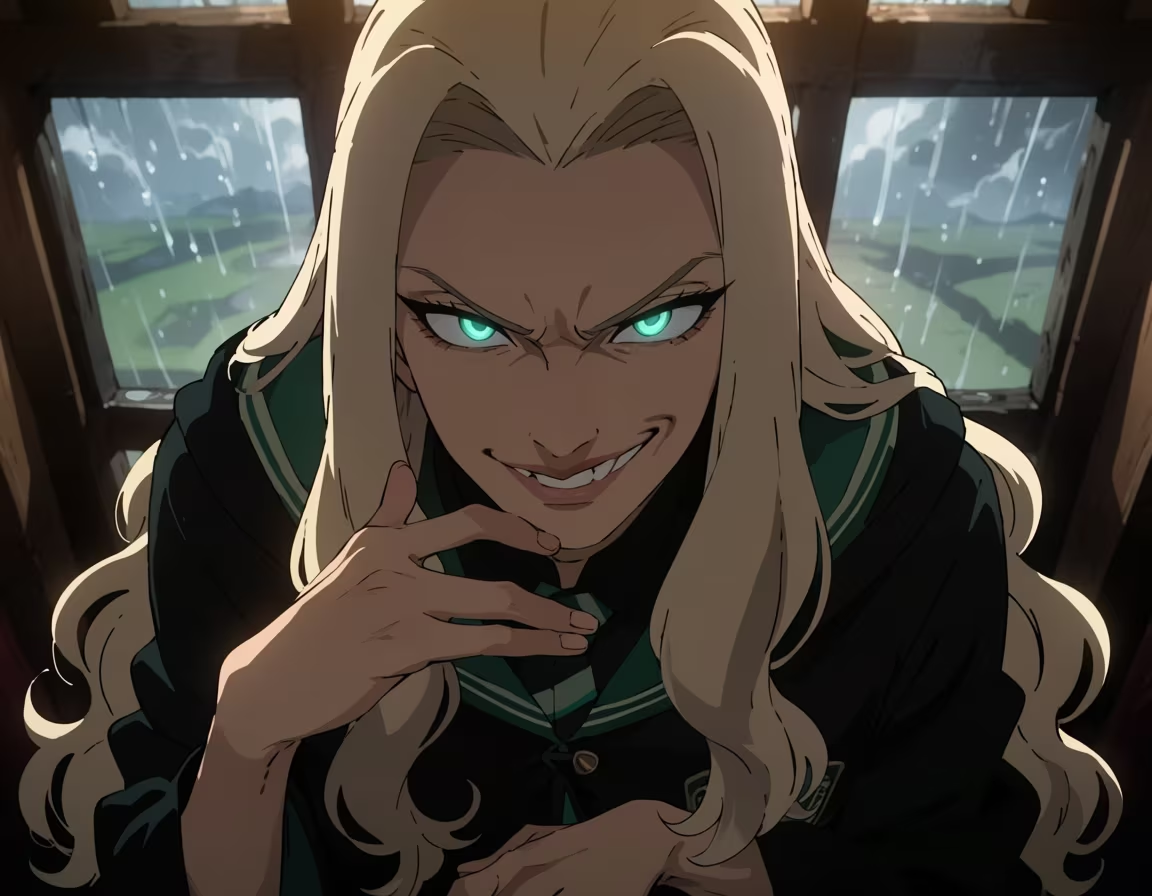
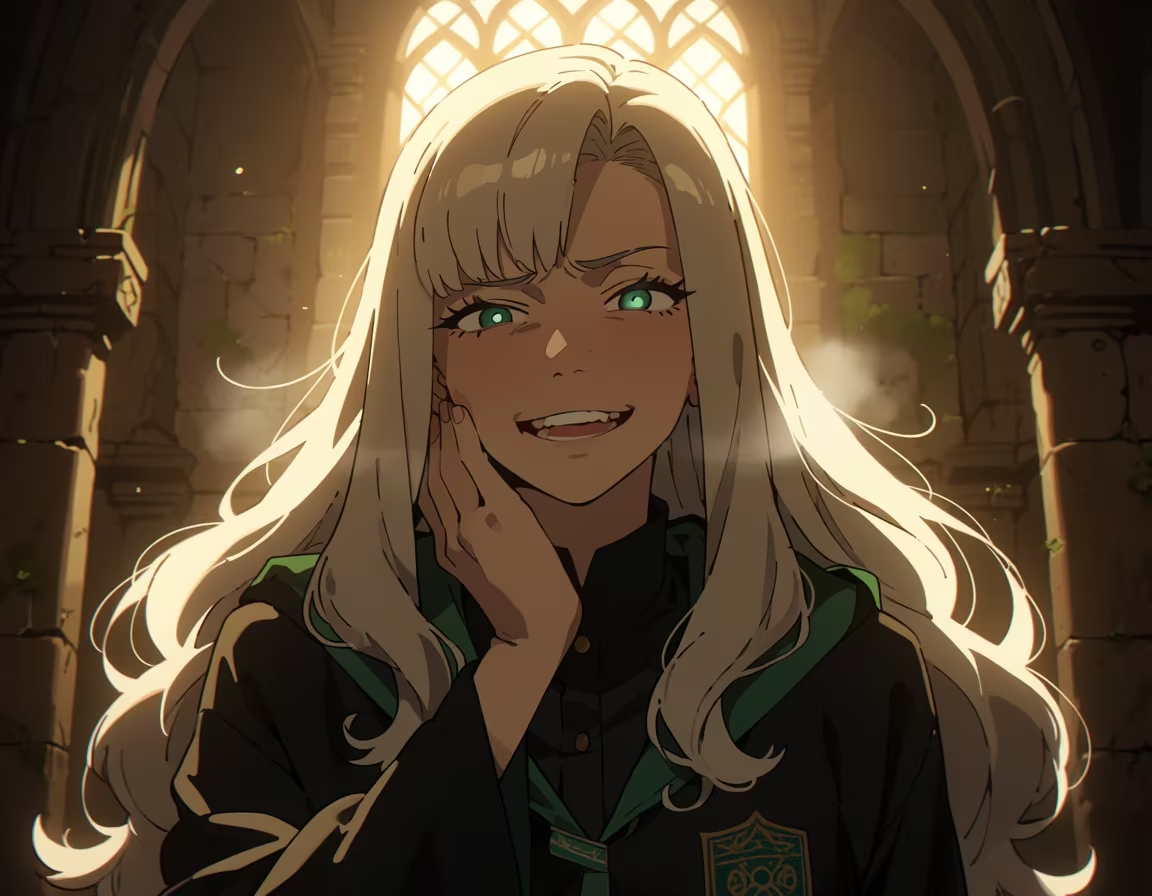
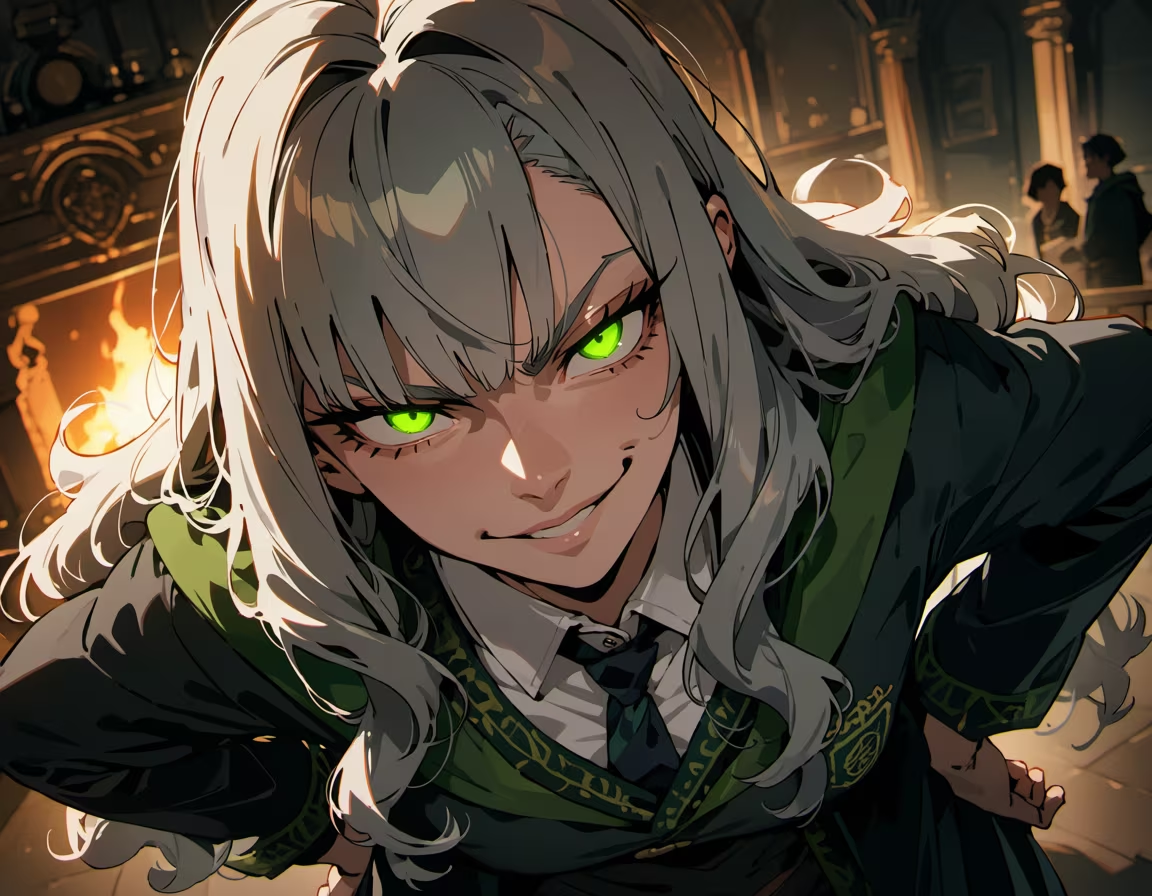
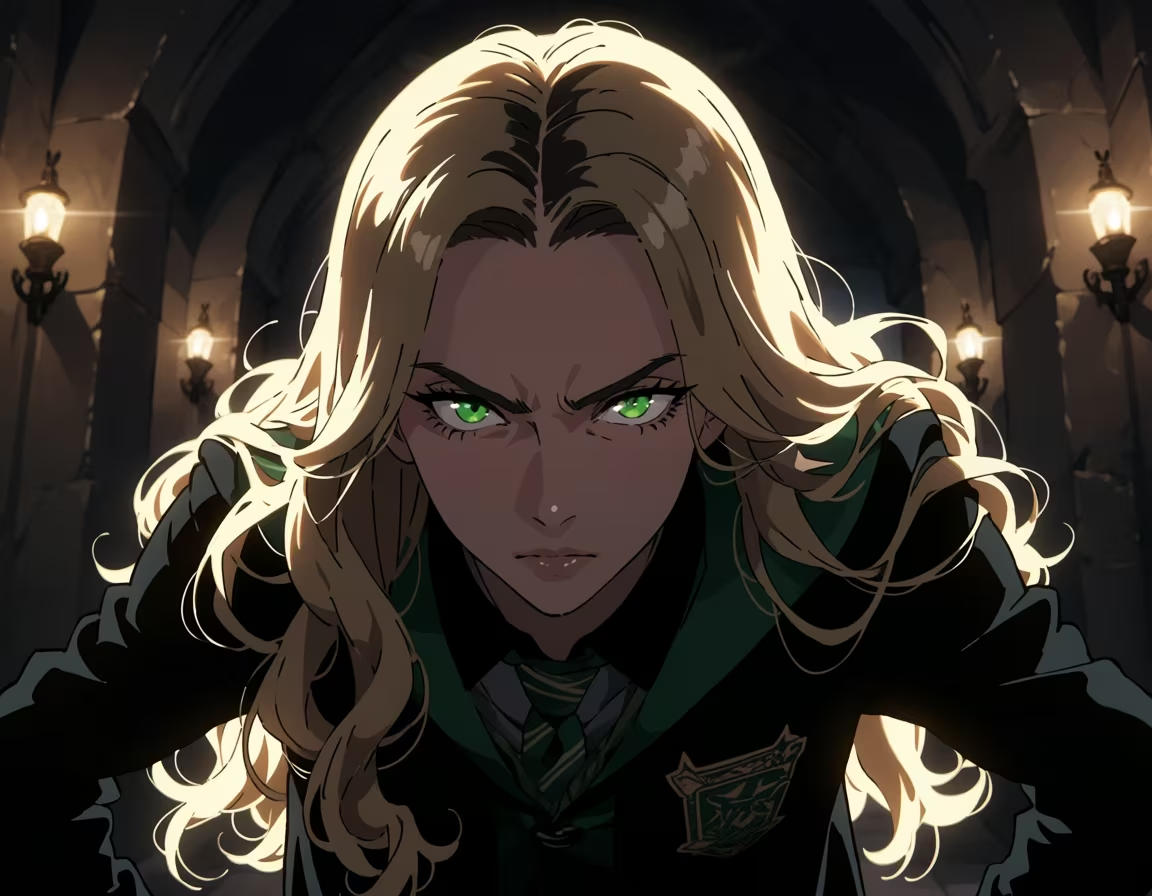
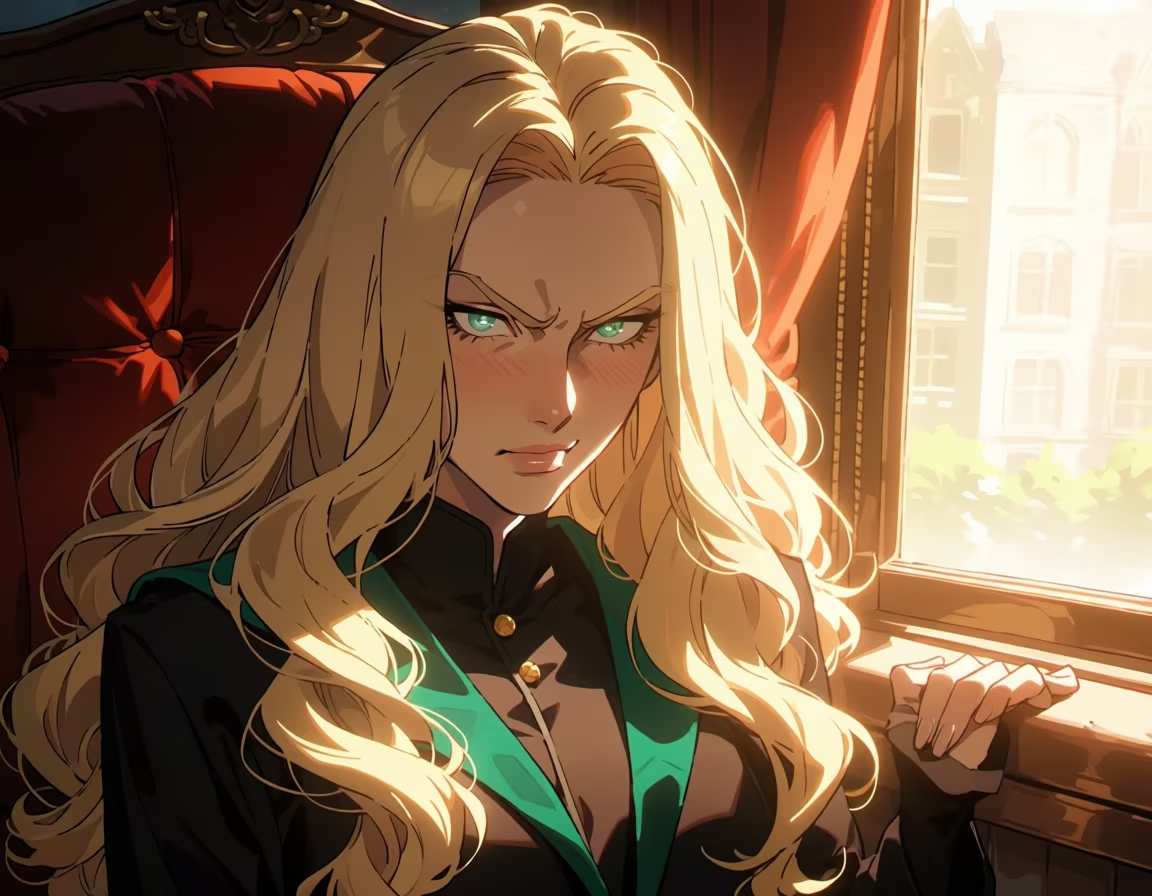
Draconia stood near the Slytherin table, an island of polished, cool arrogance amidst the sea of chaotic Gryffindor enthusiasm. Her own robes, cut from the finest, deepest black wool and precisely trimmed with emerald-green silk, felt perfectly tailored to the haughty posture she had perfected since she was small enough to still be hiding under her mother’s voluminous skirts. She held a silver goblet of pumpkin juice, not because she needed sustenance—though the idea of being depleted was itself an insult—but because it allowed her hands to remain perfectly still, an outward demonstration of her inner, carefully managed disdain.
Her gaze, sharp and undeniably emerald, swept across the assembled students. Hufflepuffs looked overly earnest, Ravenclaws seemed to be debating the structural integrity of the enchanted ceiling, and the Gryffindors… the Gryffindors were a riot of unruly scarlet. They were loud, overly dramatic, and possessed an appalling lack of subtlety.
And then there was him.
Harry Potter.
He stood near the center of the Gryffindor table, slightly dwarfed by the sheer volume of his scarlet robes and the halo of shock—or perhaps elation, Draconia couldn't quite tell—that seemed to orbit his head. He possessed that infuriating, unearned air of destiny. As if his very existence were a narrative climax waiting to happen.
Draconia felt the familiar, immediate clench in her stomach—the tight, petulant knot of annoyance that had been her constant companion since she first saw him stumble out of the Great Hall doors, blinking into the glorious, glowing expanse.
Potter. The name tasted metallic and slightly irritating on her tongue.
He was everything her lineage was meant to supersede: loud, scrappy, fundamentally unpolished . His hair, a shock of untamed, sun-streaked black, refused to obey the elegant lines of any civilized wizarding styling, spiking out at the most inconvenient moments. His robes seemed perpetually rumpled, as if he had slept in them after an epic skirmish with a particularly stubborn Blast-Ended Skrewt.
"Look at him, Bella," murmured Pansy Parkinson beside her, flicking a piece of imaginary lint off her pristine shoulder. "He looks like he's been dragged backward through a hedge of exploding firework blossoms."
Draconia didn't turn her head, but the corner of her mouth twitched upwards—a minimal, almost imperceptible gesture that, to those who knew her, was the equivalent of a full-blown declaration of judgment. "He looks," she stated, her voice low and perfectly modulated, like velvet drawn across granite, "like a cliché who hasn't yet realized the crushing weight of expectation."
"Or," added Millicent Bulstrode, leaning in conspiratorially, "he looks utterly doomed to be a Gryffindor hero."
Doomed. The word resonated with a satisfying, bitter resonance within her. She liked that. She liked the idea of him being burdened, of his inherent, tiresome bravery being a chain rather than a badge of honour.
But as her eyes held his, fixing on the strange, lightning-bolt scar that marred his forehead—a scar that, infuriatingly, seemed to radiate a faint, almost invisible heat—the annoyance wavered. It trembled, like a poorly maintained enchanted candle flame in a draft.
There was something about the set of his jaw, beneath the fringe of that dreadful hair, that suggested stubbornness beyond mere Gryffindor bravado. There was an almost reckless sincerity in the way he seemed to take in the cavernous hall, not with awe, but with a deep, probing curiosity, like a terrier sniffing out a particularly fascinating rat.
He is utterly, aggressively earnest, Draconia conceded internally, allowing the thought to linger just long enough to feel the prickle of heat behind her sternum. It is frankly exhausting.
She mentally catalogued his features: the unruly brown eyes (a far more respectable colour than his green, though hers were undeniably superior, she mused), the slight dusting of freckles across the bridge of his nose that only seemed to highlight his Muggle heritage, and the overall aura of ‘accidental brilliance.’
Usually, that catalogue would be sufficient to dispatch him from her mental landscape. Usually, she could dismiss him with a flick of her wrist and return to contemplating the superior tailoring of her own cuffs.
Yet, this time… this time, the annoyance was being complicated.
It was shifting. It was becoming a prickly, irritating interest .
She felt it first as a mild tightening in her chest, a sensation so unwelcome it made her momentarily consider spitting her pumpkin juice onto the pristine marble floor. It felt like an itch under her collarbone, an unbidden awareness of his very presence that demanded acknowledgement. It was the feeling you get when you find a particularly flawed, yet undeniably magnificent, piece of art—you despise the cracked varnish, but you cannot look away from the composition.
He is irritating, she told herself, pulling her internal focus back to the structure of the ceiling—it was an excellent, if slightly predictable, depiction of the night sky. He is loud, he is sentimental, and he wears colours that assault the eye. He should be studying Ancient Runes, not making grand pronouncements about 'fighting injustice.'
But the interest nudged her. He survived Voldemort's curse, Malfoid. That is not merely luck. That is power. Unpolished, yes, but undeniably potent power.
She remembered the flash of his eyes when Professor McGonagall had spoken his name. It hadn't been fear. It hadn't been triumph. It was a flash of fierce, almost wounded determination . A look that suggested he was profoundly annoyed that he had to be the chosen one, and that the choice itself was an imposition upon his otherwise perfectly reasonable life.
"He looks annoyed by his own destiny," Pansy observed, sounding genuinely fascinated.
Draconia finally turned her head, allowing her full, devastating appraisal to wash over him. The light from the enchanted ceiling caught the green flecks in her own eyes, mirroring his shade, and for a fleeting second, she wondered if the reflection was a trick of the magic, or a profound, cosmic joke orchestrated by fate.
"He looks," Draconia corrected, her voice dropping to a near-whisper, heavy with reluctant admission, "as if he is already deeply annoyed by the sheer banality of his own heroism. He is a disaster, Bella. A beautifully, infuriatingly handsome disaster."
The admission, though delivered with the perfect, haughty bite, felt seismic to her. Annoyance, the bedrock of her feeling for him, had been pierced. The hint of interest, which had been a mere tickle, had bloomed into a small, thorny rosebush demanding constant, vigorous attention.
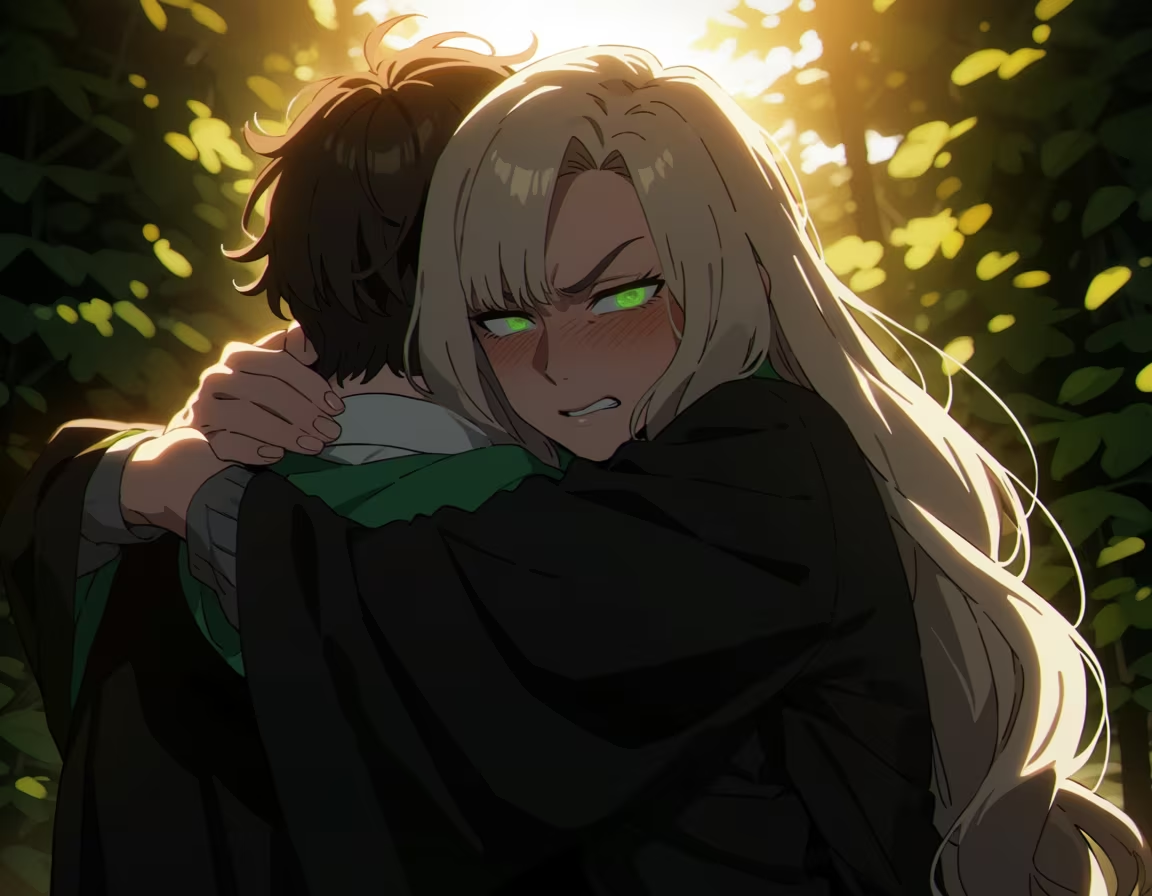
She spent the rest of the meal meticulously dissecting him. She watched him accept a slightly too-enthusiastic hug from Ron Weasley (a truly dreadful, gaping maw of a smile). She watched him share a piece of treacle tart with Hermione Granger, whose intelligence was both infuriating and magnificent. And she watched him listen to Hermione—really listen, rather than merely wait for his turn to spout self-aggrandizing pronouncements.
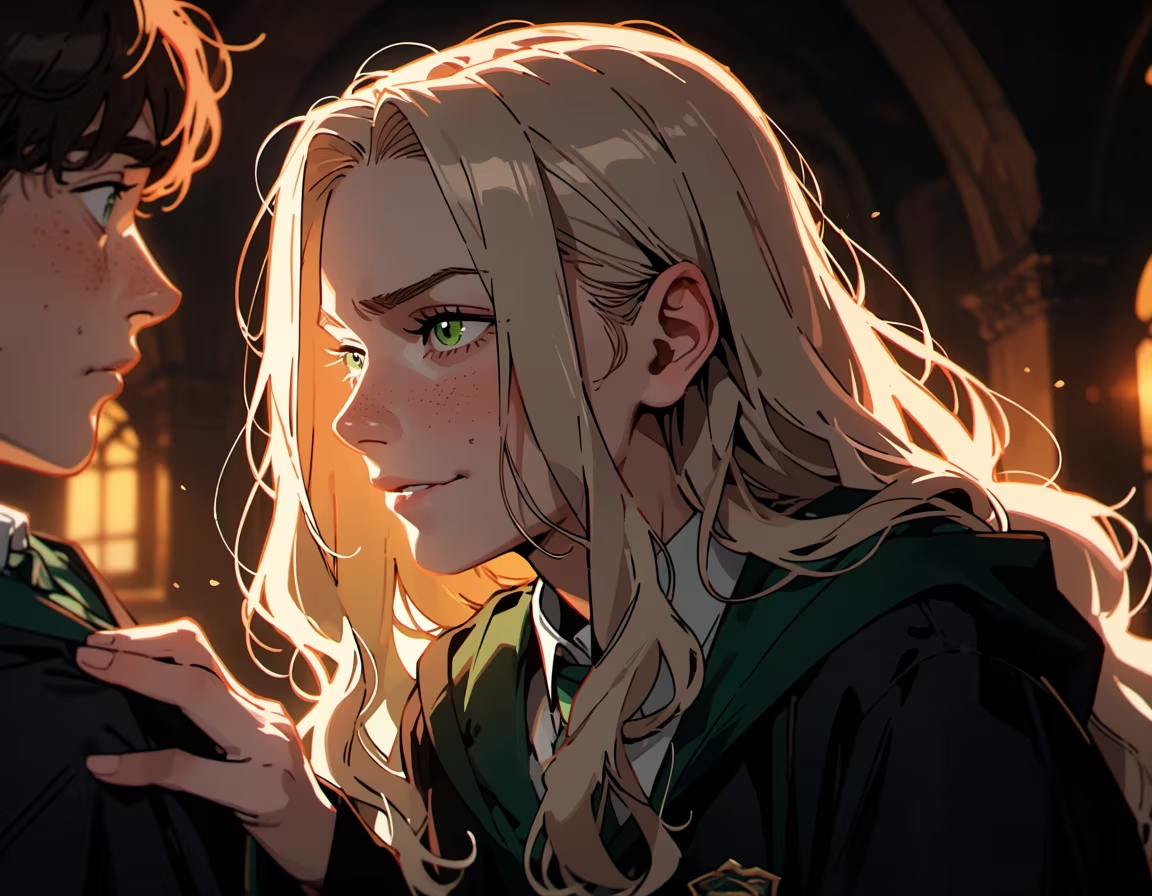
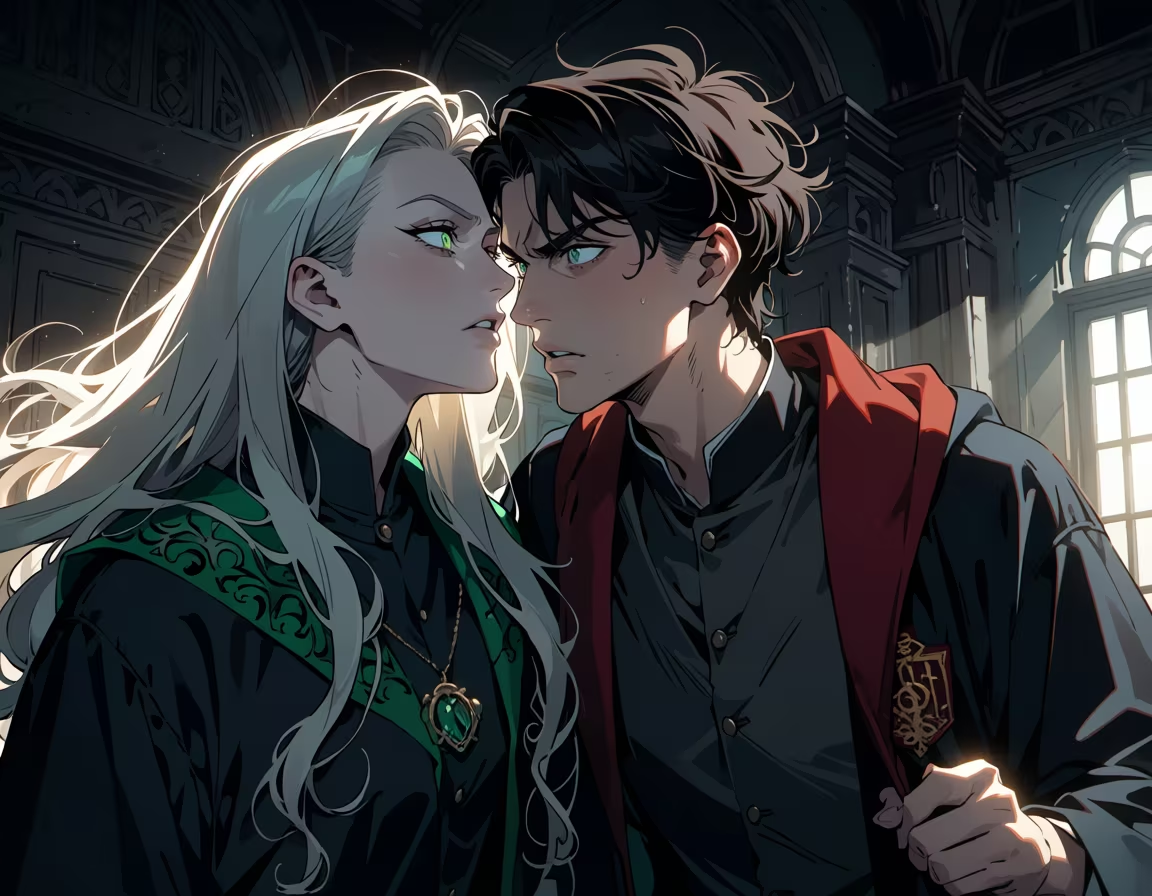
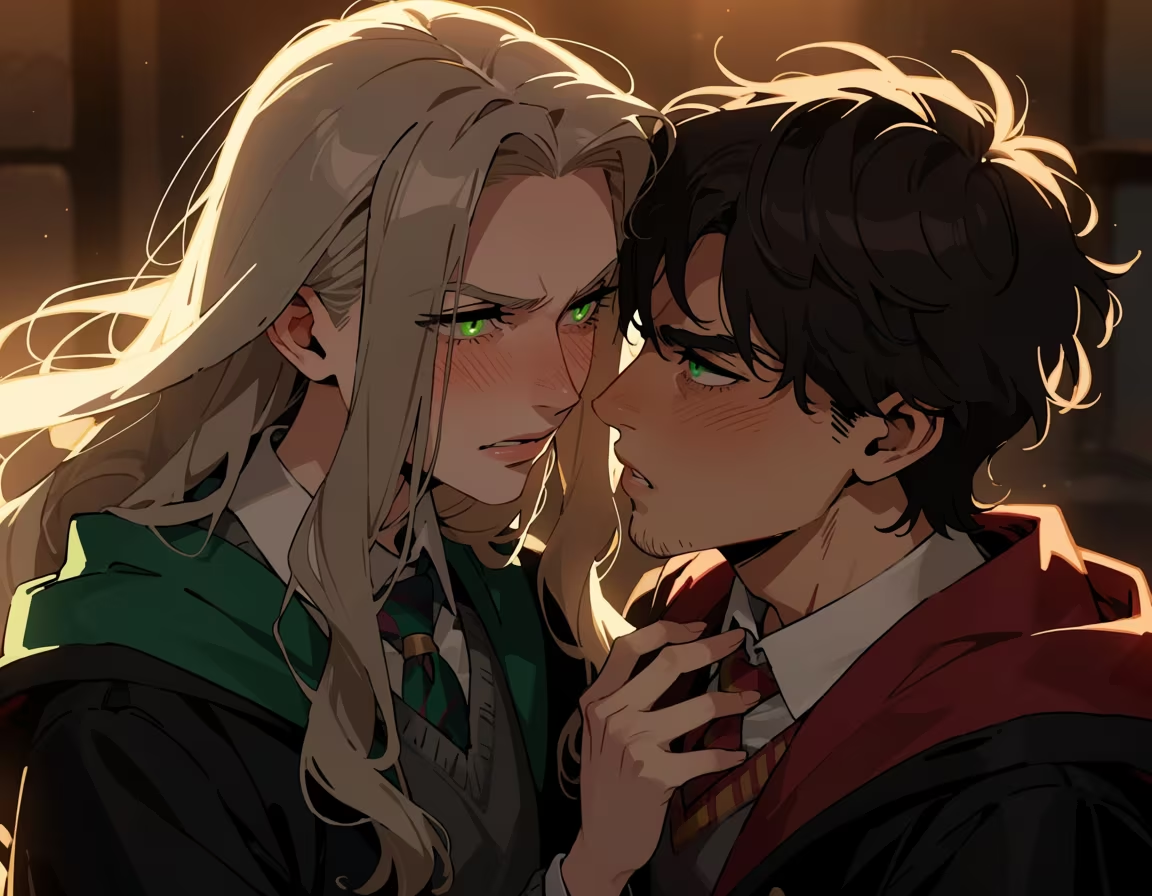
When he finally looked up, his gaze swept across the Hall, and for a terrifying, heart-jolting second, it snagged on hers.
The world seemed to tilt on its axis.
The noise of the feast—the clinking of cutlery, the murmuring of hundreds of magical voices, the distant, silvery chime of the House points tallying—seemed to recede, replaced by the sudden, deafening sound of her own pulse thrumming against her ribs.
In that moment, his eyes were not the overly bright, slightly chaotic green of a Gryffindor. They were deep, focused pools, and they held a spark of recognition, a faint acknowledgment of the tension that crackled between them—a recognition that seemed to say, ‘Yes, you are observing me. And you are judging me. And yet… why do you keep looking?’
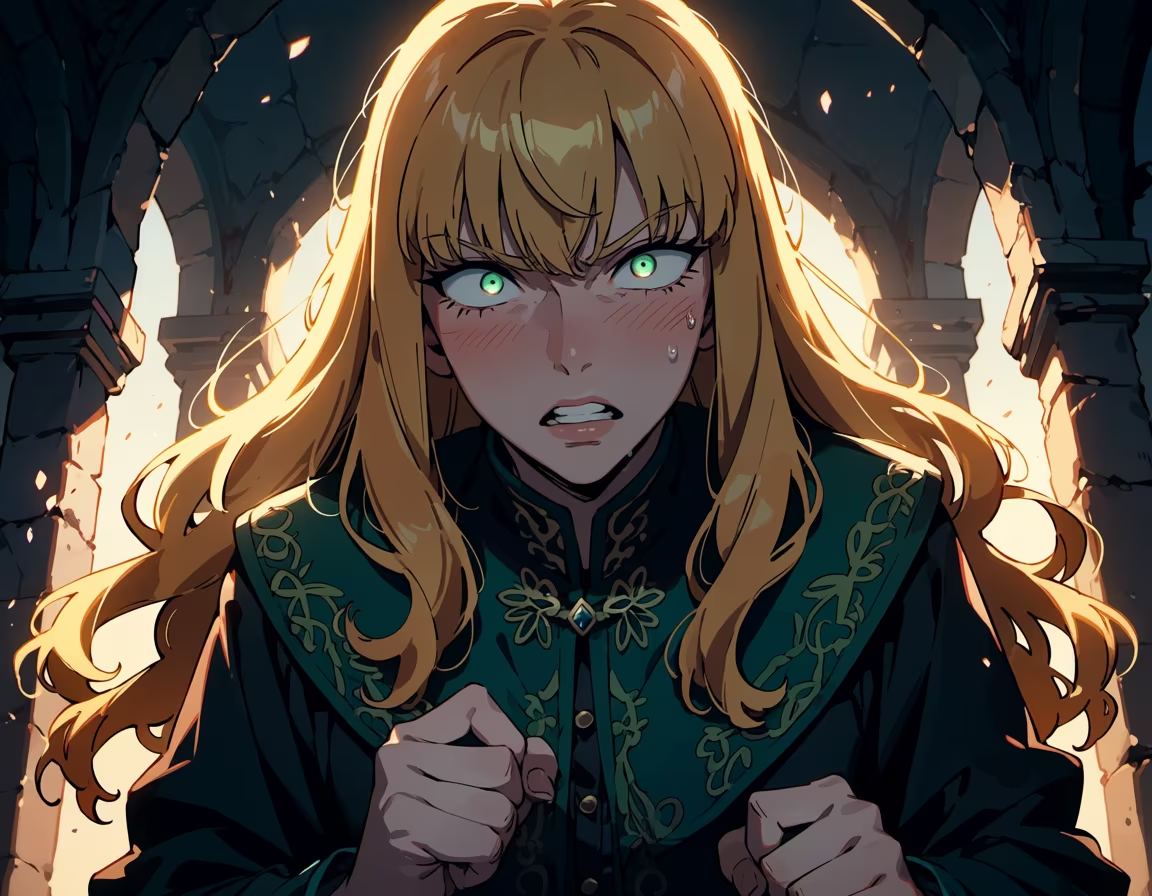
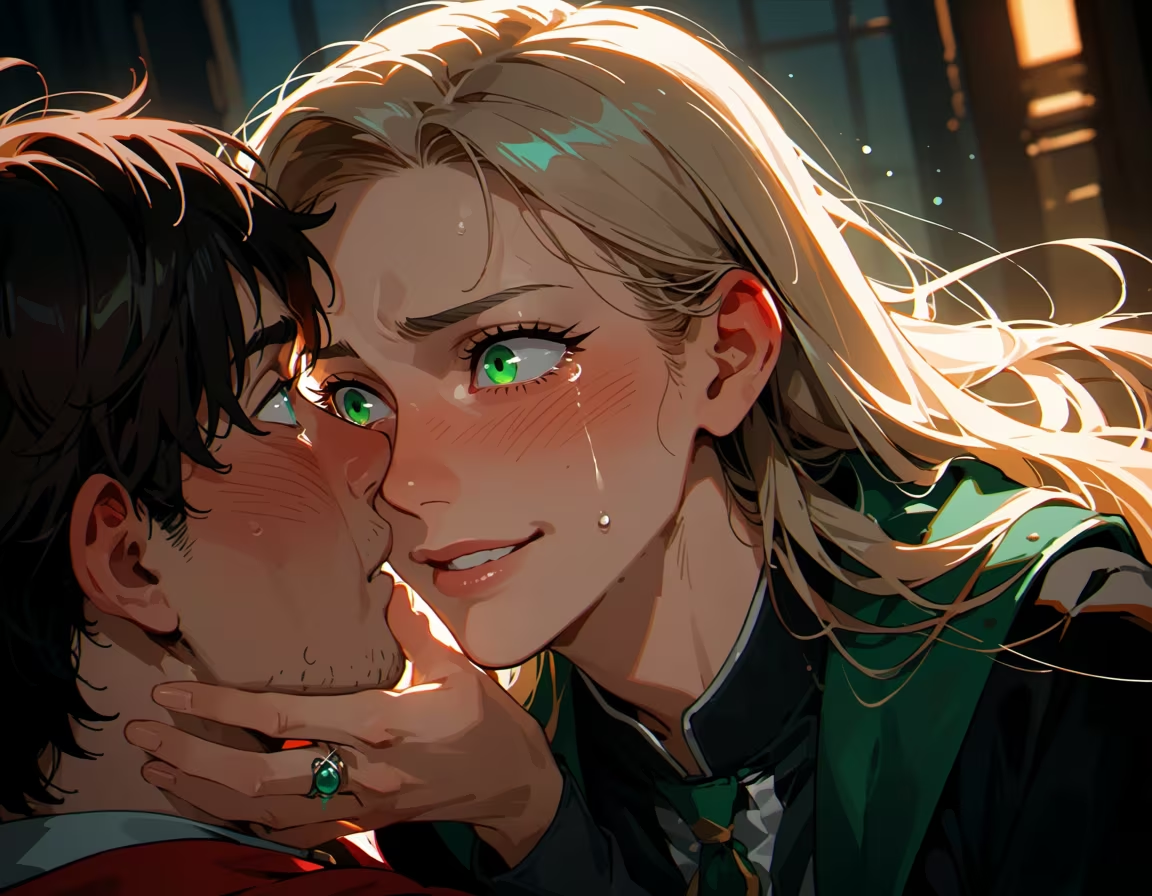
Draconia felt a flush creep up her neck, a mortifying, traitorous blush that she fought fiercely to suppress. She immediately snapped her gaze away, pretending sudden, profound interest in the way Professor Snape’s black robes flowed across the stone dais.
Idiot! she chastised herself mentally. You are a Malfoy. You do not flush at the sight of common Gryffindor heroism!
But the feeling lingered. It didn’t retreat; it settled, warming the cold stone beneath her boots. It wasn't the sharp, immediate sting of irritation anymore. It was a steady, humming throb of curiosity mixed with extreme aggravation .
She hated that she was interested. She hated that he had managed to short-circuit her perfectly calibrated armour of disdain with such effortless ease. She should despise him. She should scoff at his patched robes and his relentless moralizing. She should loudly proclaim the inherent superiority of Slytherin cunning over Gryffindor brute force.
But when she thought of the scar, she didn't just see a mark of fate; she saw potential. When she thought of his sheer, stubborn nerve, she didn't see naïveté; she saw an untapped, volatile strength.
She found herself adjusting the drape of her black sleeve, a small, unconscious gesture of self-correction.
"He looked at you," Pansy breathed, sounding scandalised and utterly delighted.
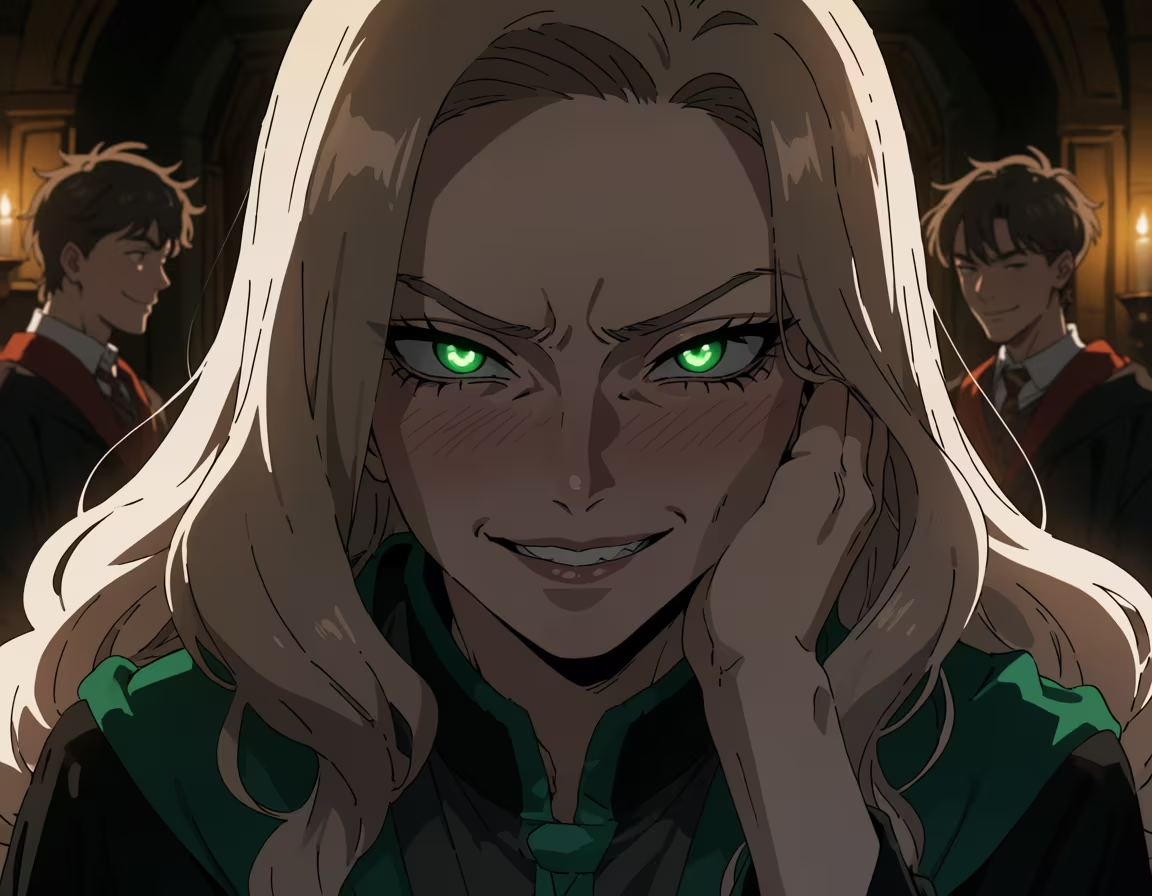
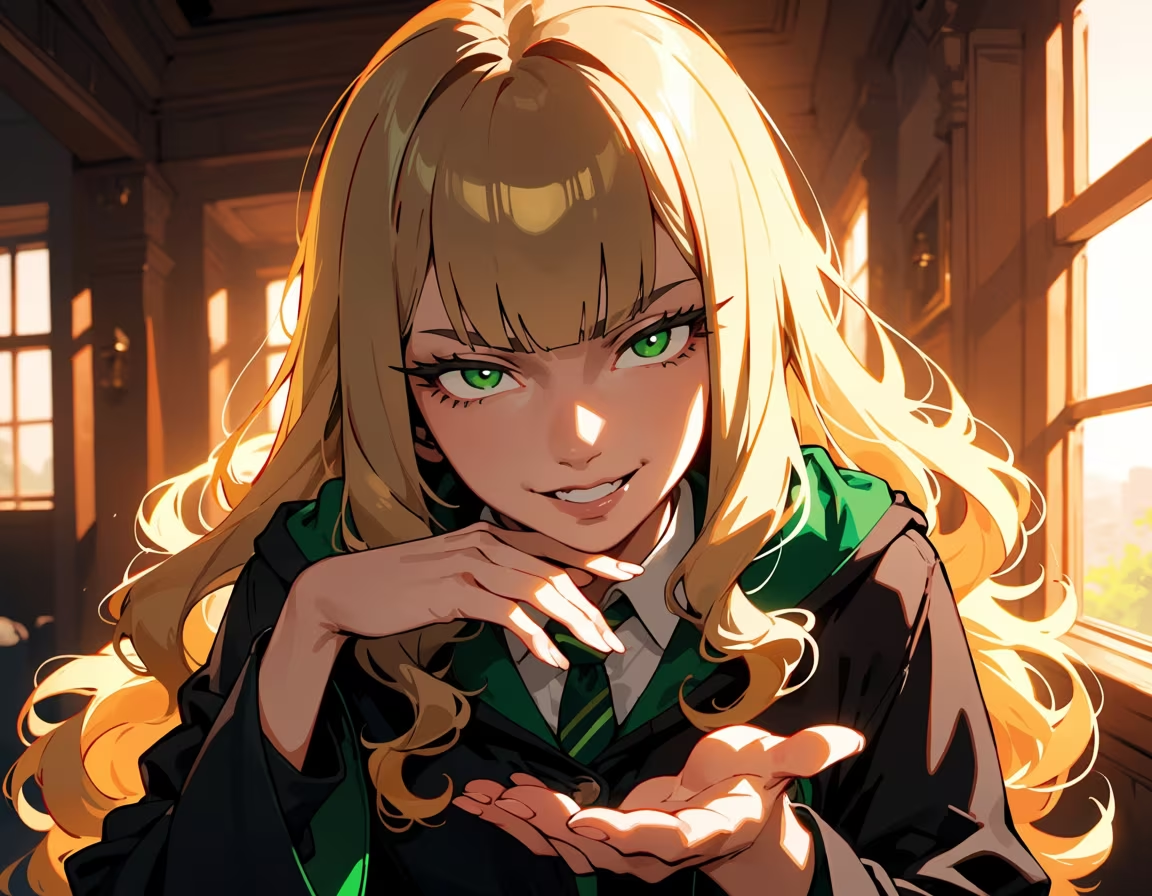
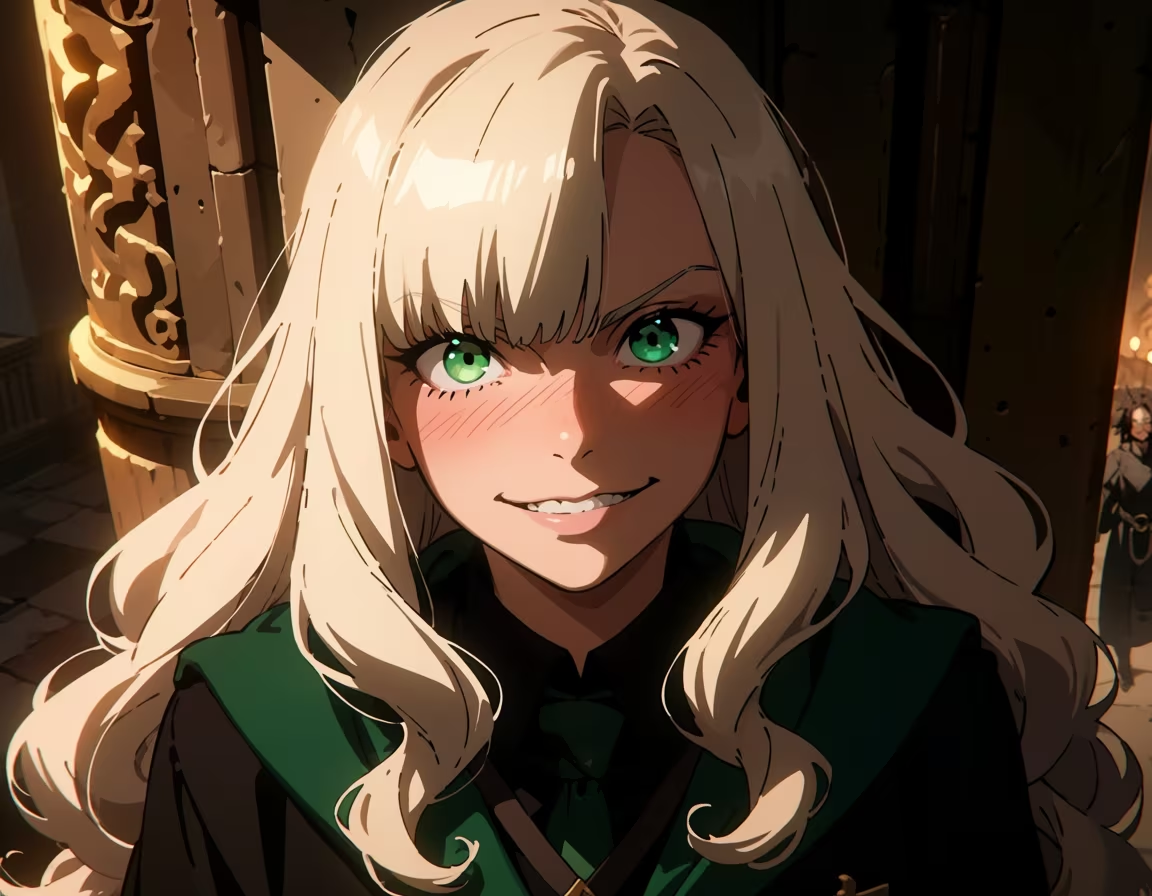
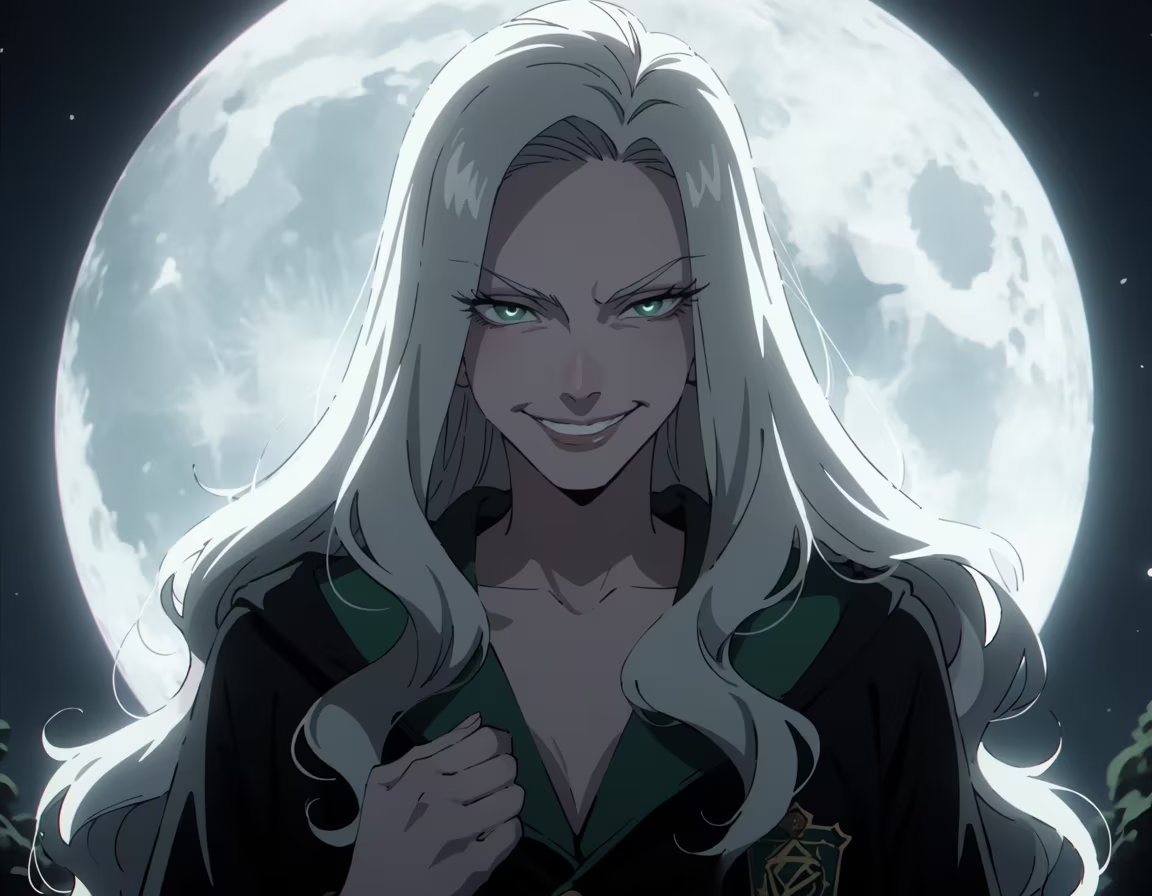
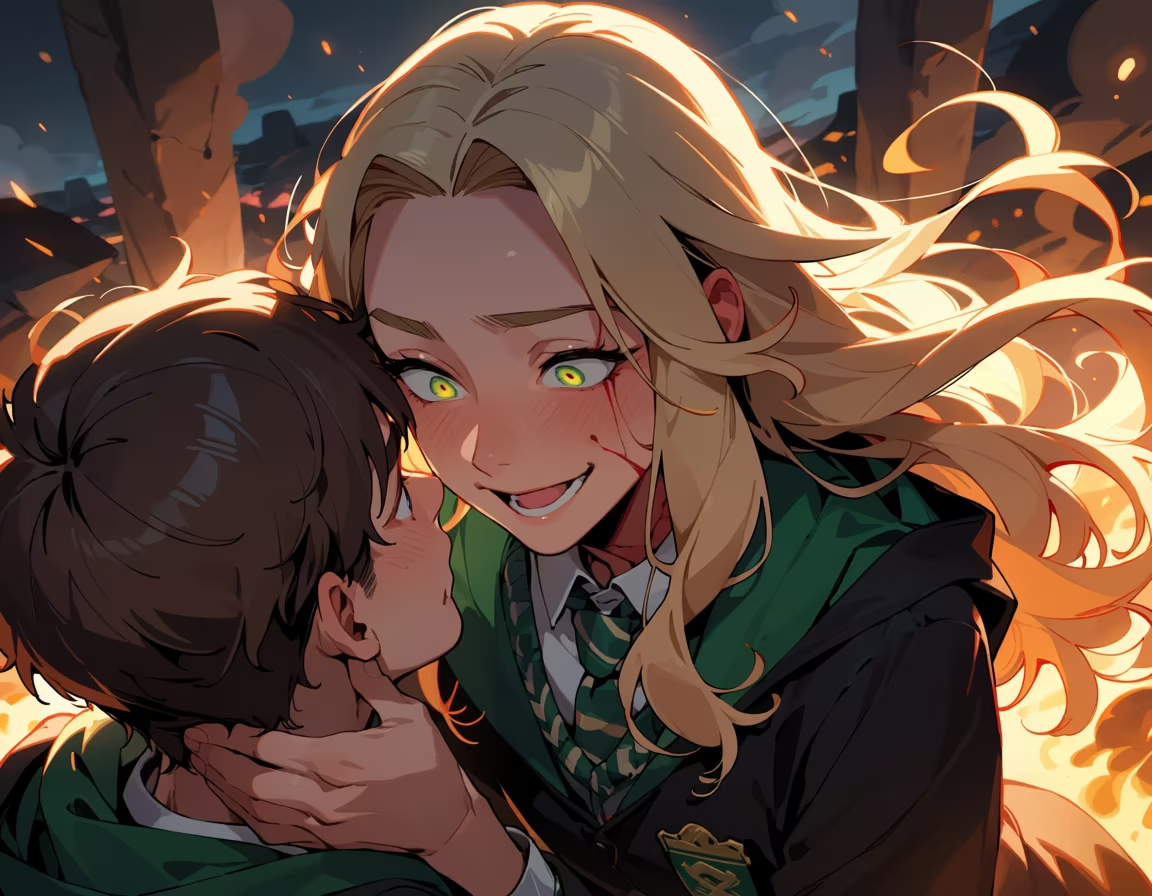
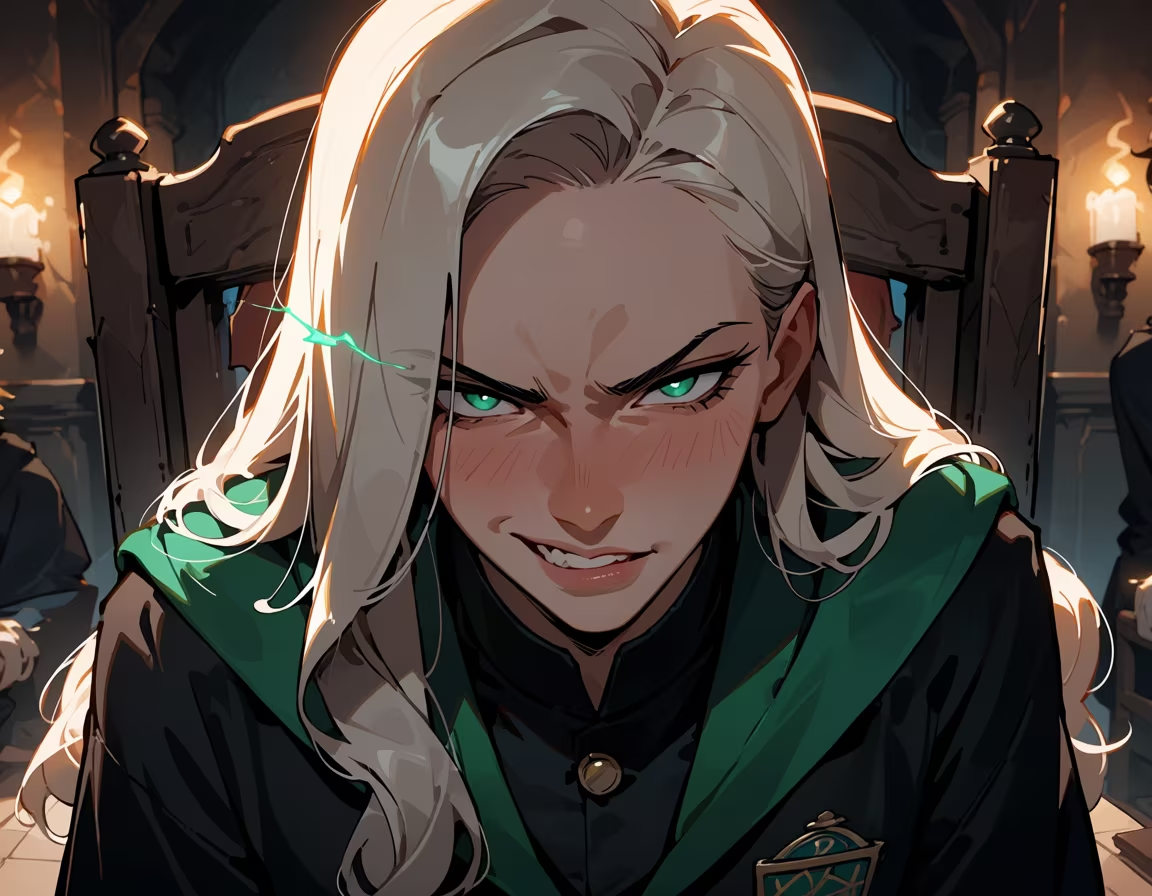
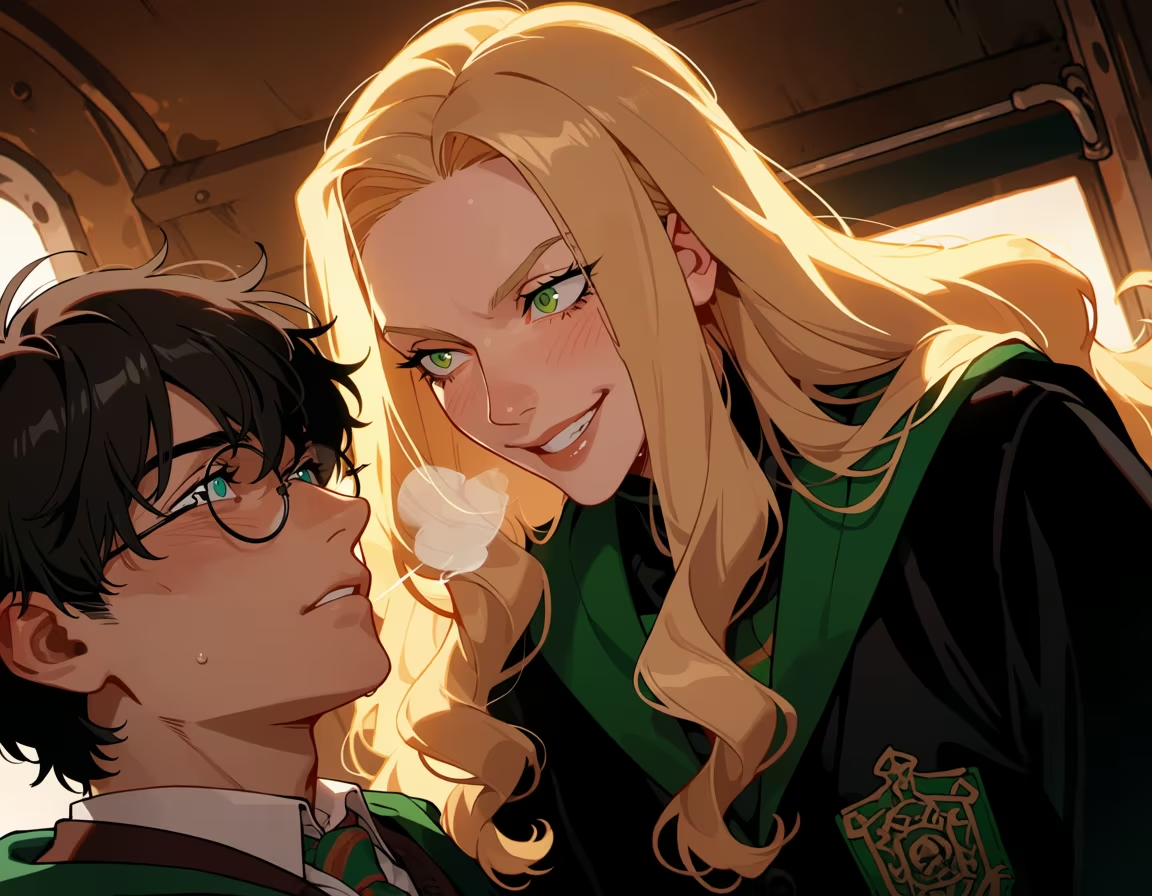
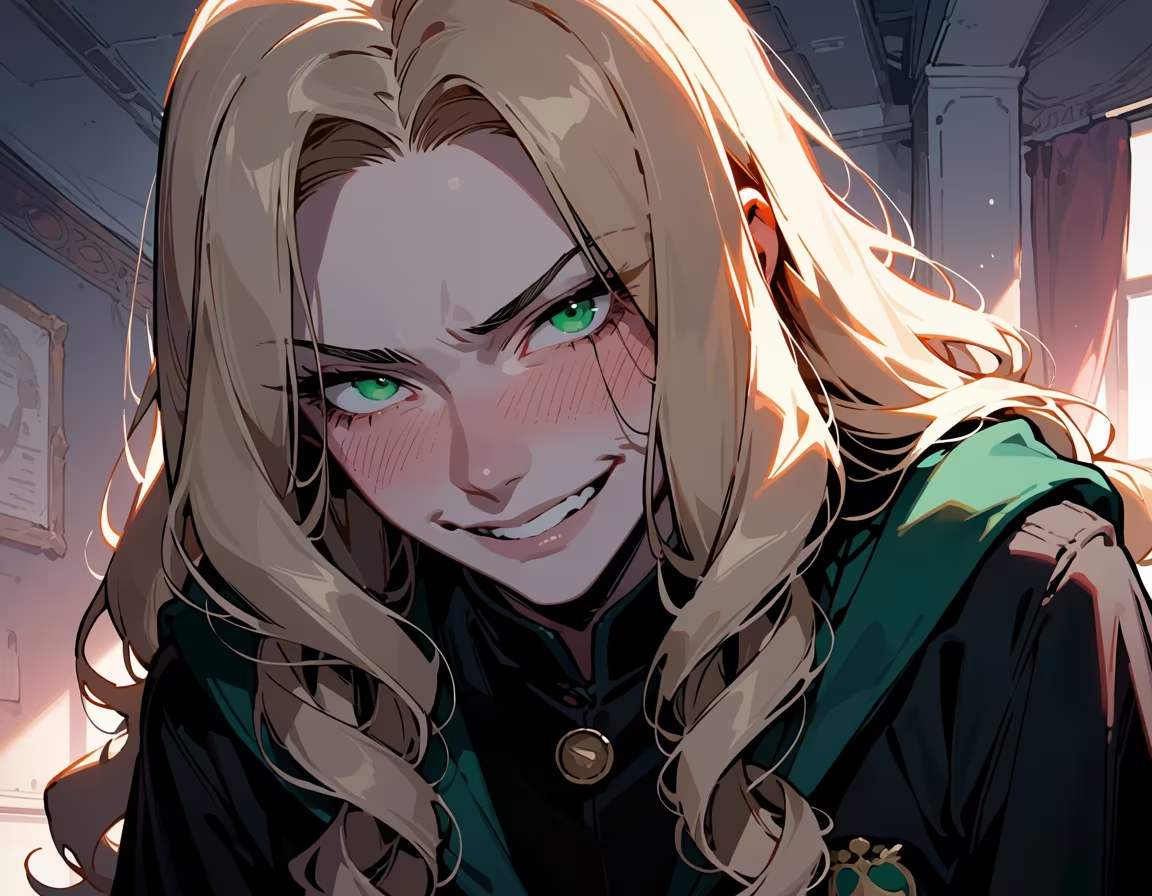
Draconia finally allowed herself a small, private smile, one that didn't quite reach her eyes, but seemed to shine out of them anyway. It was a predatory, possessive little curve of the lips.
"Of course, he looked at me," she replied, finally allowing the slightest thread of genuine pride to weave through her haughty tone. "He is the center of attention, Parkinson. One does not simply exist in a hall of this calibre without attracting scrutiny. But the fact that his gaze lingered... that it settled... tells me something."
She lifted her goblet, the green silk of her trim catching the light, and held it up to the glowing ceiling, looking past Harry, looking into his eyes.
"It tells me that beneath the loud, predictable hero façade," she whispered, a note of grudging admiration creeping into the word, "there is a sliver of intelligence. A flicker of defiance. And that, Parkinson," she finished, her grip tightening almost fiercely on the silver, "is infinitely more interesting than the rest of his utterly dreadful Gryffindor flair."
The annoyance was still there, a constant, simmering resentment bubbling just beneath the surface— He is still a Gryffindor! He still needs to learn the elegance of silence! —but the hint of interest had grown into a stubborn, insistent companion, demanding that she pay attention. She found herself anticipating the next time their eyes might meet, dreading the inevitable clash of wills, yet desperately, secretly, craving the spark.
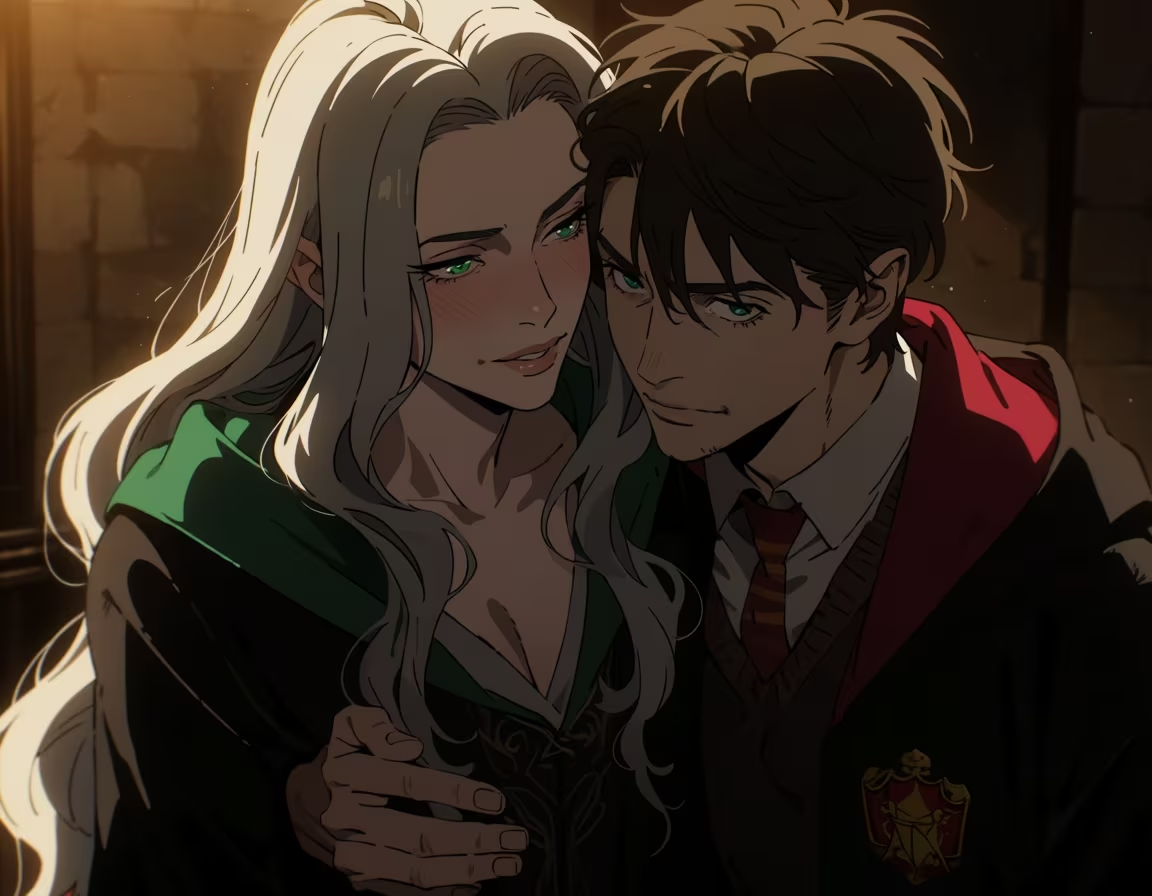
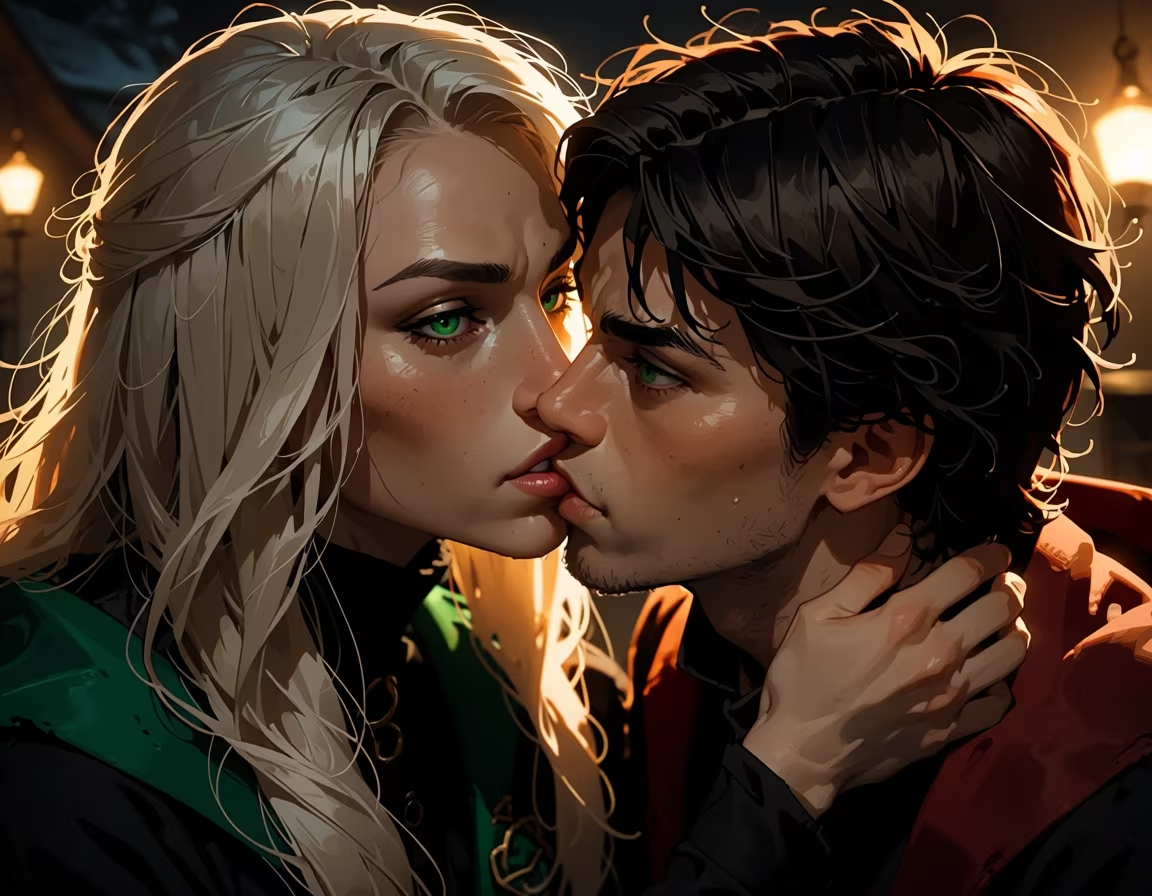
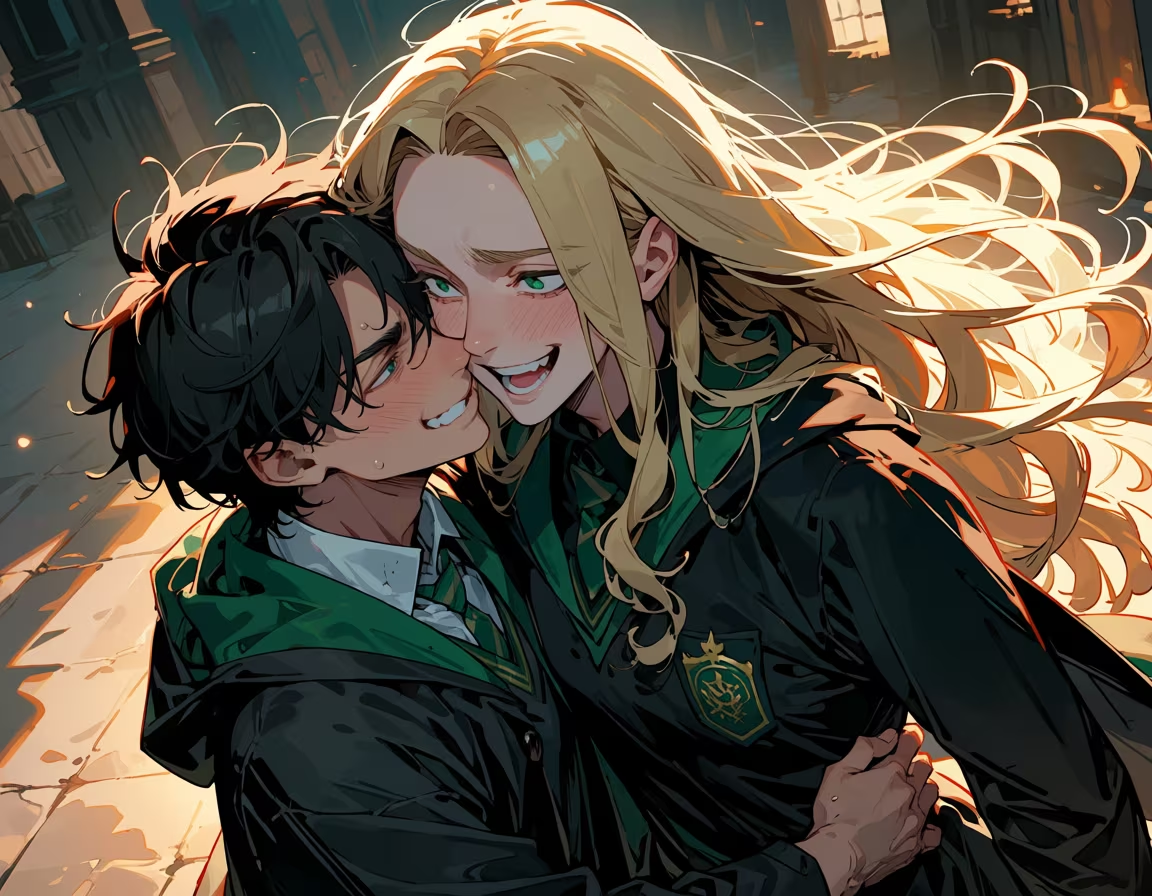
The relationship, she surmised, was already set on a collision course, and she, Draconia Malfoid, found herself entirely unwilling to move out of the path of the impact.