| Home | The Lives of Velnin | Illustrated Fiction | Malfoid Art & Fiction | Book Blurbs | Contact |
The chill of the late autumn air, which possessed a crisp, almost biting quality, always seemed to sharpen the edges of my inherent disdain for Gryffindor. It was a feeling as ingrained in my very being as the emerald hue of my house colours, a protective carapace woven from generations of Slytherin pride and Malfoy arrogance.
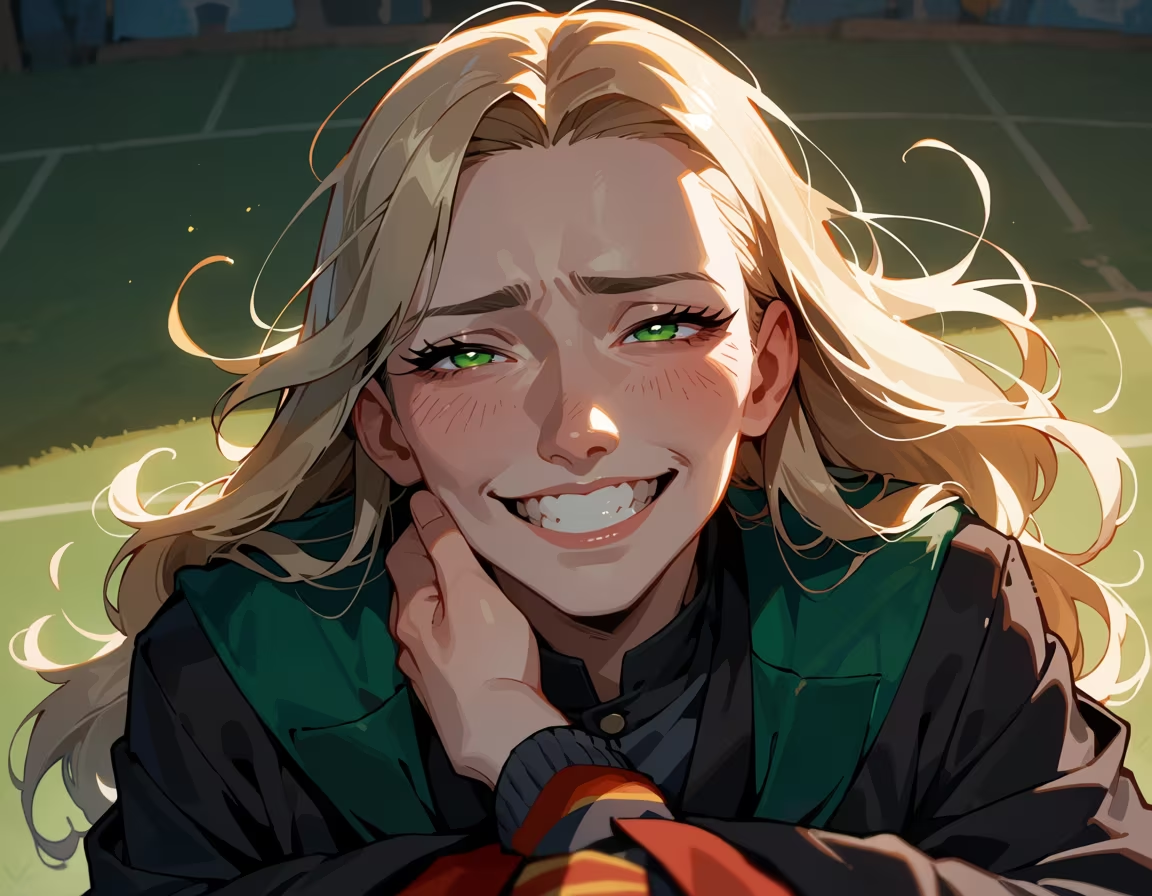
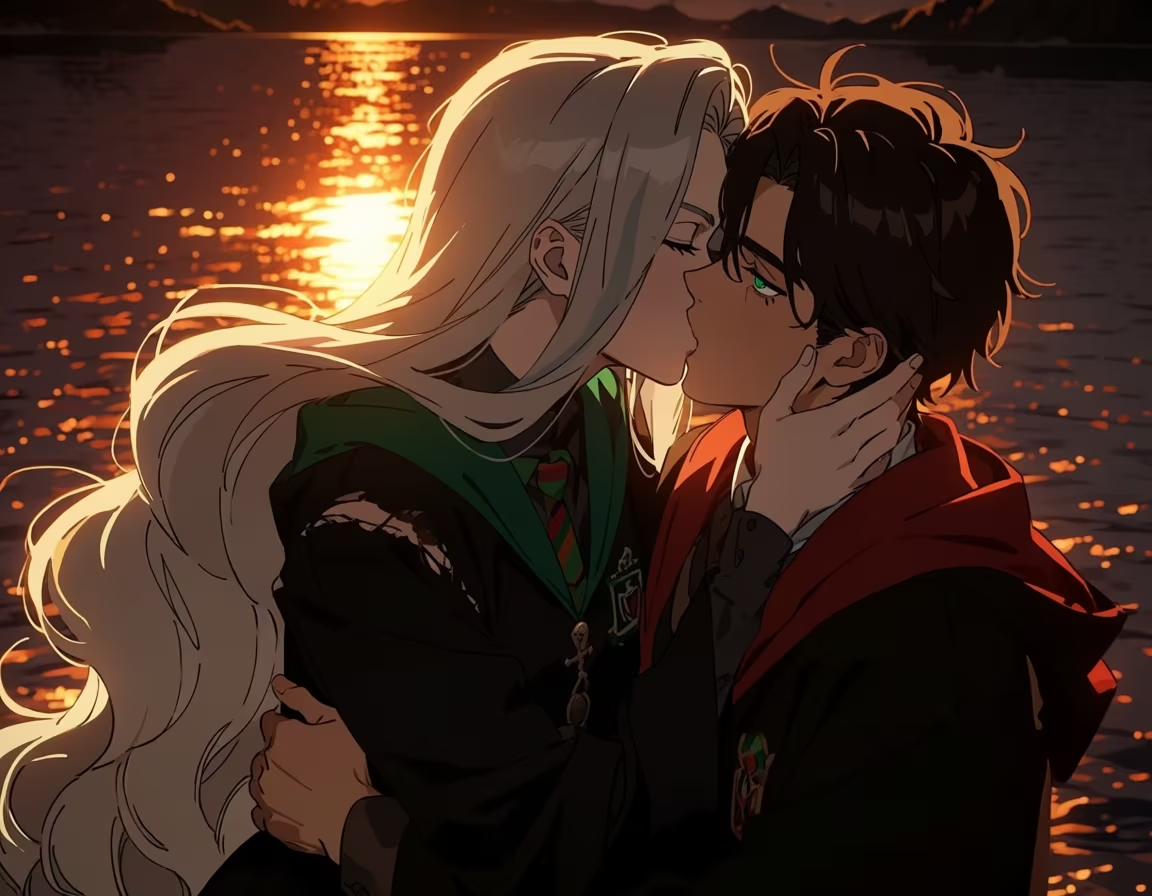
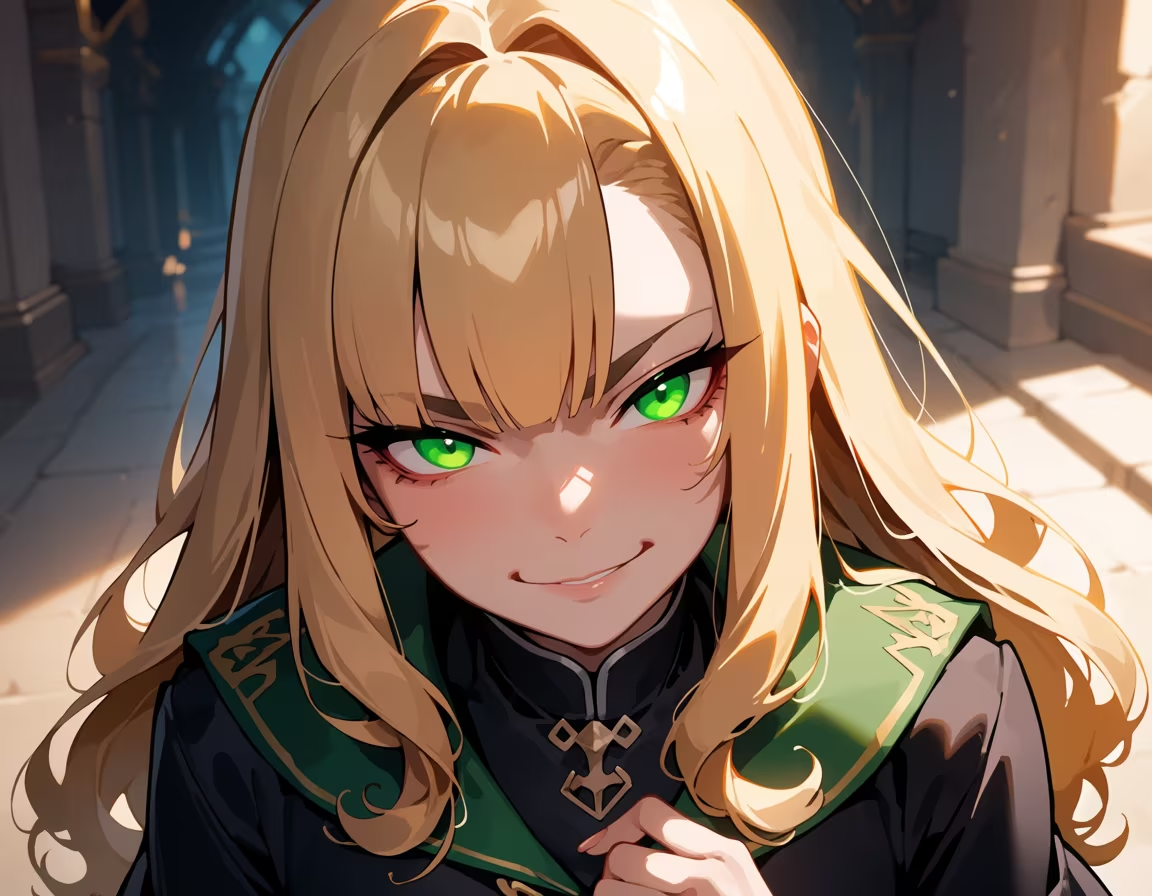
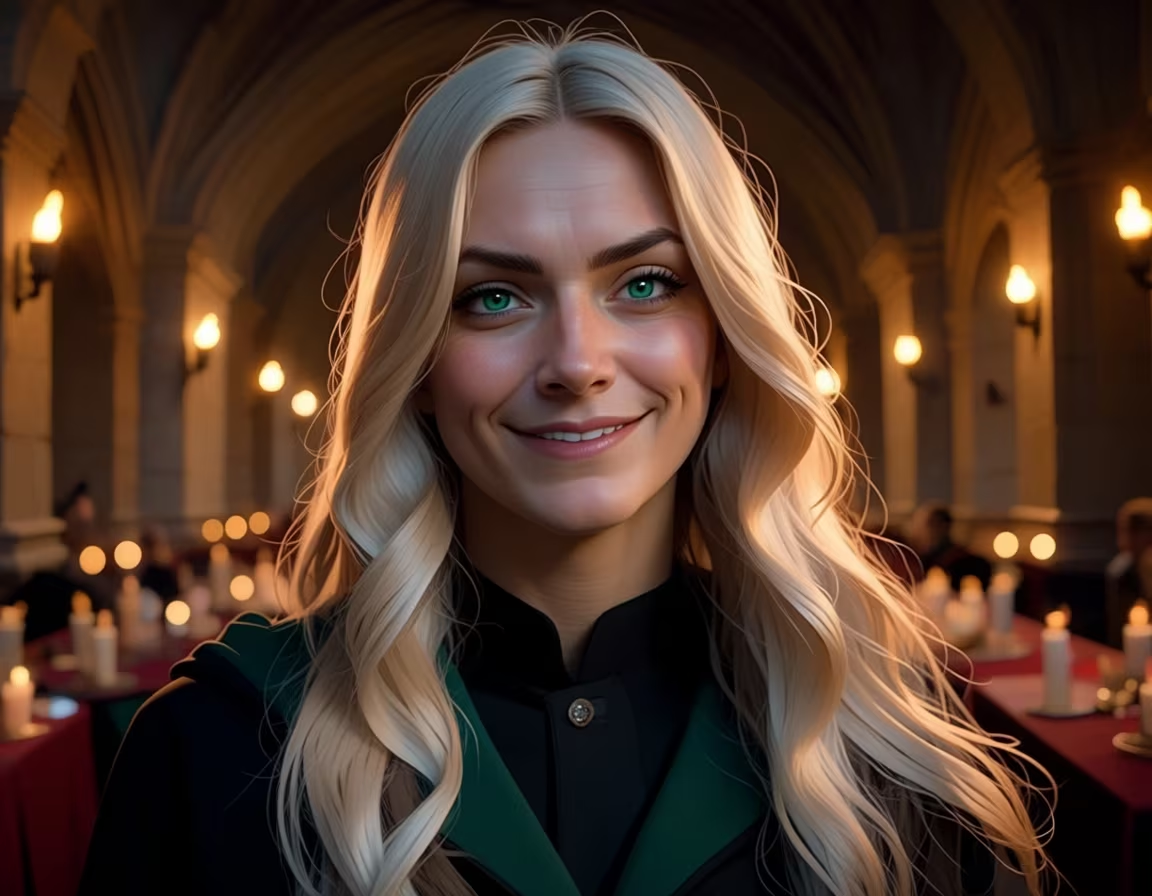
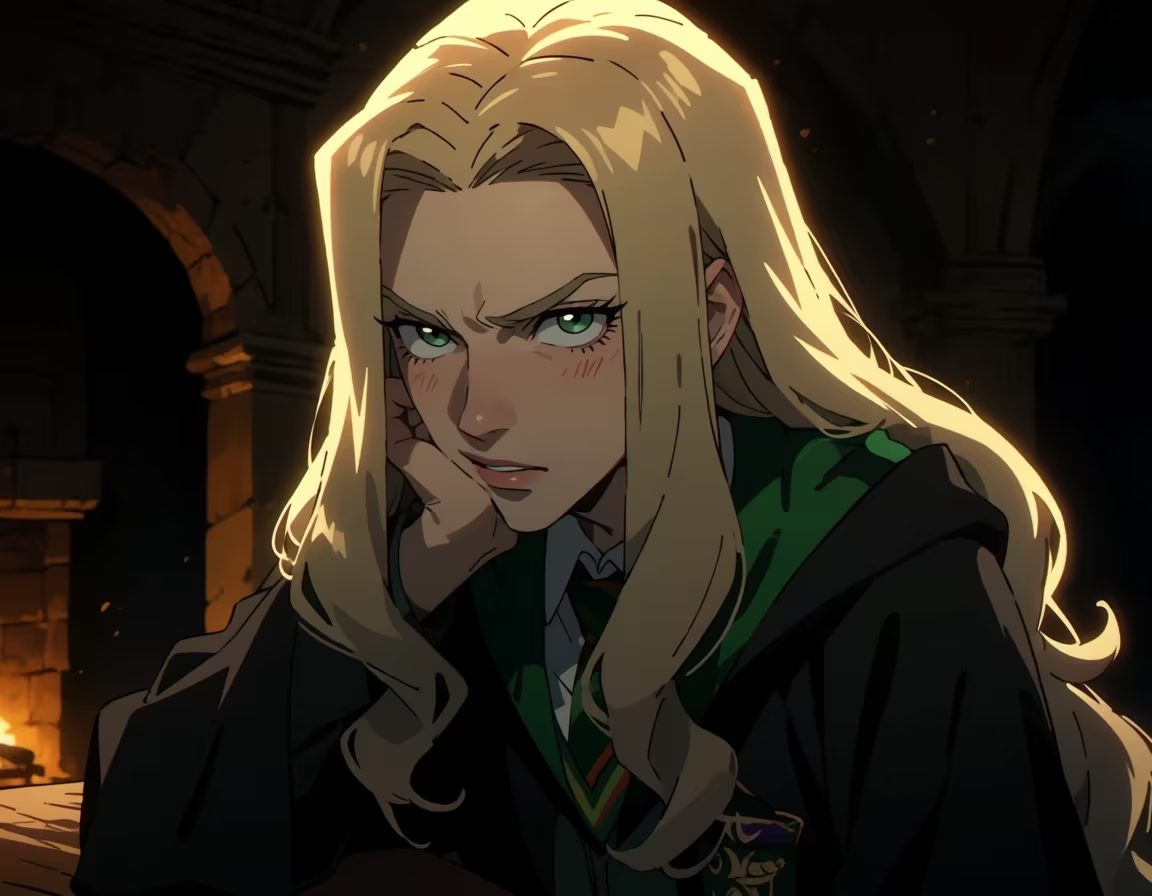
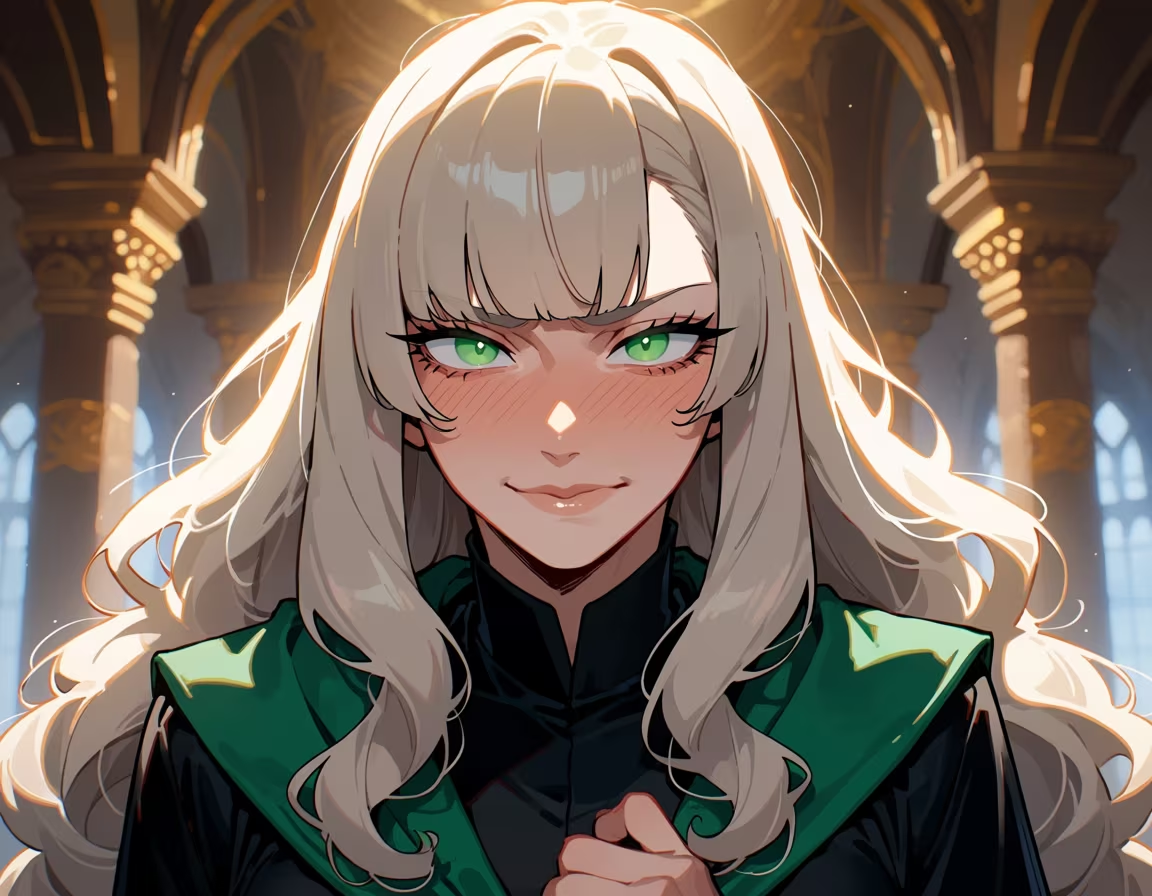
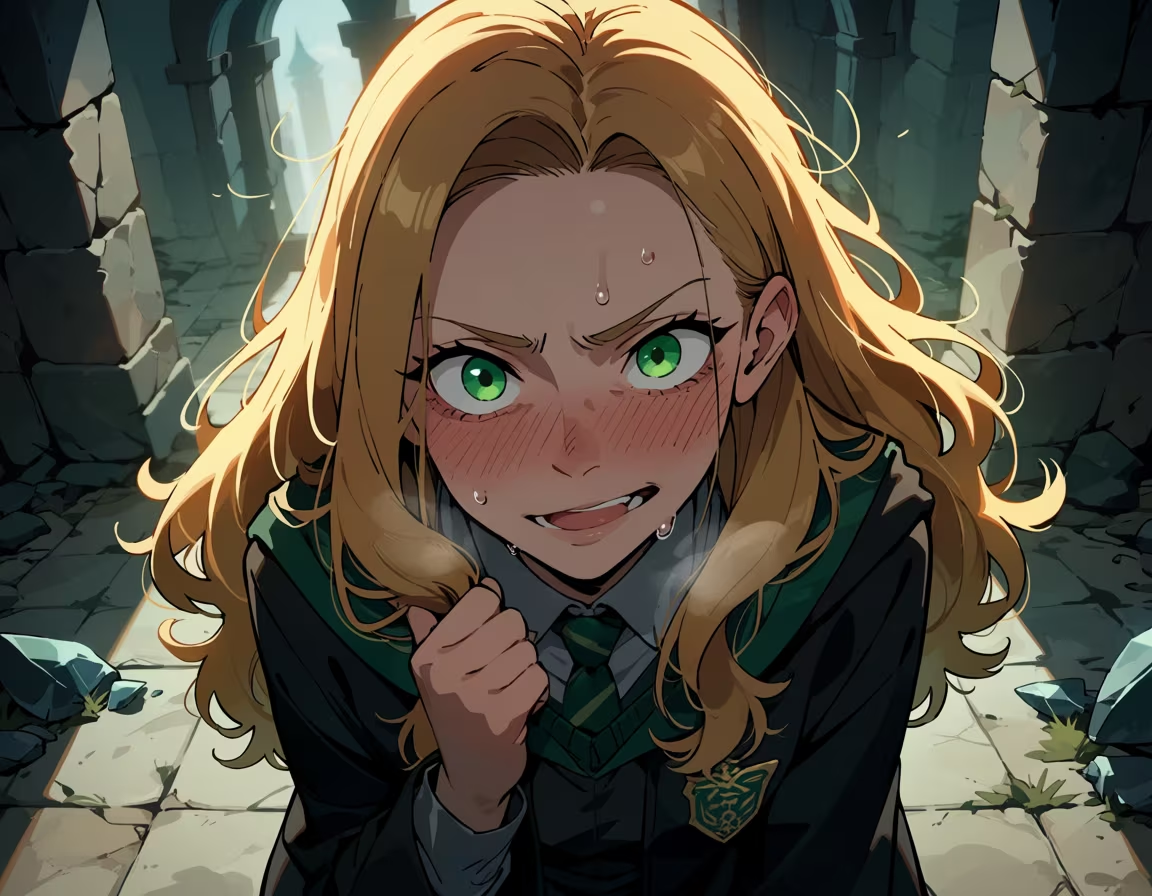
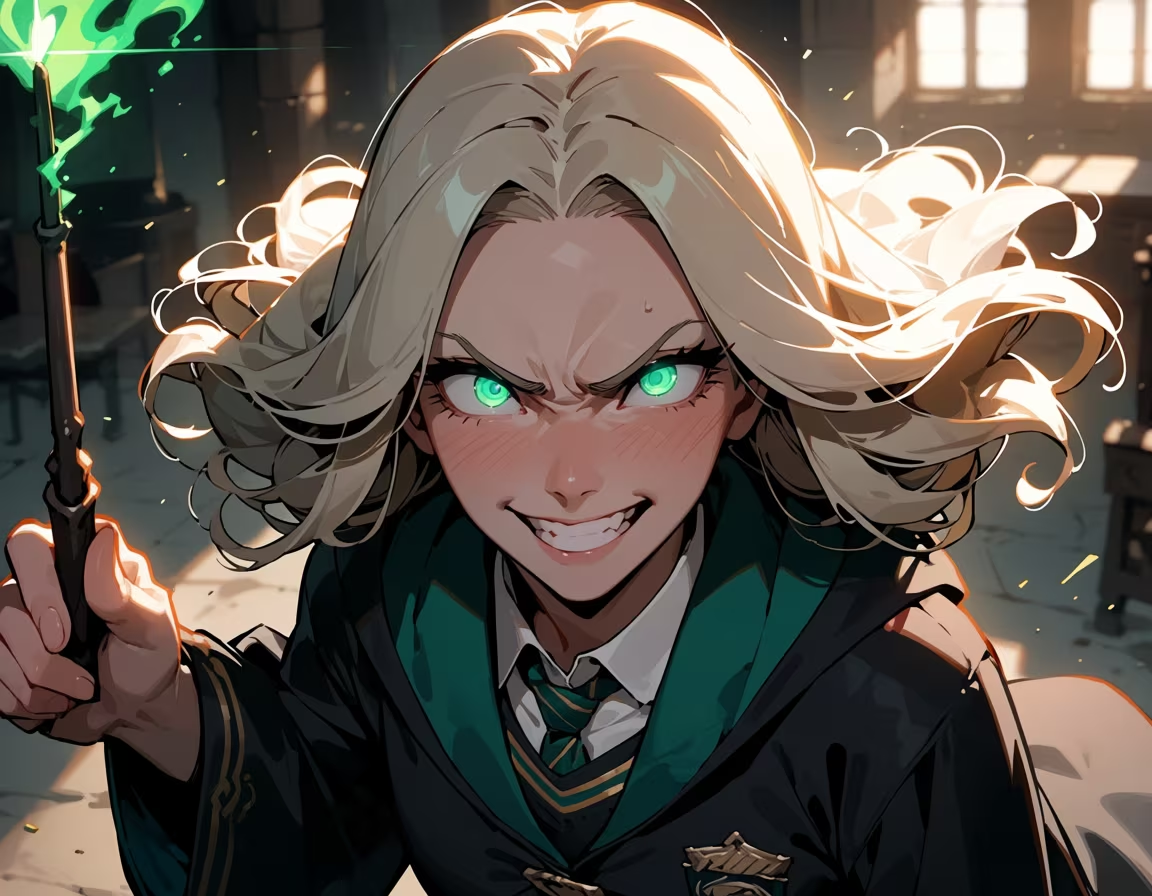
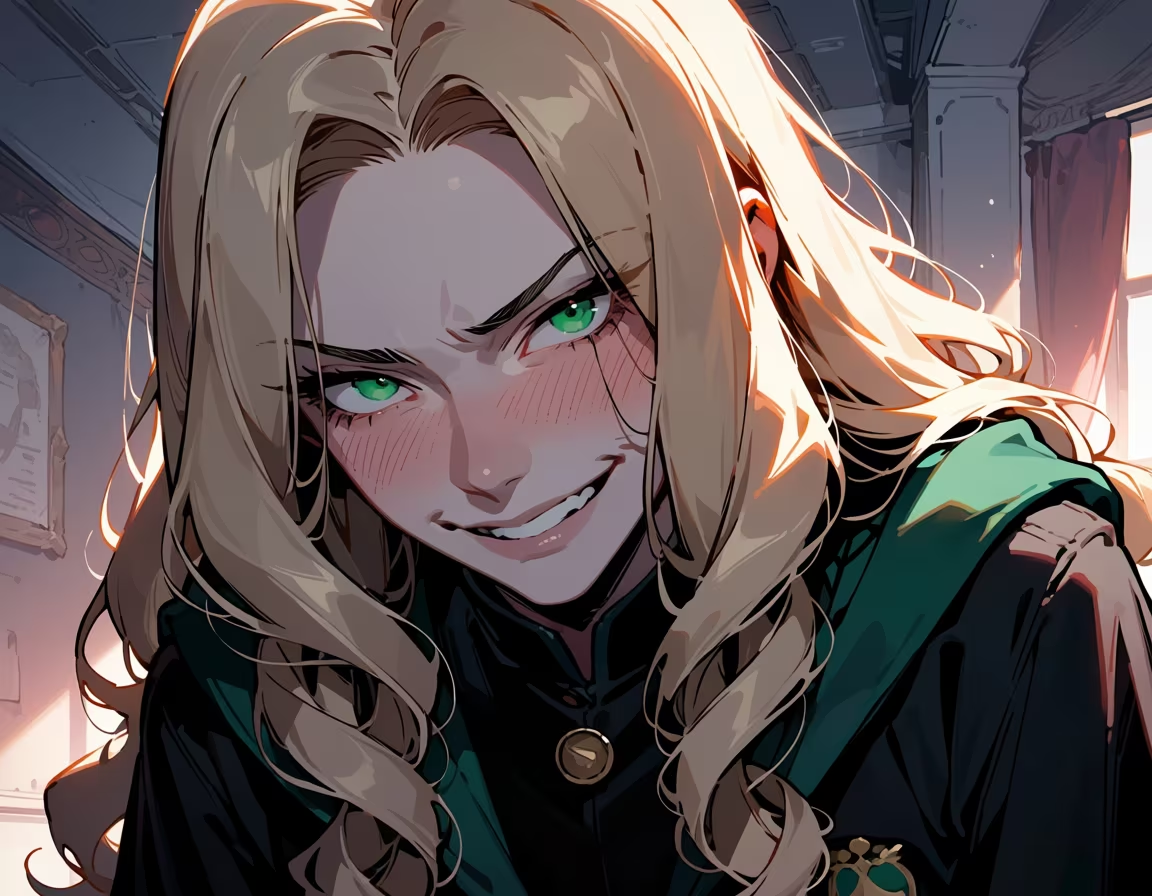
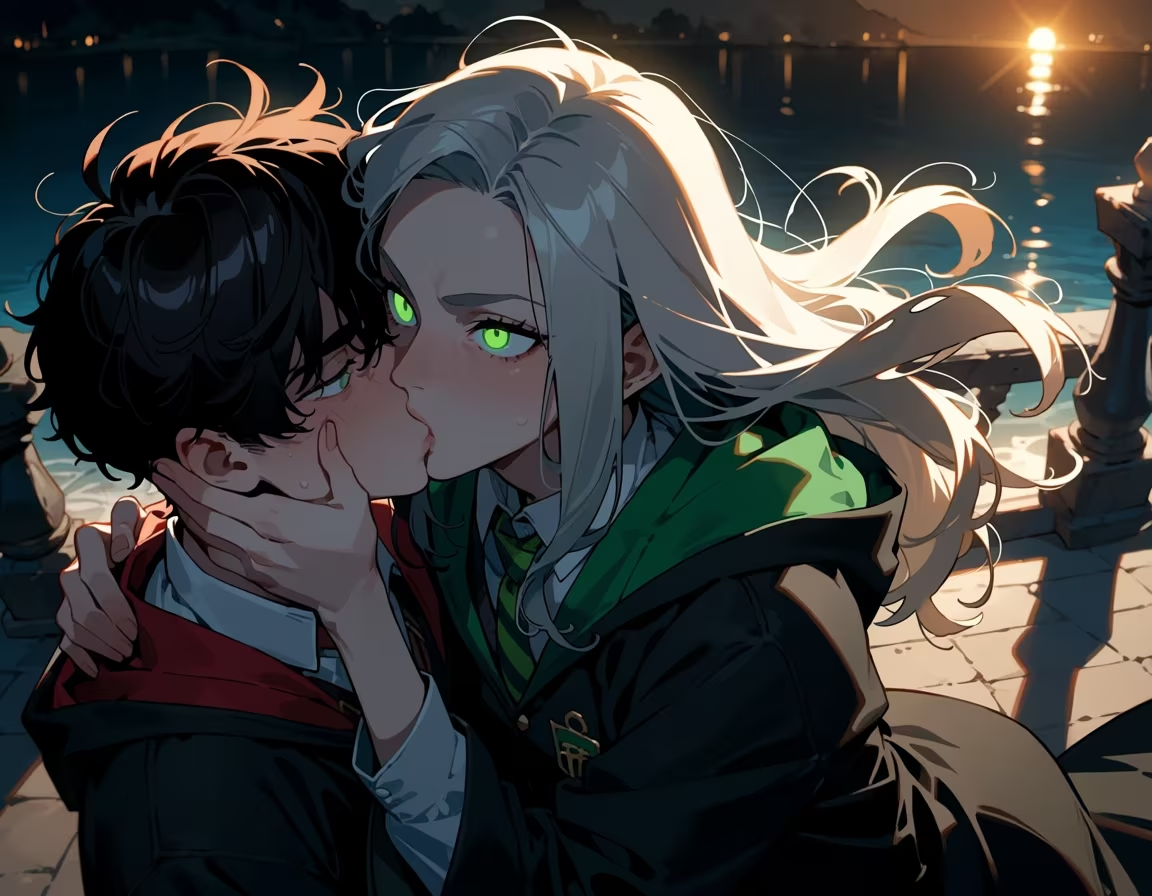
I stood near the edge of the Black Lake, the water a sheet of polished, obsidian glass reflecting the bruised purple and molten orange of the setting sun. My robes—heavy, midnight black velvet, perfectly tailored and trimmed with a swath of vibrant, almost aggressive Slytherin green—felt reassuringly substantial against the encroaching cold. The long cascade of my pale, nearly white-blond hair, usually held back by a delicate silver clasp shaped like a serpent swallowing its tail, was allowed to whip around my shoulders, catching the last vestiges of sunlight like spun gold.
And then, of course, there was him .
Harry Potter.
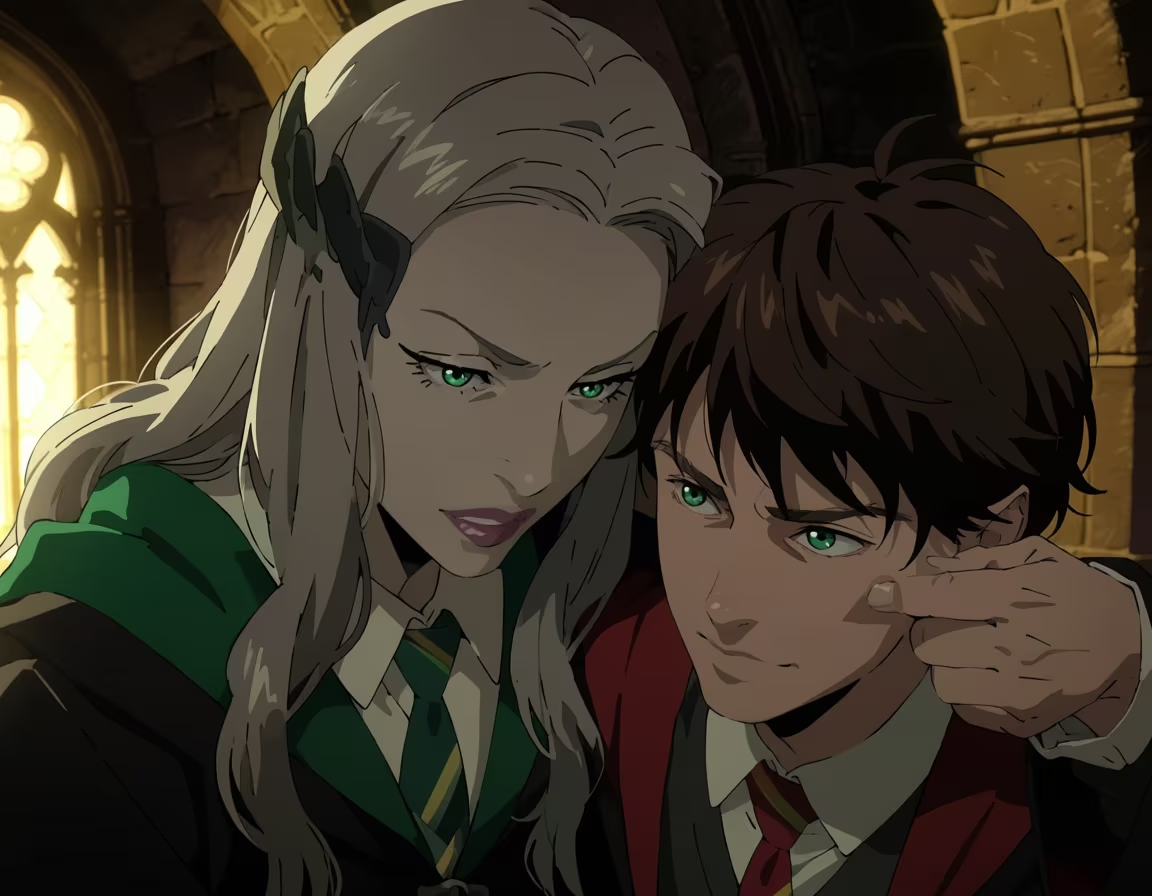
He was leaning against the ancient stone balustrade overlooking the water, looking far too casual for a student currently embroiled in a feud that seemed to be consuming the entire fabric of Hogwarts. He was clad in his familiar, ridiculously vibrant crimson and gold Gryffindor uniform, which, in my opinion, was an unforgivable aesthetic crime. It screamed ‘loud’ in a way that bespoke a profound lack of subtle self-awareness.
My initial reaction, as it had been for nearly three years now, was a low, simmering groan that only the most attuned observer—such as myself—could detect. He looked annoyingly competent. He looked annoyingly brave . He looked, in short, infuriatingly good .
“Still brooding, Potter?” I called out, my voice pitched just loud enough to carry across the slight breeze but low enough to maintain the illusion of elegant detachment. I tucked a stray lock of hair behind my ear, a gesture of perfected ennui.
He didn't startle, which was itself a minor point of irritation. Most people flinched at my verbal barbs, shifting nervously or immediately adopting a defensive posture. Harry merely turned his head, his dark, unruly mop of hair catching the light, and offered a slight, infuriatingly charming smirk.
“Just appreciating the view, Malfoid,” he replied, his voice carrying that distinct, slightly gravelly timbre that always seemed to scrape against the perfect smoothness of my composure. “Though I suppose a patch of moss clinging to the stone would be more suitably dramatic.”
“A patch of moss possesses texture ,” I countered instantly, taking a slow, deliberate step toward him. “Unlike your Gryffindor façade, which is rather… flat. Like poorly rendered wallpaper.”
He chuckled, a short, warm puff of air, and finally pushed off the stone, crossing the distance between us with that easy gait of his, the one that always seemed to glide rather than walk. He stopped close enough that the scent of him—a mix of damp wool, old leather-bound books, and something subtly green, like freshly cut grass—reached me.
Annoyance. That was the bedrock emotion. It was the first thing to surface, the instinctual, defensive barrier that warned me not to allow him too close to the meticulously curated perfection of my own sensibilities. He was too earnest. Too unpredictable. Too bright .
But beneath the sharp, metallic taste of annoyance, a new, unwelcome current was beginning to flow. It felt like a tiny spark igniting in the centre of my chest, a spark that threatened to overheat the entire mechanism of my carefully constructed indifference.
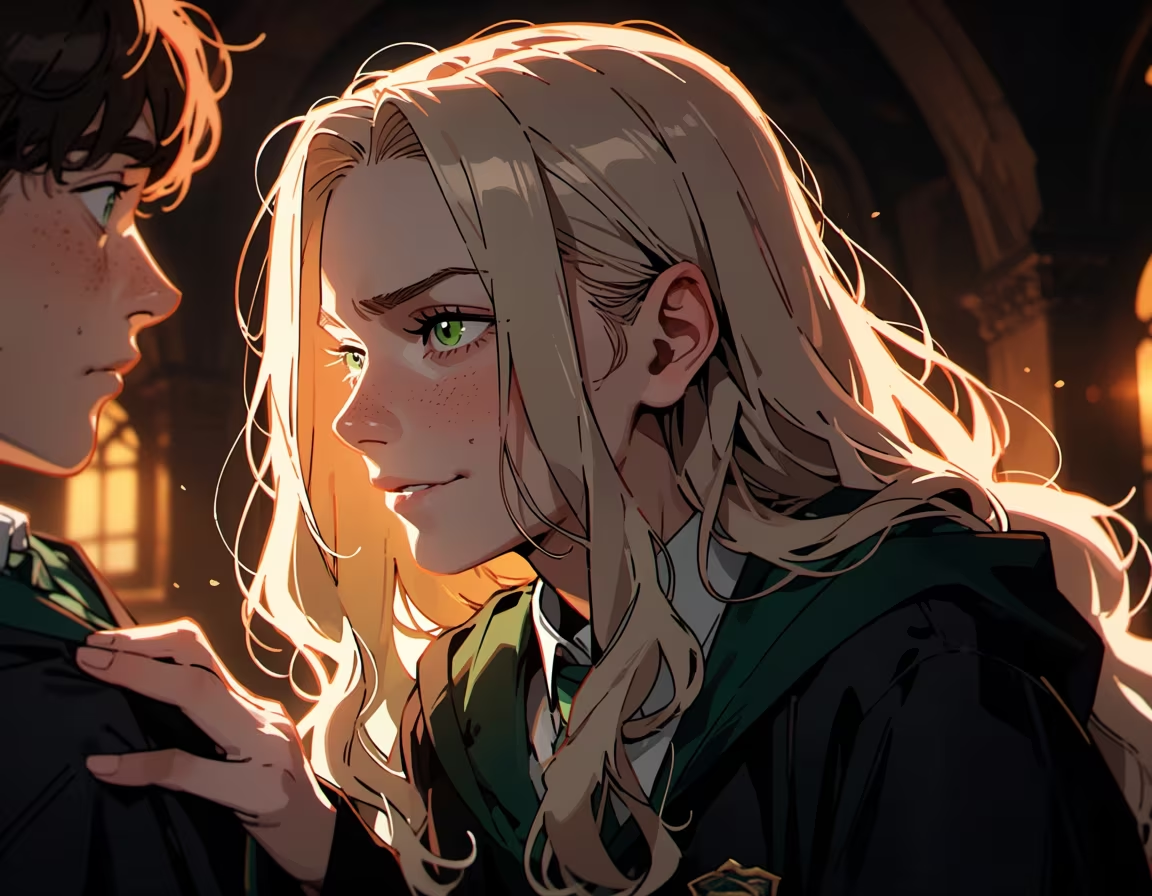
He leaned in, his gaze—those startlingly vibrant green eyes that seemed to mimic the very shade of my house colours, yet held a warmer, more reckless fire than my own—held mine captive.
“And what, precisely, is wrong with flat, Malfoid?” he murmured. His voice dropped, becoming conspiratorial, intimate.
I felt a tremor run through my carefully balanced facade. His proximity was invasive. Too close. My hands, which had been clasped loosely at my waist, tightened until my knuckles paled slightly. I felt the urge to push him away, to snap a final, scathing retort— It lacks narrative complexity, Potter —but the words seemed to stick in my throat, trapped by the sheer magnetic pull of his presence.
“It lacks depth ,” I managed, the word coming out slightly breathless. “It’s… simplistic. It’s the colour of a freshly polished trophy, gleaming, obvious, but utterly devoid of the rich, shadowed patina of true character.”
He didn't argue the point. Instead, he watched me, a slow, thoughtful appraisal sweeping over my face, lingering on the faint flush creeping up my cheekbones. He seemed to be peeling back the layers of my practiced haughtiness with the sheer power of his gaze.
“So, you prefer complexity,” he deduced, his tone laced with a playful challenge. “You prefer the things that are difficult to read. The hidden motives. The glorious, messy tragedy.”
My lips parted. He hadn't just heard me; he had decoded me. It was astonishing. It was maddening. It was—
Intrigue.
The annoyance didn’t vanish entirely; it merely retreated to the periphery, settling into a low, buzzing hum beneath the surface, like a trapped Kneazle ready to spring. Now, the irritation was flavoured with a dizzying curiosity. Why him ? Why this perpetually sunshine-drenched, slightly battered Gryffindor?
“Precisely,” I whispered, the word almost a confession. “And you, Potter, are currently leaning heavily towards ‘too obvious, yet dangerously fascinating.’ A perilous combination.”
His smirk widened, turning into something genuine and luminous. He lifted one hand, his fingers brushing gently against the emerald trim of my robe, right near my hip. The touch was light, almost accidental, yet it felt like an electric shock travelling straight up my spine, through the silk lining, and settling precisely where my heart was performing its frantic little ballet.
“Am I?” he asked, his voice suddenly thick with implication.
“You are a glaring splash of primary colour in a tapestry of exquisite, moody hues,” I corrected, my tone softening, though the sharp edge remained. “A necessary, if deeply irritating, accent.”
“And you, Malfoid, are the deep, velvety shadow that makes the colour meaningful.”
The simplicity of the metaphor, the utter accuracy of the observation, struck me with the force of a Bludger hitting a Snitch. It wasn’t just that he saw the layers; it was that he appreciated them. He wasn't dismissing them as tiresome pretension; he was finding them aesthetically pleasing.
This was beyond mere rivalry. This was… recognition.
Intrigue morphing into annoyance. The annoyance remained because he still spoke with such infuriating casual confidence, but now it was coupled with a profound, thrilling sense of anticipation. I wanted to see how long this dance of witty antagonism could last before one of us shattered the spell.
“Don’t get sentimental on me, Potter,” I warned, though the warning sounded weaker than a sigh. “You’ll ruin the perfect equilibrium.”
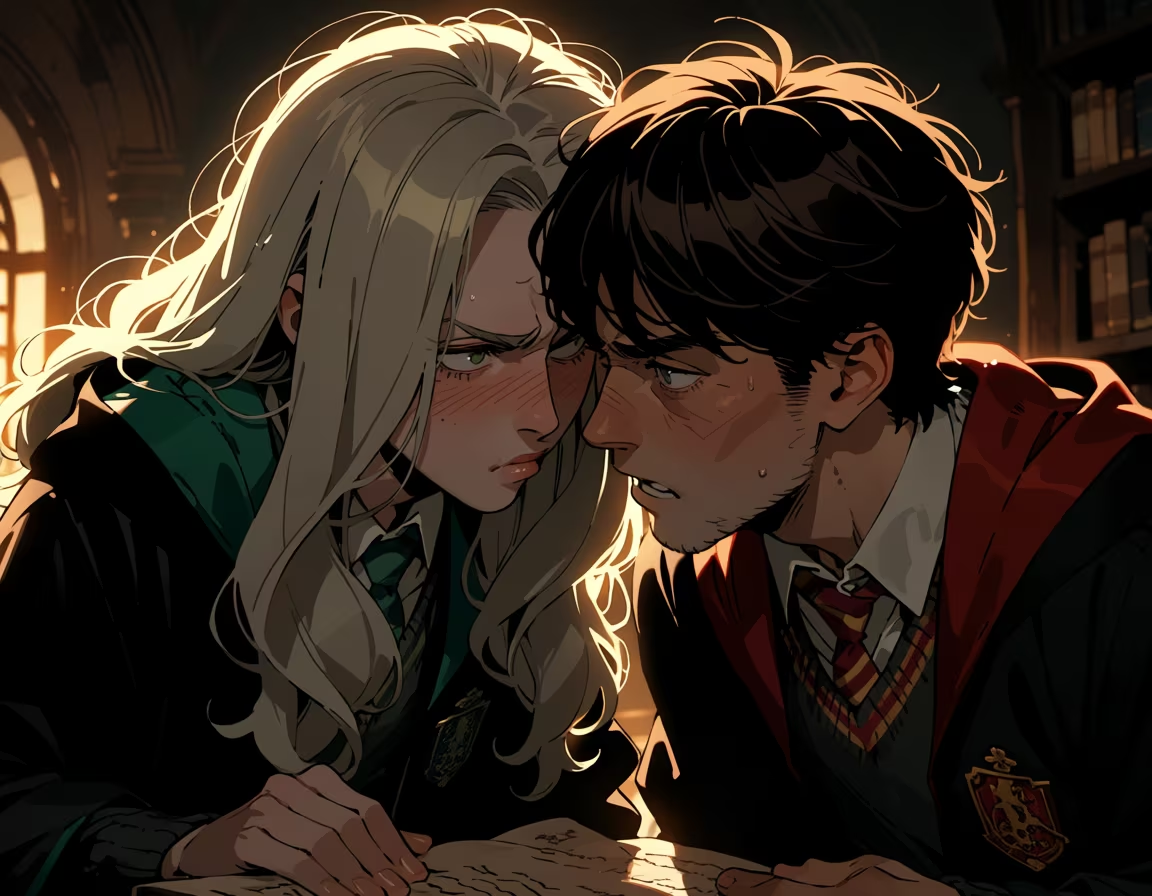
He chuckled again, that rich, warm sound, and finally, he leaned closer, invading my space entirely. The scent of him enveloped me, warm and grounding against the cold stone.
“Equilibrium is dreadfully dull, Draconia,” he murmured, using my full name—a declaration of intimacy that felt both possessive and wonderfully flattering. “Life is too short to be balanced. It requires dramatic leanings.”
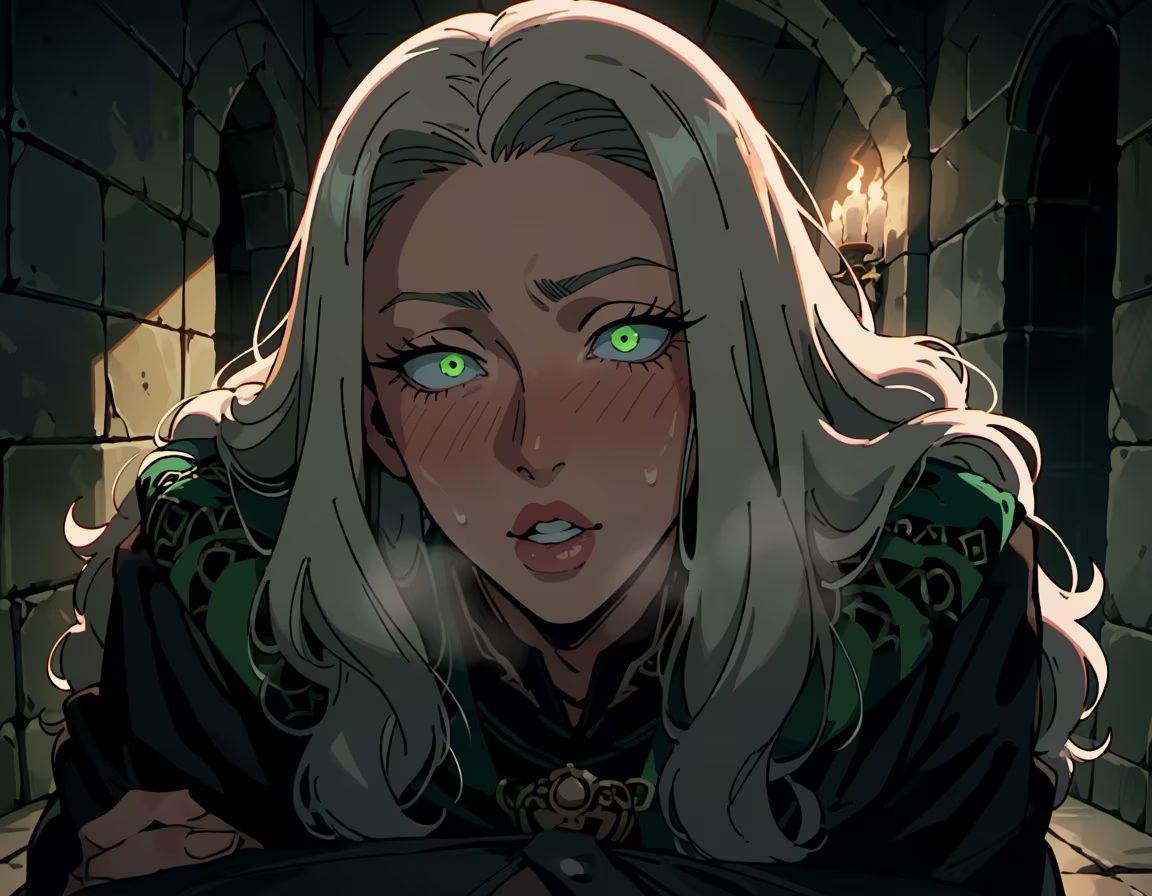
His proximity was intoxicating. I could feel the heat radiating off his skin, the slight tremor of excitement in his own stance. My carefully constructed composure was beginning to fray at the edges, like fine lace under too much strain.
Admiration and Dislike combined.
I hated that he made me feel this way. I hated that his sheer, unbridled goodness threatened to dissolve the icy armour of my upbringing. But oh, how I admired the way his brow furrowed when he concentrated, the sheer, stubborn light in his eyes when he challenged me, the effortless way he navigated the world with a mixture of grace and glorious recklessness.
“Dramatic leanings,” I repeated, my voice breathy, my green eyes fixed on his, daring him to push further. “So, you admit it. You enjoy the spectacle.”
“I enjoy you , Malfoid,” he countered, his voice dropping to a near whisper, a confession delivered with the casual bravery of a man who expects nothing less than acceptance.
The words hung between us, heavy and brilliant as the dying sunbeam catching the tips of his hair. My internal monologue stuttered. He thinks this is a game? A duel of wits? A prolonged, spectacular sparring match?
No, a deeper, more insistent voice whispered back. He thinks it’s something more.
And that was the true kicker. That was the thing that made the annoyance surge back, fierce and possessive. It was the terrifying idea that he might feel this way—that he, the embodiment of Gryffindor idealism, might be drawn to the sharp, often prickly, Slytherin shadow.
“You are dreadfully sentimental, Potter,” I managed, though the severity of the accusation lacked any real venom. It sounded more like a petulant complaint.
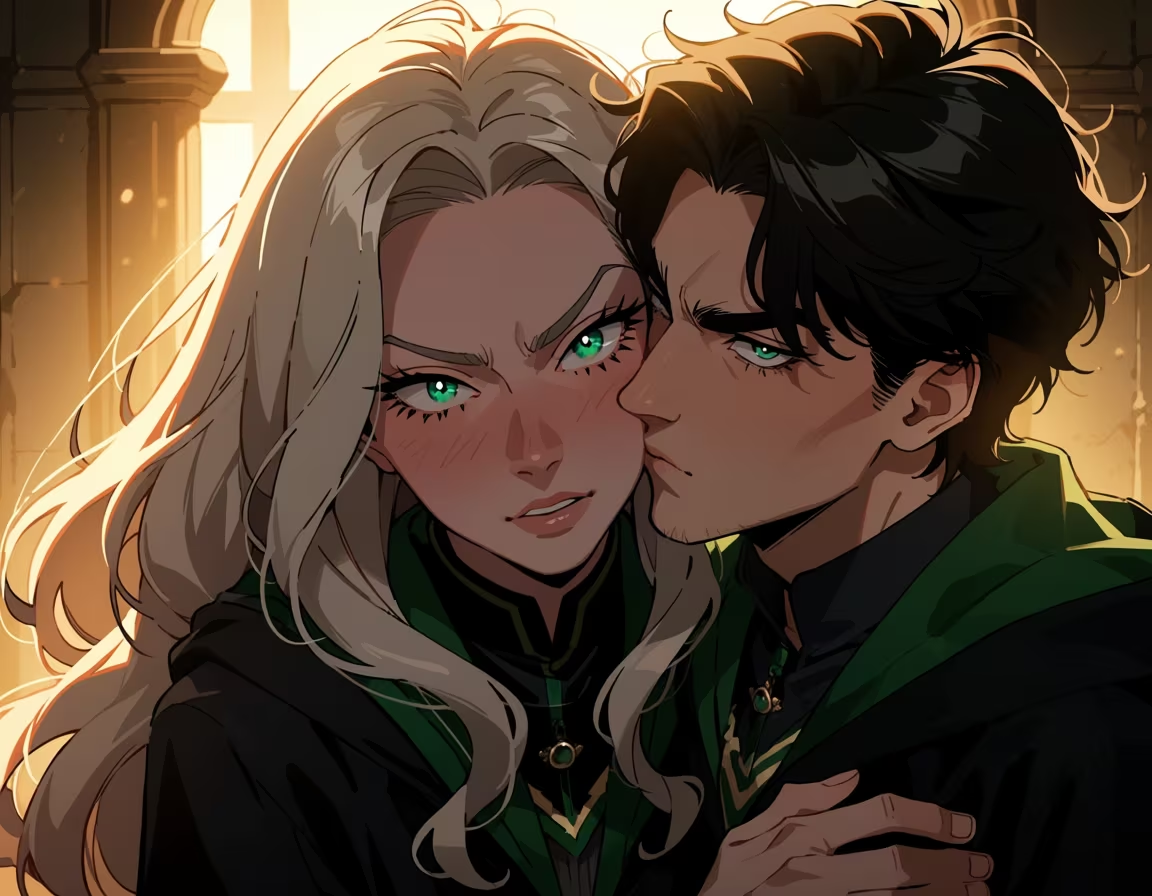
He grinned, triumphant, and reached up, his thumb gently stroking the curve of my jaw. The sensation sent a wave of liquid heat washing over me.
Fondness with Annoyance. It was a perfect descriptor. I was annoyed that he was right. Annoyed that his simple, undeniable decency managed to dismantle my complex, beautiful cynicism.
“And you are infuriatingly brilliant,” he countered, leaning in one last time, his gaze locking onto my lips. “You hide the most glorious depths beneath that perfect, judgmental surface.”
His thumb paused its journey up my jaw, resting right beneath my ear, drawing my attention inexorably to the point where his touch was warmest. The wind seemed to die down completely, holding us in a suspended pocket of time, surrounded by the hushed majesty of the lake.
The barrier was crumbling. The contempt was dissolving like sugar in hot tea.
Crush.
It was a sharp, undeniable, physical ache—the kind that made the air catch in my lungs and forced a small, involuntary hitch in my breath. It wasn't a gentle flutter; it was a full-blown, magnificent tidal wave. He was no longer just a rival; he was a phenomenon, a gravitational pull that threatened to yank my entire ordered world into chaotic, glorious orbit.
I wanted to pull away, to demand that he stop this charming, devastating display of emotional competence. I wanted to remind him that his bright colours were too loud.
But instead, I leaned infinitesimally into his touch. I allowed the warmth of his hand to seep into my skin.
His eyes softened, losing the competitive gleam and becoming deep, earnest pools of emerald devotion. He interpreted my movement perfectly.
“You like it,” he whispered, a hint of awe replacing the bravado.
“I despise it,” I argued weakly, but the conviction was hollow.
“Liar.”
The final, devastating blow. He didn't ask; he stated it as a known fact, a truth as undeniable as gravity. And it shattered the last remaining fragments of my defensive shell.
My carefully practiced hauteur melted away, replaced by a startling, almost vulnerable flush that stained my pale cheeks. My lips parted, no longer ready with a cutting remark, but trembling slightly with sudden, overwhelming emotion.
Infatuation.
It was glorious. It felt reckless, beautiful, and utterly necessary. It was the feeling that everything before him, every tedious study session, every biting insult exchanged in the Great Hall, every tactical skirmish on the Quidditch pitch—it had all been merely preparation for this exquisite moment, this recognition.
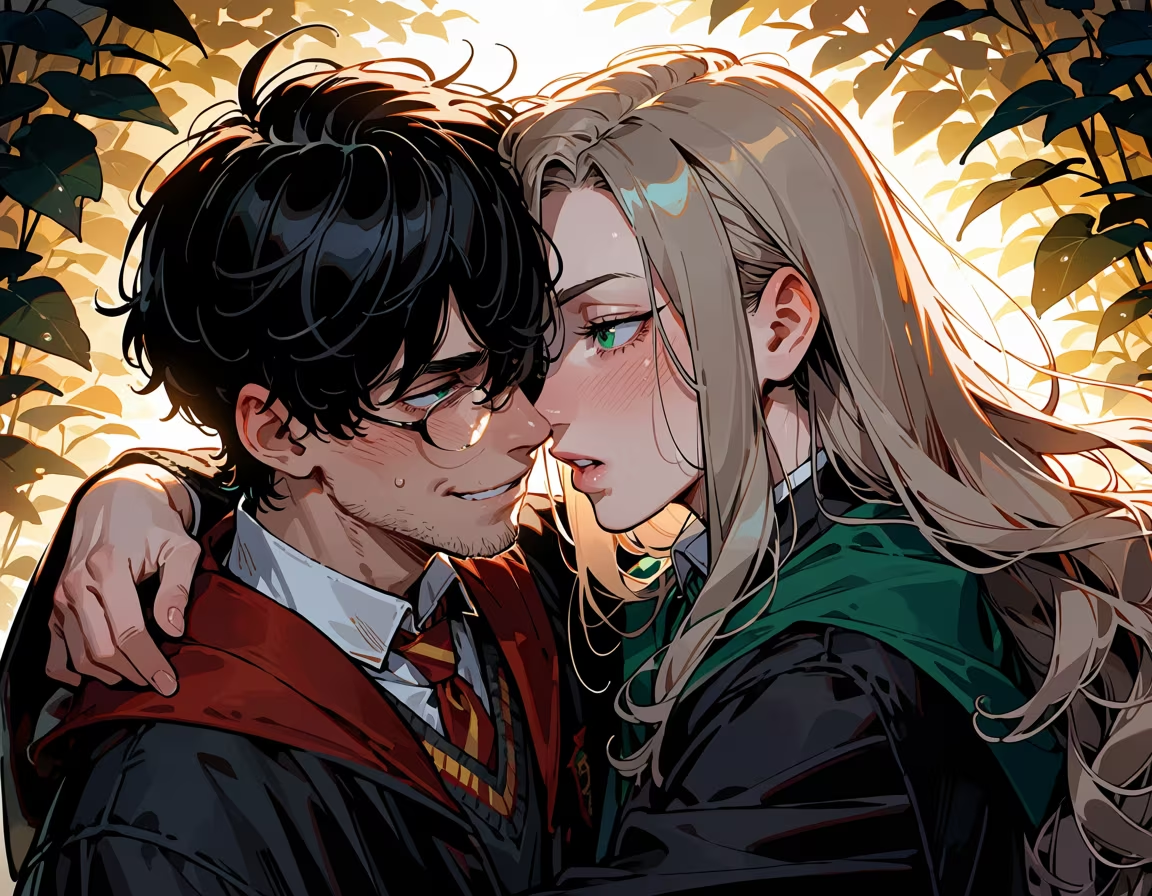
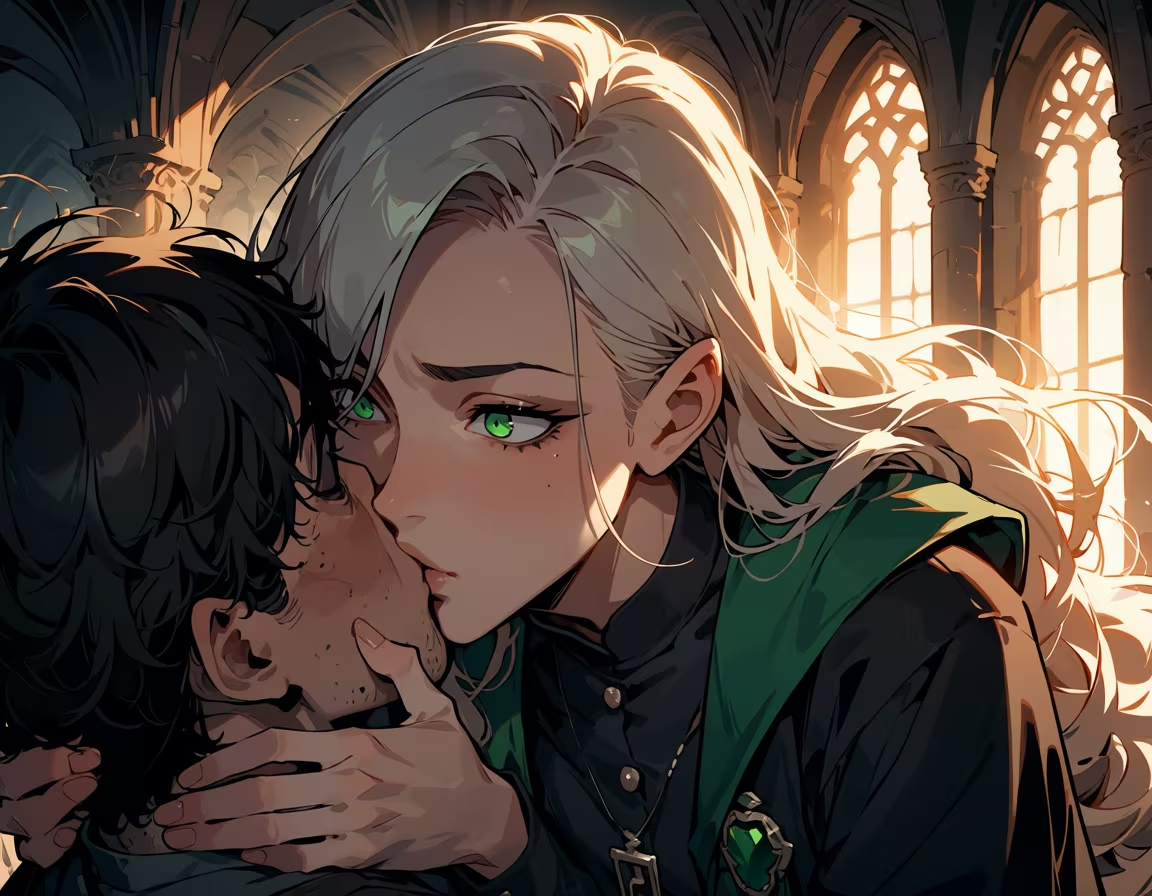
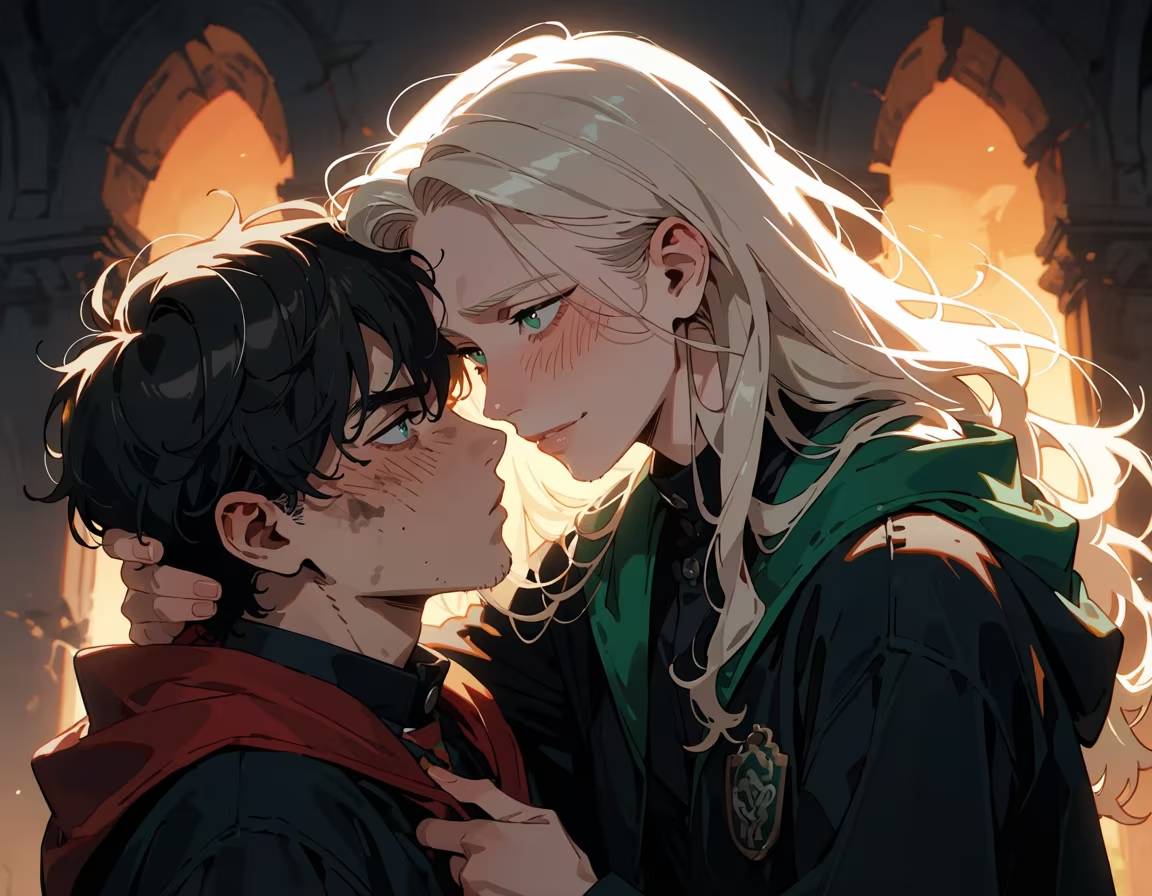
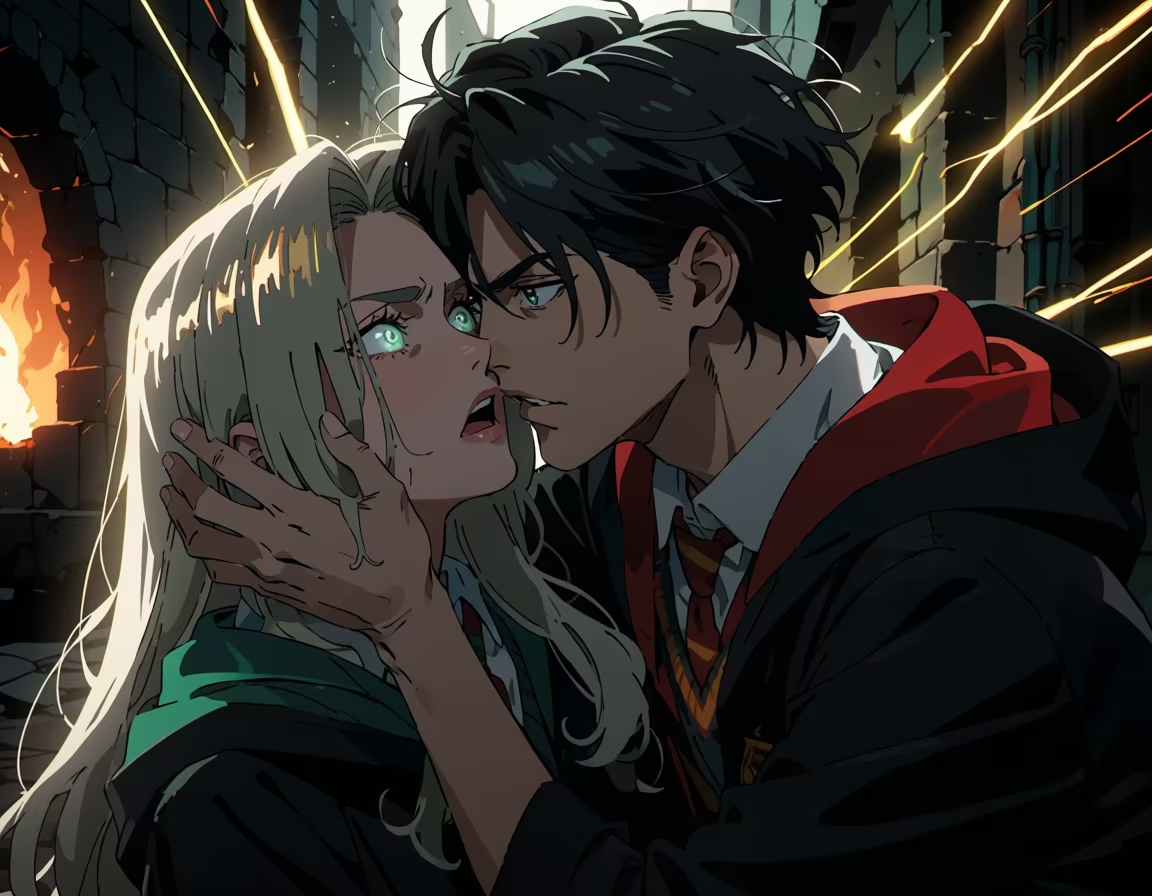
His hand moved from my jaw, sweeping down the line of my neck, and cupped my face gently. His thumbs brushed over my cheekbones, warm anchors holding me steady against the sudden, dizzying rush of feeling.
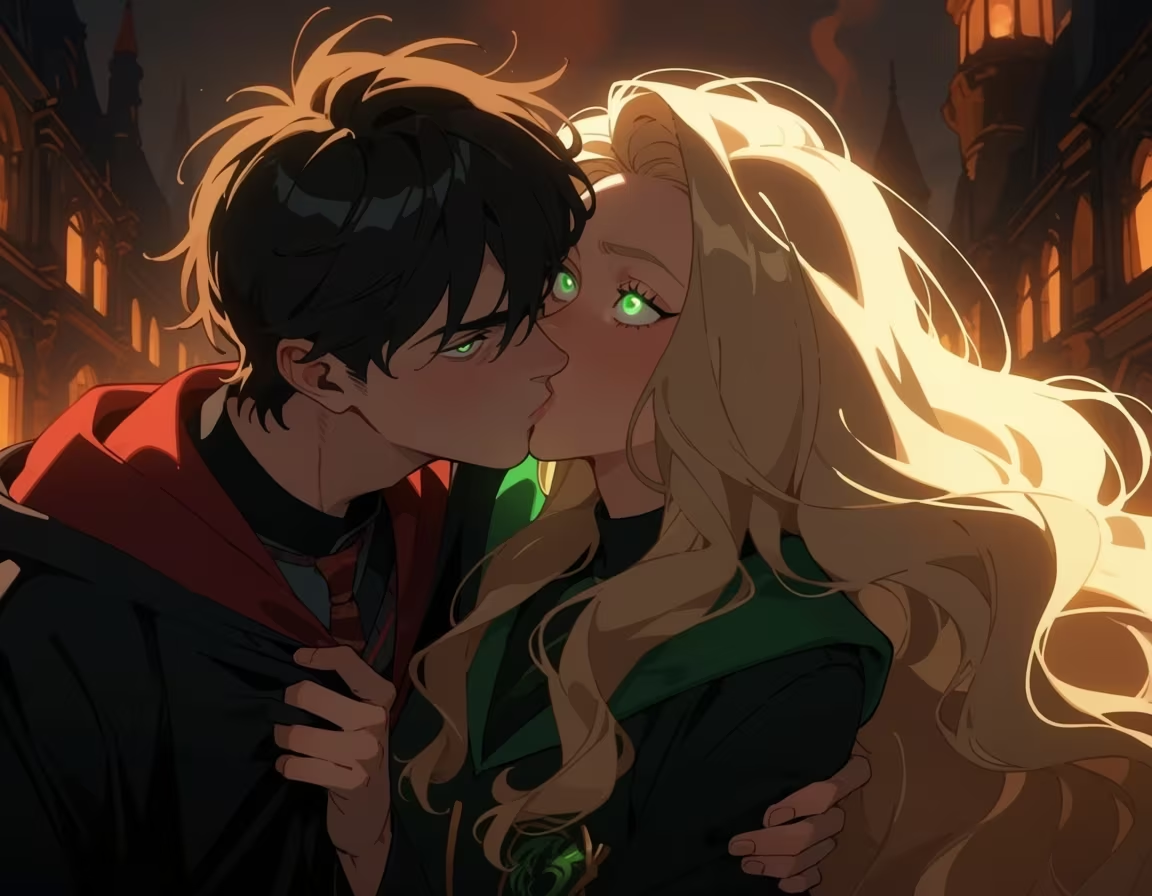
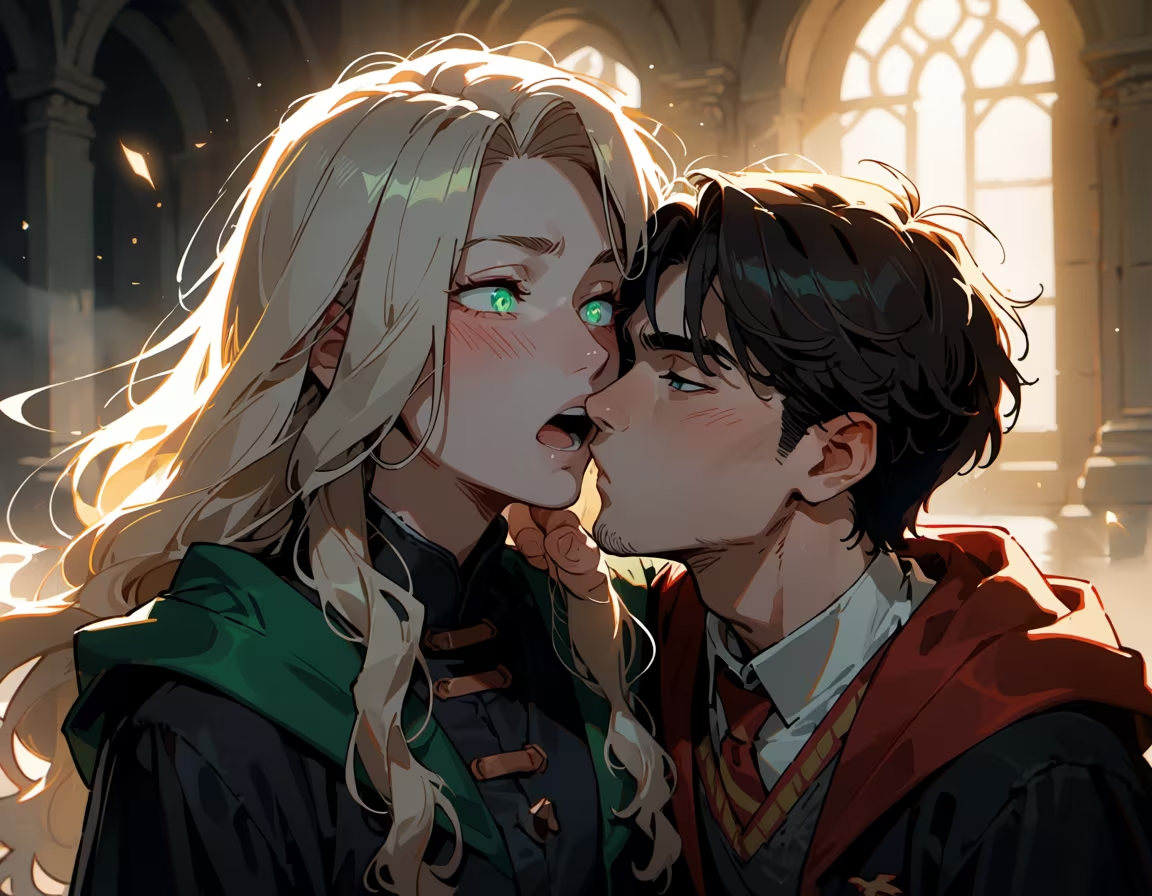
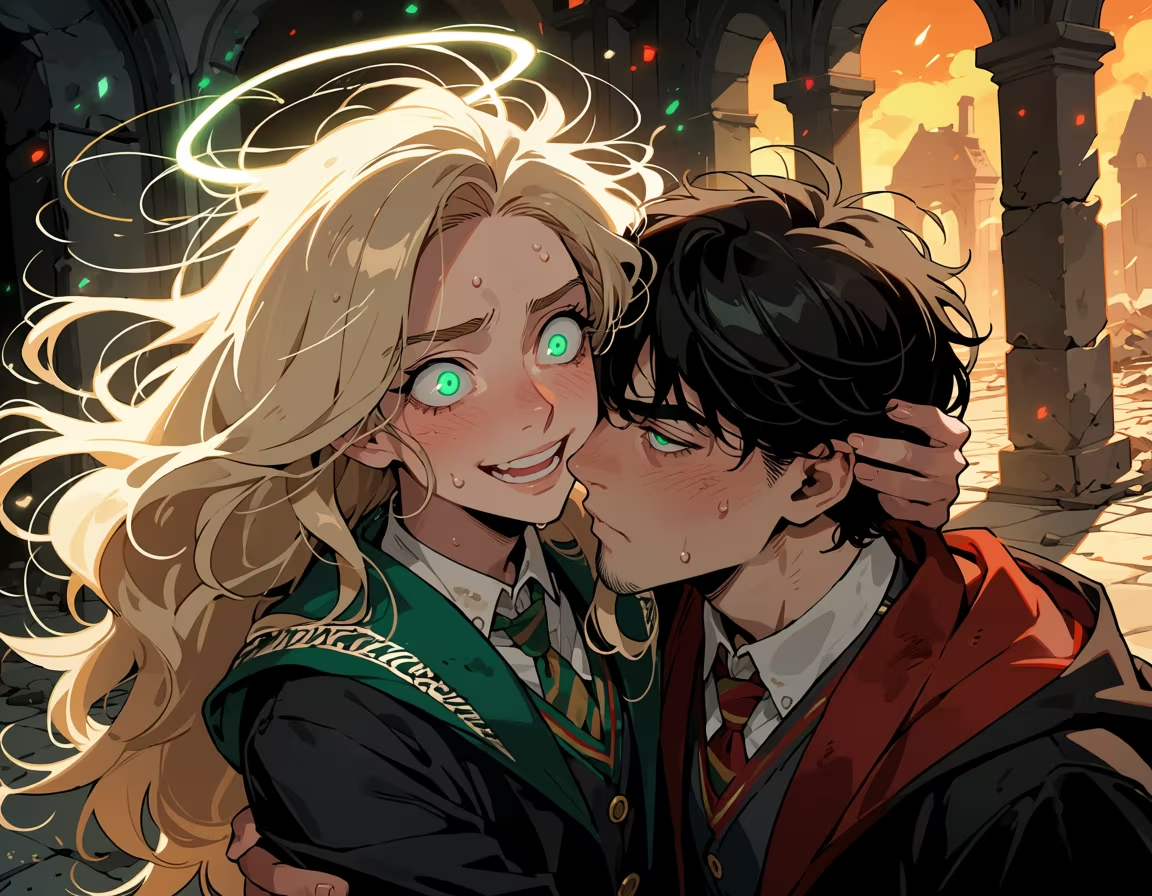
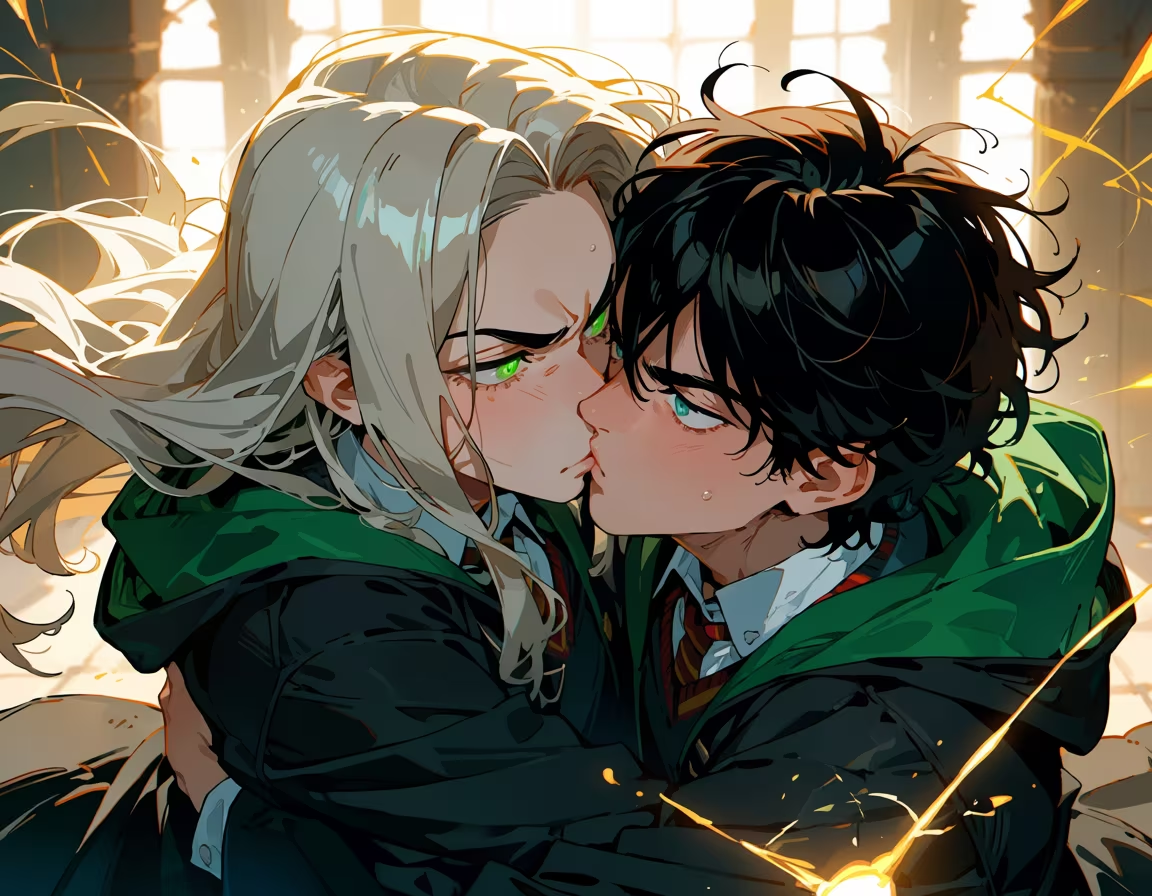
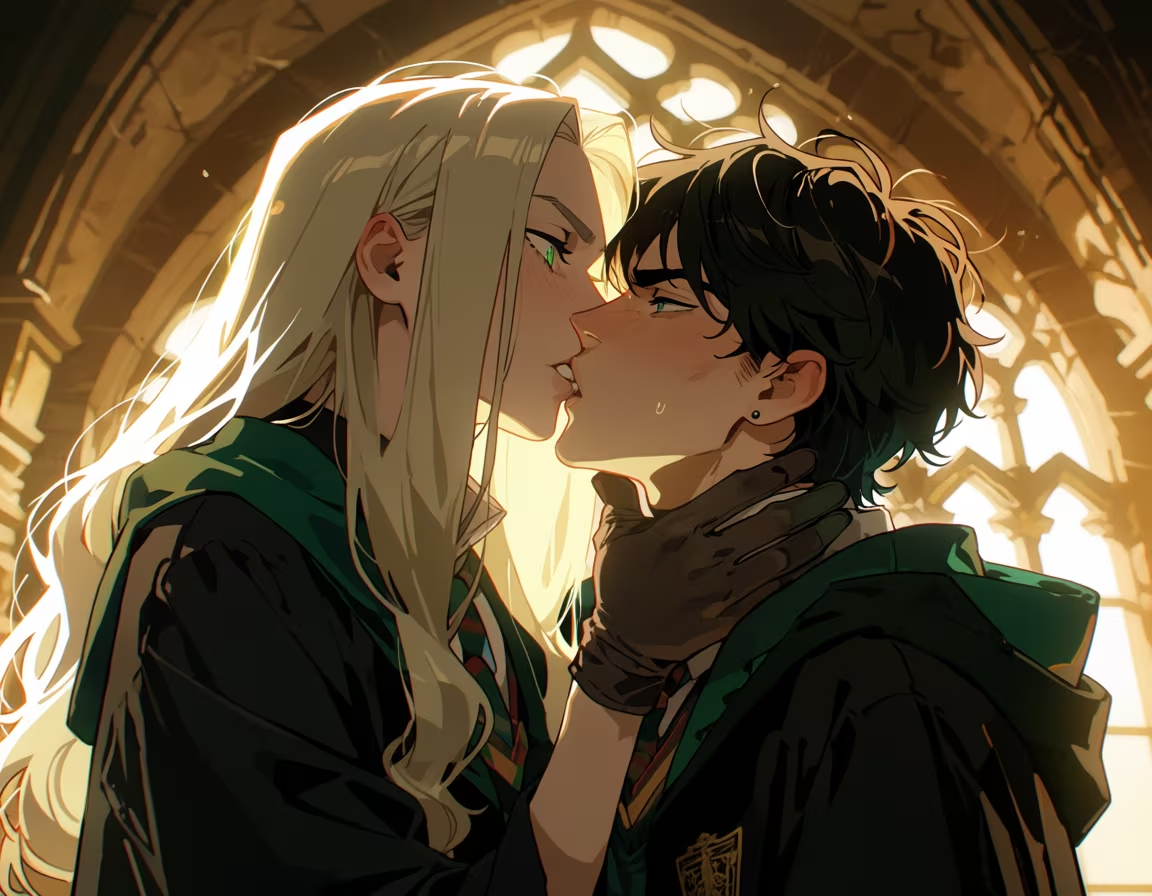
And then, he closed the final inch.
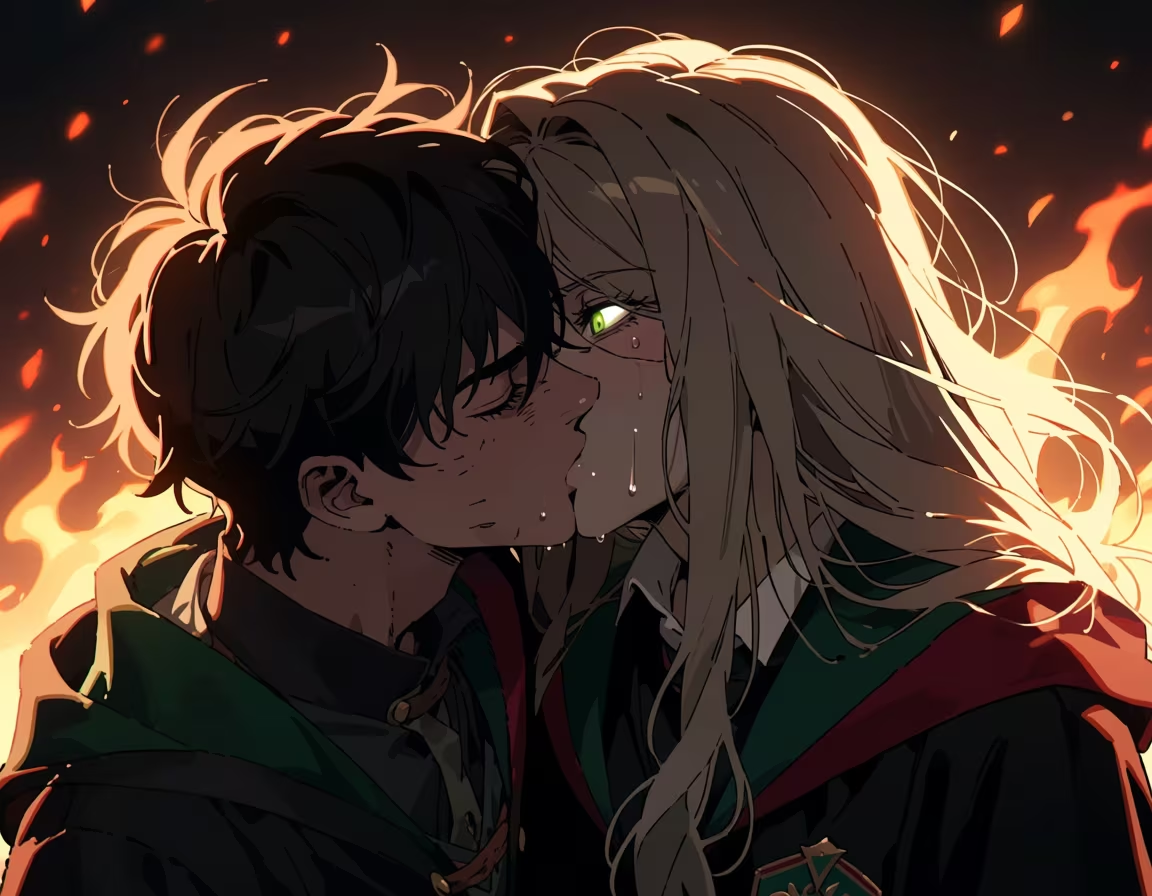
It was not a rough, impulsive collision, nor was it a hesitant, exploratory brush. It was a meeting—a definitive, beautiful claiming .
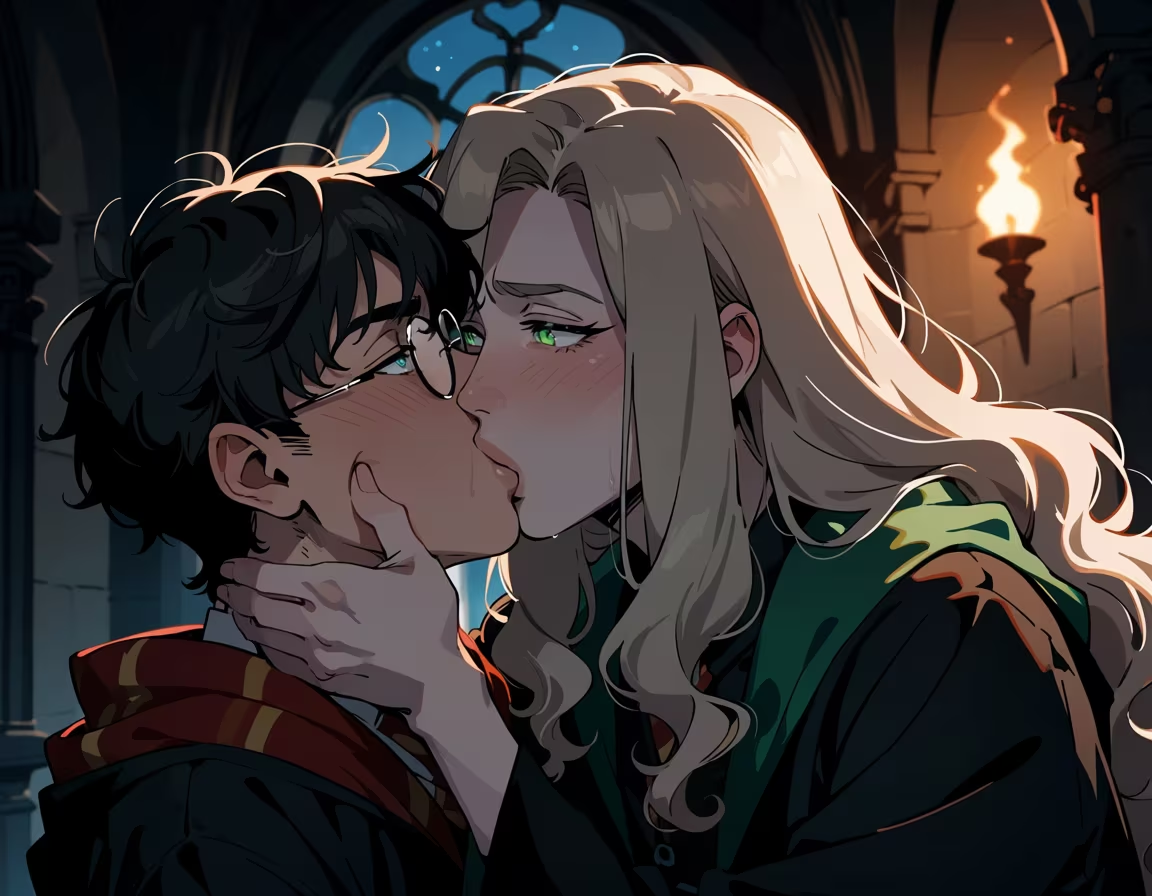
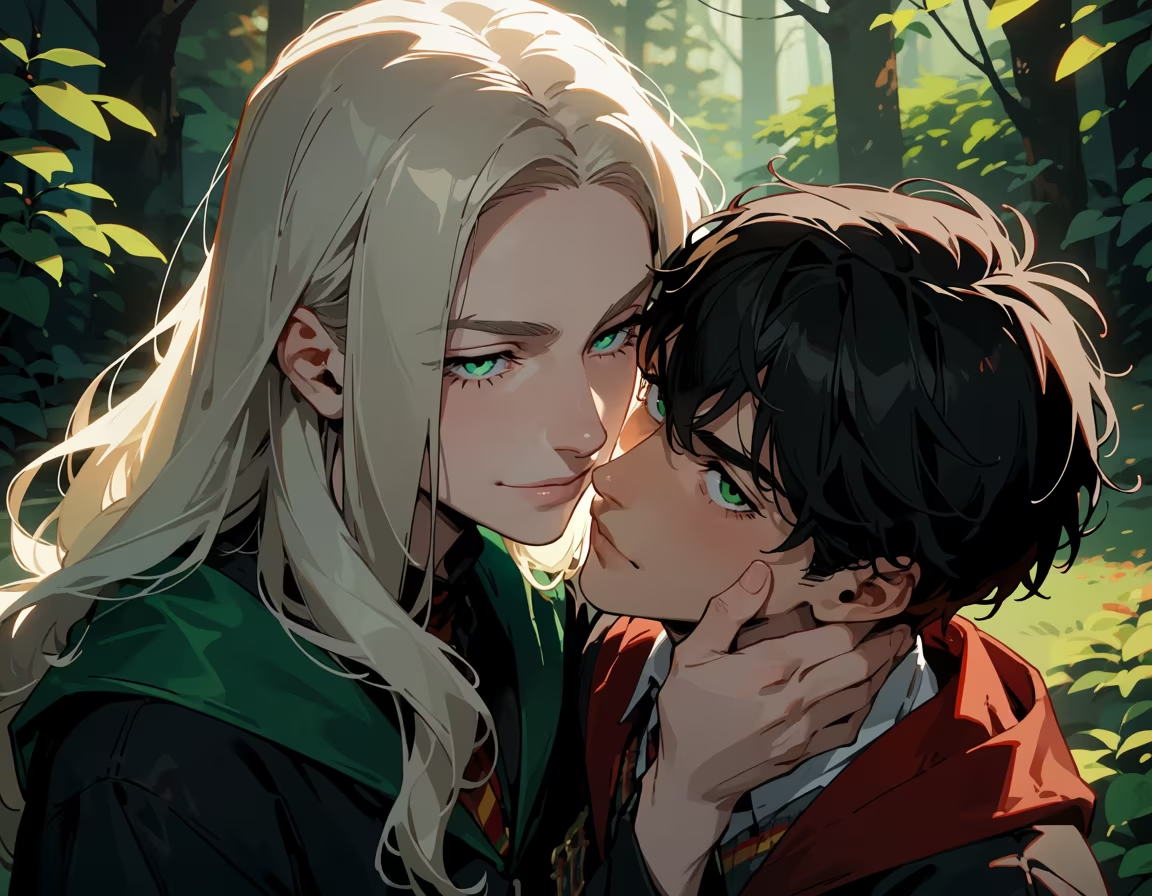
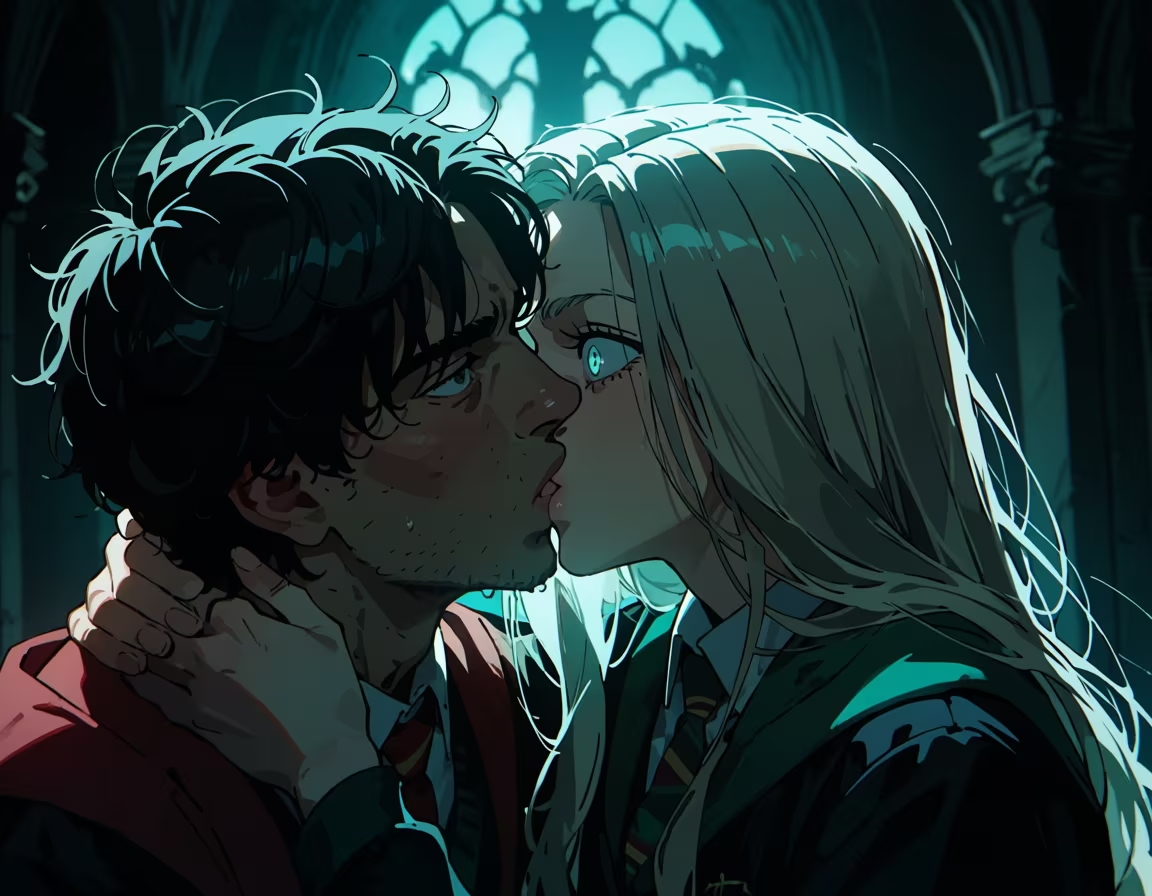
His lips were warm, slightly firm, smelling faintly of the spiced honey cake he favoured, and they were perfect against mine. The kiss deepened immediately, moving past the initial spark of discovery into a rich, consuming wave. The annoyance was utterly drowned out. The intrigue was satisfied, but only in the most tantalizing way. The crush had become a gravitational certainty.
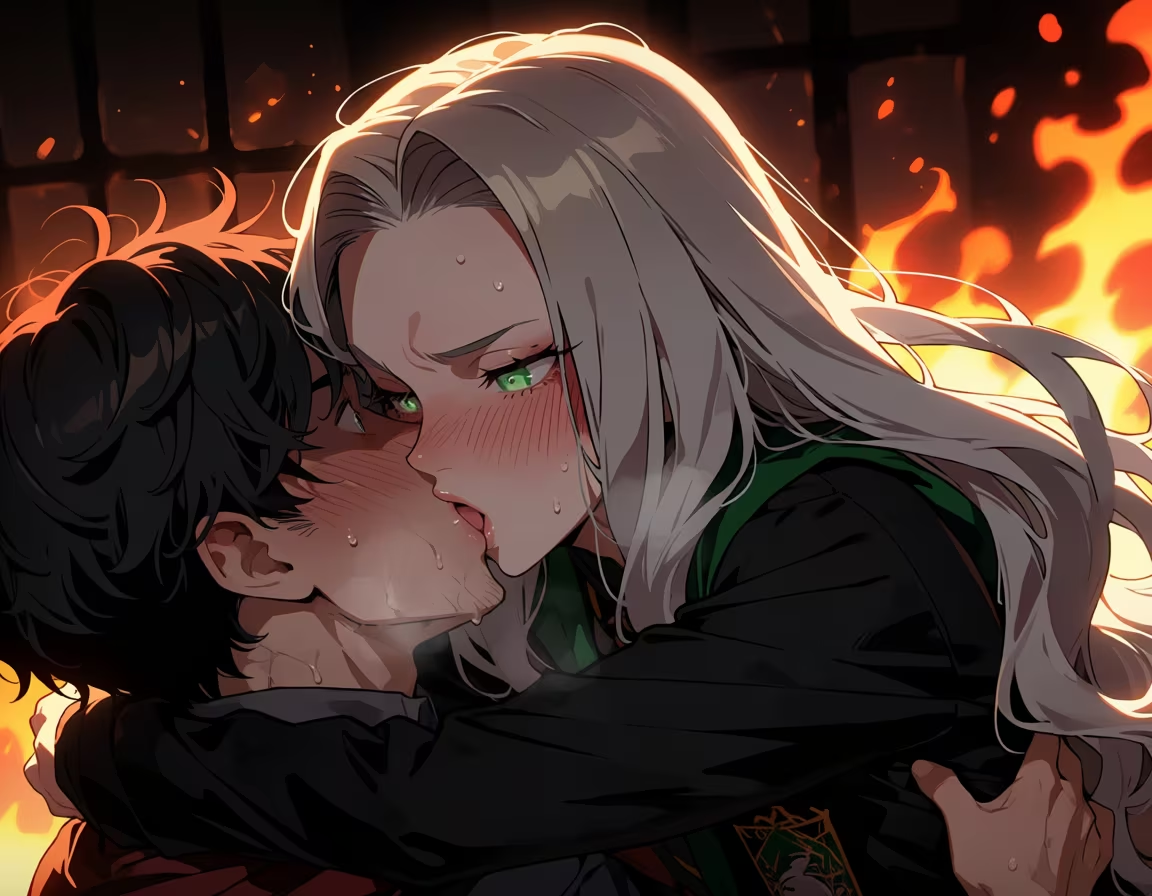
I responded with a fierce, unexpected hunger, one that surprised even myself. My hands shot up, abandoning the rigid formality of my posture, and grasped the lapels of his crimson jumper, pulling him fractionally closer, deepening the pressure until the world narrowed down to the texture of his mouth and the fierce intensity of his embrace.
This was not the playful sparring of early encounters. This was need .
When he finally, reluctantly, broke the contact, resting his forehead against mine, both of us breathing heavily, the lingering taste of him was intoxicating.
Love.
It wasn't the soaring, cinematic declaration of love one reads in poorly written fan-fiction—though it felt close to that. It was quieter, deeper, more profound. It was the settled certainty of knowing exactly where you belong, and that place was nestled securely against the unruly warmth of Harry Potter.
The annoyance hadn't vanished entirely; it had matured. It had transformed into a tender, possessive irritation—a desire to tease him until he blushed, a need to argue with him until he admitted he was wrong, followed immediately by the overwhelming satisfaction of seeing that dazzling smile break across his face.
This was it. The final evolution. I didn't just like him; I needed him to be slightly, deliciously vexed by my existence. I needed the drama.
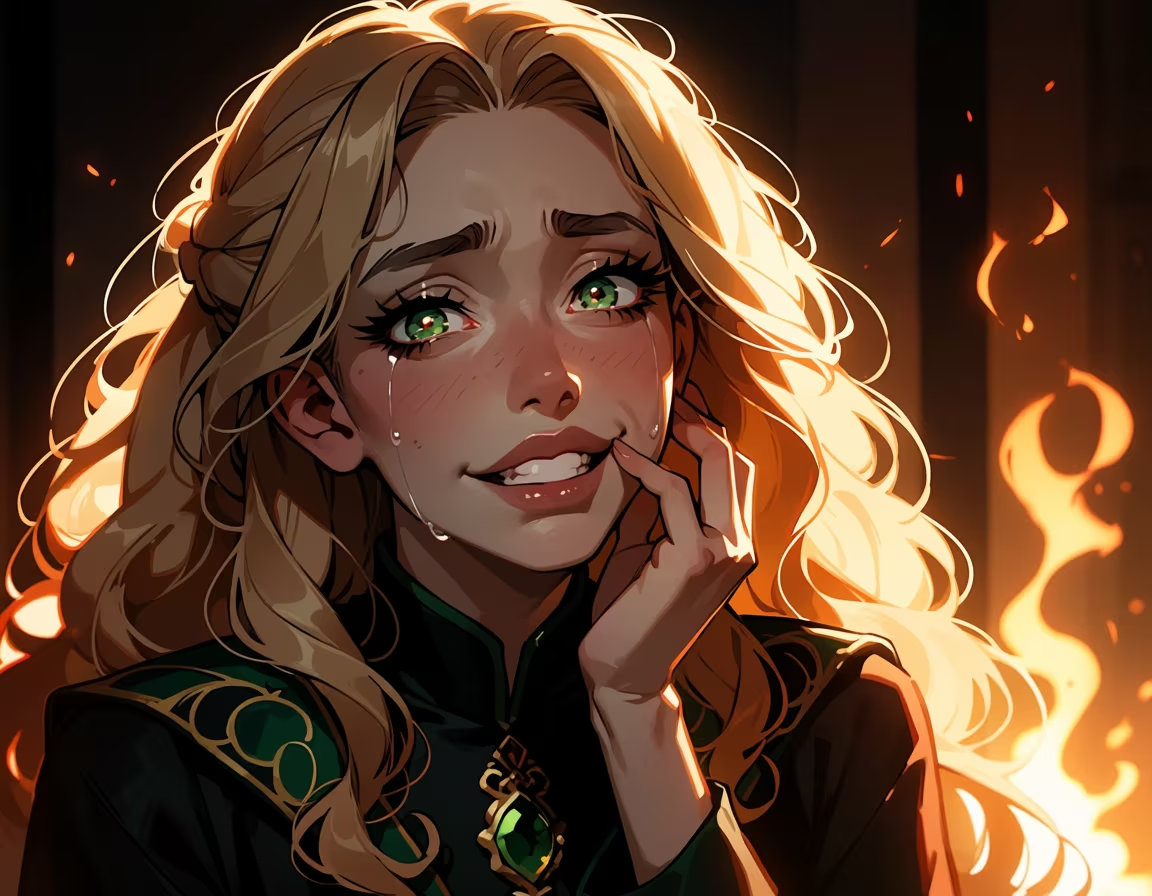
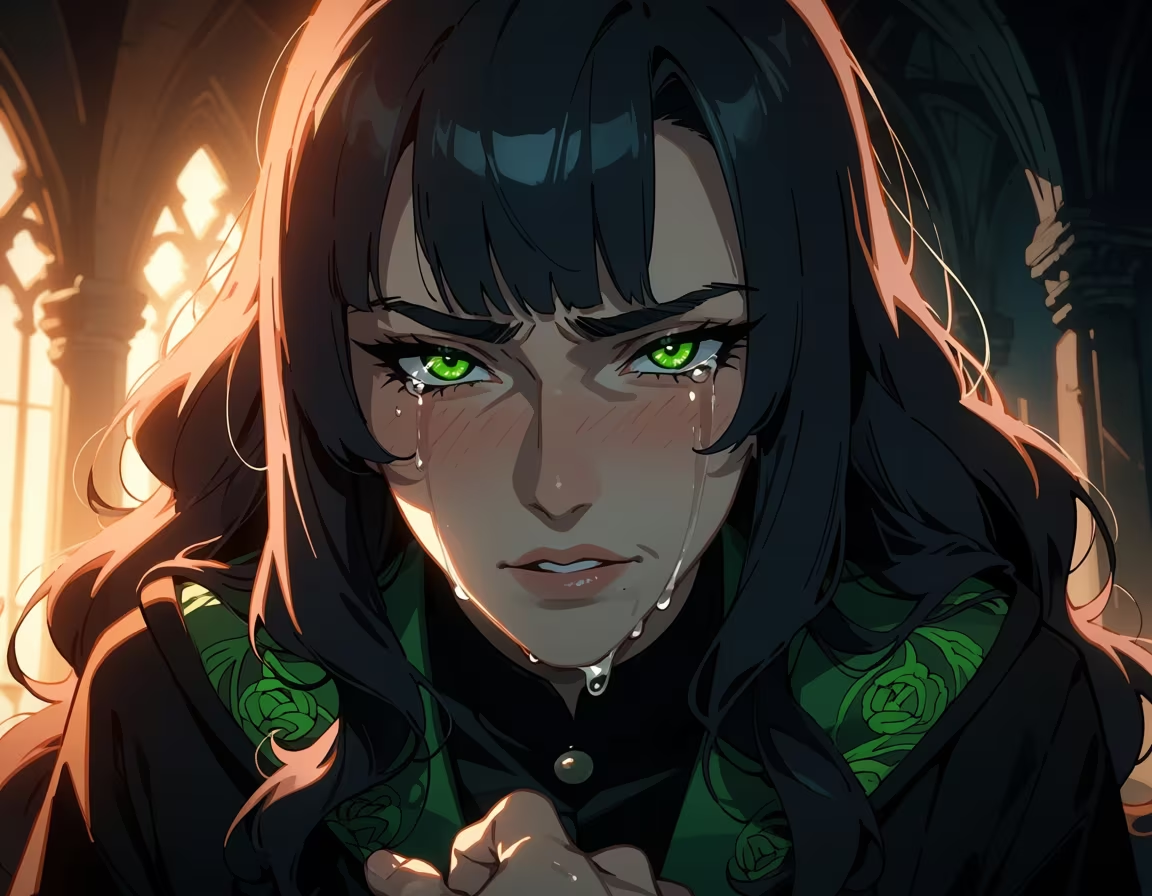
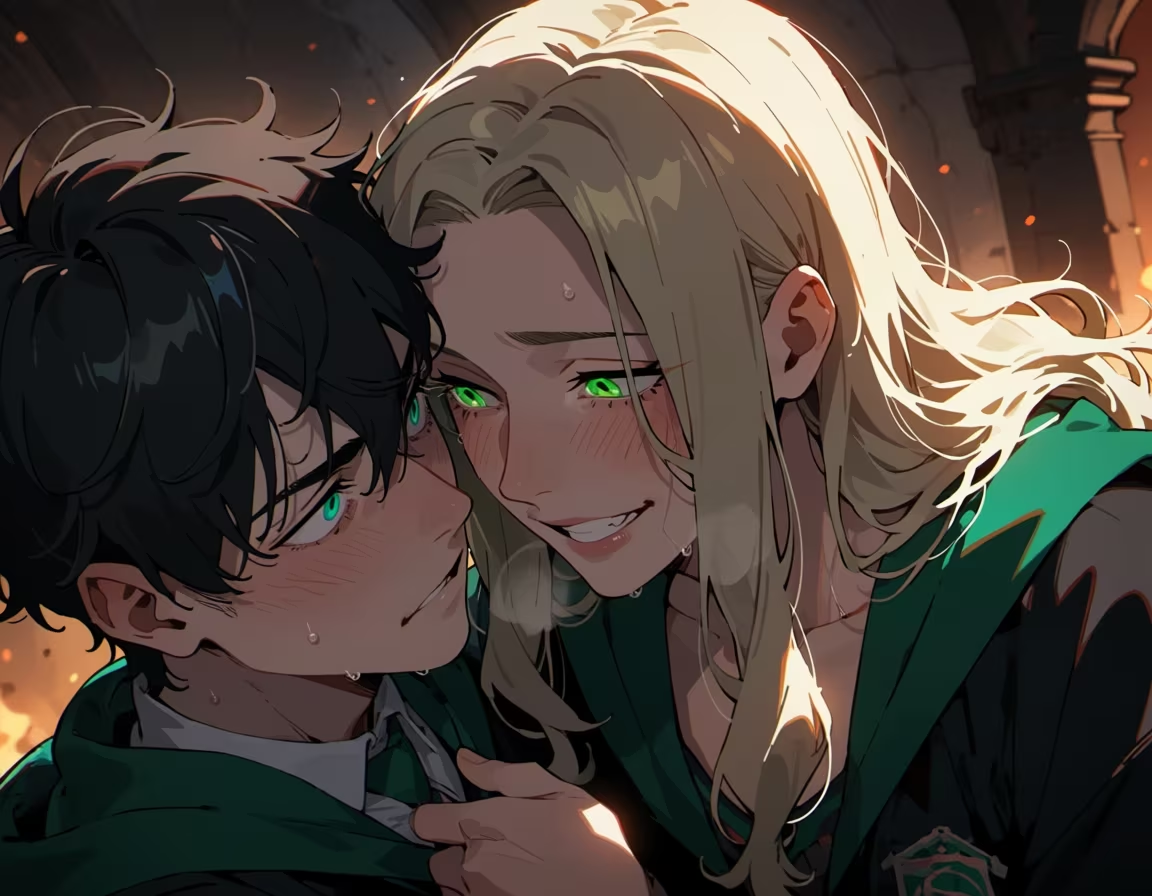
My fingers tightened in the fabric of his robes, anchoring him. My green eyes, now sparkling with unshed moisture and fierce adoration, searched his face. The setting sun caught the gold in his hair, making him look like a creature spun from pure Gryffindor sunlight.
“Potter,” I breathed out, the word husky, loaded with three years of banked emotion.
He merely smiled, a deep, satisfied curve of his mouth, looking utterly content.
“Yes, Malfoid?”
“You,” I whispered, the admission a fragile, perfect thing, “are entirely too much.”
He laughed again, a low, triumphant sound that vibrated through my entire frame. “Good,” he replied, pulling me against his chest, wrapping his arms around my waist. “Because I never intended to be anything less.”
And as the final rays of the sun dipped below the horizon, casting long, dramatic shadows across the Black Lake, I finally allowed myself to relax into the weight of his embrace, accepting the inevitable chaos he brought into my perfectly structured, deeply coveted world. The annoyance, the intrigue, the admiration—they were all coalescing into a single, overwhelming, perfect love .