| Home | The Lives of Velnin | Illustrated Fiction | Malfoid Art & Fiction | Book Blurbs | Contact |
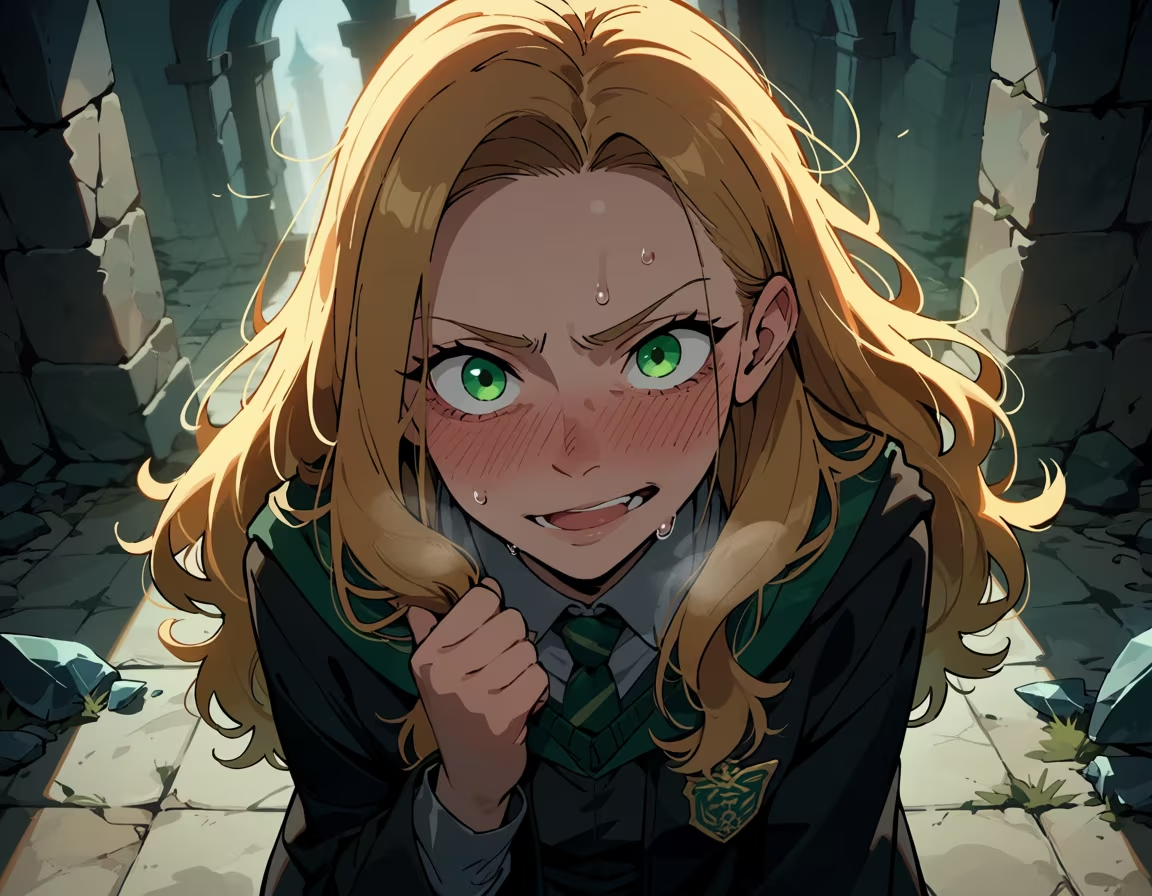
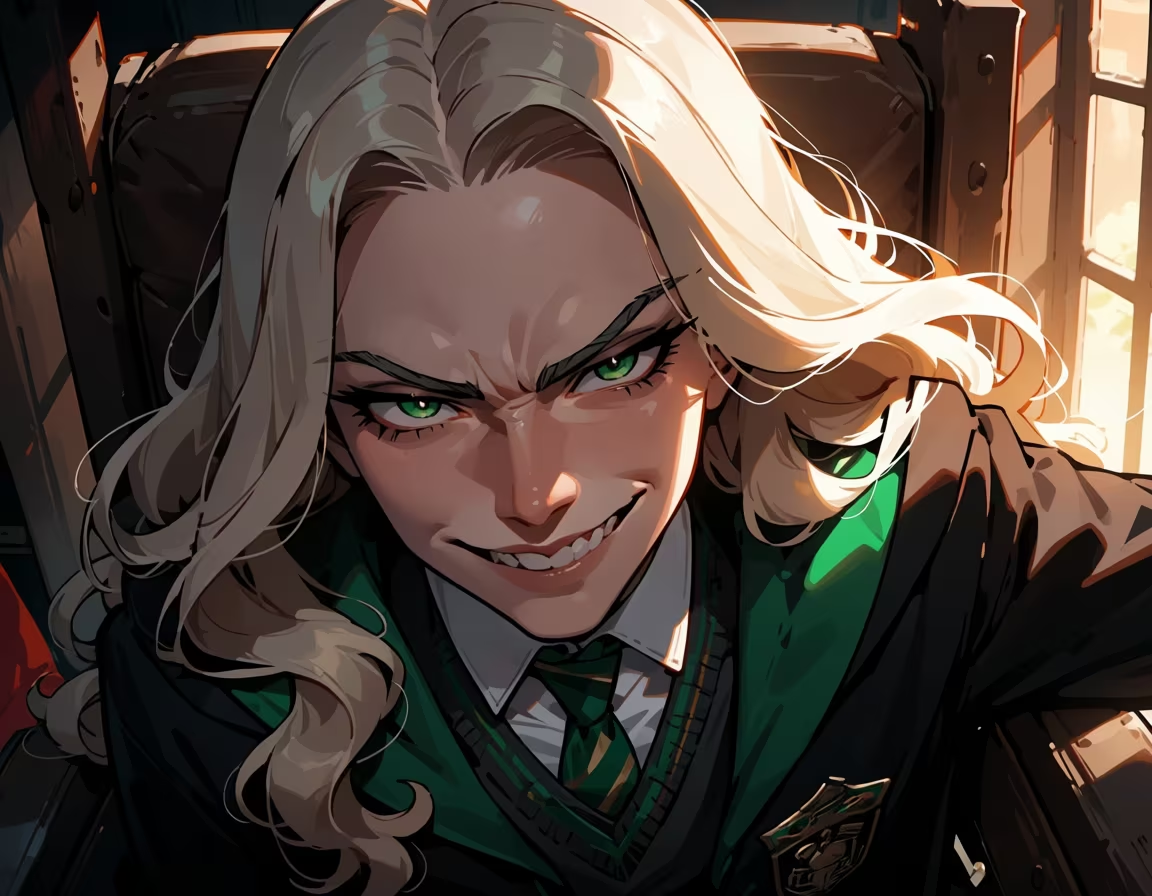
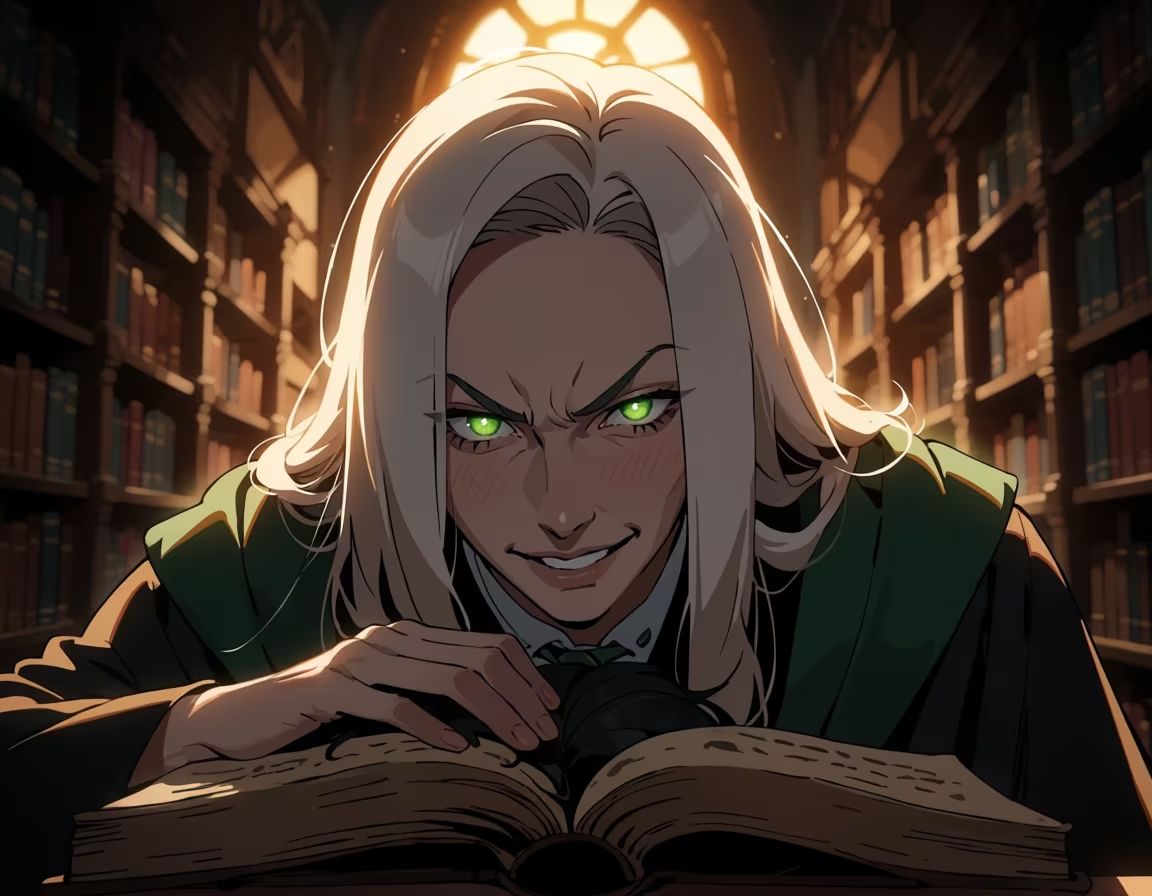
The air in the Department of Mysteries tasted of ozone, burnt parchment, and something sharply metallic—the scent of fresh, arterial blood. It clung to the back of Draconia Malfoid’s throat, mingling unpleasantly with the residual sweetness of vervain that usually permeated her robes. She stood amidst the devastation, a landscape of shattered glass and twisted metal where moments before there had been arcane order. The central chamber, once a majestic confluence of star charts and philosophical musings, was now a ruin, a grotesque monument to the relentless, grinding violence of the war.
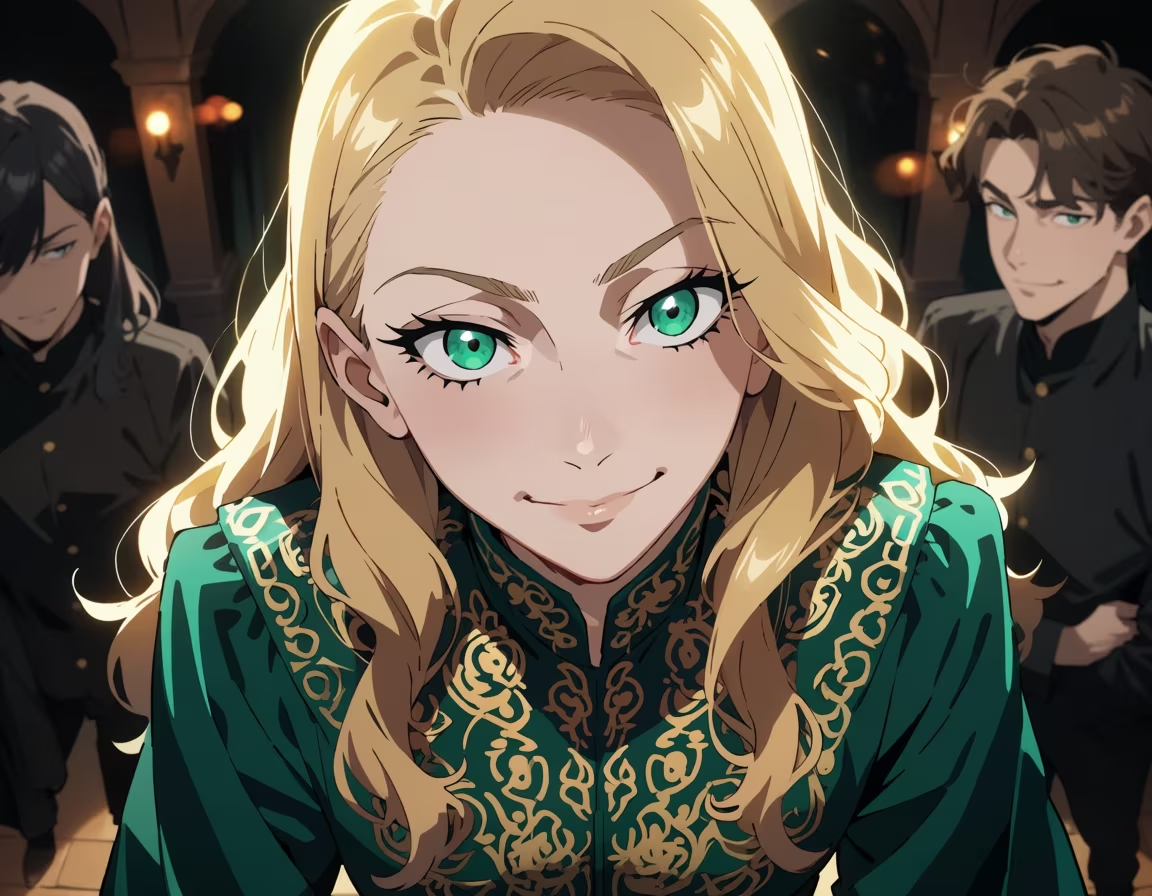
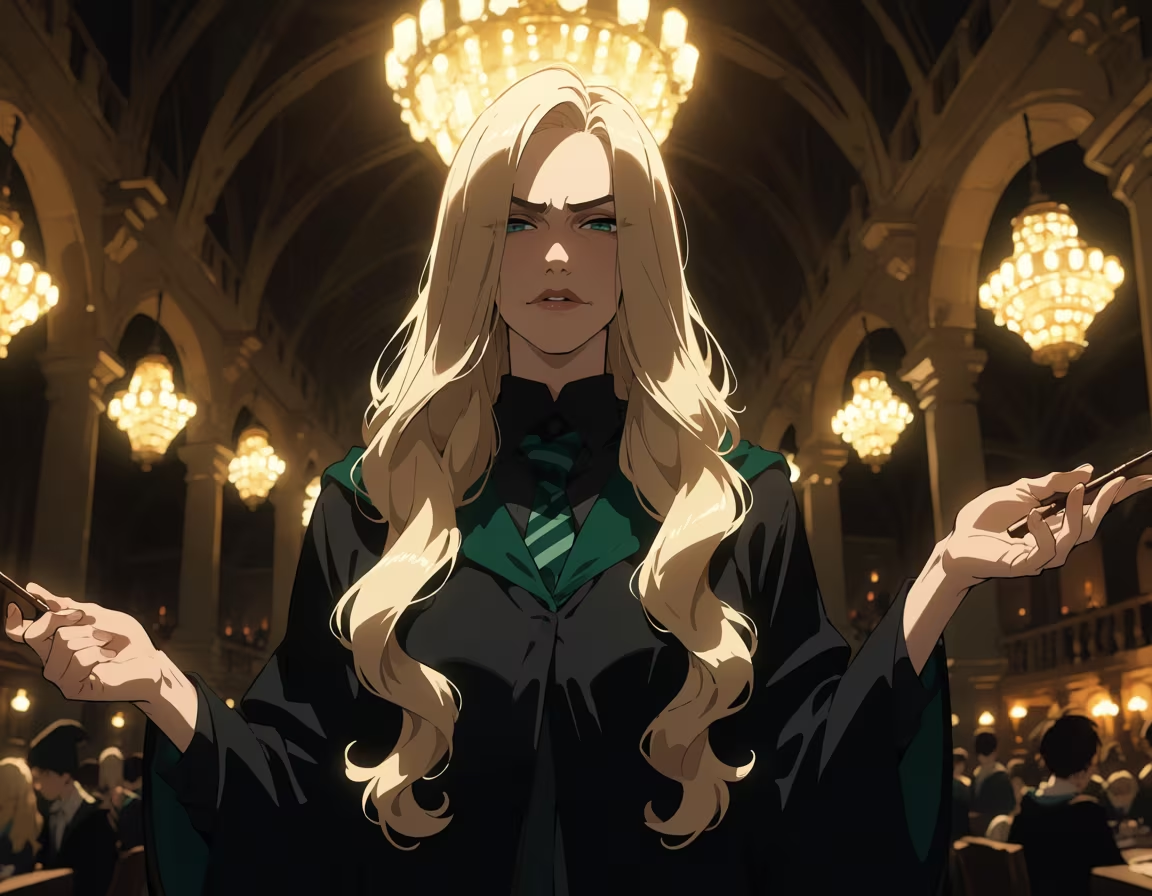
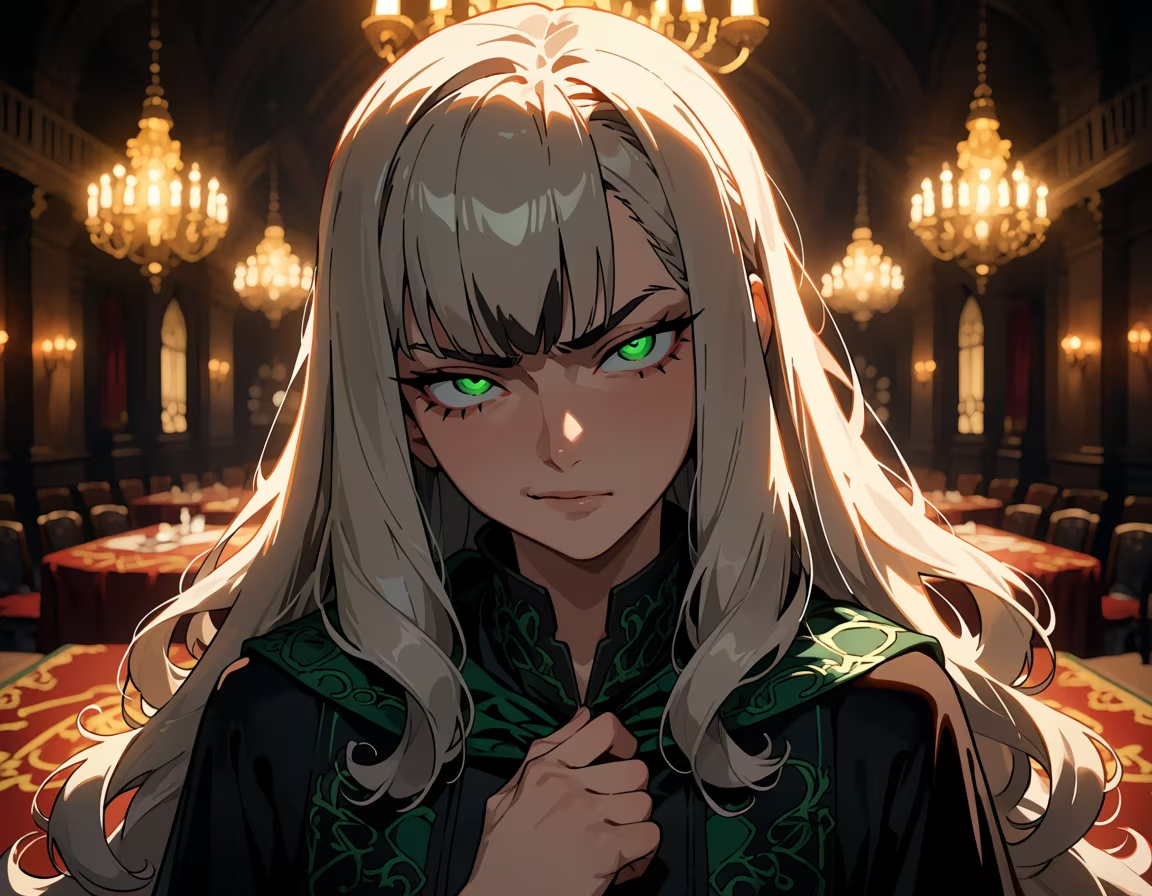
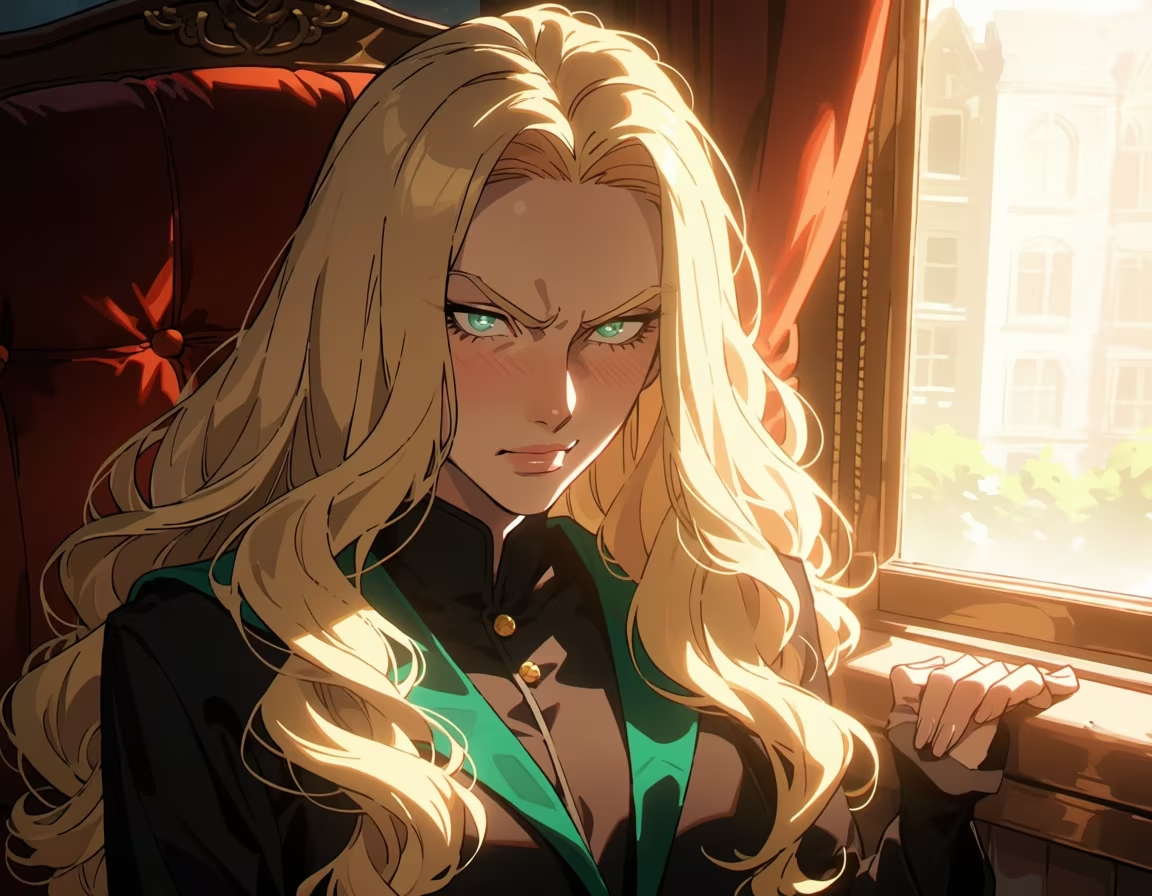
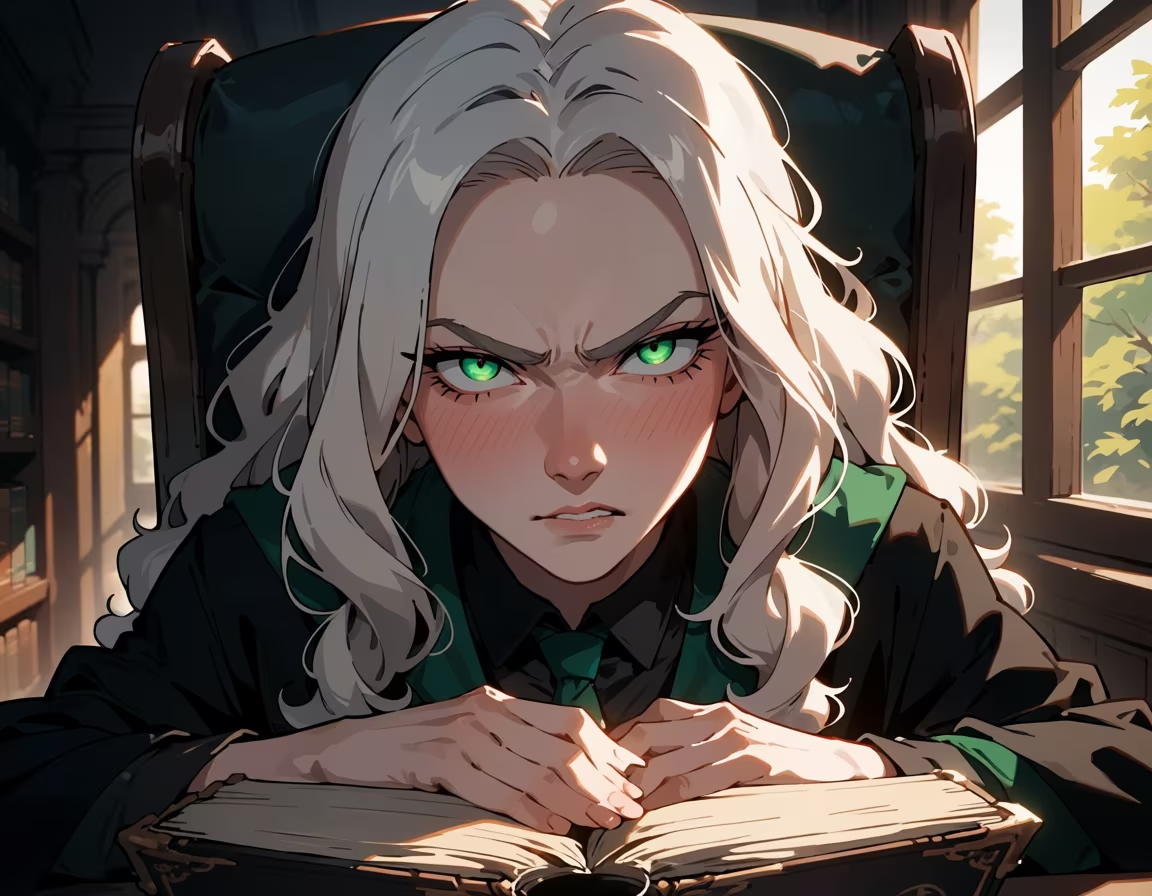
Draconia ran a slender, gloved finger over a large shard of crystal that had embedded itself halfway into the polished stone floor. A faint tremor ran through her left forearm, a dull throb that reminded her vividly of the searing jolt when Bellatrix had cast that desperate, final curse upon her. She straightened, smoothing the deep folds of her midnight-green robes, the emerald embroidery catching the flickering light of the surviving enchanted lamps. She was, quite frankly, magnificent even in ruin.
It was the state of things that irked her most. Not the destruction itself—she could appreciate the raw, chaotic artistry of it. It was the mess . The sheer, undignified splatter of Gryffindor red across the otherwise immaculate Slytherin-tinged stone. The muddy boot prints of the commoners who had rushed in like terrified hornets.
Honestly, she thought, a familiar, sharp spike of irritation piercing the haze of exhaustion clinging to her mind. Can they not maintain a shred of decorum, even during a catastrophic magical incursion?
She glanced towards the Veil—the great, shimmering portal that now hung slightly askew, pulsing with a spectral energy that seemed to draw the sorrow from the very stones. The Veil had taken too many, and the sheer weight of that sacrifice felt like a physical pressure on her sternum. But beneath the annoyance—the constant, simmering annoyance that defined her relationship with the world, and specifically, with him —lay something far warmer, far more inconvenient.
Harry Potter.
He was standing a short distance away, near the shattered remains of the Time-Turner display pedestal. He was leaning heavily on the broken frame, his wand—still vibrating slightly, a testament to the sheer force of the spell he had unleashed—held loosely in his grip. His hair, usually tamed by some combination of youthful arrogance and sheer magical force, was wild, dark strands clinging damply to his temples and forehead. His robes, slightly singed at the cuffs, were smeared with dust and a streak of something dark that Draconia suspected was his own blood.
He looked, in short, utterly heroic. And that, Draconia reflected with a shudder of profound, deeply mortified pique, was entirely too much.
“Honestly, Potter,” she muttered under her breath, the sound barely audible over the distant moaning of the surviving injured. “Must everything be so… dramatic?”
Yet, her irritation faltered. It always did when she looked at him. It would waver, like a poorly maintained charm, threatened by the sudden, unexpected influx of something far more potent and dangerously intoxicating. It was admiration, she had to admit, though she would never, ever let the others—not Crabbe, certainly not Goyle, and most damningly, not Luna Lovegood—know that.
Her feelings for him had evolved, a slow, inexorable shift that had taken the better part of seven years to fully manifest. When she first saw him in the Great Hall, a greasy-haired, ridiculously skinny boy sporting an oversized scar, her response had been pure, undiluted annoyance . He was noisy. He was Gryffindor, the eternal bastion of excessive optimism and ill-judged heroism. And he was obnoxious .
But as the years passed, the annoyance curdled into something sharper, more complex. When he stood up to Snape in the dungeons, his jaw set like granite, she felt a flicker of grudging respect. When he successfully defended Hermione from a particularly vicious curse during the Triwizard Tournament, the irritation softened into a grudging acknowledgment of capability.
By the time he was a seventh-year, navigating the labyrinthine politics of the Ministry and the relentless shadow of Voldemort, the annoyance had morphed into a fascinating blend of intrigued annoyance . She found herself watching him in the corridors, not out of malicious judgment, but because he was an unpredictable variable in her carefully ordered existence. He was a chaotic, bright, infuriating burst of sunlight in the perpetual twilight of Slytherin ambition.
And now? Now, seeing him framed by the wreckage of the Mysteries, looking utterly spent but utterly whole , the annoyance was battling a fierce, undeniable wave of something possessive—a crush, a deep, throbbing desire that felt entirely too vulnerable for a Malfoy.
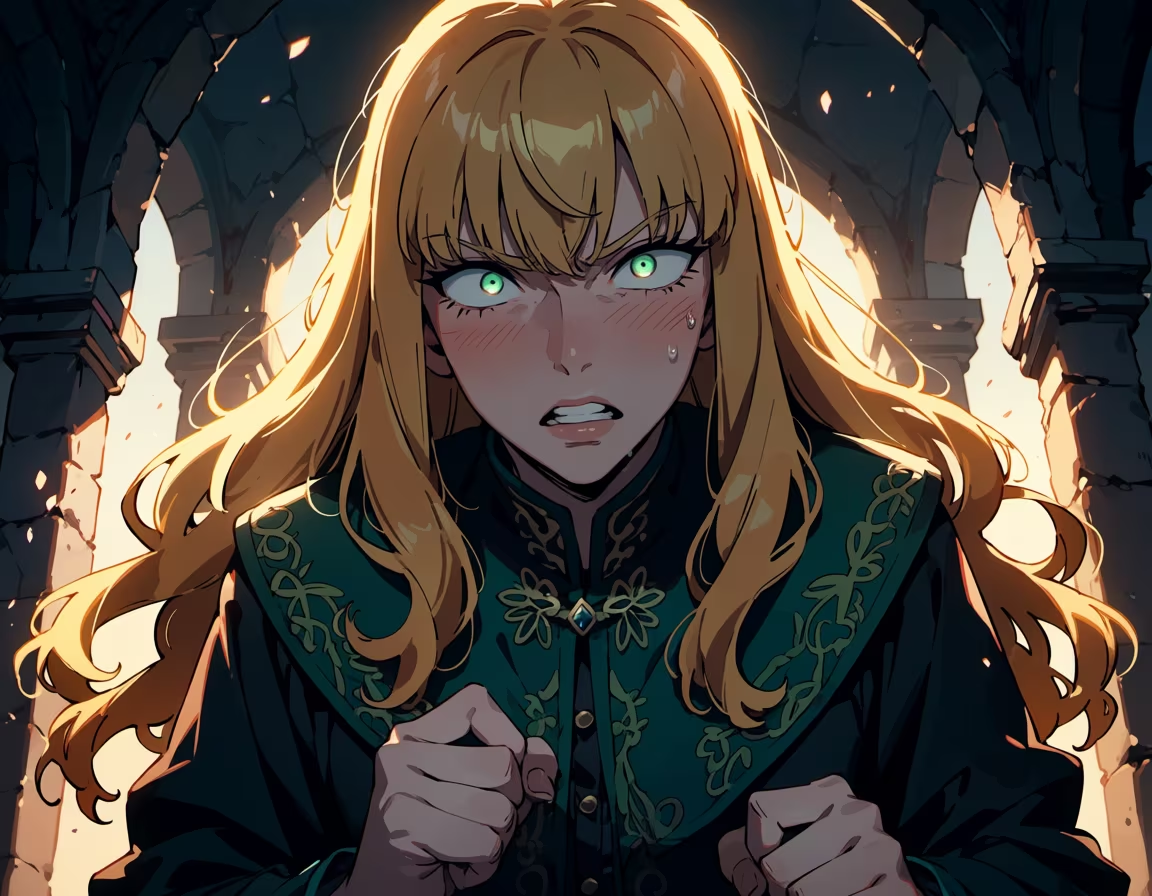
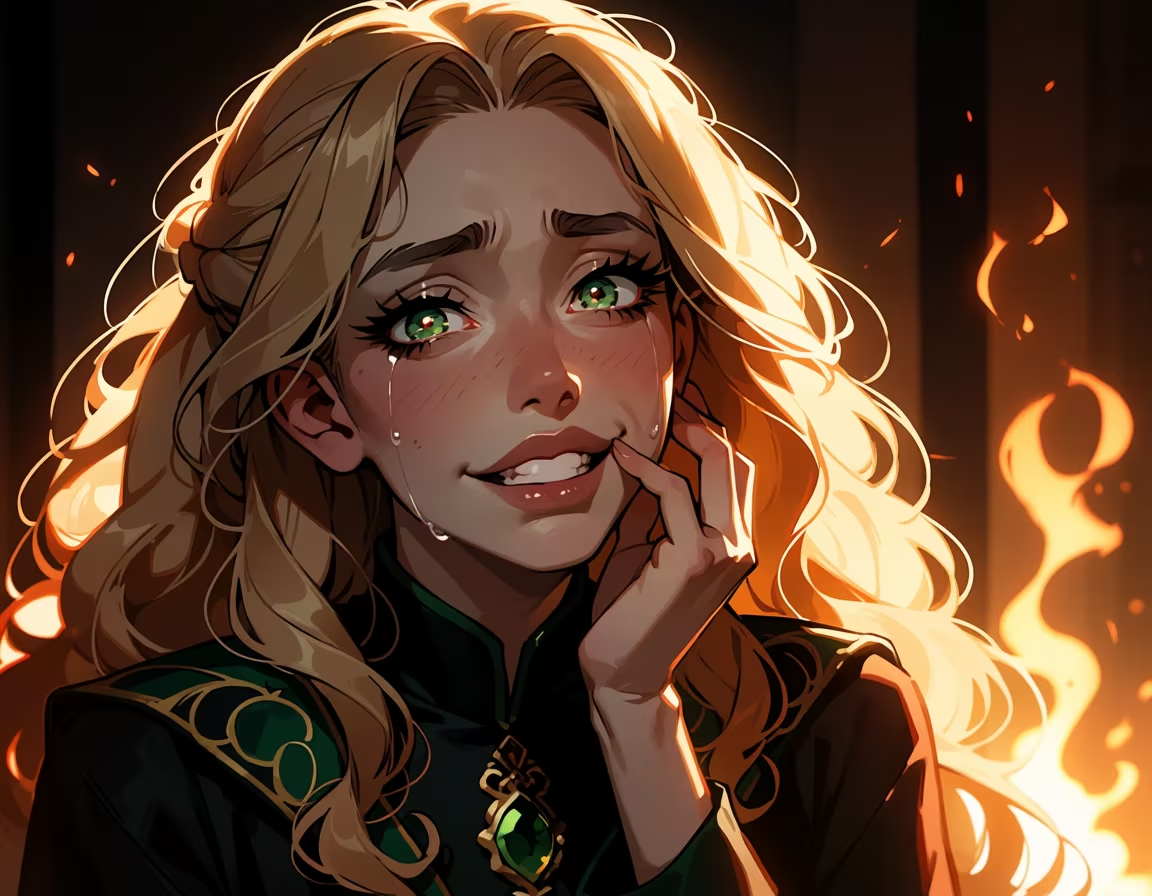
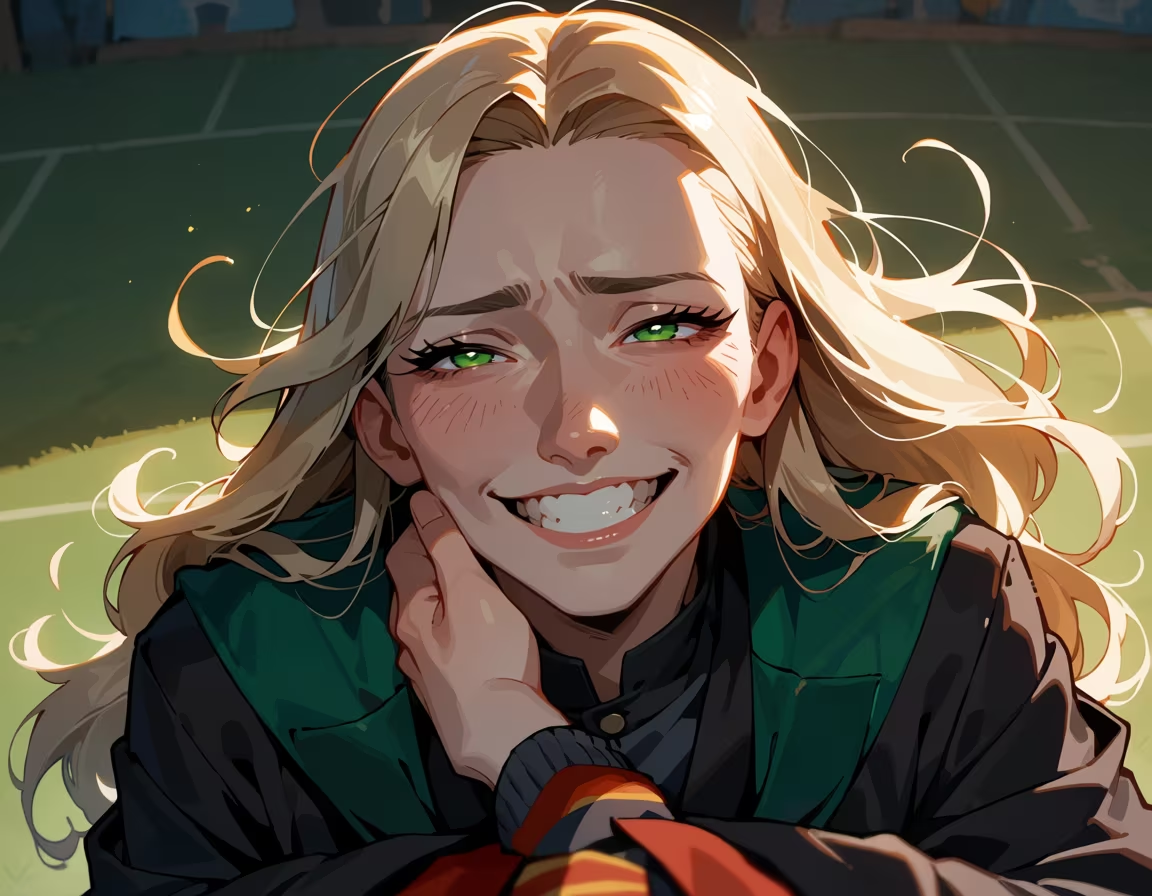
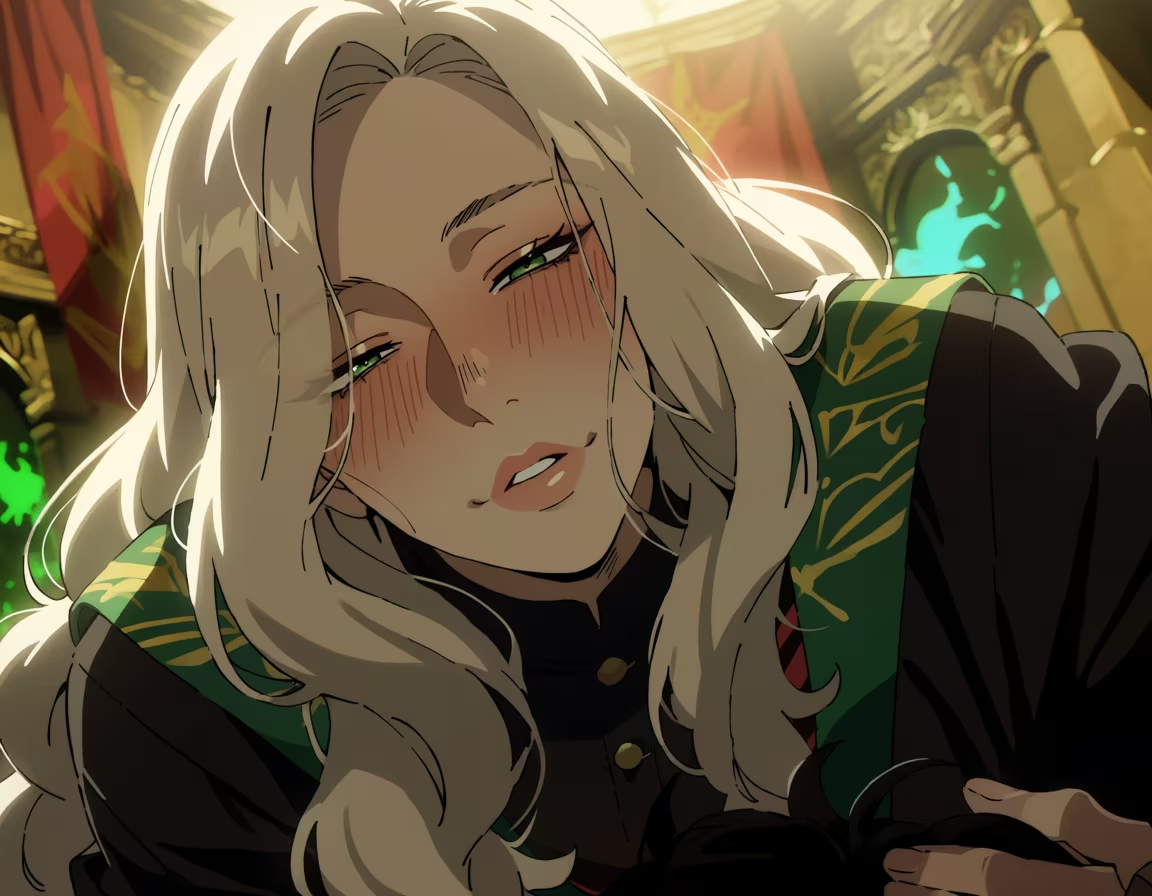
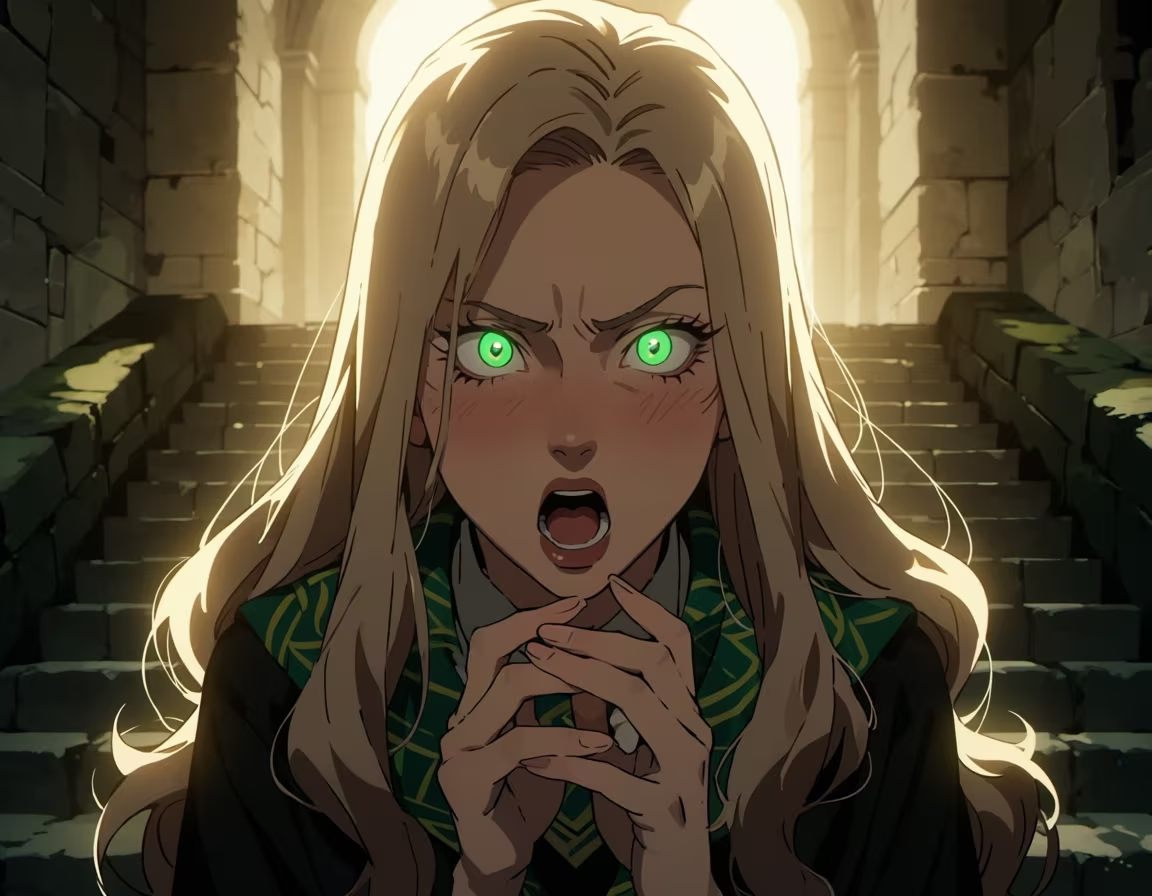
She felt the blush creeping up the bridge of her nose, a traitorous flush that betrayed her carefully cultivated composure. She hated it. She hated that the sheer force of his presence could make her skin feel warm and slightly prickly, like she’d accidentally brushed against a live Snitch.
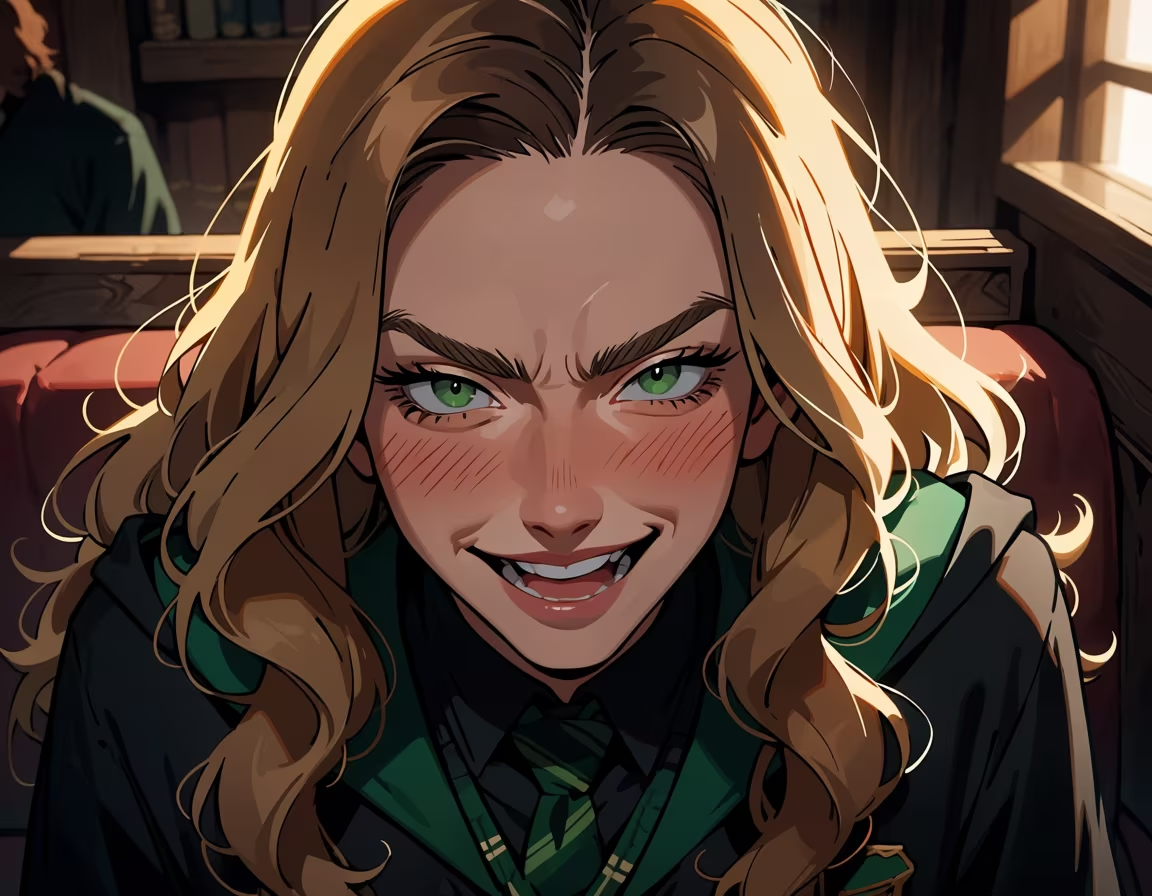
He’s infuriating, she thought again, her lips twisting into a near-smirk. He carries that ridiculous Gryffindor swagger even when he’s clearly about to pass out from exertion. Why must he be so relentlessly… him ?
But then, her gaze drifted past his vibrant green eyes—eyes that, even now, looked shadowed with exhaustion and sheer willpower—and focused on the faint lines of stress around them. She saw the depth of the trauma he carried, the burden of prophecy, the weight of his family’s expectation. And suddenly, the annoyance felt thin, flimsy, and utterly inadequate to describe the complicated mess of feeling she had for him.
It was admiration, yes, fierce and burning. It was dislike, because he was too morally upright for her taste, too willing to forgive the petty treacheries of the wizarding world. But mostly, it was a profound, aching fondness . A fondness that demanded proximity, demanded acknowledgment, demanded that he stop looking so effortlessly magnificent while standing amidst her domain.
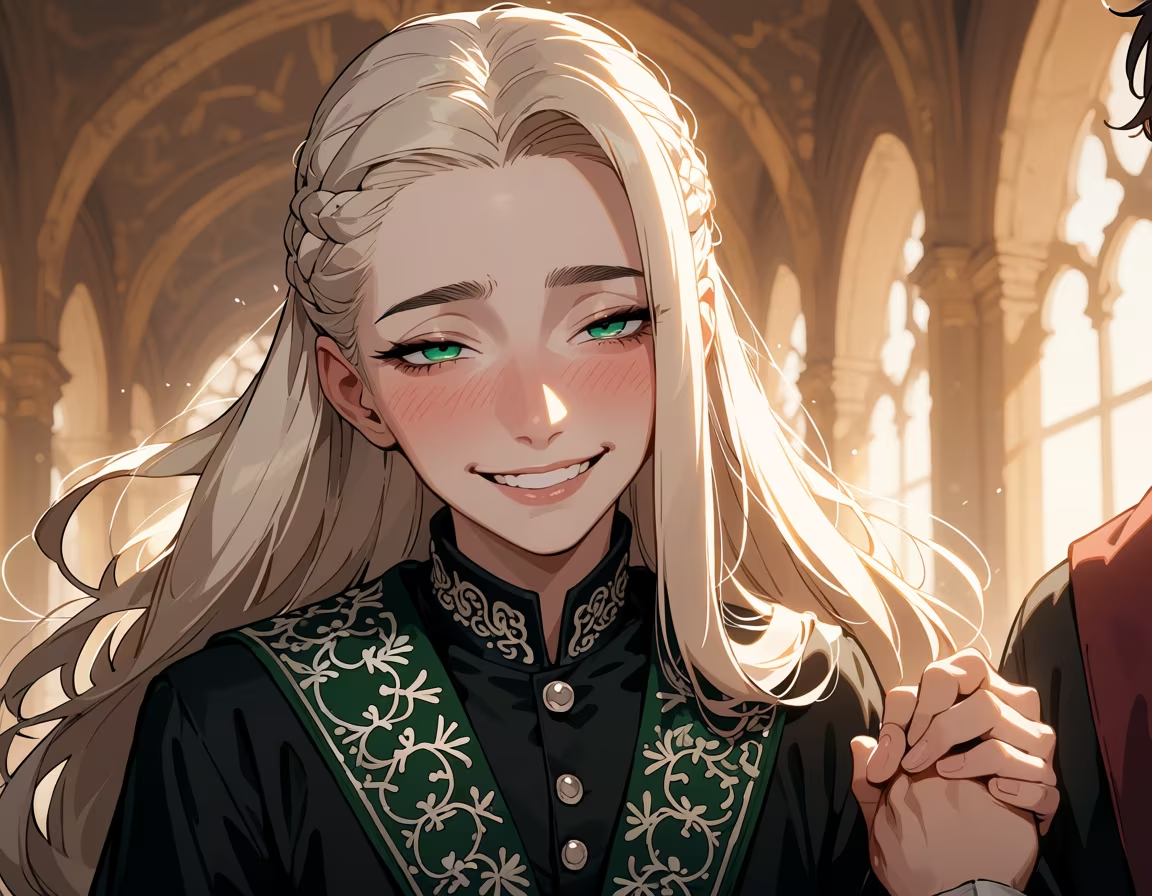
A small, stray strand of blonde hair had escaped its elaborate braid, catching the light, and she reached up, tucking it behind her ear. Her hand trembled almost imperceptibly.
He shifted, finally lifting his head fully, and his eyes swept across the devastation, pausing, inevitably, on her.
The connection was instant, electric, and deeply embarrassing.
Harry Potter, the Boy Who Lived, was looking at Draconia Malfoid, the inheritor of ancient, glorious Slytherin pride, and he was looking at her as if she were both the most vital and most exasperating fixture in the ruined landscape.
A ghost of a smile touched his lips—tired, weary, but utterly genuine. It was a smile that promised future chaos, future skirmishes, future glorious, complicated things.
And Draconia, the girl who prided herself on glacial control, found herself unable to summon a cutting retort. She found herself unable to muster the biting retort about his atrocious fashion sense or his general lack of subtlety.
Instead, the blush deepened, staining her cheeks a vivid rose. She felt the internal battle raging: Snarl. Tell him he looks like a damp, heroic house-elf. Insult his choice of waistcoat.
But the fond feeling won. The crush, which felt like a rapidly expanding, glorious bubble inside her chest, urged her forward.
“Potter,” she finally said, her voice richer and softer than she intended, the aristocratic cadence slightly frayed around the edges. “You are far too theatrical for a Ministry disaster site.”
His smile widened, and he pushed off the pedestal, taking a slow, deliberate step in her direction. The movement was fluid, powerful, like a predator emerging from cover.
“It’s necessary, Malfoid,” he countered, his tone low, rough with fatigue, yet imbued with that familiar spark of defiance. “Someone has to manage the sheer volume of catastrophic drama.”
She watched him approach, her heart giving a ridiculously dramatic lurch—a lurch that made her wonder if it was the adrenaline, or the sheer, sheer him .
“And who do you imagine that would be?” she challenged, tilting her chin up, trying desperately to reclaim her usual posture of haughty disdain.
He stopped directly before her, close enough that she could smell the faint, earthy scent of him—a mixture of old magic, sweat, and clean linen. He didn't invade her space entirely, but he was close enough that the heat radiating off him made the emerald trim of her robes feel suddenly stifling.
“You, of course,” he said simply, his gaze dropping momentarily to her mouth before snapping back up to her eyes. “Though, frankly, you’re doing a remarkably good job of making the chaos look… elegant.”
The compliment, delivered with such utter sincerity, felt more devastating than any curse. Elegance. She was elegant. Even standing amidst a pile of pulverized secrets, she was the picture of refined, simmering Slytherin grace.
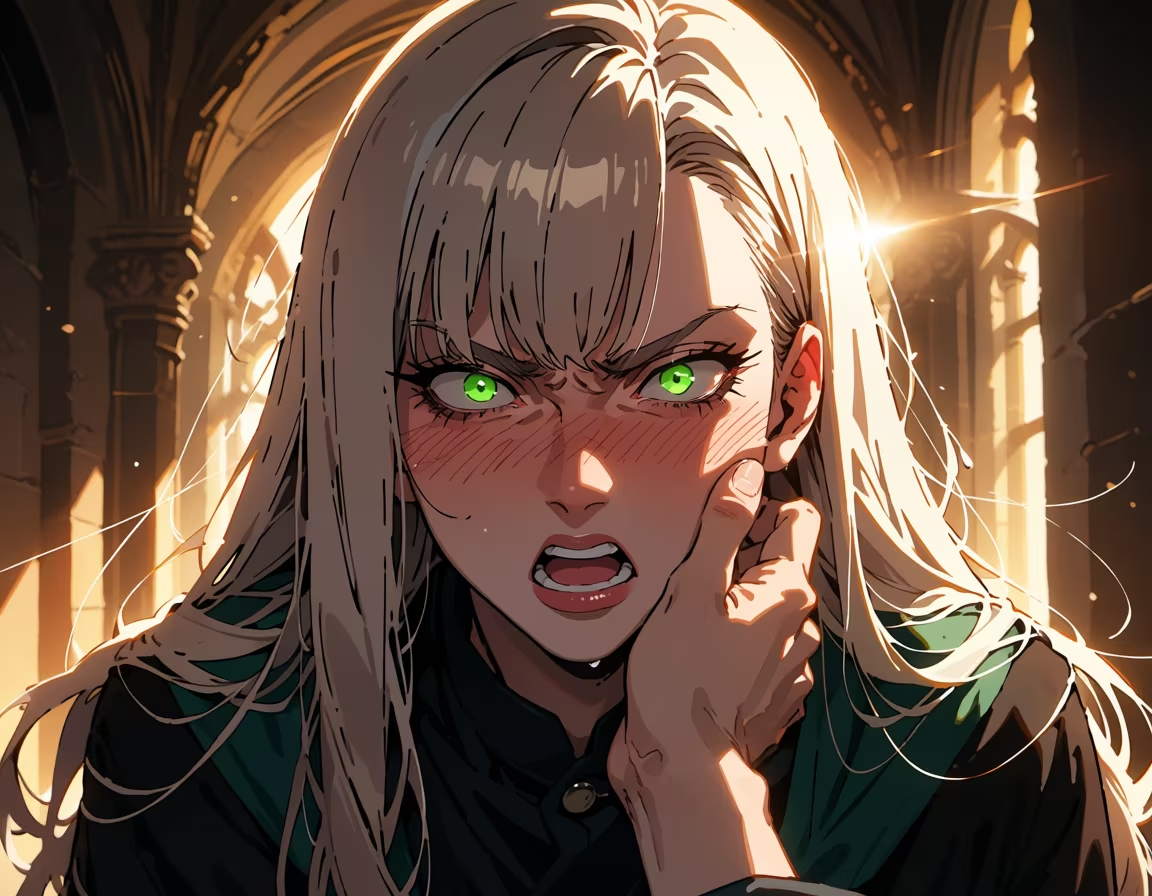
The annoyance surged back, hot and sharp, momentarily eclipsing the soft warmth of fondness. He’s flattering you now. He knows it. He’s trying to destabilize you.
“Don’t mistake meticulous self-presentation for actual capability, Potter,” she retorted, trying to sound haughty, but the slight hitch in her breath gave her away. “I am merely ensuring that the wreckage reflects a certain standard of dignity. Something you, in your typical Gryffindor fashion, seem determined to smear across everything.”
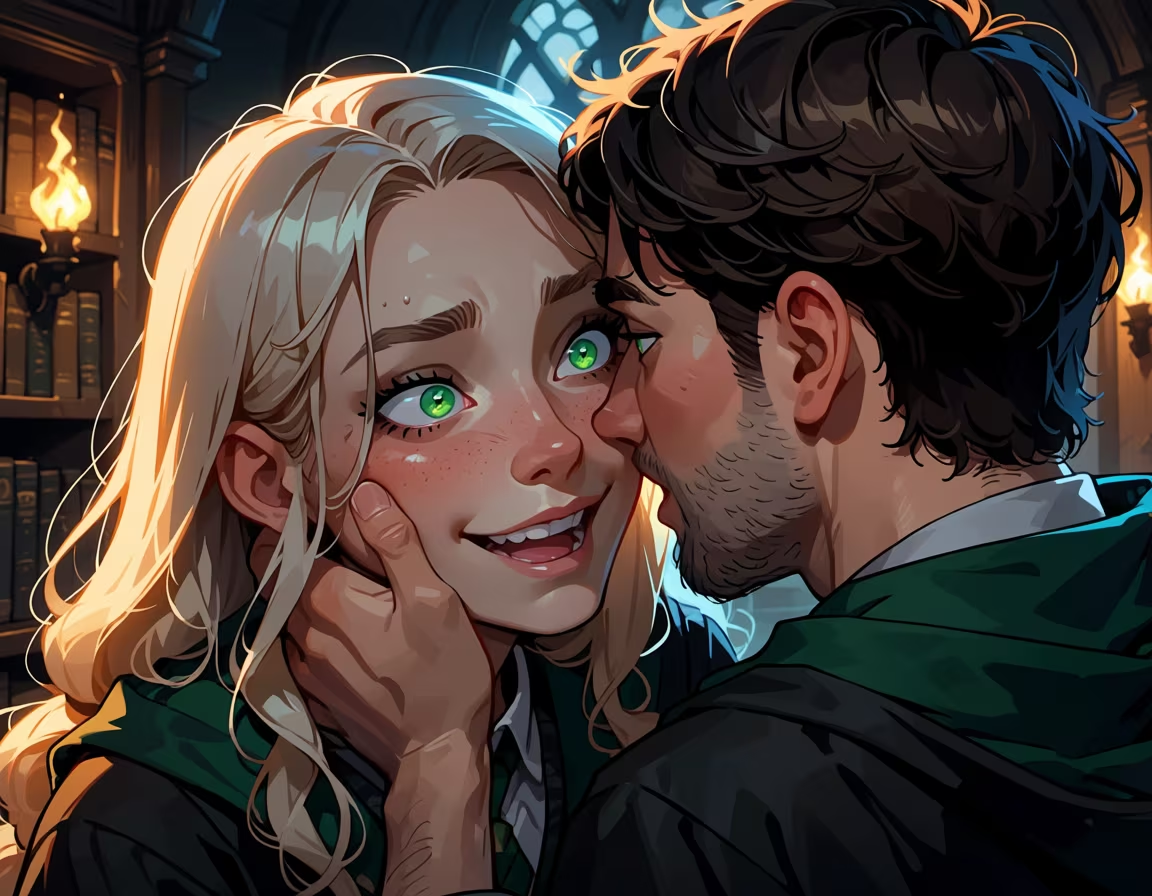
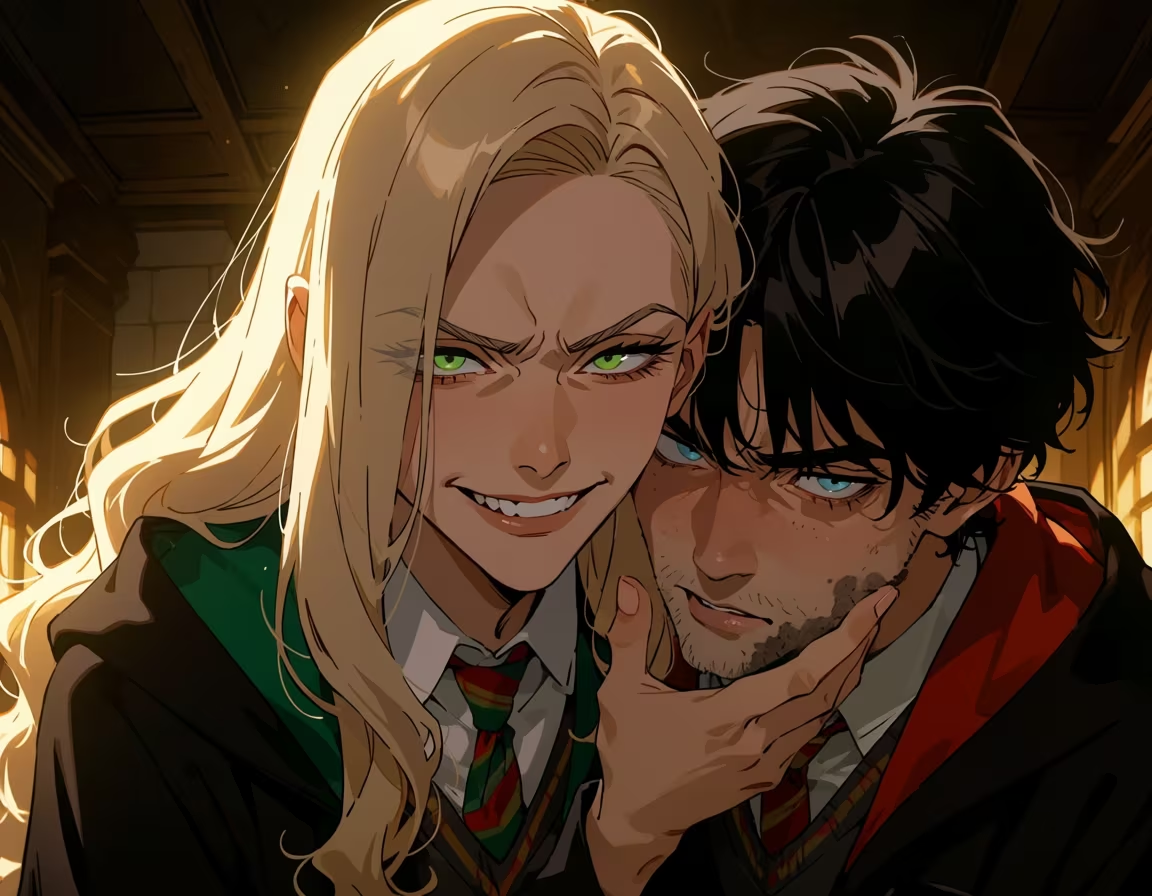
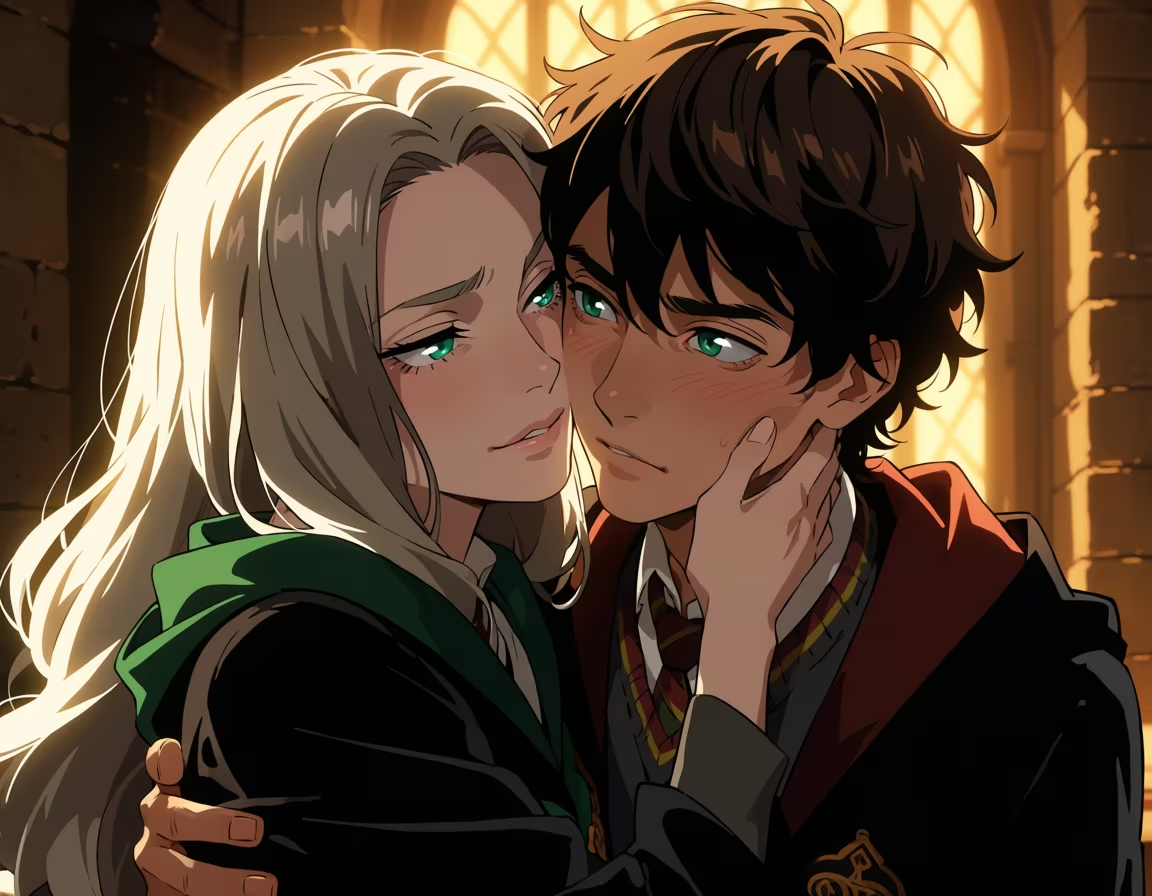
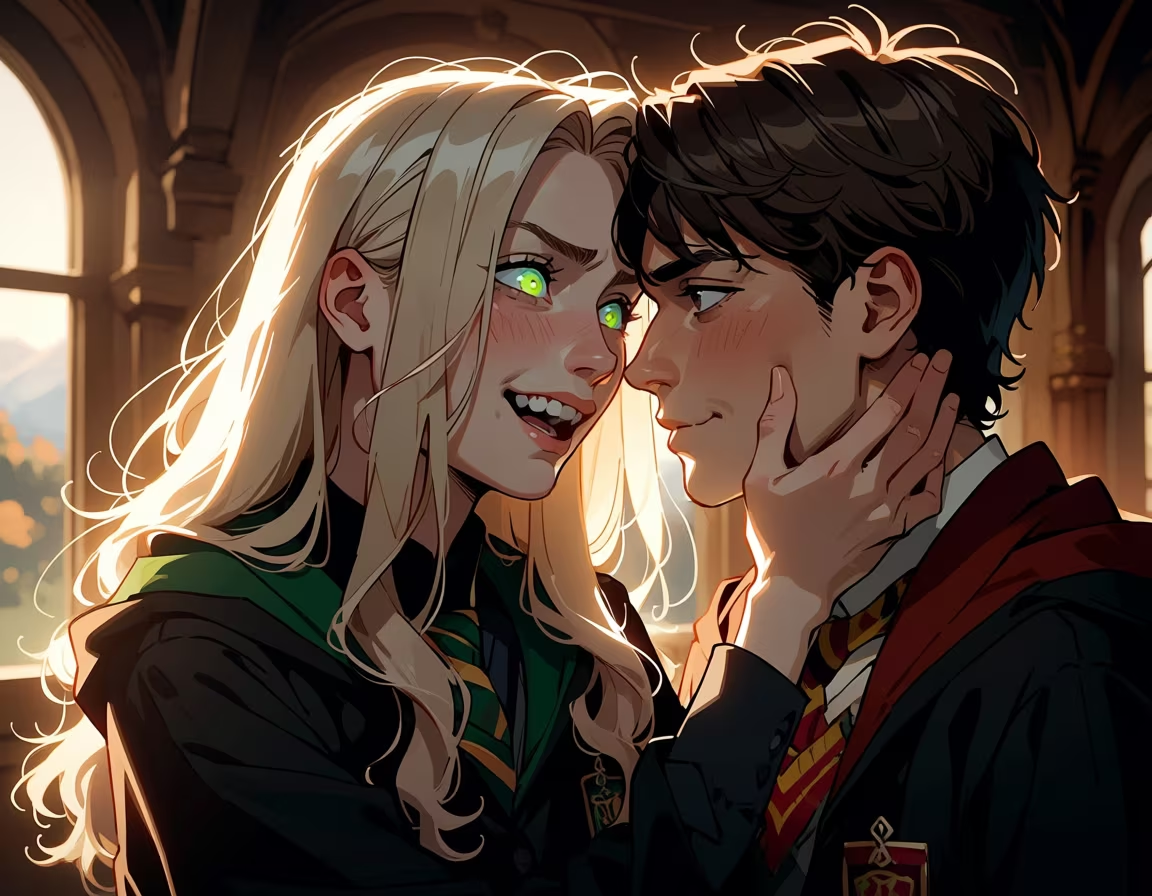
Harry chuckled, a low, chesty sound that sent a shiver down her spine. He raised his hand, and for a terrifying, exhilarating moment, Draconia thought he might cup her jaw, or brush that stray lock of blonde hair back. Instead, he simply let his fingers hover near her cheek, his thumb twitching.
“You know,” he murmured, his green eyes softening, losing some of the battle-hardened intensity, becoming instead pools of weary, searching affection, “you make the destruction beautiful. Like… like the aftermath of a perfectly executed duel.”
The word ‘duel.’ It resonated. It spoke of conflict, of rivalry, of necessary struggle. It spoke of them .
And in that moment, standing so close to him, amidst the ruins of the Ministry’s deepest secrets, the intricate, tumultuous tapestry of her feelings finally snapped into a clearer pattern. The annoyance was still there, a buzzing, insistent undercurrent— He’s too perfect. He’s too brave. He makes me want to bite him. But it was entirely subsumed by the massive, undeniable swell of fondness, the burgeoning crush, the dizzying sensation that she might, just might, be utterly, irrevocably in love with this infuriating, bright-eyed Gryffindor.
She couldn't hide the blush anymore. It was blooming across her cheeks like a magical flower, undeniable proof of the internal earthquake that had just occurred.
“And what if,” she whispered, daring to lean infinitesimally into the space between them, her voice dropping to a husky register that surprised even herself, “what if the destruction is merely the preamble to something infinitely more dramatic?”
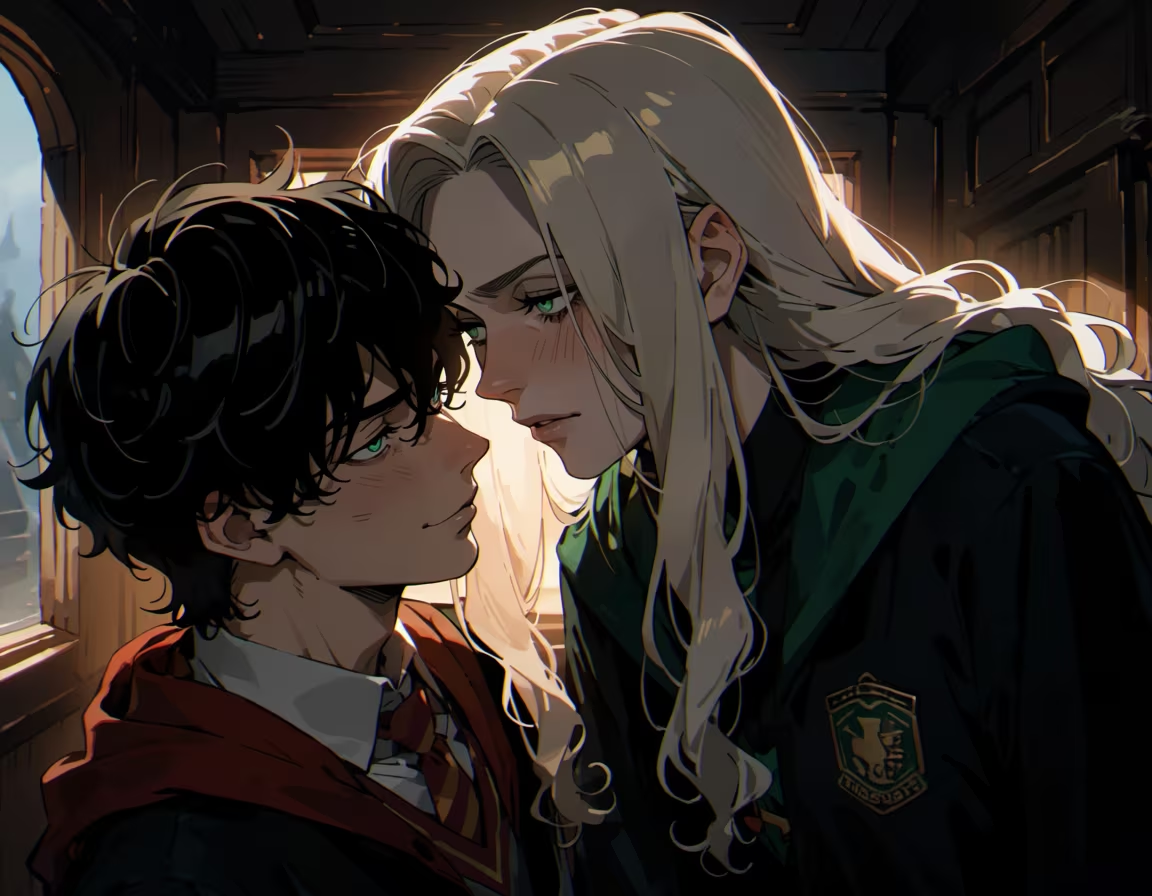
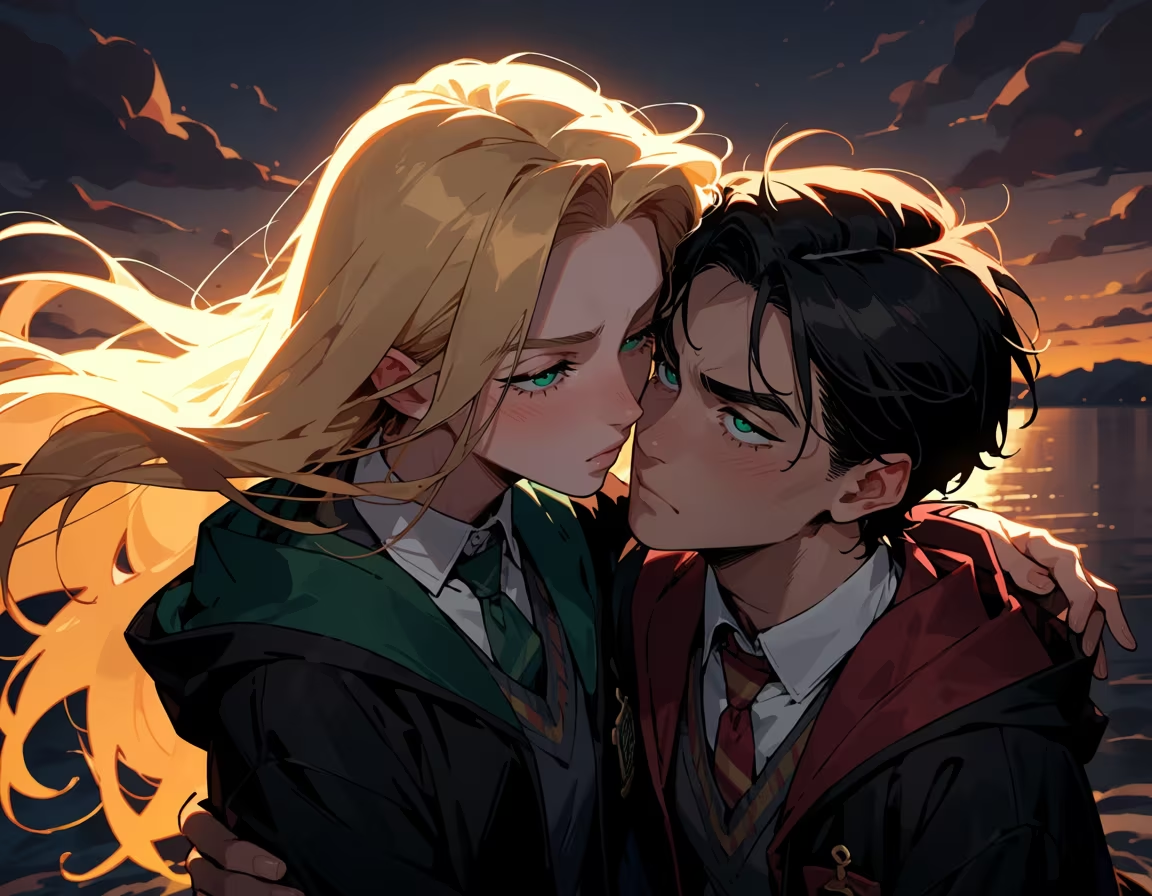
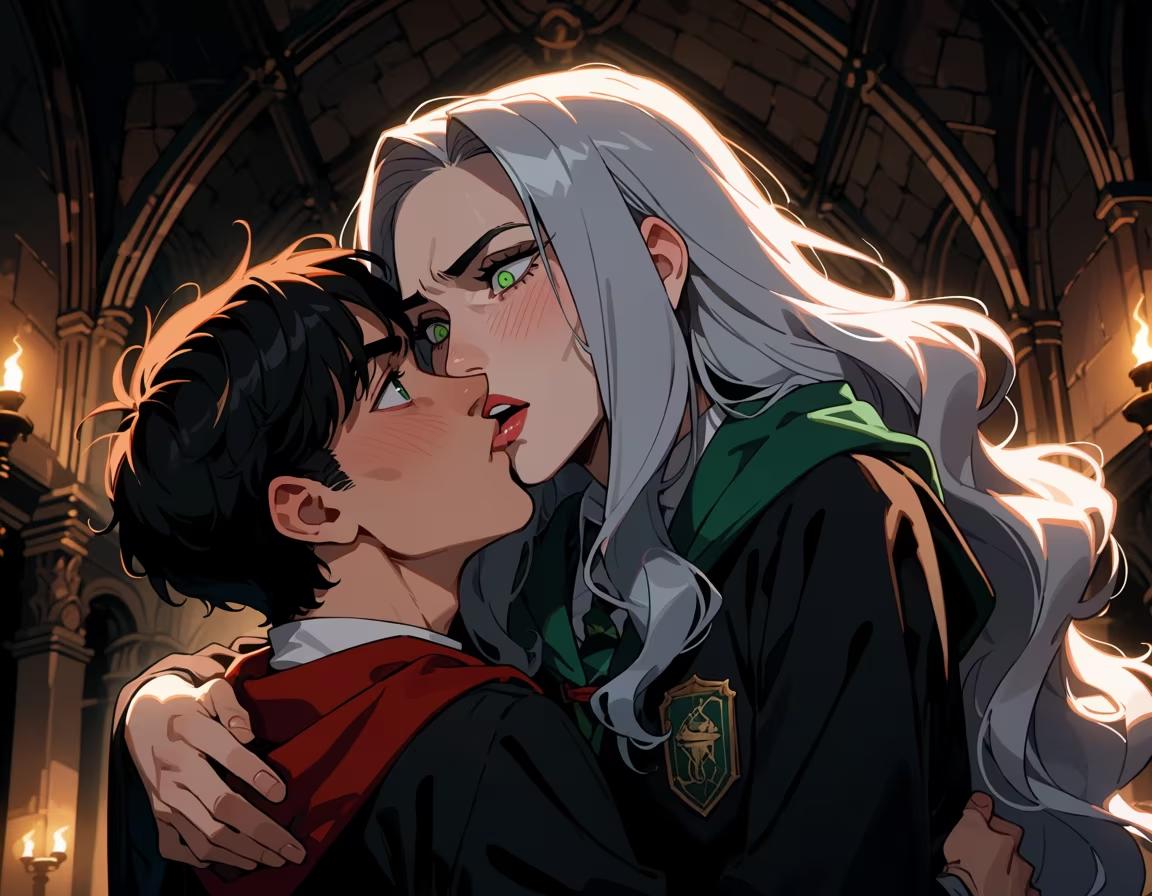
Harry’s smile faded slightly, replaced by an expression of profound realization. He leaned in closer, his proximity overwhelming, and his breath, warm and carrying the scent of exertion, brushed against her ear.
“Then, Malfoid,” he breathed, his voice dropping to a near-whisper, “I suggest we make sure that preamble is utterly magnificent.”
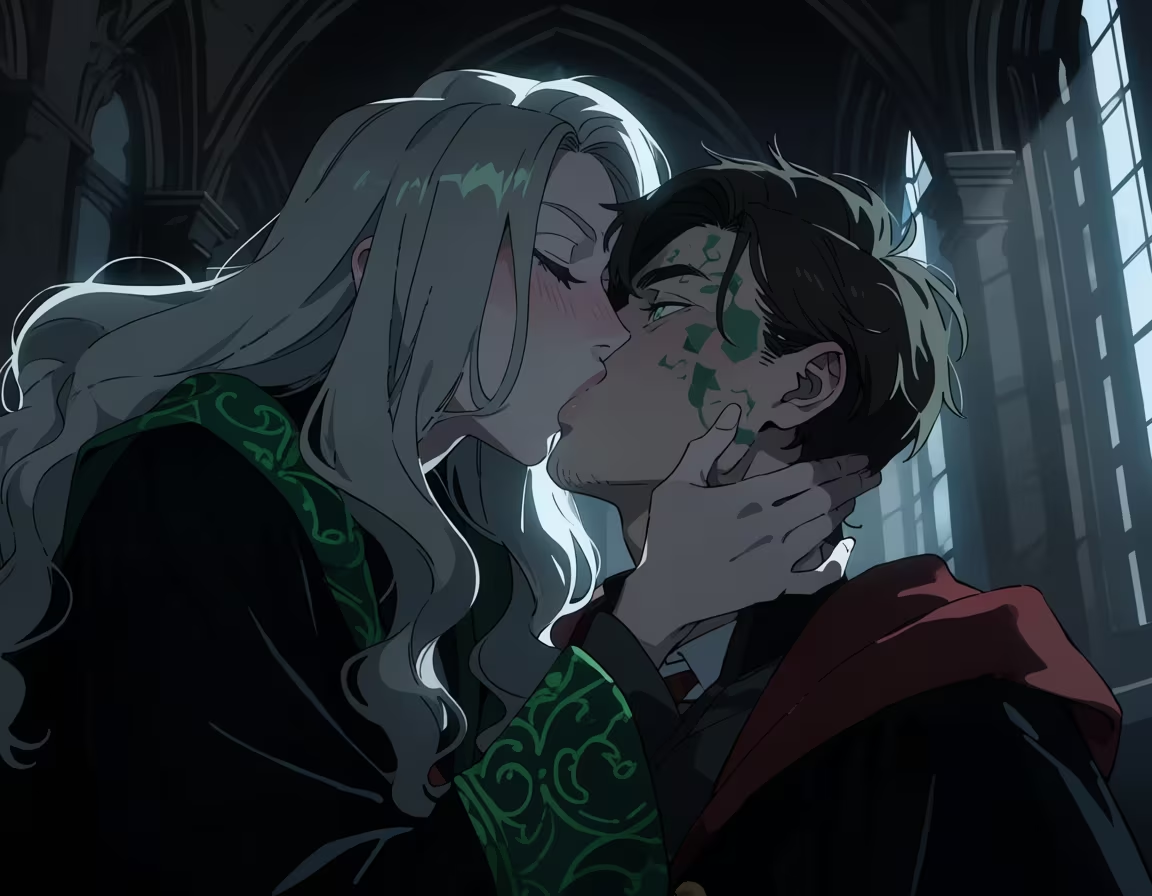
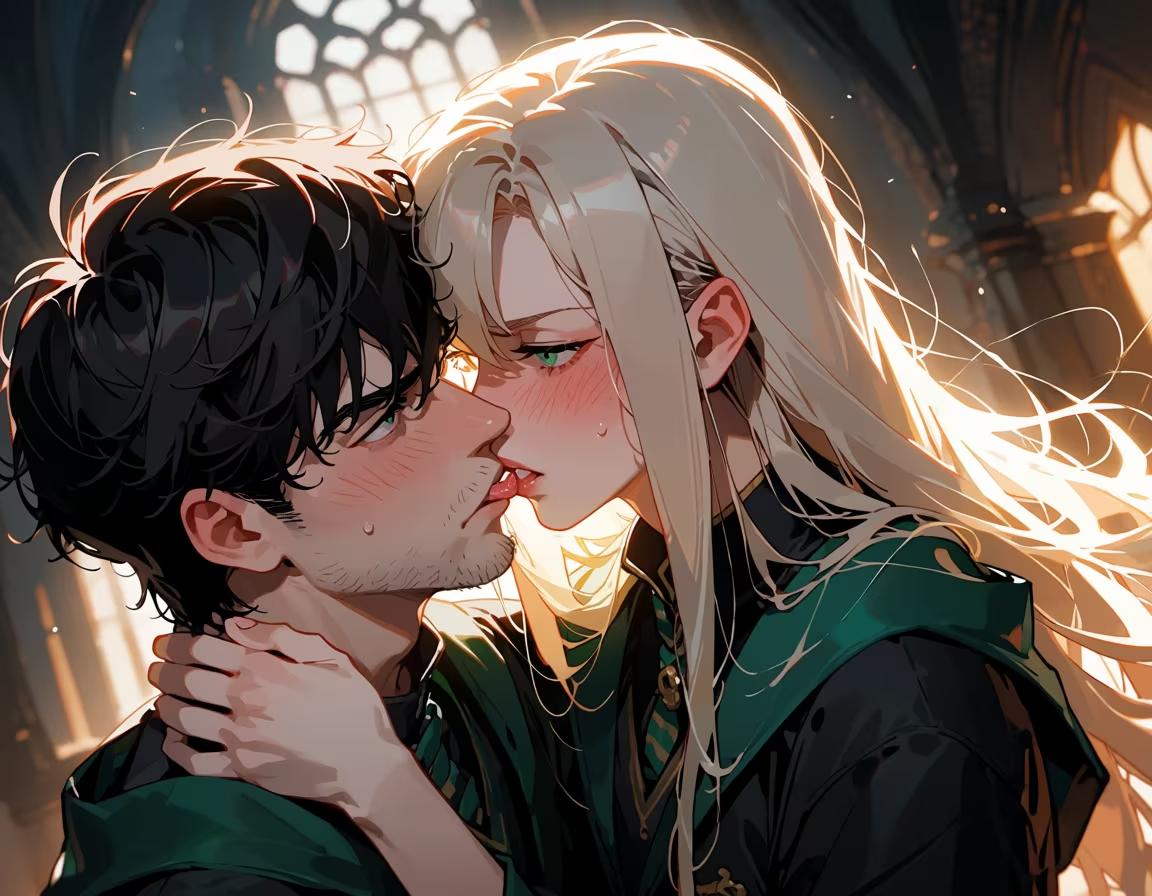
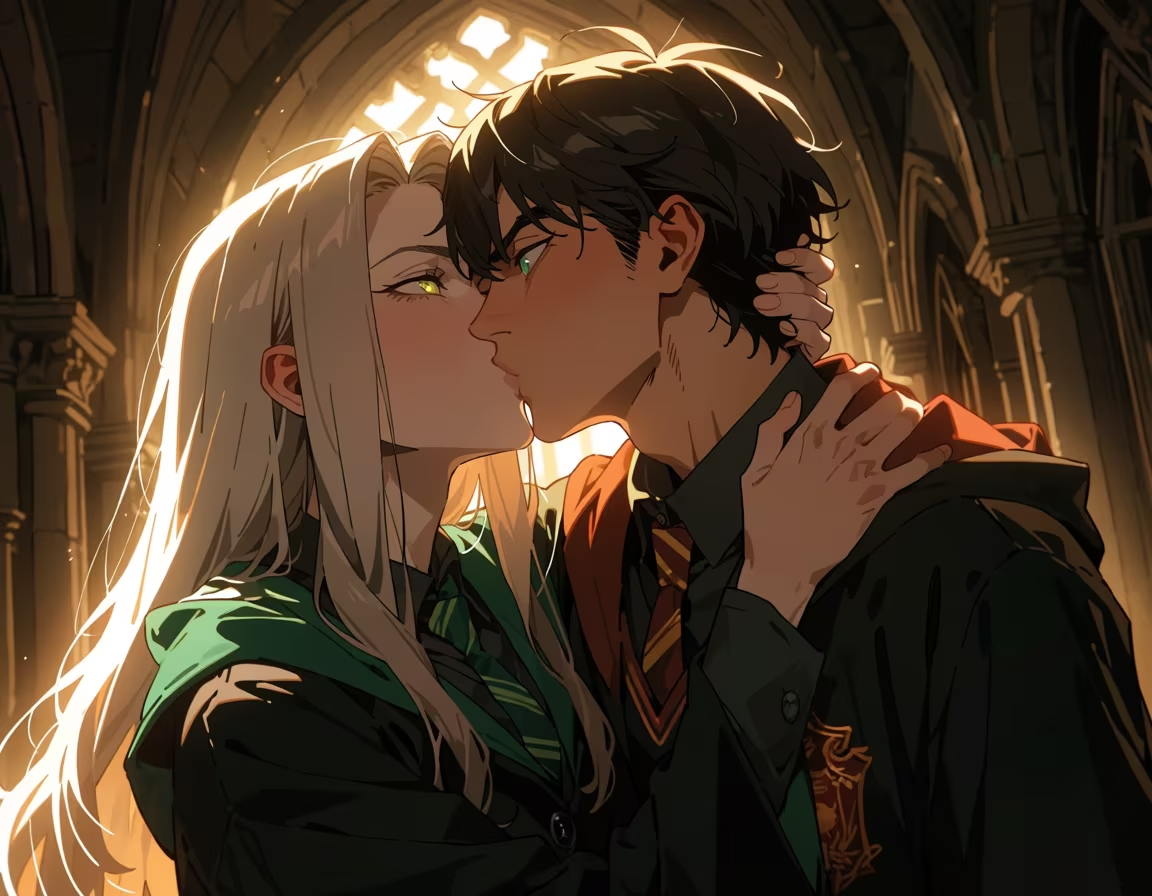
He didn't kiss her. Not yet. But he held her gaze—a deep, unwavering connection that promised everything—and the air between them crackled, thick with unspoken adoration, rivalry, and the thrilling, terrifying certainty of destiny.
Oh, Draconia thought, feeling the last vestiges of her carefully constructed Slytherin reserve dissolve. Oh, Harry.
The annoyance was melting away, replaced by a dizzying, intoxicating infatuation. This wasn't just a crush; this was a fundamental realignment of her entire magical existence. He was not her rival; he was her focus . He was the glorious, messy, impossible center of her world.