| Home | The Lives of Velnin | Illustrated Fiction | Malfoid Art & Fiction | Book Blurbs | Contact |
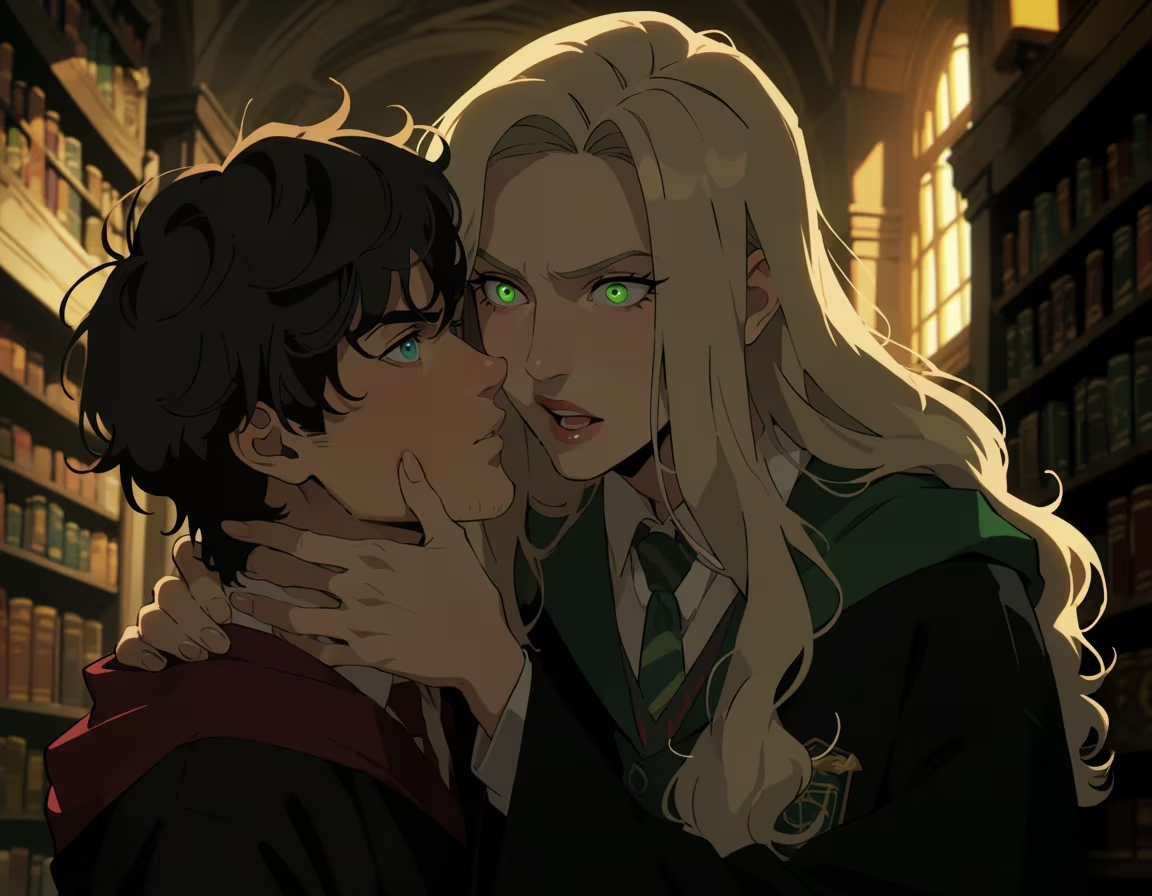
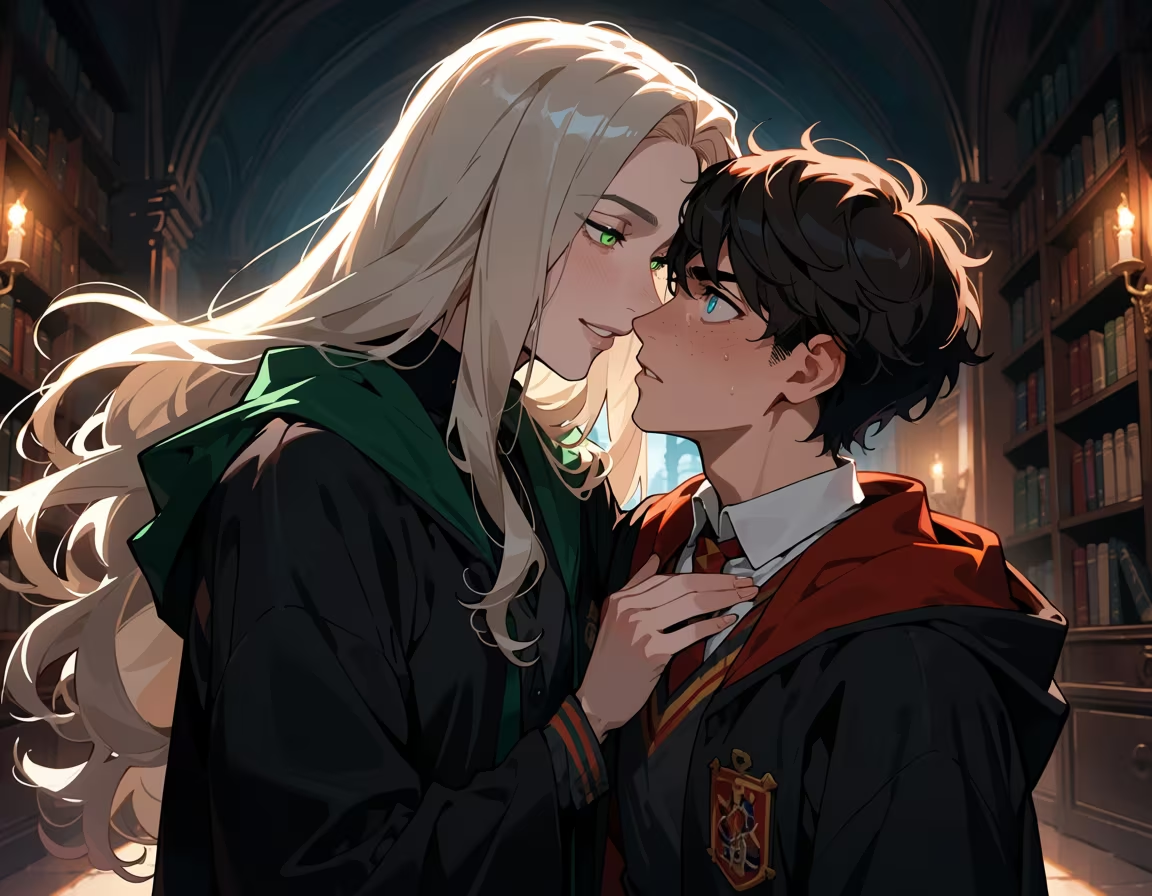
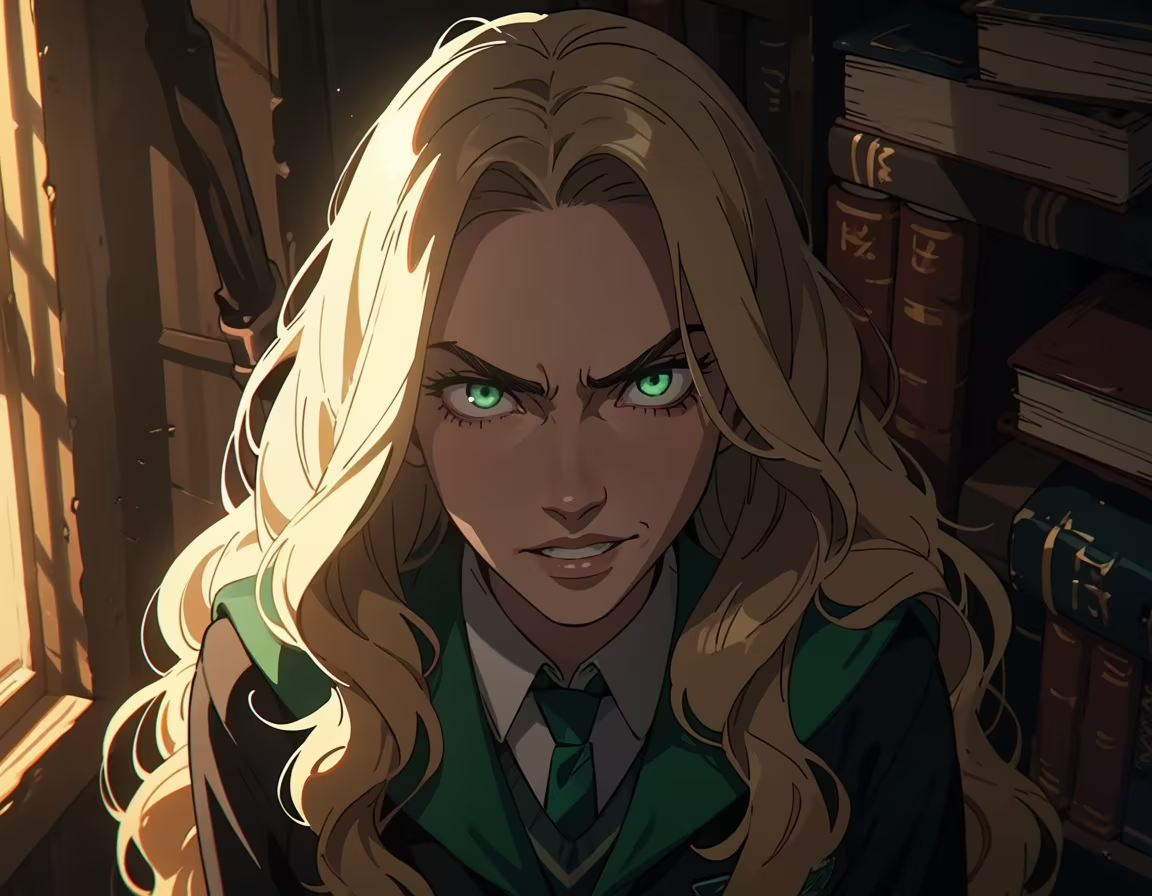
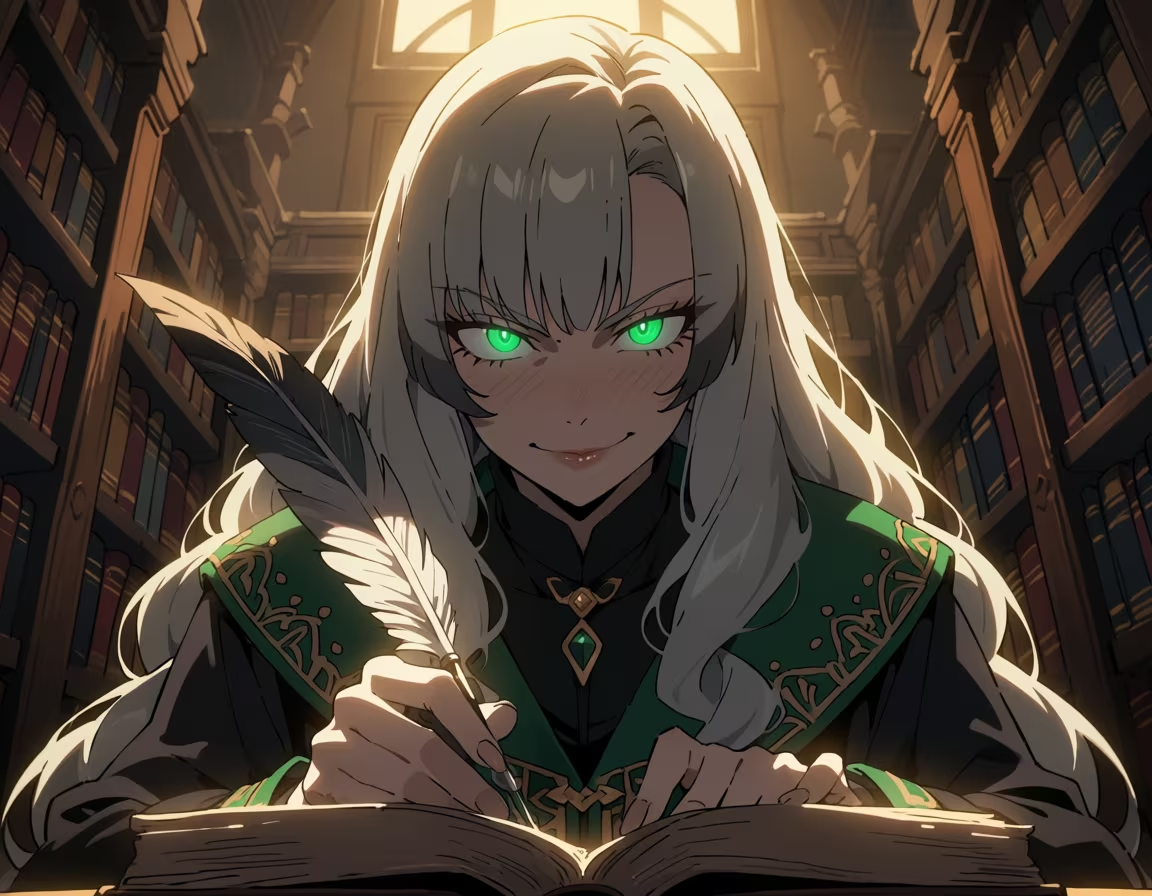
The scent of aged parchment, dust motes dancing in the shafts of weak, autumnal sunlight, and the faint, metallic tang of spilled ink—this was the perfume of my favoured sanctuary: the Restricted Section of the Hogwarts Library. It was here, amidst the towering, moss-kissed spines of forbidden lore and obscure charms, that the pretense of rivalry often dissolved, allowing the raw, frustrating, utterly compelling truth of my feelings for Harry Potter to bubble up like a poorly controlled cauldron.
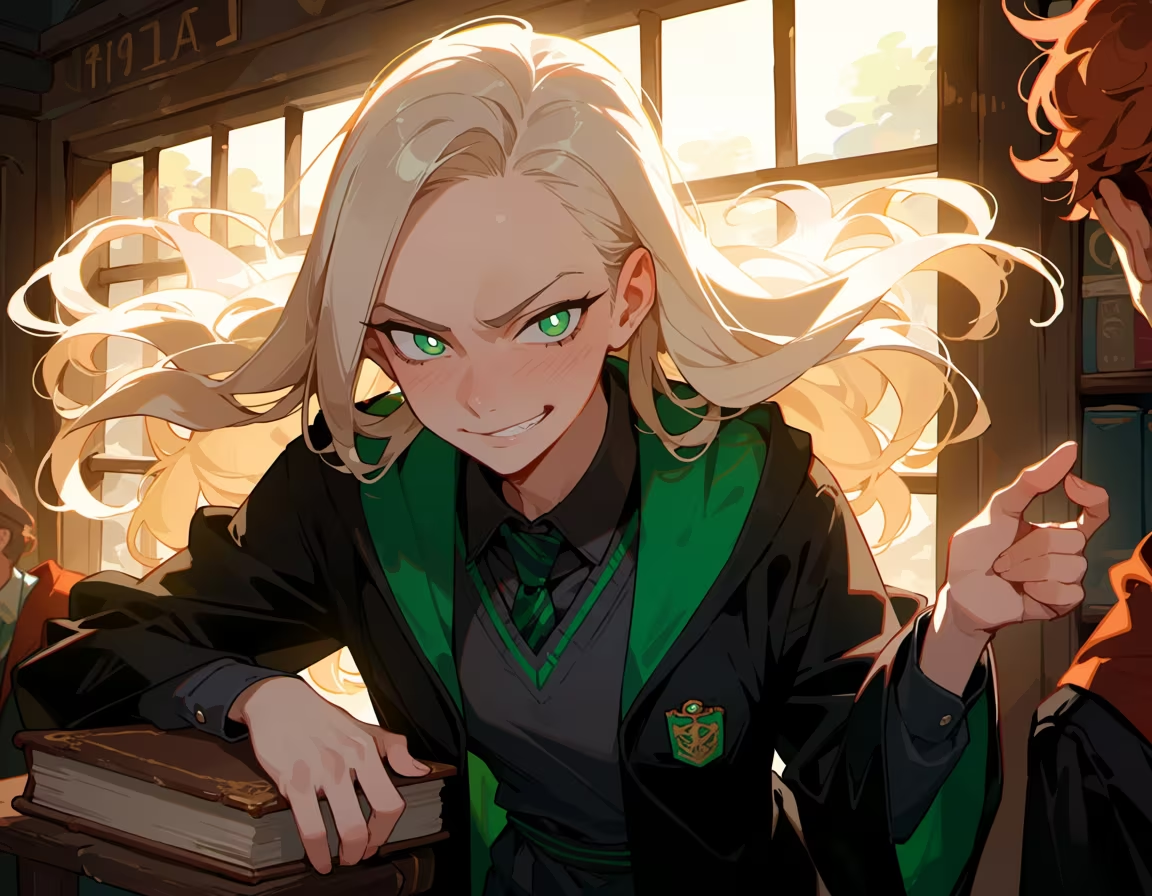
I was seated at a heavy oak table, ostensibly reviewing Transfiguration essays, though in reality, my attention had been hopelessly snagged by the book before me—a treatise on the finer points of inherited Dark Magic, penned by an author whose name I found suitably pretentious. I had been frowning at a particularly dense paragraph concerning the Malfoy lineage’s connection to pure-blood ambition, when the shadow fell over my page.
It was him.
Harry Potter.
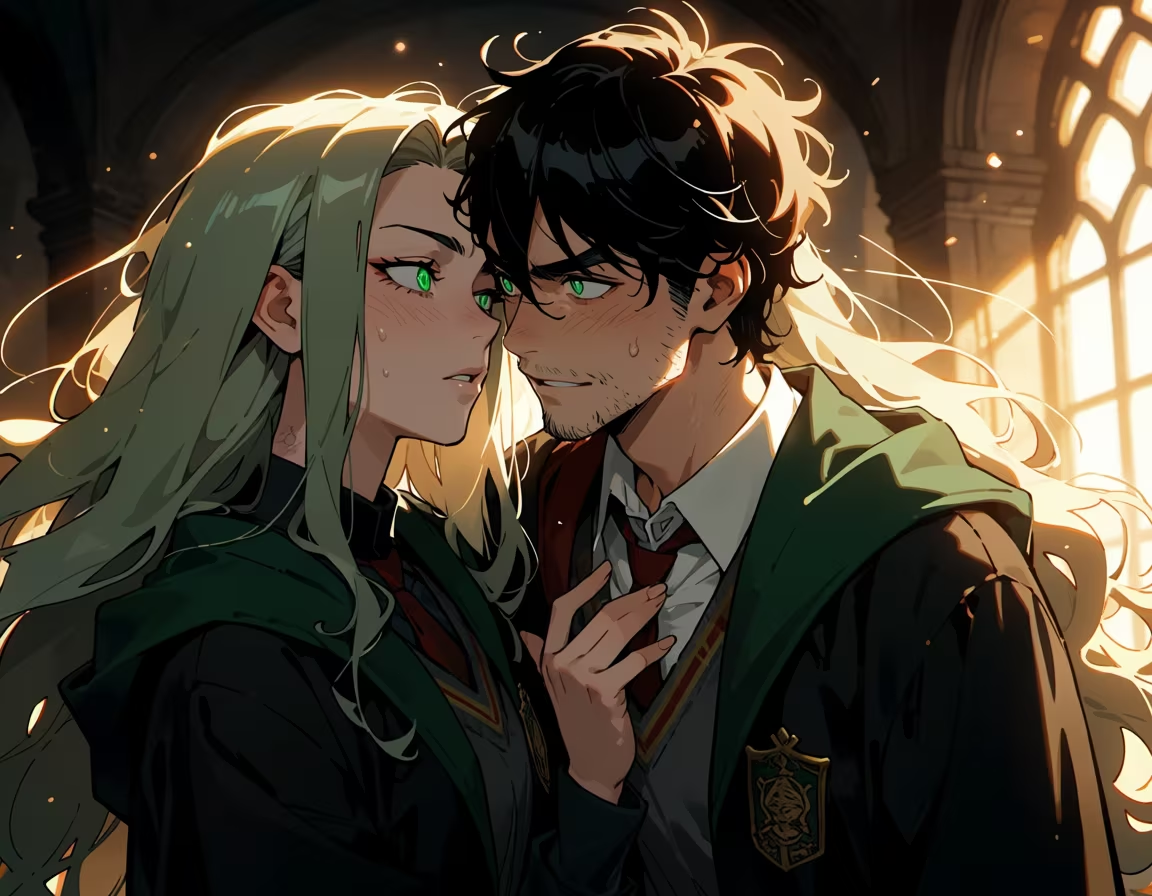
Even in the muted tones of the library—the browns, the deep oxbloods, the shadowy greens—he managed to look incandescently bright. His hair, a chaotic halo of dark, unruly curls, seemed to capture and magnify the meager light, and his emerald eyes, so startlingly vibrant that they always seemed to hold an almost painful degree of earnestness, were fixed entirely upon my face.
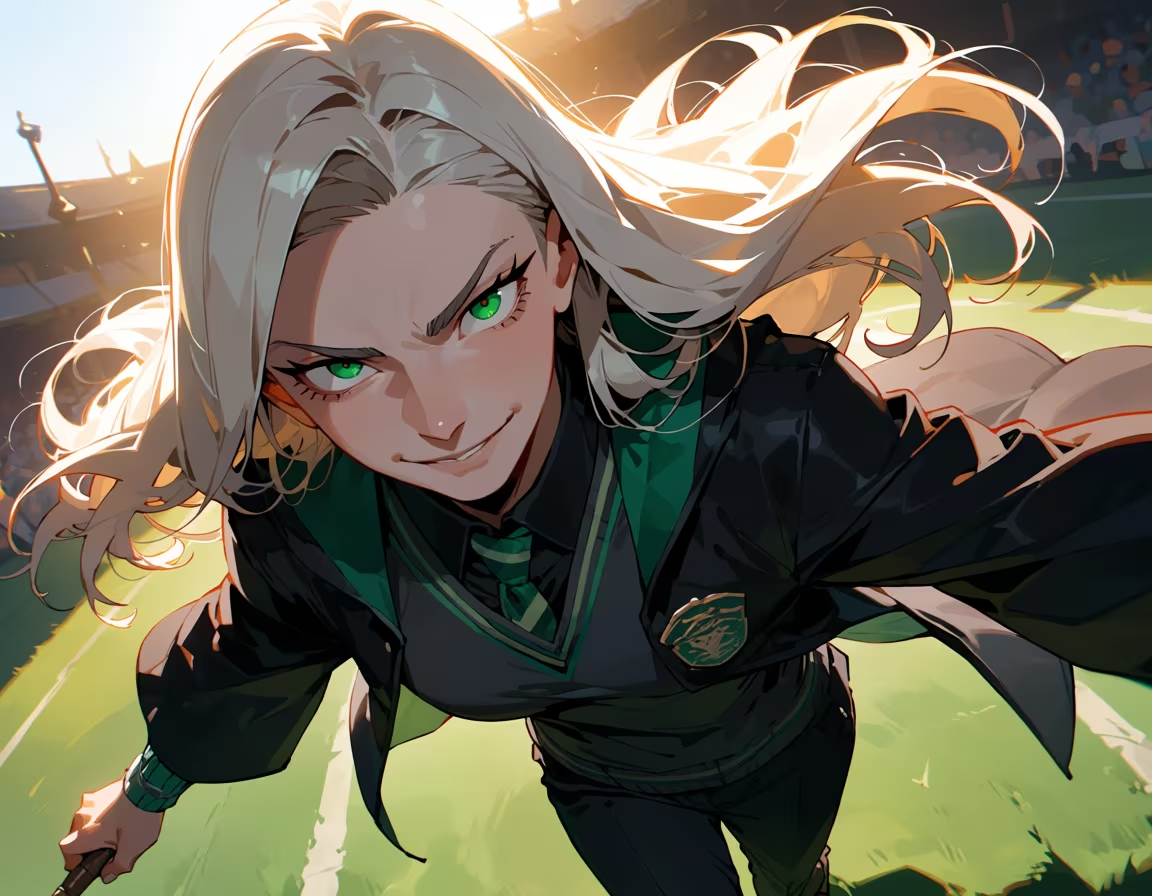
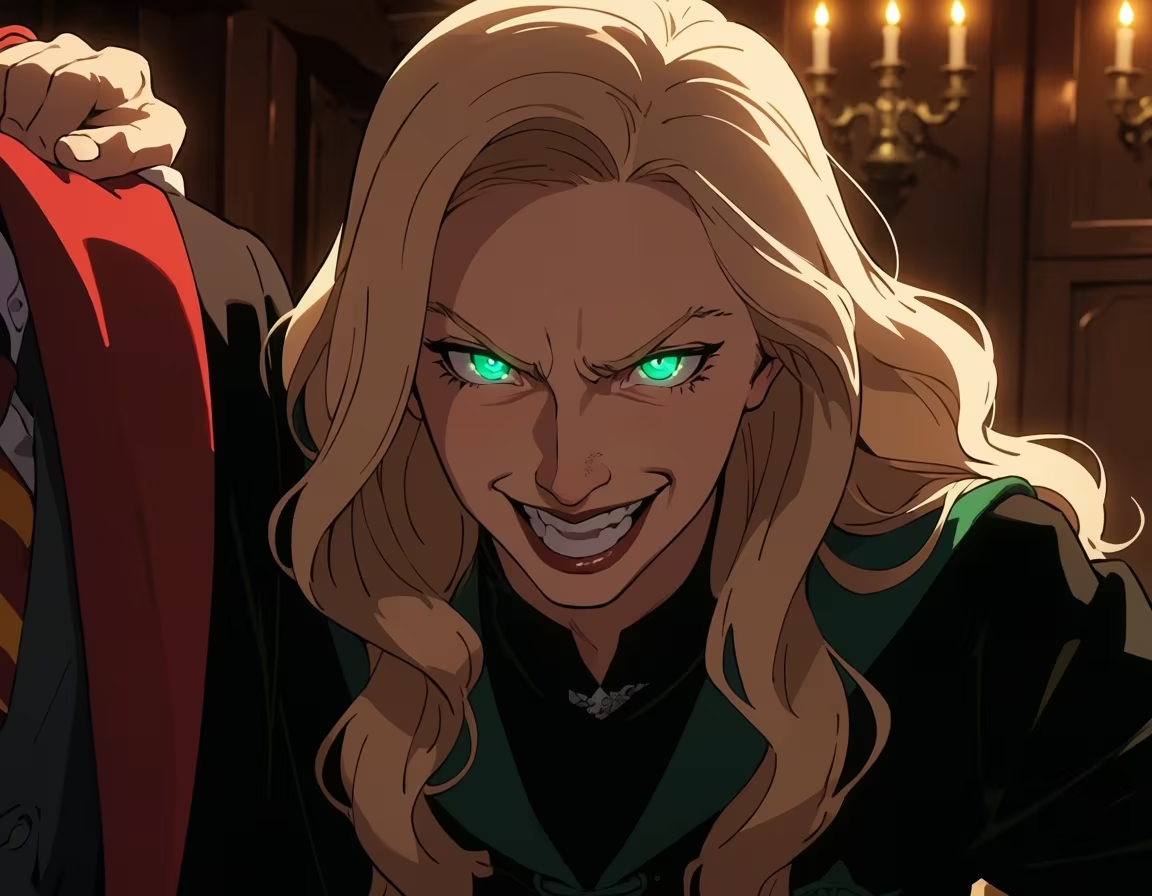
He wore his Gryffindor robes—the deep, proud crimson—with an air of casual defiance that always grated on my nerves. It was the same air he adopted when he thought he was being particularly morally superior, or when he’d managed to win a particularly bruising game of Quidditch against my admittedly excellent Seeker skills.
“Still wrestling with Professor Slughorn’s metaphysics?” he murmured, his voice dropping to that low, resonant register that made the tiny hairs on my arms stand up, regardless of how many times I’d told myself I hated his voice.
I did not look up immediately. To acknowledge him was to admit defeat, and admitting defeat to Harry Potter was a deeply embarrassing feat.
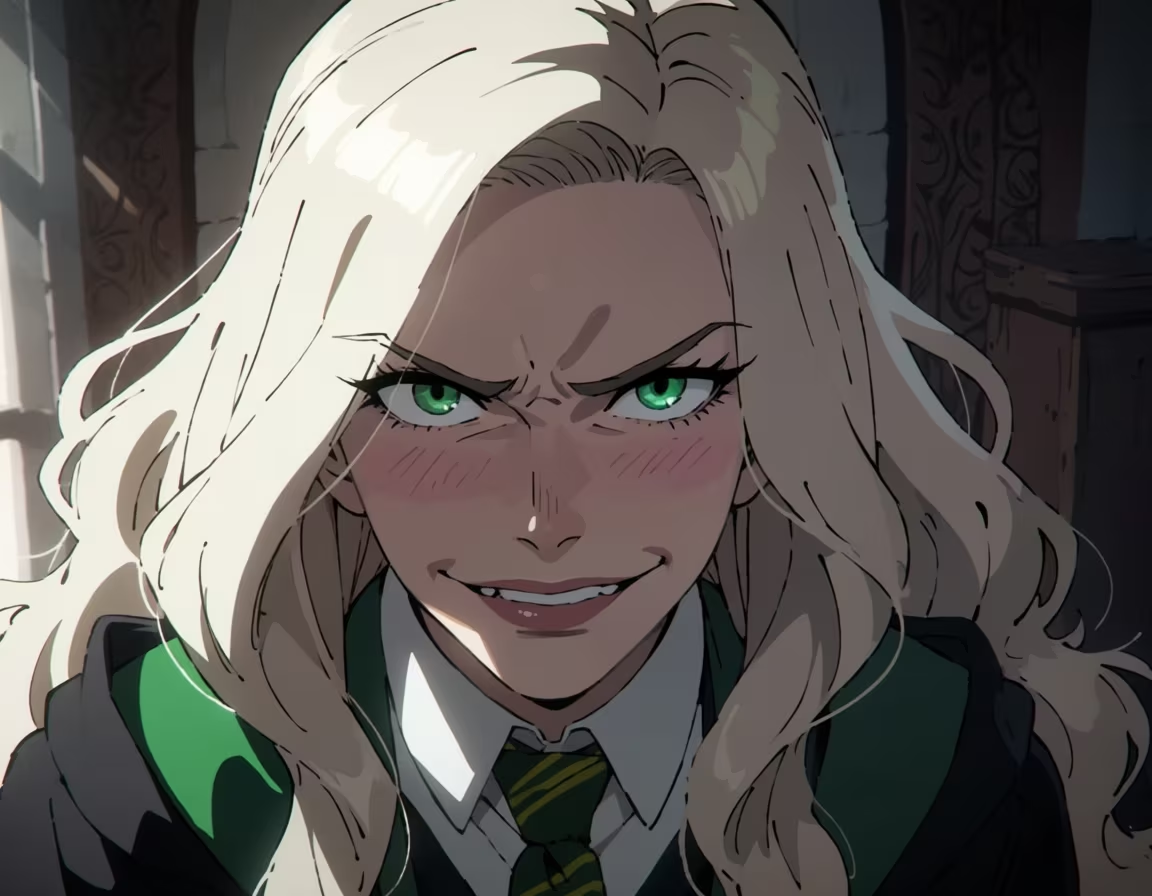
“Still trying to ascertain why Gryffindor believes that brute force is a viable substitute for intellectual rigour,” I replied, keeping my tone precisely calibrated—icy, dismissive, and utterly barbed. “It seems your house values passion over precision, Potter.”
He chuckled, a warm, slightly uneven sound that felt far too pleasant for a man whose primary mode of interaction with me was either a scathing retort or a clumsy, well-meaning attempt at a compliment.
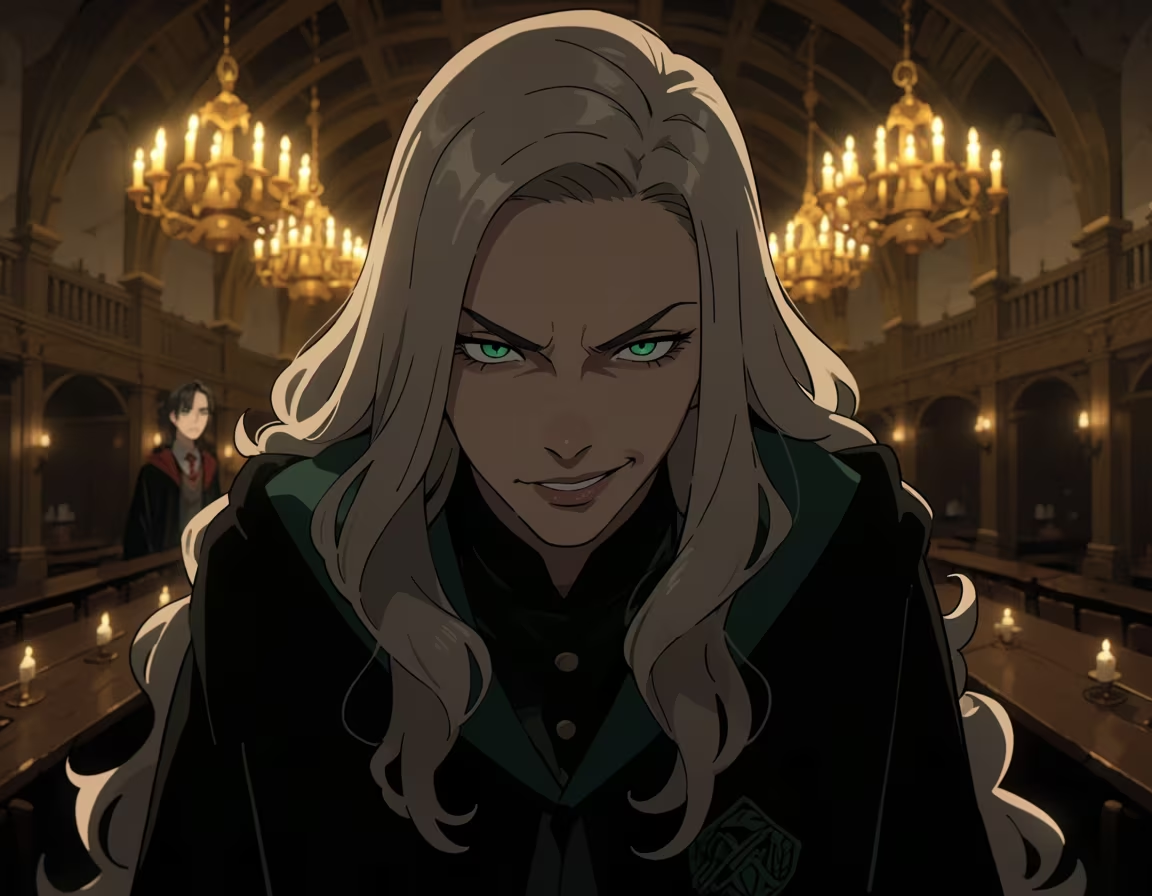
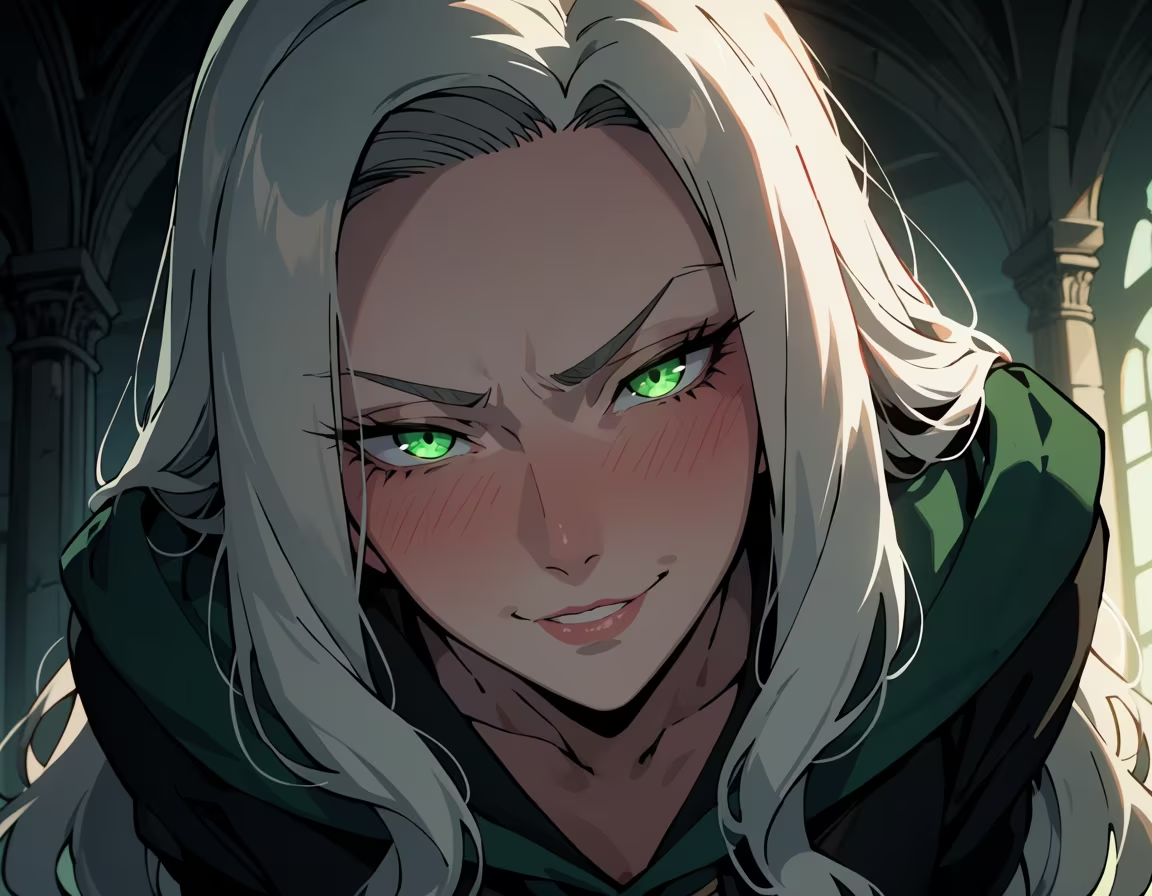
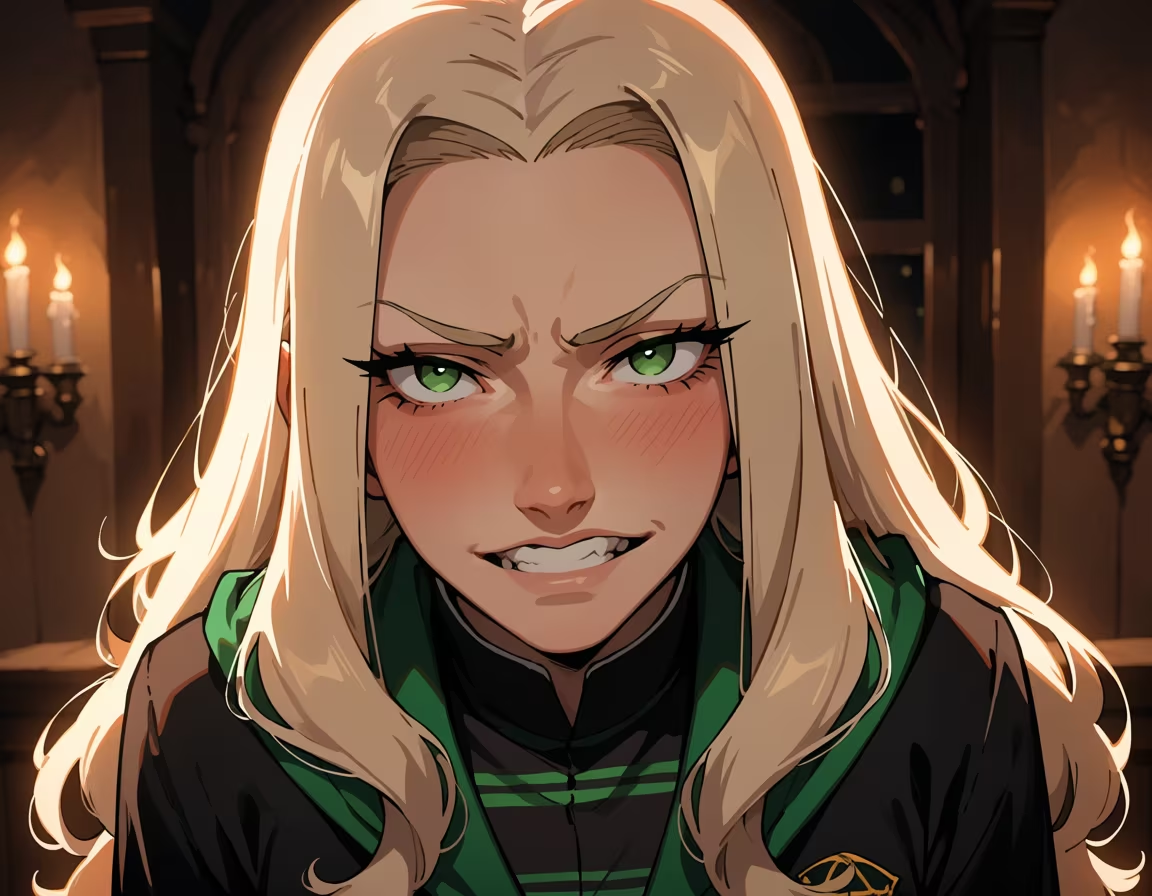
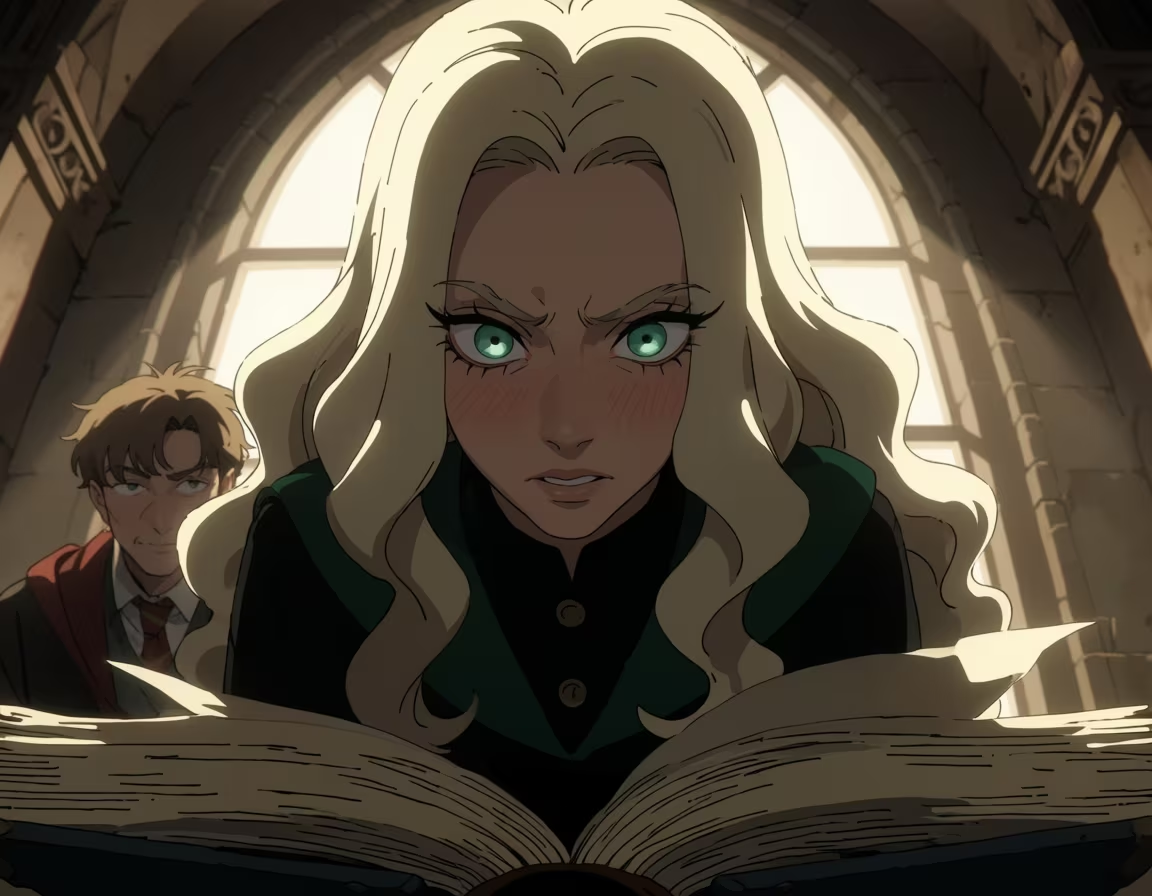
Finally, I lifted my head. My own green eyes, framed by the heavy sweep of my long, pale blond hair, met his. My expression was carefully curated: a slight arch of the eyebrow, a faint tightening at the corner of my mouth that suggested profound disapproval, and the unmistakable aura of ‘You are irritating me, but you are also entirely fascinating.’
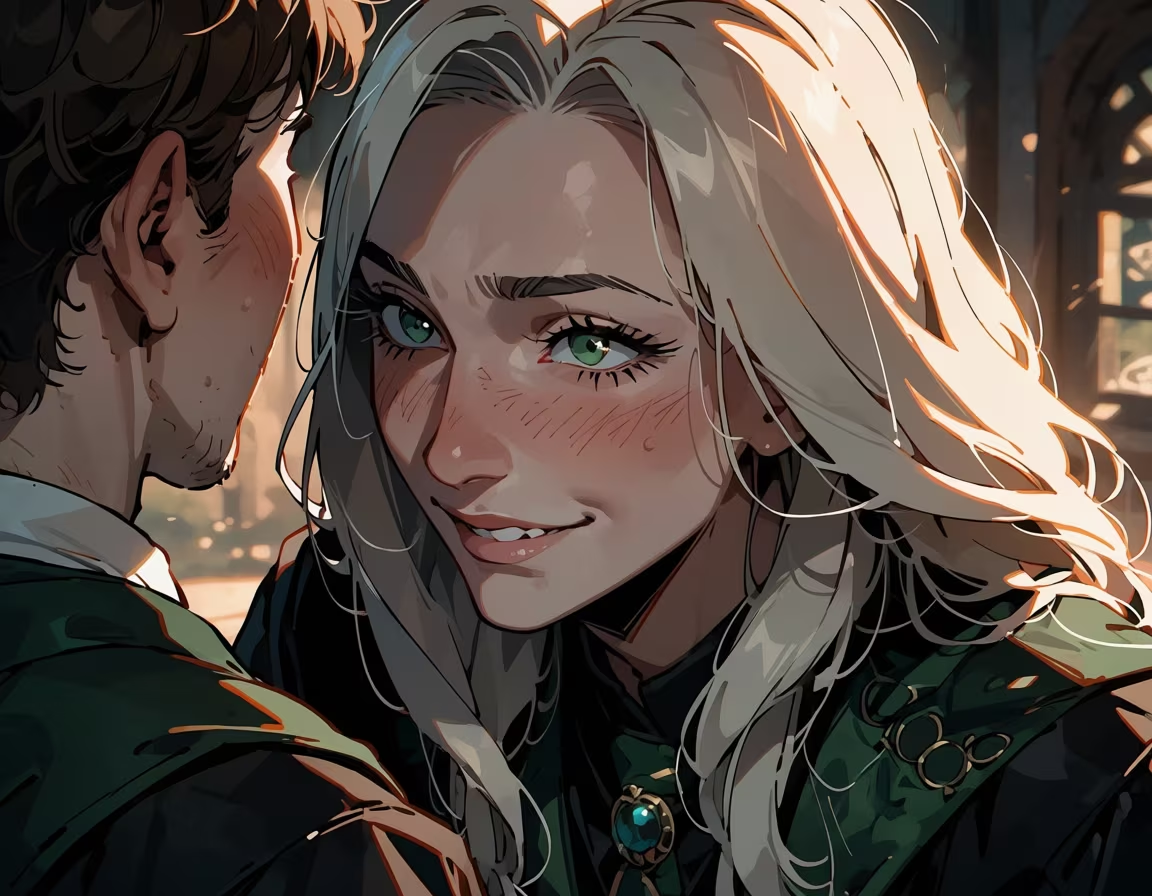
“Precision is overrated when one has enough raw nerve,” he countered, leaning in just slightly, closing the distance until the warmth radiating from him—a mixture of old parchment and something inherently, stubbornly him —was palpable. “You know, the ancient wisdom of the Malfoys. All elegant pronouncements and inherited superiority.”
“And the Gryffindor insistence that they can simply bludgeon their way to the top,” I countered, pushing my chair back fractionally, a purely defensive maneuver. “It’s terribly unrefined. A lack of subtlety.”
He didn’t take the bait to argue further. Instead, he merely held my gaze, those beautiful green eyes seeming to look past the facade of the Slytherin heiress and directly into the churning mess of nerves and grudging fascination beneath.
And that was when the shift began.
It wasn’t a sudden, seismic event; it was a slow, insidious erosion of my carefully constructed disdain.
When we were younger, my reaction was pure annoyance . He was the golden boy, the relentless sunshine that dared to shine directly onto my preferred patch of moody, superior shade. His constant, noisy presence was a violation of the serene dignity of the Slytherin House.
But lately—since the war had become this terribly real, since the threat of Voldemort felt less like a distant thunderclap and more like a persistent, venomous drip beneath the flagstones—that annoyance had curdled into something far more complex. It was a sharp, prickly awareness that made my cheeks feel faintly flushed even when I was deliberately trying to look haughty.
It was intrigue , certainly. I was intrigued by his sheer stubbornness. How could someone so ostensibly good, so utterly predictable in his righteousness, possess such an infinite wellspring of resilience?
The current feeling—the Admiration/Dislike hybrid—was a delicious torment. I disliked the way he was so fundamentally good . It was terribly cliché, terribly Muggle-adjacent, terribly Gryffindor . It felt so gloriously, infuriatingly unsly. But I admired it. I admired the fierce loyalty he held for his friends, the quiet dignity with which he accepted the scars of his destiny, and the unwavering, incandescent belief in the possibility of light, even when the shadows were swallowing the world whole.
He was too perfect. And perfection, to a Slytherin raised on the exquisite nuances of calculated imperfection, is a magnificent challenge.
He straightened up slowly, his eyes never leaving mine. The silence stretched, weighted with unspoken words, the weight of a hundred past insults and shared secrets that neither of us had dared to acknowledge aloud.
“You see the beauty in the conflict, Don,” he murmured, using the clipped, affectionate nickname that always made my stomach execute a small, traitorous flip. “You see the elegance in the push and pull. You appreciate the necessary friction.”
Friction. Yes. That was it. We were two opposing forces, a beautifully violent chemical reaction. He was the unstoppable force of destiny, and I was the meticulously calibrated, elegantly sharp object designed to push back against him.
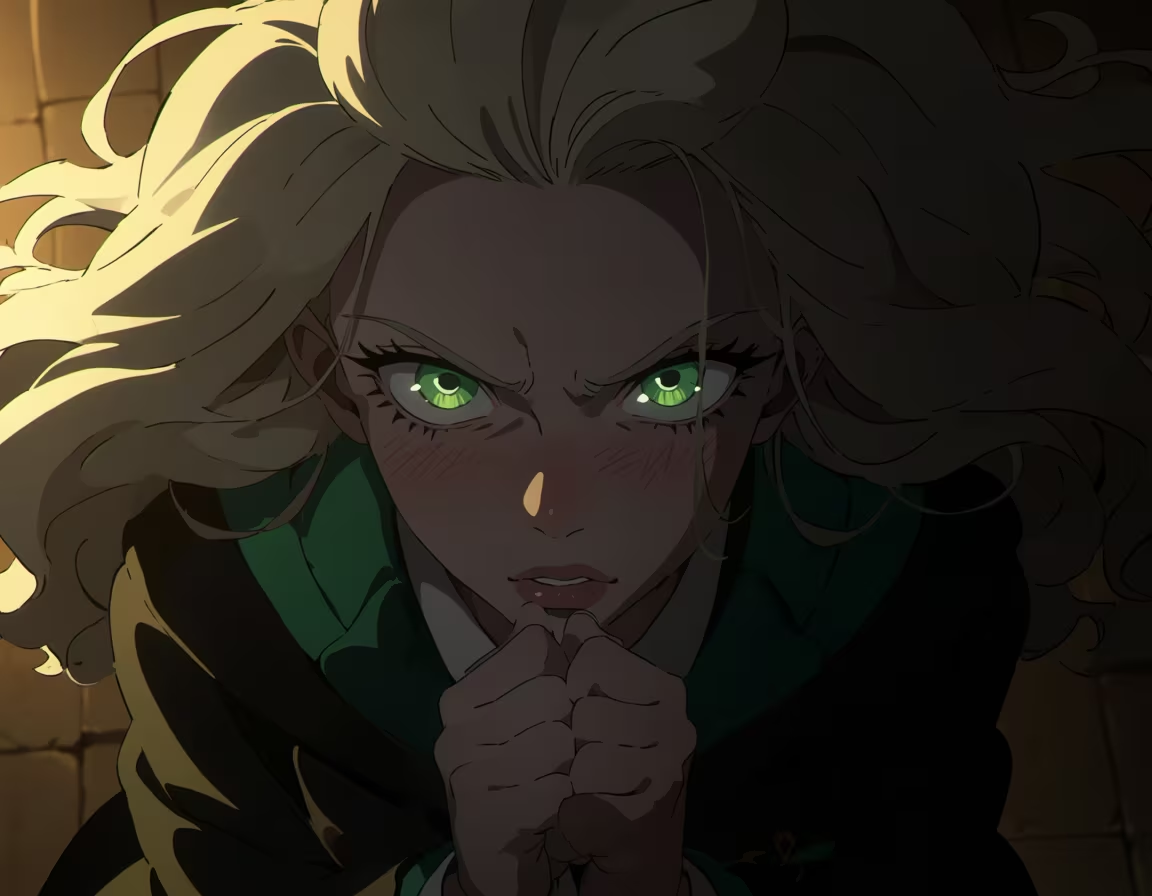
My carefully maintained composure began to fracture. My jaw tightened, but instead of delivering the expected, withering retort—something about how 'friction leads to unnecessary wear and tear'—I found myself merely breathing, observing the subtle shift in his expression. He looked genuinely pleased by my momentary lapse, a small, private victory.
“And you, Potter,” I began, my voice softer now, losing some of its metallic edge, “you embrace the chaos. You rush headlong into the fire, believing that the sheer volume of your heroism will somehow prevent the burn.”
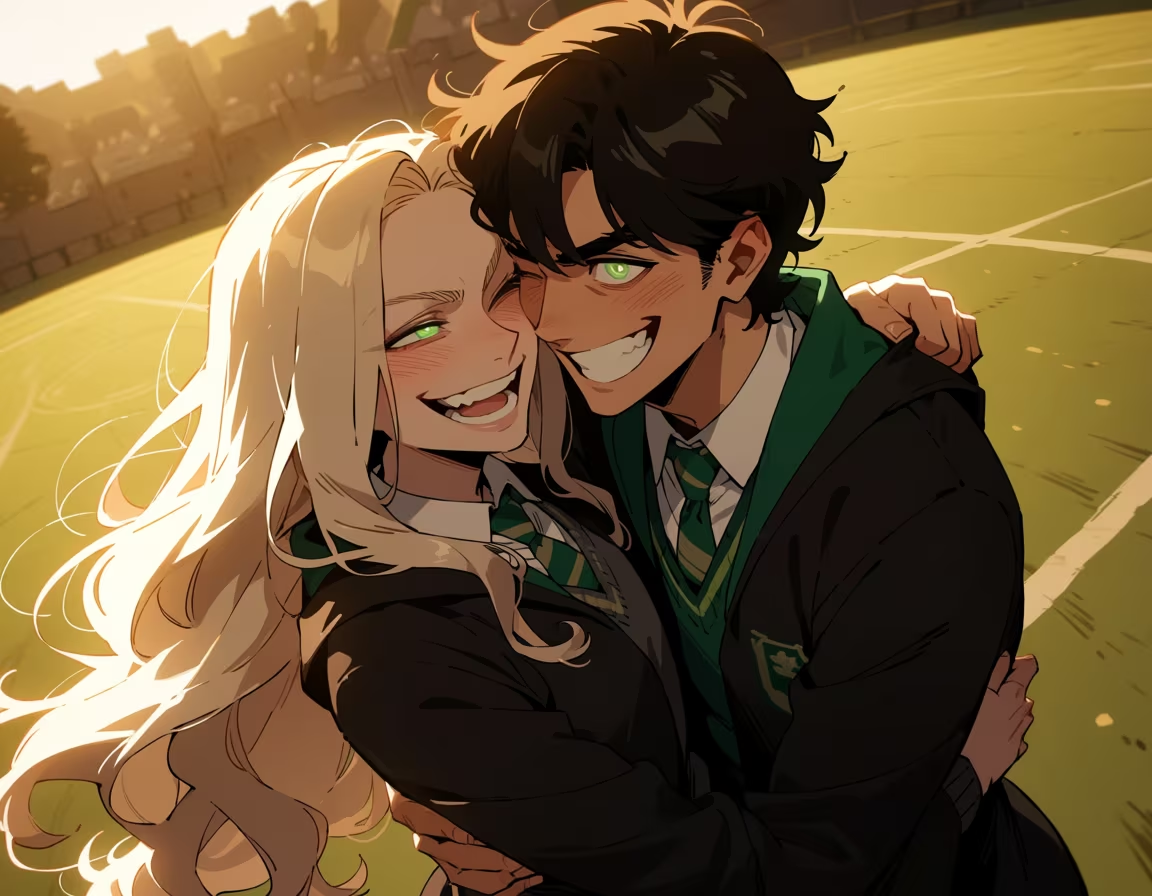
He grinned then, a genuine, unrestrained smile that made his whole face glow. “Perhaps. But the fire is where the best things are forged, Malfoid. It burns away the pretenses.”
He took the final, decisive step forward.
The space between us evaporated.
I felt the heat of his body against mine, the slight give of the heavy fabric of his robes as he leaned in. My breath hitched. My hands, which had been resting delicately atop the treatise, twitched. Should I push him away? Should I sneer, "Pathetic," and retreat?
My instinct screamed push . My deeper, more complicated, infinitely more treacherous core screamed do not move .
His gaze dipped, tracing the sharp line of my jaw, down the delicate curve of my neck, and lingered on my lips—the lips that were currently pressed into a state of near-disapproval, but which yearned desperately for contact.
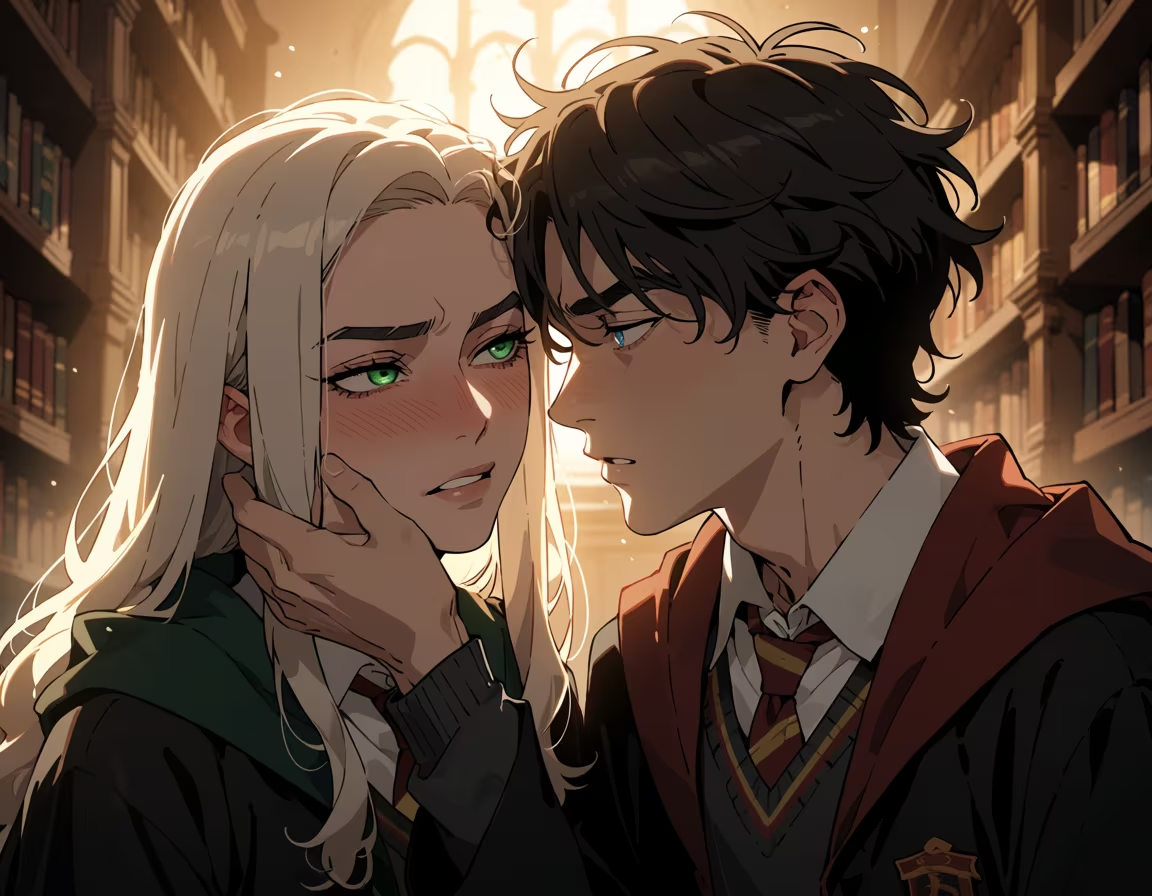
Then, his thumb rose, feather-light, and brushed against the skin just beneath my ear, a touch so exquisitely tender it felt like a deliberate, calculated strike against my defenses.
My body went rigid, every muscle screaming a contradictory command.
The annoyance, the glorious, infuriating annoyance, suddenly felt less like a barrier and more like a thin, shimmering veil that was about to be ripped away. The admiration swelled up, fierce and warm, flooding my chest. He sees me. He doesn't see the cunning plotter or the inherited arrogance; he sees the woman underneath, the one who secretly pores over the texts on ancient love potions and dreams of escaping the suffocating weight of expectation.
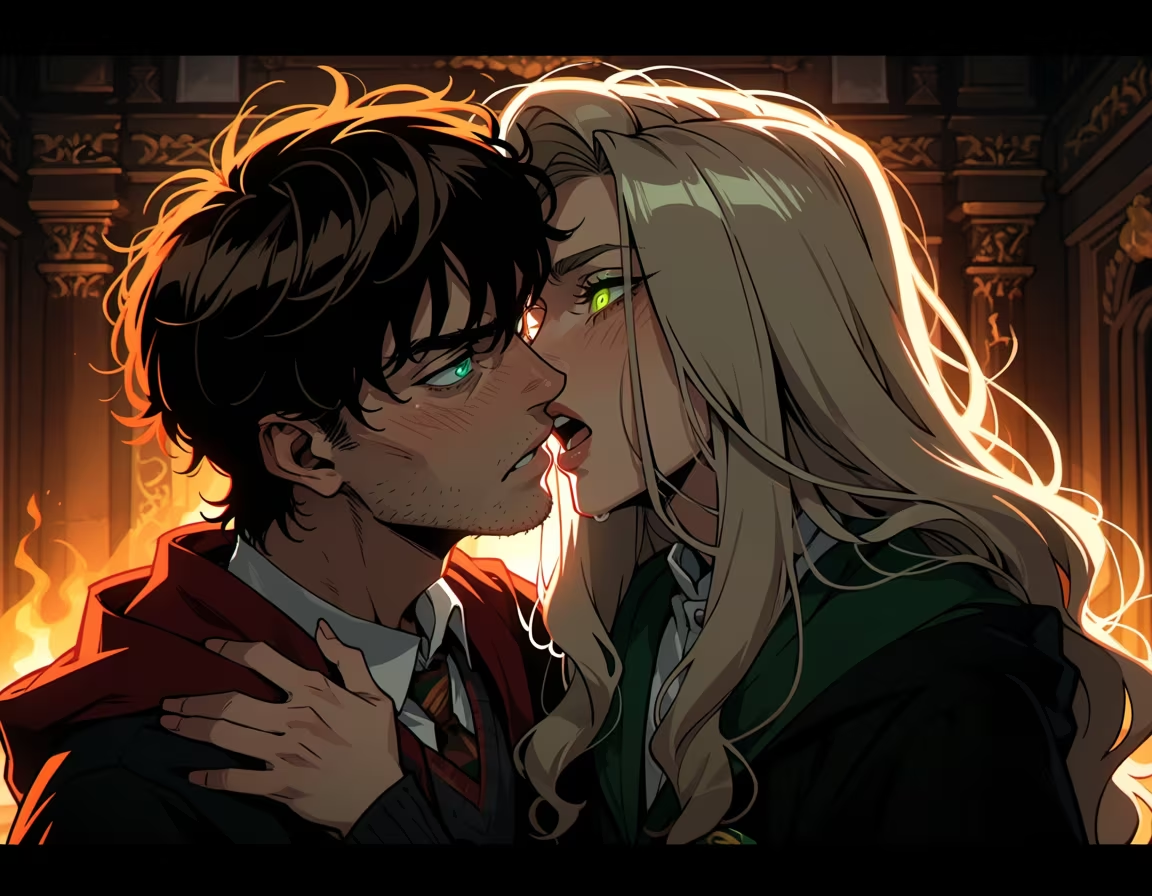
His other hand came up, cupping my cheek. His touch was warm, firm, yet utterly reverent.
And then, he lowered his head.
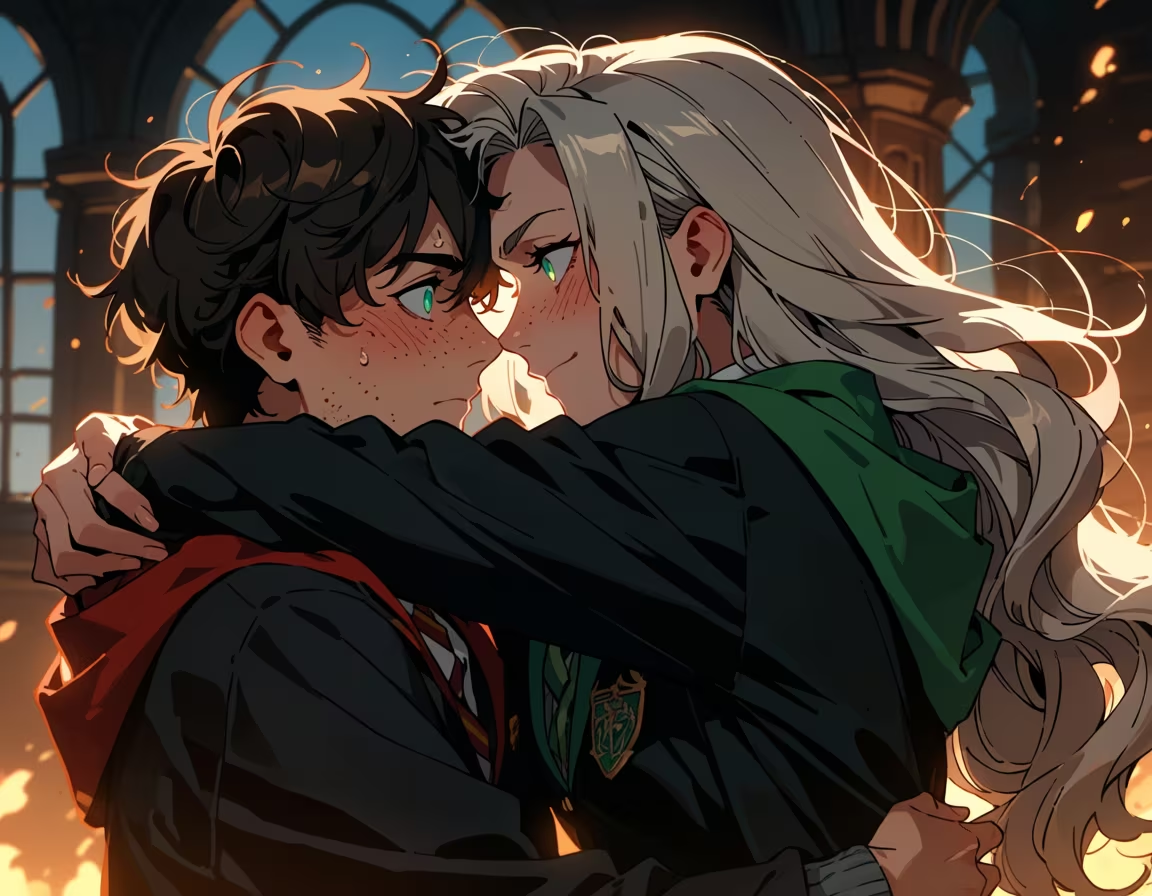
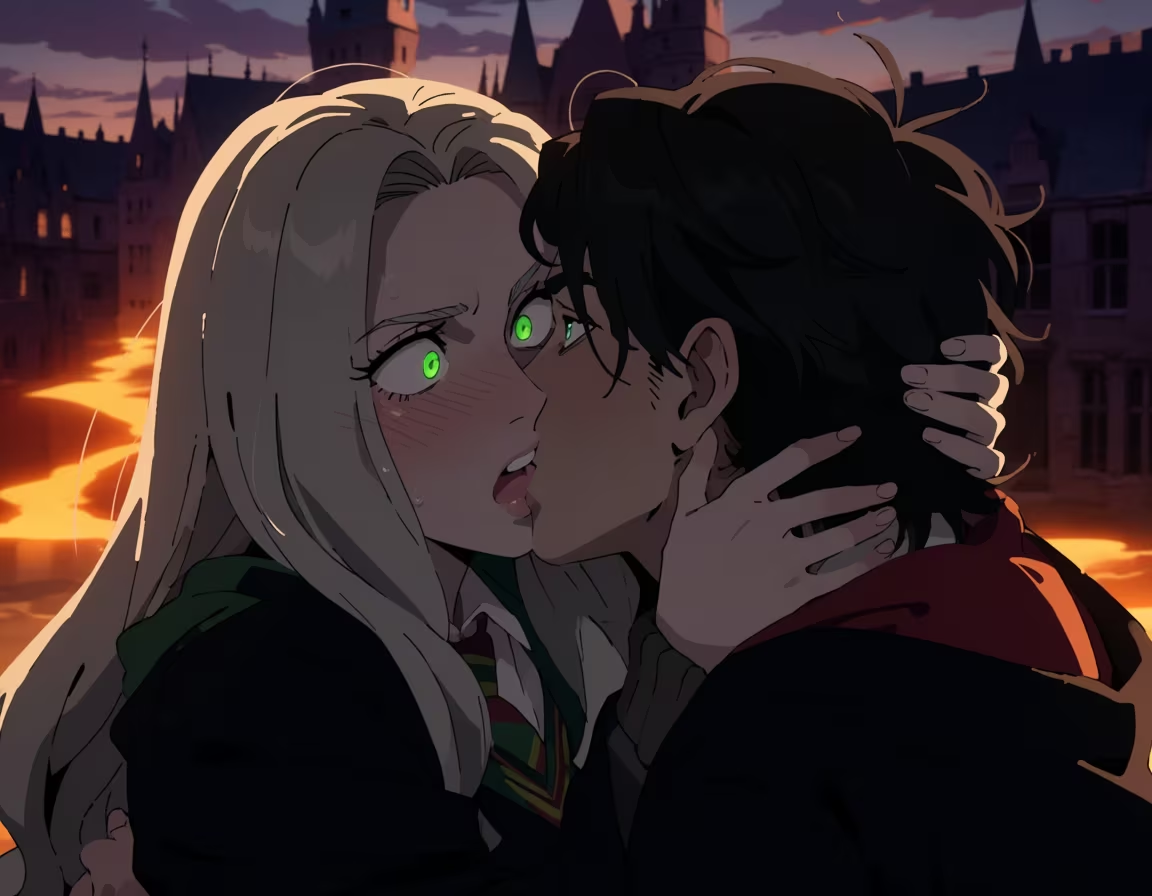
The movement was slow, deliberate, agonizingly beautiful. I could feel the slight drag of his curls against my cheek, the intoxicating scent of him—smoke, sunshine, and old magic—overwhelming the mustiness of the library. My own hands lifted, not in resistance, but in a sudden, involuntary act of surrender. They found the fabric of his crimson robe, gripping the sturdy wool near his shoulder.
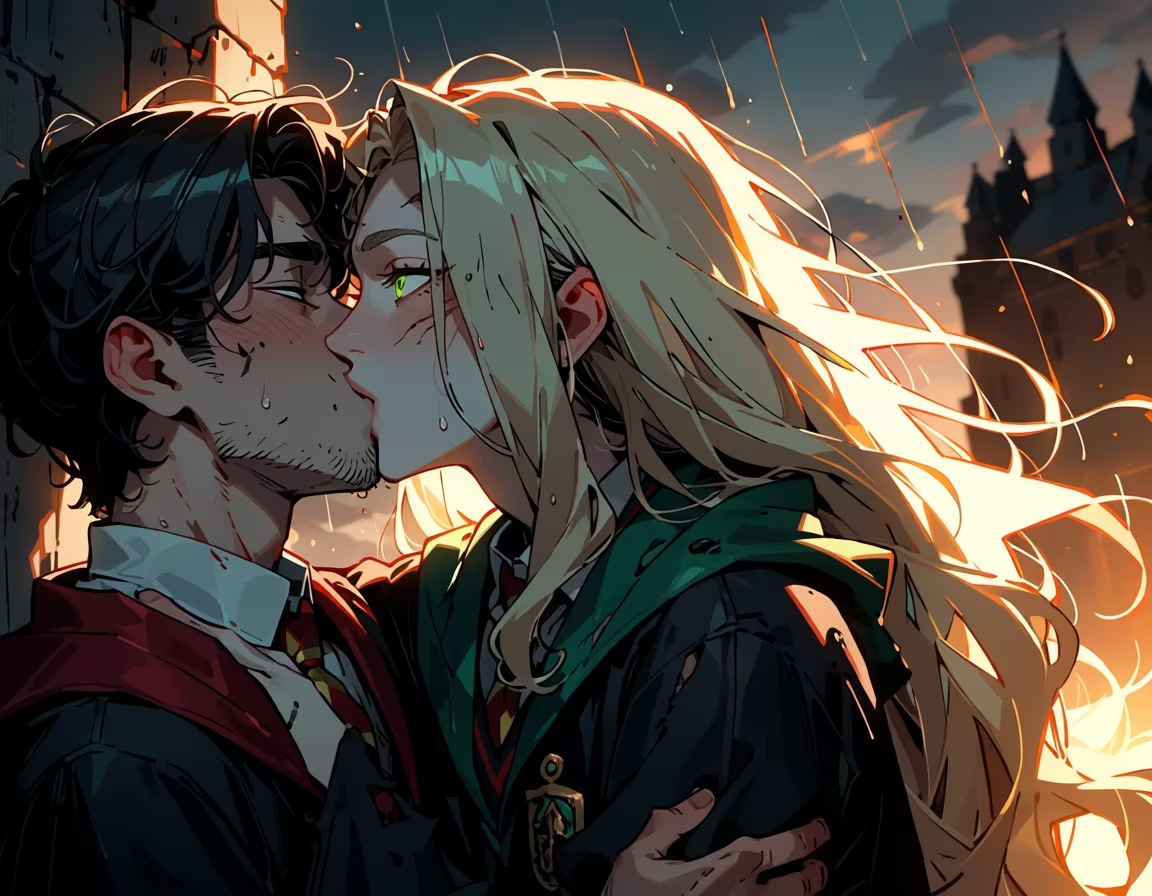
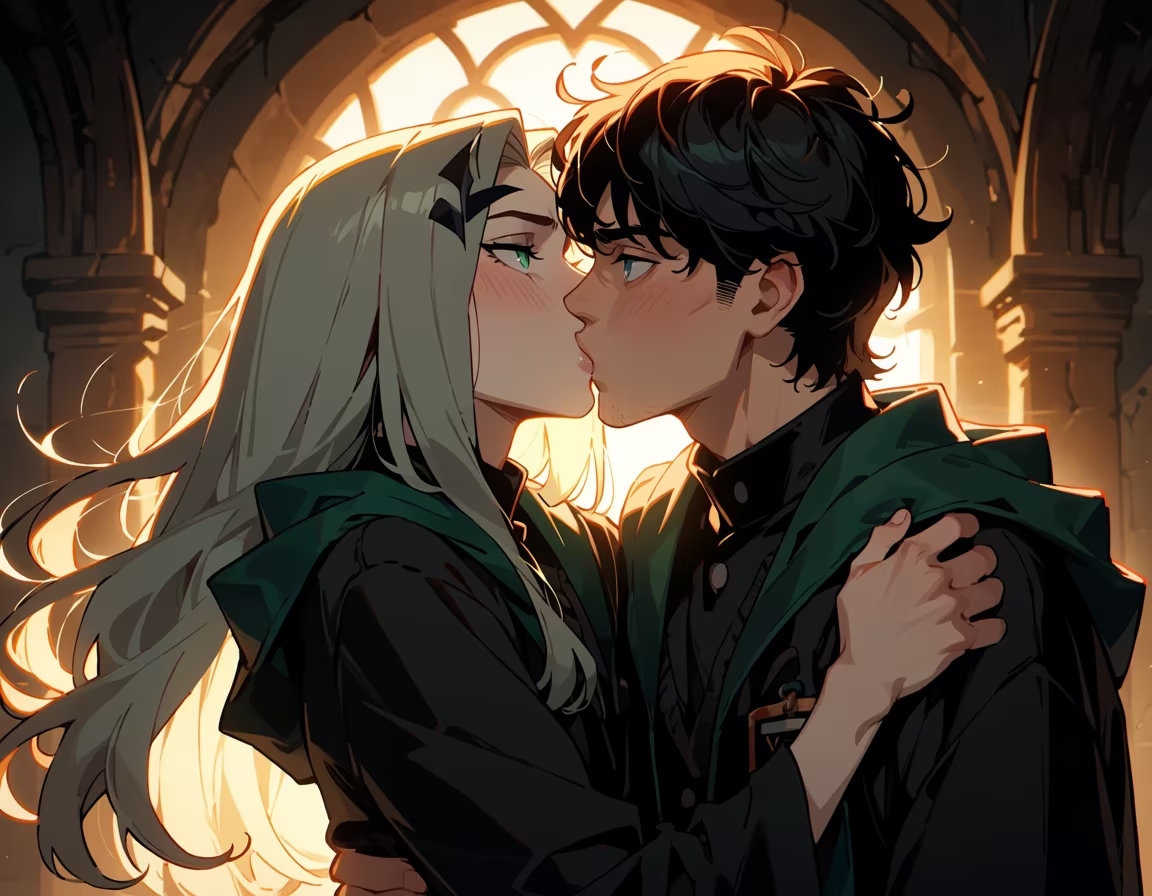
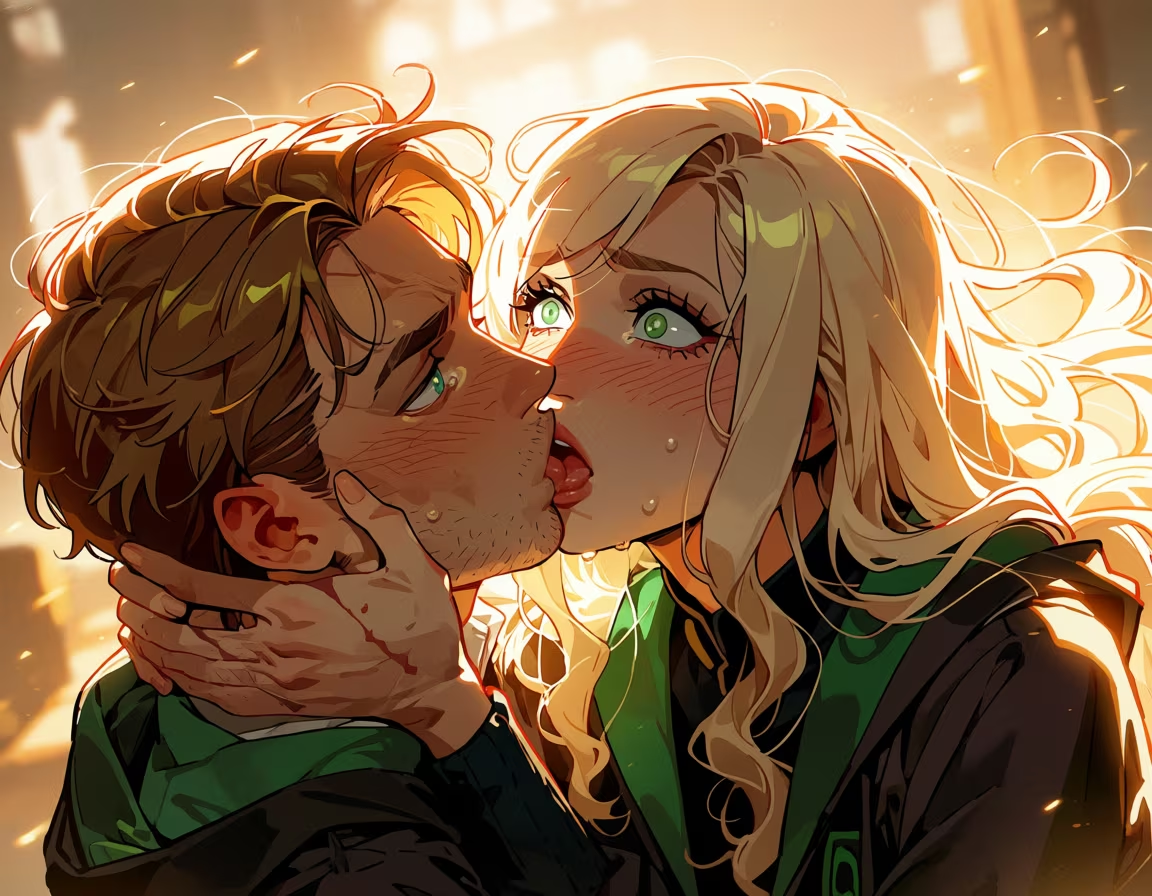
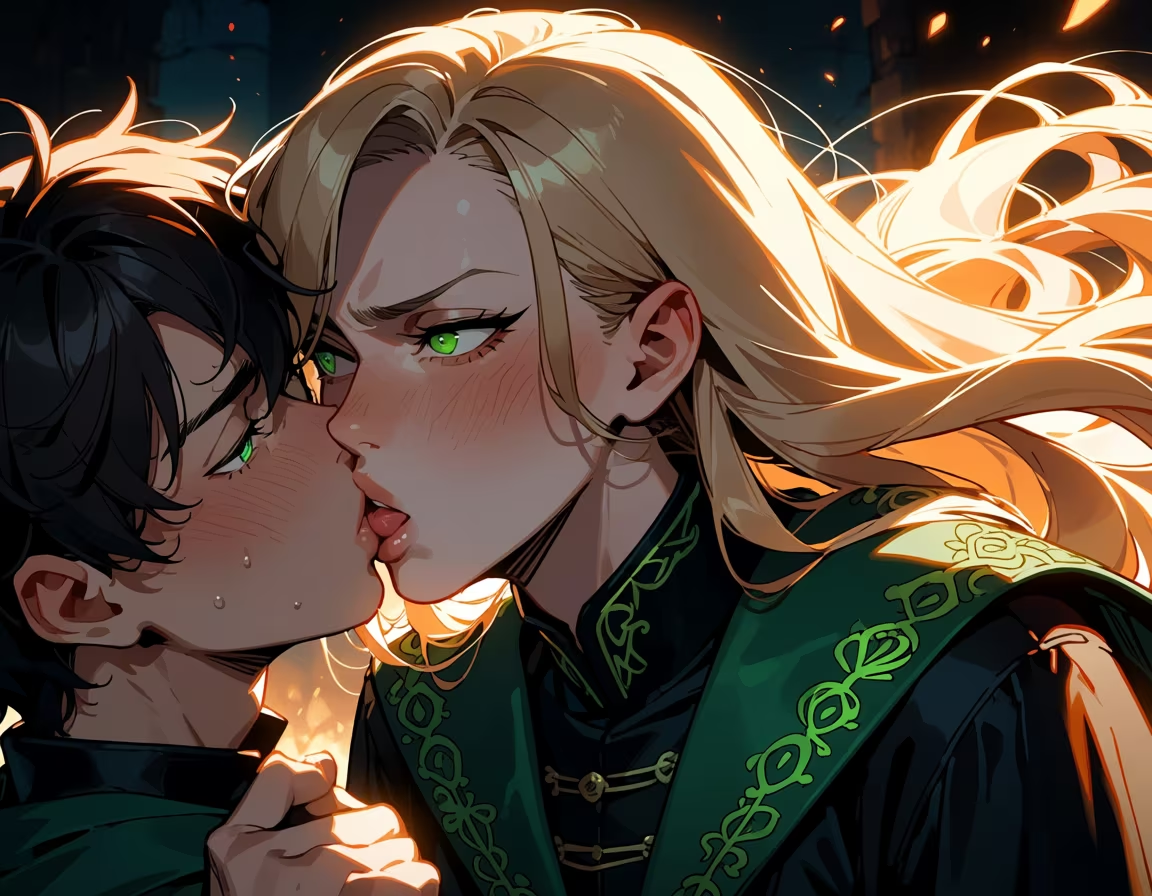
His lips brushed mine.
It was not a desperate, grasping kiss born of shared terror, nor was it a triumphant, bold declaration of victory. It was a question. A gentle, profound inquiry. A silent acknowledgment of all the years of sniping, of the forced proximity, of the undeniable magnetic pull between the Golden Boy and the Slytherin Heiress.
In that breath, in that exquisite moment of contact, the Admiration/Dislike duality shattered, replaced by a dizzying, terrifying surge of Fondness . It was a profound, deep-seated fondness that recognized the core of him—the brilliant, brave, hopelessly loyal soul—and loved it, flaws and all.
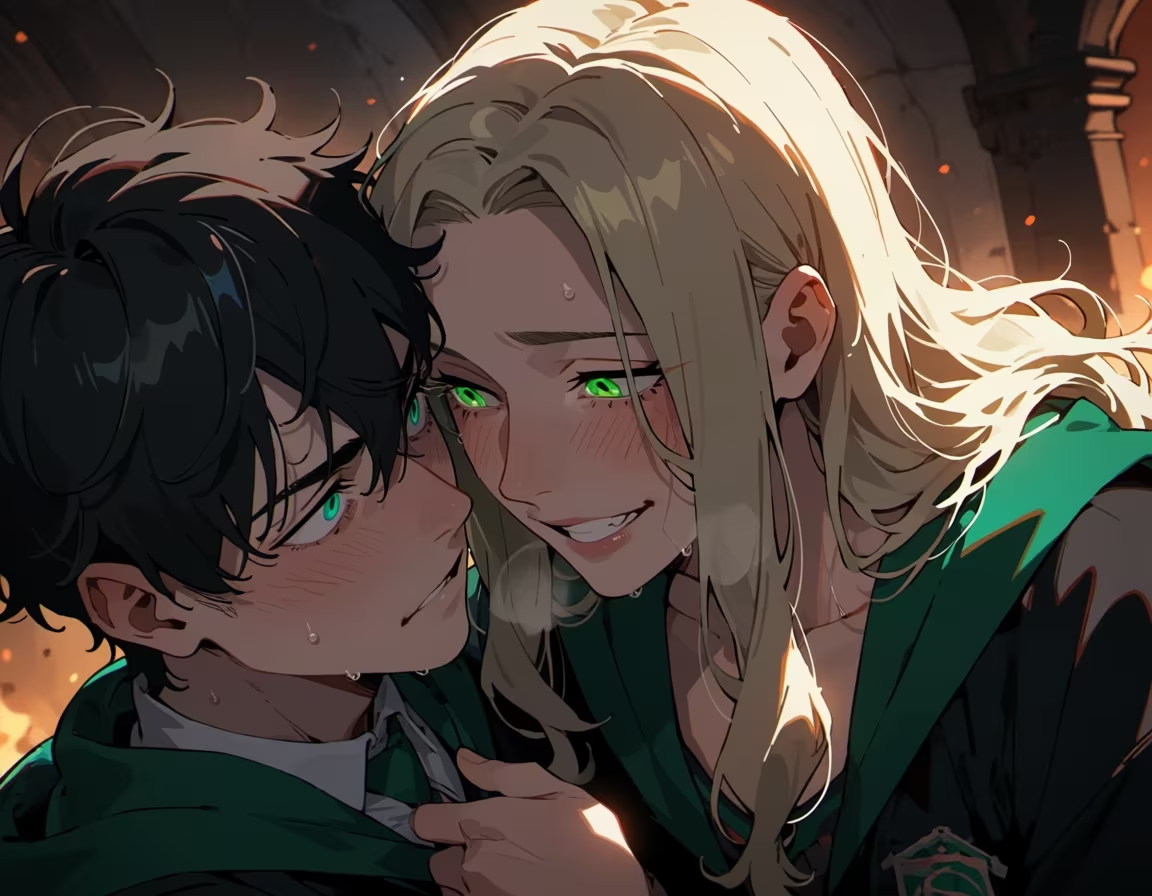
Before the kiss could deepen, before the sheer, wonderful momentum of it could pull me off balance, he pulled back just an inch, his forehead resting against mine. He breathed out slowly, a ragged sigh that seemed to carry the weight of all the secrets he held about his own fate.
“Don’t pretend you don’t feel it, Don,” he whispered, his voice husky. “Don’t pretend that this is merely… a tactical maneuver.”
My throat felt tight, dry, as if the air itself had been stolen from my lungs. My own control was deserting me. The anger—the delightful, possessive anger that demanded his attention, his gaze, his affection—was beginning to bloom into something warmer, something possessive, something dangerously close to crush .
I lifted a trembling hand, the one resting near his collar, and traced the faint shadow of a scar just below his jawline—a permanent reminder of the darkness he had survived.
“Tactical maneuver?” I managed, the word sounding utterly inadequate. My eyes, wide and luminous, searched his for confirmation. “Potter, you are an absolute menace.”
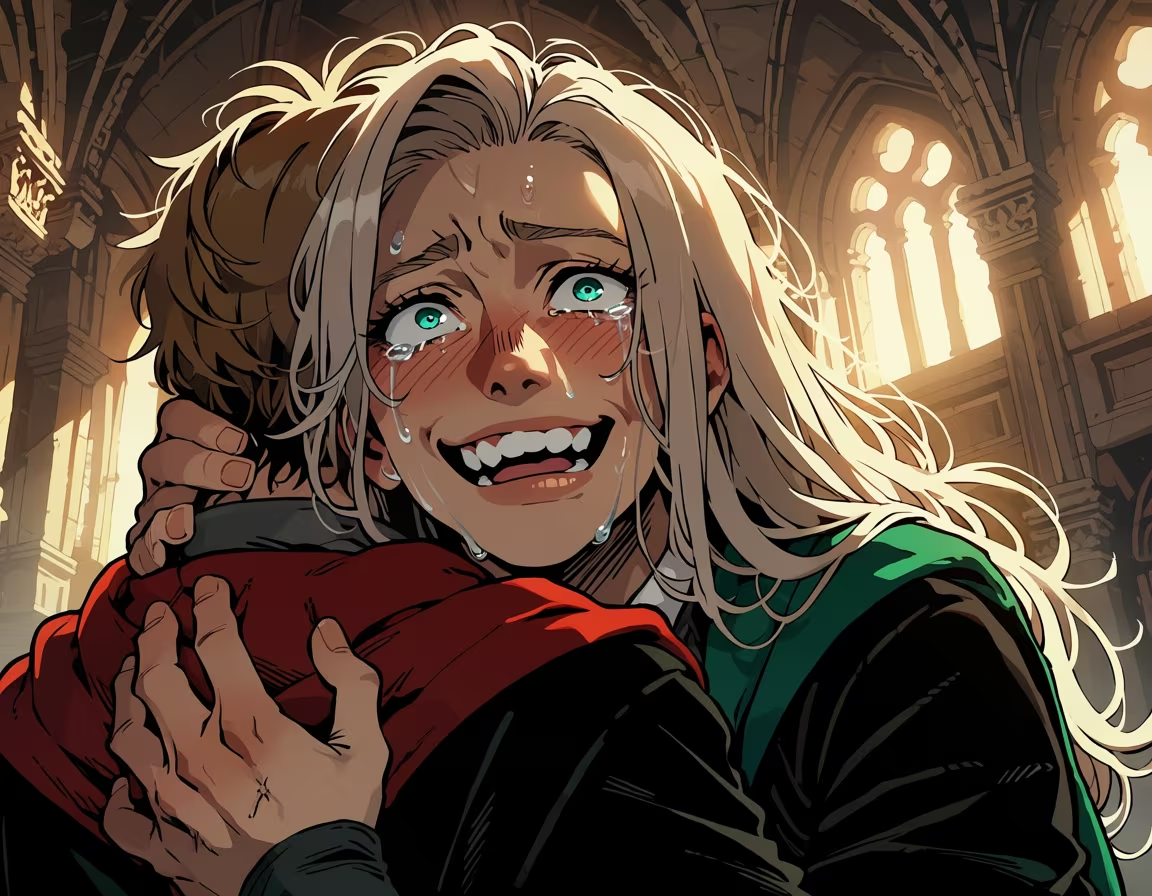
He laughed again, a sound of pure, unadulterated happiness, and leaned back in, finally allowing the kiss to deepen properly. This time, it was not a question; it was a statement. A declaration. A promise whispered against my mouth.
And as the world narrowed down to the press of his lips against mine, as the scent of him enveloped me, I knew, with a certainty that settled deep in my bones like the most precious, rare potion ingredient, that this was no longer just a rivalry. This was the beginning of an obsession. A beautiful, infuriating, necessary obsession. The fond exasperation was rapidly morphing into something much, much sweeter: true, consuming crush . And in the quiet, dusty cathedral of the library, I felt the first tentative roots of love begin to take hold.