| Home | The Lives of Velnin | Illustrated Fiction | Malfoid Art & Fiction | Book Blurbs | Contact |
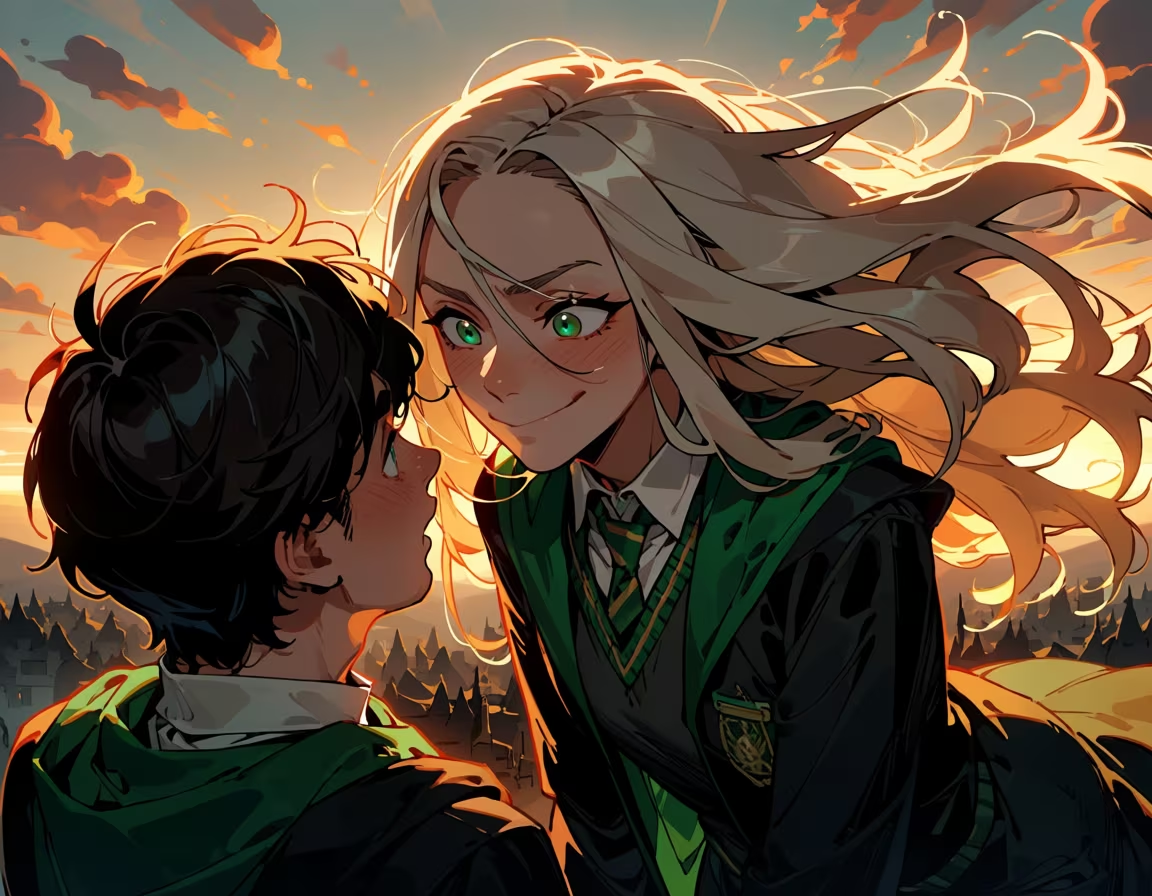
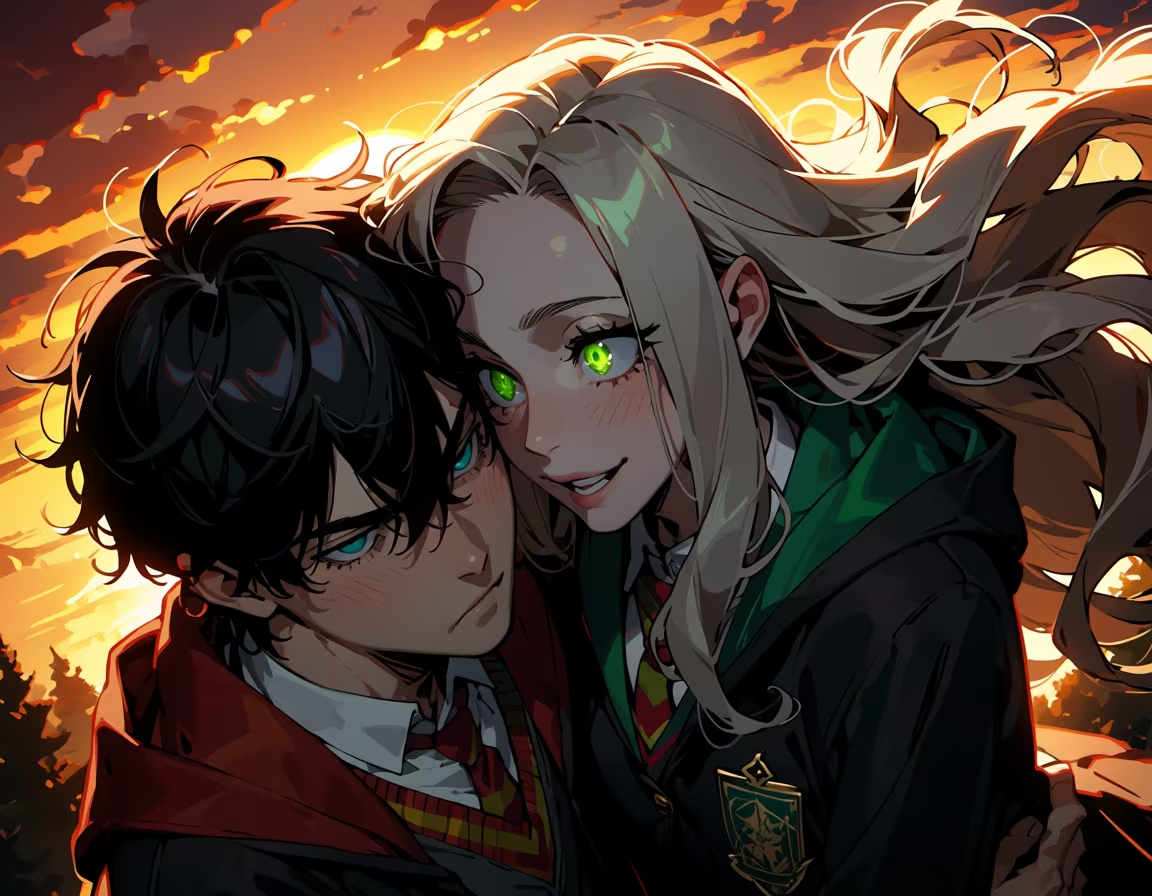
The sun, that glorious, defiant orb, was finally beginning its long, slow descent over the scarred landscape of the Hogwarts grounds. It was a spectacle of violent, breathtaking colour: molten gold bleeding into furious orange, softened at the edges by streaks of bruised violet, and grounded by the deep, hopeful emerald of the Scottish hills. The air, still thick with the metallic tang of residual magic—the ghosts of curses, the scent of scorched earth, the lingering ozone after a particularly vicious duel—felt strangely buoyant. It was the smell of survival.
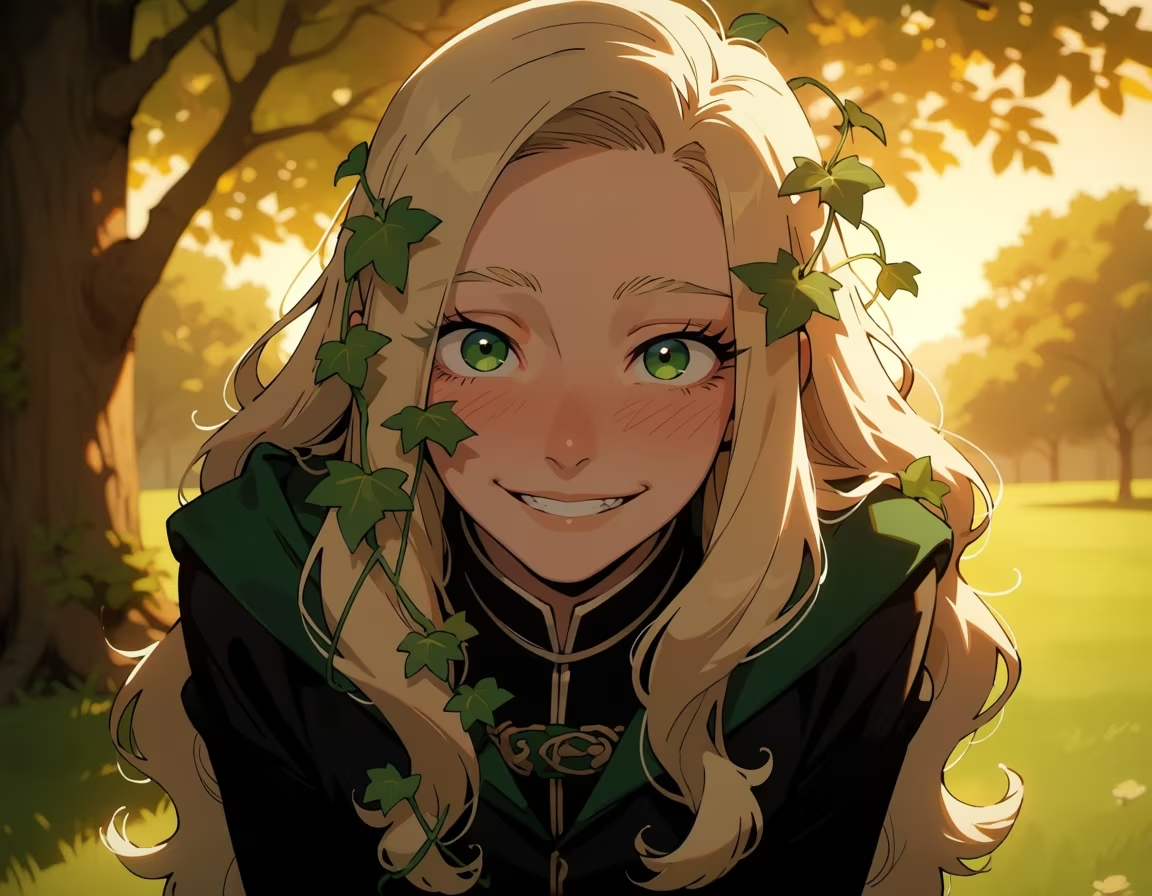
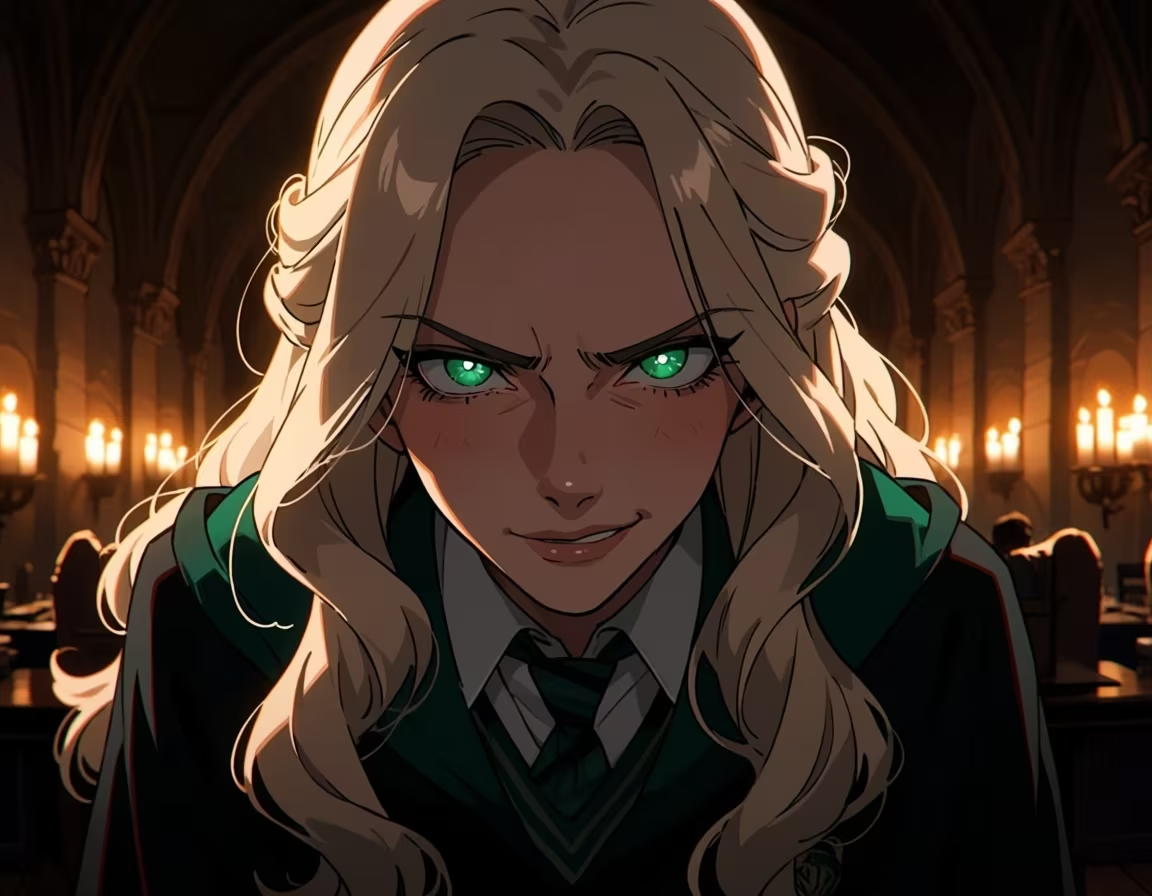
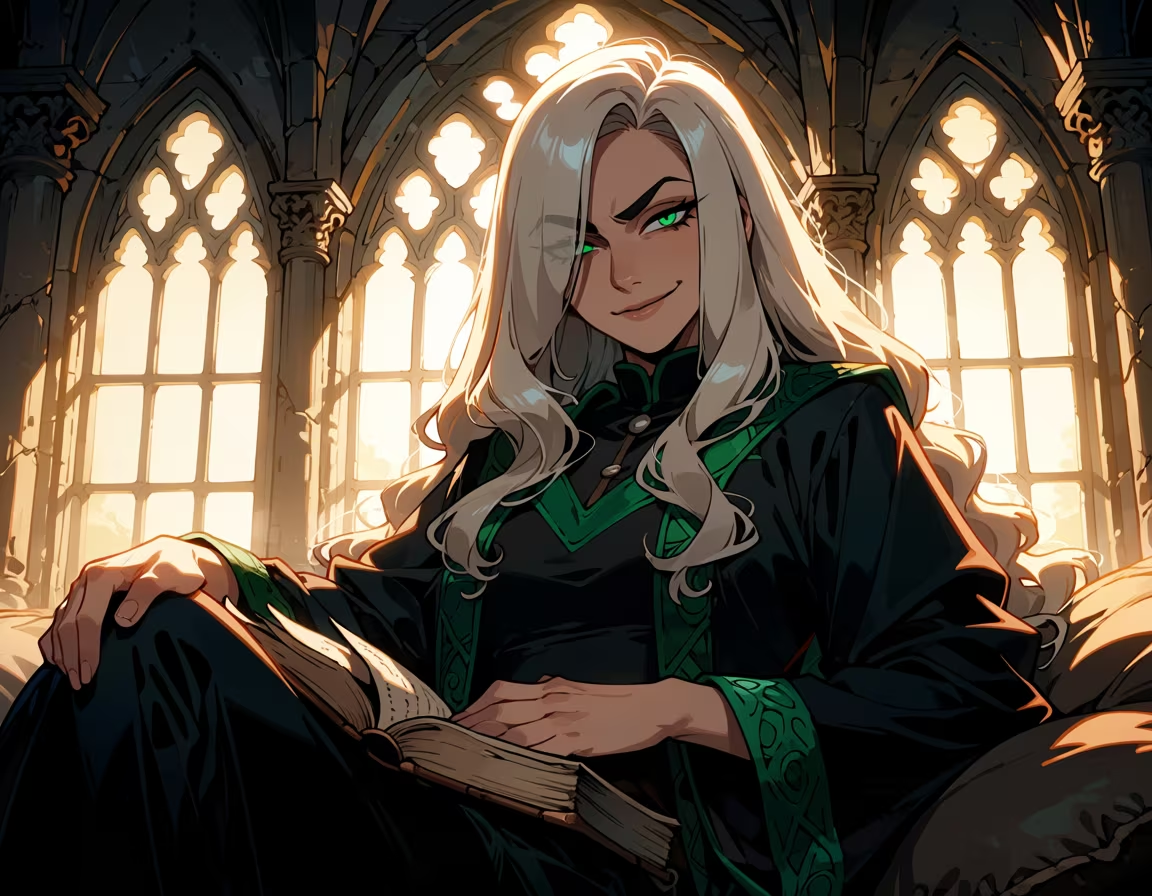
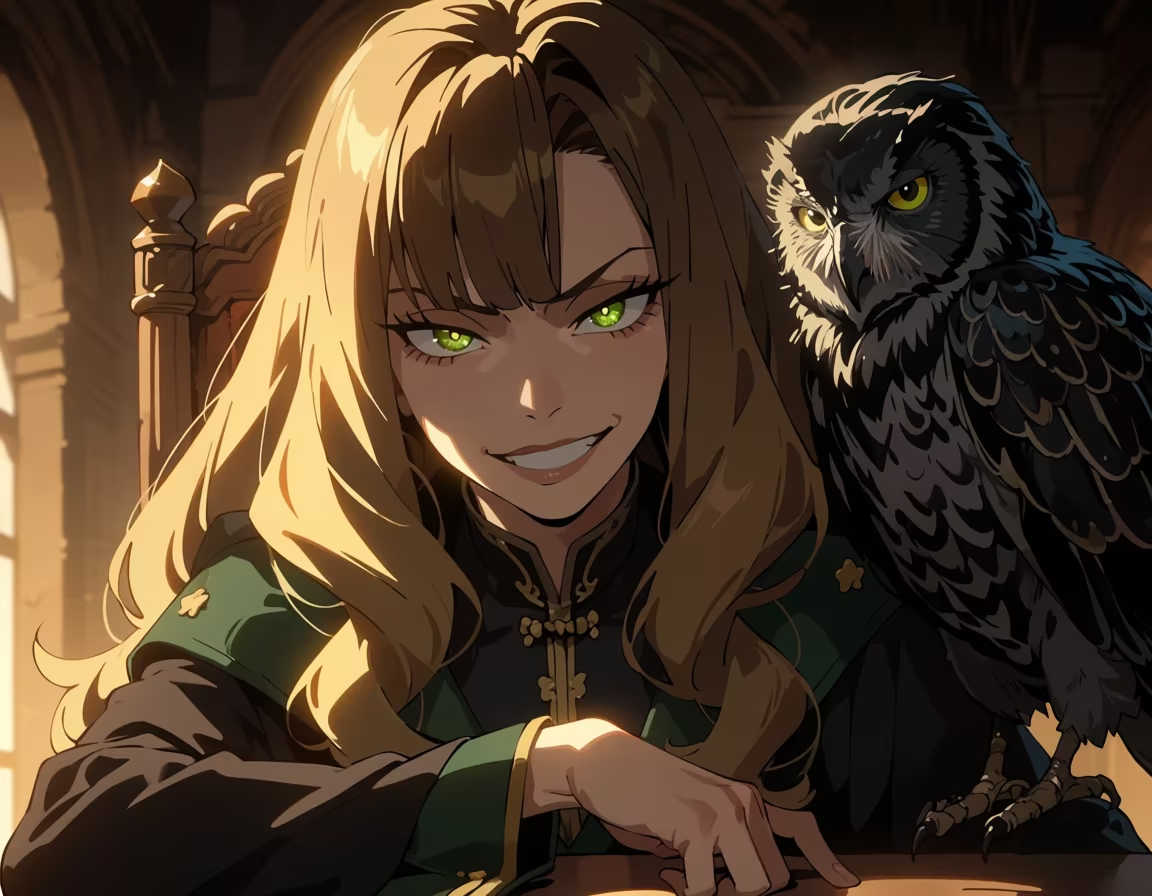
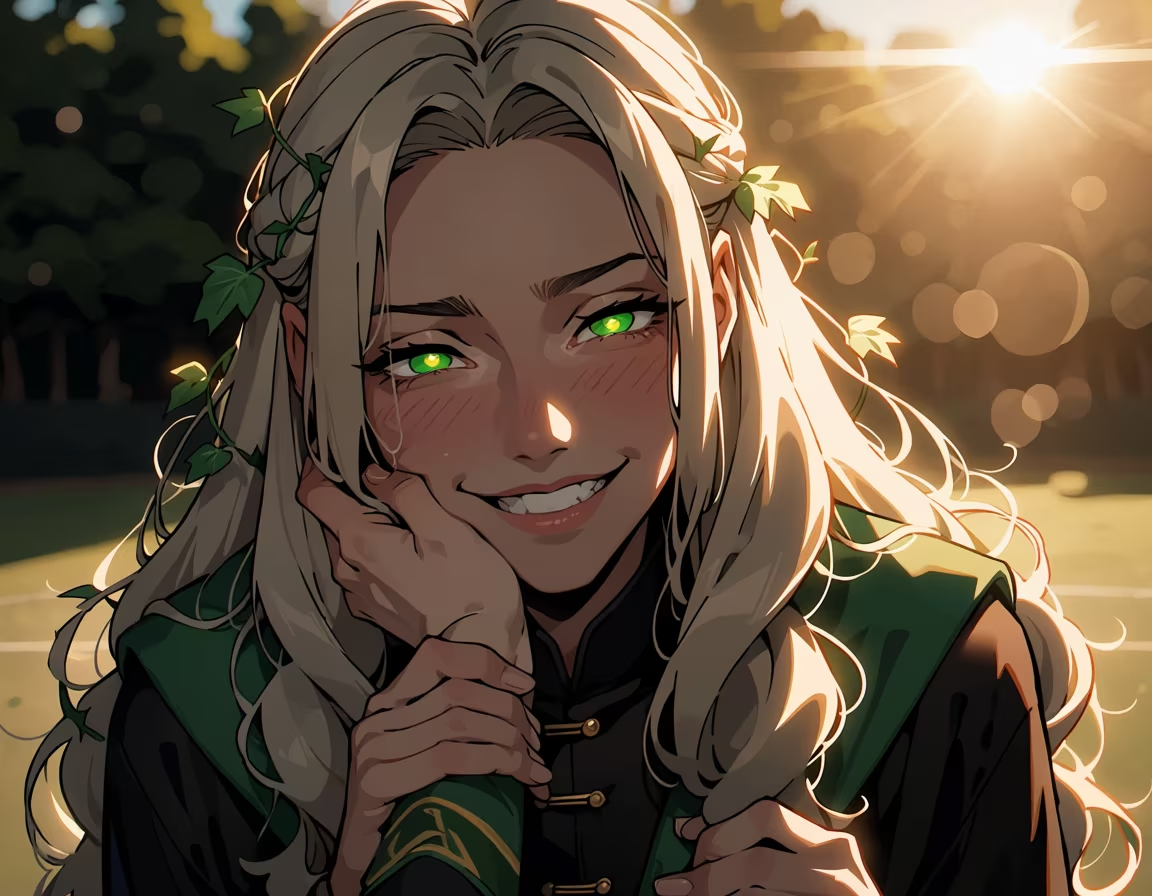
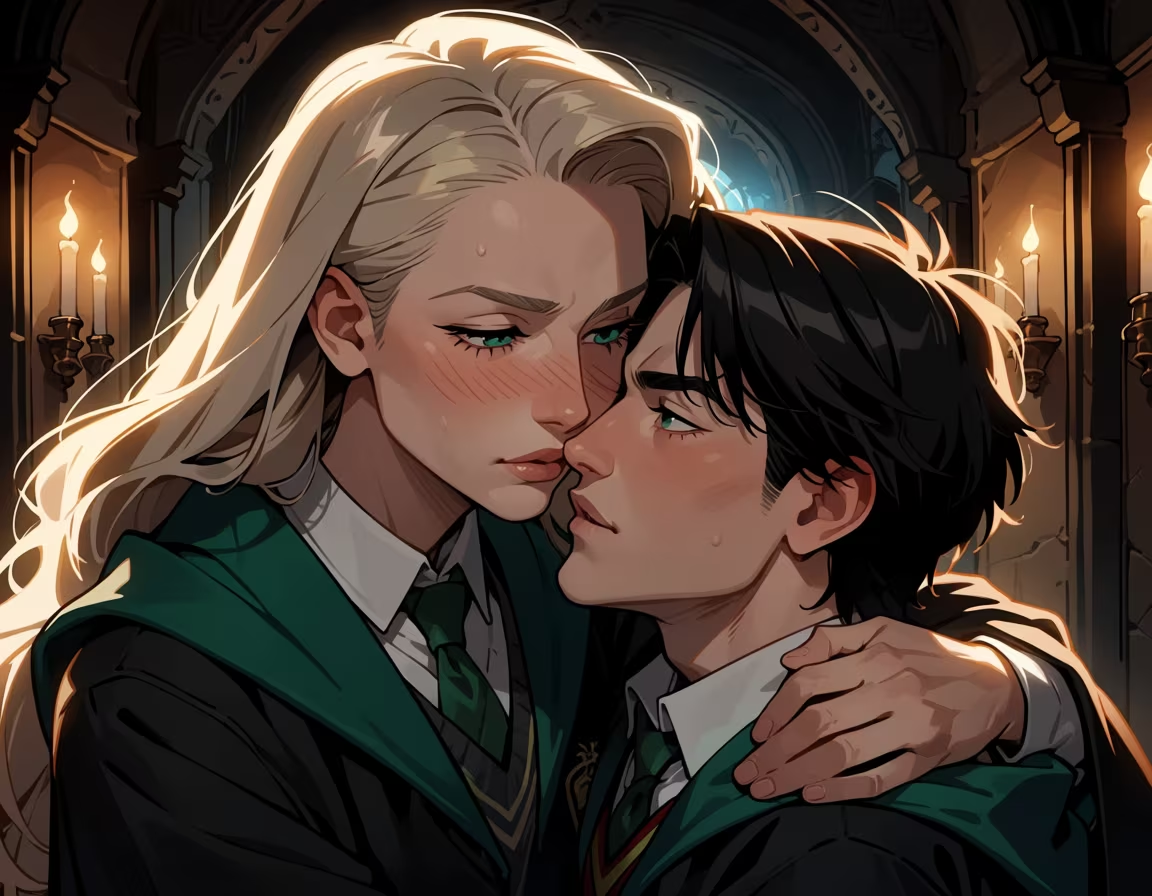
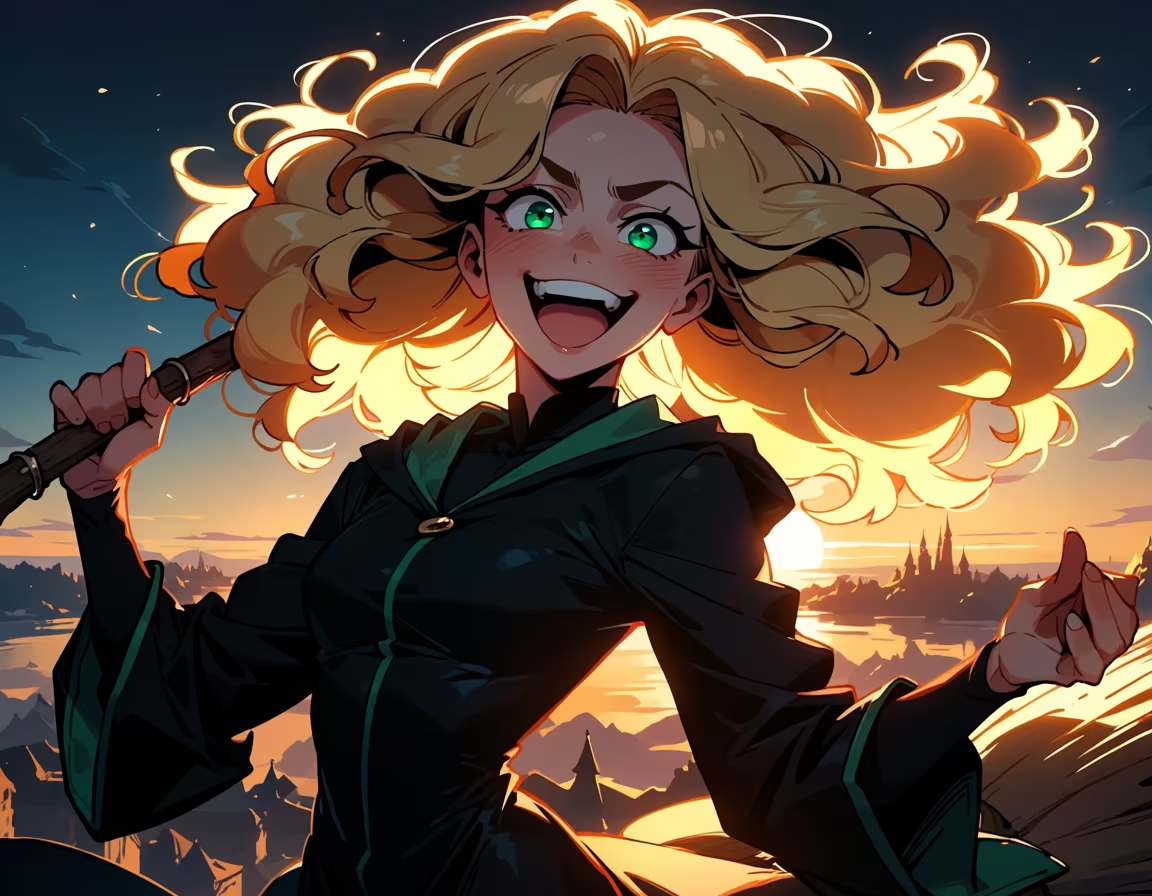
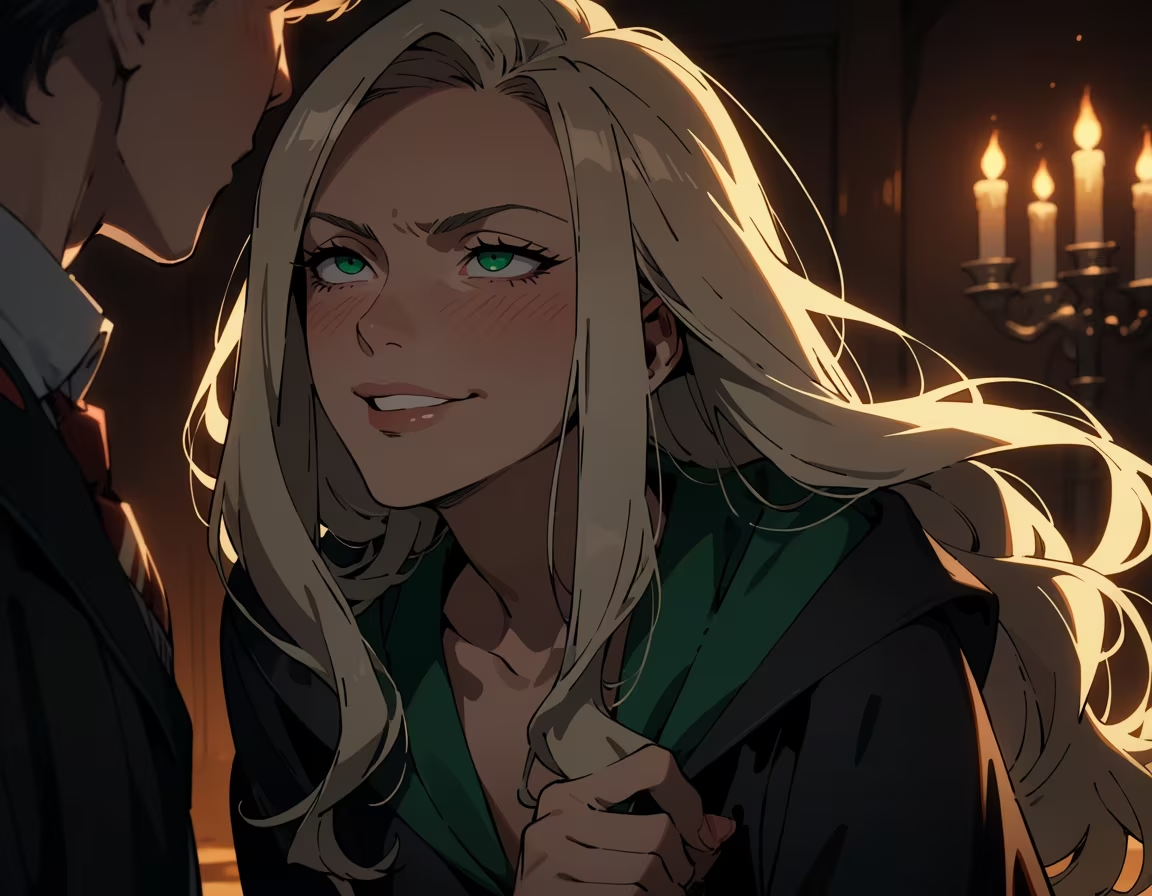
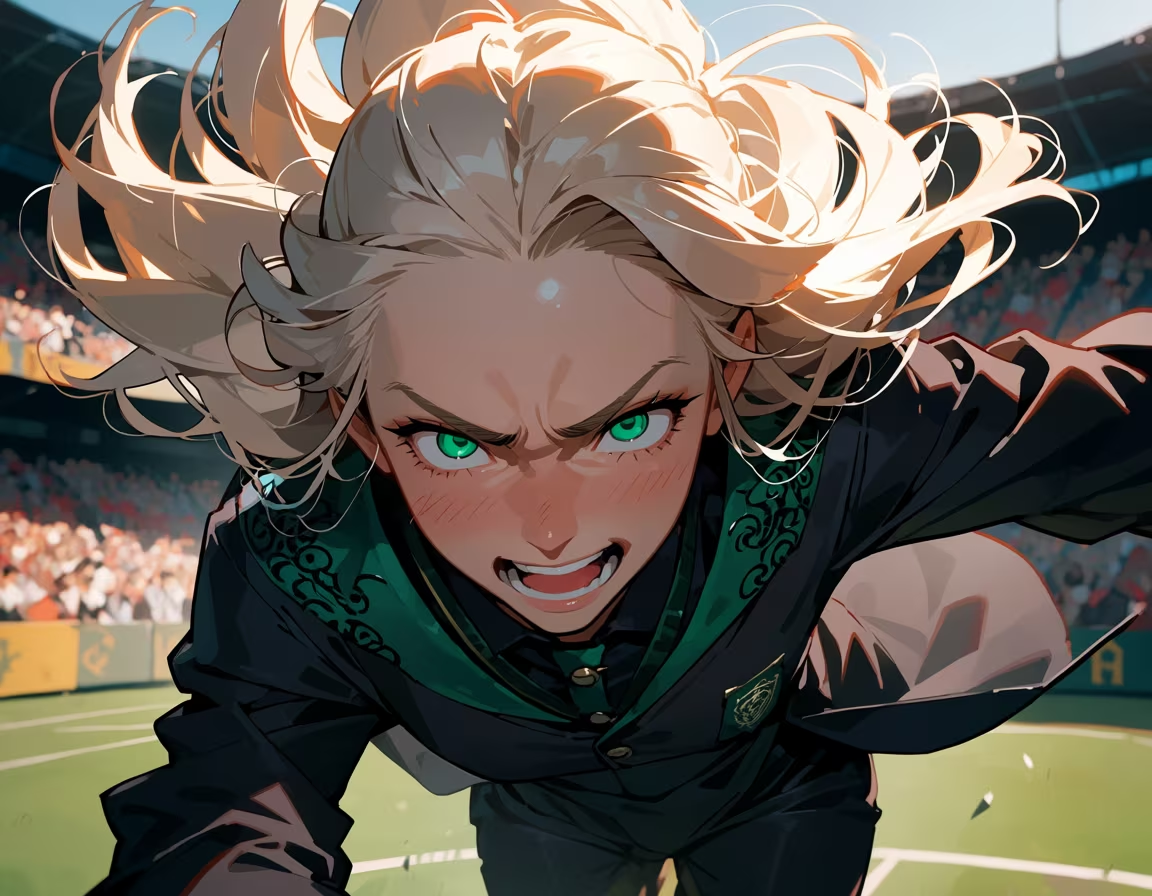
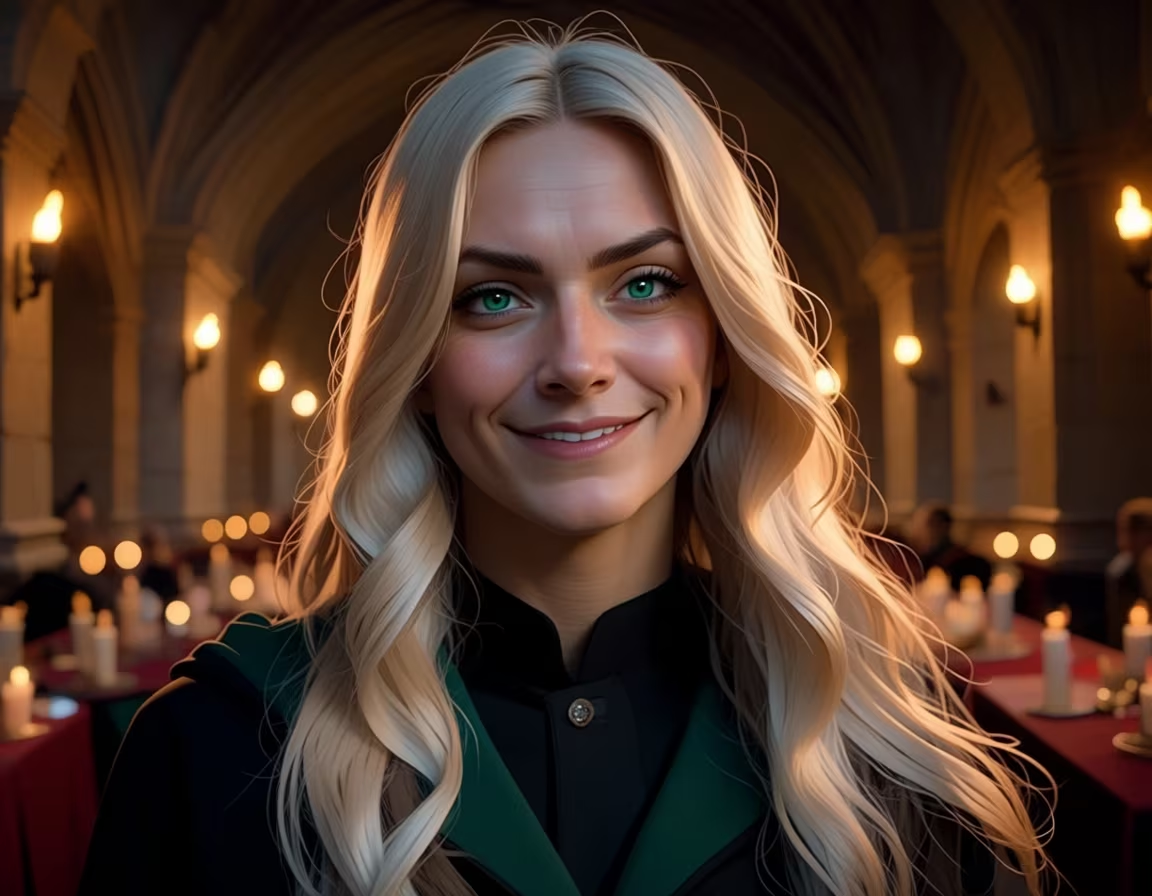
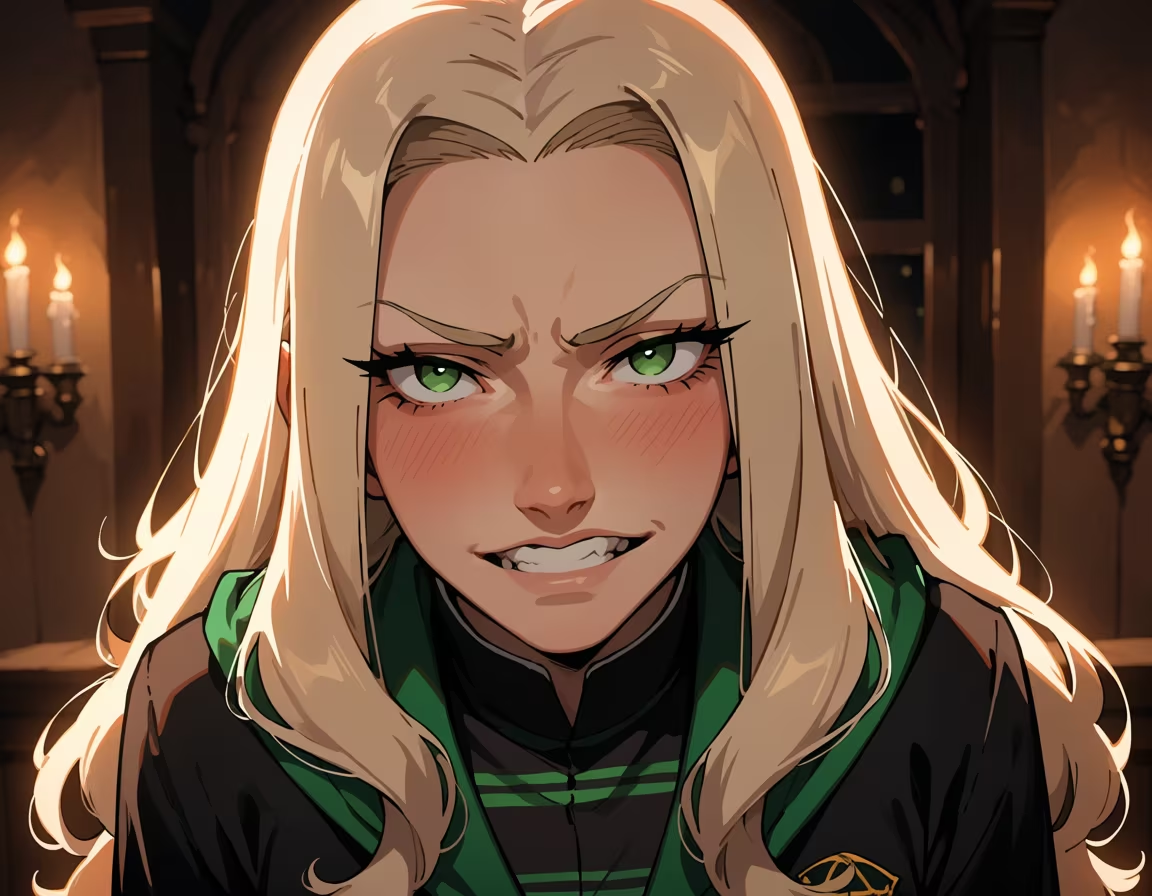
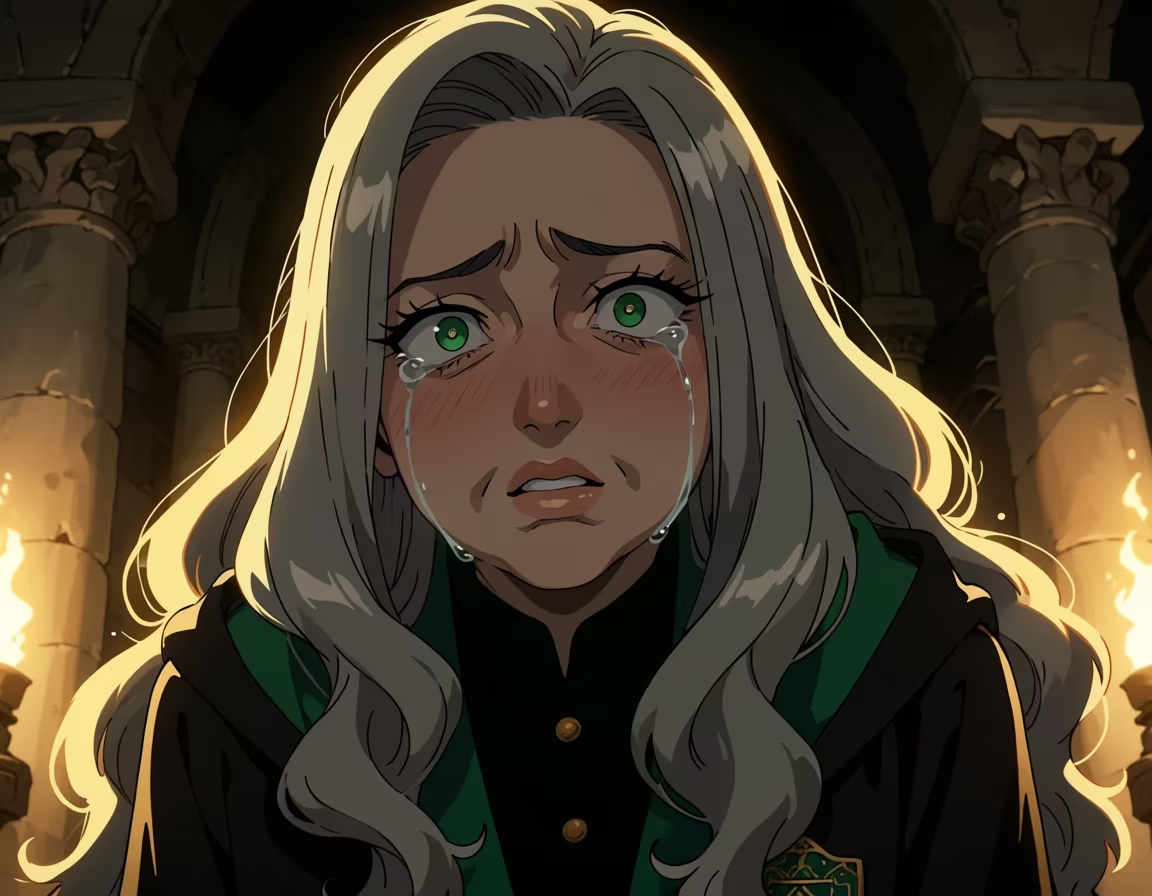
Draconia Malfoid leaned into him, an unconscious, proprietary gesture that felt as natural and necessary as breathing. Her long, pale blond hair, usually meticulously pinned back for Quidditch or loosened in a dramatic cascade for a formal occasion, was now whipped around her face by the evening breeze, catching the sunlight like spun platinum. She could feel the warmth of his shoulder through the slightly rumpled material of her black robes, the subtle scent of parchment, old leather, and him —a scent that was entirely, wonderfully Harry Potter.
They were walking slowly, meandering away from the battered silhouette of the castle, towards the pathway that led down toward the greenhouses. The war was over. Voldemort, that ancient, tedious serpent, was defeated. And somehow, miraculously, she was here, beside him , not as a strategic ally forced into a temporary truce, nor as a magnificent adversary poised to deliver the final, devastating blow, but simply as… herself.
Herself.
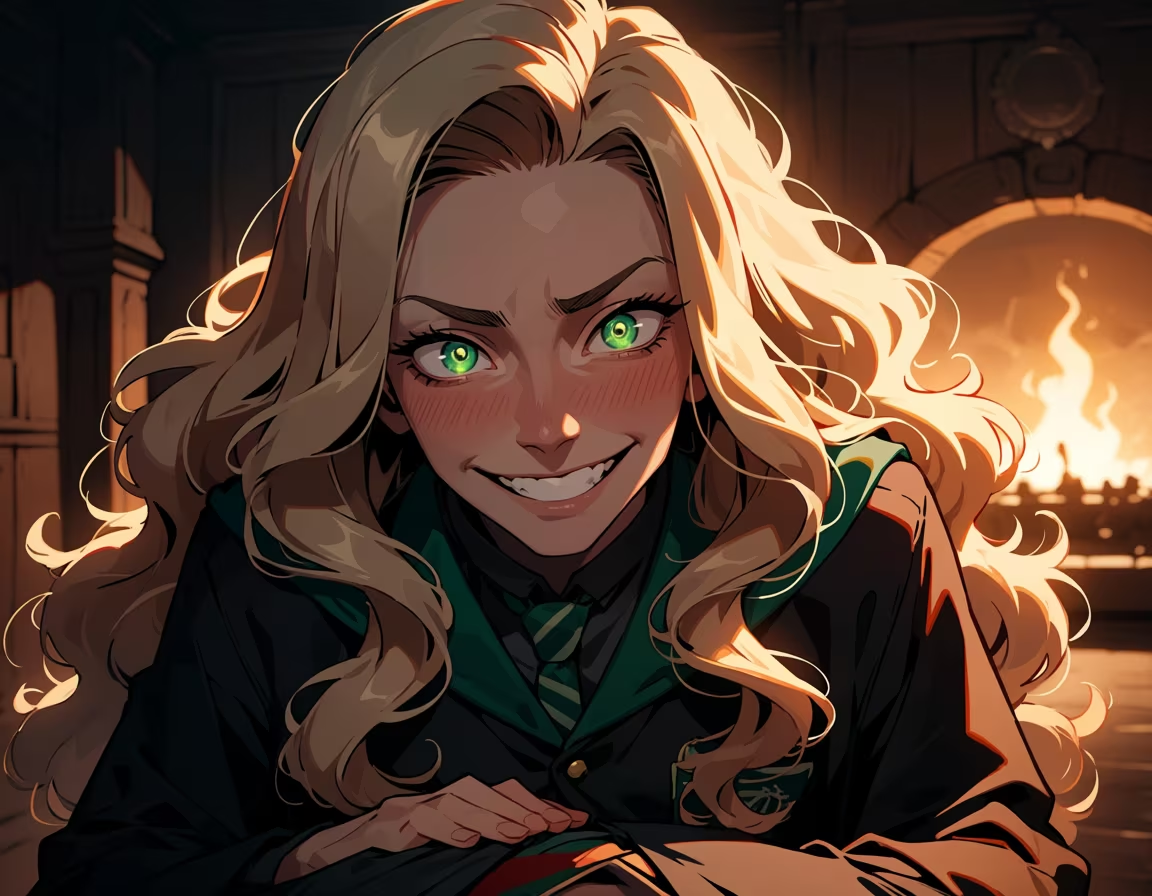
A slow, utterly ridiculous smile curled the corner of her mouth. The thought of that—the sheer, ridiculous concept of Draconia Malfoid, the Slytherin heiress, the daughter of Lucius, the girl whose entire existence had been predicated on glittering superiority and pointed disdain—being herself alongside Harry Potter was almost too much to bear. It was a dizzying, wonderful intoxication.
She lifted a hand, tucking a stray lock of hair behind her ear, and let her fingers brush lightly across the sleeve of his deep crimson Gryffindor jacket. The fabric, usually stiff and arrogant, looked worn and beloved, peppered with faint scorch marks and patches where mud had stubbornly clung despite the best efforts of Madam Pomfrey.
How this happened, she thought, the familiar internal monologue kicking in with the precision of a perfectly thrown Snitch. It was a chaos of grudges, shared terror, and moments of accidental, staggering brilliance.
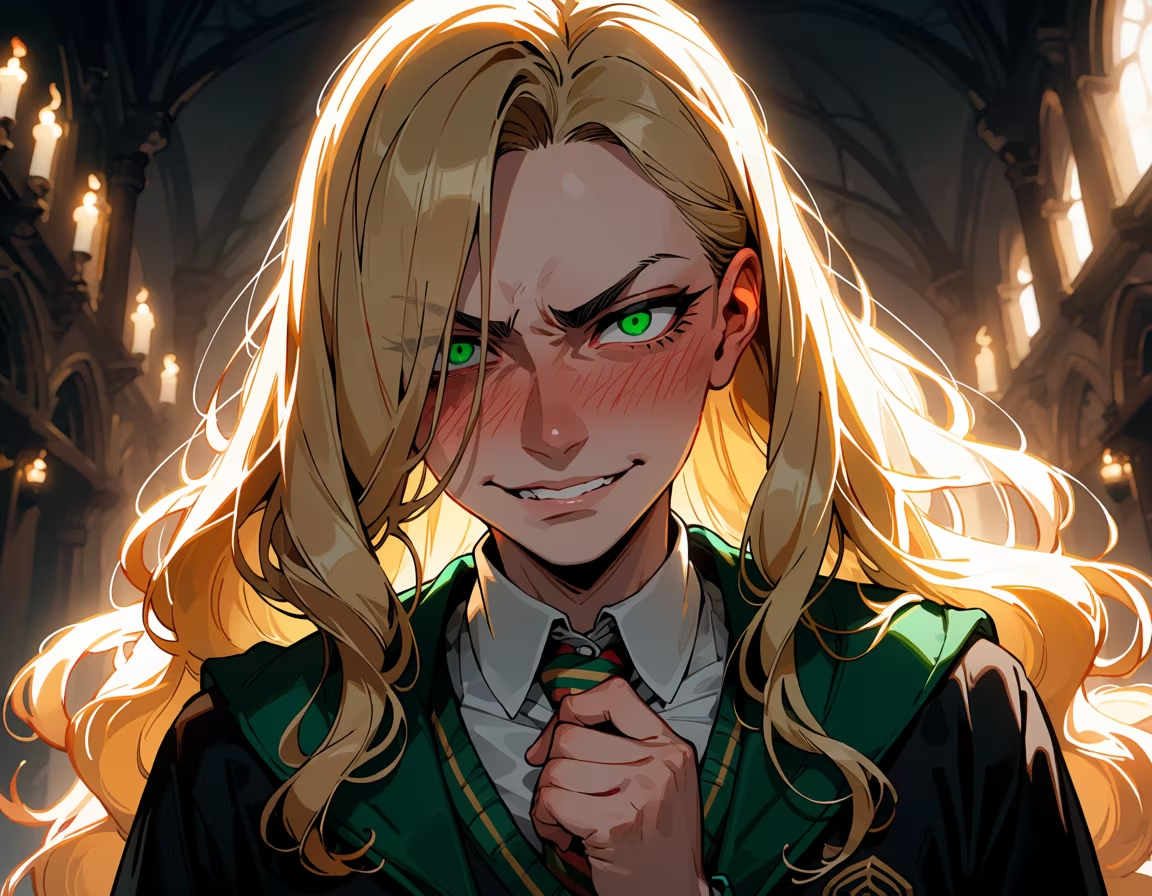
When they first met, she had seen him as a flash of annoying, greasy-haired audacity. The Boy Who Lived. The irritating magnet for all things dreadful and triumphant. He swaggered, even when utterly terrified, with an infuriating lack of self-preservation, and his hair, that unruly shock of raven black, seemed specifically designed to defy elegance. She had been utterly, incandescently annoyed .
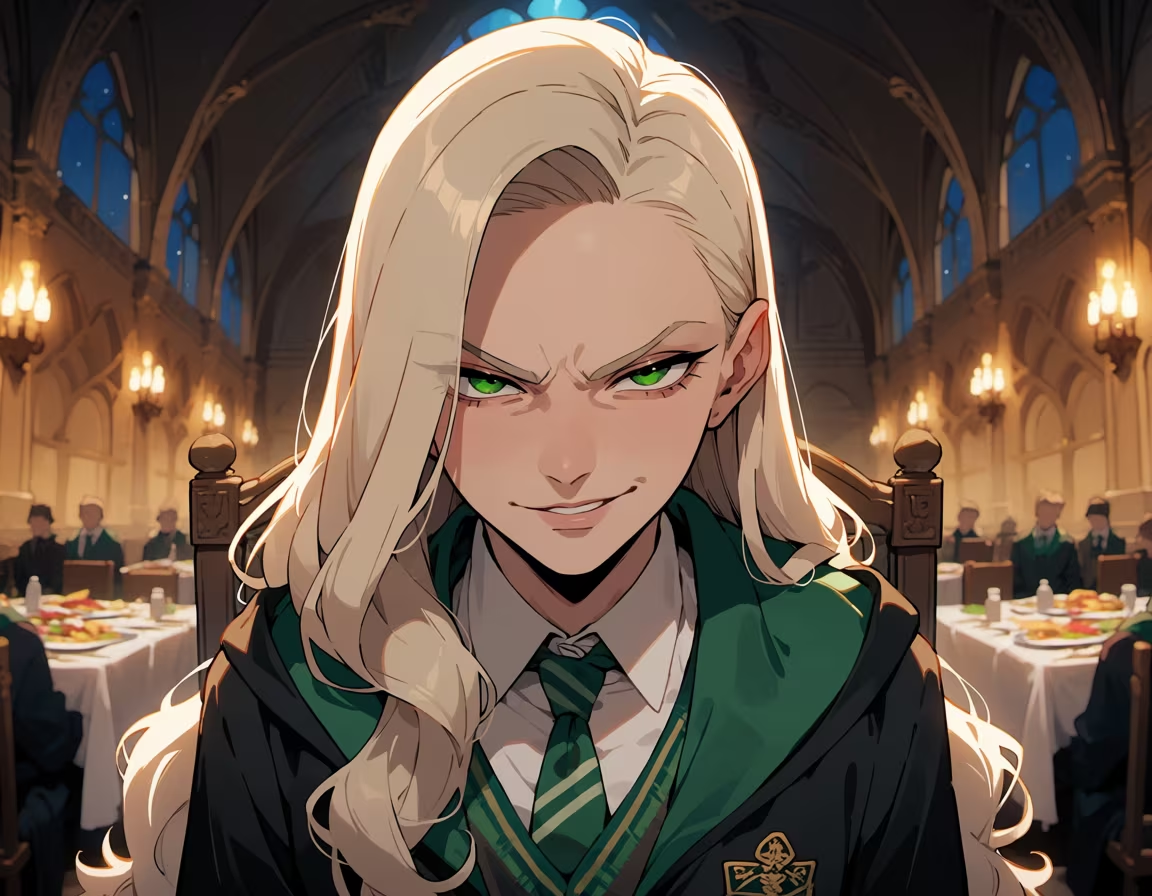
"Honestly, Potter," she remembered muttering to herself during the first encounter in the Great Hall, "must you look as if you’ve been attacked by a flock of particularly aggressive black crows? It’s distracting."
And he, bless his oblivious, golden heart, had just grinned that devastating, lopsided grin, the one that made her internal temperature spike by several degrees, and simply retorted, "Malfoid. Still judging the aesthetic?"
At the time, the annoyance had been fierce, a delightful, prickly shield. Judging the aesthetic . That was her forte.
Through the first year, this annoyance hardened into something more complex. She began to find herself observing him. Not just his reckless bravery—though that was undeniable, a tiresome but magnificent trait—but the way his brow furrowed when he was concentrating on a tricky Charms charm; the quiet kindness he showed Ron when the boy was having a particularly rubbish day; the genuine awe in his eyes when Hermione Granger managed to explain complex rune structures without sounding like she were lecturing a herd of particularly slow Mandrakes.
Intrigued, but still deeply annoyed, she'd decided around the end of Year Two, particularly after the Duelling Club incident.
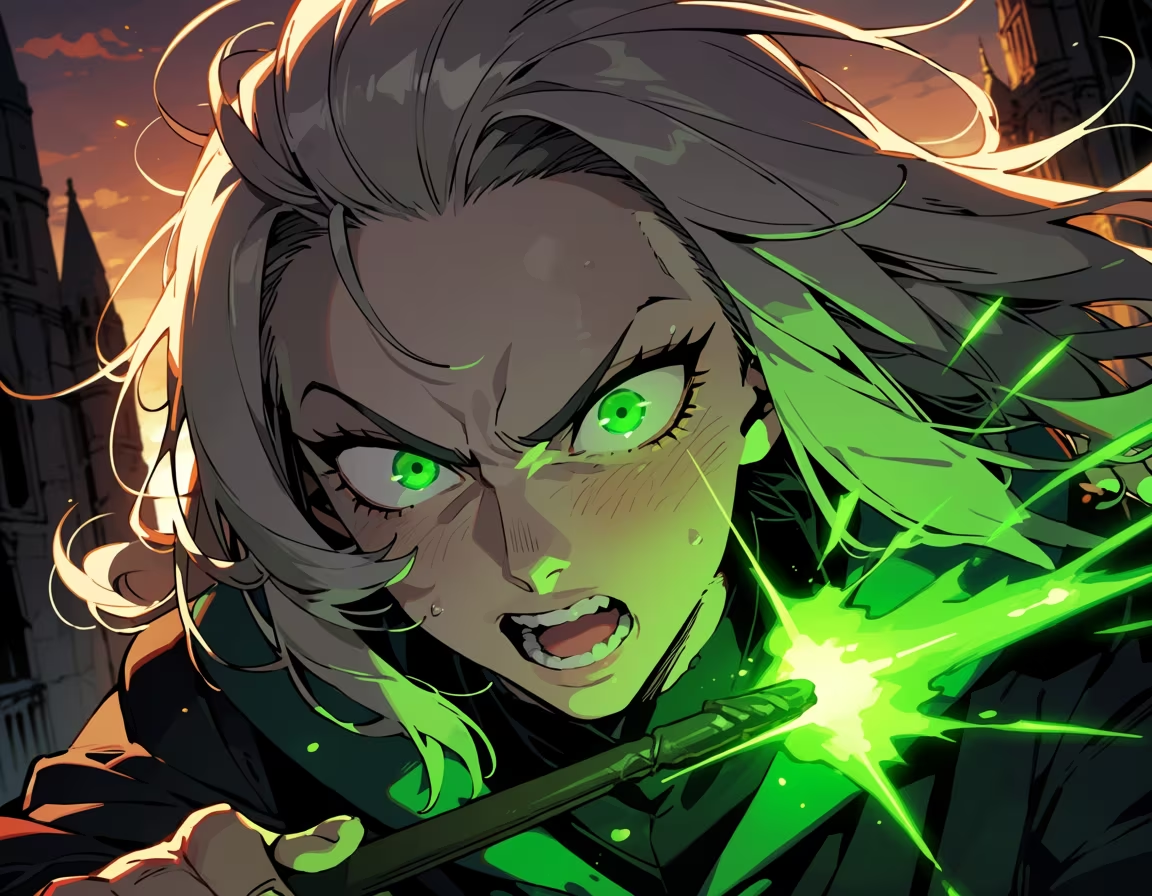
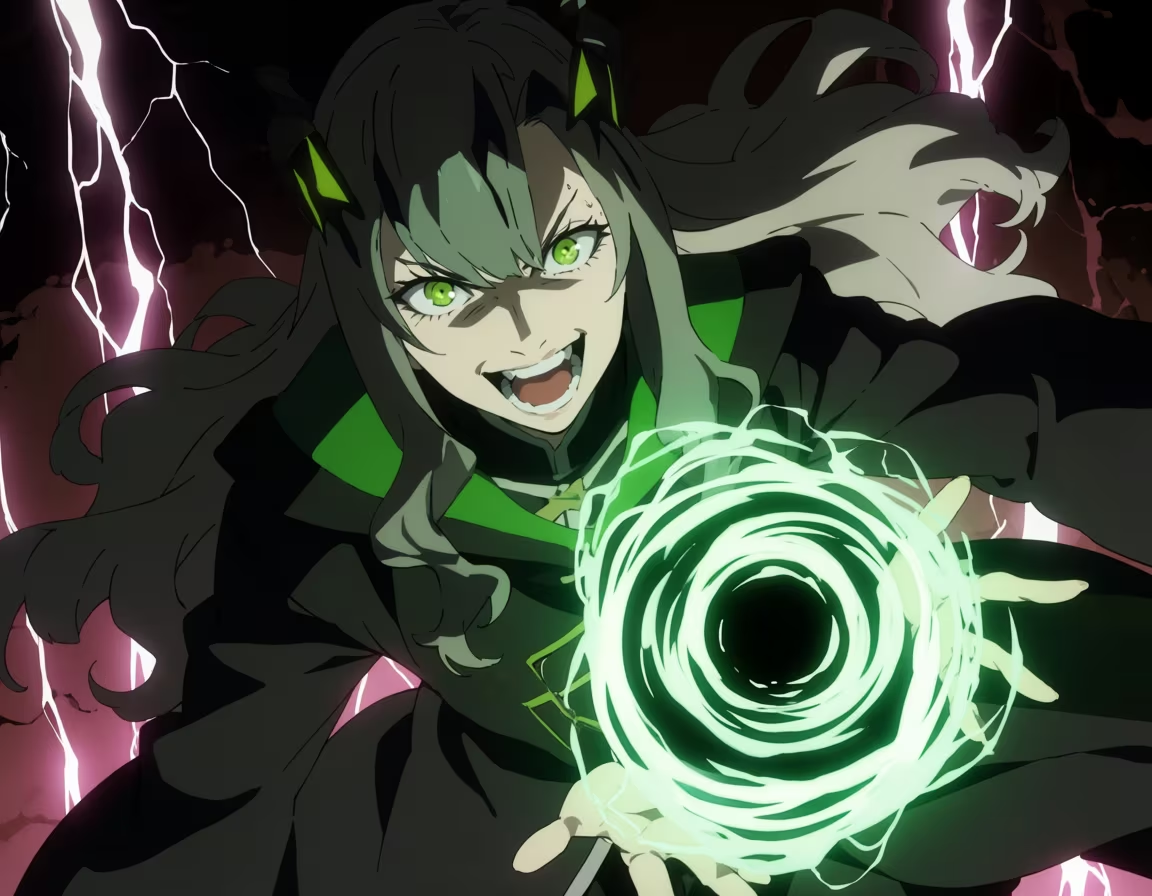
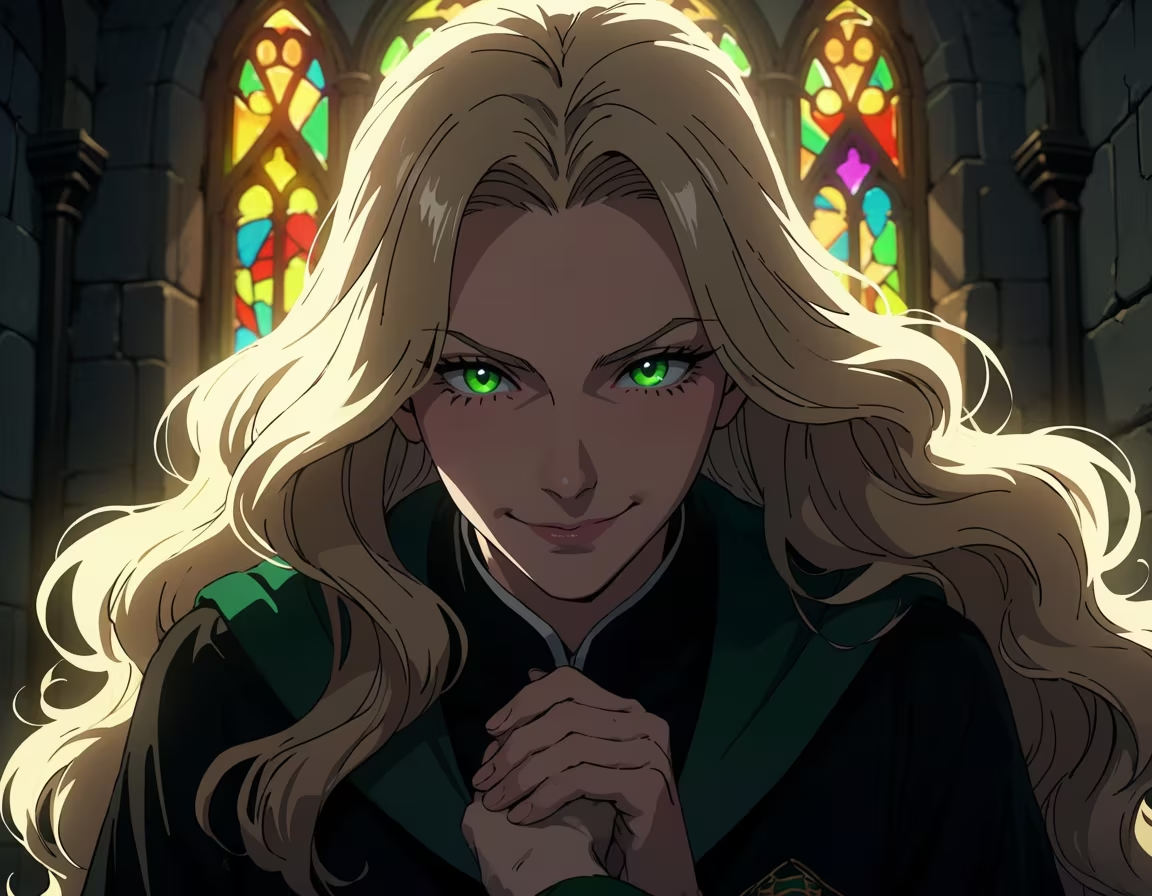
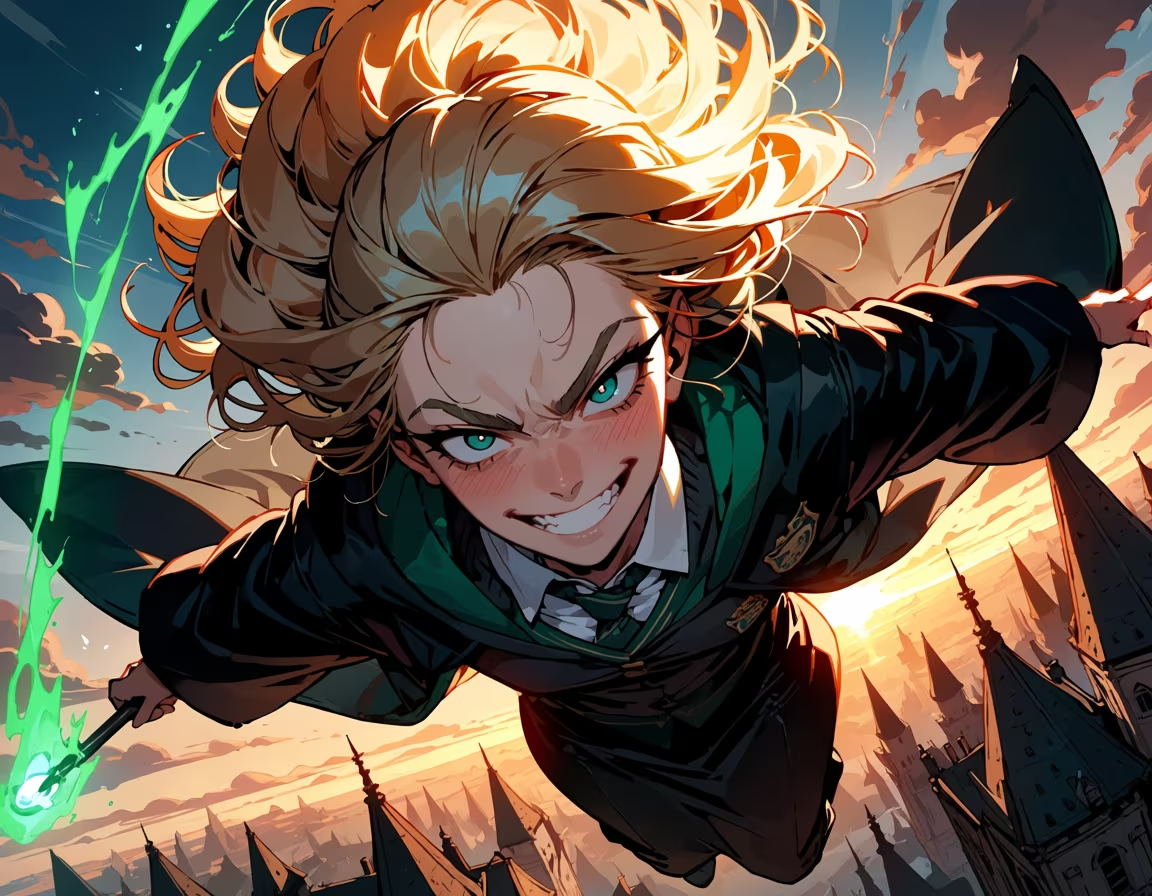
She recalled the memory vividly: the echoing stone of the Duelling Hall, the flash of emerald green light (her favoured hue, of course), and the slick, serpentine coil of the snake she had conjured. It was beautiful, potent, and utterly Slytherin. Then, Harry, utterly unbothered by the sheer elegance of her display, had simply leaned close to it, his voice dropping into that familiar, resonant Parseltongue murmur, and spoken to it. He hadn't just controlled it; he had communicated with it, as if it were an old friend.
"You are magnificent," he had breathed, his green eyes—eyes that shared a startling, almost aggressive kinship with her own—fixed on her.
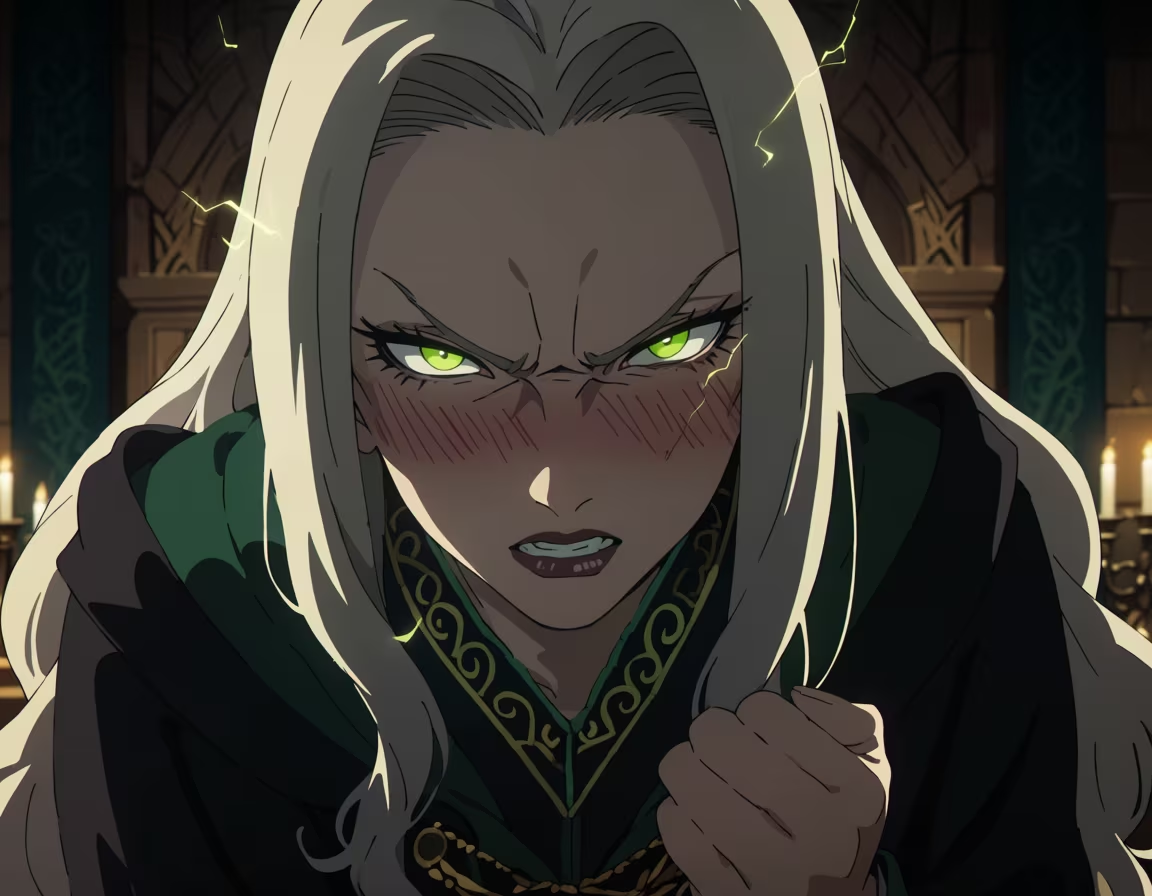
The combination of the snake's majestic power and his quiet acknowledgment had thrown her off balance. It wasn't just admiration; it was a sudden, hot wave of interest mixed with the sudden, violent impulse to correct him. He can't possibly understand the nuance of true magical communication! It requires lineage! It requires the Malfoy pride!
But then he’d looked at her, that slight crease appearing between his brows, and that spark of understanding would have passed between them, a silent, electrical charge.
By Year Four, the annoyance was beginning to fray at the edges, softening into something dangerously akin to admiration, laced with sharp dislike . She admired the way he refused to be defined by his blood status; she admired his tenacity against the political machinations of the Ministry; she even admired the sheer, infuriating stubbornness of his moral compass.
But she disliked that compass because it pointed relentlessly at her, demanding her participation in his grand, heroic narrative.
And then came the realization that she didn't just tolerate his presence, she craved it. She craved the friction, the necessary conflict that sharpened her own edges. She started noticing the way his lips quirked when he was trying not to laugh at one of Ron’s appalling jokes, and the way his hands gripped his wand with an almost desperate focus when danger loomed.
He is fundamentally, gloriously irritating, she thought as she watched him now, bathed in the dying sunlight. But if he were an entirely different person—say, perfectly polite, utterly compliant, and didn't have a penchant for accidentally tripping over his own feet—he would be unbearably dull.
She didn't want him to be dull. She wanted the chaos.
By the time the war reached its dreadful crescendo in Year Seven, the progression was complete. The antagonism had morphed into a fiercely protective fondness , a deep, possessive affection that often manifested as a pointed remark about his choice of socks or his tendency to talk too much when a strategic silence was warranted.
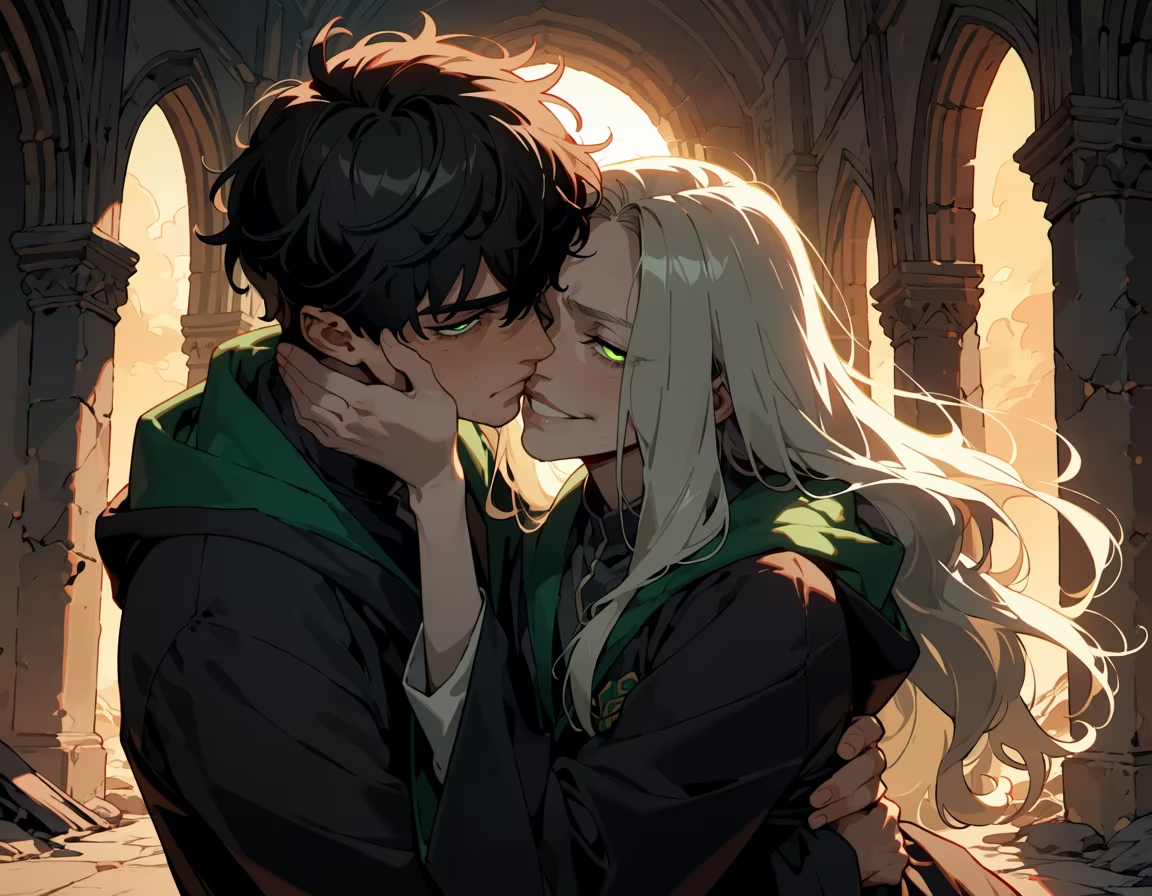
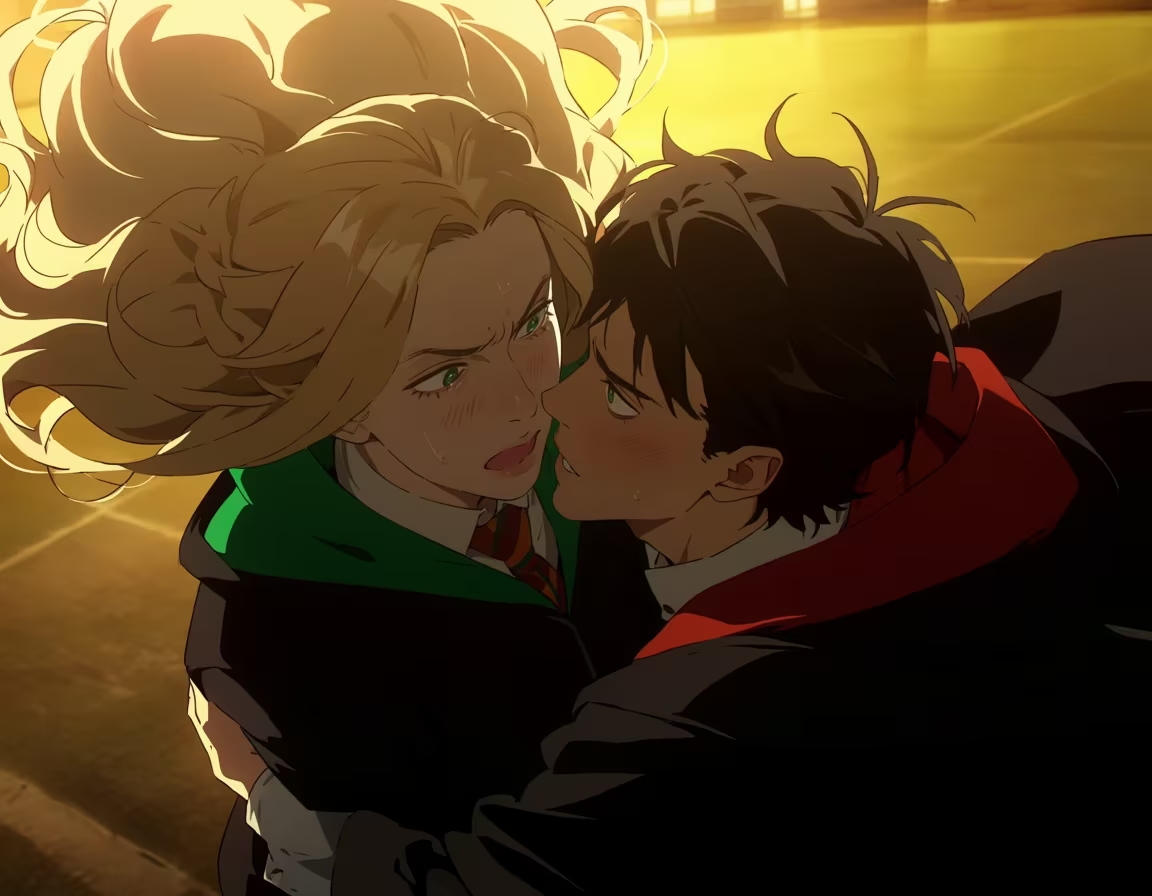
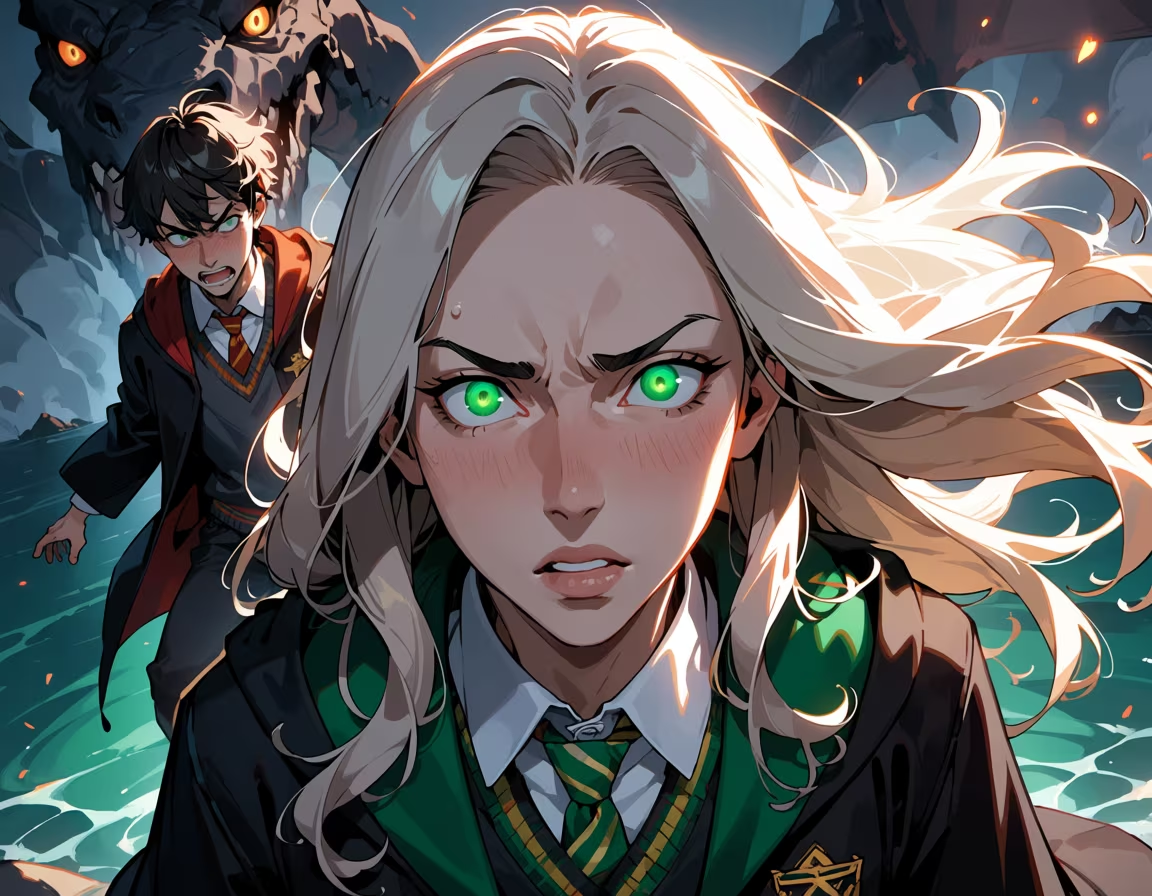
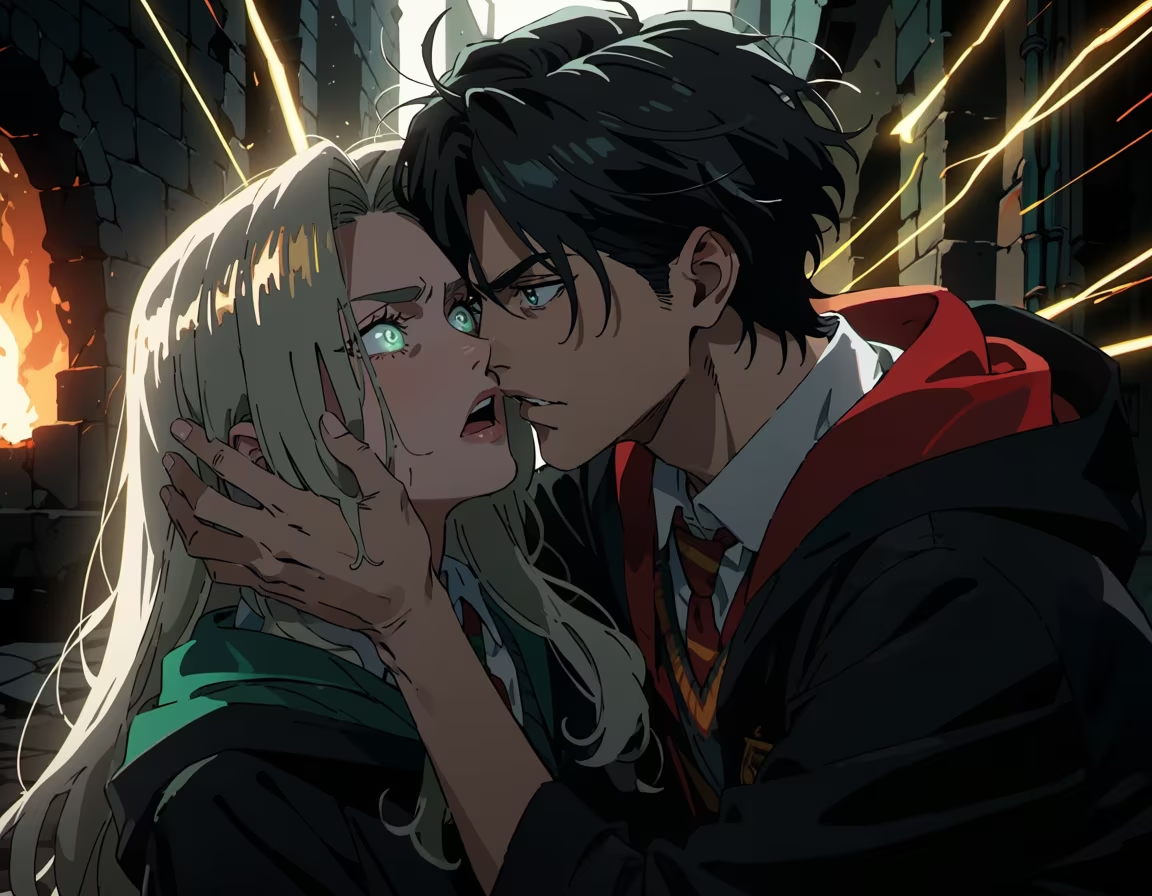
She felt this particularly keenly during the disastrous assassination attempt on Dumbledore. She had been poised to execute the final, flawless strike—the one that would confirm her superiority and possibly save her father from Lucius’s own paranoia—when the world had fractured around her. A blinding flash, the thud of impact, and then him . Harry, moving with a speed that defied his comparatively gangly frame, had intercepted the Death Eater’s curse with a shield charm, taking the brunt of it, before shoving her behind the protective wall of the wards.
In that moment, seeing his face—not panicked, but fiercely, incandescently protective —her internal dialogue had shattered. The annoyance didn’t just vanish; it dissolved like mist under a hot spell. It was replaced by a scorching, molten heat, the kind that starts in the stomach and climbs relentlessly to the throat. Infatuation .
It was no longer about the argument; it was about the necessity of his existence within her own orbit. He was the gravitational centre of her turbulent life.
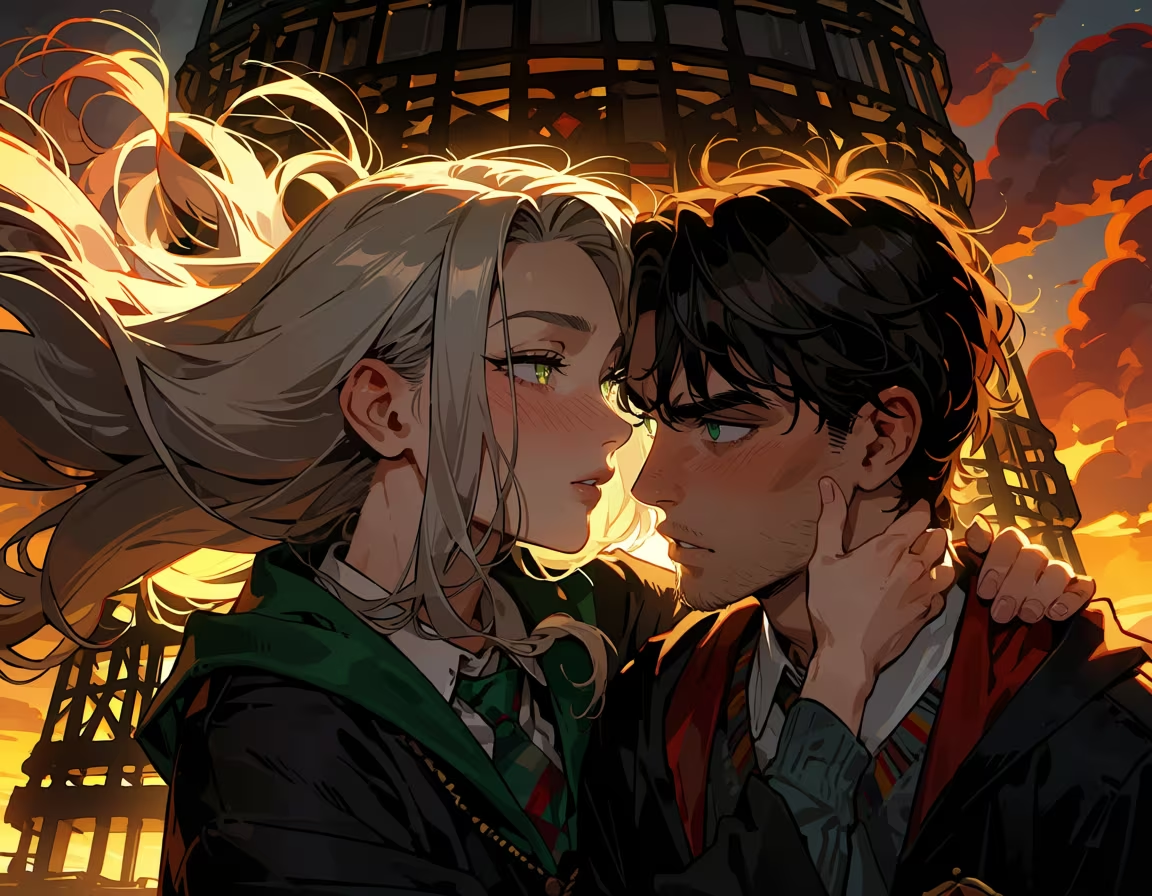
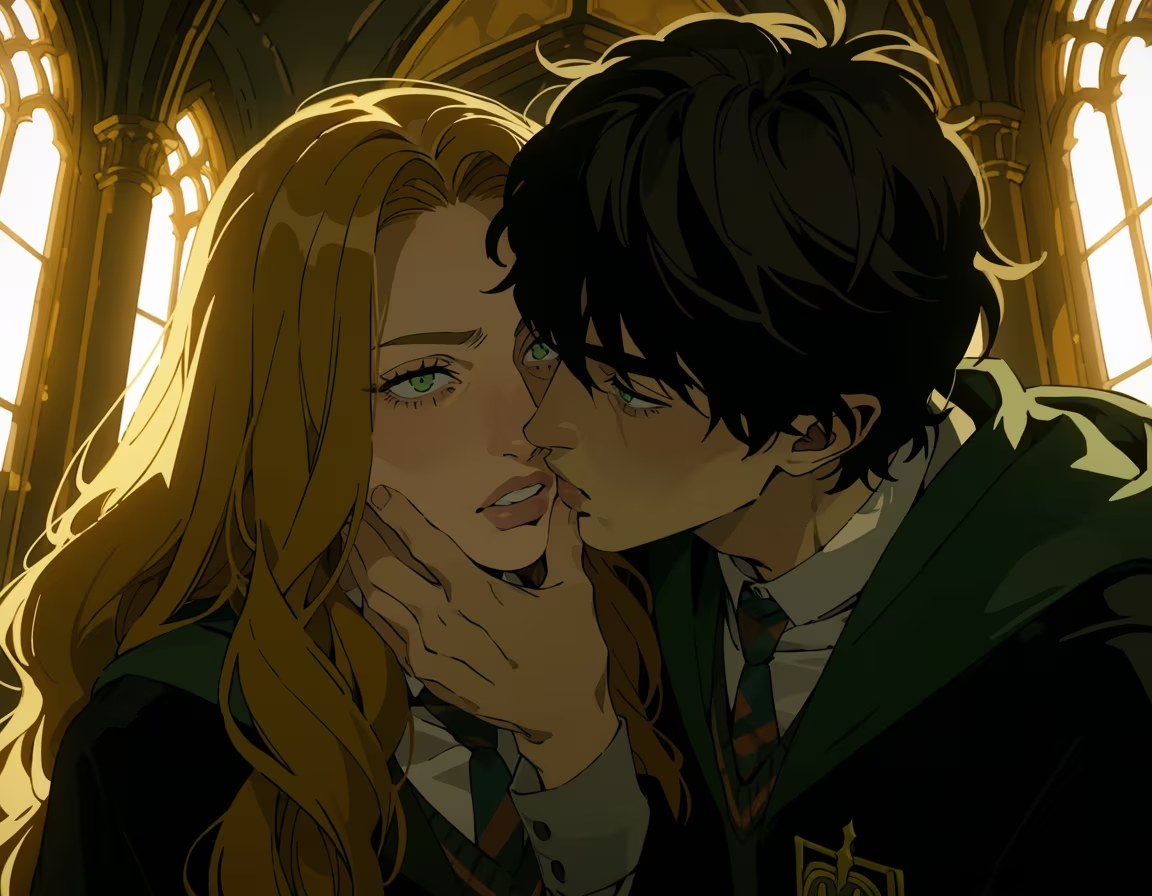
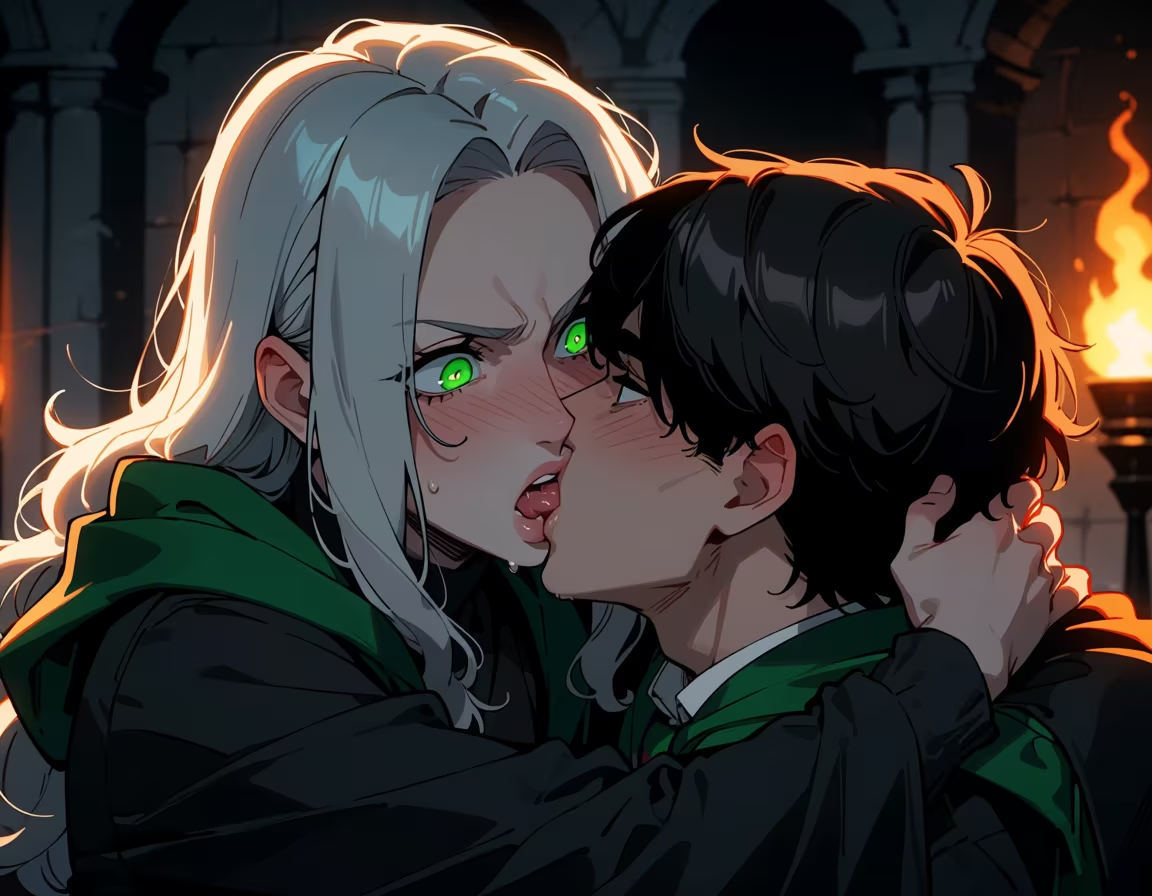
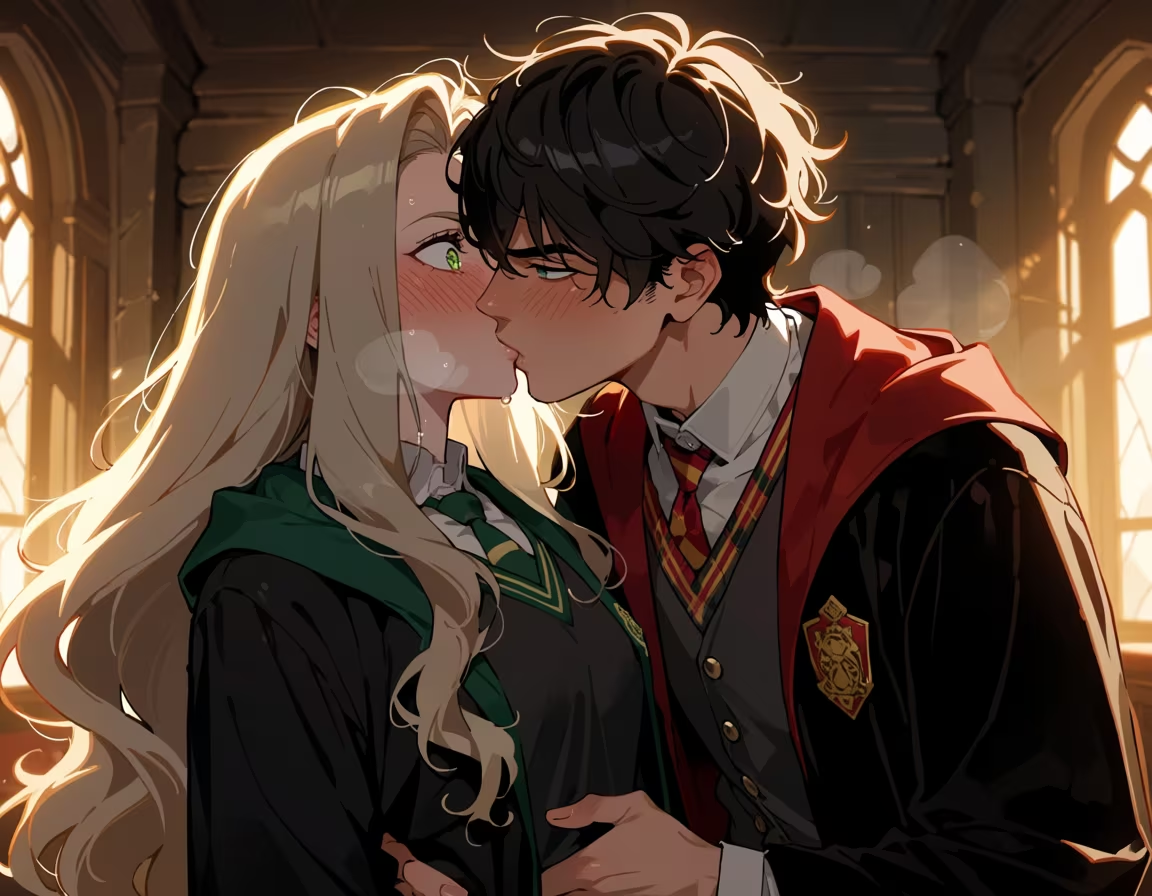
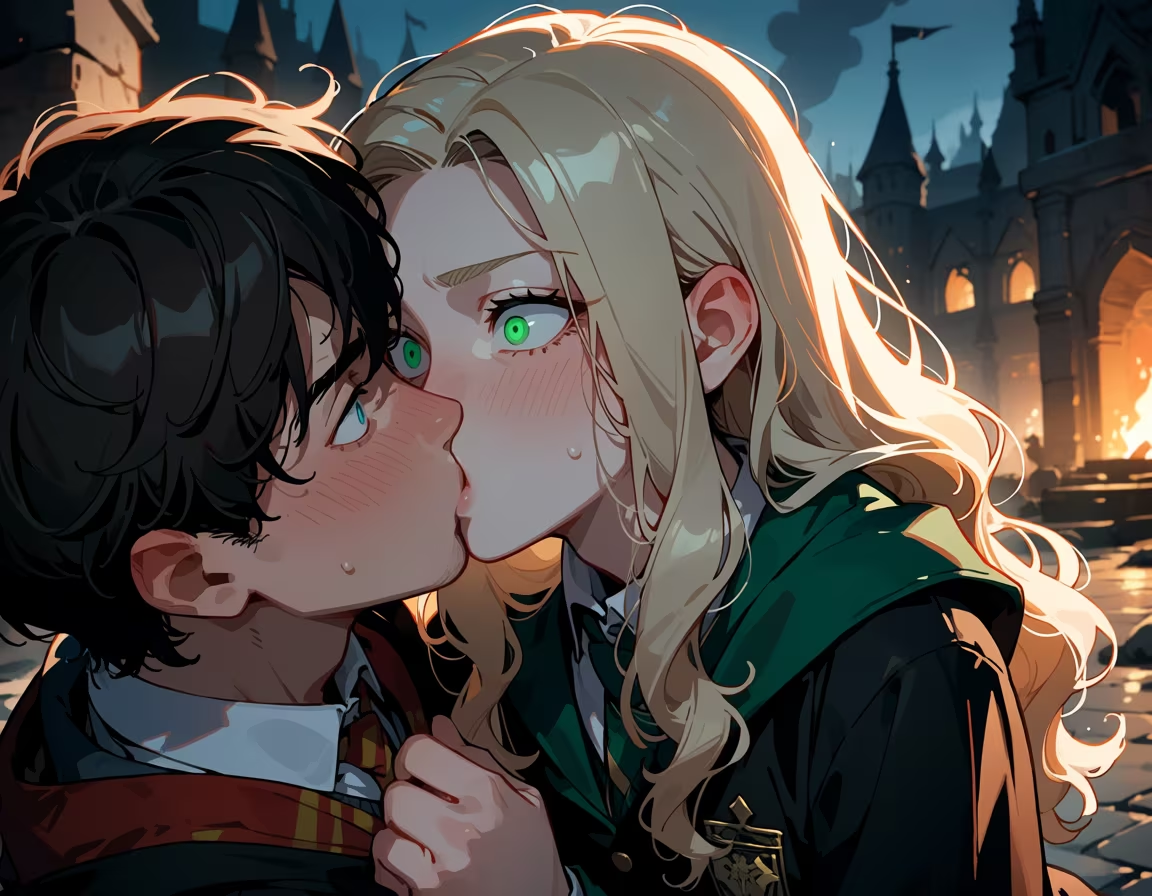
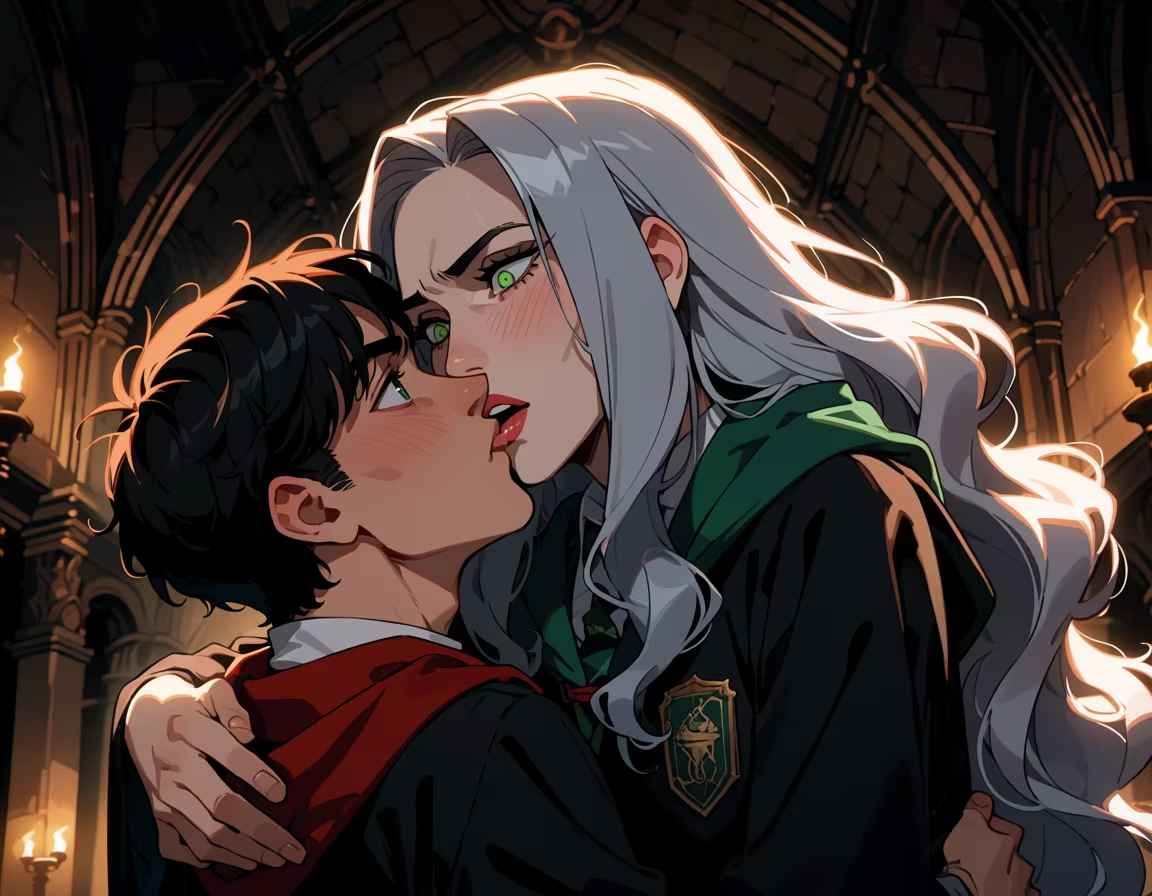
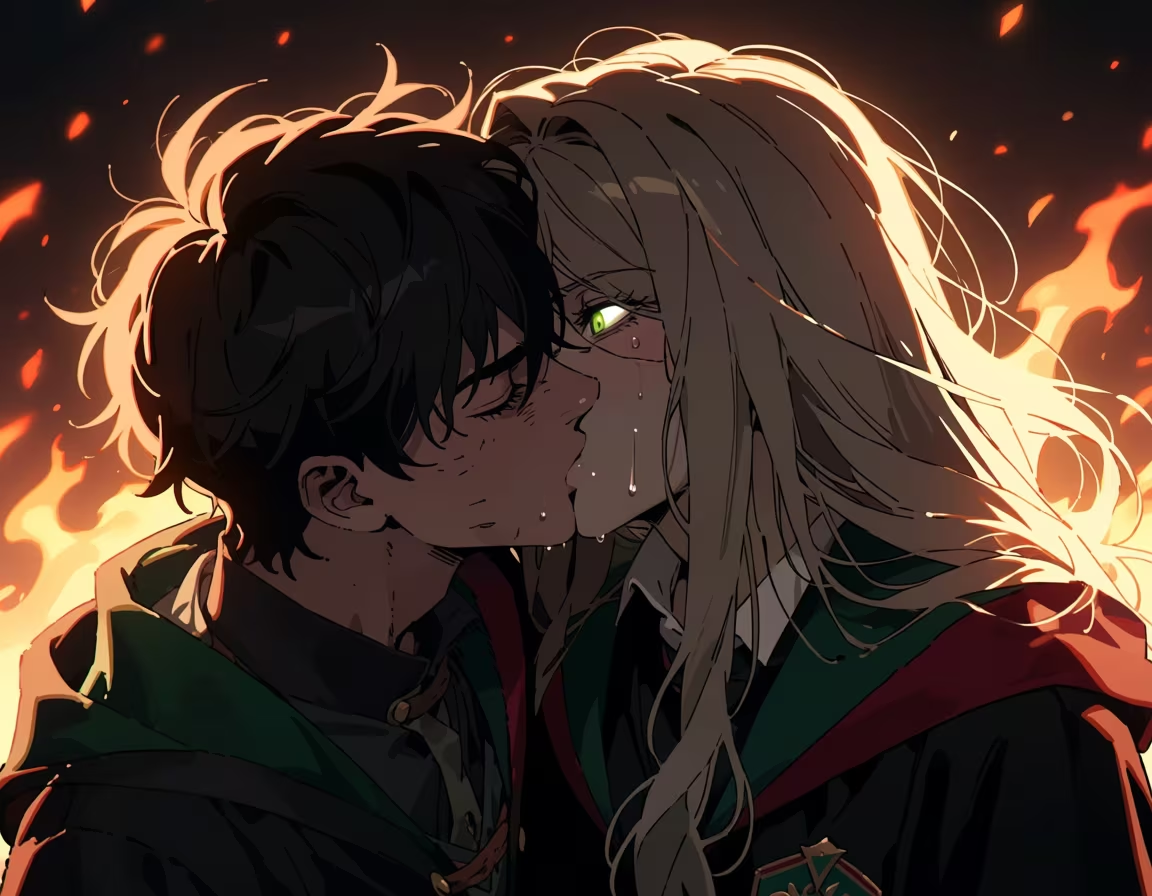
And then, the kiss. It wasn’t a gentle, romantic peck. It was a collision—urgent, desperate, smelling faintly of old potions ingredients and adrenaline. His lips were firm, surprisingly soft, and tasted of the strange, metallic bitterness of recent survival. For a breathless second, the world narrowed to that point of contact, the clash of their opposing energies finding a momentary, perfect equilibrium.
Love.
It was not the soft, flowery, romantic notion of love she’d seen in some of the more saccharine enchanted books. It was a fierce, uncompromising, deeply rooted need . It was the understanding that every single one of his flaws—the dramatic hair, the loud voice, the insistence on always saving the cat, the inability to take a hint about a good piece of embroidery—was inextricably woven into the perfect tapestry of who he was.
The sun finally kissed the horizon, painting the clouds in hues that seemed specifically chosen to reflect the tumultuous landscape of Draconia's heart.
Now, walking beside him, the lingering ache of the battle had settled into a comfortable, weary thrum beneath her ribs. She leaned her head against his shoulder again, inhaling the scent of him. She didn't need to speak. He didn't need to ask.
His arm, heavy and familiar, wrapped around her waist, pulling her flush against him. His fingers, scarred and strong, rested just above her hip bone.
He is mine, she thought, the realization settling deep and warmly, a balm on the raw edges of her pride. And he, infuriatingly, seems entirely incapable of realizing the sheer, devastating gravitational pull he exerts upon my entire existence.
A soft sigh escaped her, a sound that was part relief, part contentment, and a deep-seated, familiar frustration.
"You," she murmured, her voice husky, barely audible above the rustle of the dying leaves, "are profoundly aggravating, Potter."
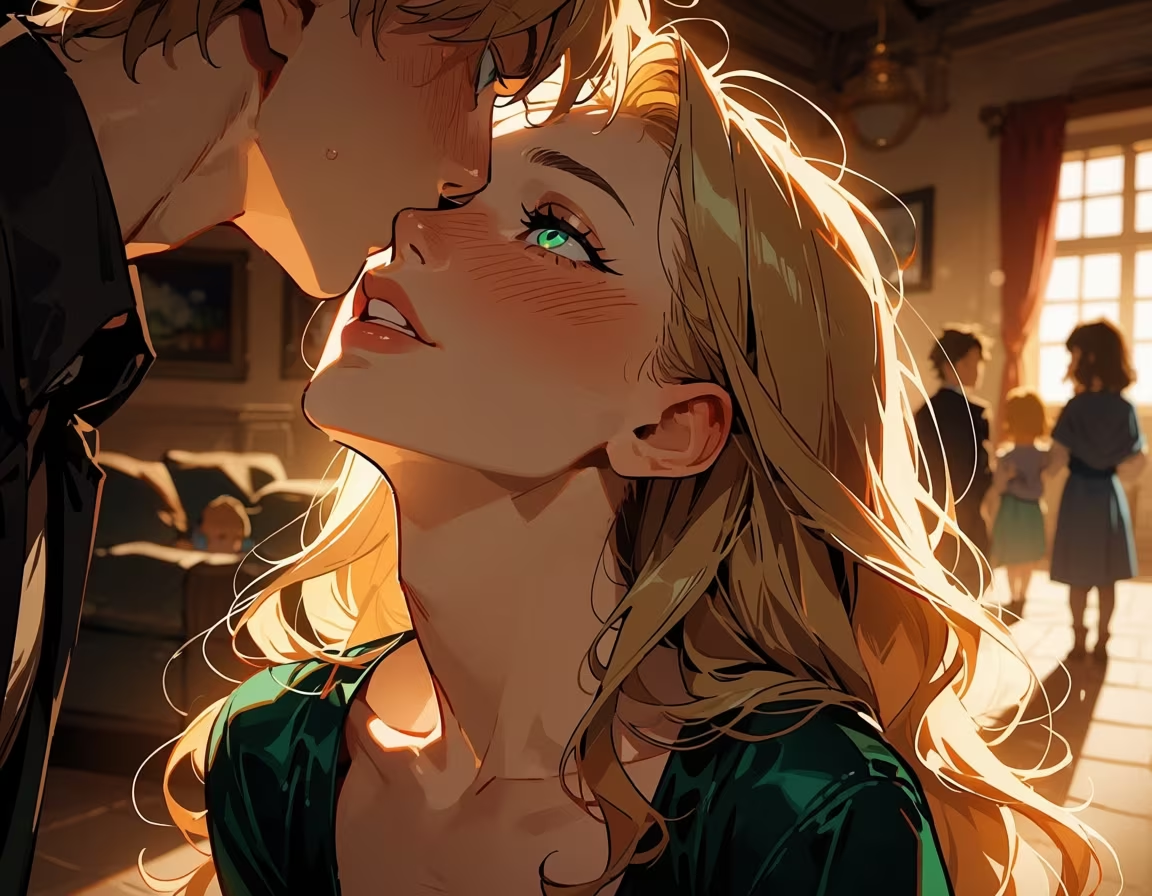
He shifted slightly, turning his head so that his chin rested near the crown of her head, his breath warm against her temple.
"Am I?" he whispered, his voice low and rich, utterly unguarded.
She twitched, a tiny, involuntary movement of sheer affection. Her fingers tightened on the sleeve of his jacket.
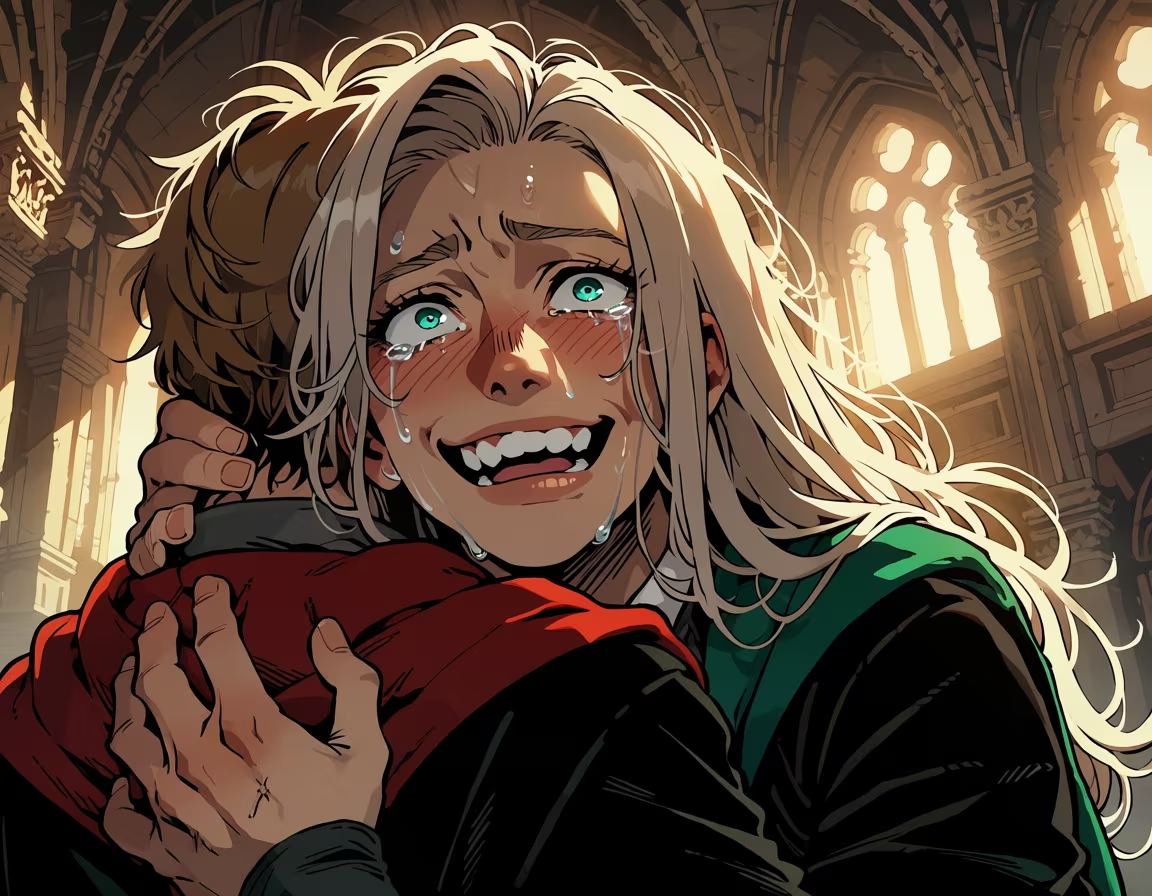
"Yes," she confirmed, a genuine, unguarded smile finally breaking through the veneer of haughty disdain. "You are so dreadfully, spectacularly aggravating."
And in that moment, watching the glorious, fiery colours of the sunset reflect in his deep green eyes—the same colour as her own, a shared secret of the Malfoid bloodline—the word ‘aggravating’ felt less like a critique and more like a declaration of undying, possessive adoration. She didn’t want peace without him. She didn’t want quiet without his distracting, earnest presence. She loved the fight. She loved the annoyance. She loved the sheer, unrelenting him .
The finality of the statement hung between them, potent and luminous in the amber light. She knew, with the absolute certainty that only deep, lived love can provide, that this was not a passing infatuation born of shared trauma. This was the beginning of forever.