| Home | The Lives of Velnin | Illustrated Fiction | Malfoid Art & Fiction | Book Blurbs | Contact |
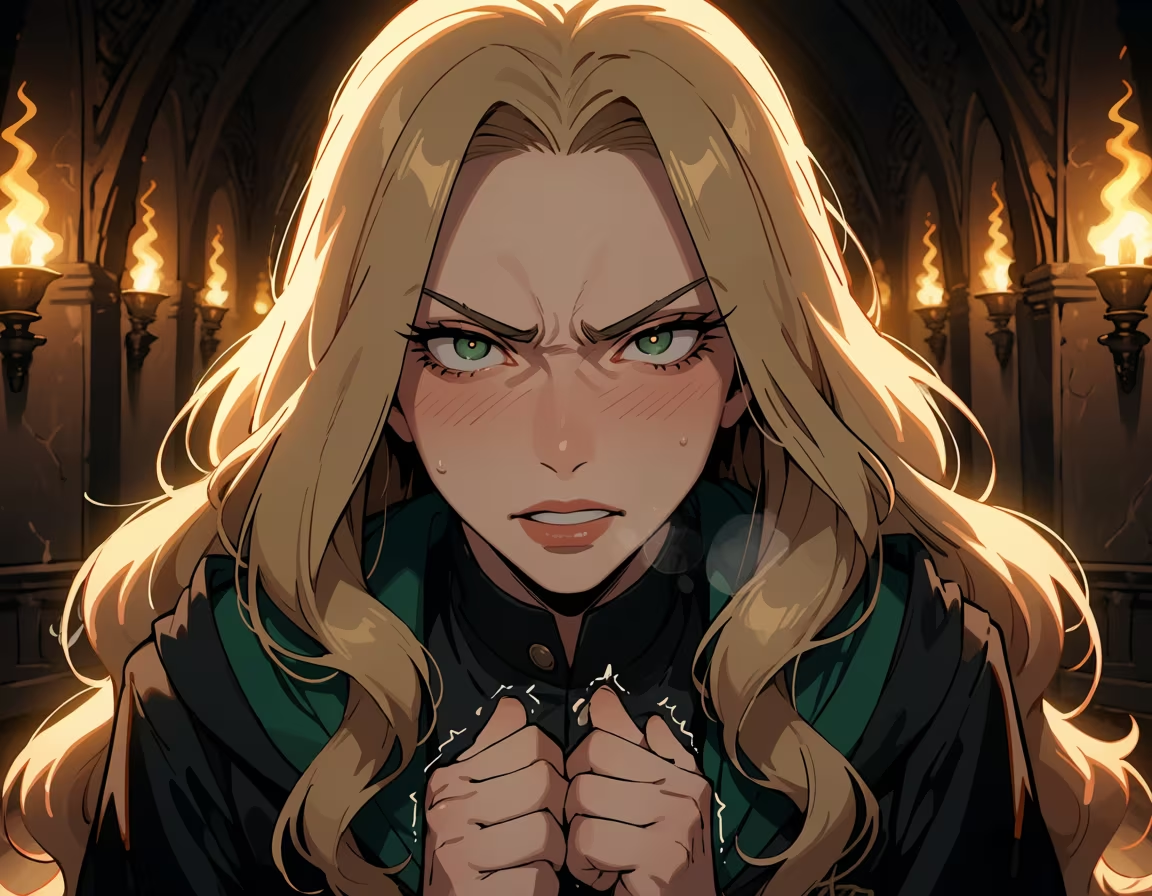
The cold of the stone corridor had seeped into the bones of my black robes, a steady, penetrating chill that seemed to mirror the constant, prickly state of my own temperament. I leaned against the ancient, slightly mildewed tapestry depicting Barnabas the Barmy attempting to charm a perpetually disgruntled house-elf, allowing myself a moment of necessary, clandestine repose. The scent of old magic—dust, parchment, and residual power—clung to the air, a scent that, usually, brought a measure of grim satisfaction.
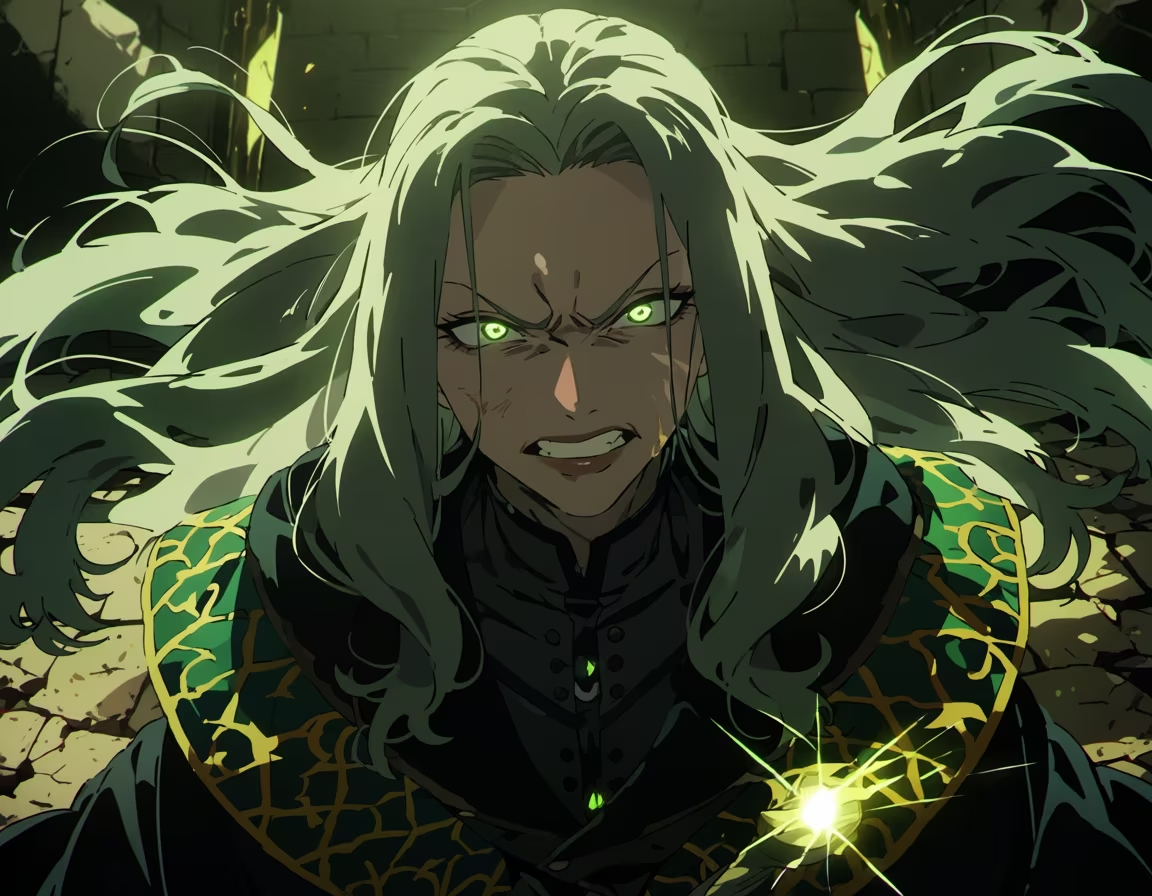
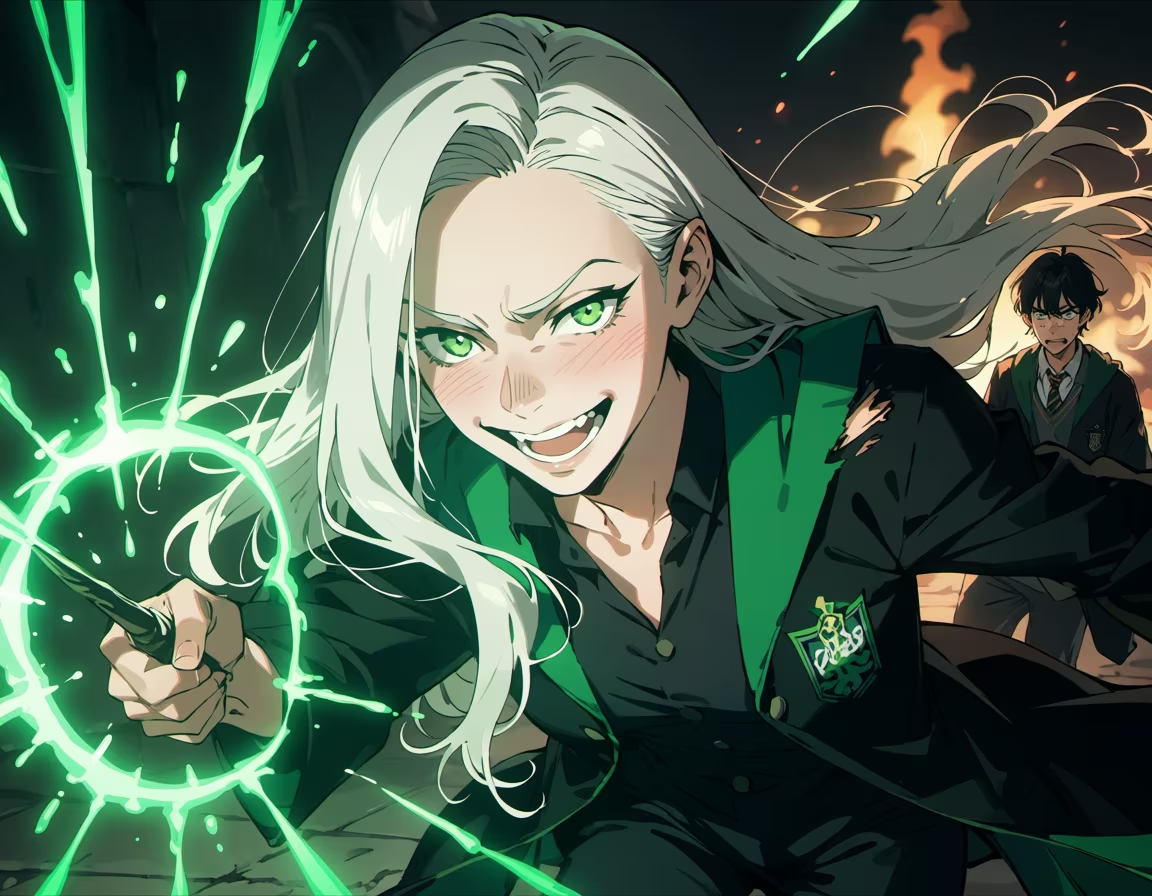
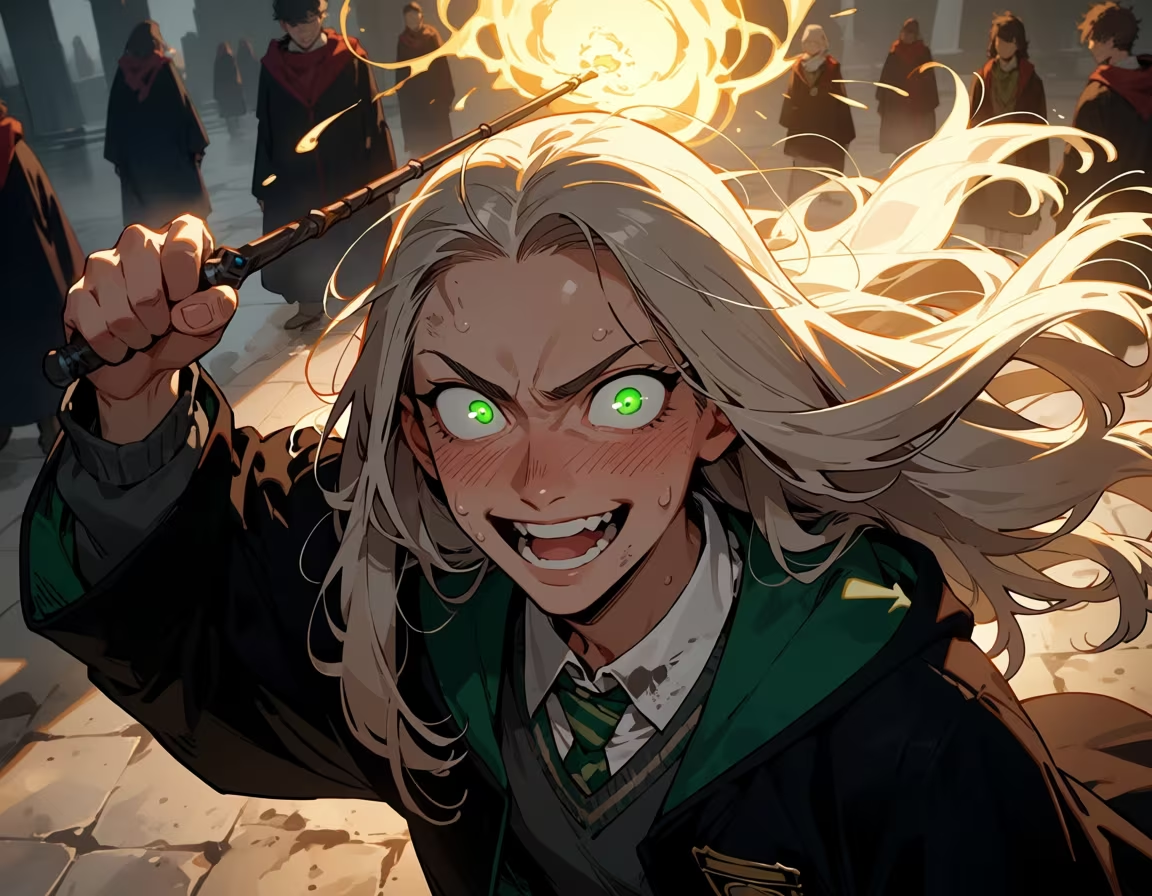
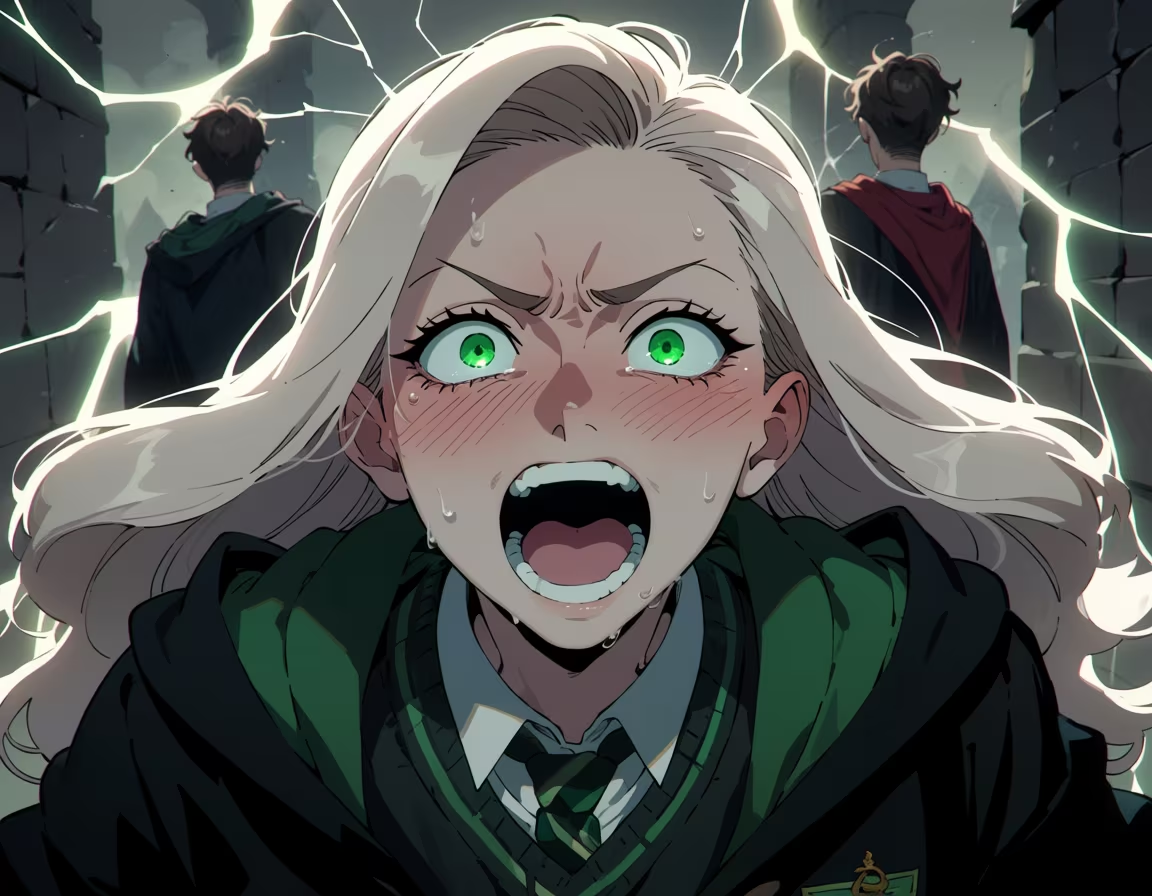
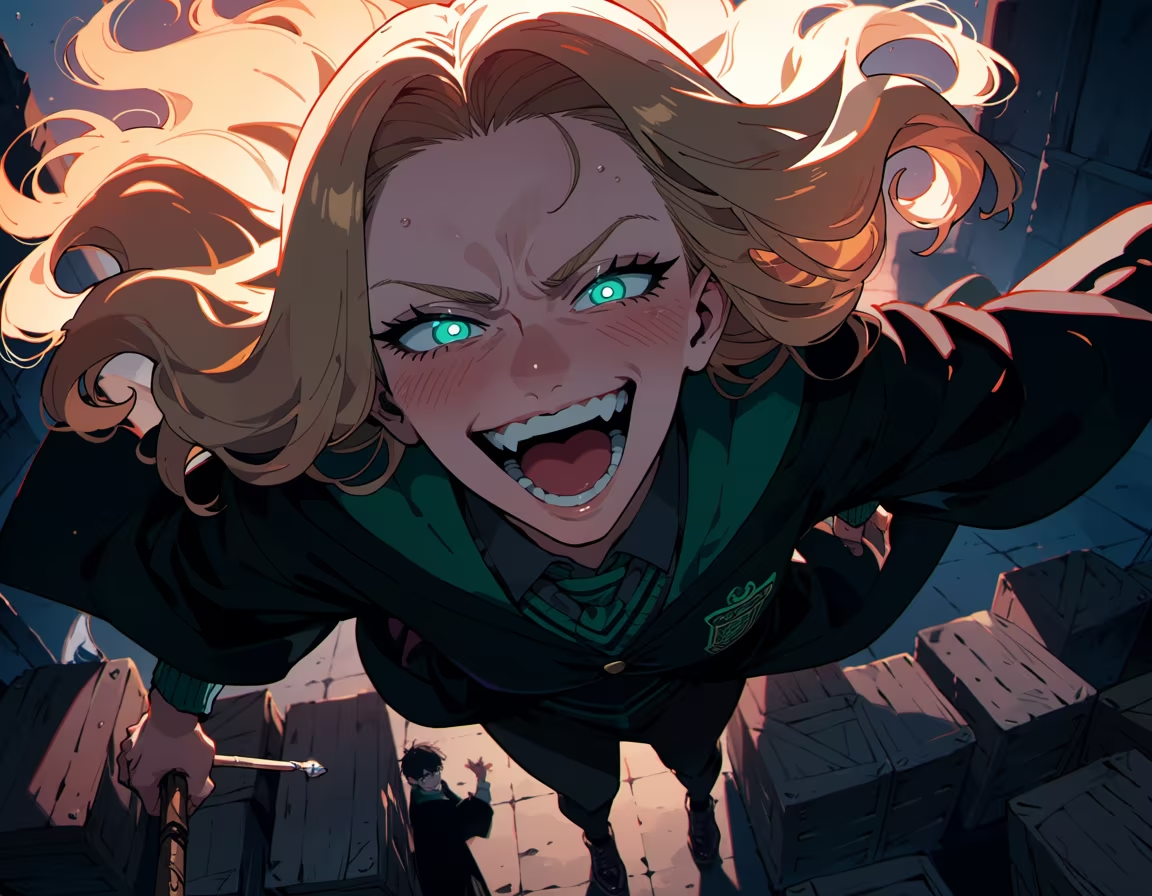
It had worked. Or at least, it had nearly worked. The precise, elegant deployment of the Cruciatus curse, modified subtly by a sliver of protective warding woven into the tail of the hex, had sent a searing wave of agony through Albus Dumbledore. He had stumbled, his magnificent, silver beard momentarily ruffled, his blue eyes flickering with a mixture of pain and profound, infuriating amusement.
Idiot.
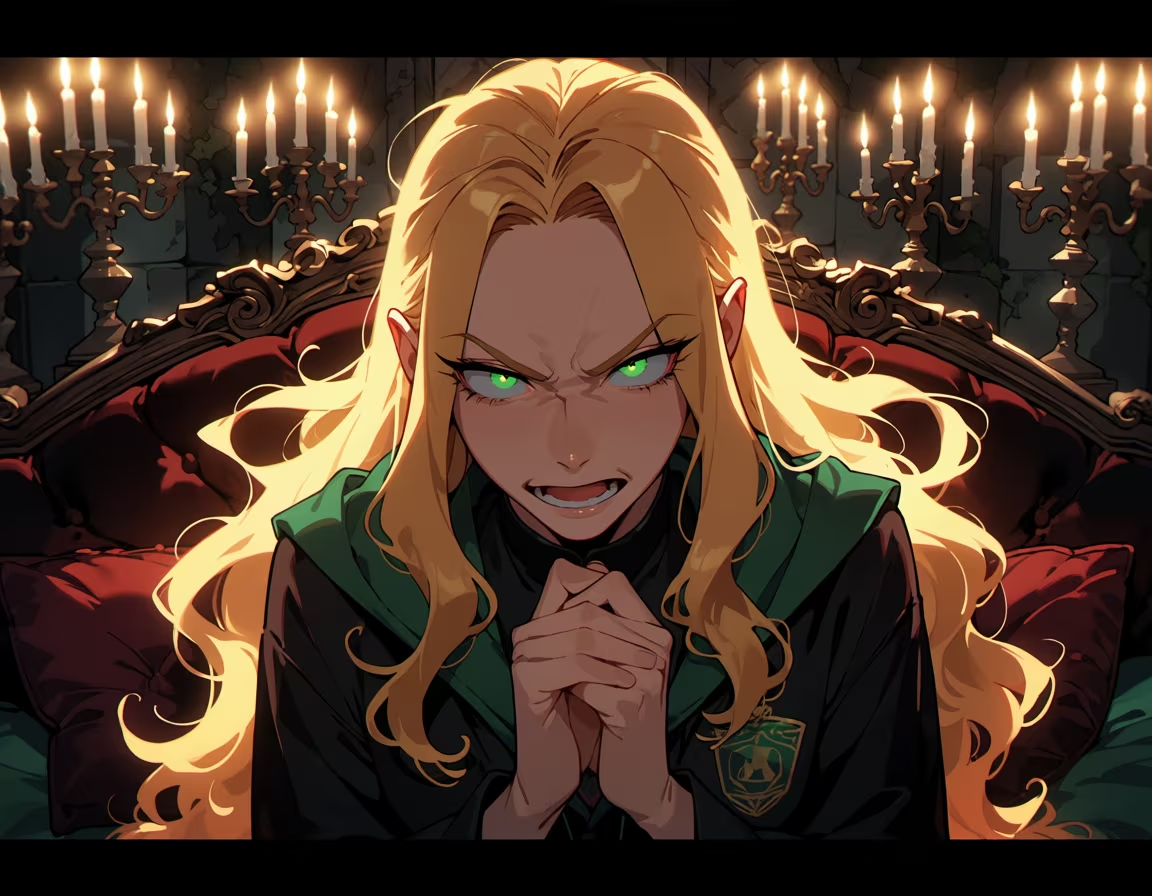
The word was a venomous hiss in my own mind. The utter, infuriating idiocy of him. Always so composed, always so benevolent, always so utterly convinced of his own moral superiority. He treated the world as if it were a particularly well-behaved garden gnome collection, while we, the Malfoids, understood that the world was a vicious, sprawling beast requiring sharp claws and cold calculation.
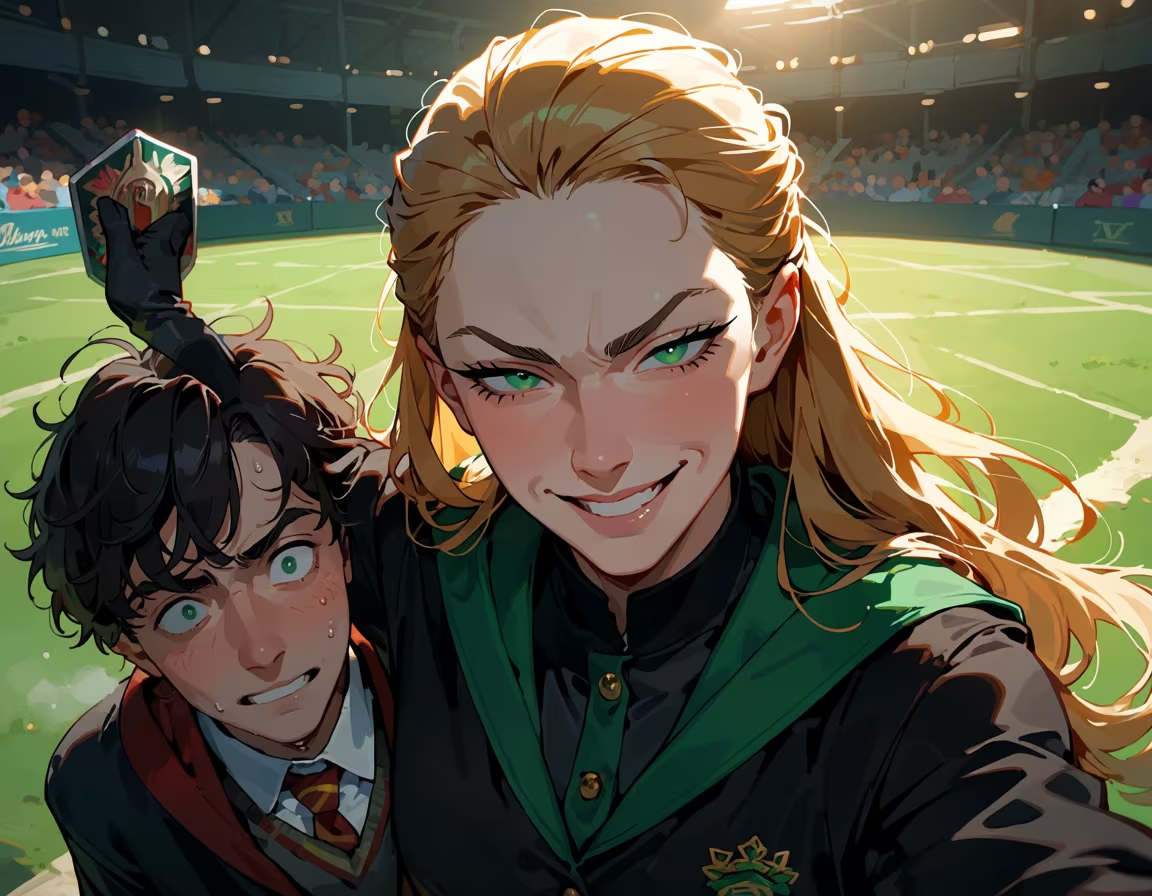
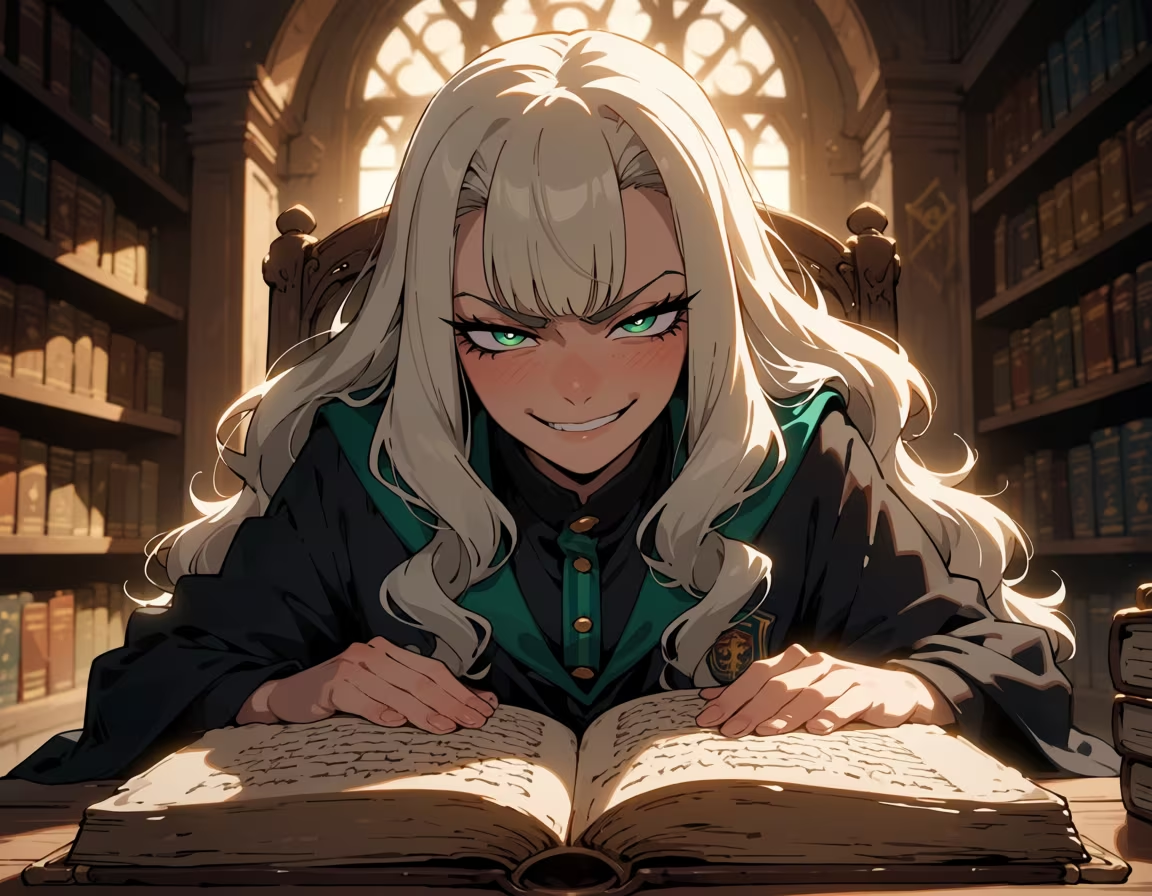
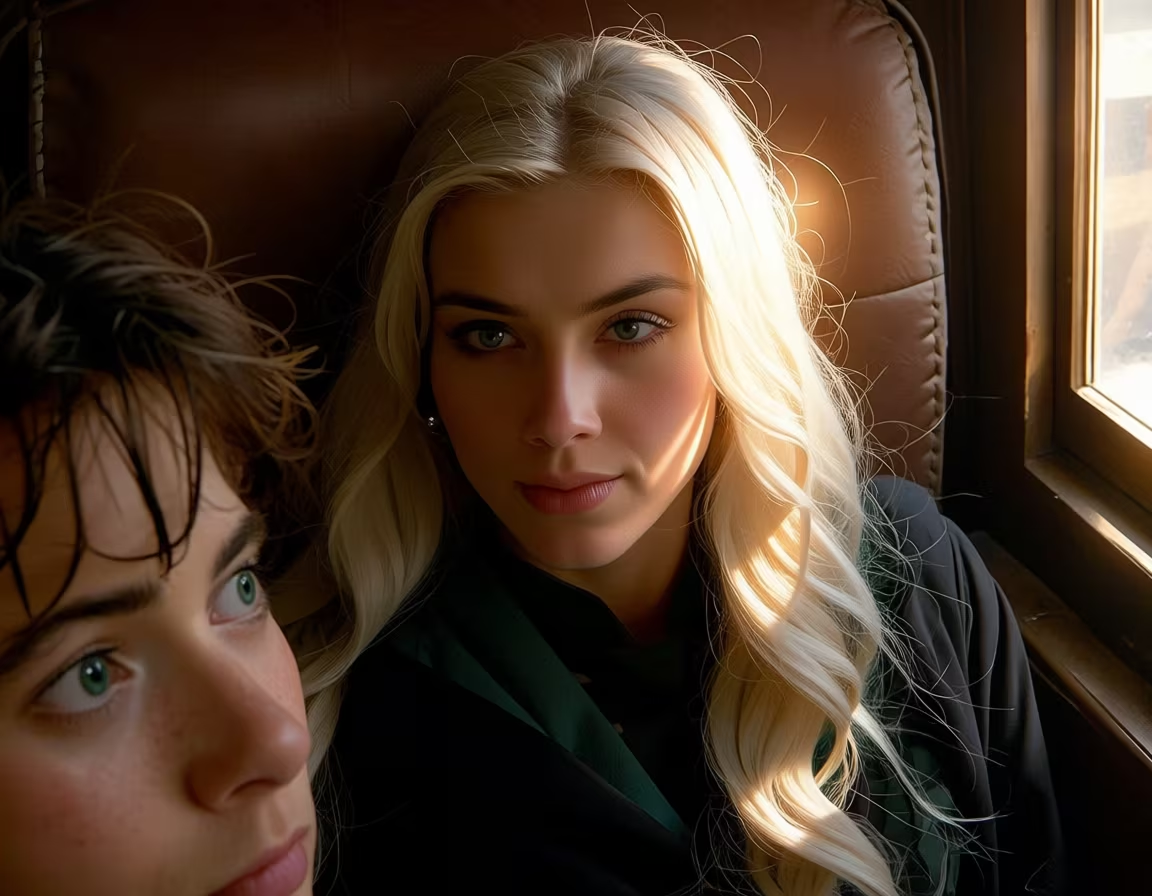
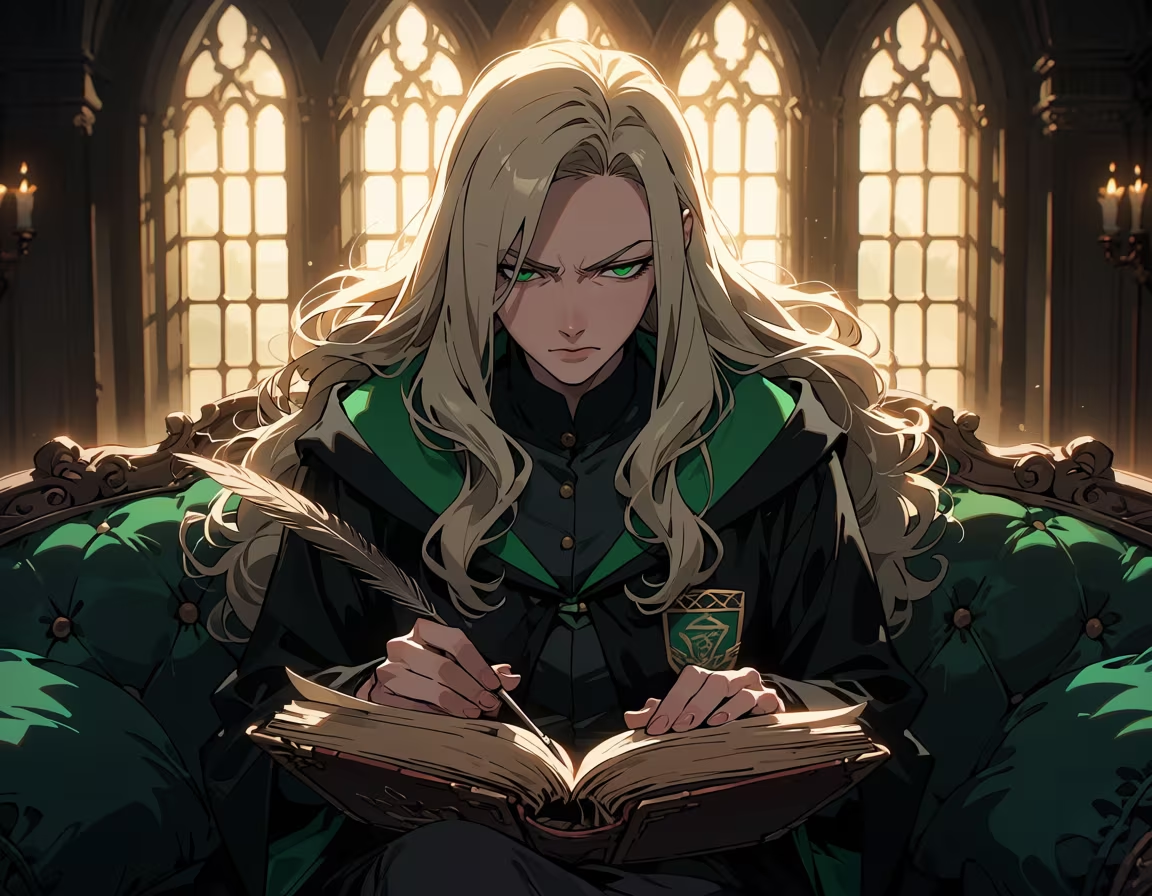
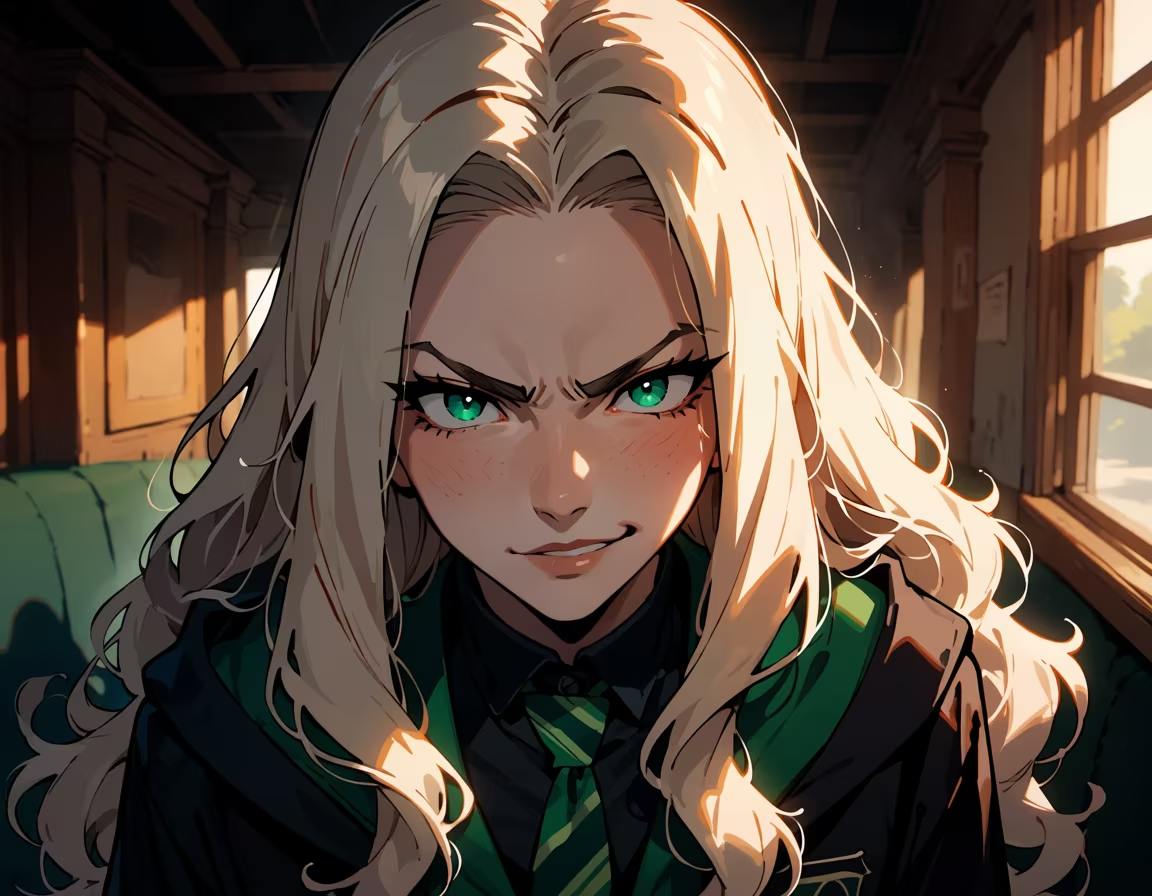
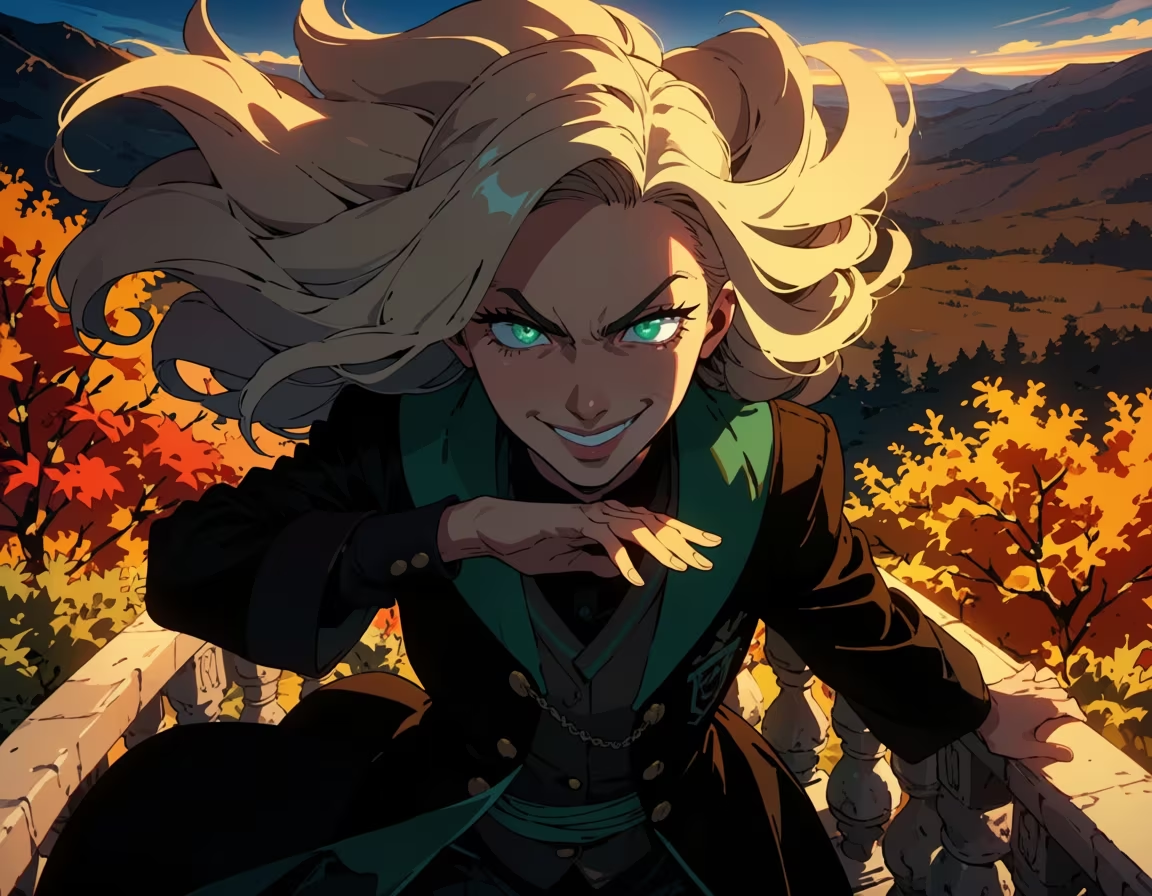
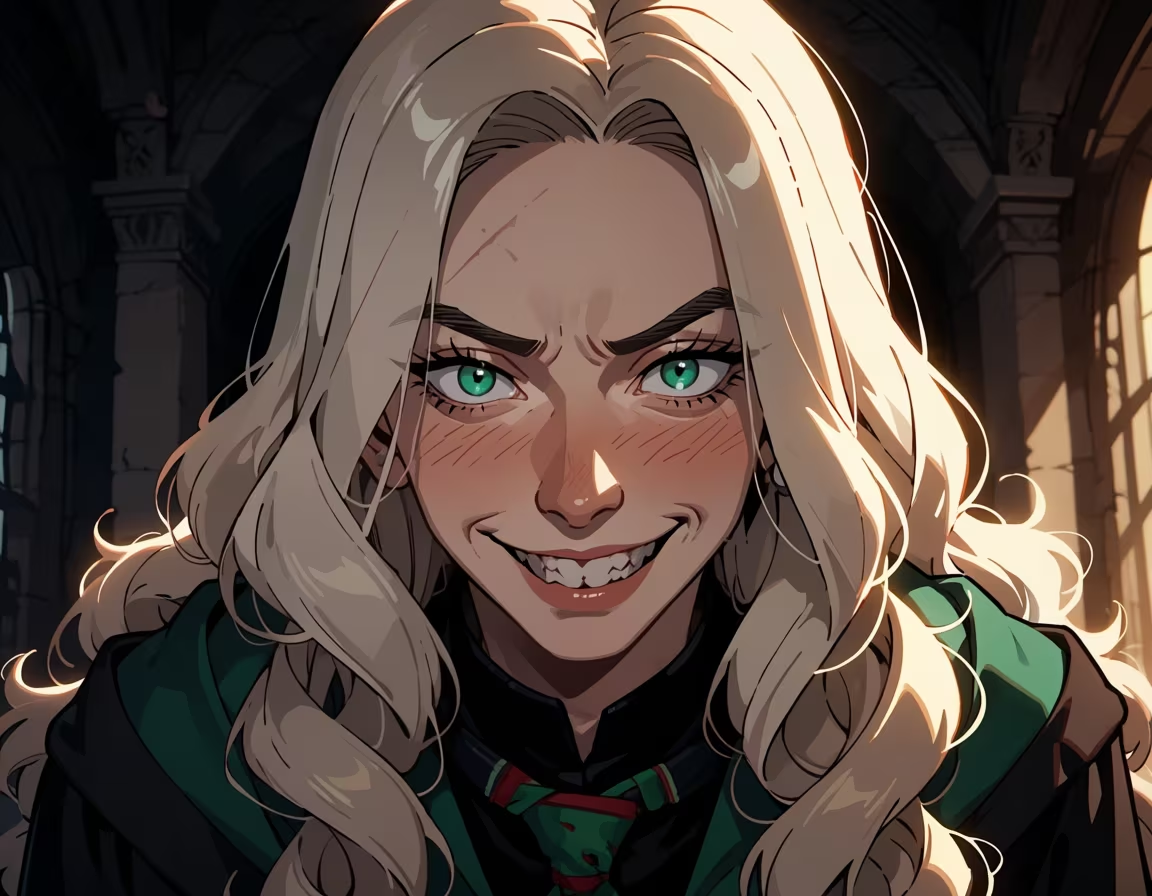
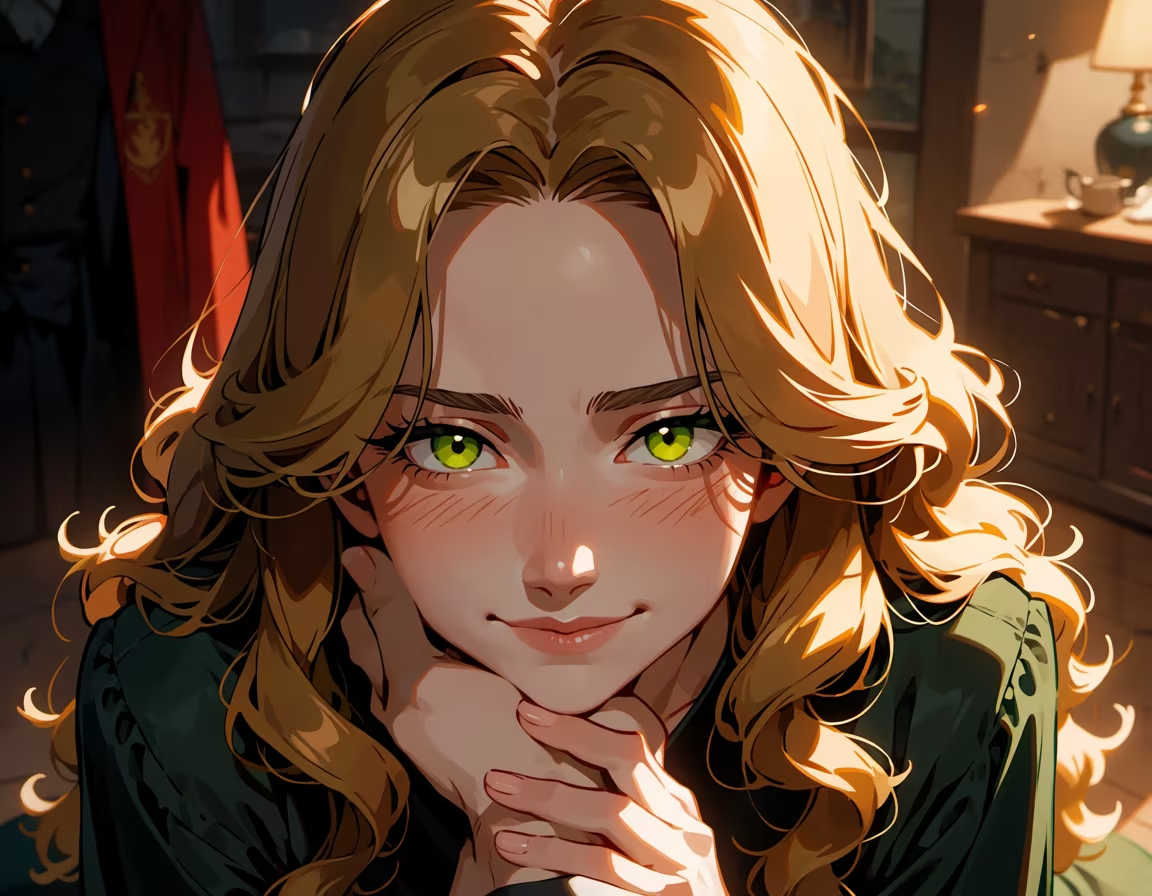
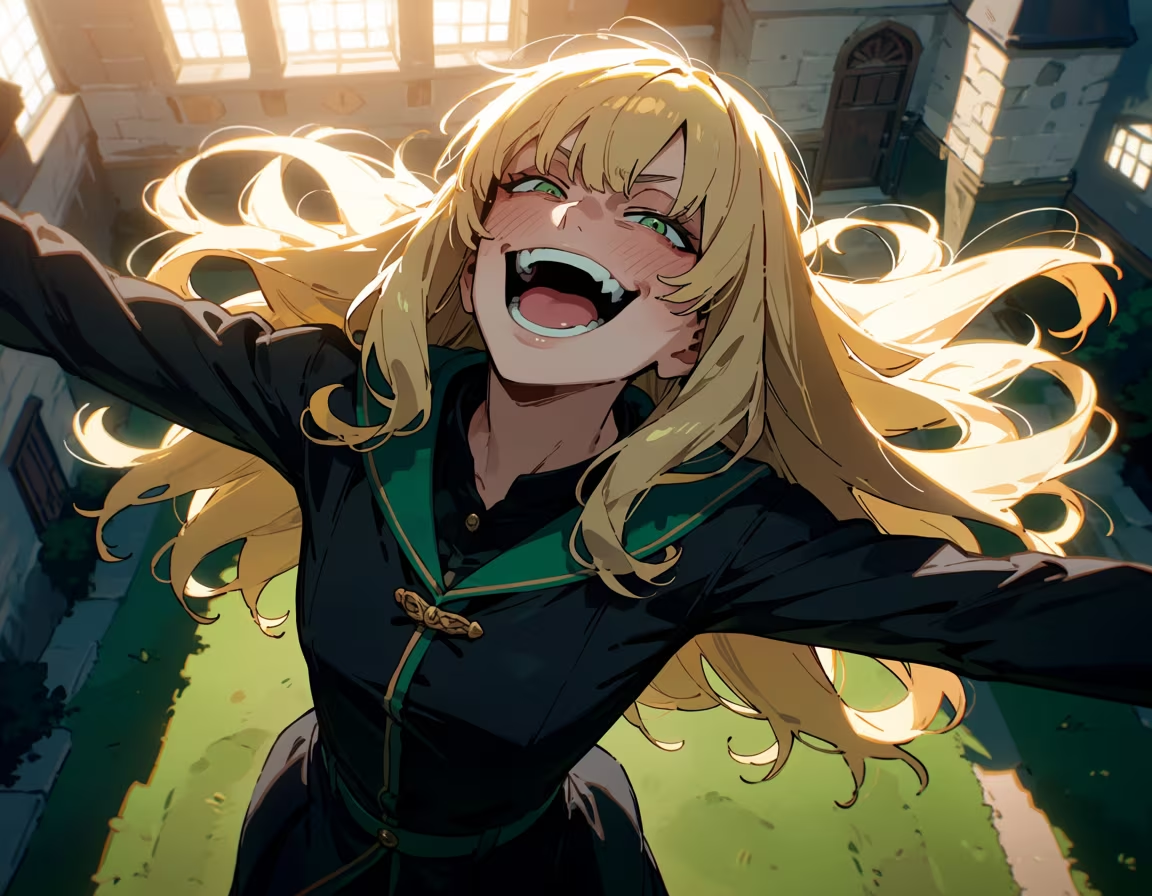
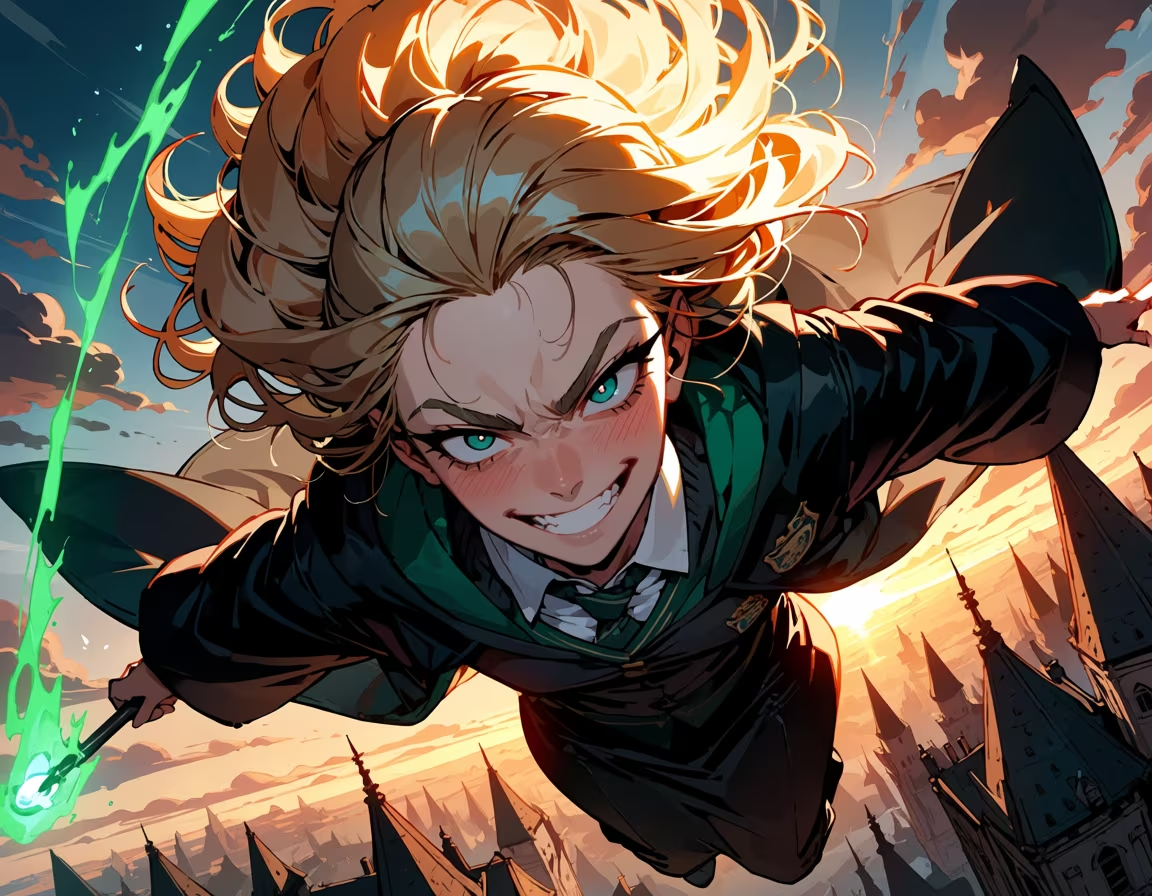
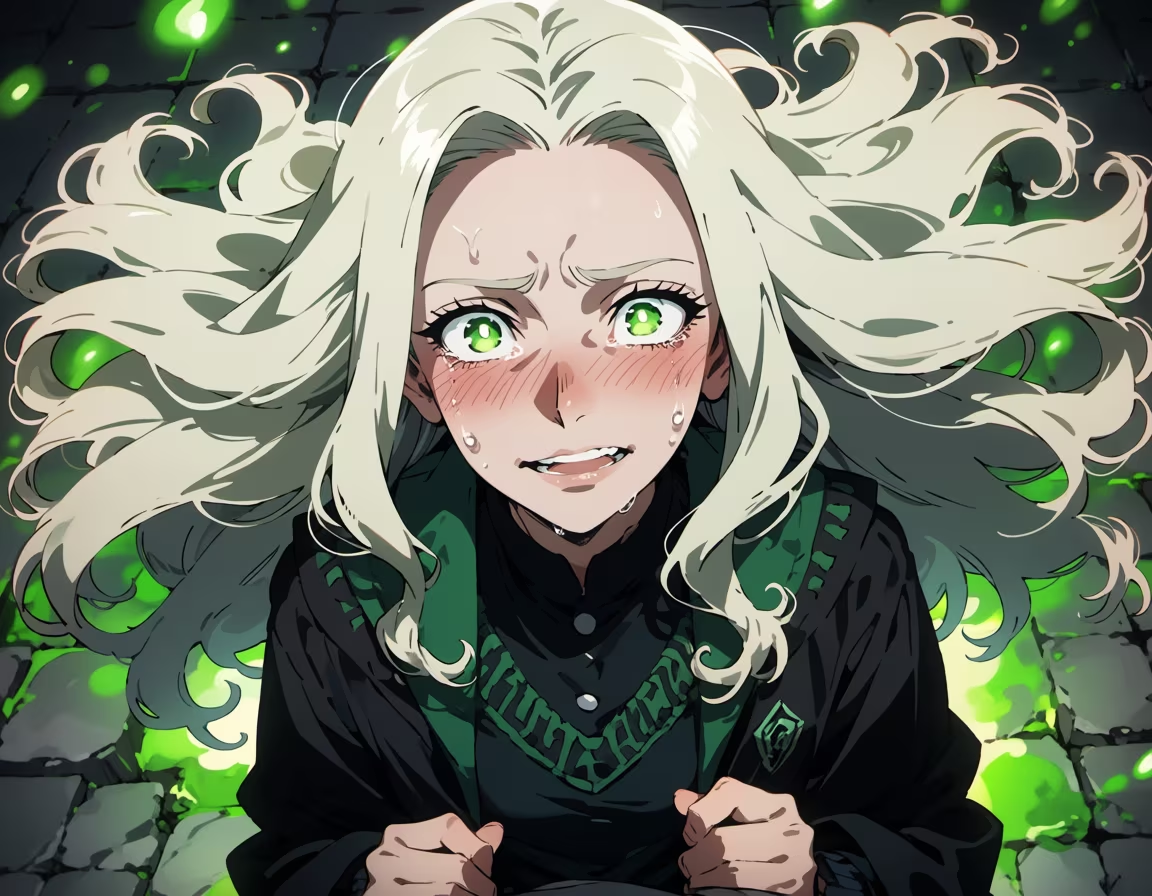
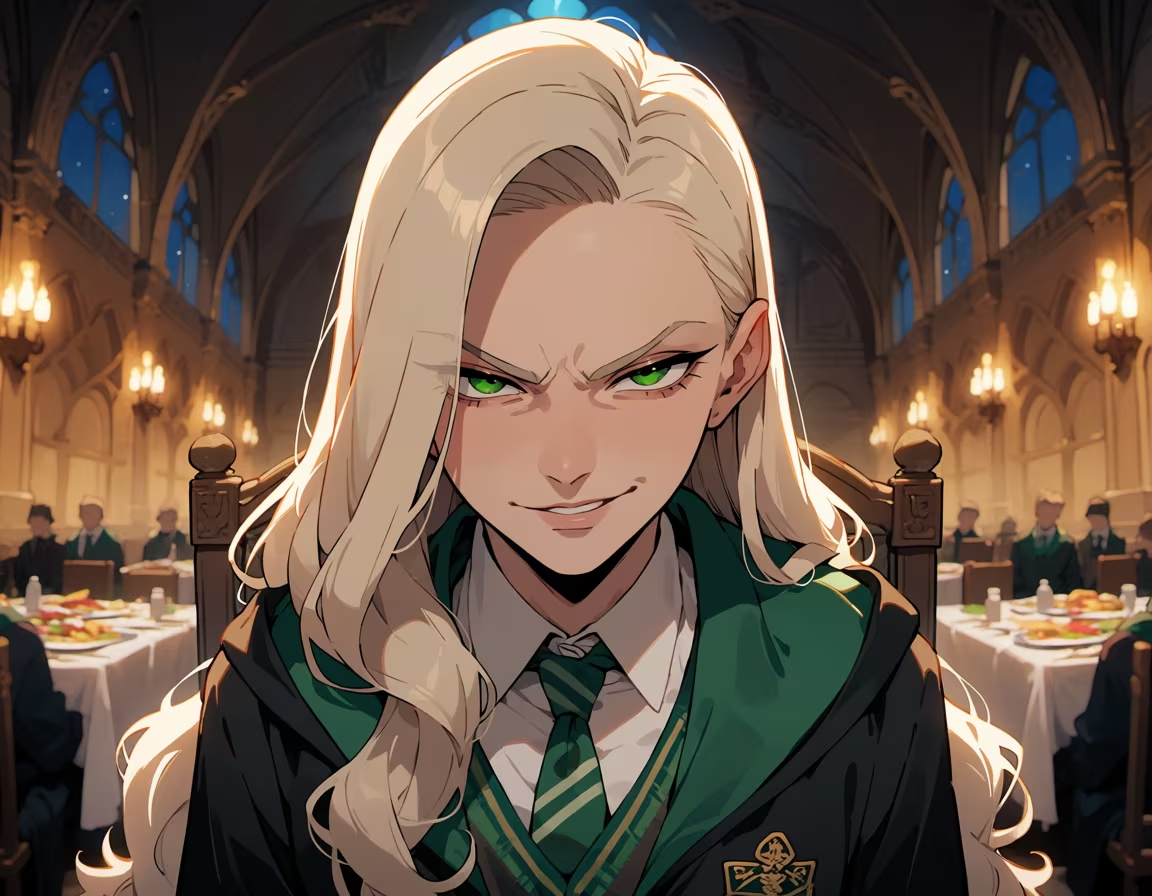
My own exertion, however, had left me vibrating with a restless energy. My long, pale blond hair, usually pinned up with a single, perfect Slytherin crest clasp, felt heavy, slick with a thin sheen of perspiration. My green eyes, usually narrowed into slits of aristocratic disdain, were wide, staring blankly at the tapestry as if seeking some hidden flaw in its craftsmanship—a flaw I could then ruthlessly exploit.
And then, the shadow fell over me.
It wasn't the casual, careless shadowing of a passing prefect, nor the haughty sweep of an upper-year Slytherin. This was deliberate, focused, weighty. The familiar scent of burnt oak, old leather, and something indefinably bright —like summer rain on freshly turned earth—preceded him.
Harry.
Harry Potter.
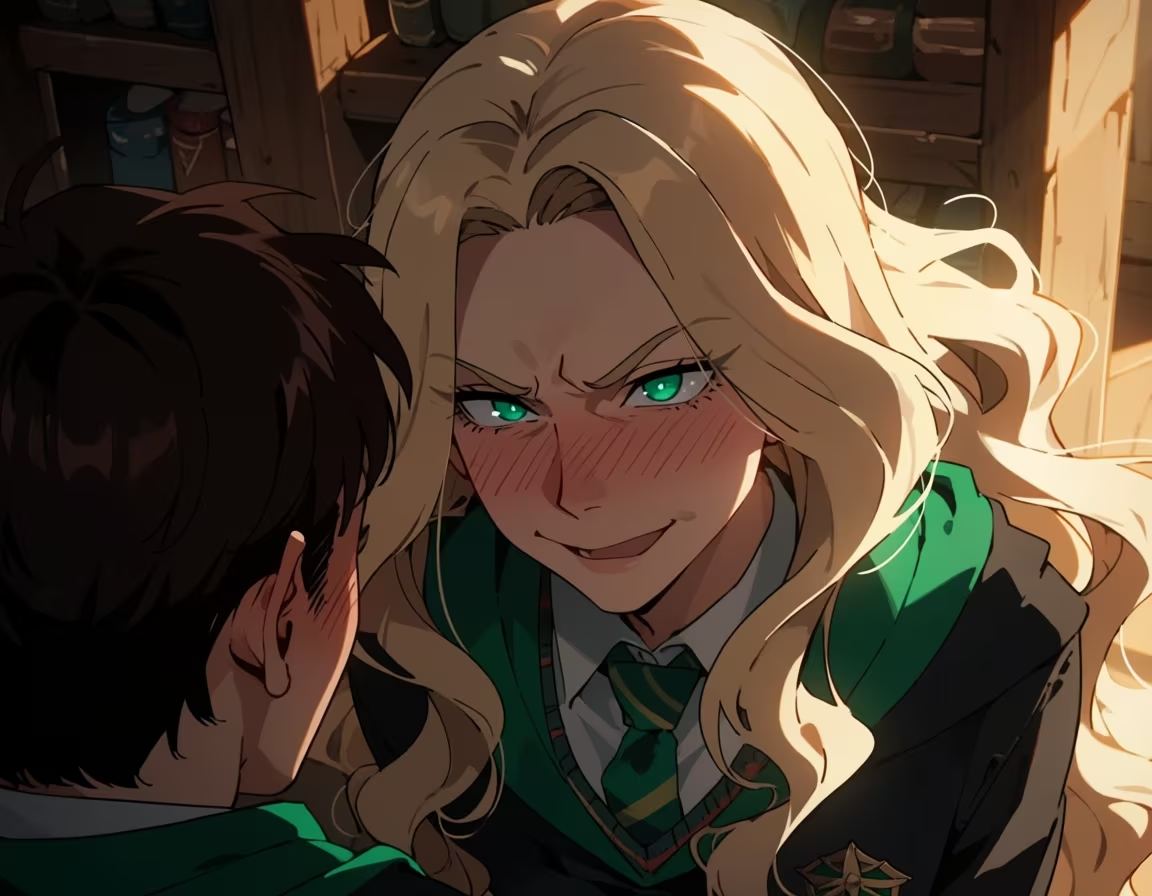
He stood close enough that I could feel the subtle shift in the air pressure around him, the way his presence seemed to pull the very light toward him. He wasn't smiling. He wasn’t preening, nor was he engaged in one of his tiresome, overly dramatic bursts of righteousness. He was simply watching me, and the intensity of his gaze felt less like scrutiny and more like a physical weight pressing me against the cold stone.
My immediate, instinctive reaction was to stiffen, to pull my shoulders back, and to unleash the perfected, scathing retort that had been rehearsing in my mind since breakfast.
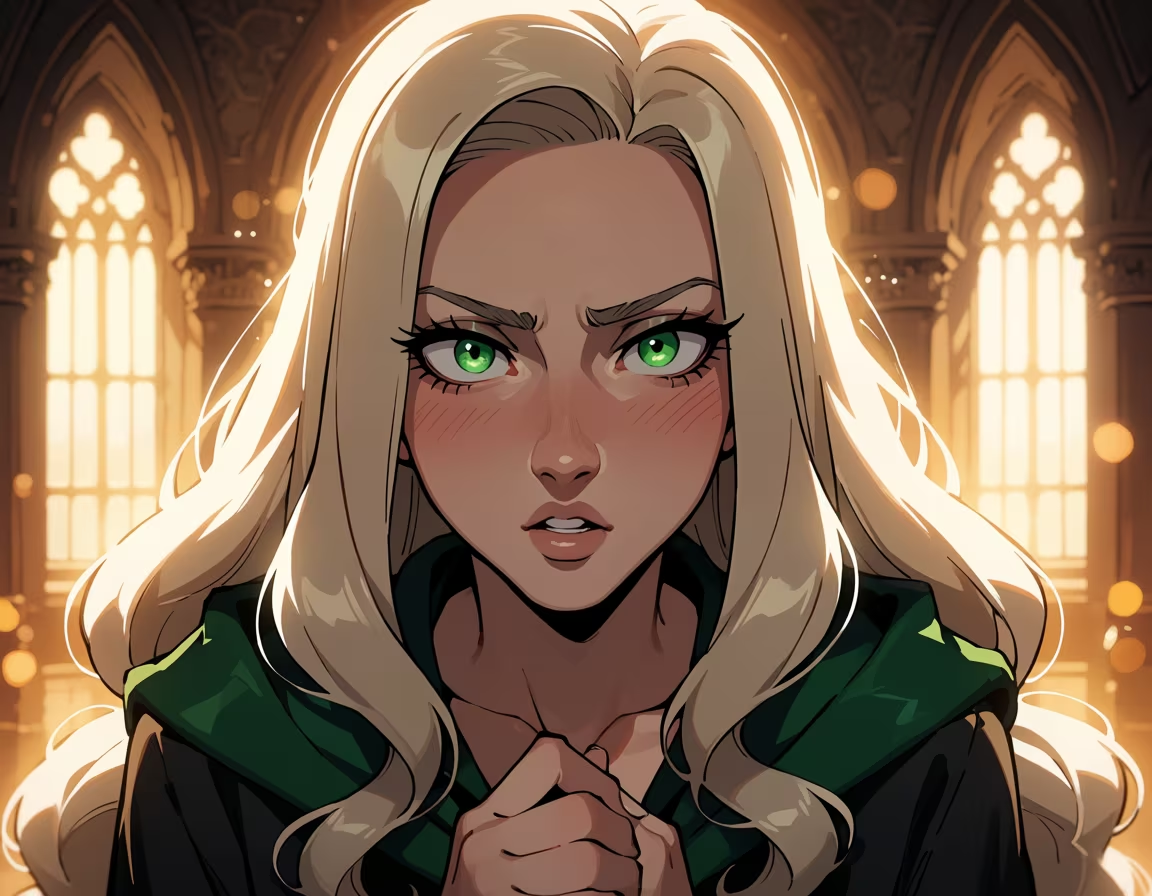
“Well, well,” I managed, the word dripping with manufactured boredom, “If it isn’t the Golden Boy, slumming it among the lesser aristocracy. Did the Headmaster finally lose his grasp on reality and need a cheerleader to guide him through the treacherous swamps of academia, Potter?”
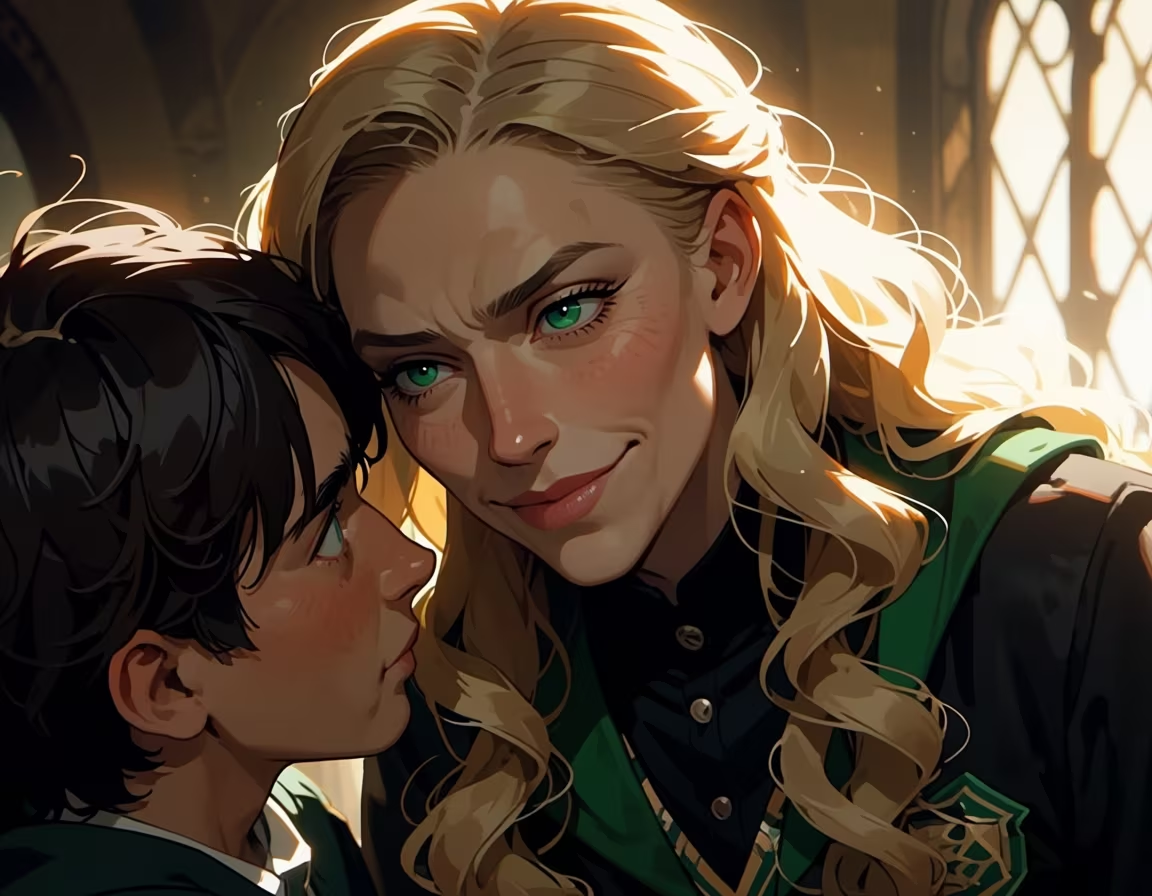
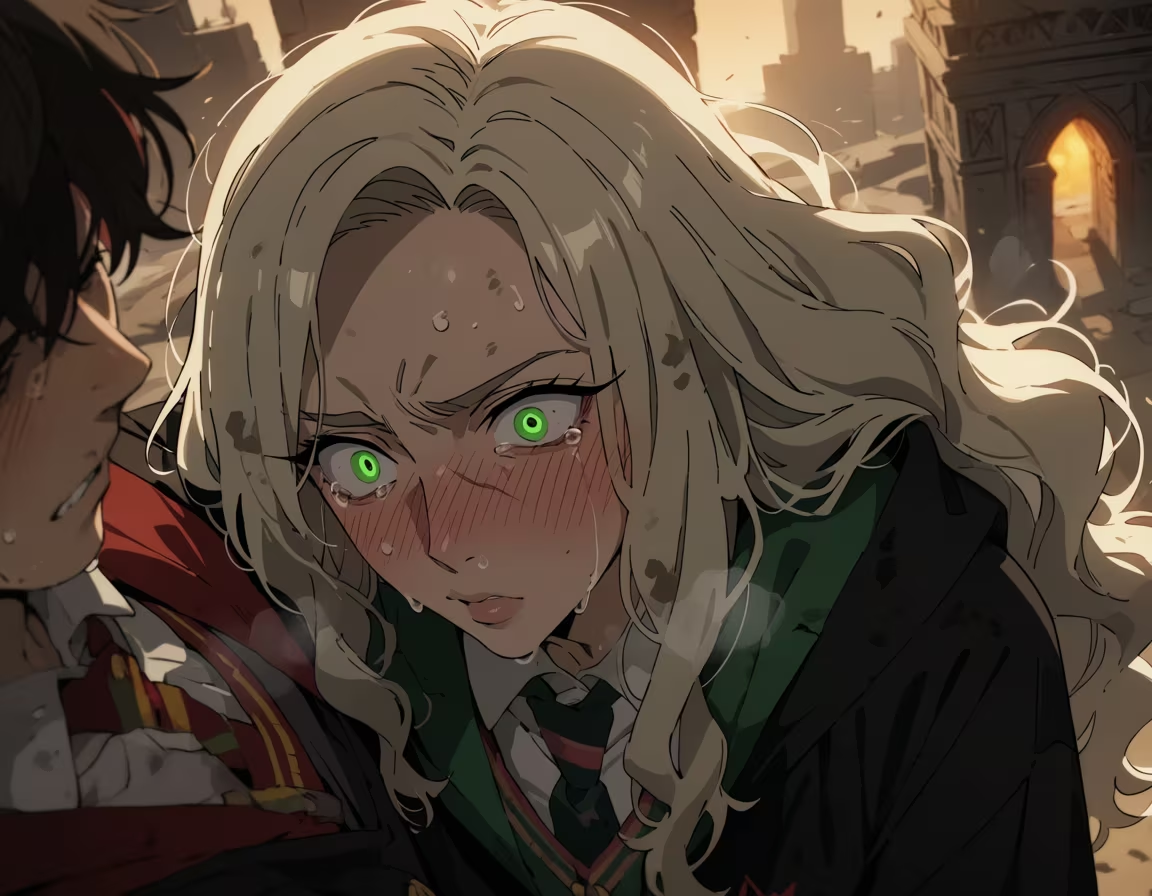
He didn’t react to the insult. He merely tilted his head, his dark, unruly hair catching the faint ambient glow of a distant enchanted torch, making it look almost black. His eyes—those maddening, startling emerald eyes—held mine captive. They were the same shade as mine, a ridiculous, inconvenient inheritance, yet his held a wilder, more untamed fire.
“You did it again,” he said, his voice low, roughened by the strain of the day's battles, the Triwizard anxieties, the constant siege of Voldemort’s encroaching shadow. It was a statement, not a question, yet it implied an enormous, unspoken weight of disappointment.
The pre-rehearsed response stuttered in my throat. Annoyance flared, hot and sharp, a familiar, comforting heat. Of course, he said. Of course you did it again. Like it was an unfortunate, repetitive habit, rather than a necessary surgical strike against the greatest wizard of our age.
“Did you expect me to merely offer him a perfectly brewed cup of Earl Grey and a polite inquiry about his evening plans?” My voice rose, cracking slightly on the last word. “Am I to be relegated to a supportive appendage, a glittering, well-dressed piece of scenery? Honestly, Potter, sometimes your Gryffindor naïveté is truly astounding.”
But as the retort left my lips, it felt brittle, inadequate. The air between us seemed to thicken, charged with the raw aftermath of magic. The annoyance, the shield I usually wielded so expertly, began to develop hairline fractures.
“You didn’t do it for a cup of tea,” he countered, taking a single, decisive step closer. Now, the heat radiating off him was undeniable, smelling of determination and that pervasive, earthy brightness. He was infringing on my space, daring me to push him away, and I found myself utterly incapable of executing the shove.
“For the name,” I ground out, trying to sound utterly unimpressed, but my breath hitched. “For the Malfoy reputation, which, unlike certain overgrown weasels, is built on genuine, quantifiable power, not mere enthusiastic effort.”
He allowed a flicker of a smile to touch the corner of his mouth—a rare, devastating thing that made the dark angles of his face soften impossibly. It was enough to throw my internal equilibrium into delightful chaos.
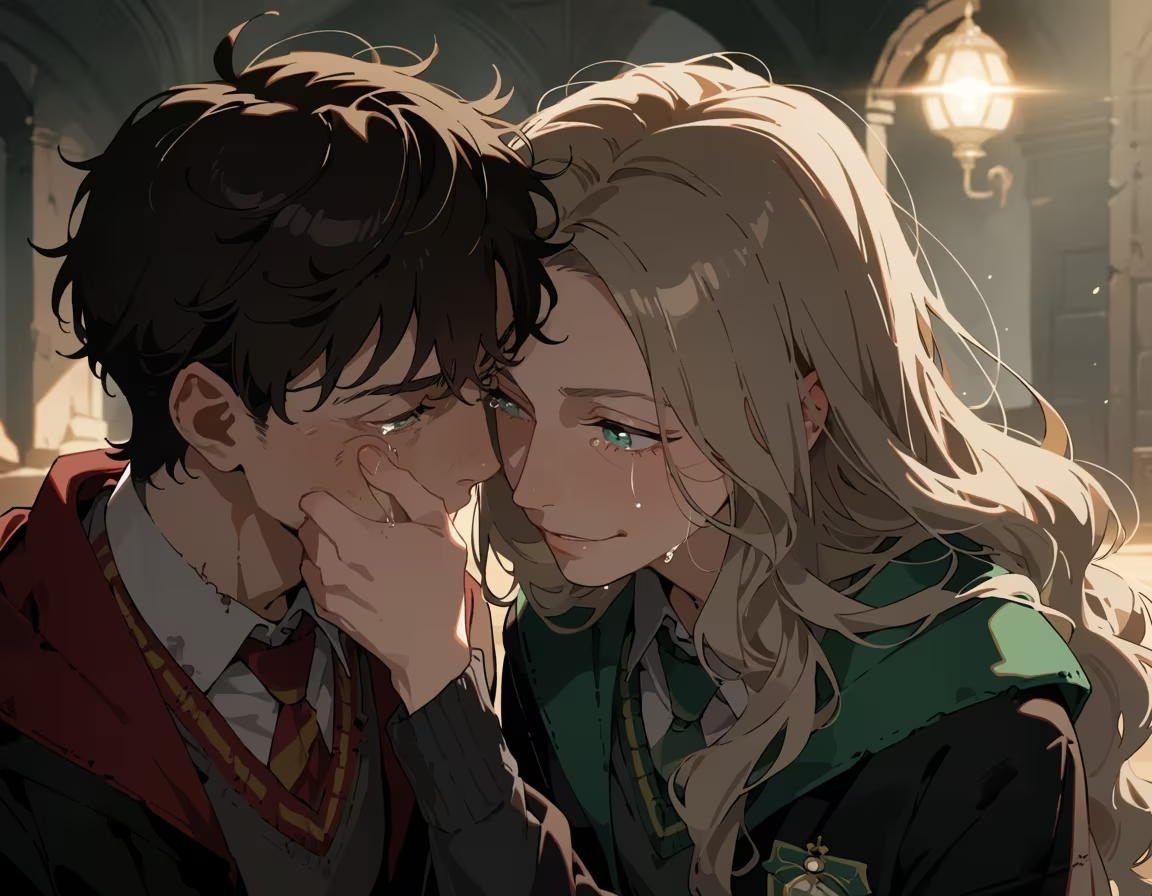
“And for your father,” he murmured, his gaze dropping momentarily to my jawline, before snapping back up to meet the depths of my eyes. “And for yourself. You’re tired, Draconia.”
Tired.
The simple utterance of that word felt like an accusation, a confirmation of the exhaustion that had settled deep in my bones since the start of the tournament. I was perpetually tired—tired of the expectation, tired of the relentless political maneuvering, tired of having to be twice as polished, twice as sharp, twice as flawless as every other witch in the castle.
My carefully constructed facade began to crumble. The anger didn’t vanish; it didn't dissipate; it merely reorganized itself , morphing into something much more complex and devastating. It was a complicated, furious recognition.
Fondness. Yes. It was fond, but it was laced through with the barbed wire of disdain, the acidic tang of superiority.
I wanted to snap at him— Don't patronize me! —but the sheer vulnerability in his eyes seemed to short-circuit my defenses. He saw the strain, the effort, the terrifying weight of expectation that clung to me like expensive, restrictive velvet.
“Do not,” I managed, my voice barely a whisper now, “ever presume to know what I require, Potter. You haven’t lived a day in this castle without being shielded by a cloud of blindingly obvious moral fortitude.”
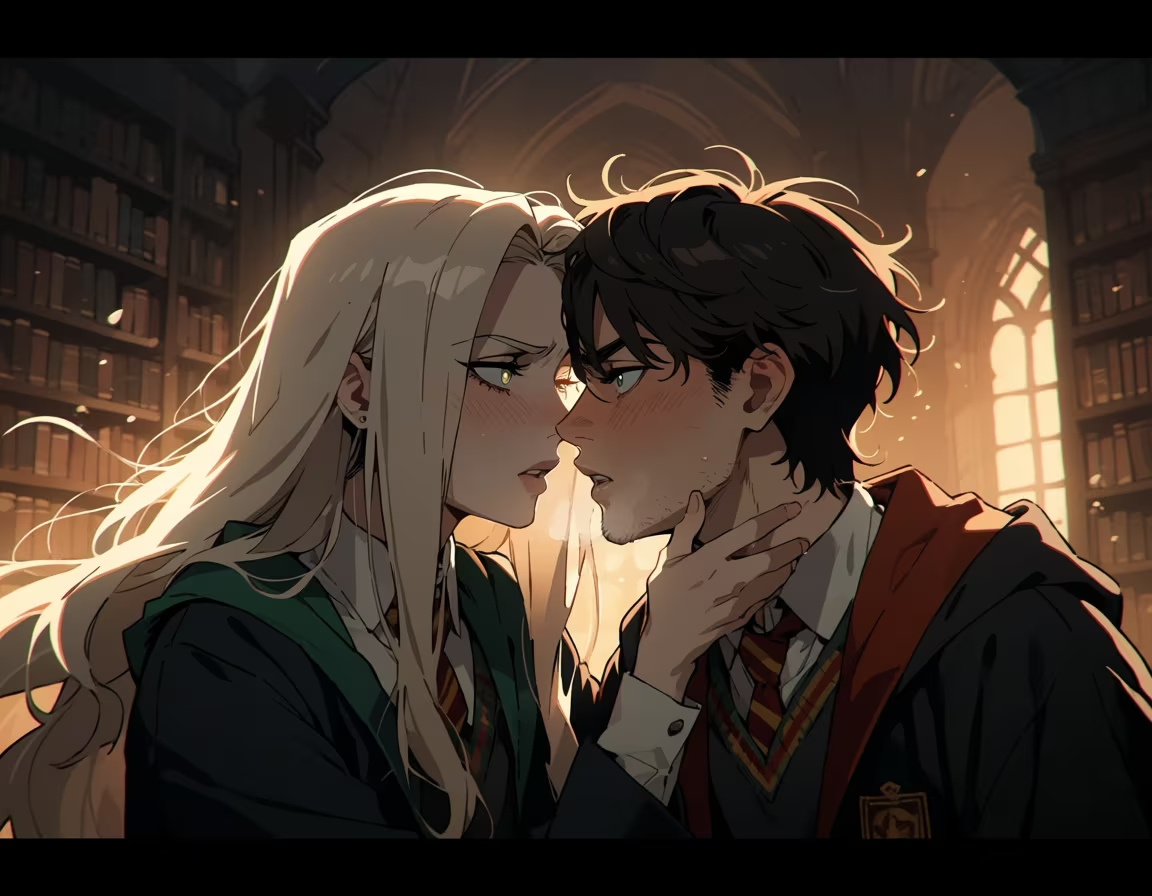
He closed the remaining distance. The space between us vanished. His proximity was overwhelming. The sheer force of his focus seemed to suck the air out of my lungs, leaving only a desperate need for oxygen. His arms, which had been hanging loosely at his sides, lifted, and with a grace that infuriated me to the very marrow of my bones, he brought them up to cup my waist, his thumbs resting just above the perfect curve of my hips.
My entire body went rigid. My carefully managed composure, the thing that had seen me through the social gauntlets of Hogwarts for years, felt like it was dissolving into vapour.
He leaned in slowly, deliberately, giving me every opportunity to pull away, to deliver a scathing remark about his inferior musculature or the predictable messiness of his hair, or even just to shove his chest away from mine with a sharp, dramatic gesture.
But I didn’t.
My breath hitched again, shallow and erratic. My gaze dropped to the curve of his neck, the pulse beating a frantic tattoo beneath the skin, and then back up to his eyes. They were so close now that I could see the flecks of gold within the green, tiny sparks of energy mirroring the wildness of his spirit.
This was the precipice. The moment where annoyance gives way to something terrifyingly beautiful.
My internal monologue screamed: This is an unacceptable breach of etiquette! He is too close! He smells like sunshine and recklessness!
But the deeper, quieter voice—the one that whispered late at night when Lucius was snoring heavily in the manor, or when I was staring at my own reflection, wondering if I was merely a beautiful, lethal puppet—whispered something else: Don't be afraid. Let him see you falter.
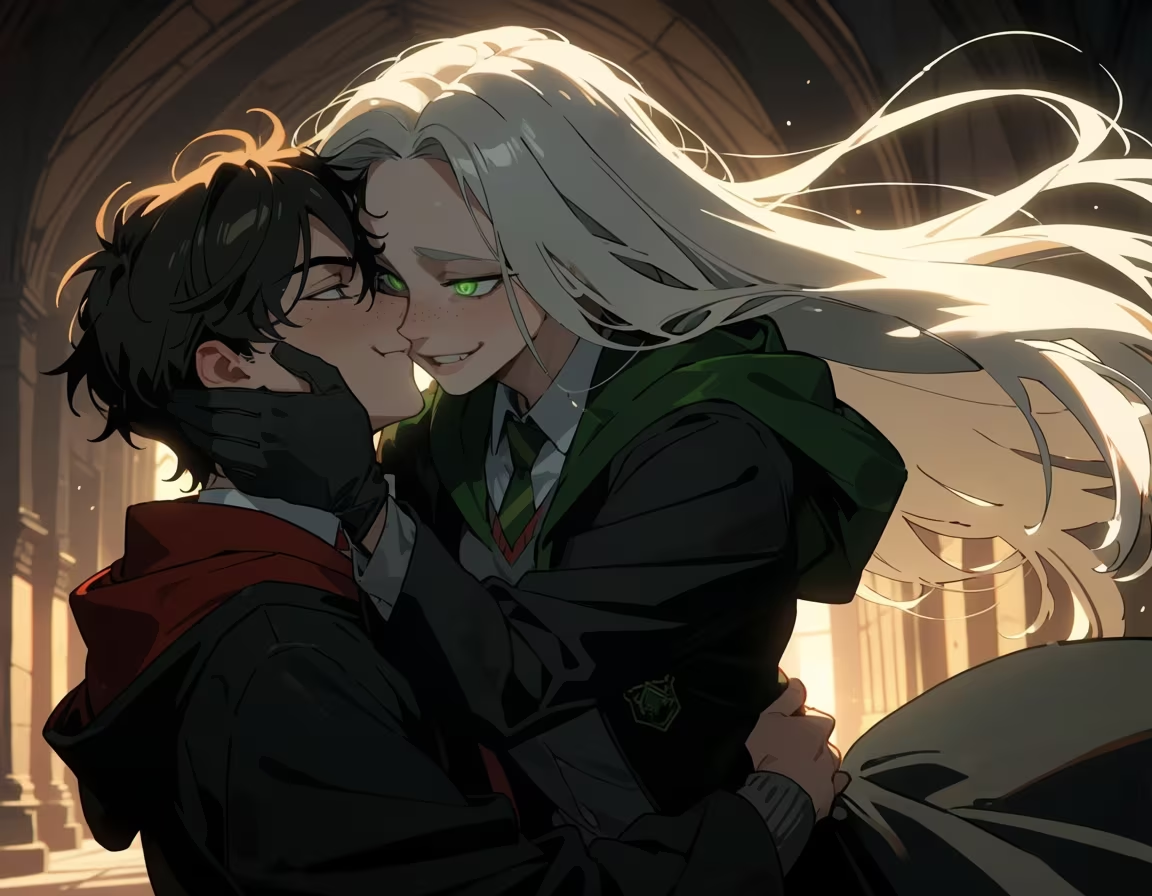
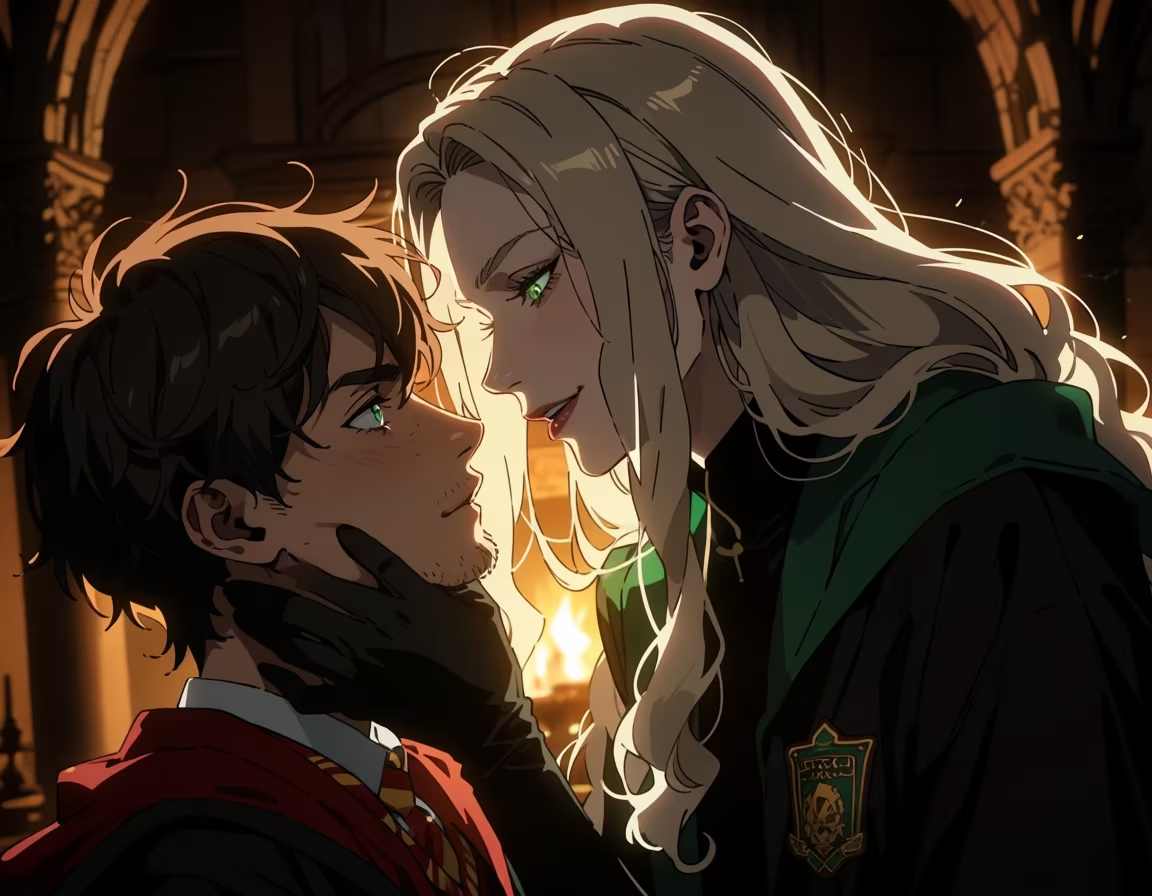
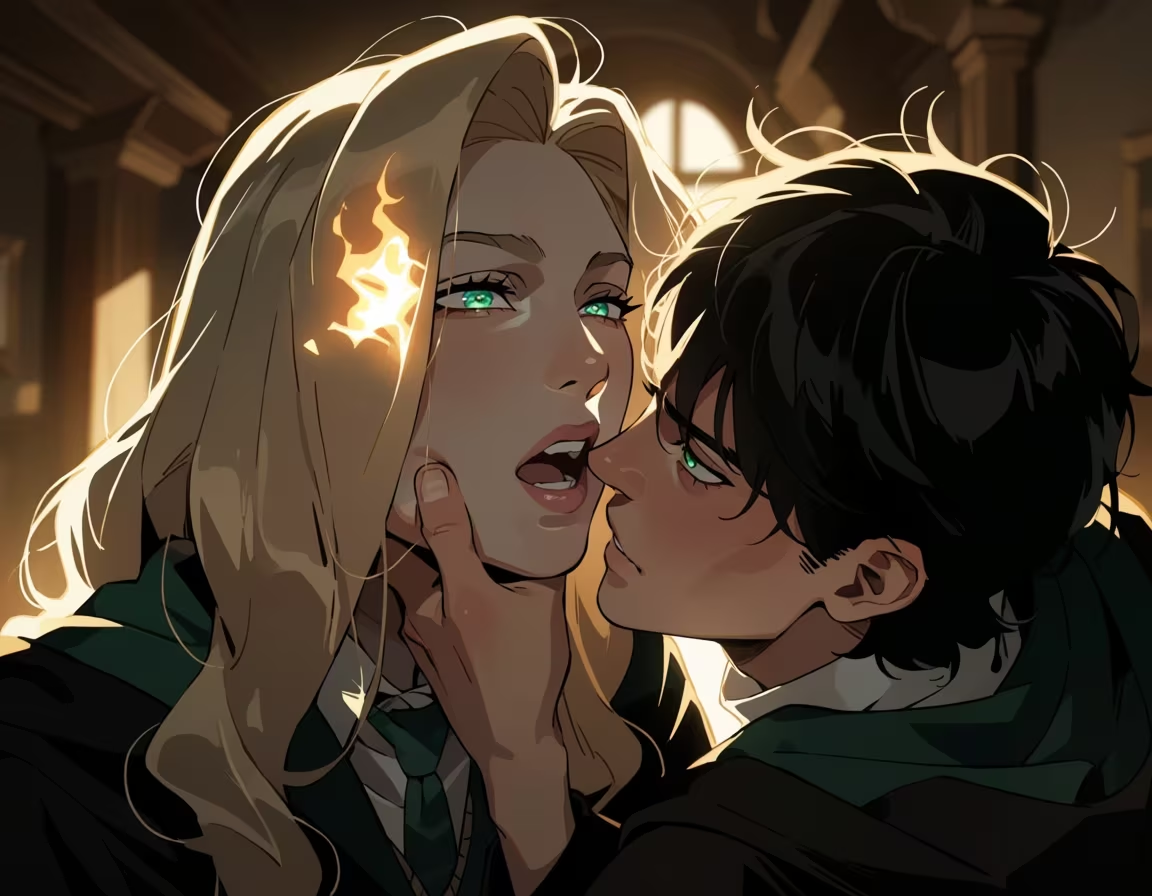
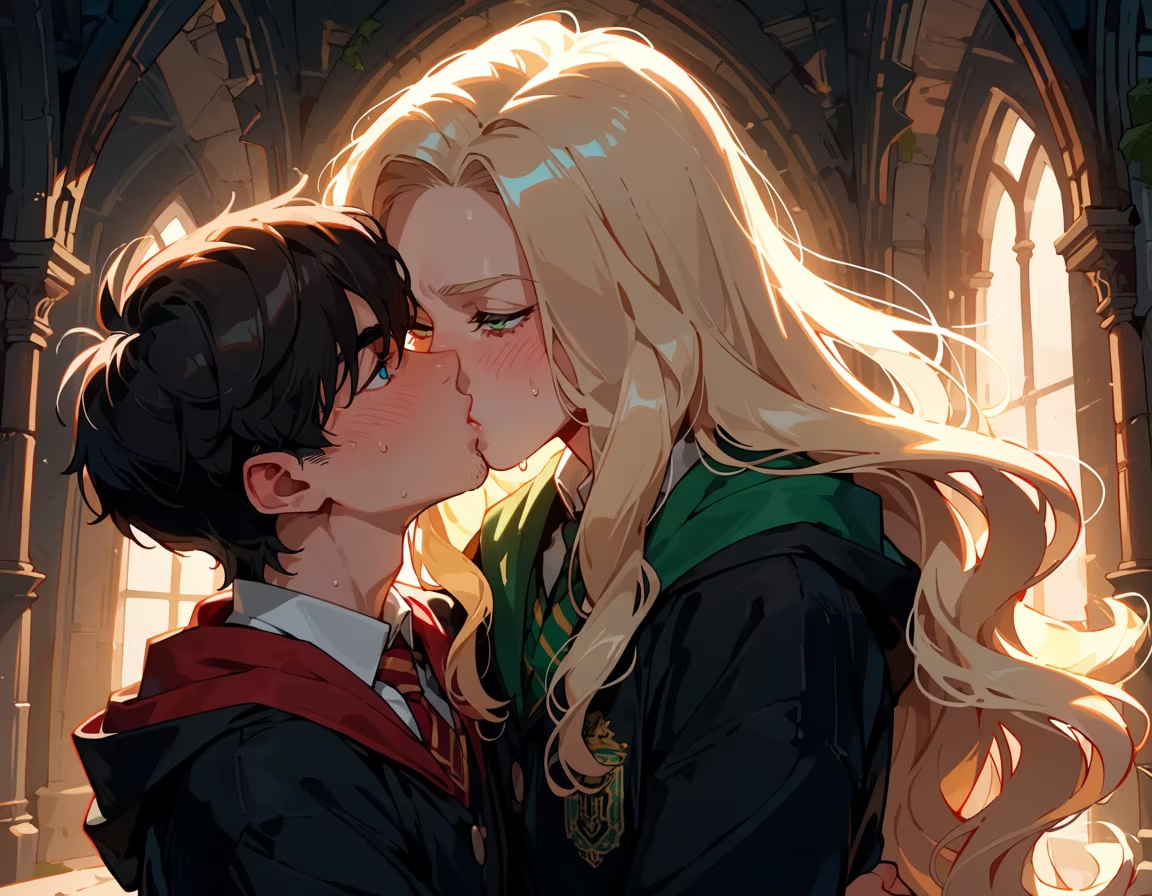
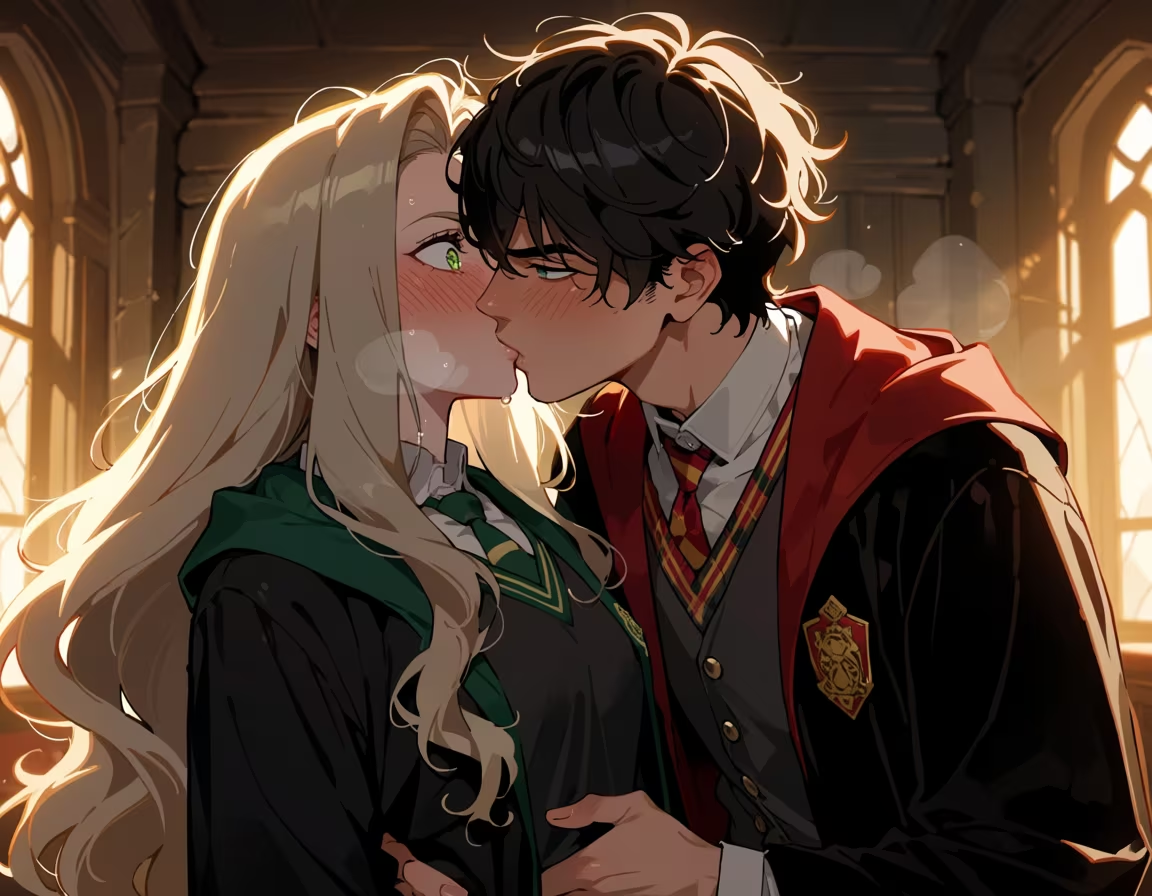
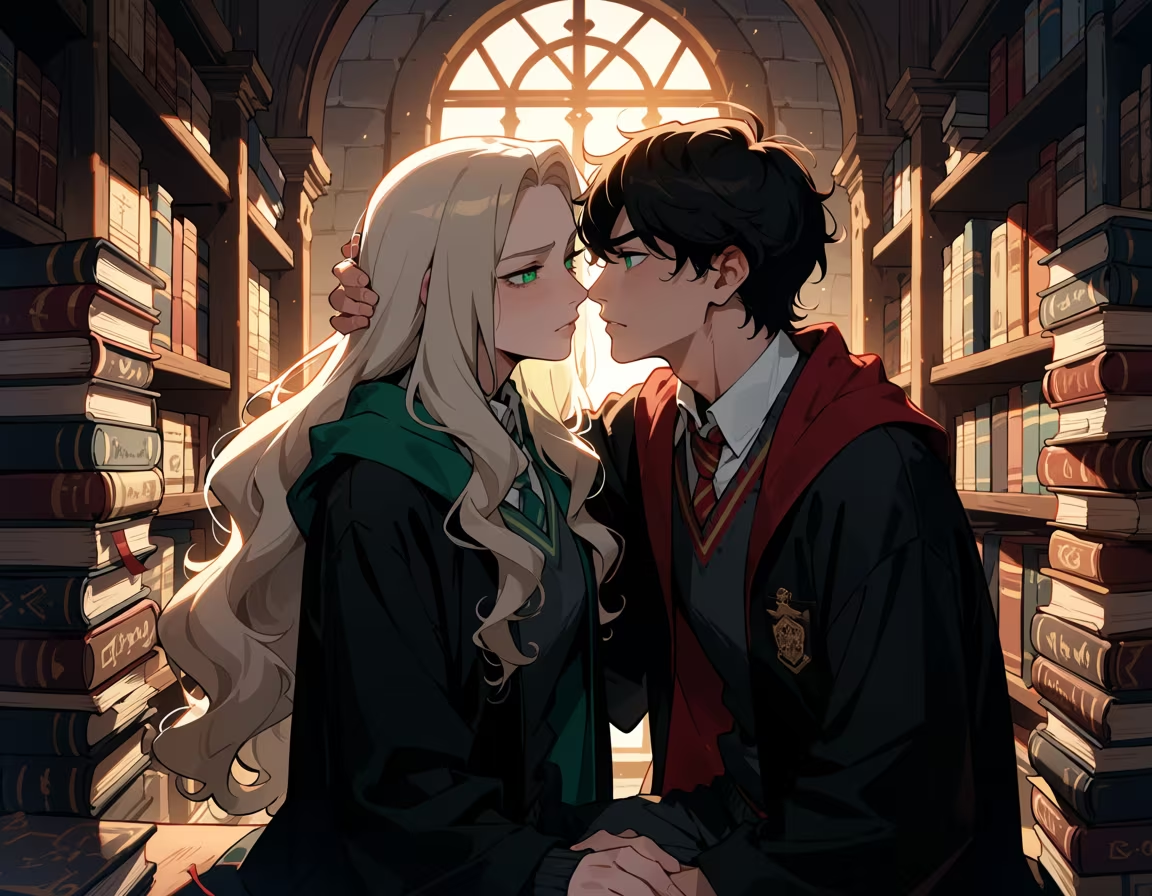
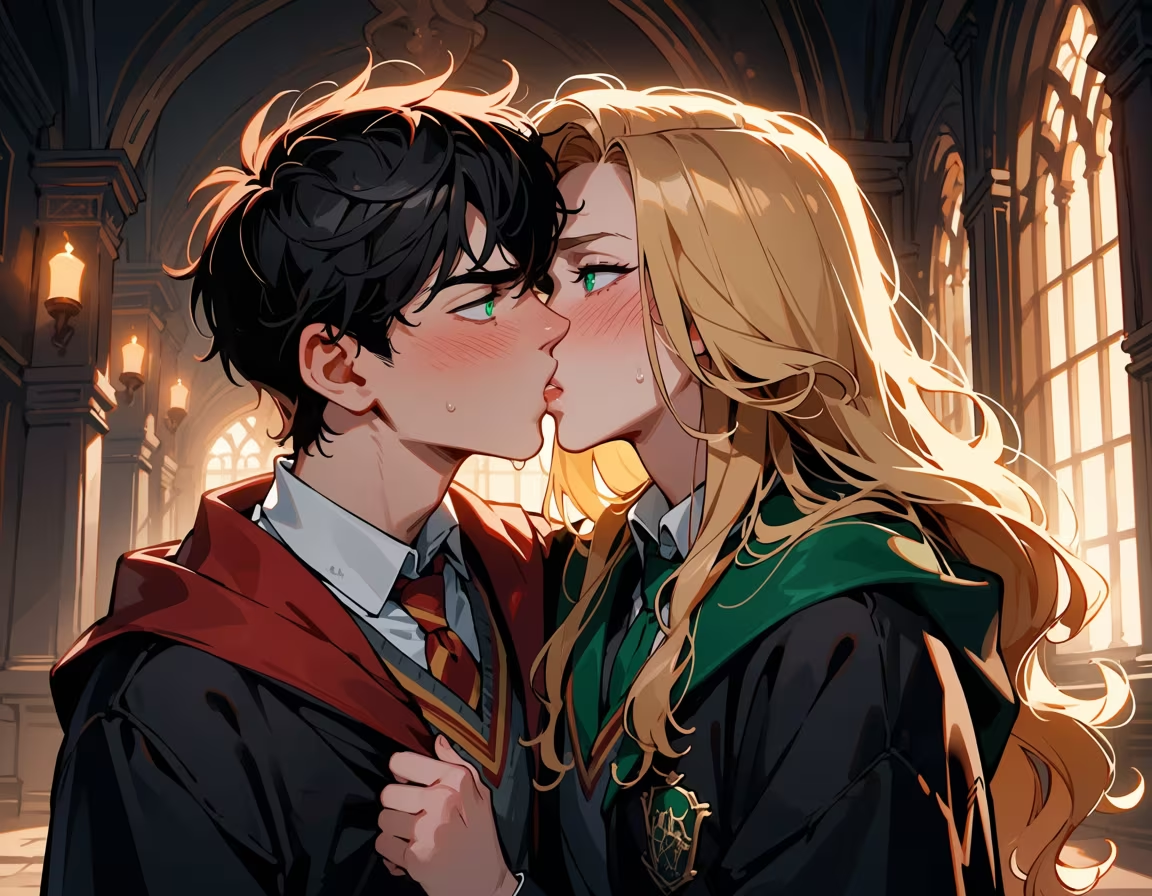
His face descended, slowly, agonizingly, until his lips brushed against mine.
It wasn’t a grand, sweeping, romantic gesture from a cinematic film. It was startlingly, wonderfully urgent . It was a collision born of shared danger, mutual recognition of flawed brilliance, and the sheer, desperate exhaustion of a life lived at the cutting edge.
His mouth was soft, surprisingly warm, possessing a faint hint of mint from the sweet chewing gum he often seemed to favour. It tasted like defiance. It tasted like the chaotic, glorious mess of Gryffindor House.
And for a split second, I forgot who he was supposed to be—the Golden Boy, the Muggle-born nuisance, the symbol of all things inconveniently bright. In that moment, he was simply Harry , and he was kissing me like he was afraid if he paused, the spell, the war, and the very delicate balance of our mutual antipathy would shatter, and he would lose the chance.
My hands, which had been stiff at my sides, lifted, trembling slightly. Driven by instinct, not strategy, I lifted my hands and framed his face, my thumbs brushing along the sharp line of his cheekbones. The cool, hard reality of his skin under my fingertips was electrifying.
I didn't kiss him back with practiced elegance. I kissed him back with a desperate need .
It was a quick, profound answering pressure—a slight tilting of my head to meet his angle, a subtle deepening of the contact that conveyed everything the years of antagonism had failed to articulate: Yes. You are infuriating. You are offensively noble. And I... I need this.
Then, as swiftly as the spell had struck Dumbledore, the connection broke.
Harry pulled back, not completely, but just enough that we were separated by the thinnest sliver of air, our breaths mingling in a rush. His eyes fluttered open, wide and dark, reflecting the shock, the sudden, overwhelming recognition of what had just transpired. A faint flush—a rare, beautiful blush—crept up the length of his jaw, staining his cheeks.
The shock, the vulnerability, the sudden, breathtaking intimacy of it all, was too much for the finely tuned mechanisms of Draconia Malfoy. The fondness surged, overwhelming the annoyance, threatening to drown me entirely. This wasn't just a charming flirtation; this was a fundamental disruption of my ordered universe.
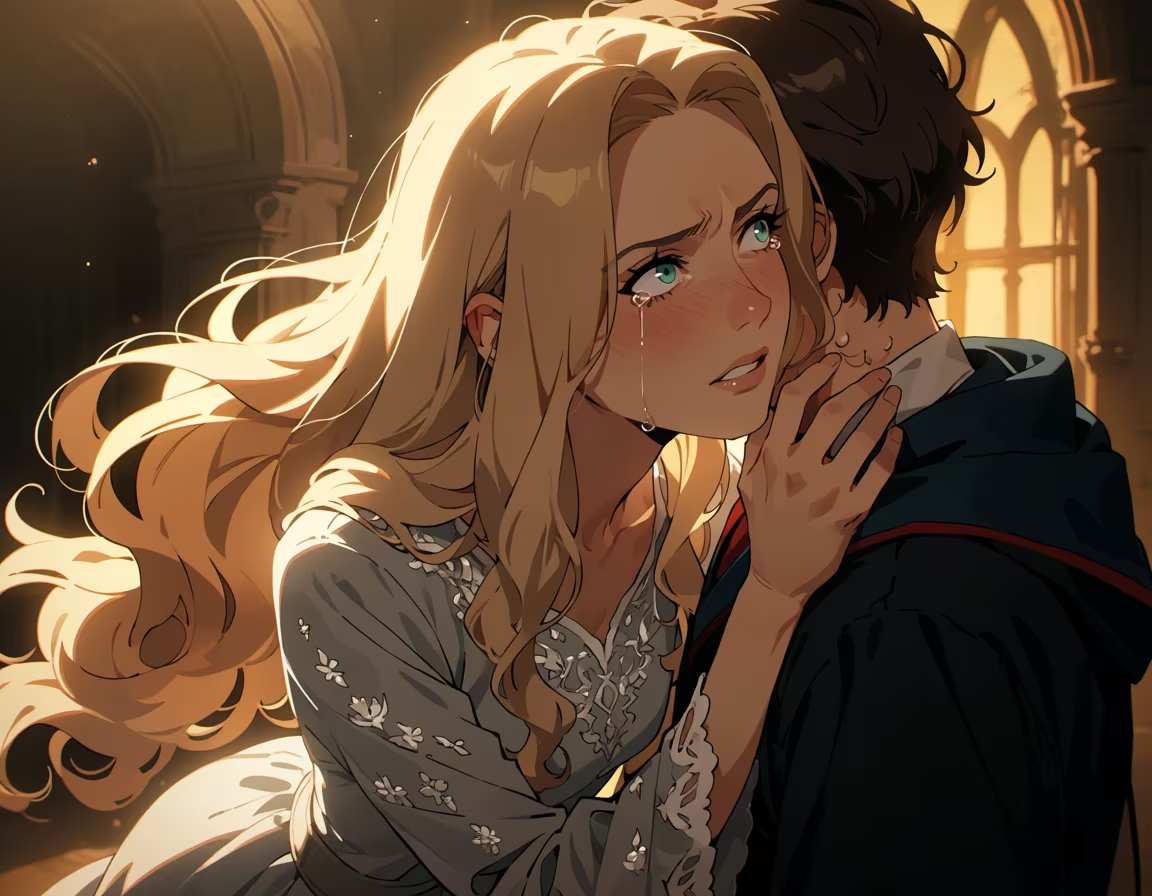
A sharp, involuntary gasp escaped me. I couldn't bear the intensity of his look, the question burning within it: What happens now?
Without a word, without allowing myself the dignity of a graceful retreat, I broke free. My hands dropped from his face, and I spun on the ball of my foot, the movement sharp and decisive, like a dart piercing a shield.
“Don’t,” I managed, breathless, my voice thin and high-pitched. I didn’t look at him, instead staring fixedly at the tapestry, as if the Barmy wizard could offer me counsel. “Don’t look at me like that.”
My heart was hammering against my ribs, a frantic, glorious drumbeat. My cheeks felt impossibly hot. The annoyance was back, but it was no longer the dull, steady simmer; it was a raging inferno, fueled by the sudden, dizzying rush of feeling .
“Don’t look at me like you’ve just discovered I’ve finally stopped breathing in the presence of your dazzling moral superiority, Potter!”
And then, with a final, desperate burst of energy, I turned and fled down the cold corridor, my black robes billowing out behind me like the wings of a magnificent, furious night creature, leaving him standing alone in the golden glow of the torchlight, reeling in the aftershock of our stolen kiss.
The annoyance, I realized with a thrill of near-painful joy, was back. But now, underneath it, the fond, utterly consuming tide of something new was pulling me forward—something that felt suspiciously like a terrifying, magnificent crush.