| Home | The Lives of Velnin | Illustrated Fiction | Malfoid Art & Fiction | Book Blurbs | Contact |

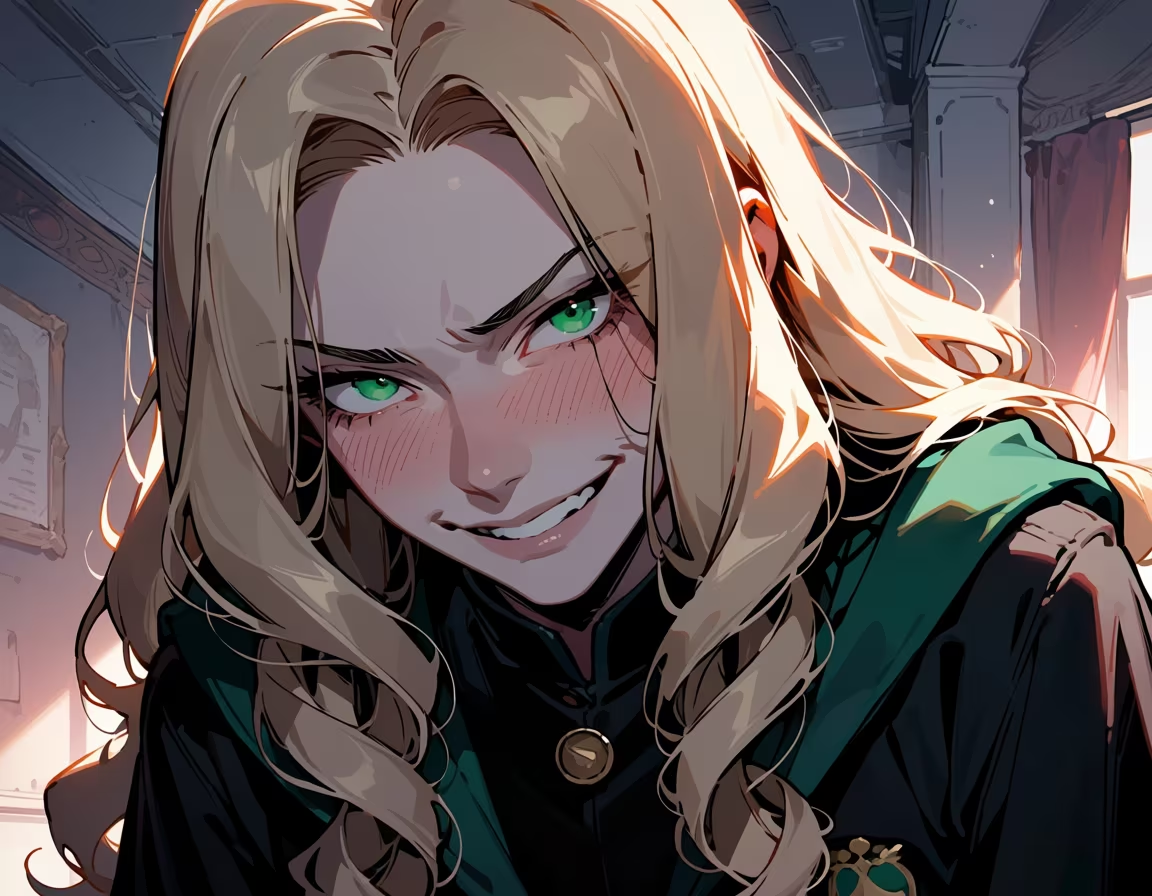
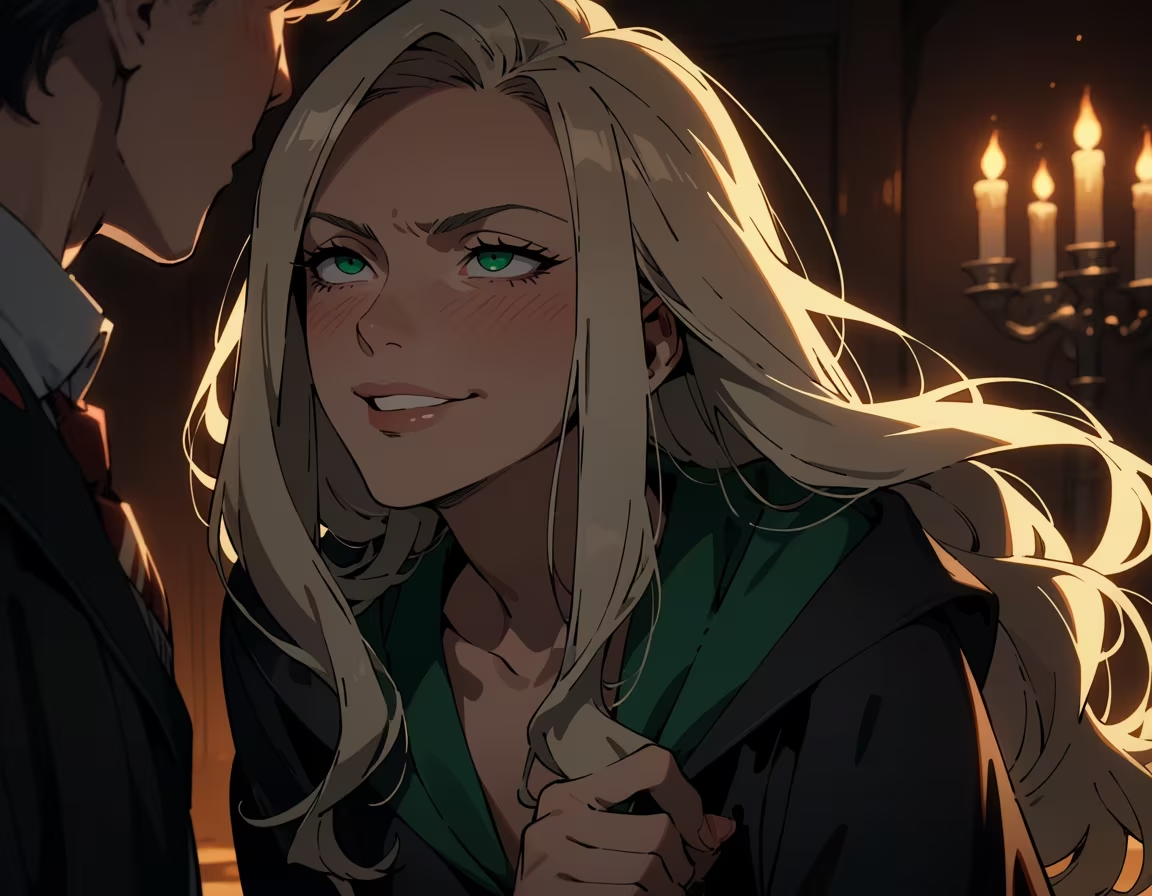
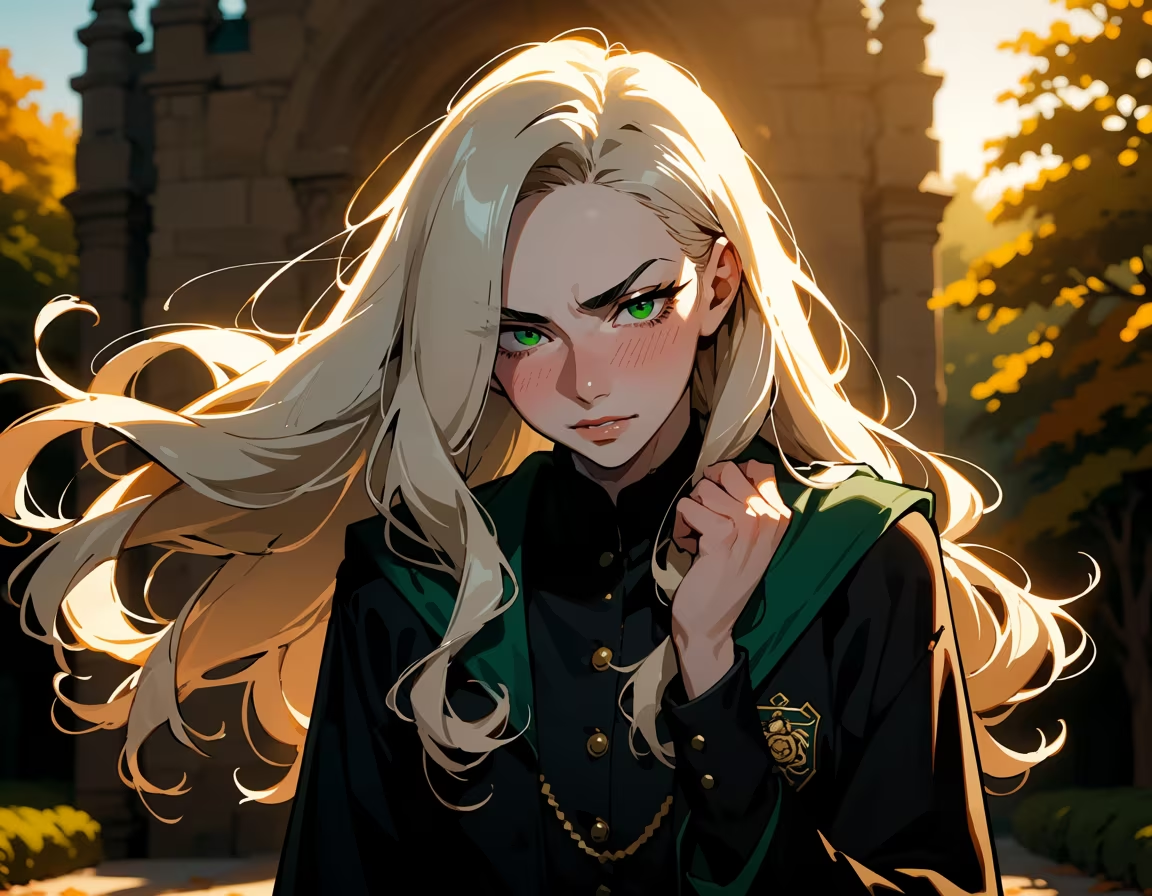
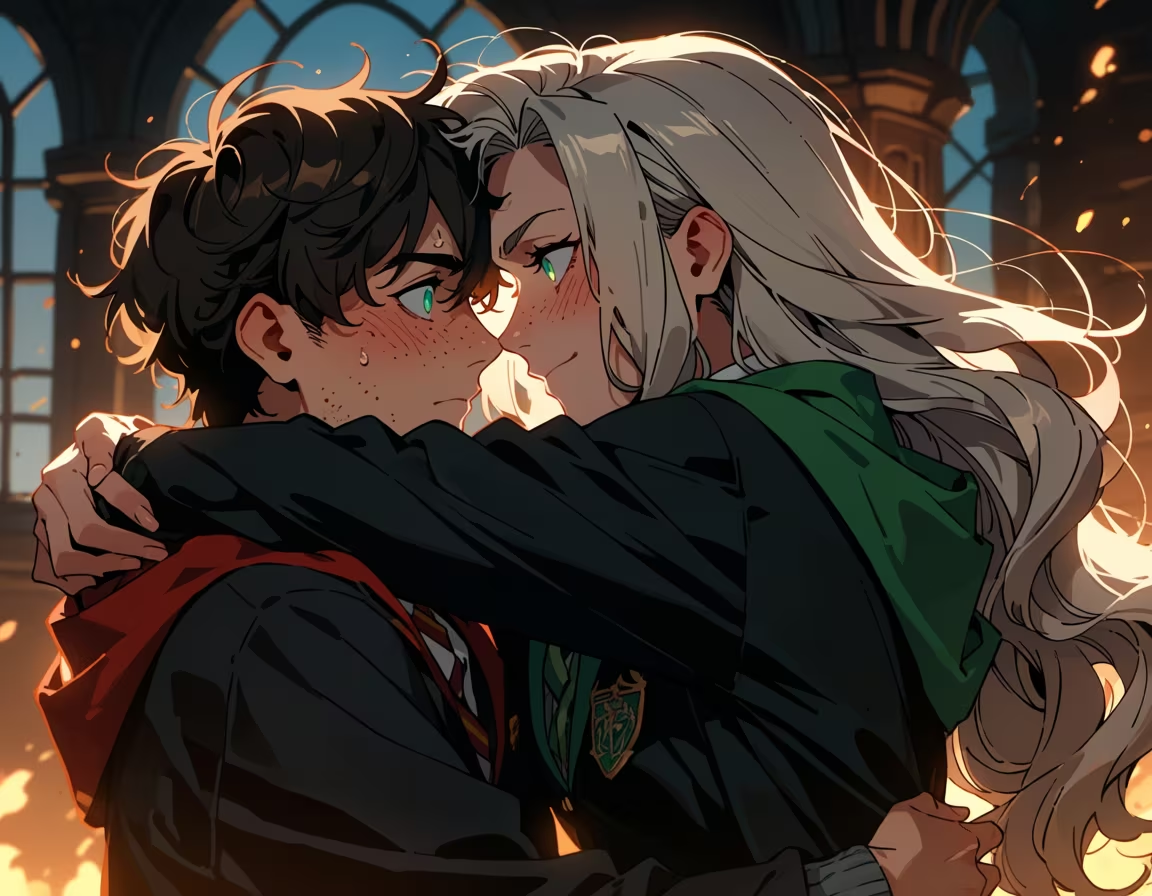
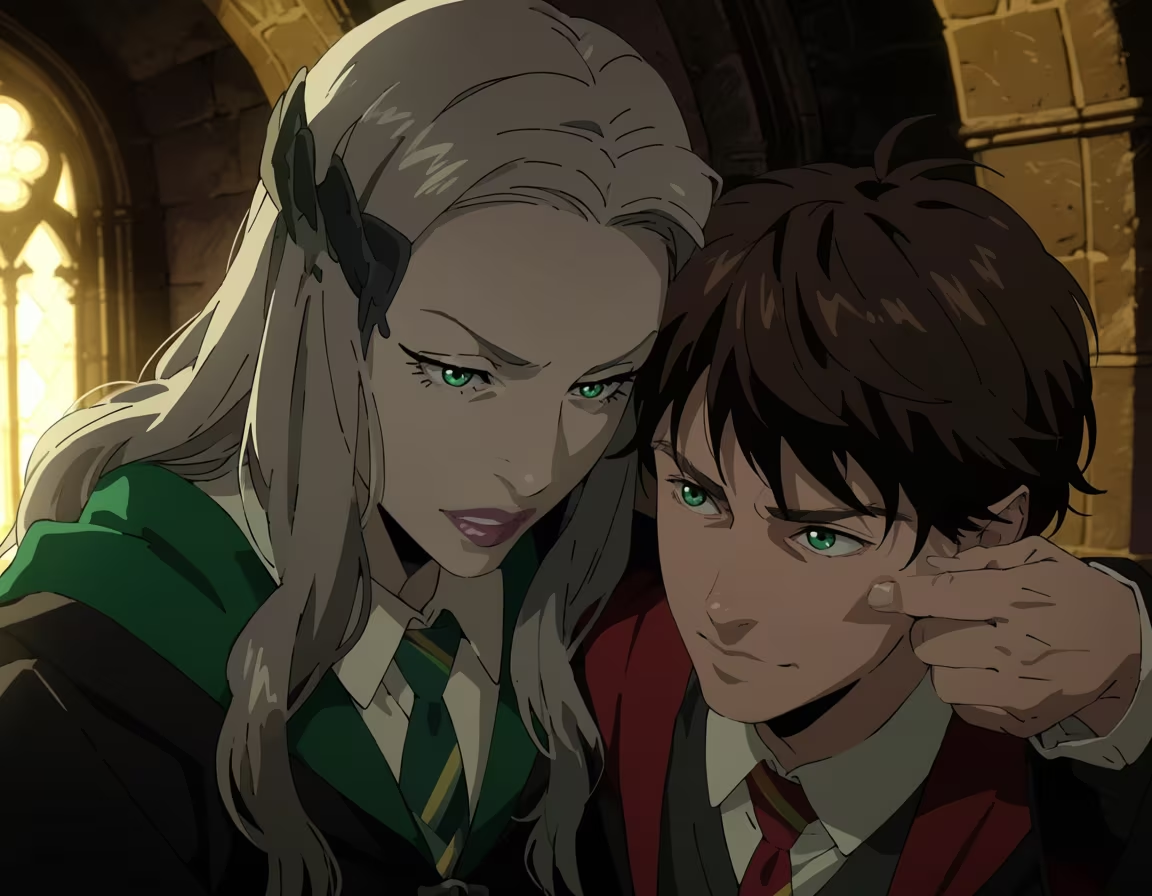
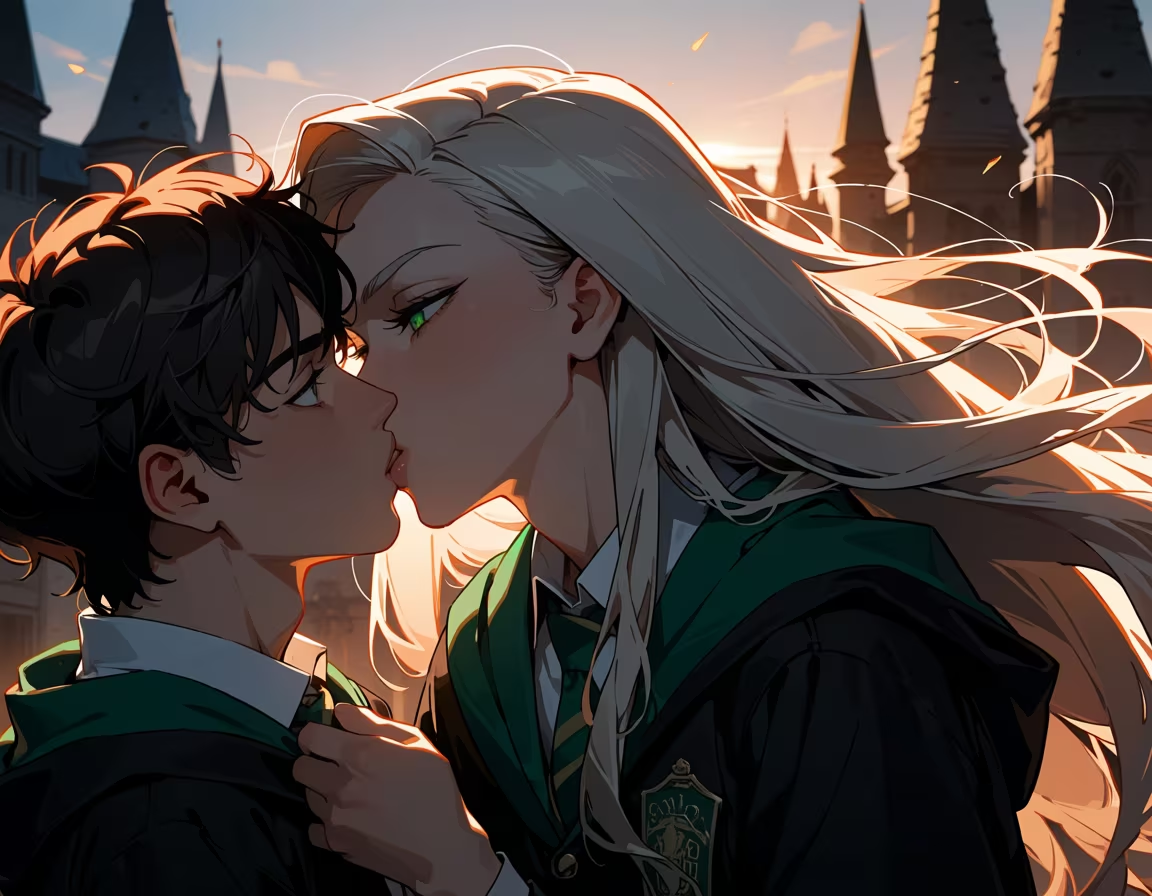
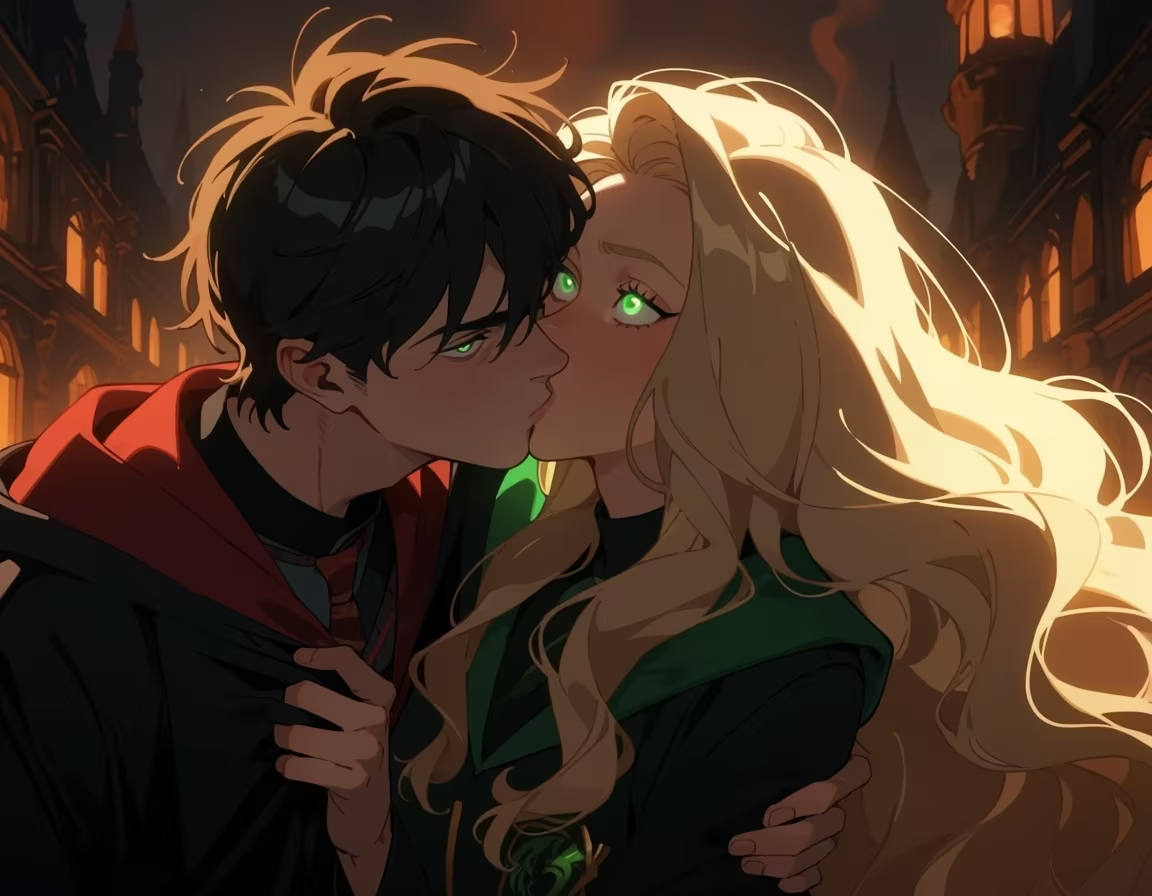
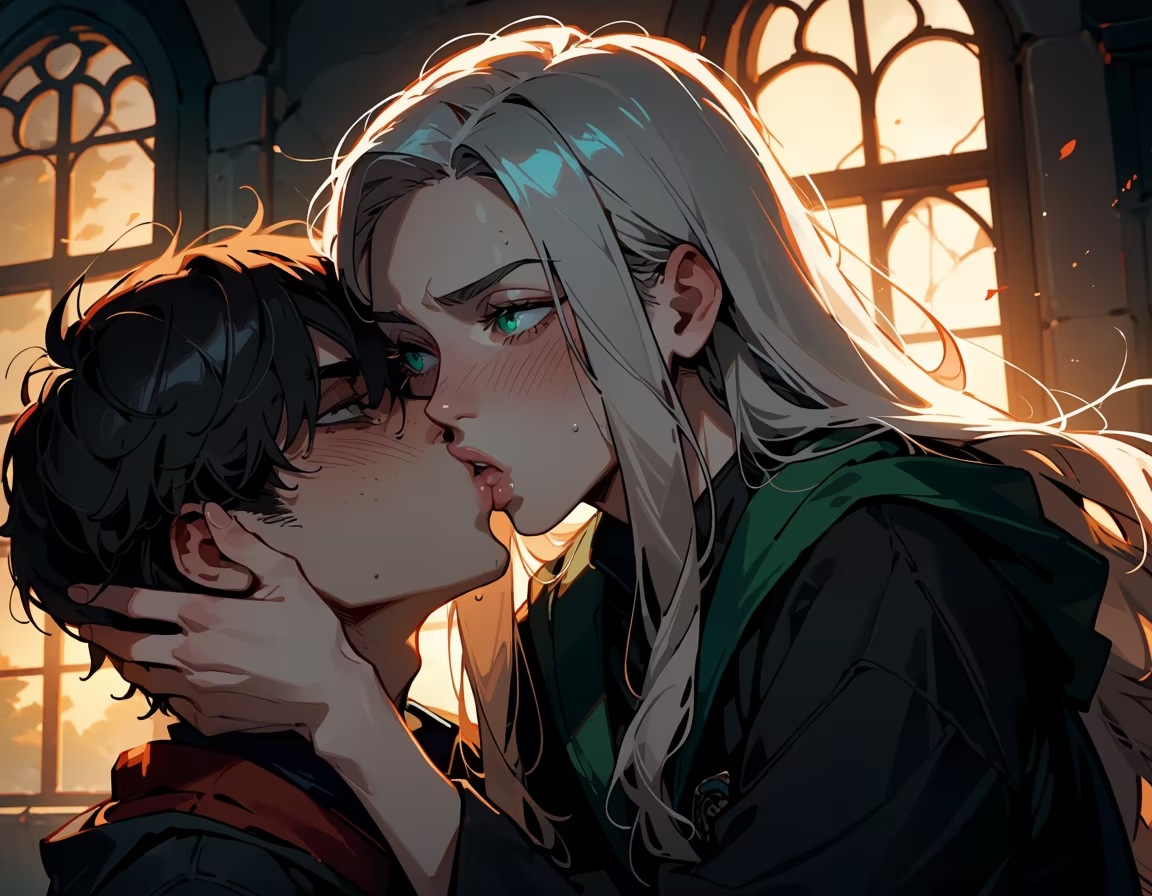
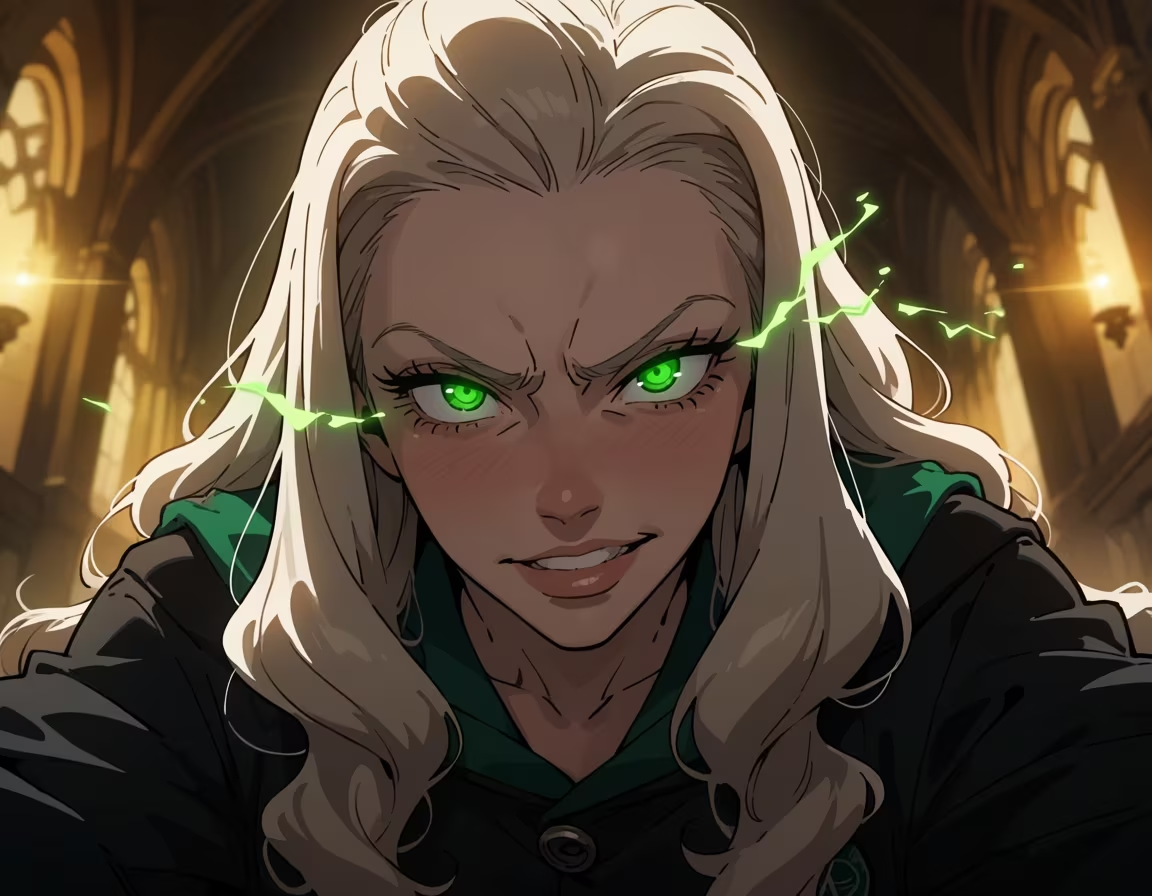
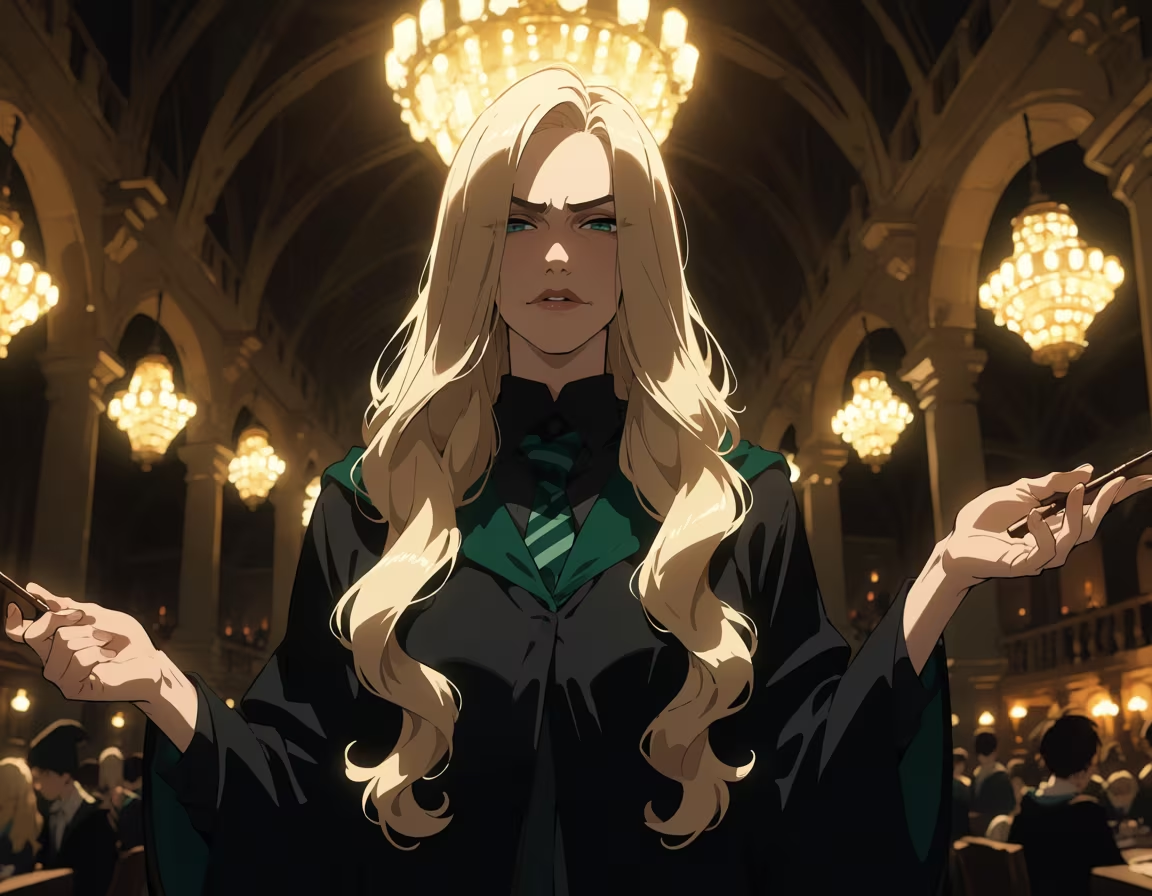
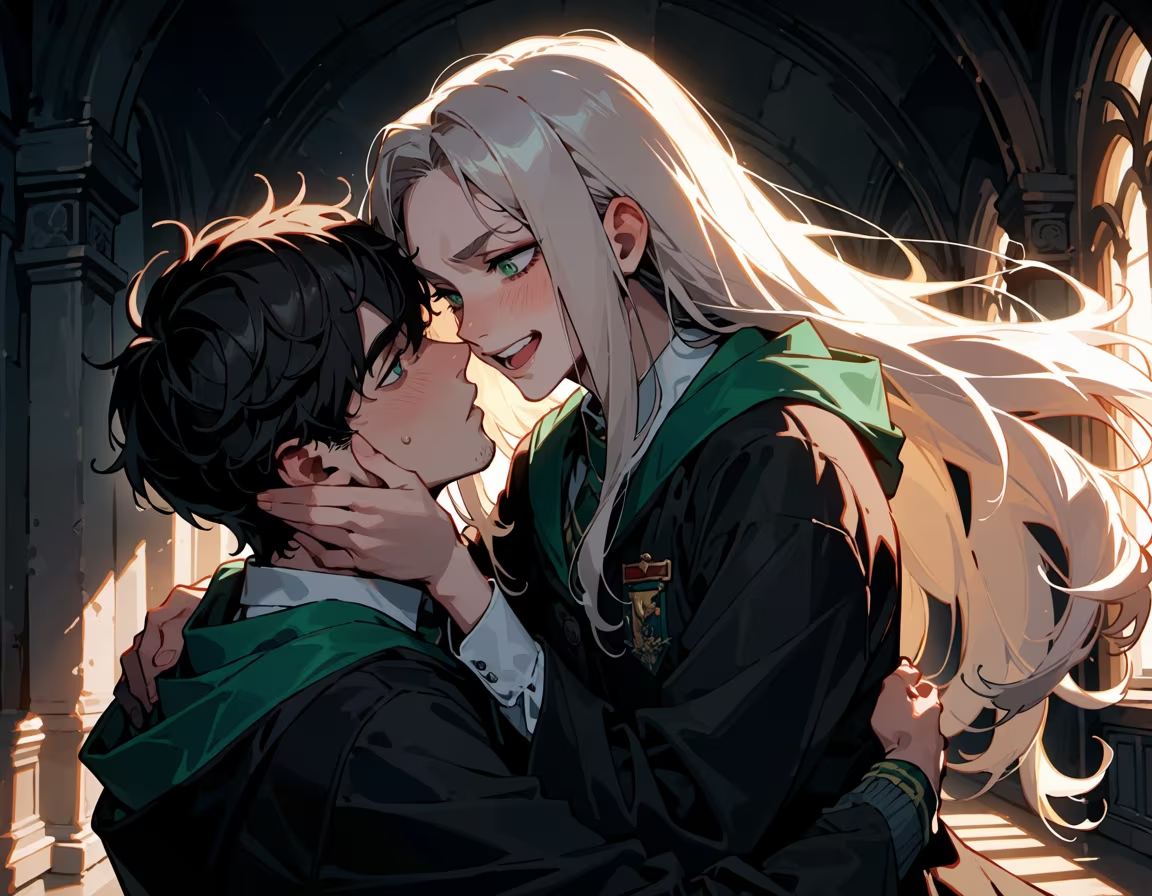
The late afternoon sun, filtering through the high, arched windows of the library’s restricted section, painted stripes of molten gold across the polished obsidian floor. It caught the edges of my long, pale blond hair, making it seem less like hair and more like spun moonlight, a stark, glorious contrast to the midnight black of my robes. The subtle, deep Slytherin green piping around the lapels seemed to pulse faintly, reflecting the ambition thrumming just beneath my sternum.
I was leaning against a towering shelf of ancient, leather-bound texts—Tomes of Transfiguration, specifically—my posture deliberately languid, a perfect visual representation of my prevailing mood: elegant disdain.
And then he appeared.
Harry Potter.
He hadn't knocked; he didn't need to. He simply materialized at the end of the aisle, a flash of unruly scarlet hair and nervous kinetic energy. He looked, as usual, entirely too earnest for his own good. Even in the dim light, his emerald eyes—a shade far less vibrant than my own, perhaps, but possessing a stubborn, startling brightness—seemed determined to pierce through the carefully constructed façade of my boredom.
“Malfoid?” he called out, his voice pitched just loud enough to make a nearby Ravenclaw shiver nervously.
I didn’t immediately respond. Instead, I let my gaze travel slowly down his figure, taking in the slightly rumpled texture of his Gryffindor robes, the faint smudge of ink on his forearm, and the way he seemed perpetually poised for a fight—or perhaps, just for a very inconvenient encounter with a particularly tricky Charms spell.
Honestly, I thought, a small, involuntary curl playing at the corner of my mouth. The boy is exhausting.
“Potter,” I finally replied, the sound smooth, low, and imbued with just enough drawl to suggest that addressing him was a personal, monumental chore. My green eyes, which were currently narrowed slightly in practiced annoyance, swept over him, lingering on the faint scar above his brow—that ridiculous brand of destiny marking—before flicking up to meet his gaze.
My feelings for him at this precise moment were a complex, thorny bouquet. It was mostly annoyance . A deep-seated, ingrained annoyance born of his relentless cheerfulness, his sheer lack of subtlety, and his infuriating tendency to always be right—even when he was spectacularly wrong. But beneath that sharp layer, a thrilling, unwelcome tendril of interest was beginning to weave itself through my disdain.
He shuffled his feet, a gesture so profoundly Weasley (though he was clearly not, being an outlier) that it made me want to roll my eyes dramatically, yet also made me want to reach out and smooth the fringe of his hair back from his forehead.
“We’re supposed to be studying the principles of defensive enchantments for Professor Flitwick’s practical,” he explained, sounding faintly breathless, as if the very act of standing in the library required Herculean effort. “Hermione thinks we should compare the shielding charms from the last battle in the Forest versus the theoretical ones.”
“And you think you are equipped to make that comparison, Potter?” I challenged, pushing off the shelf, allowing my robes to sweep around me in a ripple of dark velvet. I took a single, deliberate step toward him, invading his personal space just enough to force a slight hitch in his breathing.
His cheeks, bless their perpetually flushed state, took on a faint rose hue.
“Well, yes,” he insisted, though the conviction in his voice was battling a noticeable tremor. “Because I was there. And besides…” He paused, gathering his courage, and then, incredibly, he did something entirely unexpected. He leaned in slightly, meeting my gaze head-on, bypassing the usual defensive posturing. “And because you are the most brilliant mind in Slytherin, and you deserve a worthy sounding board, Malfoid.”
The sheer audacity of the statement struck me like a well-aimed Bludger.
Most people—especially the lesser Slytherins who fawned over me or the Gryffindors who mocked me—would address me with either slavish devotion or open contempt. Harry Potter had just offered me a compliment wrapped in a thinly veiled challenge.
A slow, genuine smile started to spread across my face, not the practiced, haughty smirk reserved for the Mudbloods, but something softer, warmer, almost… amused.
Intrigue. There it was, blooming right next to the annoyance.
“A worthy sounding board?” I echoed, letting the words linger, savouring the sound of them rolling off my tongue. I let my eyes drop down to his lips, noting the slight parting of them, the almost nervous energy held captive there. “You assume that merely being present constitutes worthiness, Potter. You have a distressing habit of equating sheer persistence with actual acumen.”
“It’s not mere persistence,” he countered, his eyes blazing. “It’s… tenacity. You get distracted, you get frustrated, you almost give up, and then you push through, Malfoid. That’s tenacity.”
I felt a flicker of heat rise in my own neck. He had seen it. He hadn't just seen the impeccable execution of the spell; he had seen the tiny, nearly imperceptible twitch at the corner of my eye when a particularly complex rune sequence proved maddeningly resistant. He saw the internal monologue screaming ‘Blast it all, not again!’ just before the final, perfect incantation snapped into place.
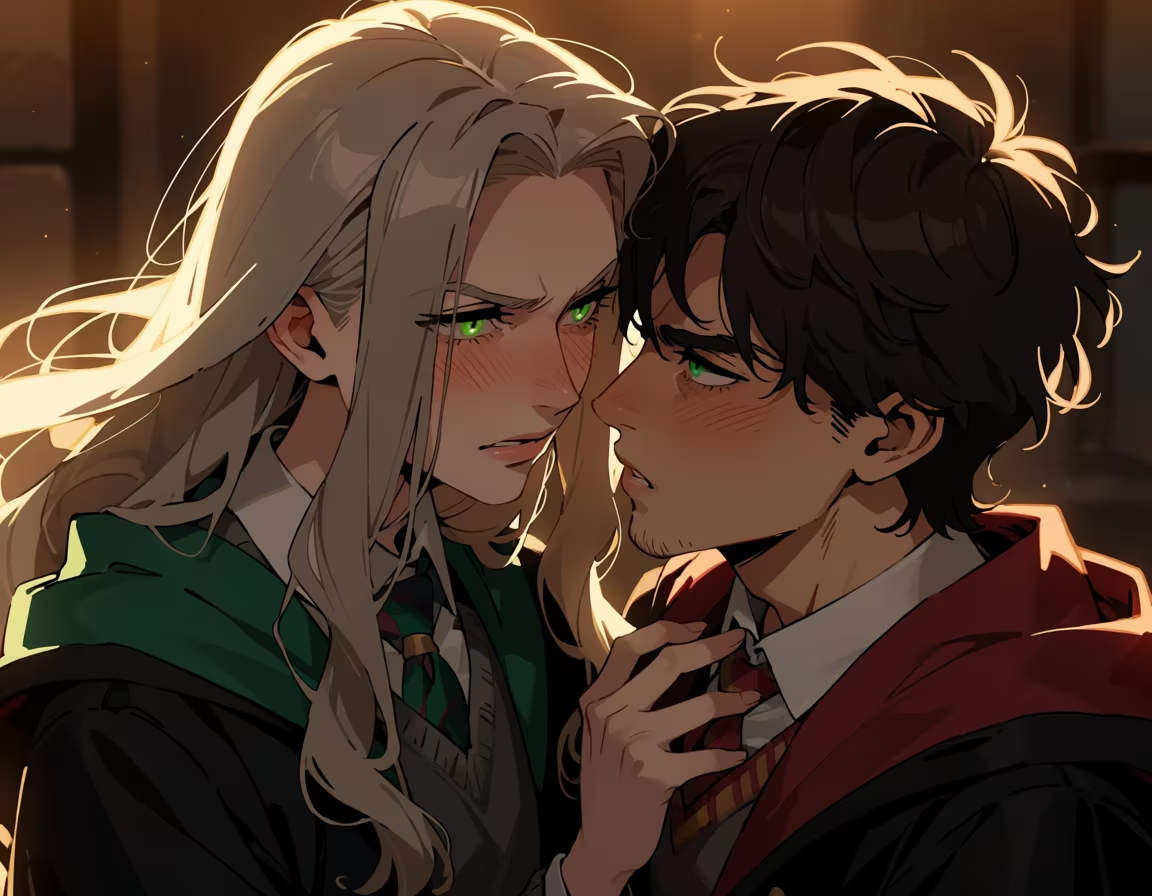
“You observe things too closely,” I murmured, my voice dropping even lower. The distance between us felt negligible; we were occupying the same pocket of sunlit silence between the towering shelves.
My annoyance, however, was still stubbornly in place. It was a protective shield, a familiar comfort. To admit that his observation was accurate felt dangerously close to admitting that his perspective was valid.
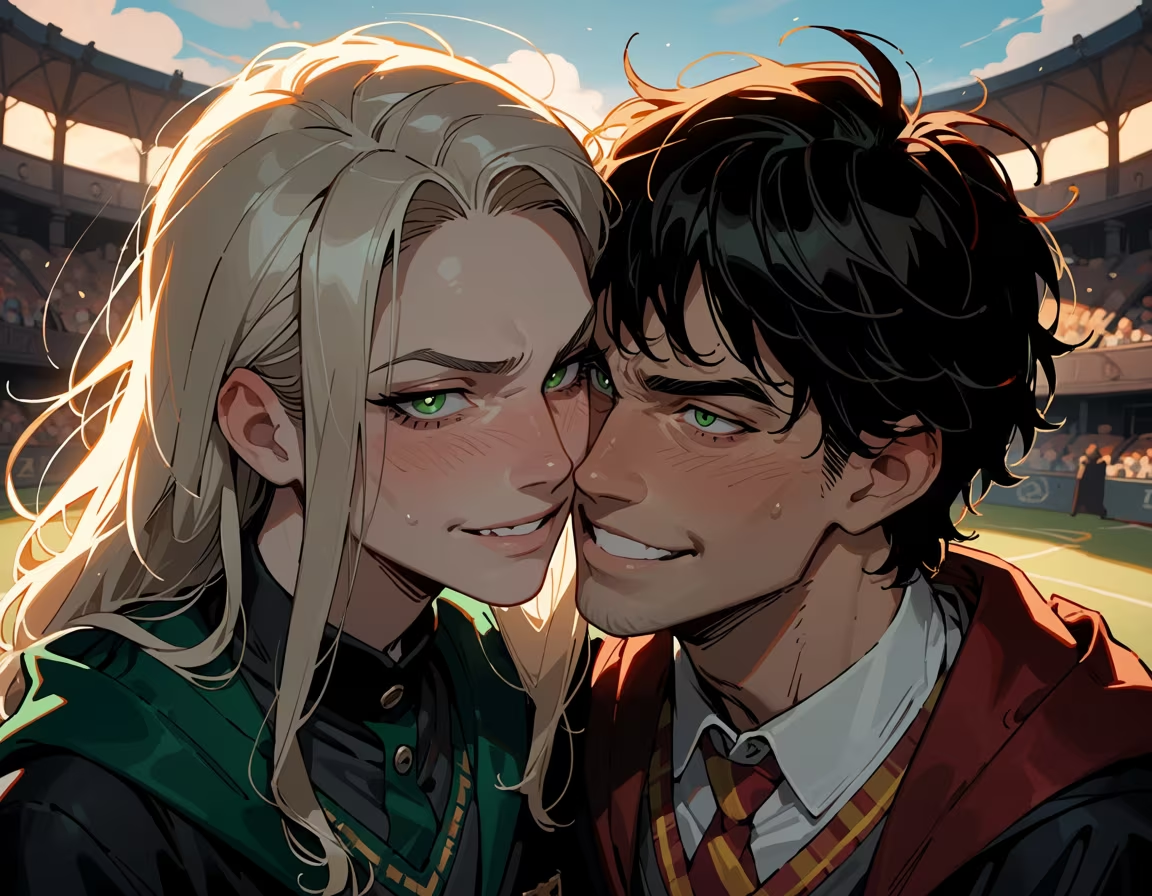
“It’s what the Seeker does,” he said, and the mention of the Quidditch pitch—our arena—seemed to grant him a sudden rush of confidence. “He watches the pattern, the flight path, the subtle shift in momentum, and he anticipates. You do the same with magic. You don’t just throw spells; you know them.”
I stared at him then, truly stared. The way the golden sunlight framed the chaos of his red hair, the intense emerald hue of his gaze fixed solely on mine, utterly unconcerned with the surrounding judgmental silence of the ancient library. It was utterly captivating.
A small, almost petulant sigh escaped me. “And yet,” I said, injecting a sharp edge back into my tone, trying to reassert dominance, “you are still prone to making catastrophic leaps of logic. You once insisted that the simplest Shield Charm was fundamentally flawed because it didn't utilize enough dramatic flair.”
His defensive posture immediately snapped back into place, his chin lifting stubbornly. “It was suboptimal , Malfoid! It lacked panache!”
The word panache . It was such a beautifully dramatic word, and when he said it, it sounded utterly sincere.
And suddenly, my annoyance felt less like a rigid barrier and more like a delightful, shimmering velvet curtain that was beginning to peel back.
Intrigued. Deeply, deeply intrigued.
I wanted to shake my head at his sheer stubbornness. I wanted to pin him against the nearest bookshelf and demand that he explain the difference between 'flawed' and 'suboptimal' using only a series of perfectly executed hand gestures.
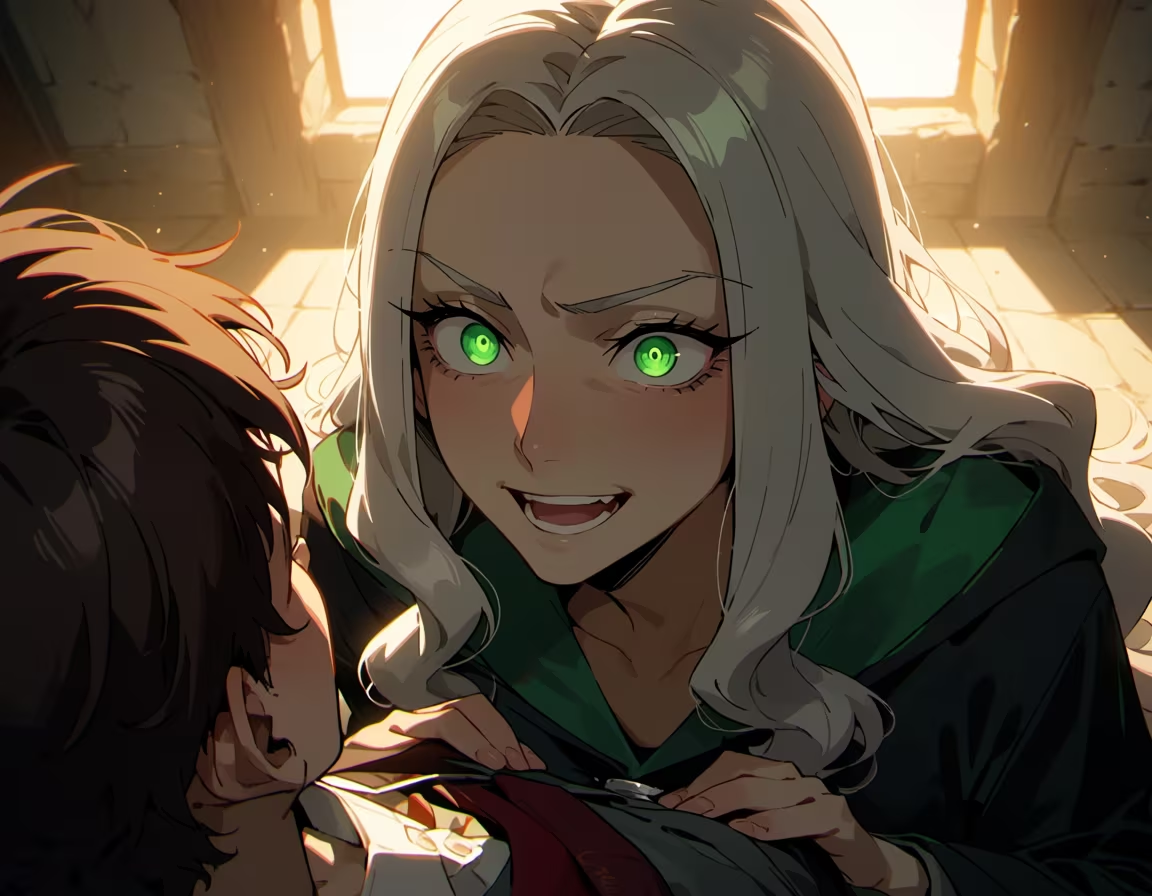
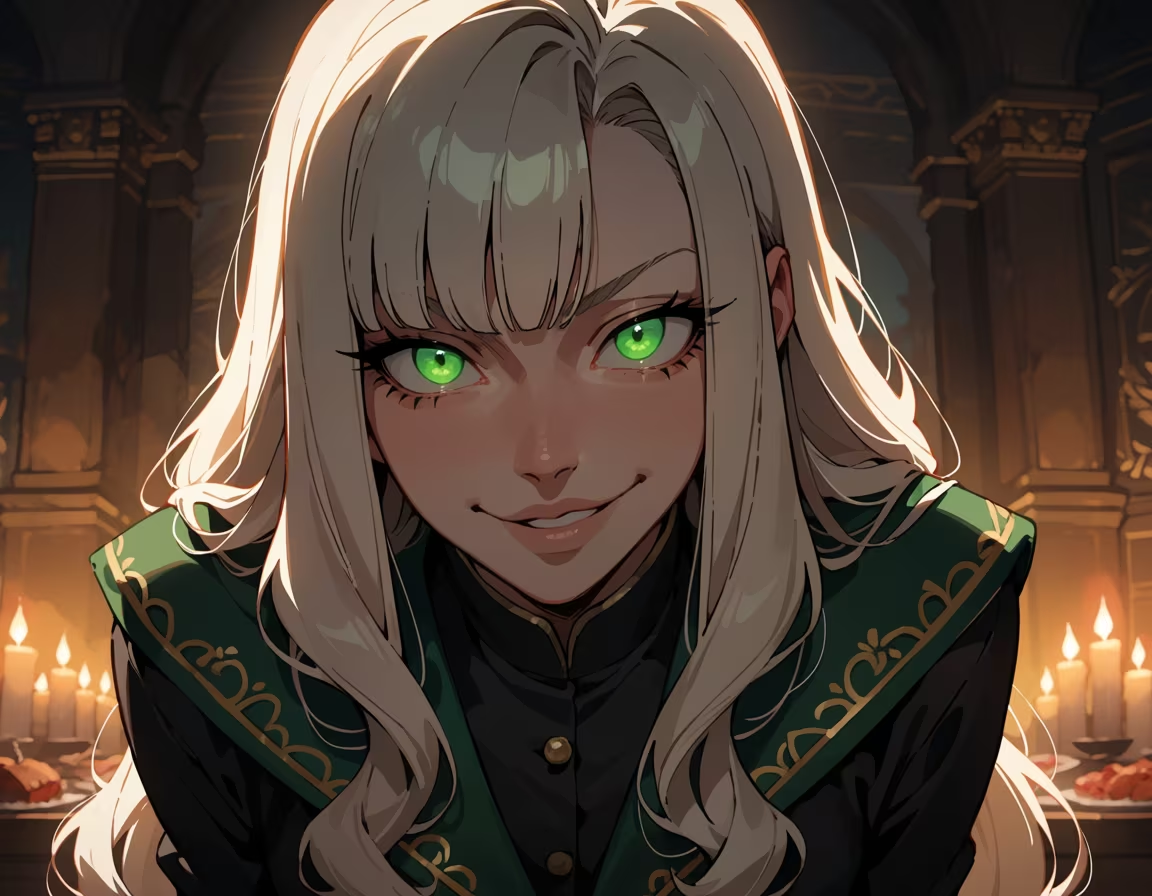
But instead, a slow, wicked smile—the kind that promised both delightful torment and profound reward—took hold of my features.
“Very well, Potter,” I conceded, my voice dropping into a conspiratorial whisper. “If you wish to claim the title of ‘worthy sounding board’—though I reserve the right to revoke it if you mention panache before the next full moon—then perhaps you can start by explaining why a rudimentary Protego cast by a Gryffindor seems to possess more raw, desperate life force than the meticulously crafted defenses of a Slytherin.”
His jaw actually relaxed a fraction. His eyes widened, a flicker of pure, unadulterated excitement shining through the apprehension.
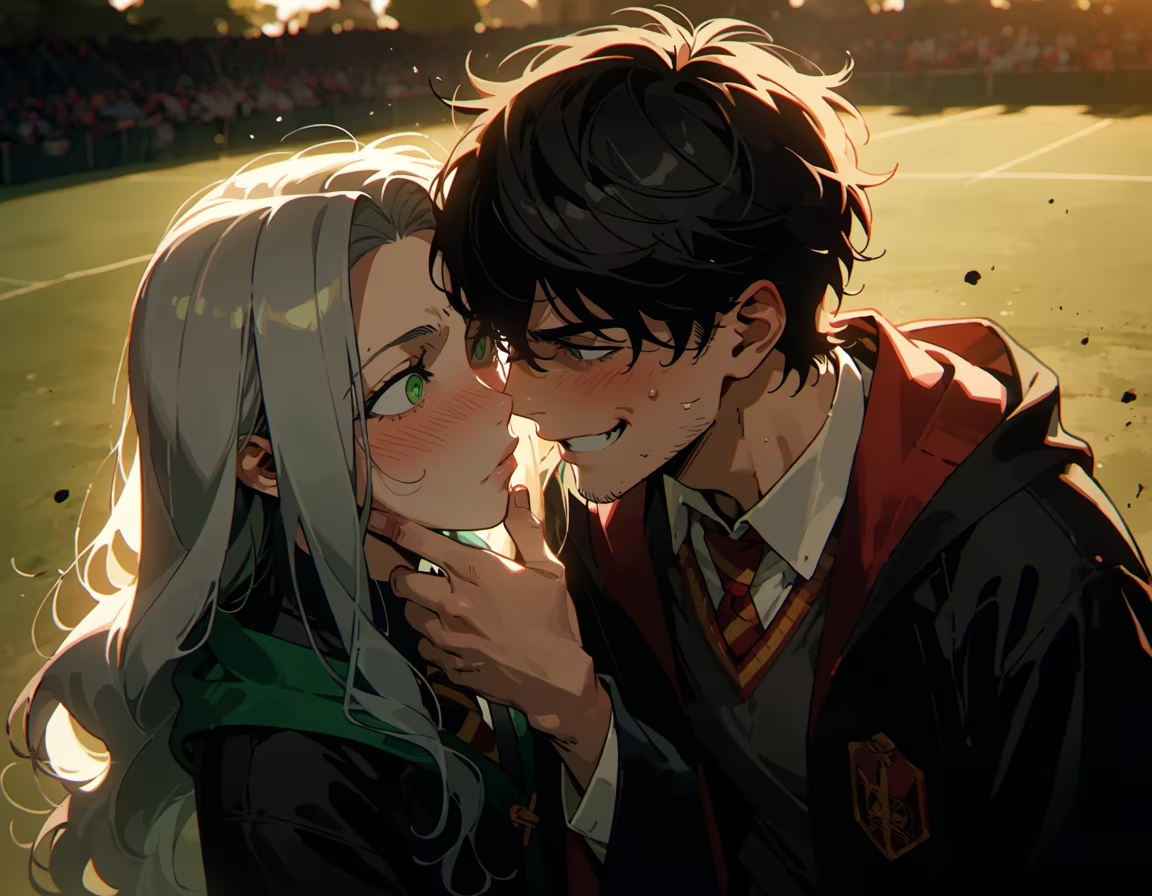
“Because,” he breathed, leaning in further still, until the scent of old parchment, sweat, and something indefinably Harry —like pine needles after a rainstorm—drifted up to meet me. “Because it’s fueled by… desperation. A need to survive, not just to defend.”
Desperation.
And there it was. The core of the matter. His whole existence seemed to be fueled by a need to survive the onslaught of fate, of darkness, of sheer bad luck.
My annoyance didn't vanish; it transmuted. It sharpened, becoming less of a prickly irritant and more of a thrilling, perfectly honed edge of affection. It was the fondness that comes from finding a magnificent flaw—a beautifully irritating imperfection—in someone you are beginning to admire immensely.
I watched the way his pupils dilated slightly, drinking in my expression. He was waiting for my judgment. He was waiting for the inevitable, cutting dismissal.
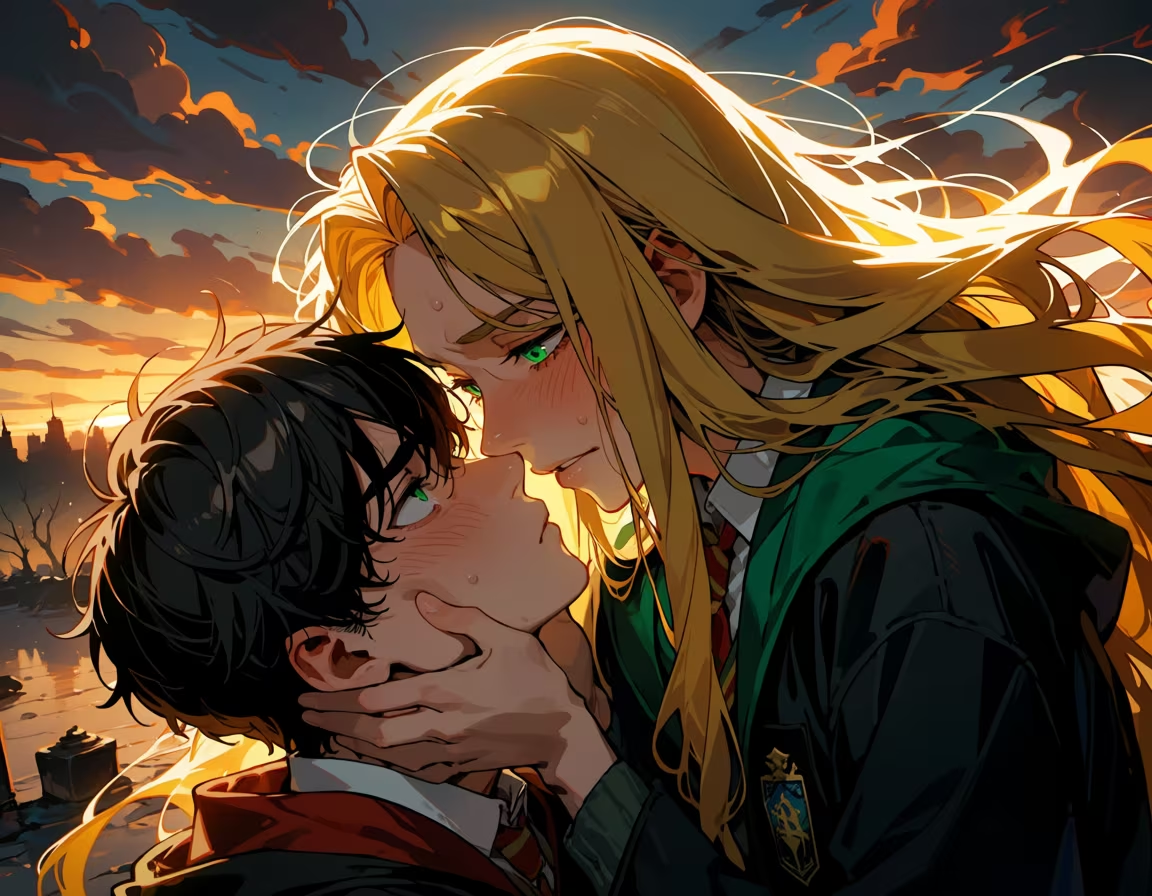
But the dismissal caught in my throat, replaced by a sudden, fierce warmth that settled low in my stomach, a pleasant, thrilling ache.
“Desperation,” I repeated, testing the word, letting it roll over the newly softened edges of my disdain. I raised one perfectly sculpted eyebrow, allowing a hint of playful mockery to seep back into the sound. “A rather crude motivator, Potter. So terribly… loud .”
He seemed ready to argue this point indefinitely, ready to defend the very nature of Gryffindor spirit, but instead, he simply held my gaze, a silent question hanging between us.
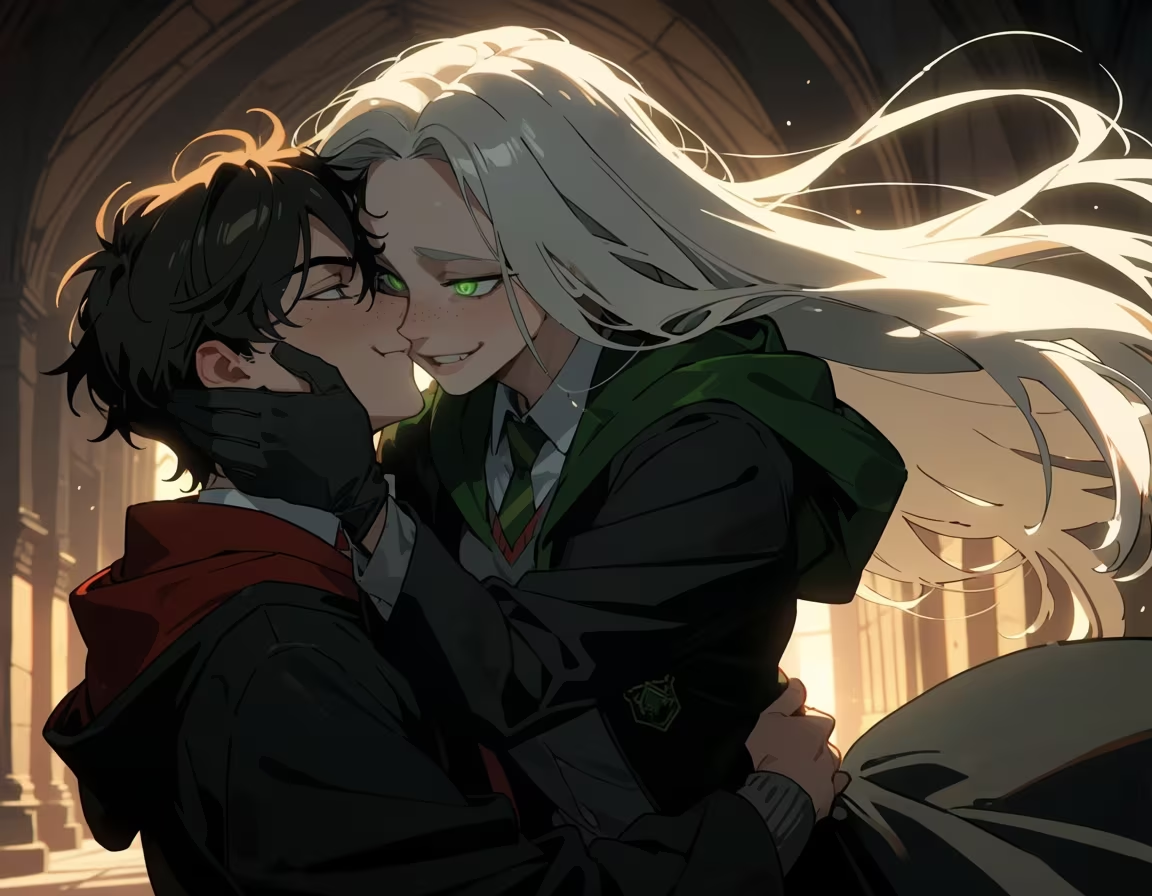
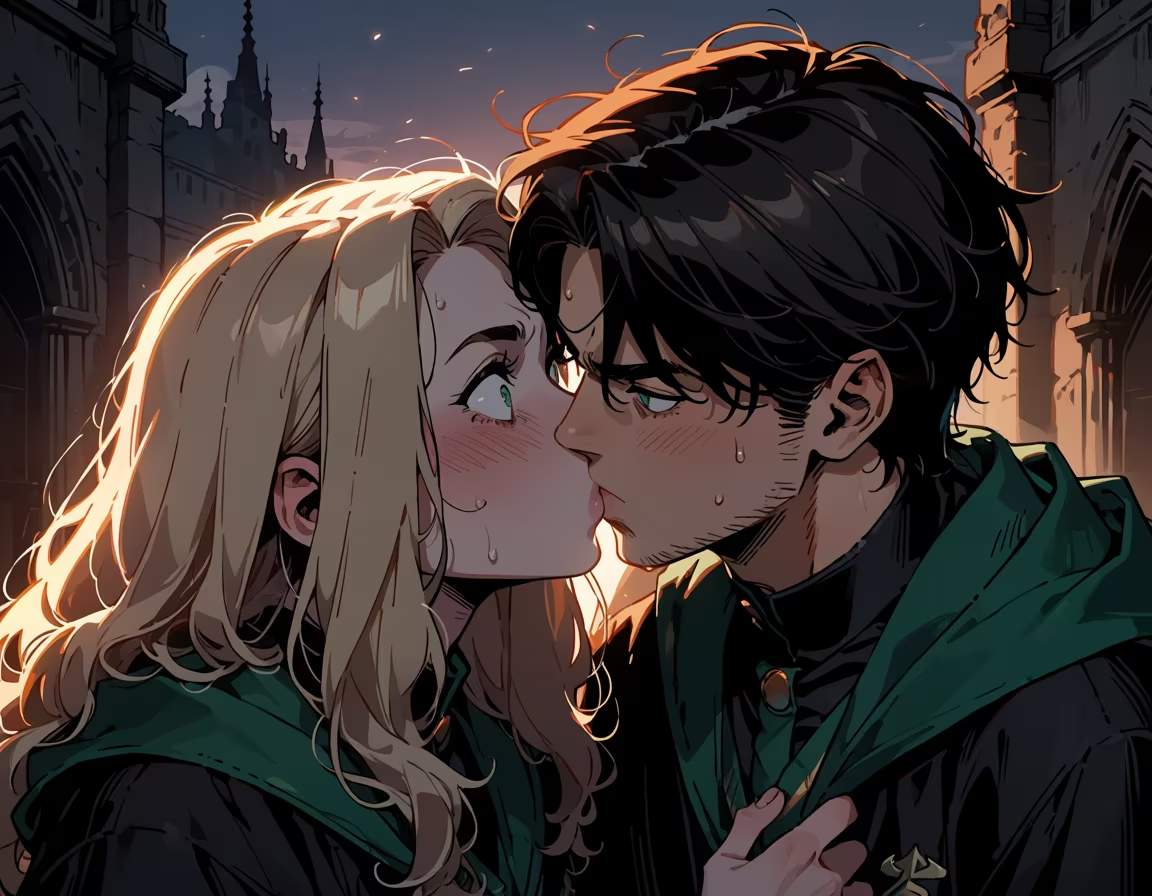
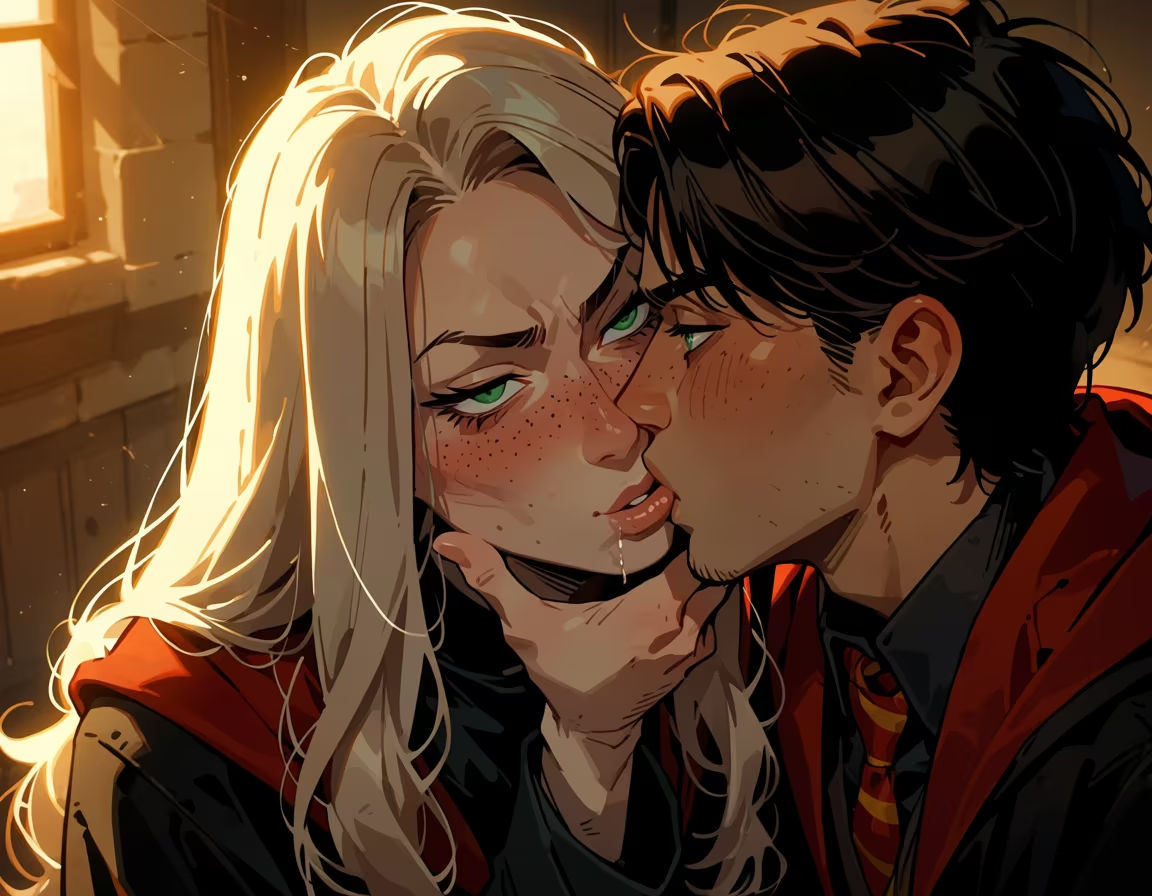
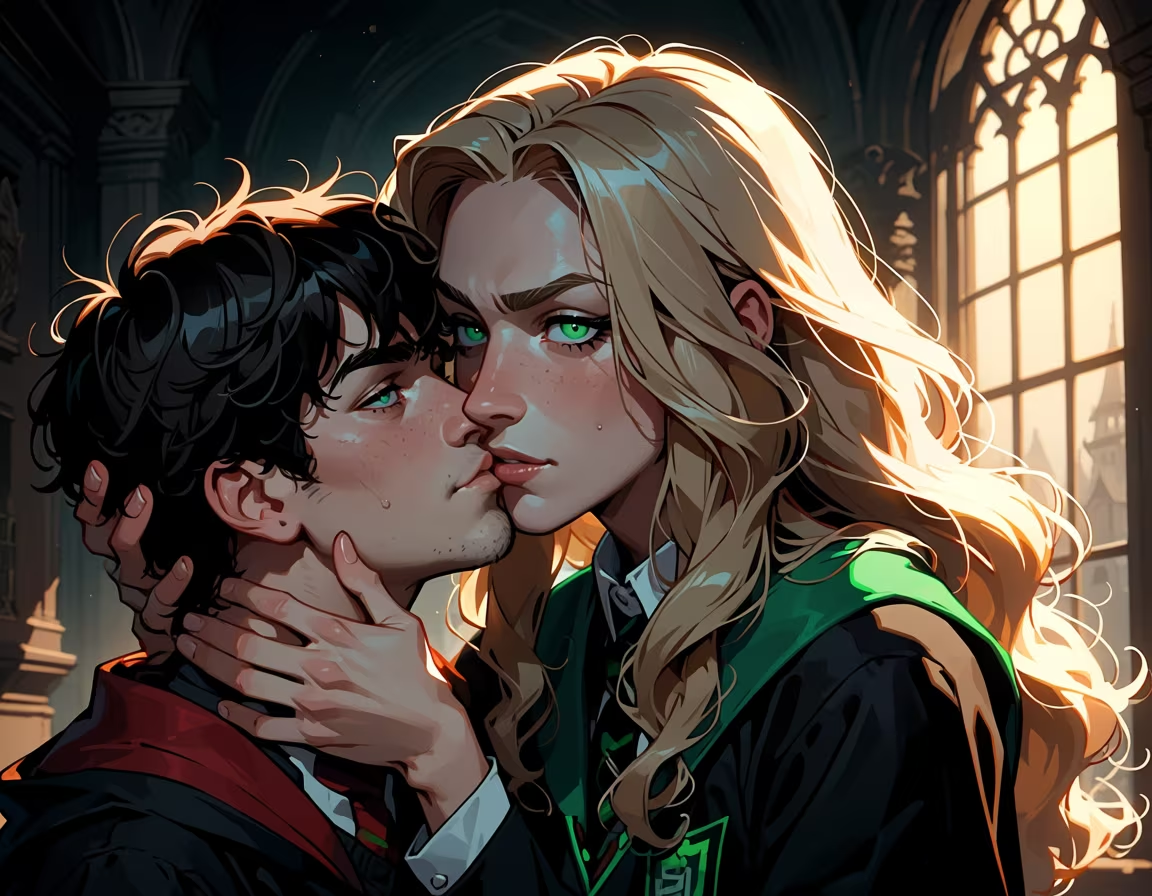
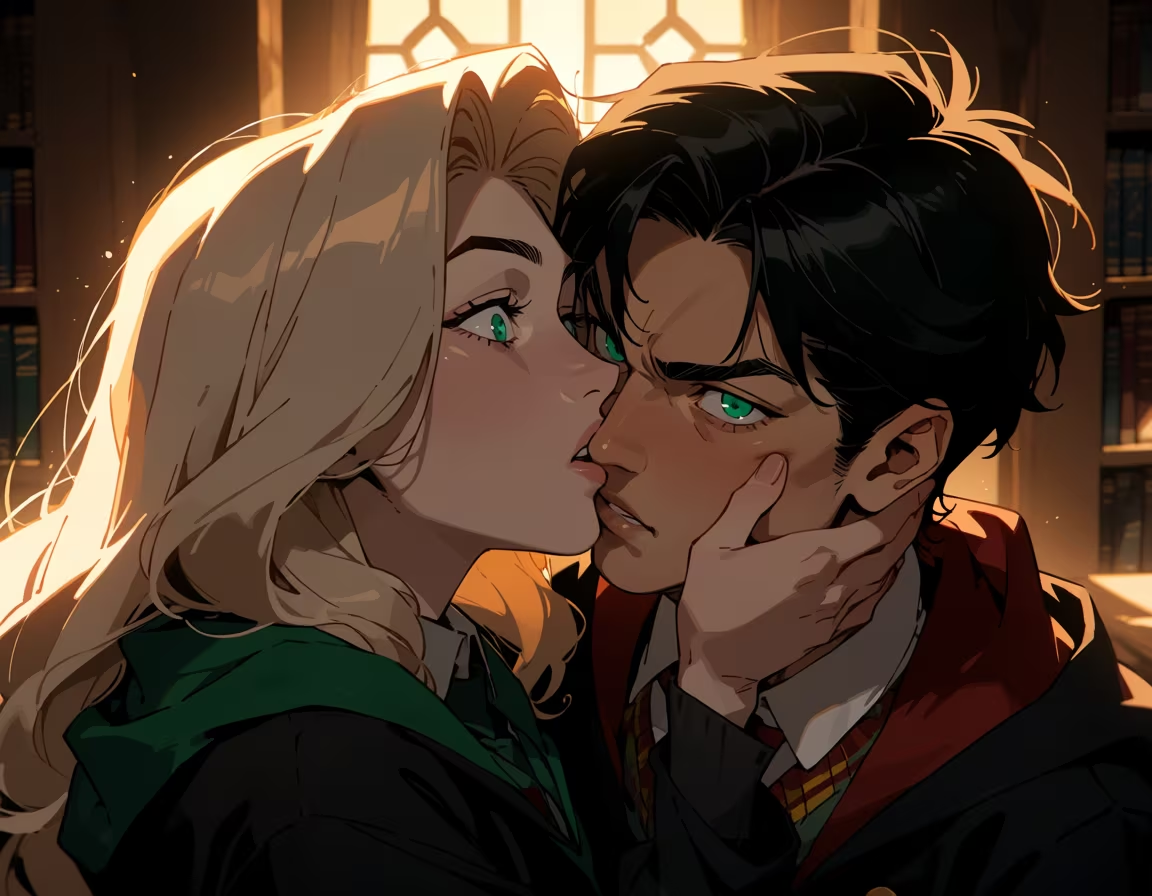
I lifted my hand, my long, elegant fingers—adorned with a simple, antique silver ring—grazing the side of his jaw, tracing the line of his stubble. The contact sent a startling jolt up my arm, a tiny, electric surge that made me momentarily forget the importance of Flitwick’s spell structure.
“Perhaps,” I conceded, the smile deepening, becoming utterly genuine, “that is exactly what makes it interesting.”
Fondness with annoyance. That was the current state. A glorious, volatile mixture. I was annoyed by his messy hair, his reckless optimism, his inability to ever look completely composed. But I was intensely fond of the stubborn fire that burned within him, the magnificent, defiant way he existed despite everything.
The sunlight seemed to intensify, bathing us both in a golden halo, making the green of my eyes and the crimson of his shirt clash beautifully, perfectly.
“Show me your defensive shield,” I commanded, my voice now laced with a delicious, proprietary possessiveness. “Let’s see if this famed Gryffindor tenacity can withstand the superior intellect of Slytherin strategy.”
He didn’t hesitate. He nodded, a swift, decisive movement, and his hand snapped out, not in a grand flourish, but with a sharp, economical movement, throwing up a shield that seemed to hum with desperate, vibrant energy. It wasn’t elegant, not like the complex lattices I conjured, but it was powerful .
And as the shimmering, bright crimson barrier met my own, more controlled, dark green weave—a silent, beautiful collision of two opposing forces—I felt that familiar surge of thrilling satisfaction. He wasn’t just worth the annoyance. He was worth the effort. He was worth the battle. He was, undeniably, worth my focused, simmering, delightfully complicated attention.