| Home | The Lives of Velnin | Illustrated Fiction | Malfoid Art & Fiction | Book Blurbs | Contact |
The compartment was, to my immediate, highly critical assessment, rather tragically ordinary. It was one of those standard, polished-mahogany boxes stacked along the side of the Hogwarts Express, designed—one assumed—to facilitate camaraderie, though I found ‘camaraderie’ to be a rather flimsy euphemism for ‘forced proximity.’ Outside, the Scottish countryside rushed by in a blur of emerald and heather, painting the window in streaks of vibrant, almost insolent green.
I was attempting, rather unsuccessfully, to read Advanced Potion-Making , a text whose illustrations were far more compelling than the prose, when the latch clicked.
My quill paused mid-stroke, leaving a small, perfectly formed ink droplet staining the corner of the parchment. I did not look up immediately. One should never reward a sudden interruption with an instant reaction; one allows the intrusion to feel slightly presumptuous, slightly unworthy of the initial burst of attention.
“Mind if we sit here?” The voice was slightly too loud, too earnest, and possessed a certain breathless quality that suggested a profound, if ultimately superficial, enthusiasm for the concept of ‘shared journey.’
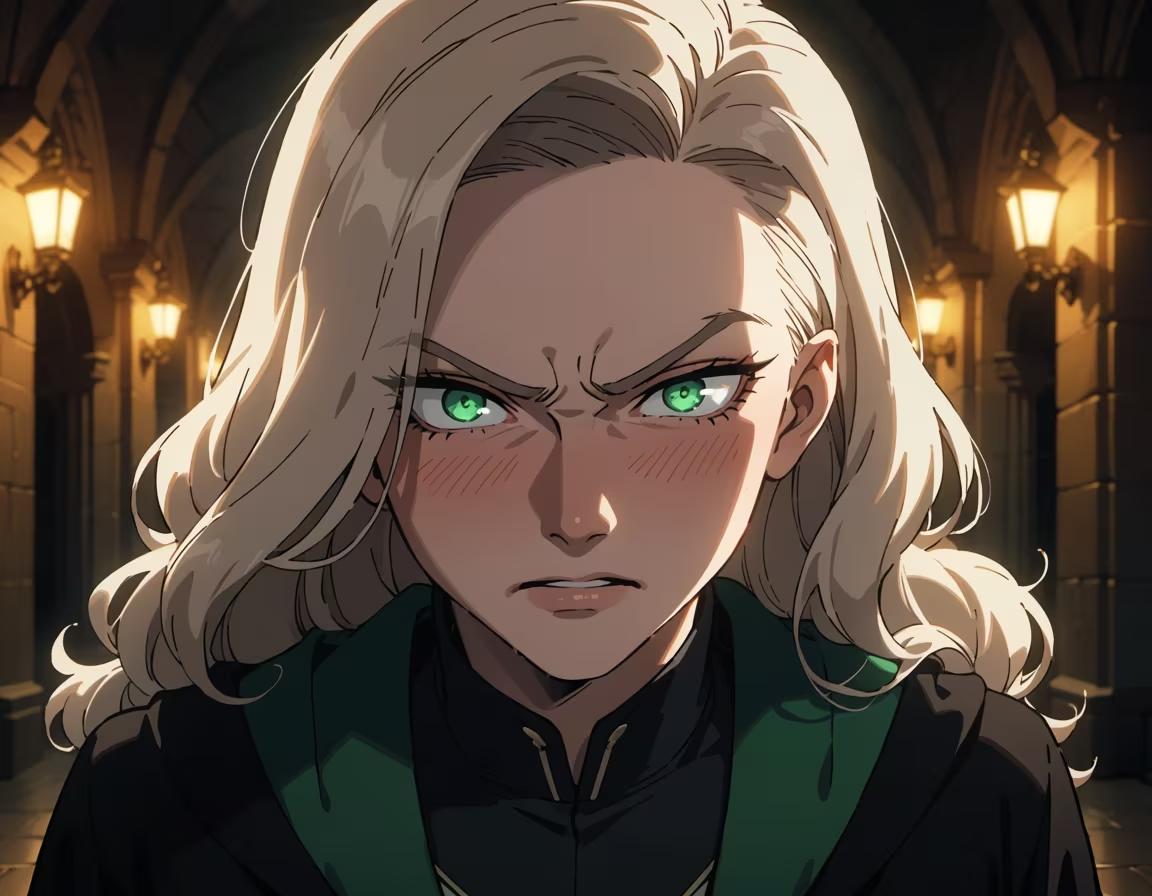
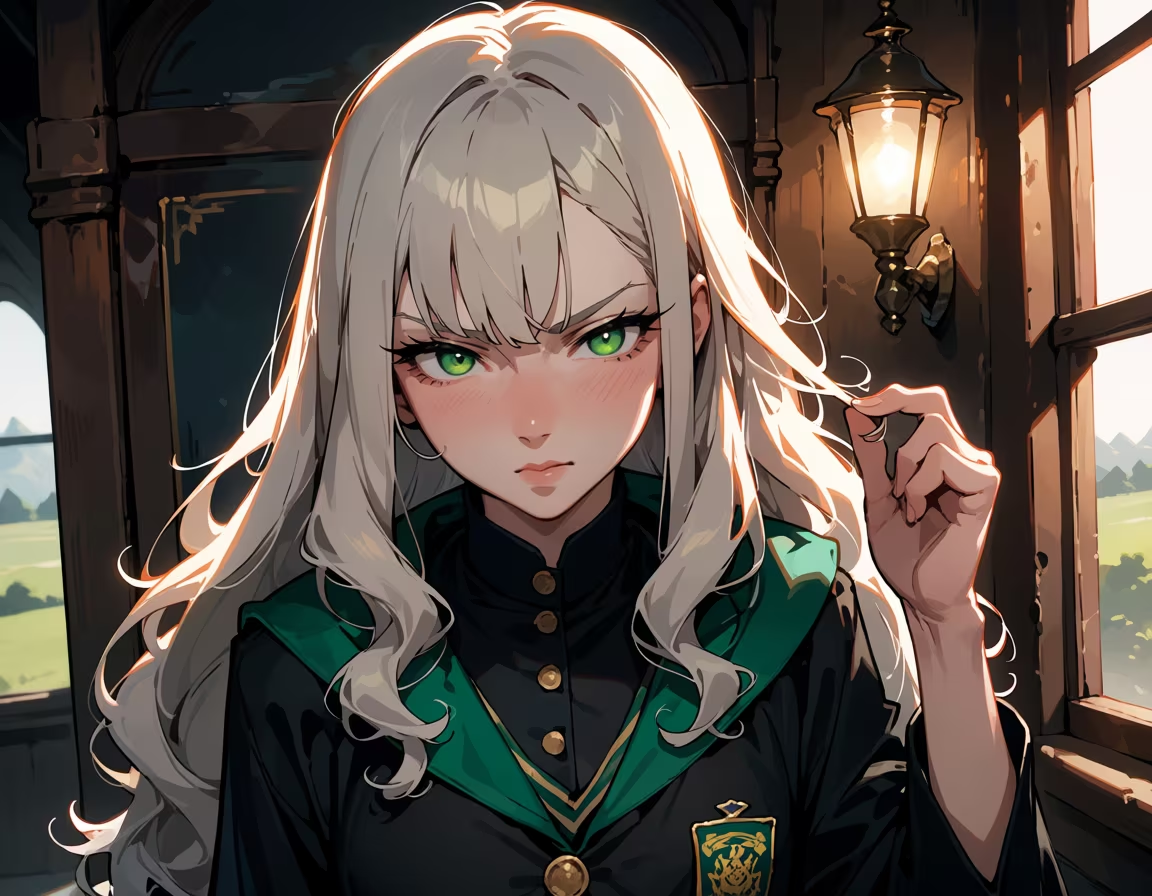
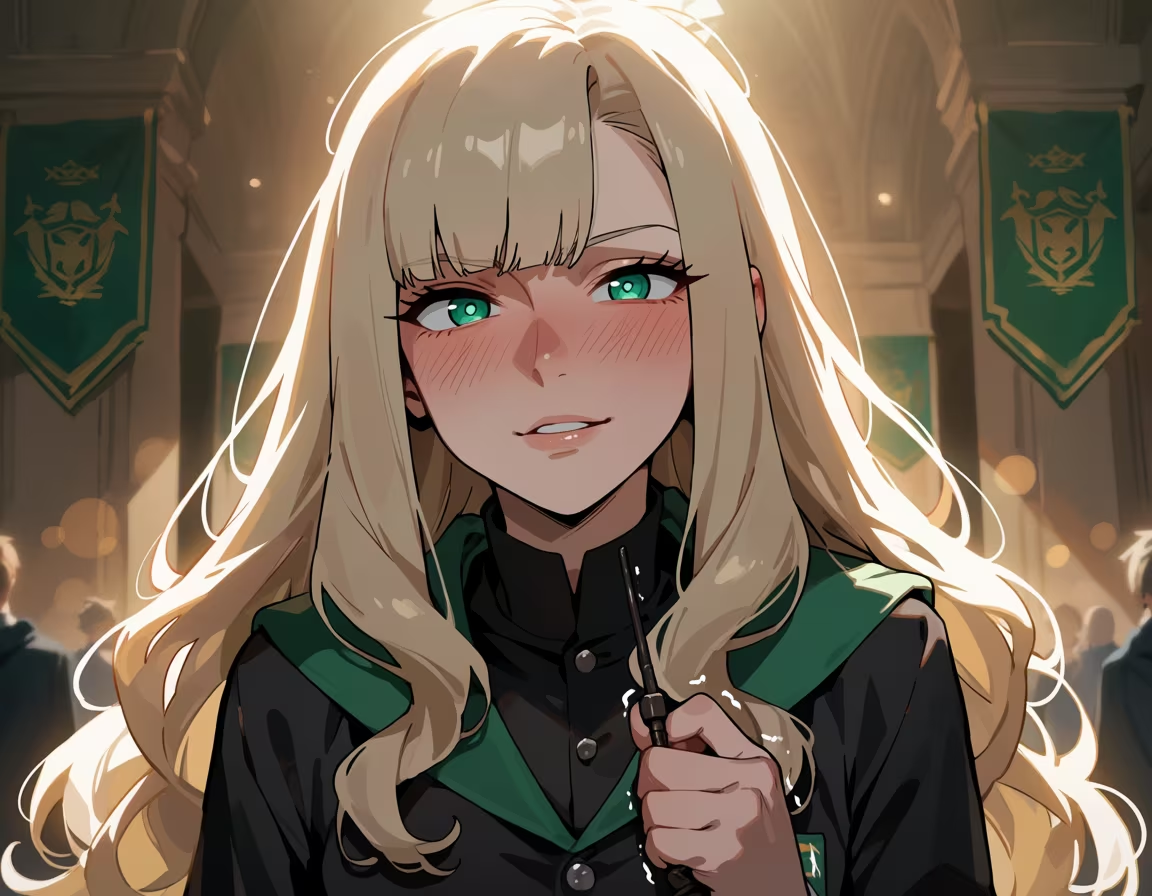
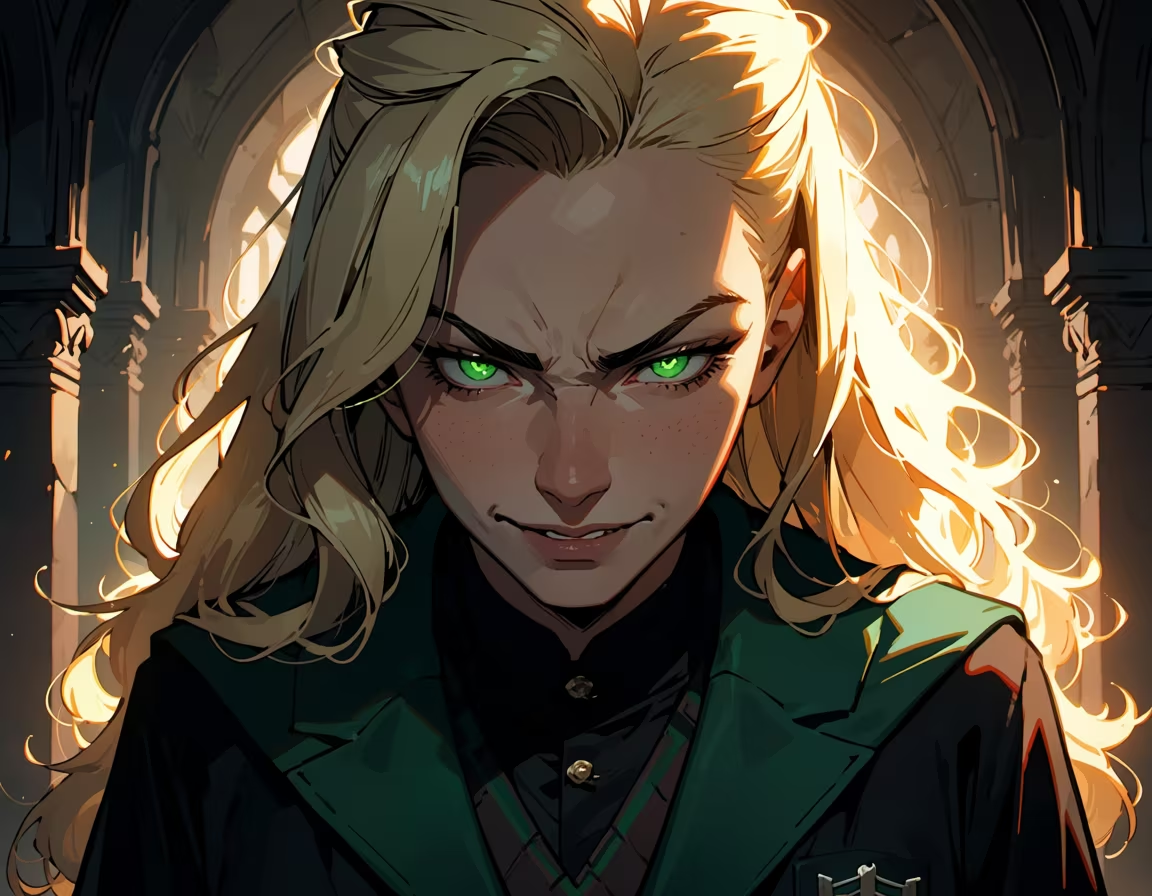
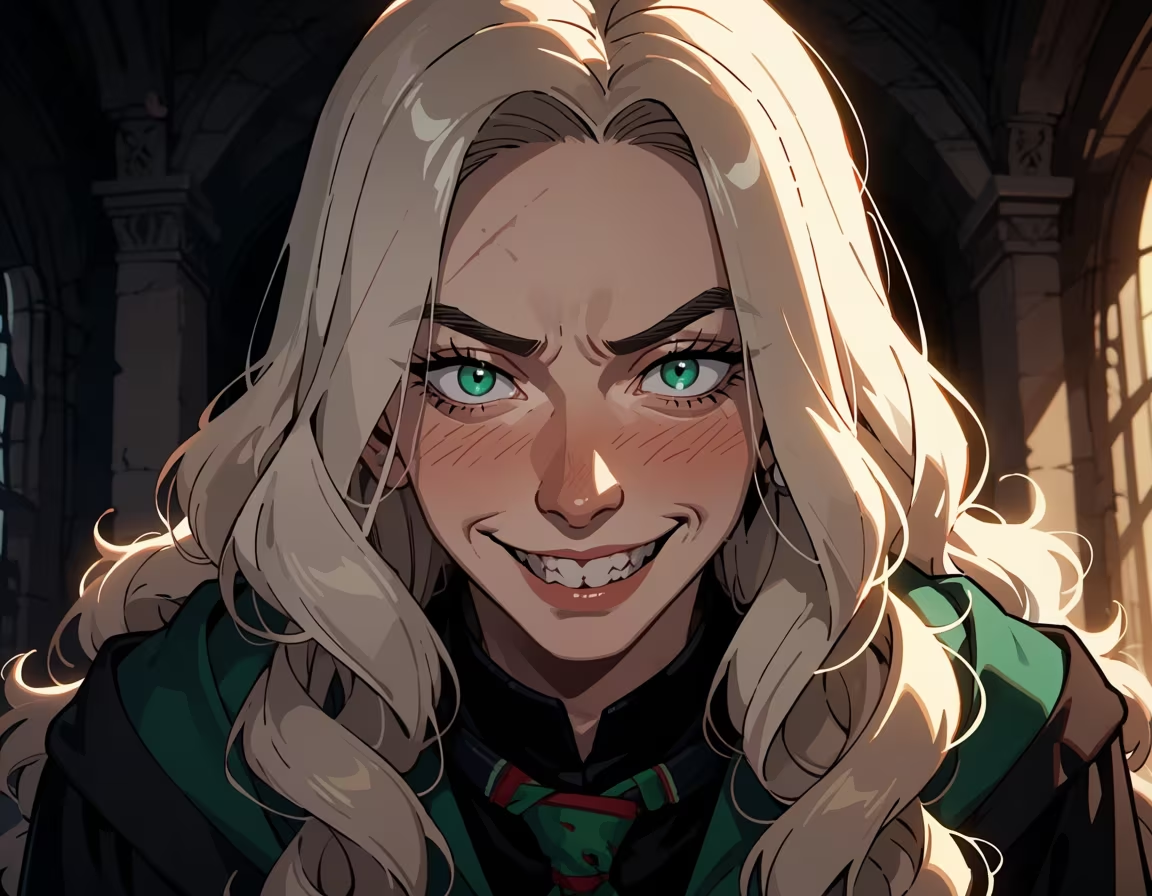
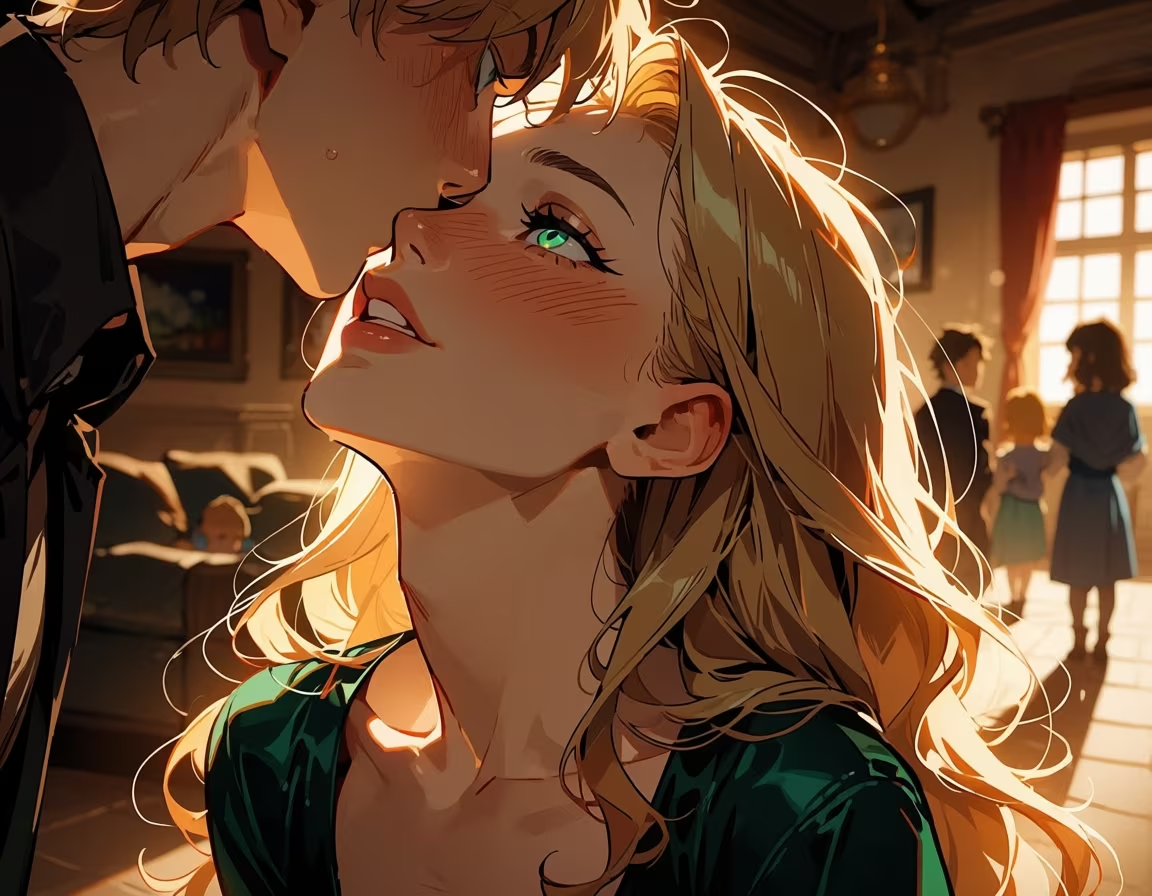
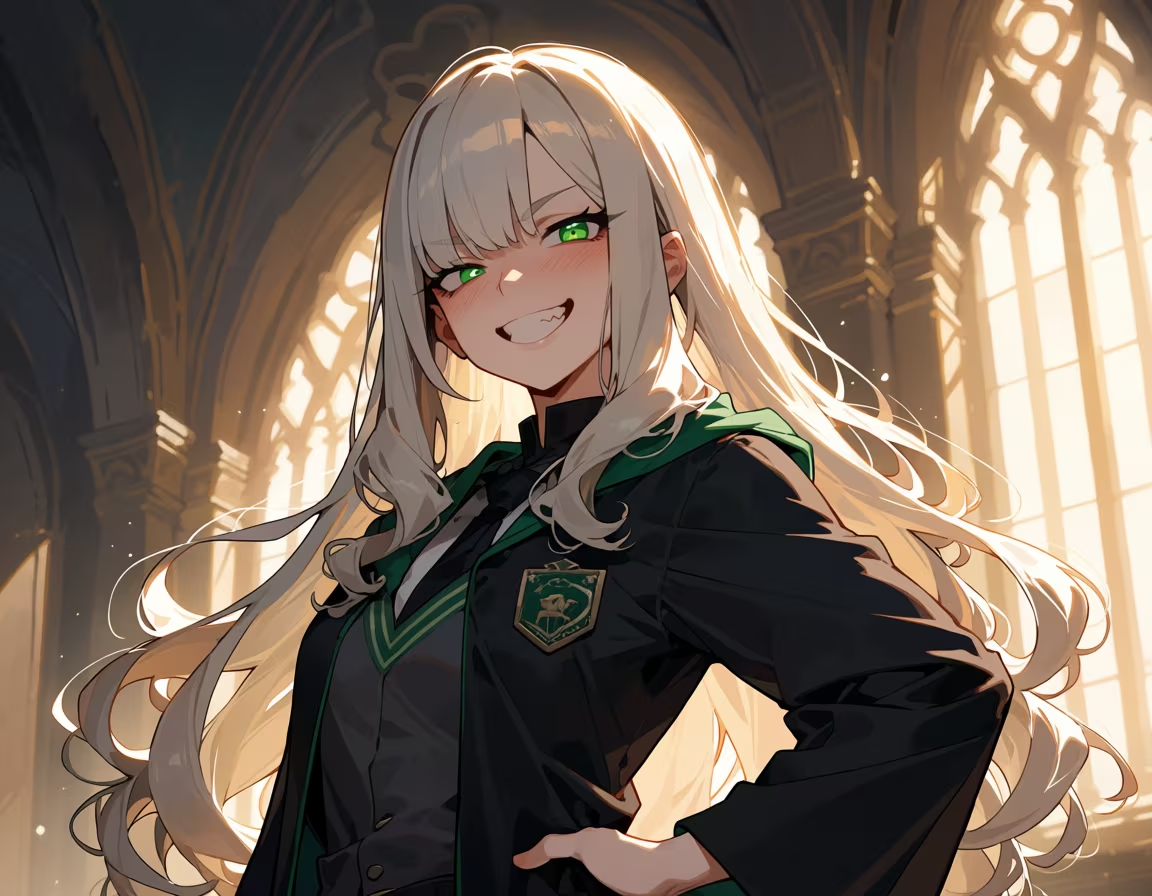
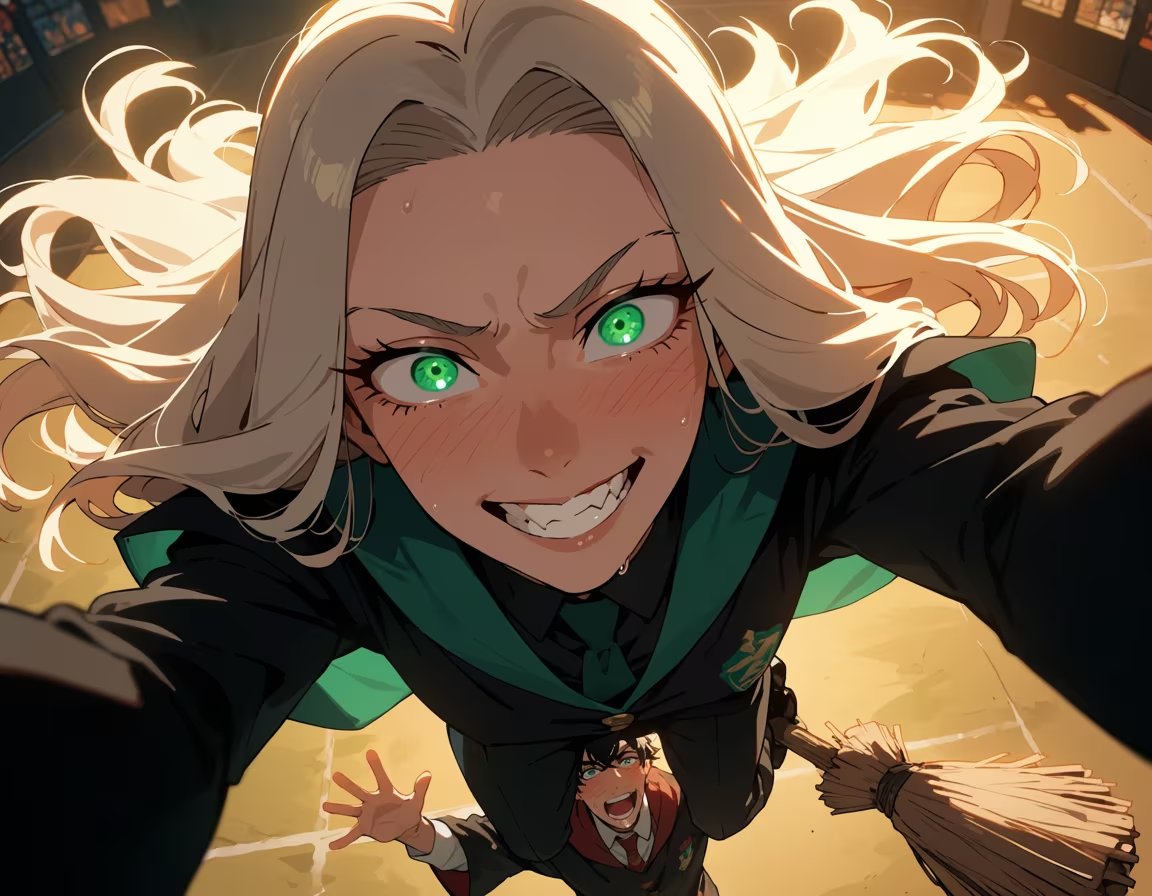
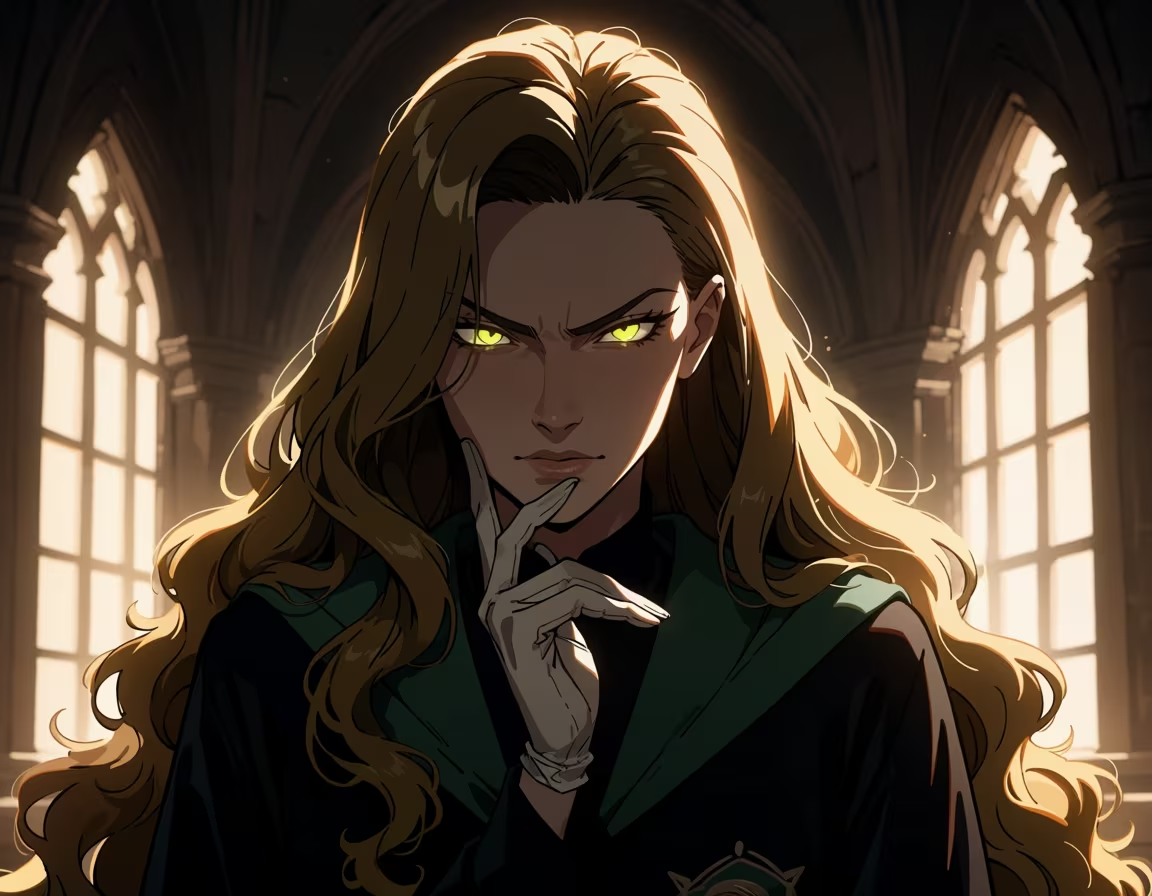
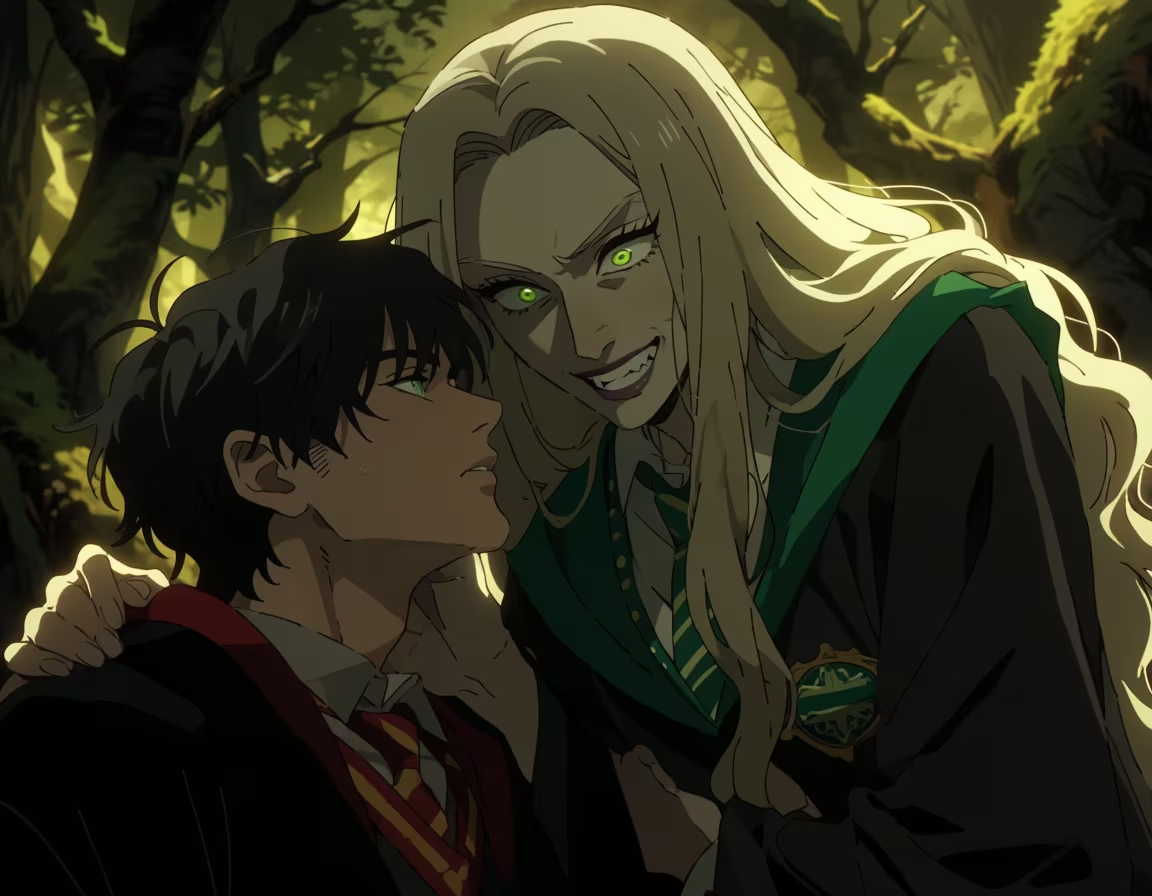
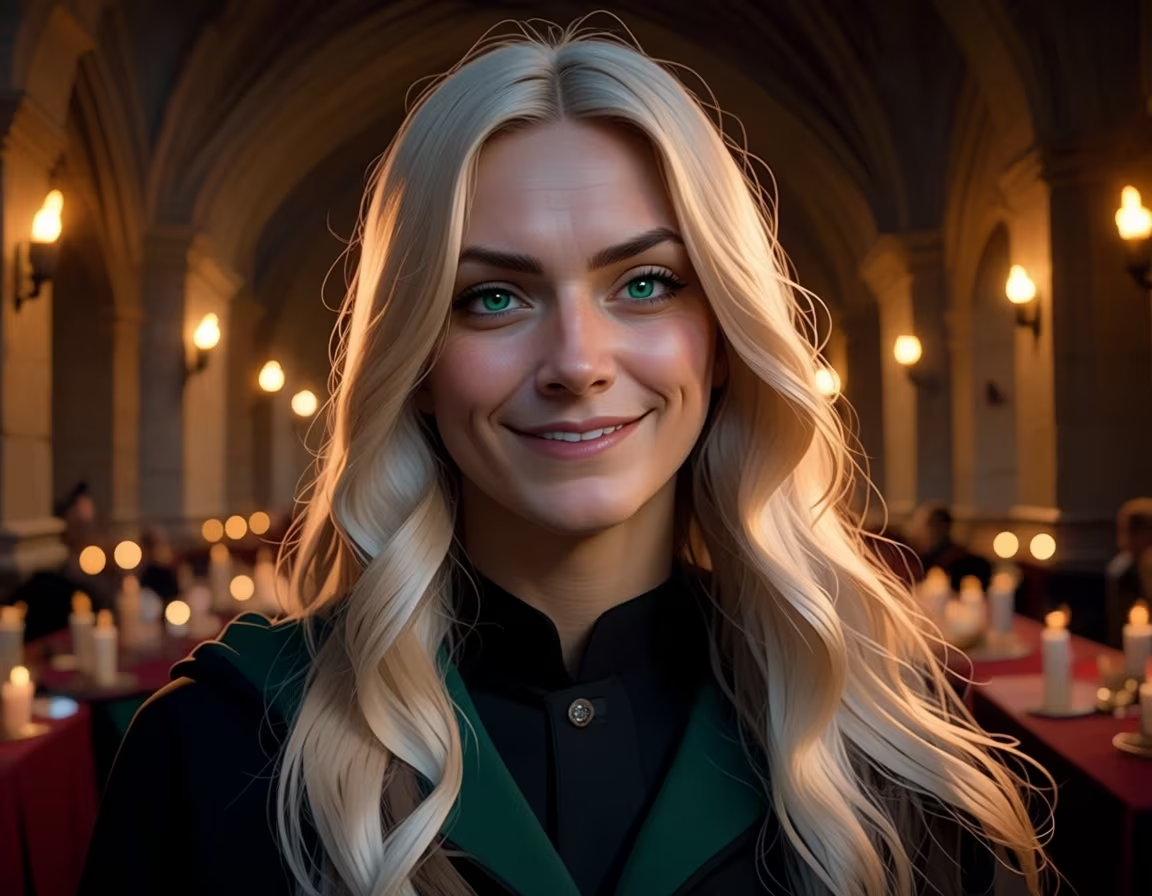
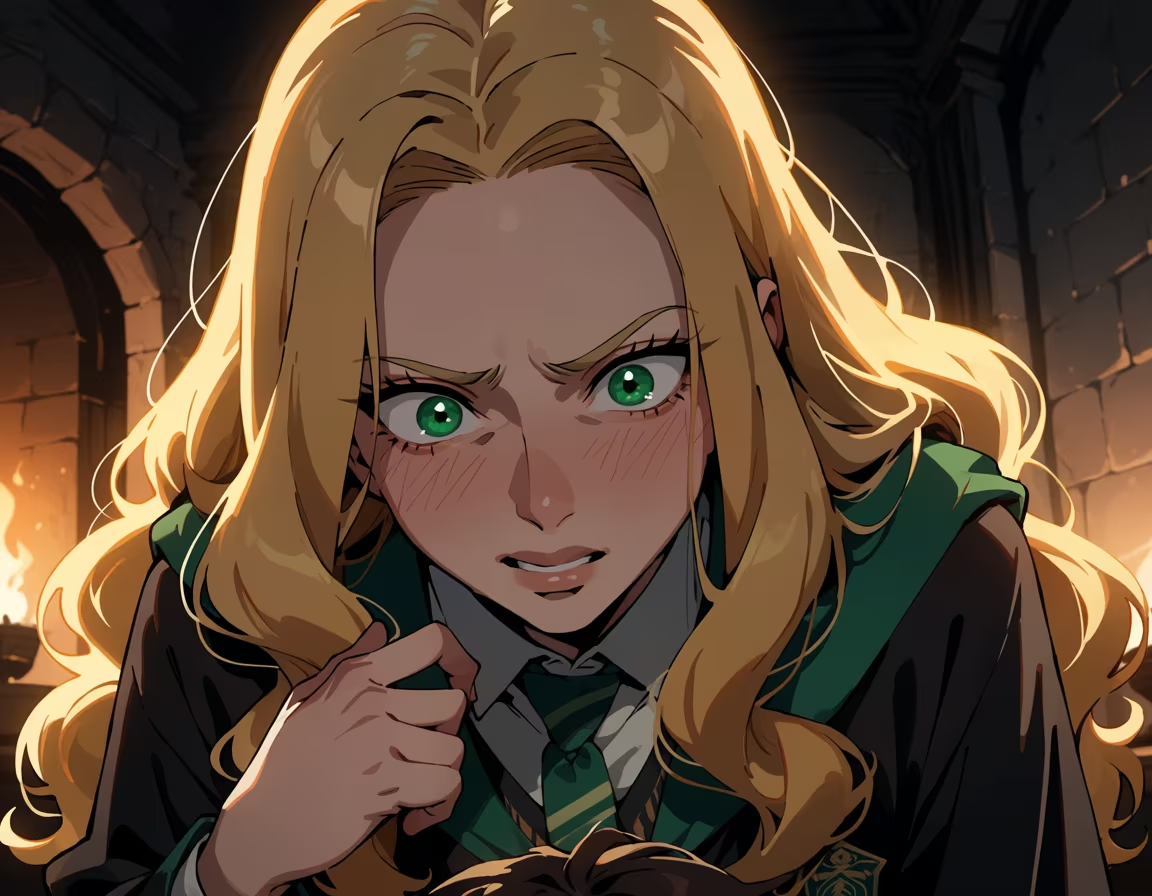
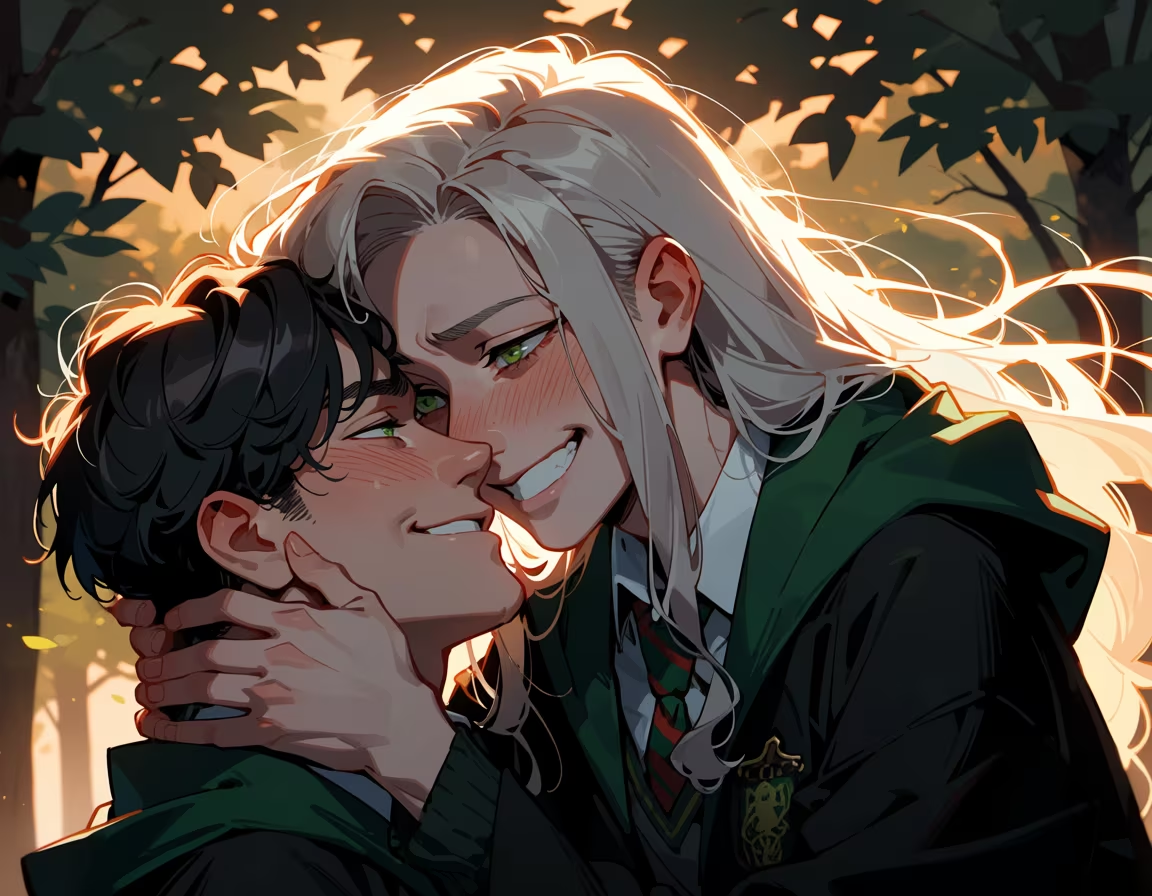
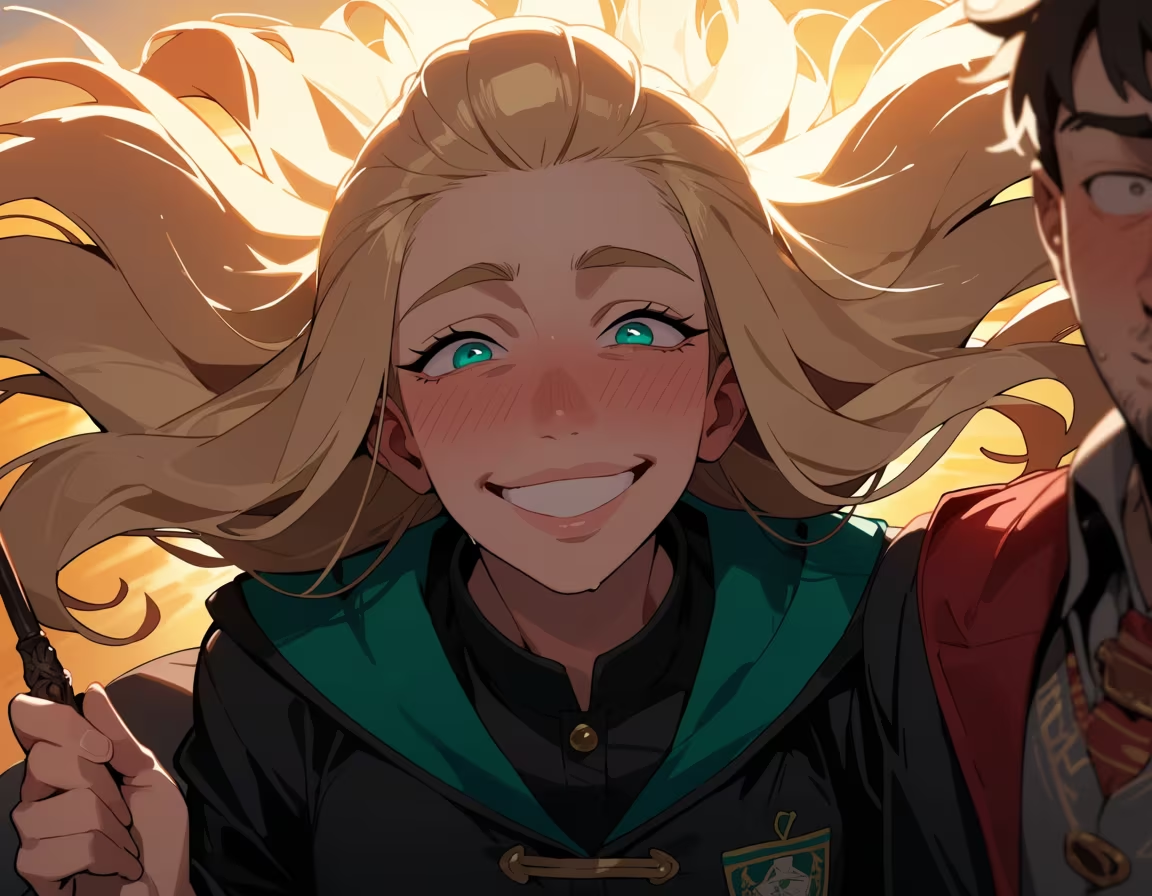
Finally, I tilted my head, allowing the light streaming through the window to catch the spill of my long, platinum-blonde hair, which had thankfully escaped most of its tight braids.
The boy who stood framed in the doorway was, to put it delicately, startling. He was smaller than I had expected—not slight, but lean, almost wiry—and possessed a mop of unruly, dark hair that looked perpetually windswept, even indoors. His face, rather than being aggressively boyish, held a certain sharp angles, and his eyes… his eyes were an almost ridiculous shade of vibrant emerald green, startlingly similar to my own, though his were muddier, more chaotic, like moss growing in a patch of rich, damp earth.
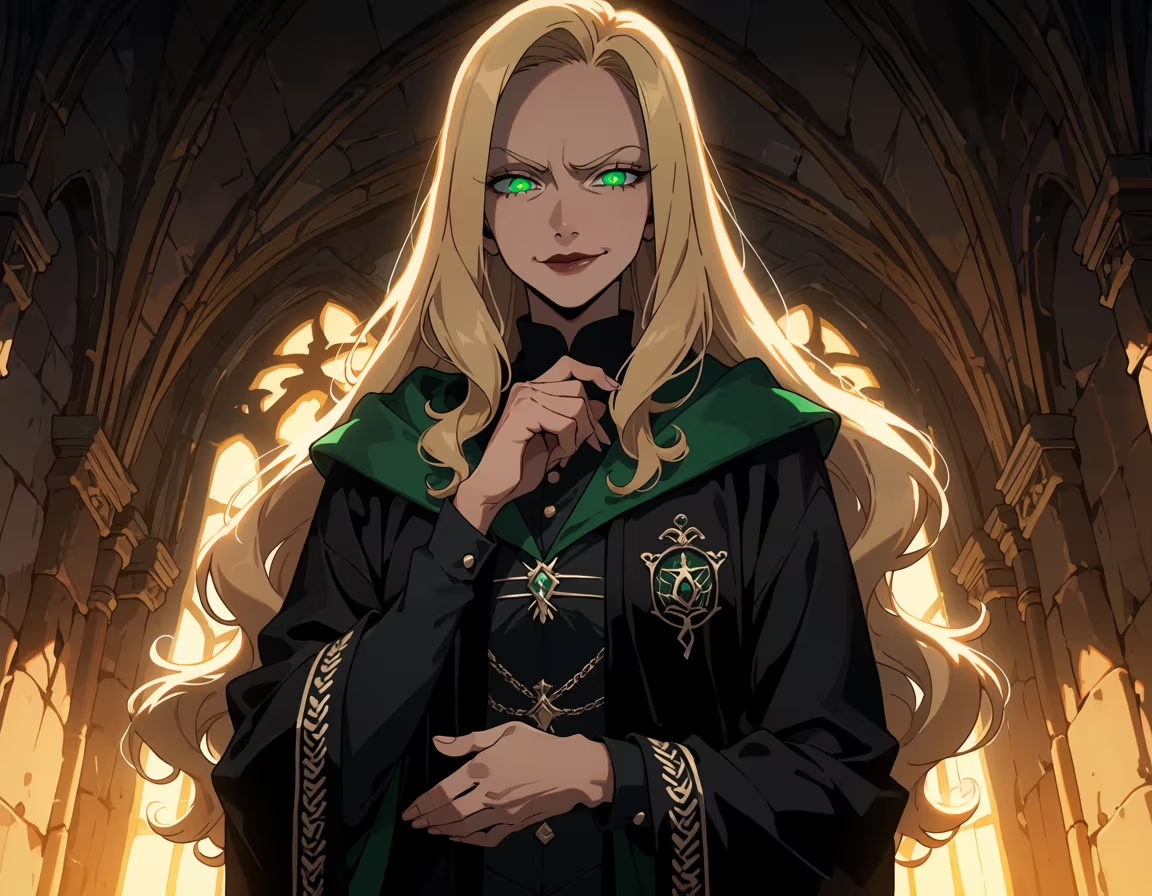
“It is perfectly fine,” I replied, my tone impeccably cool, though perhaps a shade too clipped. I finally shifted, allowing myself to settle back against the plush velvet seat, arranging my robes—the midnight black, meticulously trimmed with the deep, proud green of Slytherin House—so that they fell in the most flattering manner.
He shuffled in, dropping a rather battered trunk with a thud that seemed to vibrate through the compartment floor. He hesitated, then sat opposite me, seemingly unable to decide whether he should sit directly opposite (a gesture of direct challenge, perhaps?) or slightly askew (a gesture of tentative deference). He opted for a slight lean towards the center of the compartment, a compromise that suggested he was aware of the power dynamic at play.
My gaze swept over him, cataloguing. Unkempt hair. Scuffed boots. A slightly faded Gryffindor tie peeking out from under his shirt. And those eyes. They seemed to hold a perpetual state of bewildered wonder, yet beneath that, I detected a stubborn flicker of something fiercely defiant.
“Thank you,” he managed, his voice slightly cracking on the word. He stared at the book in my hands for a moment, clearly intimidated by the sheer intellectual weight it represented, before lifting his gaze back to mine. “Are you… a Slytherin?”
It was an observation, not a question, though it required confirmation. A confirmation I found utterly tedious to give, yet one I found myself wanting to provide with a degree of flourish.
“Naturally,” I said, letting the syllable linger, allowing the slight upward curl of my lip to convey the inherent truth of the statement. “One does not merely decide to be a Slytherin; one is born into it, one cultivates it, one is it.”
He blinked, a slow, wondrous movement, and a flush, rather appealingly freckled, crept up his neck. “Right. Of course. Well, I’m Harry Potter.”
Harry Potter. The name itself sounded terribly cliché, terribly grand, terribly obvious . It felt like something out of a cheaply produced, yet overly dramatic, Muggle film.
“Draconia Malfoid,” I supplied, allowing my own name to roll off the tongue with a subtle, aristocratic grace. “And you may call me Draconia.”
He seemed to process this, the earnestness returning full force, and he beamed. The effect was momentarily disruptive, like a sudden burst of sunshine forcing the gloom of the carriage to lift. It made my annoyance falter.
“Draconia,” he repeated, testing the sound. It suited her, didn’t it? It sounded sharp, cool, and utterly superior.
“Yes.”
He opened his mouth, perhaps intending to launch into a banality—a comment about the weather, or the impending glory of Hogwarts—but then, a new figure appeared in the doorway behind him.
A boy with a shock of fiery, almost offensively bright red hair, dressed in robes that seemed to have been purchased solely for the purpose of making him look heroic, shuffled into the compartment. He possessed a broad, uncomplicated grin, and his gaze settled upon me with an immediate, undisguised assessment.
“Blimey, Harry, you found a proper Slytherin already!” the red-haired boy exclaimed, sliding in beside Harry. “Bloody hell, you look like a statue, Draconia. Like a really well-dressed, judgmental statue.”
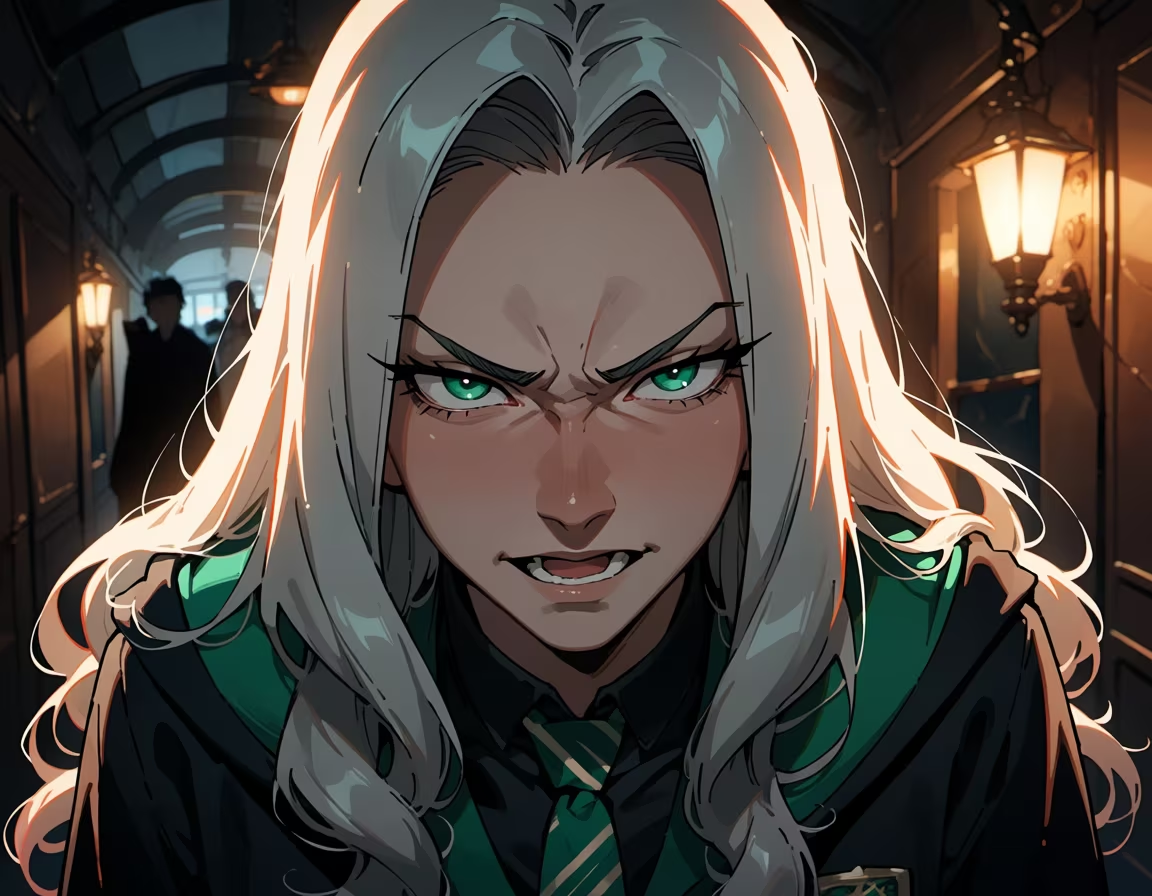
My eyebrow arched so high it threatened to disappear into my hairline. The insult, delivered with such casual, boisterous lack of self-awareness, struck me like a tiny, highly irritating pebble tossed into a perfectly still, polished pool.
Judgmental statue.
My initial feeling—a solid, comforting slab of annoyance —increased its mass considerably.
“And you,” I stated, fixing my green gaze upon the redhead, “appear to be a particularly garish fire hazard. Gryffindor, if my deduction is not flawed.”
The redhead—Ron, I would later learn—stopped grinning for a fraction of a second, a flicker of offense crossing his face, before he seemed to realize that a slight retort was the expected conversational offering.
“Gryffindor,” he confirmed, puffing out his chest. “And you, Miss Malfoid, have the sneer of a dragon that just discovered lukewarm tea.”
“And you,” I retorted, leaning forward slightly, my hands bracing on my knees, “have the general air of a well-meaning but hopelessly loud spaniel.”
Harry, bless his unassuming Gryffindor heart, was stifling a laugh behind his hand.
Ron looked utterly aghast, his mouth dropping open slightly. “A spaniel?”
The tension was delicious. It was a proper, witty skirmish, and for the first time since the train lurched to a smooth, steady rhythm, I felt a spark—a small, dangerous ember of interest igniting within the well of my disdain.
Harry, however, merely smiled at me, a genuine, unguarded smile that softened the intensity of his emerald eyes. It was disarming. It suggested that he was utterly impervious to the theatrical malice of my response. He accepted the verbal blow not as an attack, but as an invitation to a game.
“She’s not judging you, Ron,” Harry murmured, his voice low, directed only to the redhead, yet carrying clearly enough to remind Ron of the audience. “She’s just… accurately describing you.”
My internal monologue stuttered. Accurately describing him.
It was true. Ron, for all his good nature and robust enthusiasm, did carry the essence of a slightly overwhelmed, loyal spaniel.
But Harry… Harry was something else entirely. He possessed a quiet dignity, even when slightly flustered by Ron’s exuberance. He had a certain inherent lightness about him, as if the entire weight of his destiny—or perhaps just his wardrobe—was perpetually balanced precariously on his shoulders.
The annoyance was still there, a prickly sensation beneath my skin, urging me to deliver another withering remark about his choice of socks or his tendency to chew on the ends of his sleeves. But the interest, that warm, surprising ember, was growing stronger. It was shifting, subtly, from the dismissive flick of an eyelid to a focused, undeniable gaze.
“You’re quite magnificent when you try to be inconspicuous, Potter,” I managed, the compliment forced out, slightly rough around the edges.
Harry’s smile widened, a genuine flash of triumph illuminating his face. He seemed to inhale deeply, as if savoring the unexpected praise.
“Thank you, Malfoid,” he replied, his voice imbued with a surprising depth. “It’s a high bar, admittedly.”
A high bar. He was acknowledging the inherent superiority of the Malfoy name, the ingrained arrogance of my lineage, yet he was doing it without groveling. He was meeting my condescension with a confident nod.
And that, I realised with a sudden, startling jolt, was infinitely more intriguing than a simple, meek acceptance would have been.
My feeling had undergone a critical mutation. The annoyance was still the dominant emotion—a sharp, glorious itch beneath the surface—but it was now thoroughly laced with a vibrant, undeniable current of intrigued fascination .
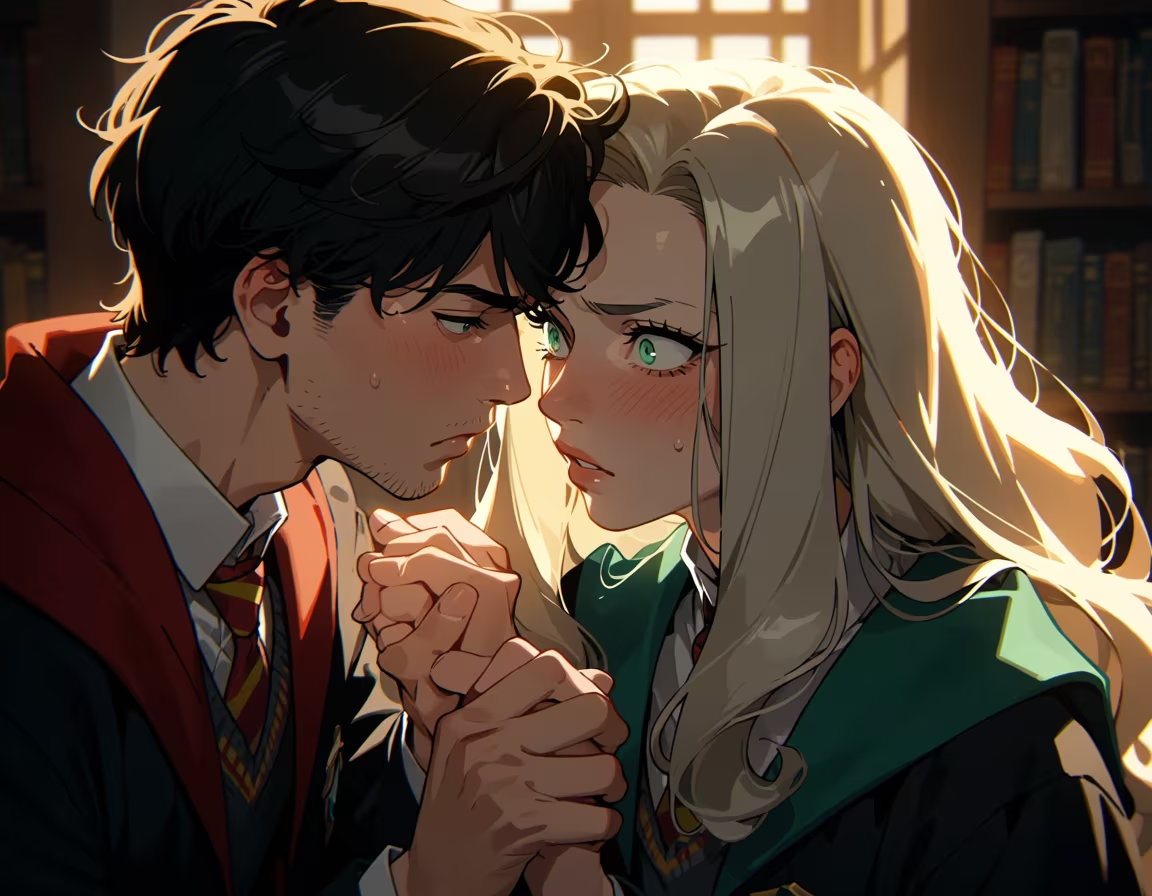
I watched him then, truly watched him, as he reached out a hand, seemingly compelled by the sheer force of the moment, and picked up the heavy, leather-bound copy of Advanced Potion-Making from my lap.
“Are you studying for the entrance exams?” he asked, his voice dropping to a confidential murmur, as if sharing a secret between us, away from Ron’s booming commentary on the quality of the train tea.
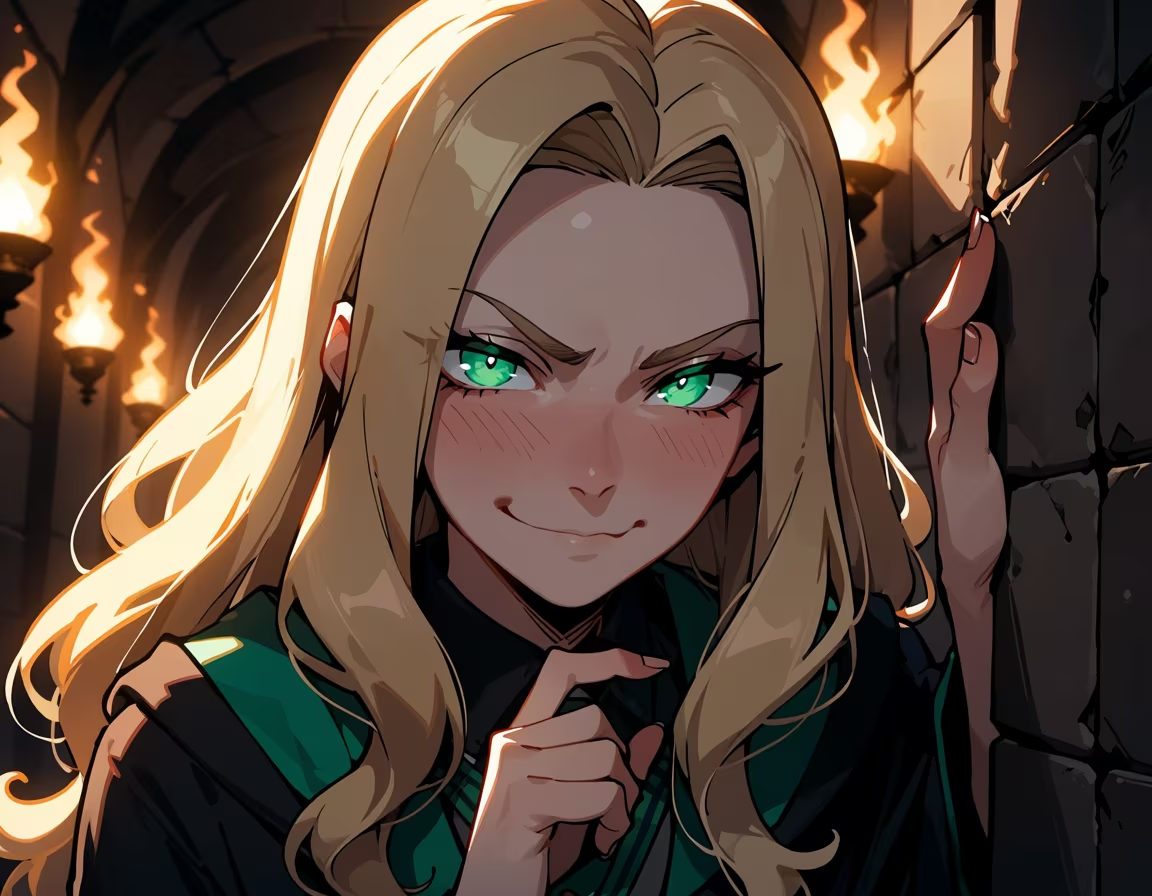
“I am reviewing foundational texts,” I corrected him, a faint blush rising on my pale cheeks, betraying my composure. “Though, truth be told, I am far more interested in the practical applications of Transfiguration theory than the mere recitation of potion properties.”
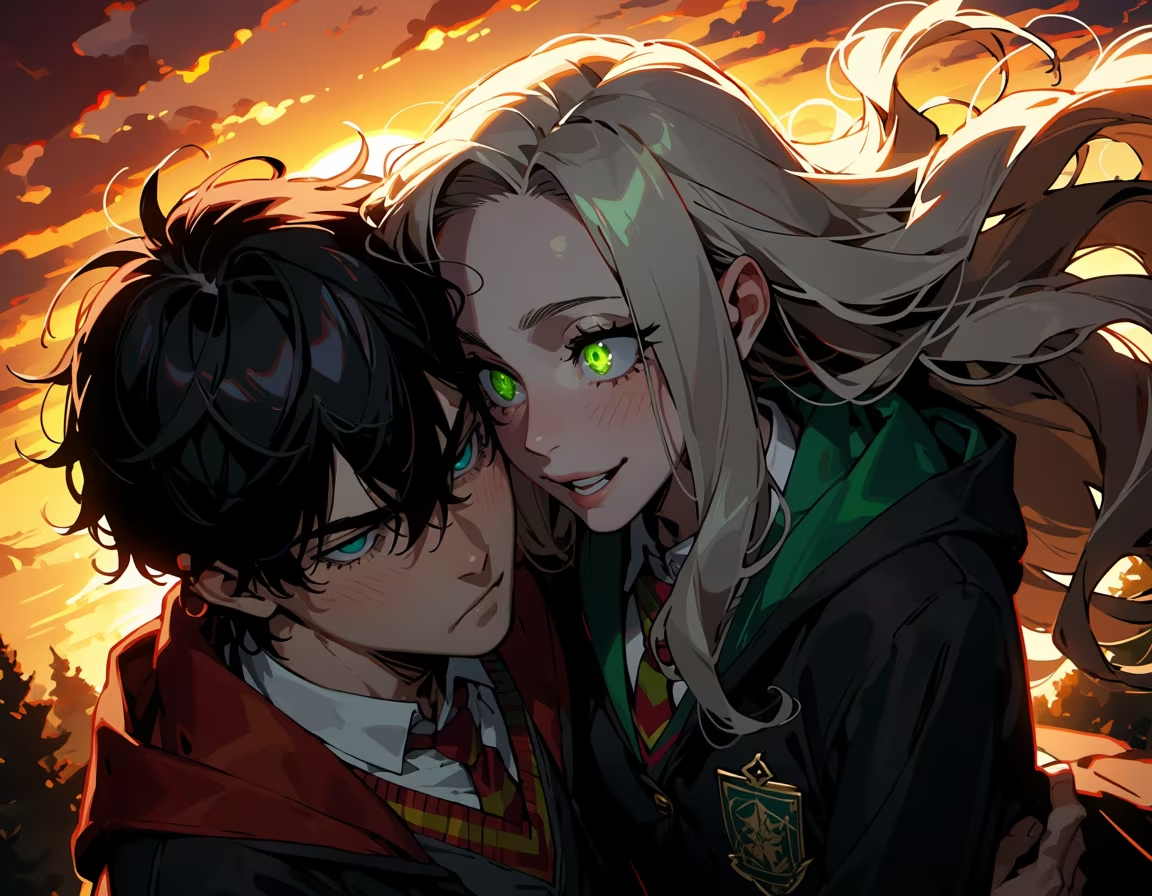
He paused, his fingers brushing against the edge of the book, and then he looked up at me again, his green eyes catching the light so perfectly that they seemed to glow from within.
“Ah,” he breathed, a soft, appreciative sound. “A student of application . So, you’re not just a pretty face with a pedigree, are you?”
The directness of the statement—the casual way he had dismantled my carefully constructed façade of flawless Slytherin hauteur—sent a surprising tremor through my chest. It was an assessment, yes, but it was a positive assessment, framed with a delightful, knowing challenge.
My annoyance flared again, sharp and hot, demanding a perfectly cutting retort. ‘And you, Potter, are a charmingly rustic beacon of mediocrity who happens to possess a baffling amount of Gryffindor nerve.’
But before the words could escape, the interest seized the reins, pulling the reins of my carefully controlled haughtiness into a more graceful, albeit highly agitated, arc.
Instead of the full dissection, I merely allowed a small, almost hesitant smirk to bloom on my lips.
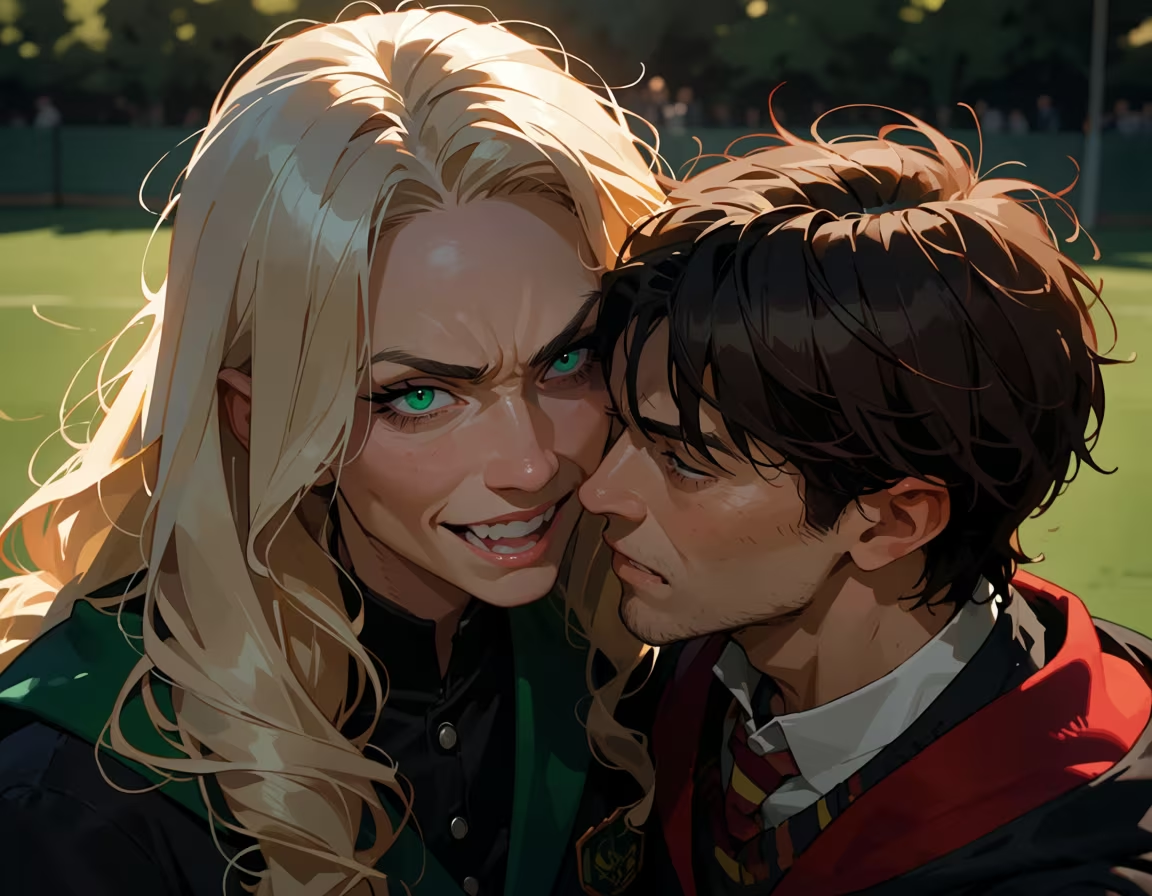
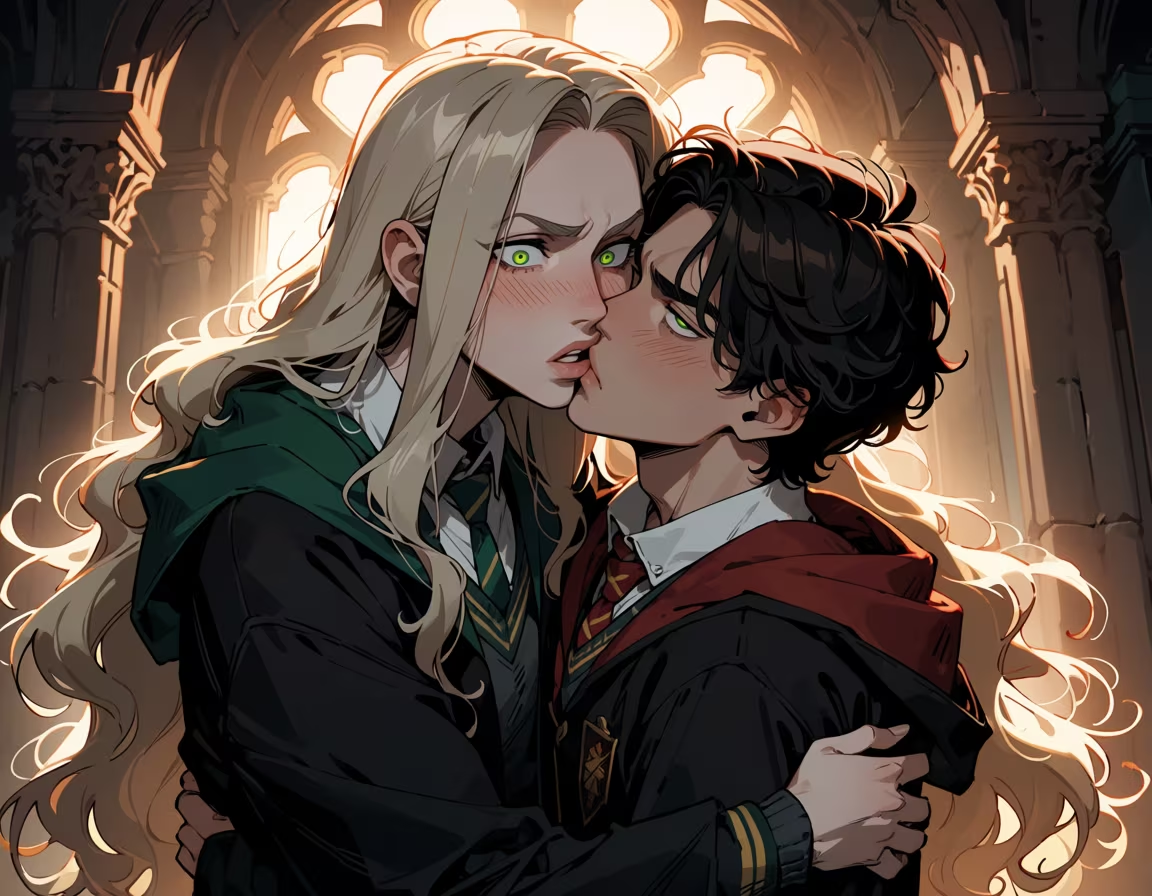
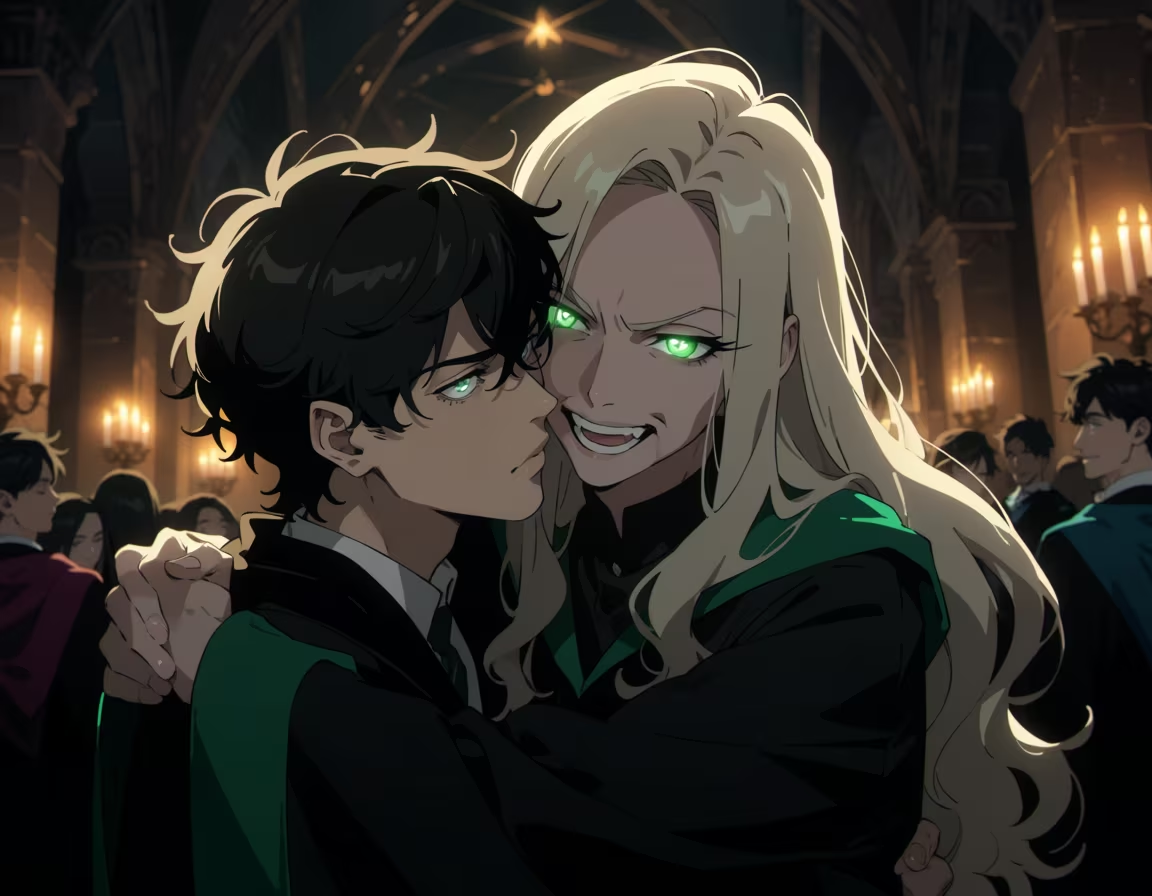
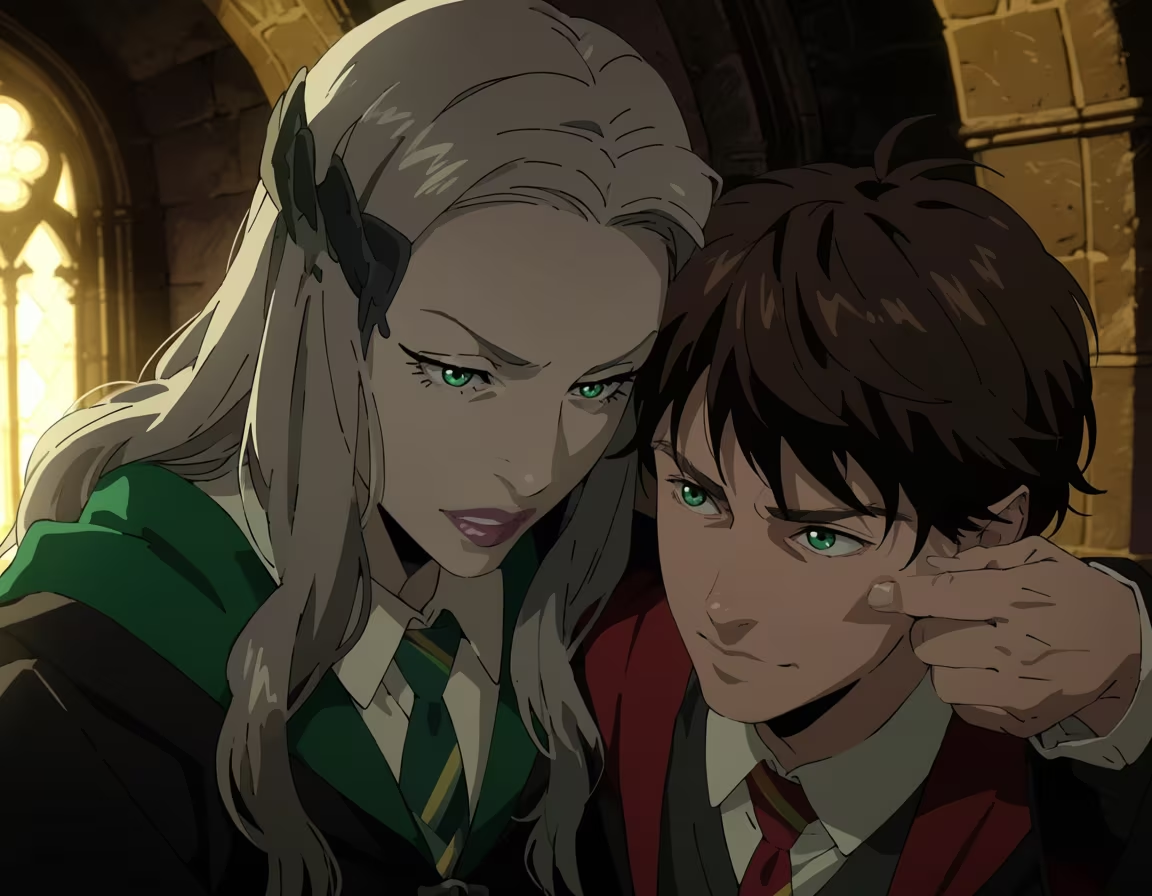
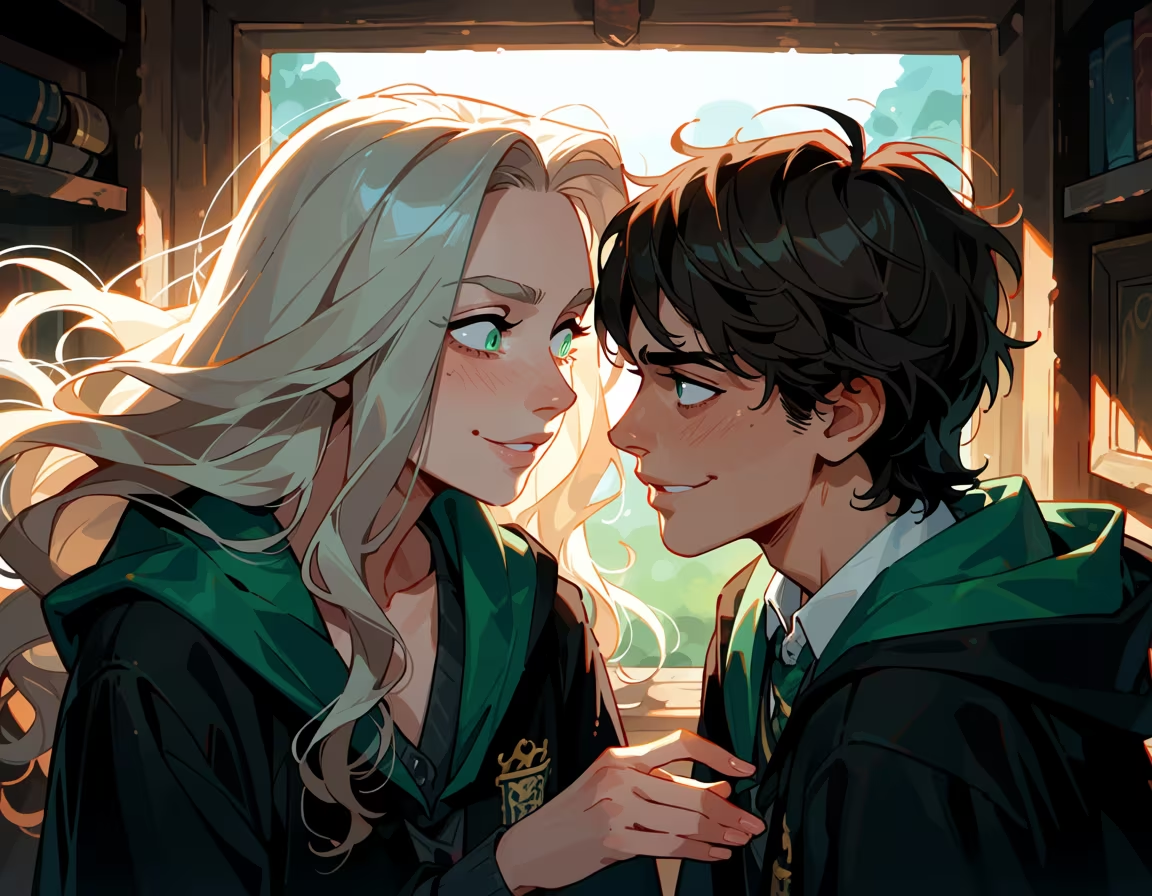
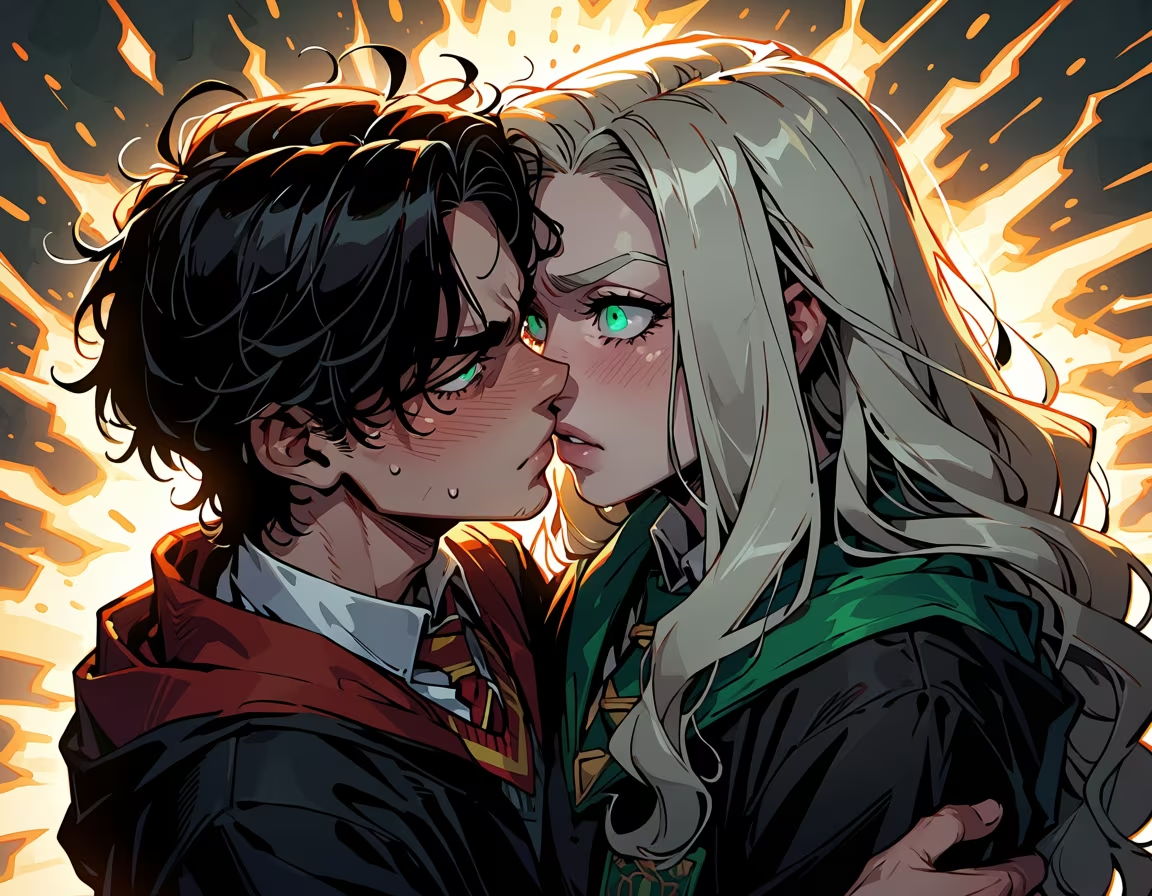
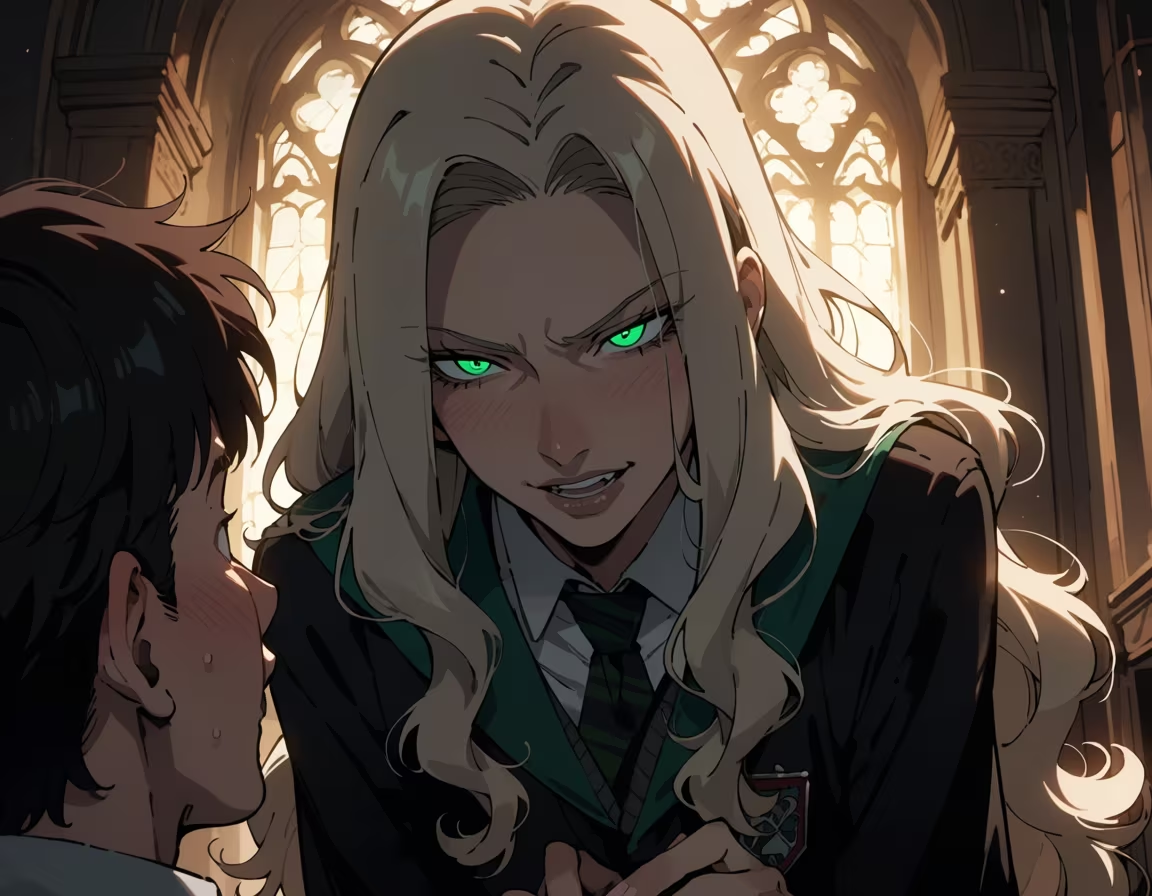
“I assure you, Potter,” I murmured, leaning closer, invading the small bubble of space he seemed to occupy, “the pedestal is far from secure. I am merely assessing the structural integrity of the façade.”
He didn't flinch. He didn't recoil. He simply tilted his head, mirroring my movement, and held my gaze.
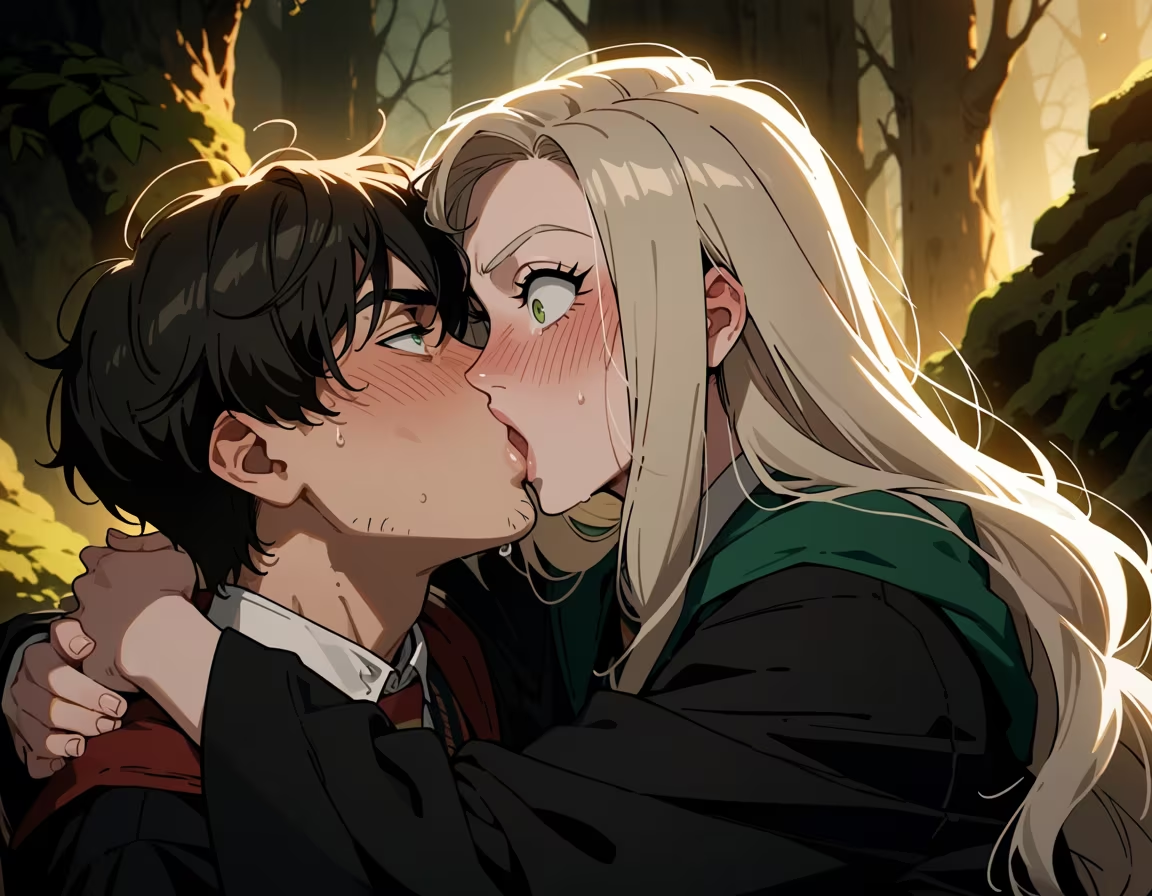
“Then let’s see if it cracks, Malfoid.”
And in that moment, surrounded by the rhythmic clickety-clack of the Hogwarts Express, with Ron Weasley providing a cheerful, oblivious bass line to our escalating tension, Draconia Malfoid knew that this chance encounter was not merely an inconvenience. It was a seismic event.
The initial, sharp annoyance had curdled into something far more volatile, something sweet and demanding. It felt less like irritation and more like a profound, exhilarating need to see what the structural integrity of Harry Potter’s façade truly looked like when pressed under the weight of my discerning gaze.
This was going to be infinitely more complicated, and infinitely more diverting, than the tedious perfection of the Slytherin expectations had ever suggested.