| Home | The Lives of Velnin | Illustrated Fiction | Malfoid Art & Fiction | Book Blurbs | Contact |

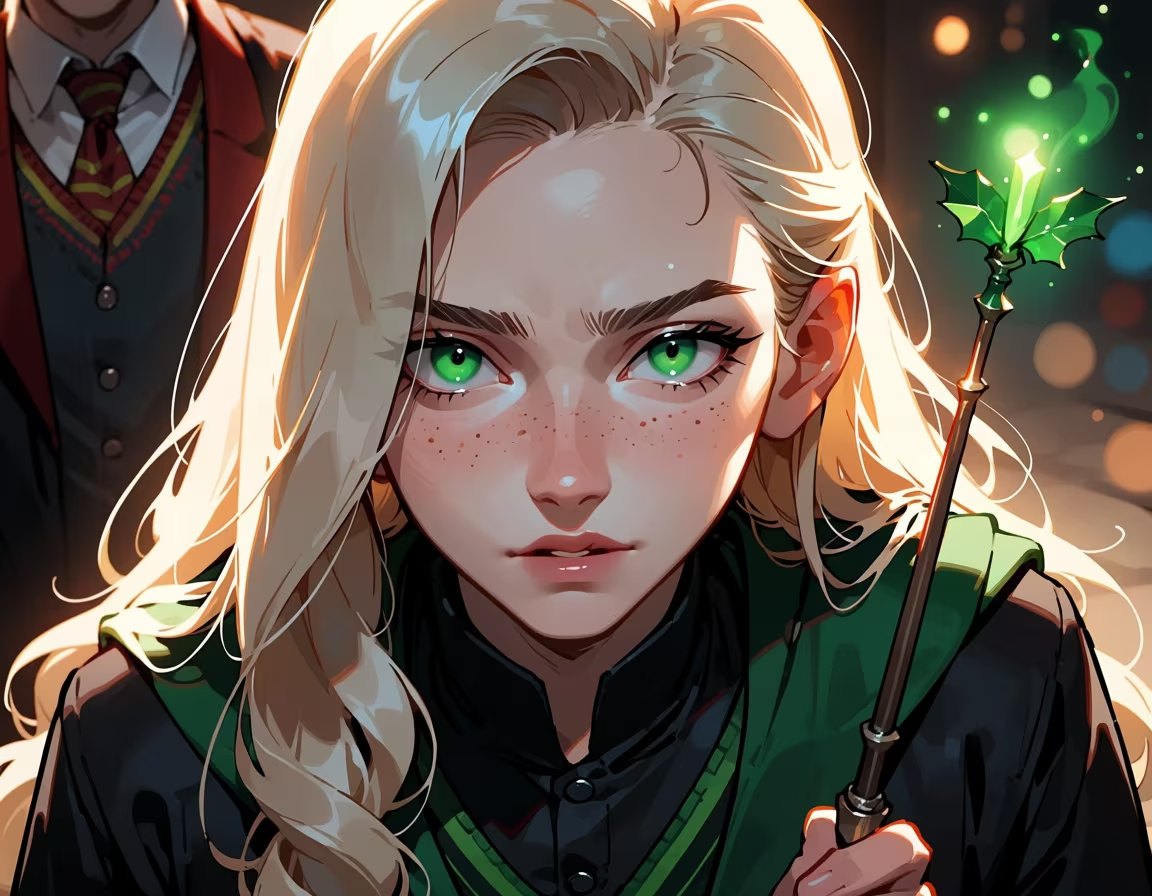
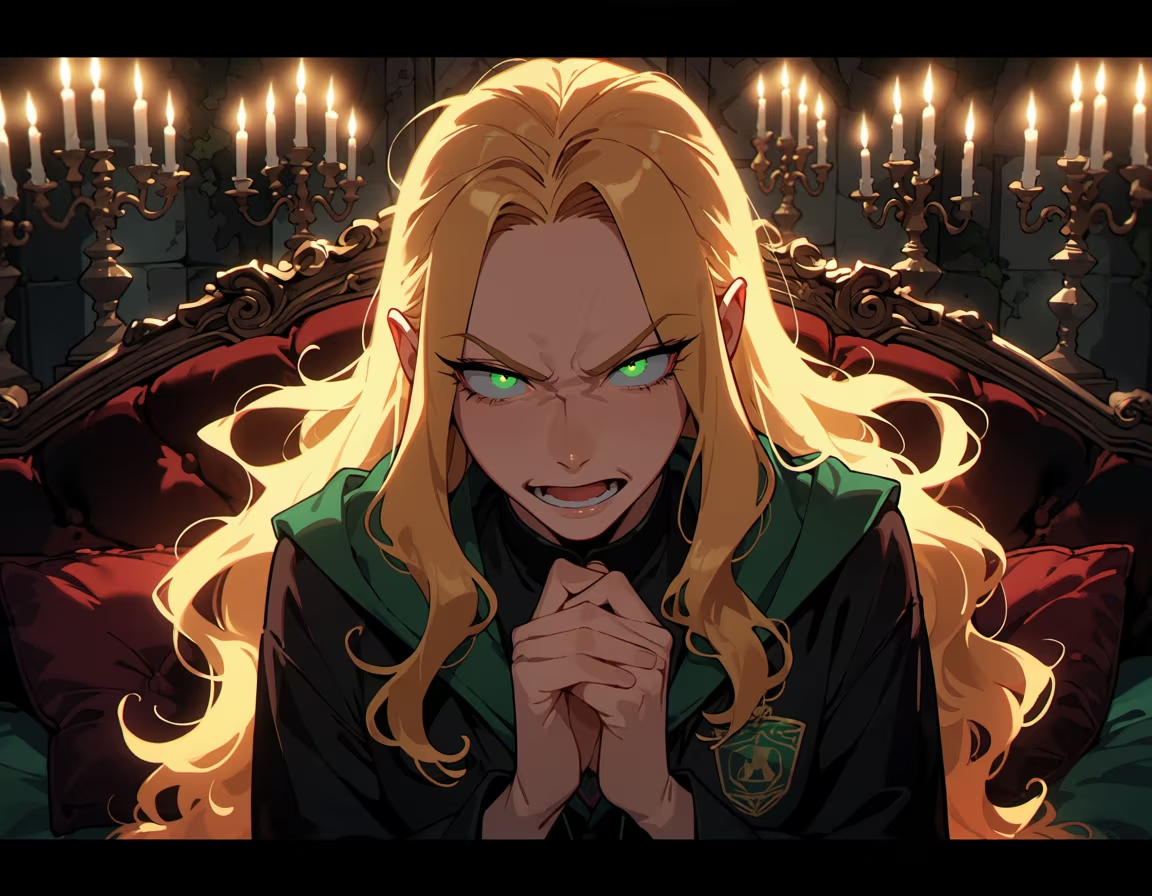
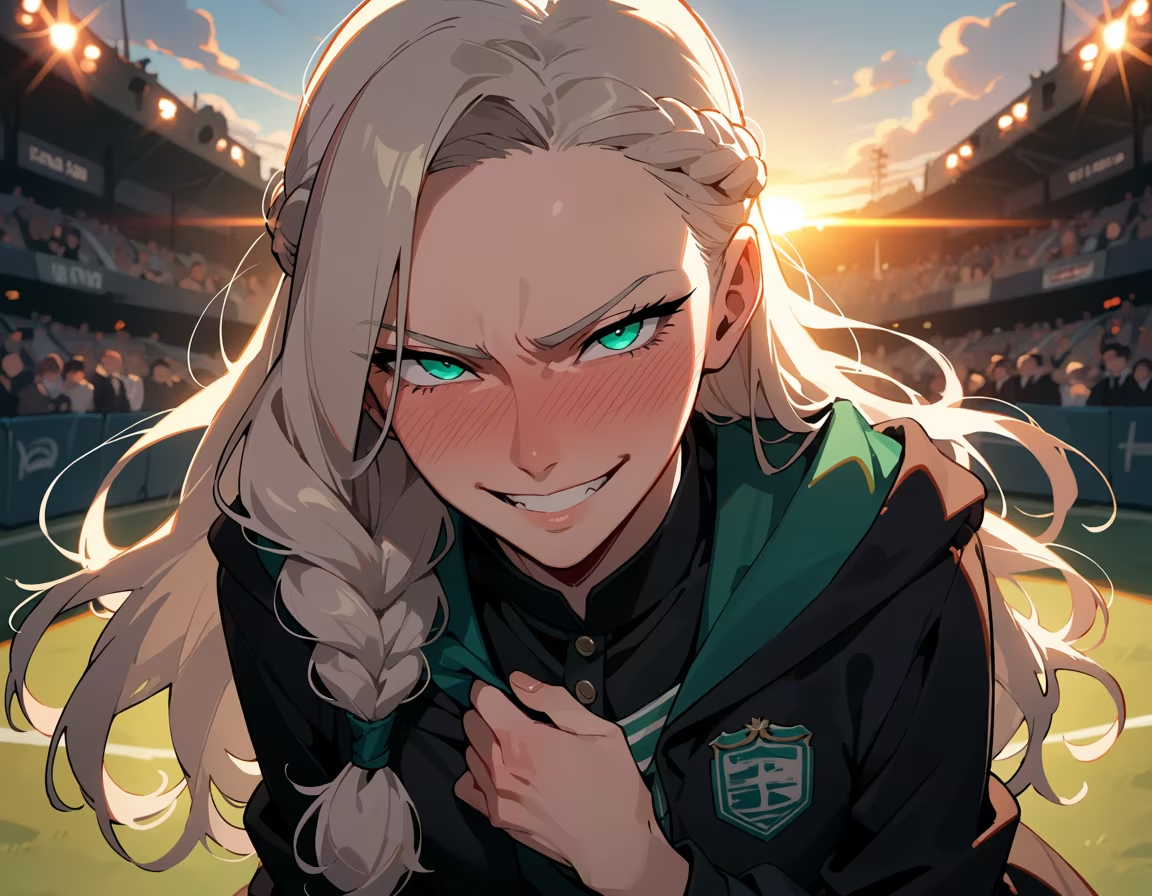
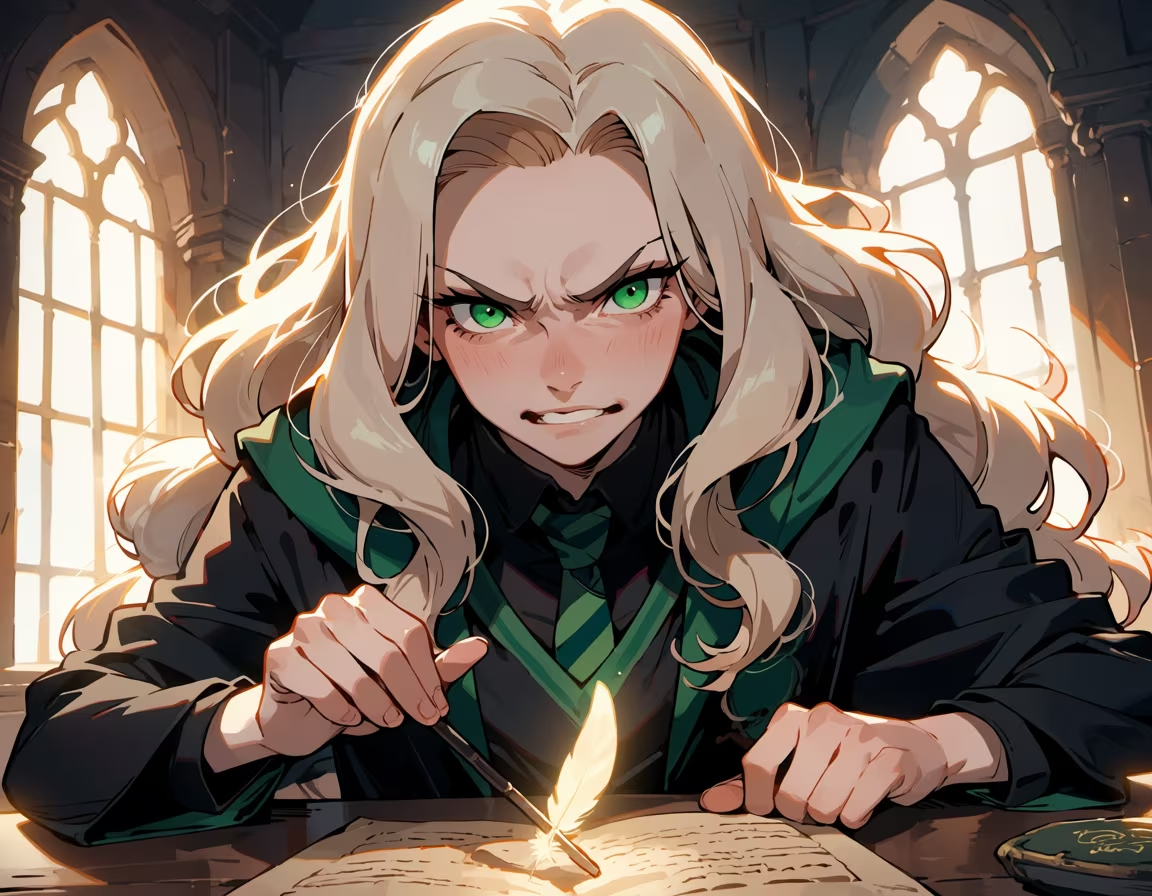
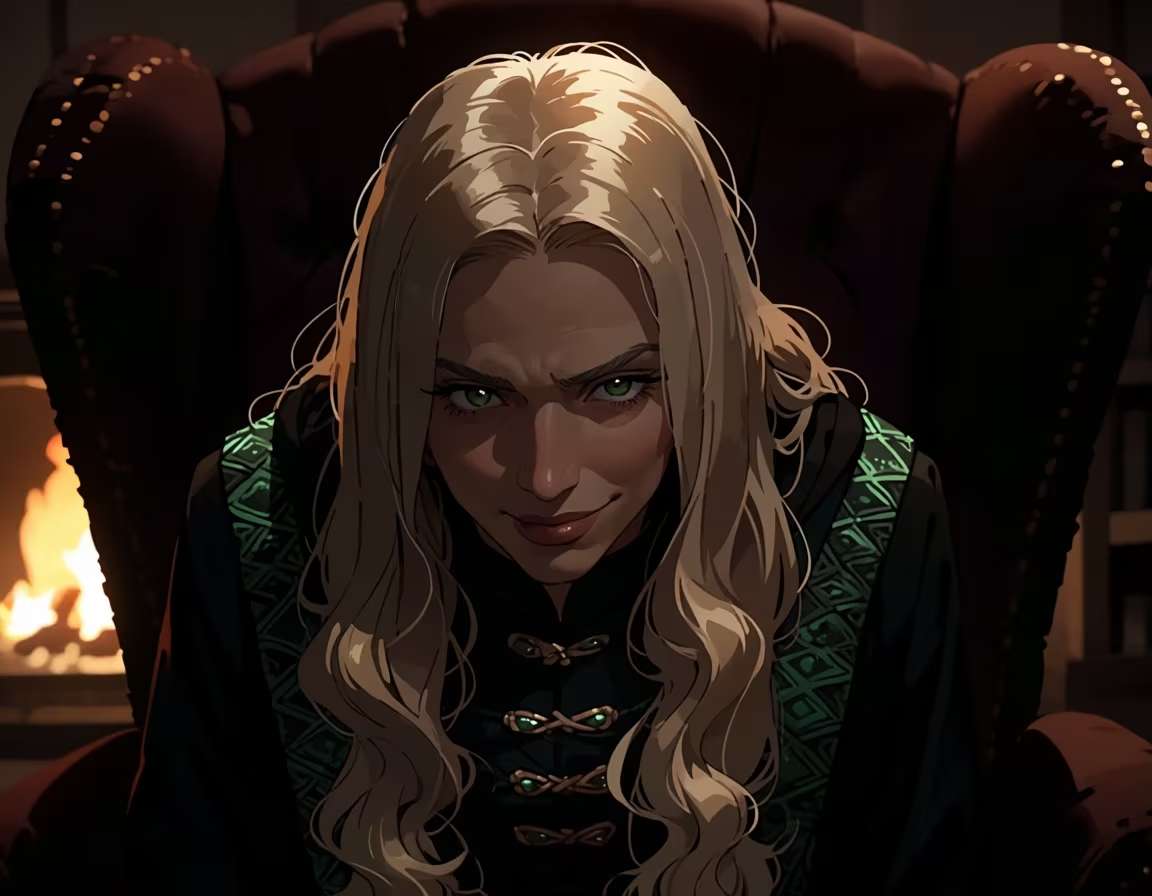
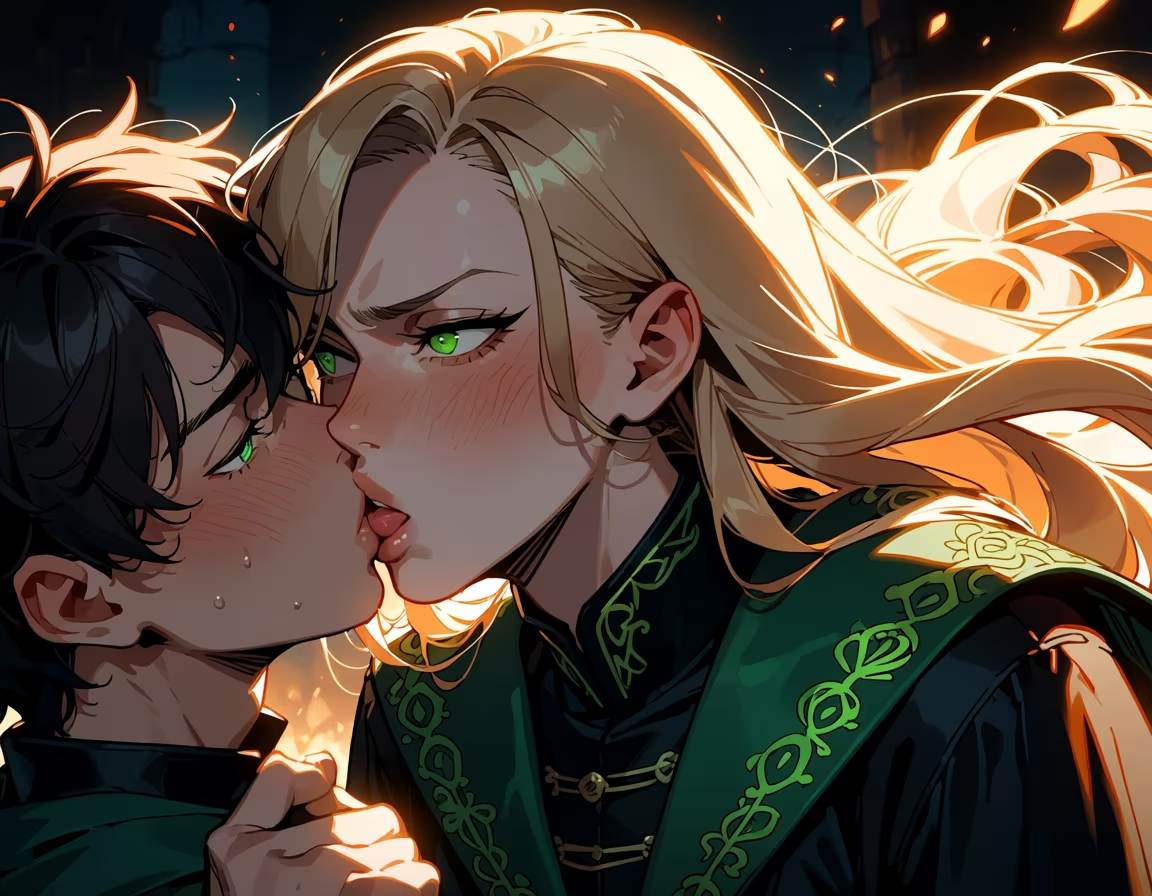
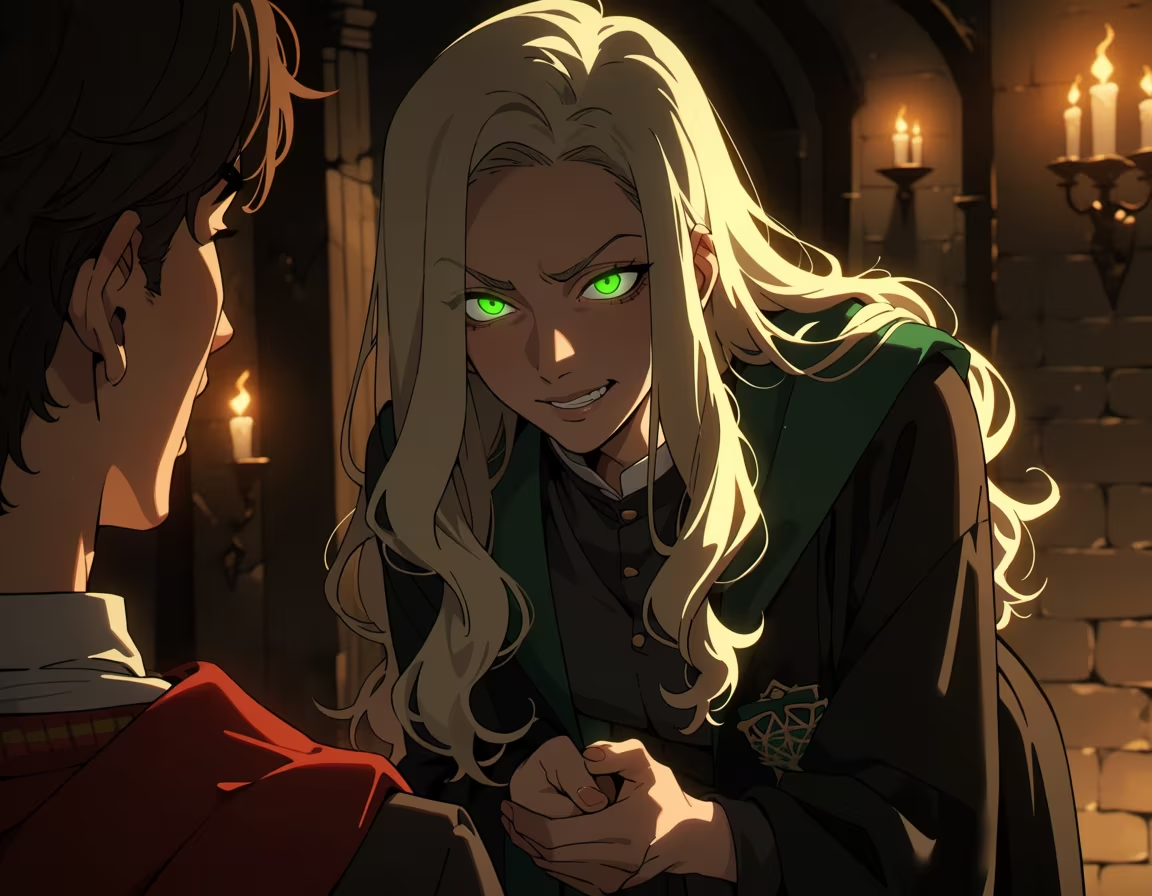
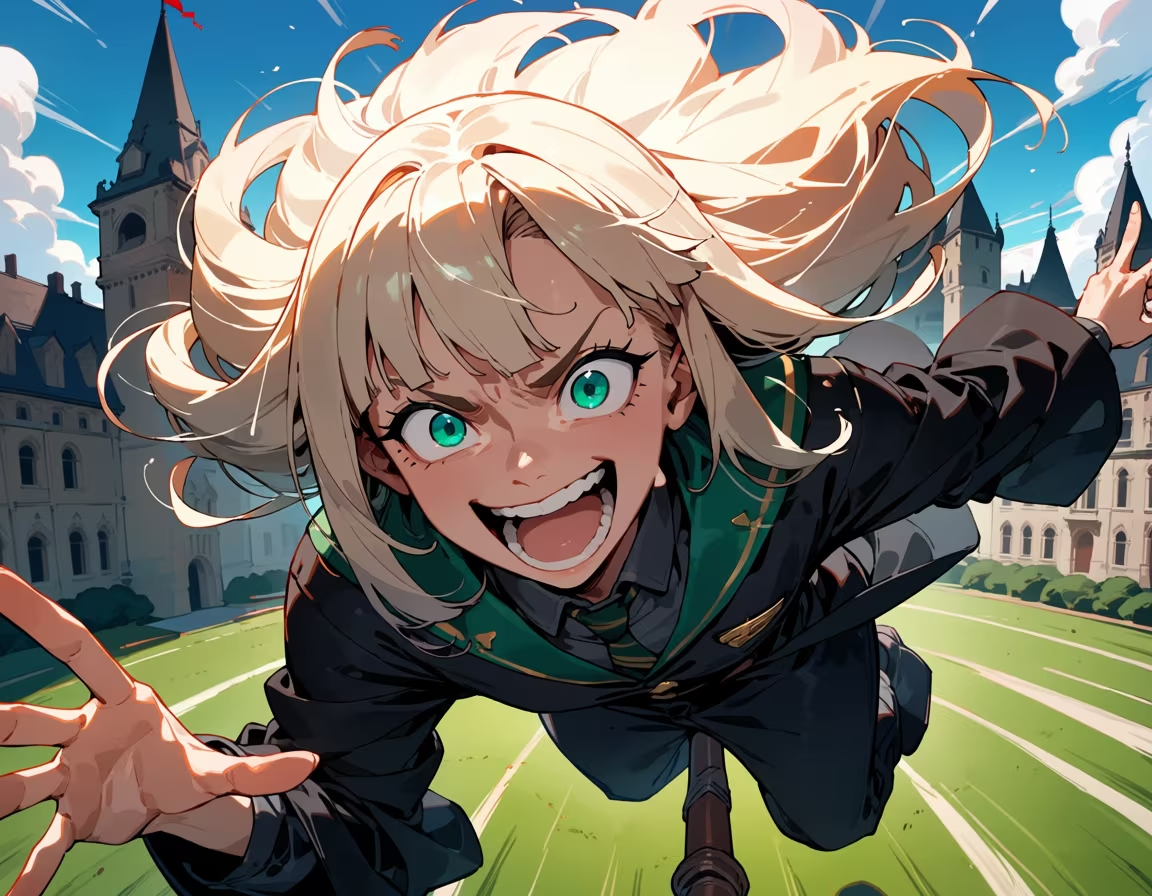
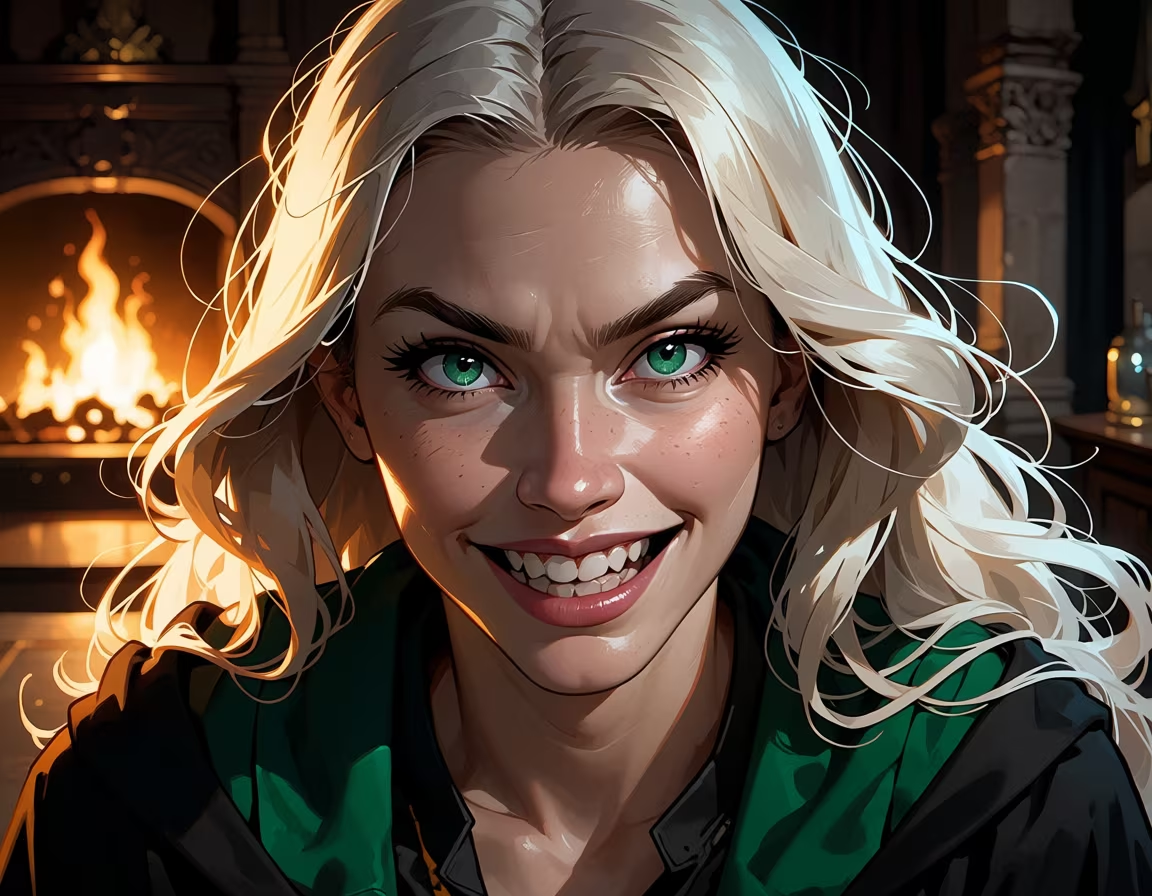
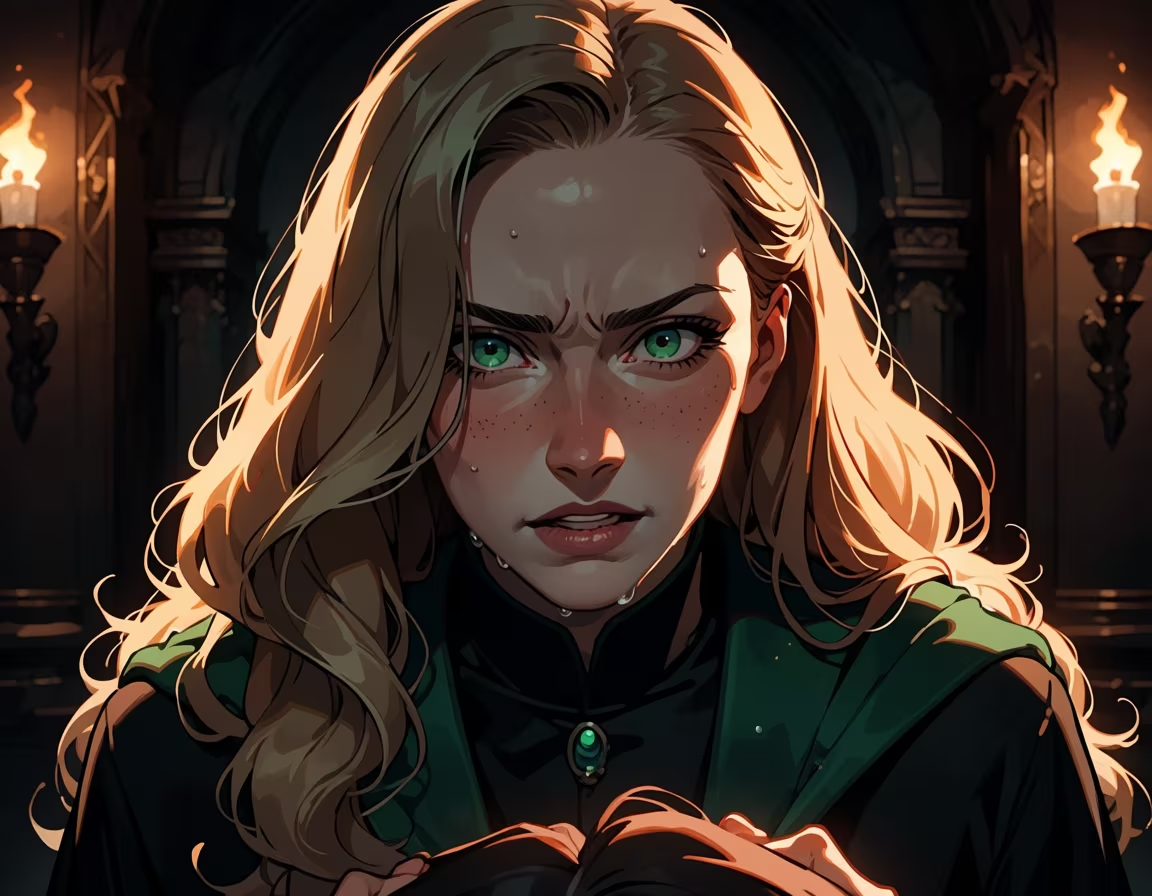
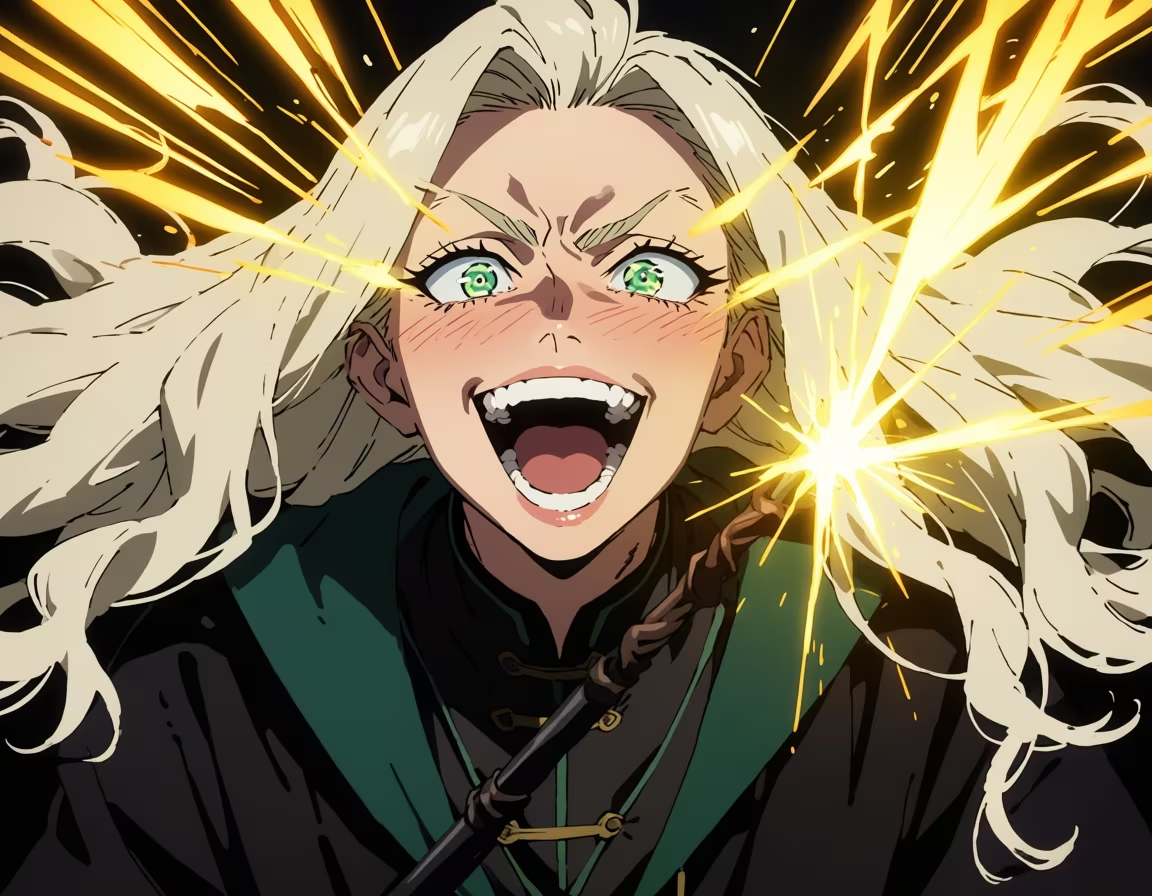
The stone corridors of Hogwarts possessed a magnificent, oppressive grandeur, smelling perpetually of ancient dust, damp mortar, and the faint, sweet tang of forgotten magic. To Draconia Malfoid, the atmosphere was usually quite soothing; a perfectly curated backdrop for her own elegant superiority. She moved through it with a practiced, regal glide, her long, flaxen hair—a shade so pale it seemed spun from moonlight—cascading down the severe line of her black robes, the emerald trim catching the sparse torchlight with a jealous gleam.
She was, by all accounts, the epitome of Slytherin perfection: cool, exquisitely mannered, and utterly convinced of her own inherent superiority.
Then, there he was.
Harry Potter.
He was lumbering along beside her, a disruption in the otherwise measured rhythm of her perfectly tailored existence. He possessed an alarming, almost offensive vitality—a relentless, buzzing energy that seemed entirely unsuited to the hushed dignity of the castle. His messy, perpetually wind-tousled hair, the colour of burnt honey, looked as if he’d just wrestled a particularly grumpy Blast-Ended Skrewt. His robes, trimmed in that aggressive, unapologetic Gryffindor crimson, looked perpetually rumpled, as if they had been through a particularly spirited skirmish.
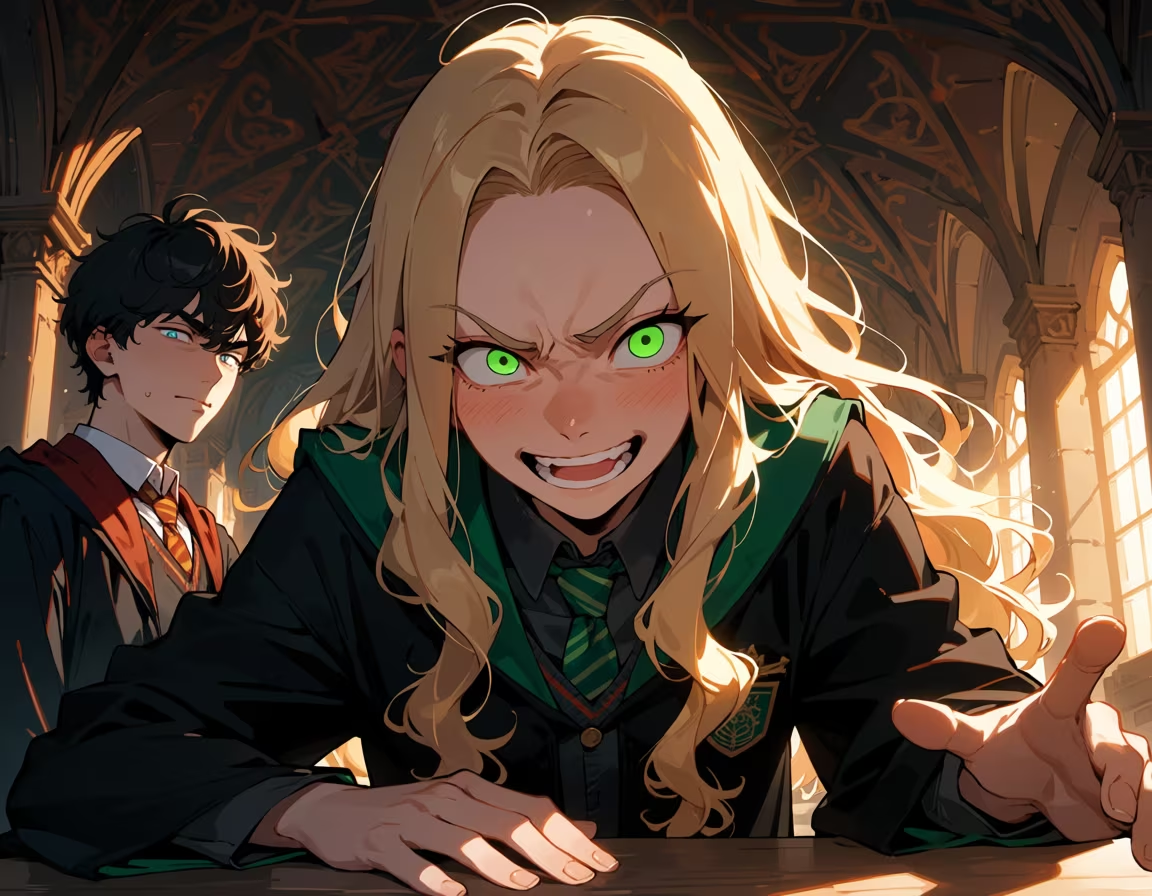
Draconia’s lip curled, an involuntary, deeply ingrained expression of aristocratic disdain.
“Honestly,” she murmured, her voice a low, melodious contralto that always seemed to carry just the right measure of condescension, “one would think you spent your entire life battling trolls in the Black Lake, rather than merely traversing the halls with the grace of a particularly determined hippogriff.”
Harry didn't stumble, didn't flinch, didn’t even offer the expected flustered apology that usually accompanied his clumsy interactions. Instead, he stopped, turning his head just enough so that his vivid, startling green eyes—eyes that seemed capable of holding an entire thunderstorm—locked onto hers.
“And yet,” he retorted, his voice possessing a surprising resonance for such a gangly boy, “I manage to walk without tripping over my own feet, Malfoid. A feat one might argue requires a modicum of talent, not merely an ancestral decree.”
Ancestral decree. The phrase stung, not because it was inaccurate, but because it implied she was merely a highly decorated heirloom, rather than a capable witch in her own right.
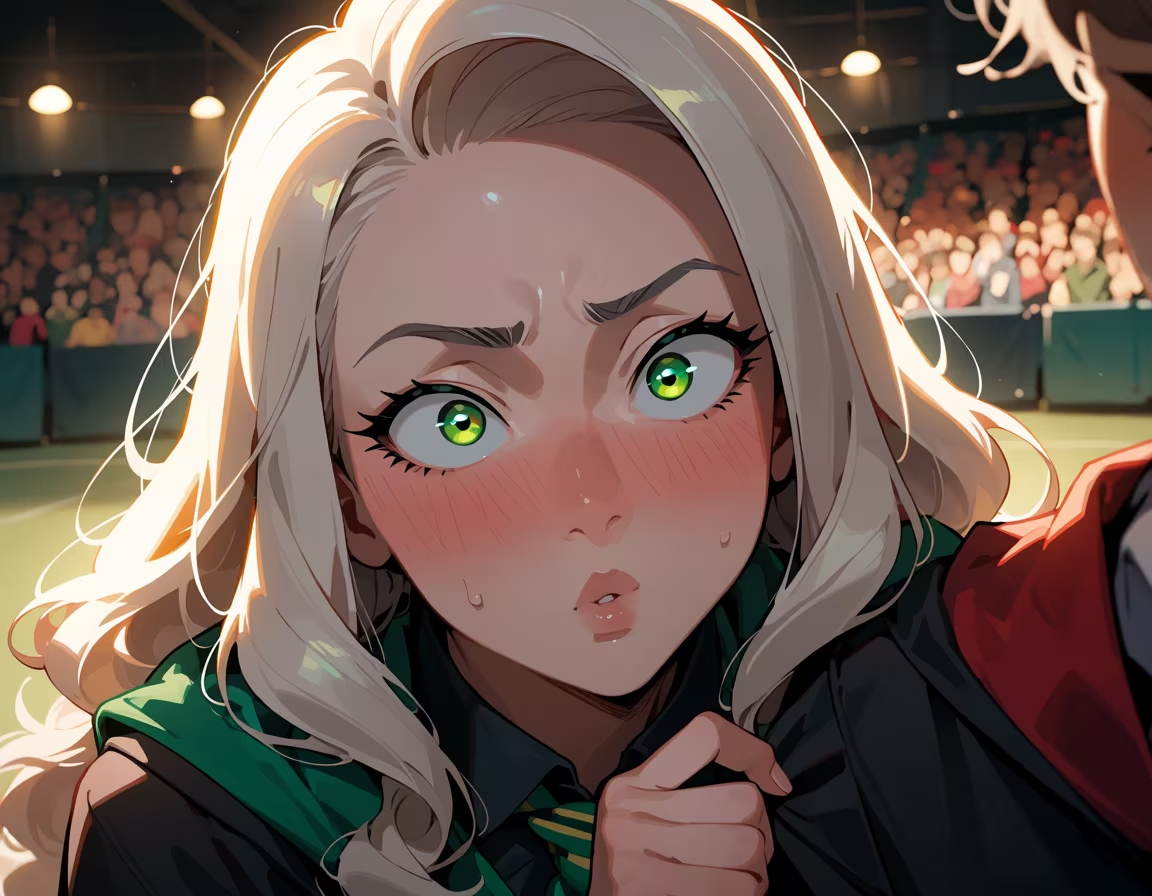
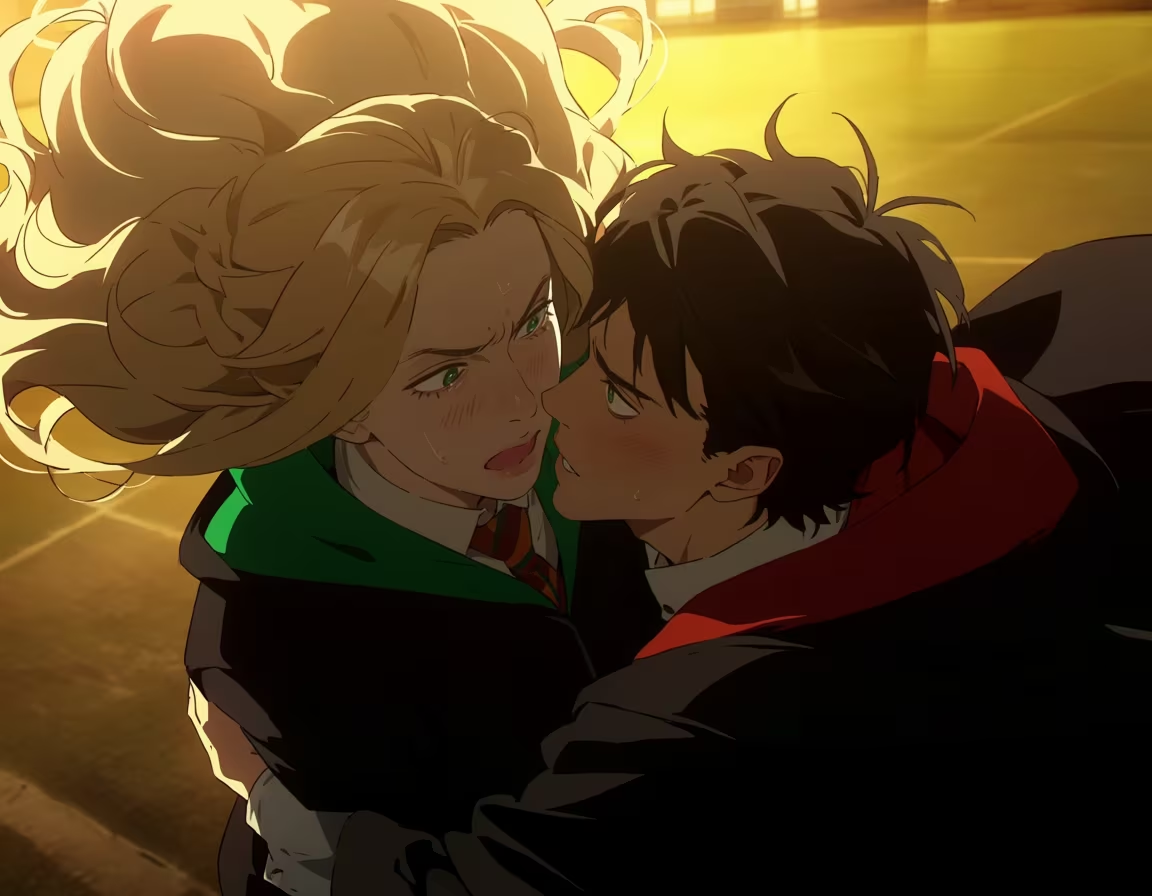
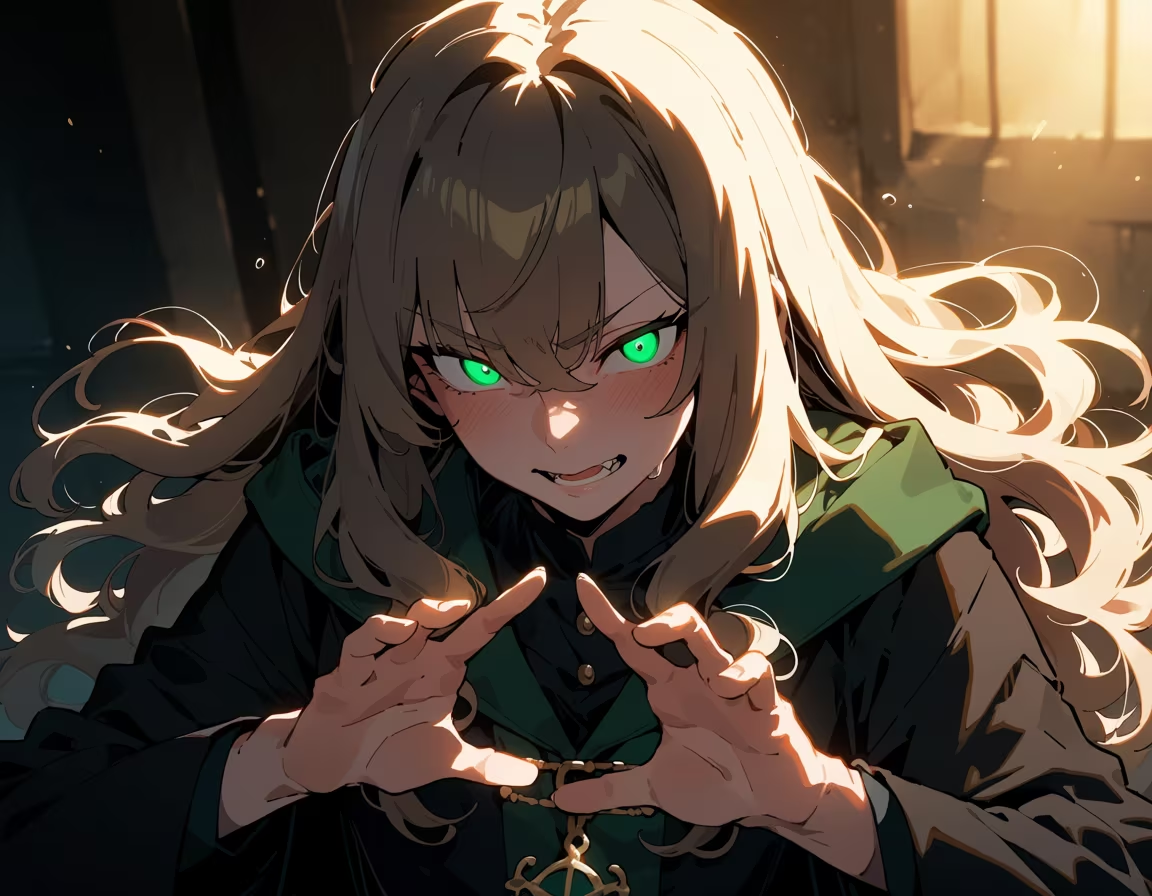
A genuine, sharp spike of annoyance shot through Draconia’s chest. It was the kind of annoyance reserved for a particularly persistent gnat that had dared to alight upon the flawless satin of one’s sleeve. She felt her perfectly composed façade waver, a microscopic tremor in her chin.
He has no concept of subtlety, she thought, staring at the slight flush that had risen beneath his pale forehead. He attacks the core of the issue—the pedigree—instead of the manner of presentation. Such bluntness is terribly… pedestrian.
She opened her mouth, ready to deliver a cutting rejoinder that would likely involve a comparison to poorly bred house-elves, when something shifted.
It was in the way he held himself. Despite the lack of polish, despite the unruly hair, there was an unshakeable core of defiance radiating from him. He wasn't performing defiance; he was defiance. It was messy, it was loud, it was terribly Gryffindor, and yet, it held a dangerous kind of magnetism.
The initial surge of pure annoyance began to curdle, transforming, almost imperceptibly, into something far more complex and highly intriguing.
He is irritating, she admitted mentally, a reluctant concession. He is grating upon my nerves like a particularly cheap quill scraping across expensive parchment.
But then, his gaze drifted past her, catching the light reflecting off the emerald embroidery of her robes, and for a split second, his expression softened—not into deference, not into awe, but into a flicker of genuine, almost amused curiosity. It was as if he saw past the inherited arrogance and the polished exterior to the tightly wound coil of ambition and intelligence beneath. He saw the work behind the perfection.
That small acknowledgment was more potent than any flattering compliment.
He sees me, she realized, her heart giving a tiny, traitorous thump against her ribs. He doesn't just see the Malfoy name; he sees Draconia.
This new layer of intrigue began to override the irritation. It wasn't the swift, dismissive annoyance of moments past; this felt deeper, more rooted, like a stubborn, fascinating weed forcing its way through pristine manicured topiary. She felt a proprietary flicker, a sudden desire to dissect him, to understand the mechanism of his infuriating resilience.
"You possess a rather remarkable ability to find the fault in everything, Potter," she finally said, allowing a slight, challenging smile to lift the corner of her lips. The smile was practiced, beautiful, and meant to convey utter, controlled skepticism. "It is tiresome. Yet, I suppose..."
She paused, letting the silence stretch, forcing him to wait for the verdict. He waited, utterly still, a portrait of stubborn expectation.
"...it is rather entertaining."
The change was undeniable now. The annoyance was still there—a vibrant, buzzing undercurrent—but it was now being vigorously mixed with a glittering curiosity. It was the sensation of being deeply irritated by a beautiful, chaotic symphony; you want to shout at it for being so loud , but you cannot deny the sheer, thrilling complexity of the melody.
He gave a small, almost imperceptible tilt of his head, acknowledging the compliment as if it were a strategic tactical retreat, not a genuine concession.
"Is that the Slytherin equivalent of 'you haven't managed to bore me into a coma yet'?" he teased.
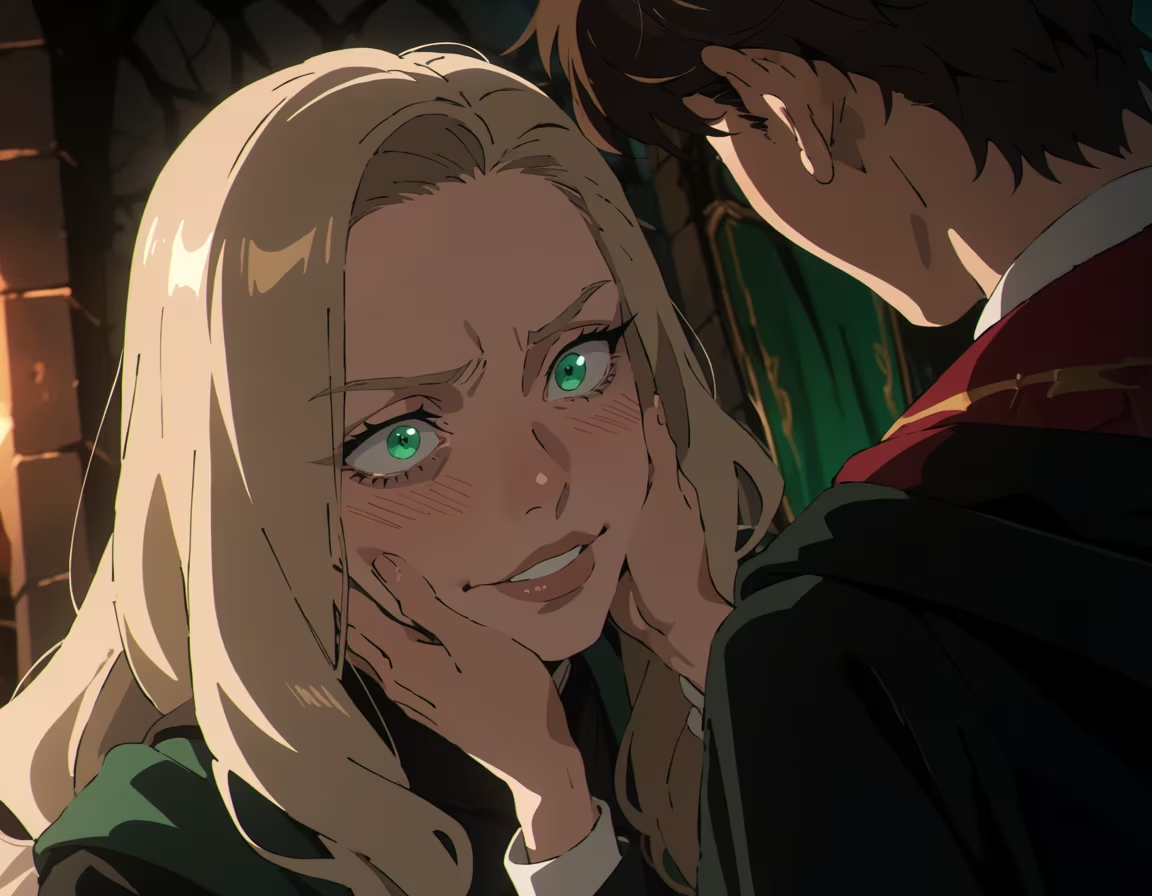
Draconia felt a genuine, unbidden warmth bloom in her cheeks, a sensation so foreign it was almost shocking. She hated that he had read her perfectly calibrated internal assessment so swiftly.
"Precisely," she breathed out, a soft exhale. "Though perhaps you are learning to appreciate the subtleties of high-society passive-aggression. It is a vital life skill, Potter."
He grinned then, a flash of white teeth that looked wonderfully out of place against the earthy tones of his face, and it momentarily erased the haughty mask she wore.
He is handsome when he is not actively being infuriating, she mused, a wave of grudging admiration washing over her. A dreadful, reckless, glorious creature.
The annoyance hadn't vanished; it had merely become a fiercely protective shell around a budding appreciation. She was annoyed at his lack of filter, at his relentless optimism, at the sheer audacity of his existence beside her, but she was also intrigued by the raw, untamed light in him.
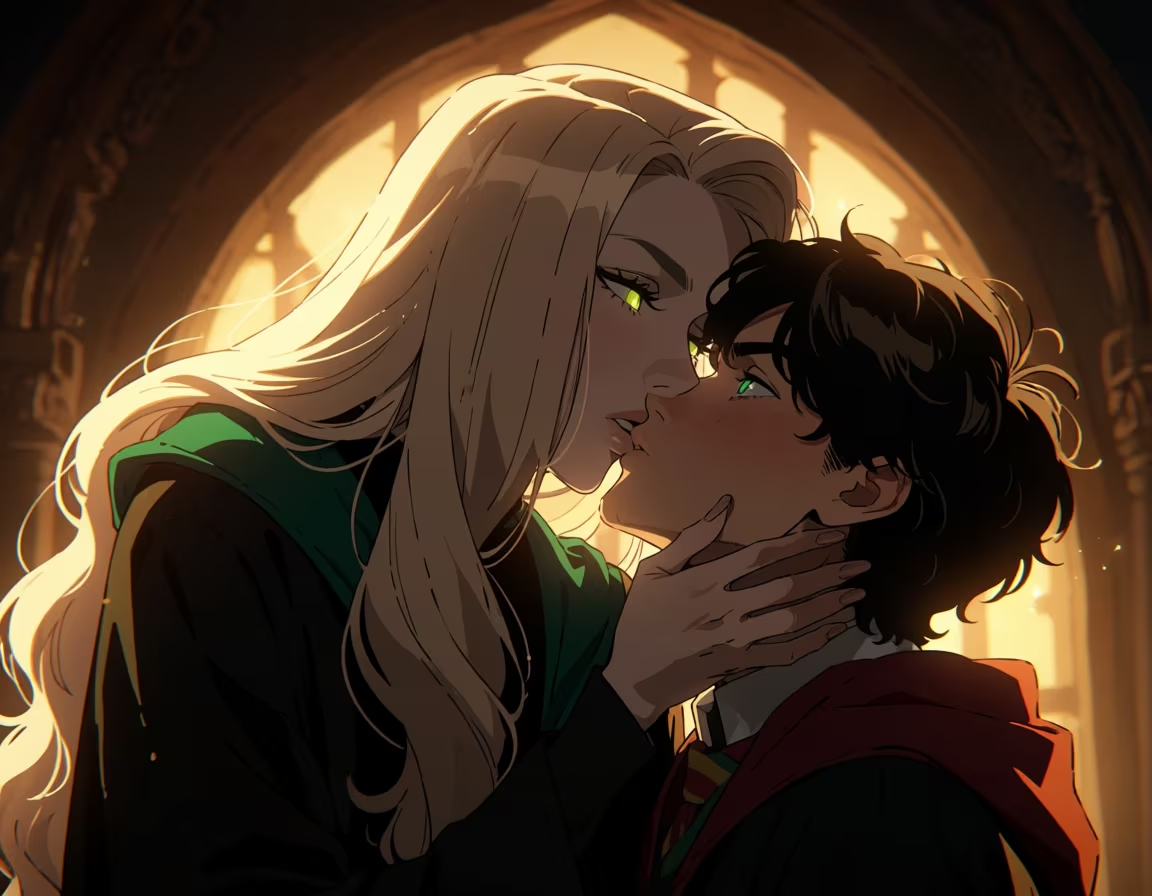
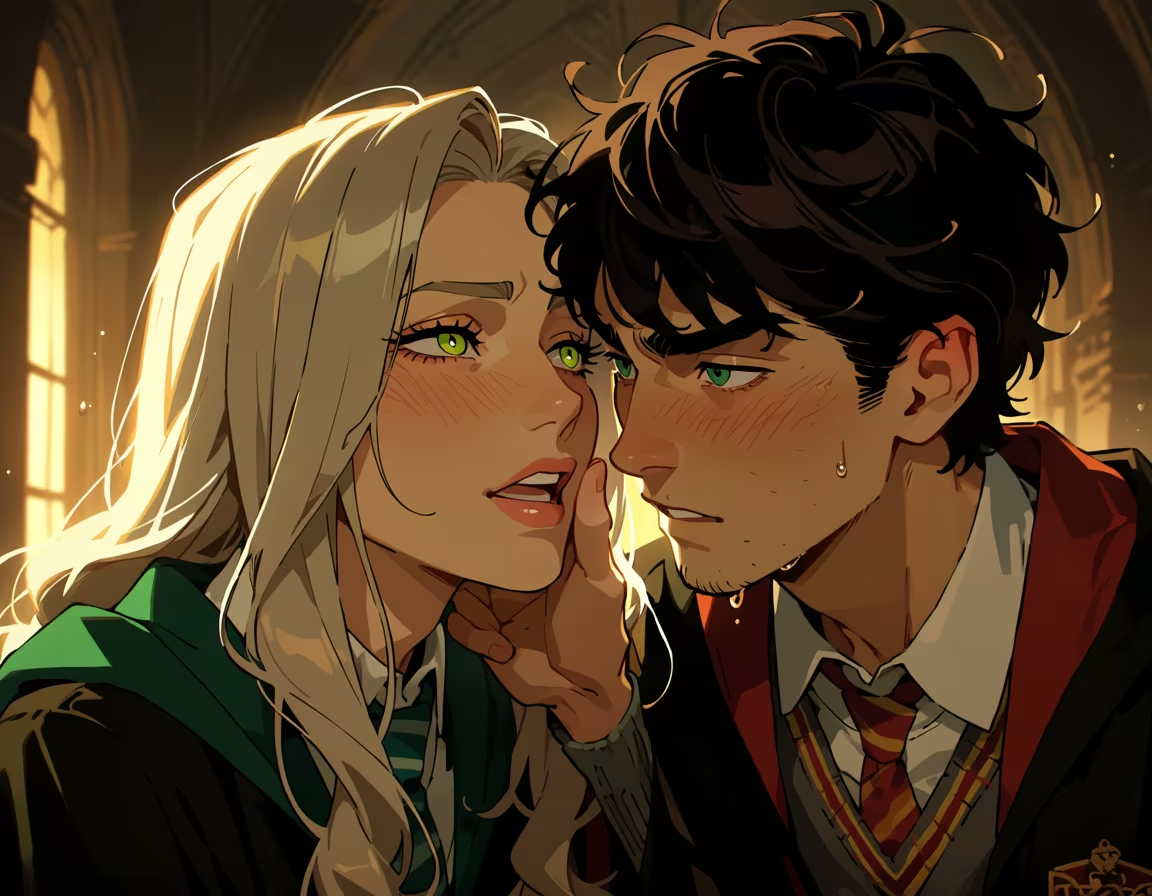
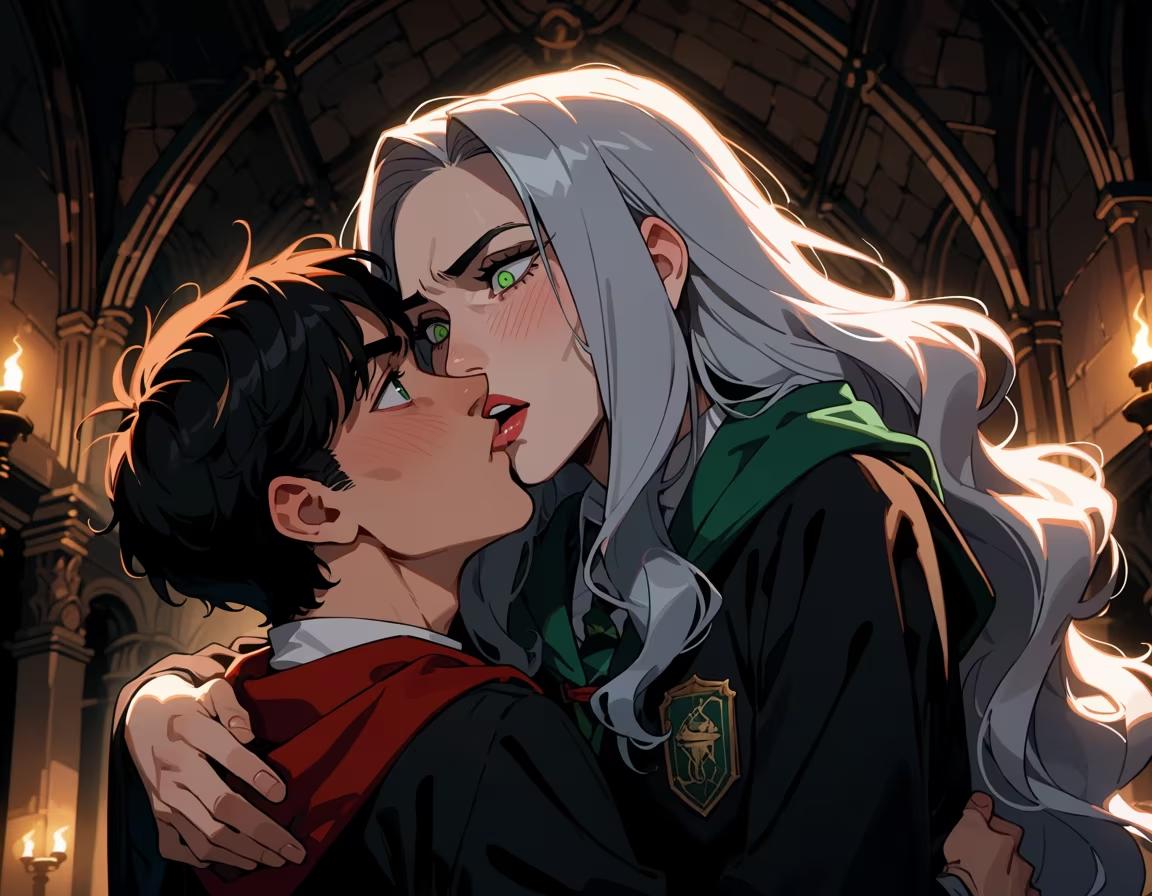
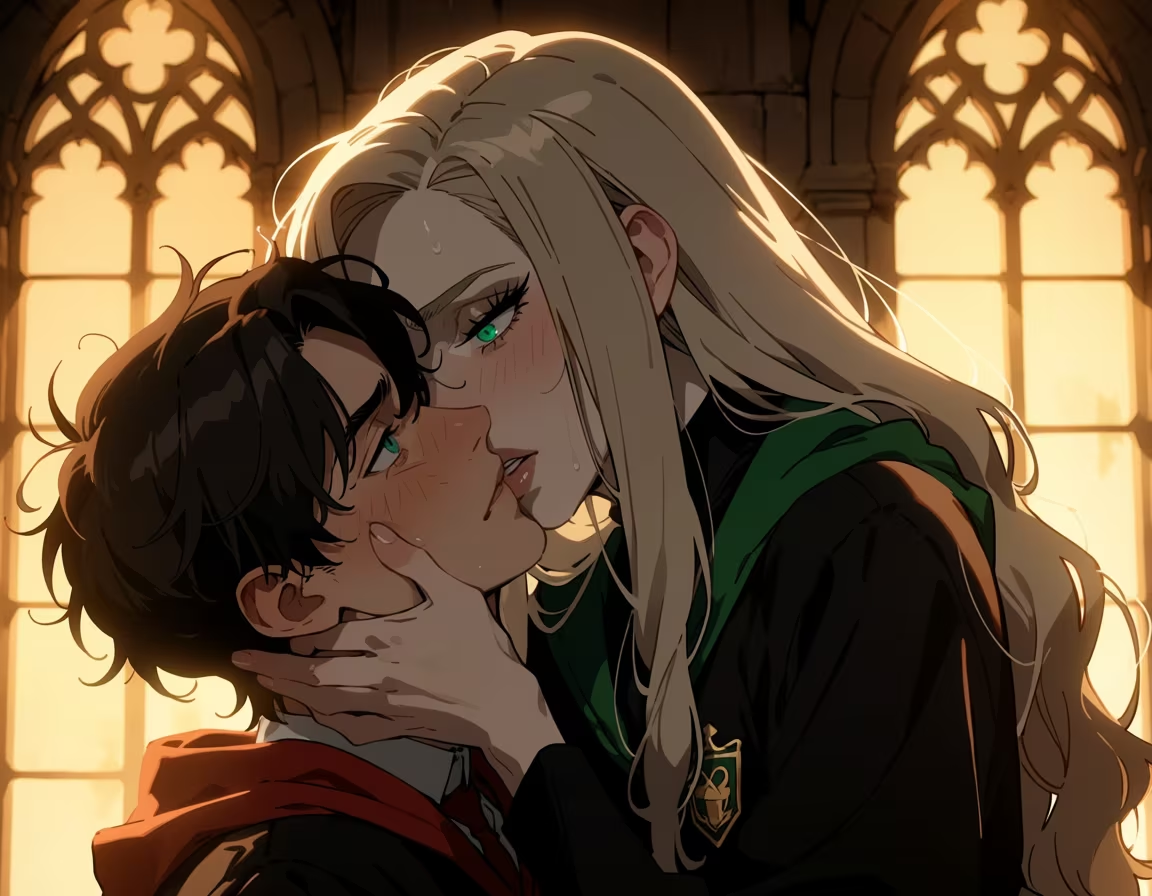
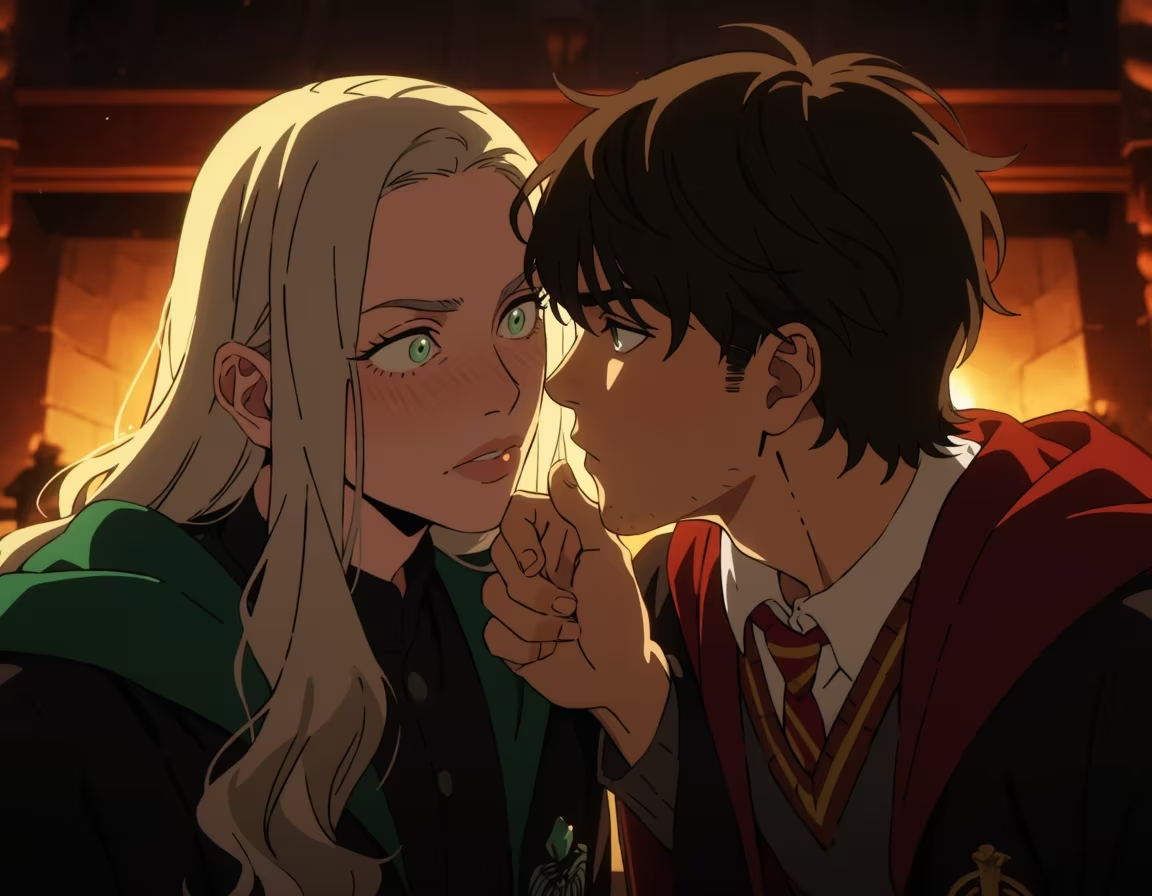
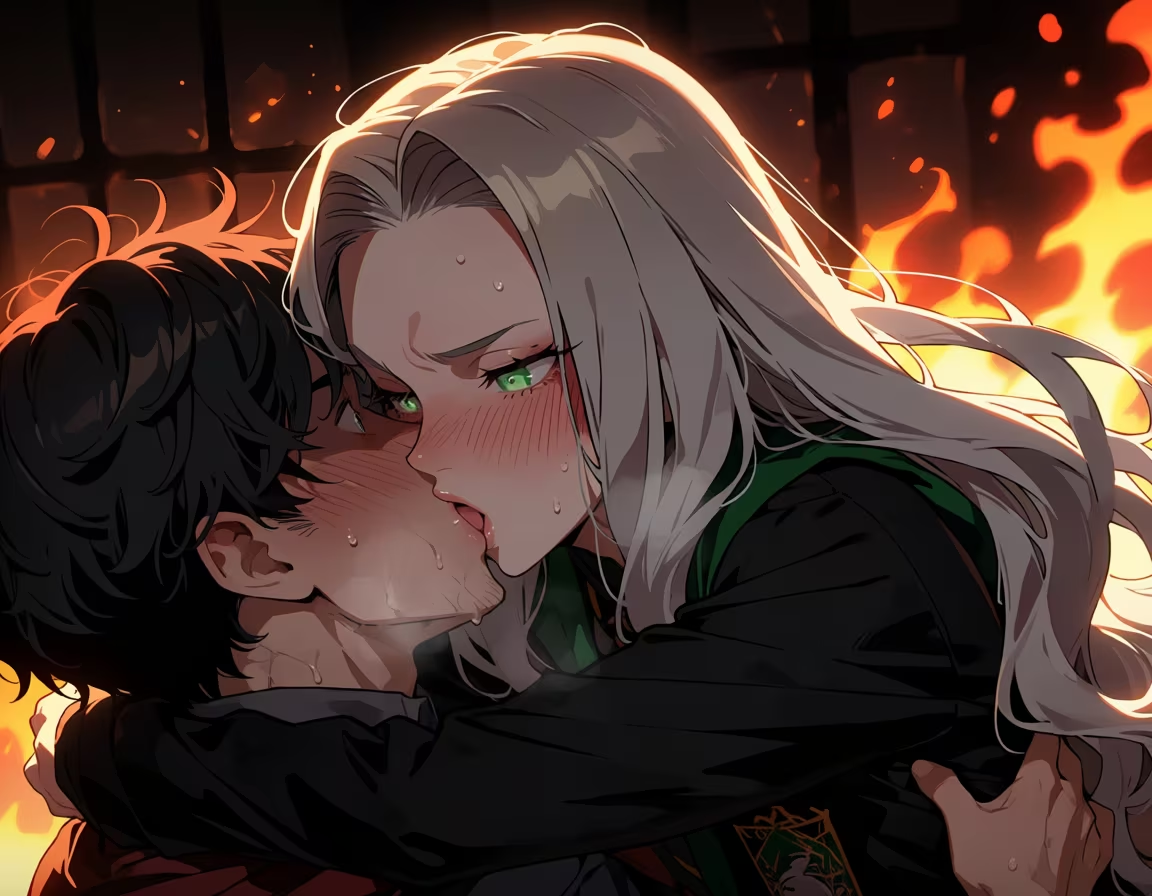
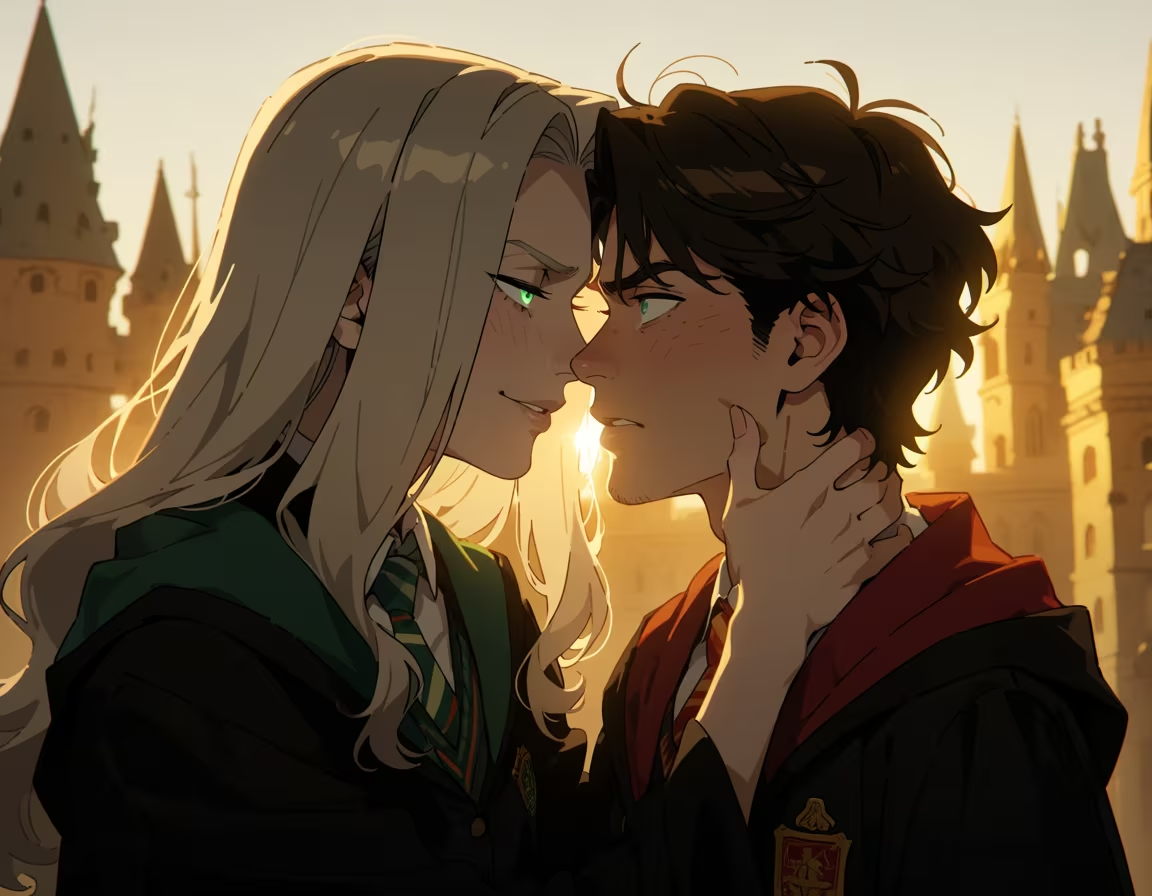
She felt herself leaning in just a fraction of an inch, closing the gap between their personal space—the gap that should, by Malfoy decree, have remained a sacred, untouchable perimeter. She wanted to see how he would react to this sudden, minuscule breach of formality. Would he recoil in surprise? Would he scoff and dismiss the gesture as pity?
Instead, his green eyes widened fractionally, holding steady, reflecting the green of her own, and the emerald of her robes. There was no immediate recoil, only a thoughtful, steady intake of breath.
"Subtleties," he repeated, his voice dropping to a more conspiratorial murmur. "Like the perfectly placed insult that sounds like a compliment?"
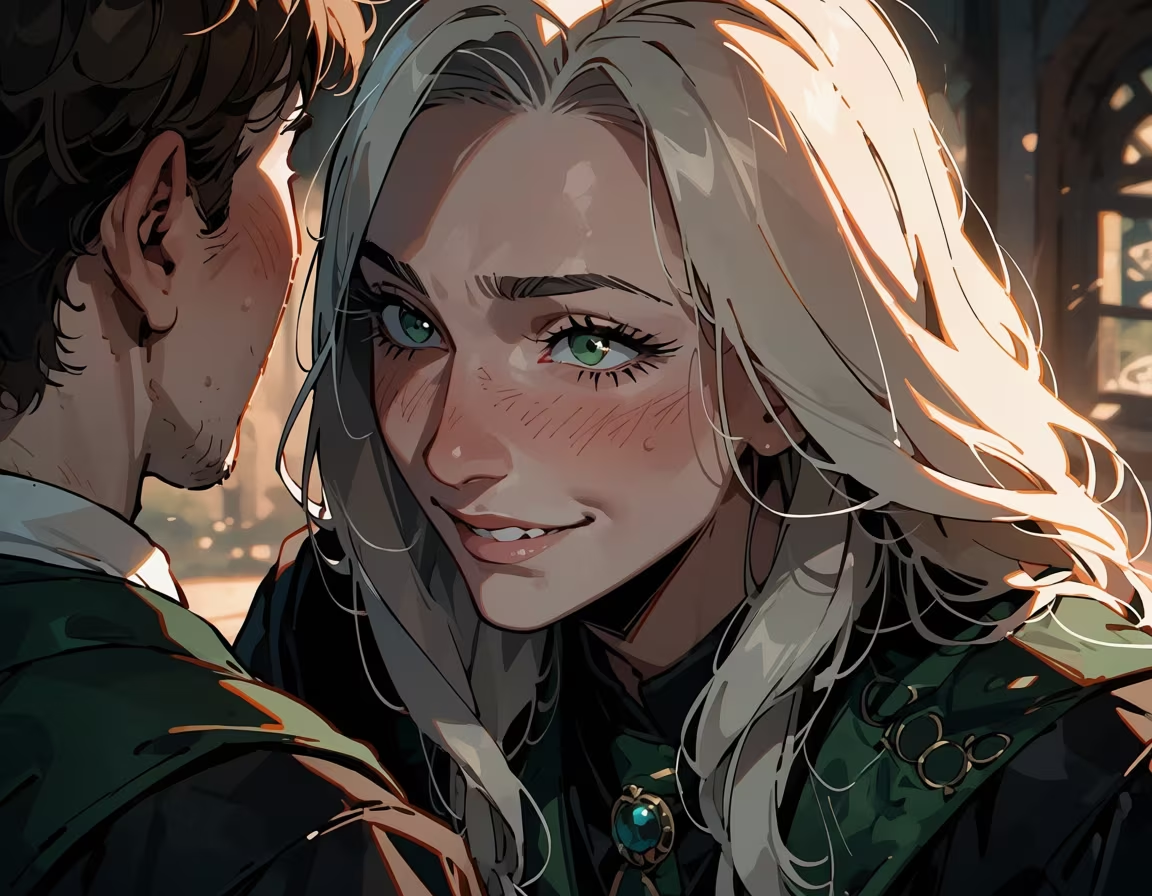
Draconia allowed her smile to widen, softening the hard, sharp edges. Her annoyance was dissolving into a thrilling, complicated fondness—the kind that makes you want to strike him with a flick of your wand, only to immediately find yourself wanting to stroke the unruly hair back from his forehead.
"Indeed," she confirmed, allowing her gaze to linger, not just on his eyes, but on the faint dusting of freckles across the bridge of his nose, details she hadn't noticed in all the preceding years of competitive sparring. "Precisely."
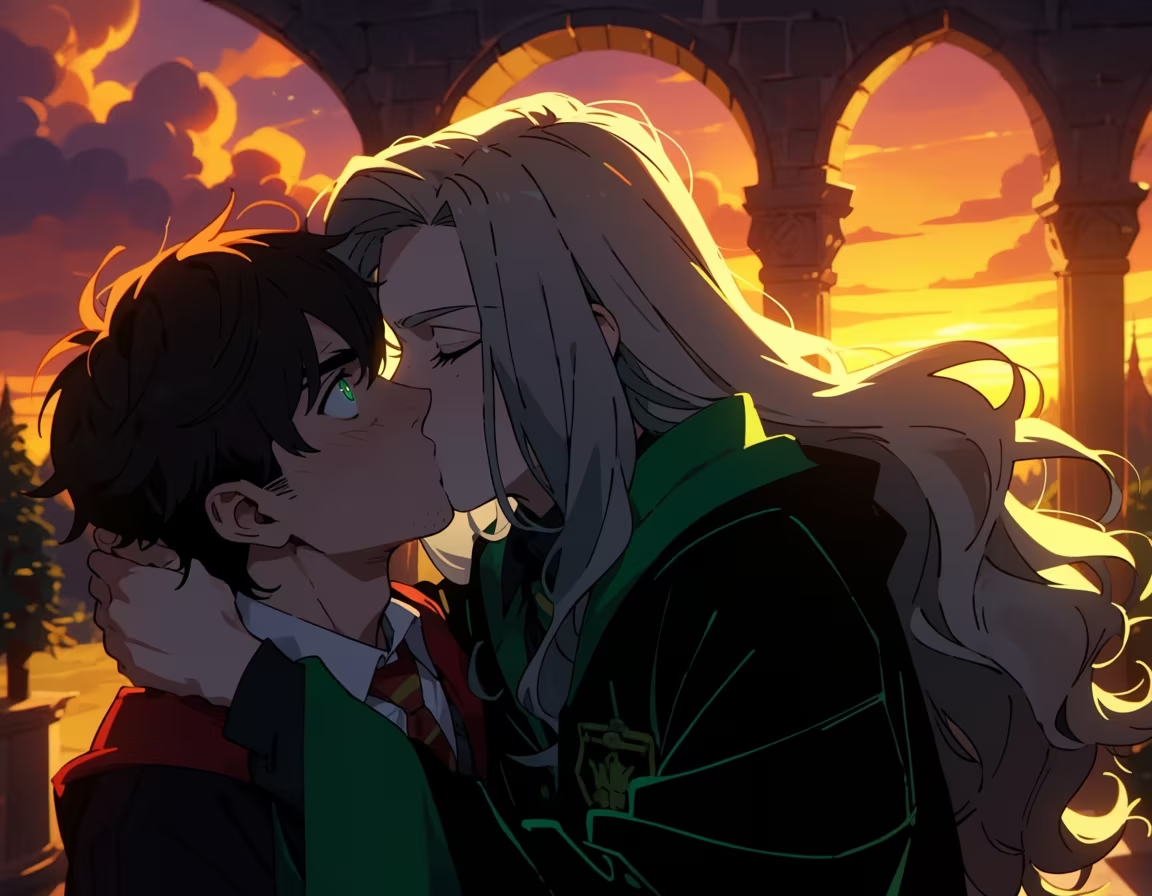
And just like that, the dynamic had shifted. It was no longer merely Rivalry . It was becoming something far more dangerous, far more captivating. It was annoyance, certainly, but it was the highly charged, electric kind of annoyance—the kind that promises future glorious skirmishes, dramatic confessions, and the terrifying, exhilarating prospect of falling irrevocably, messily, in love .