| Home | The Lives of Velnin | Illustrated Fiction | Malfoid Art & Fiction | Book Blurbs | Contact |
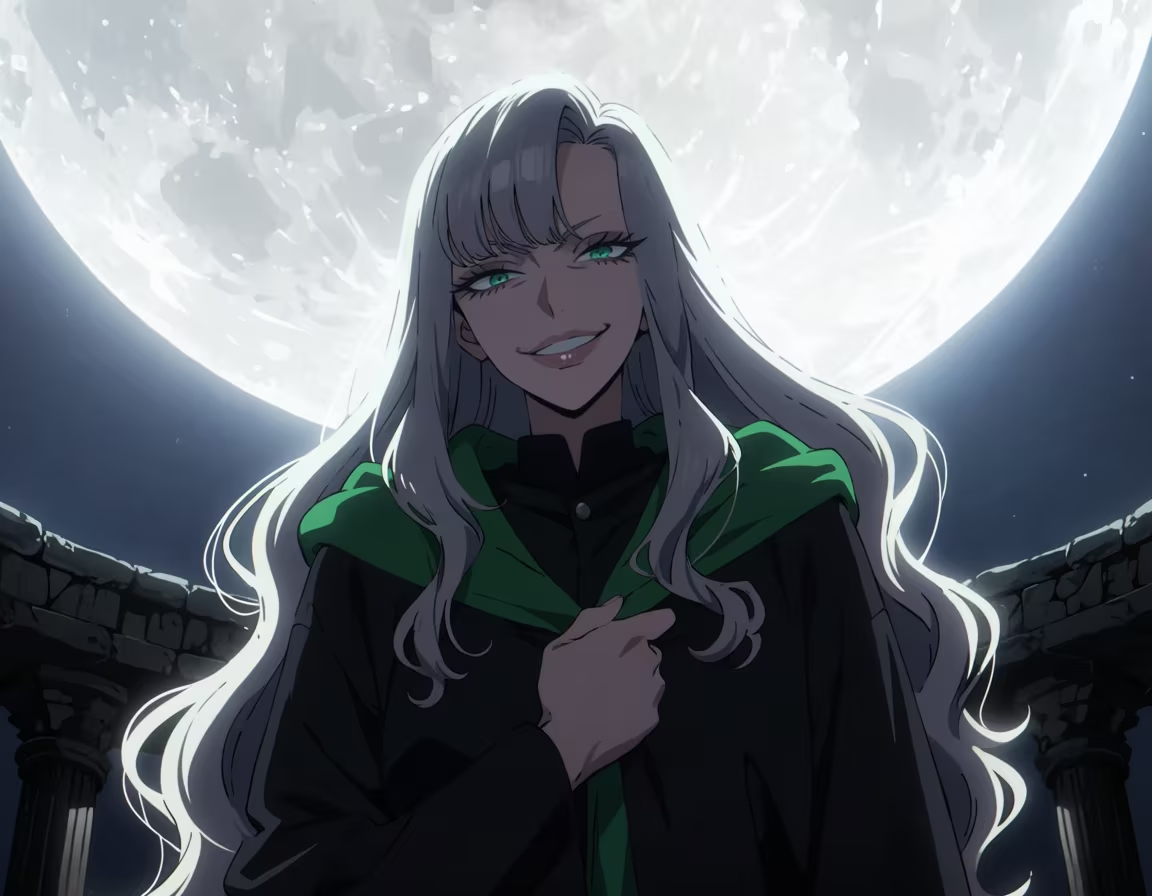
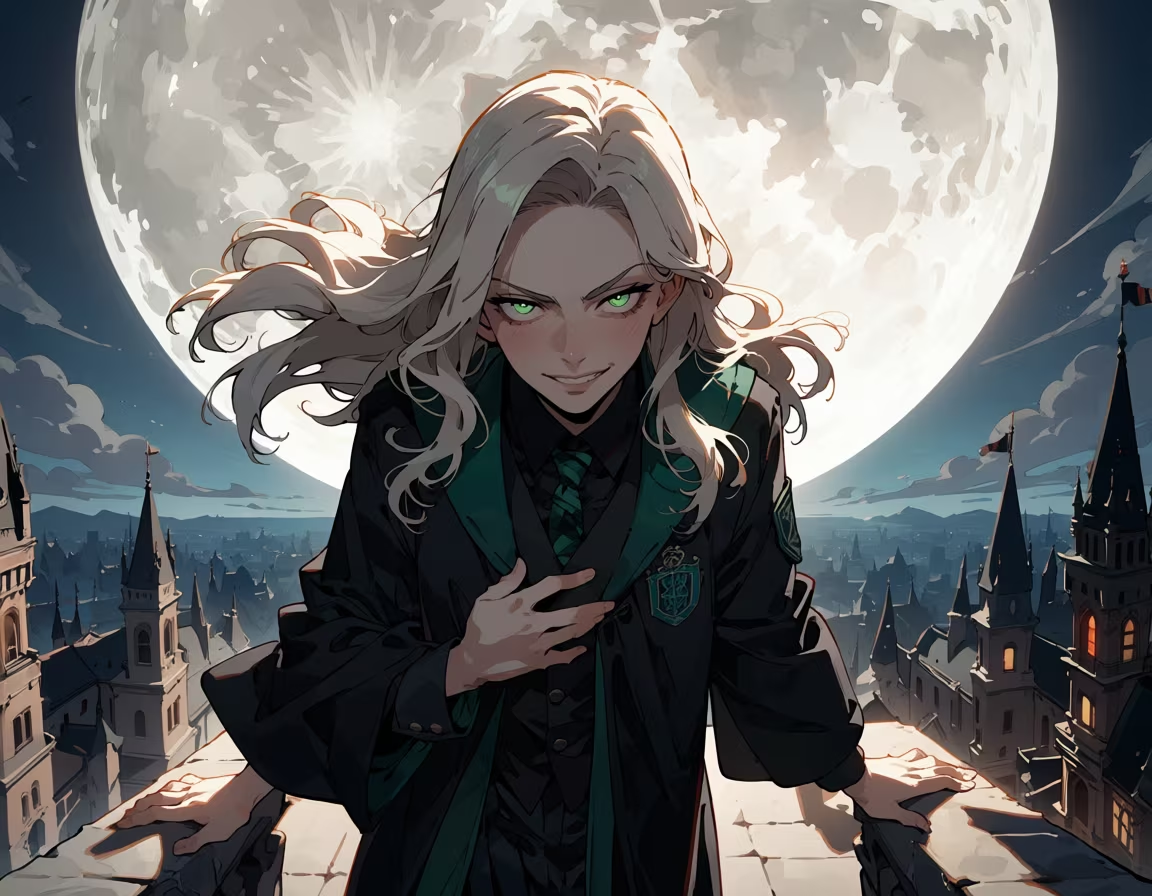
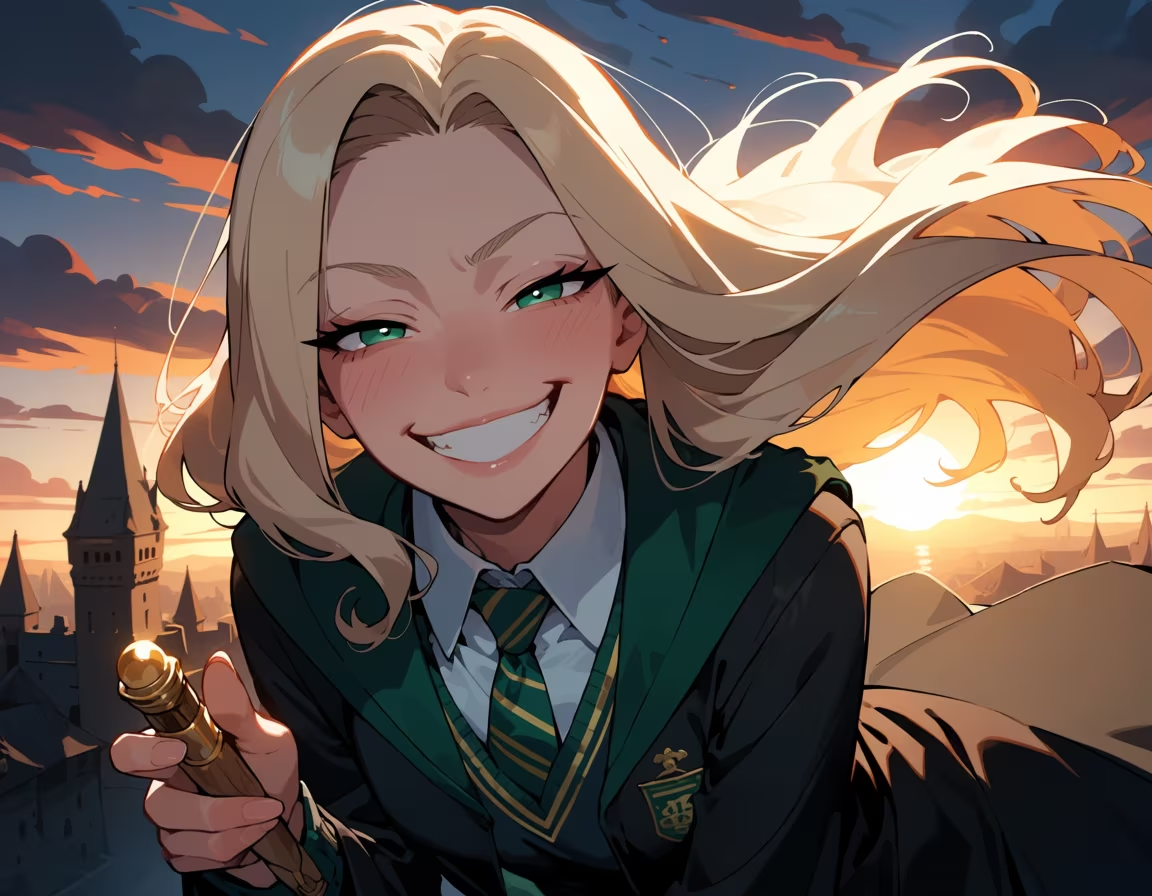
The air was sharp, biting at the exposed skin of her forearms, carrying the metallic tang of residual magic—the scent of burnt phoenix feather and spent curses. Below her, Hogwarts sprawled like a magnificent, sleeping beast, its turrets piercing the bruised indigo sky, its ancient walls slick with the damp breath of the Scottish night. Above, dominating everything, was the moon.
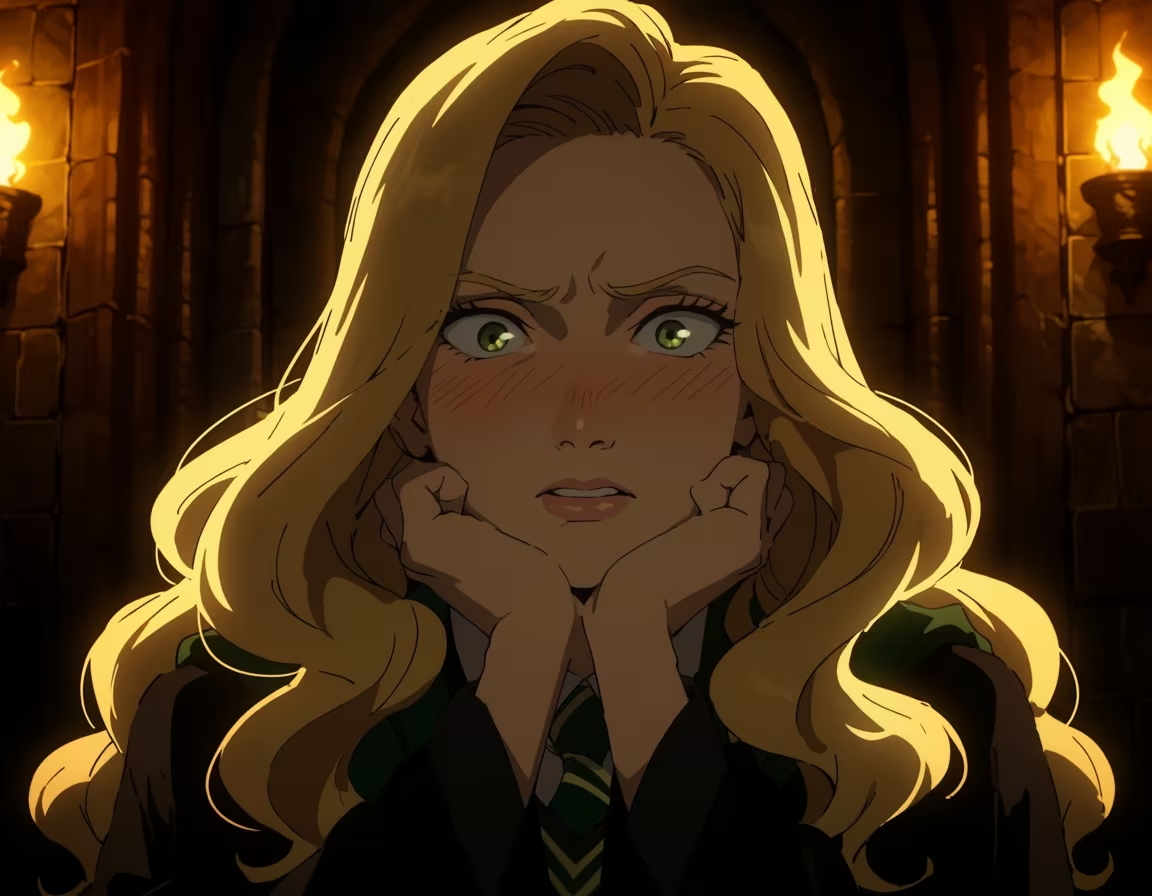
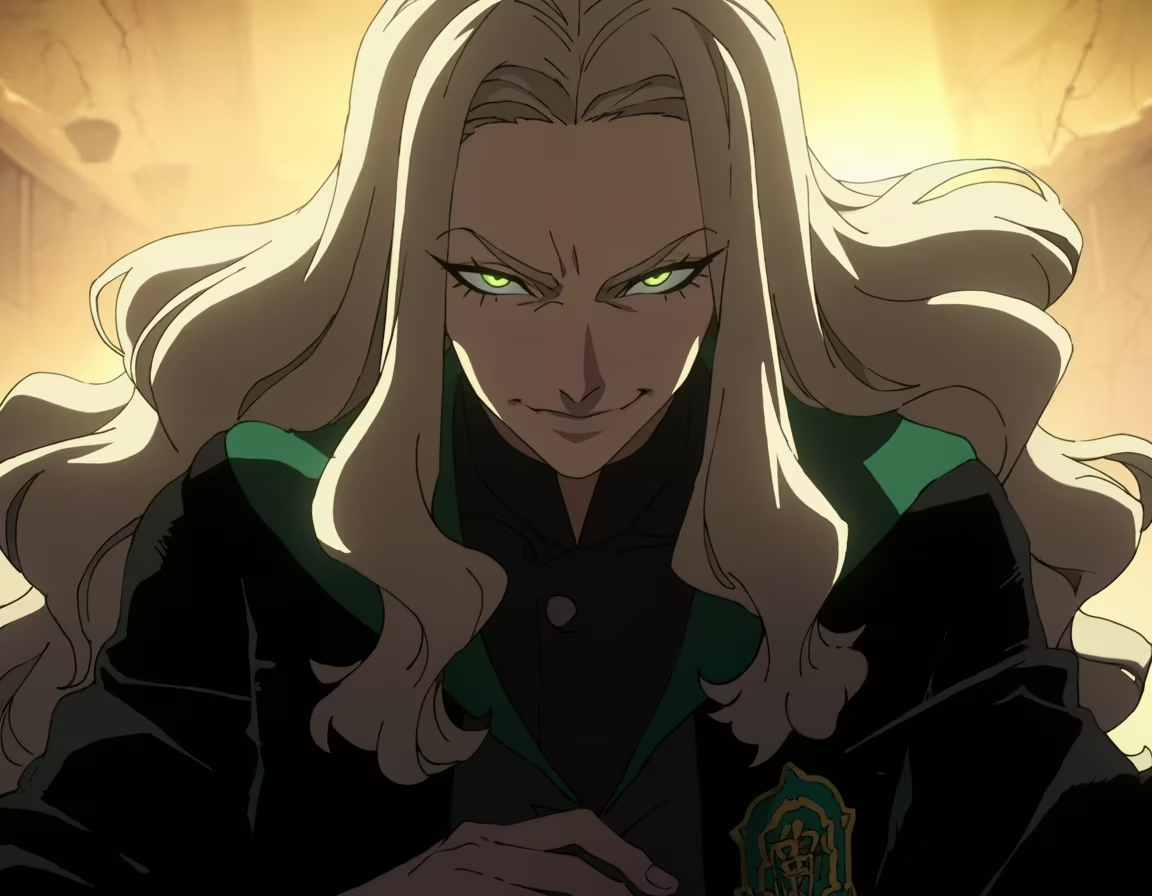
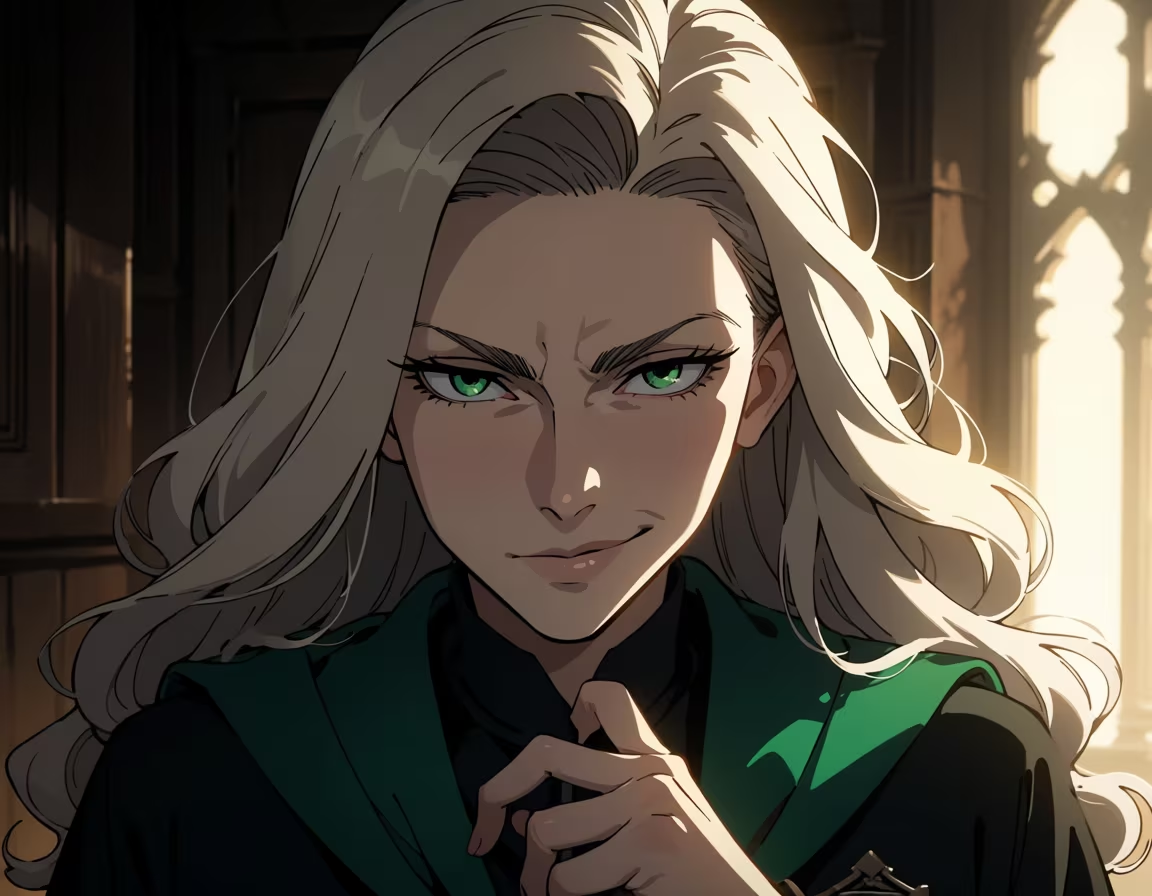
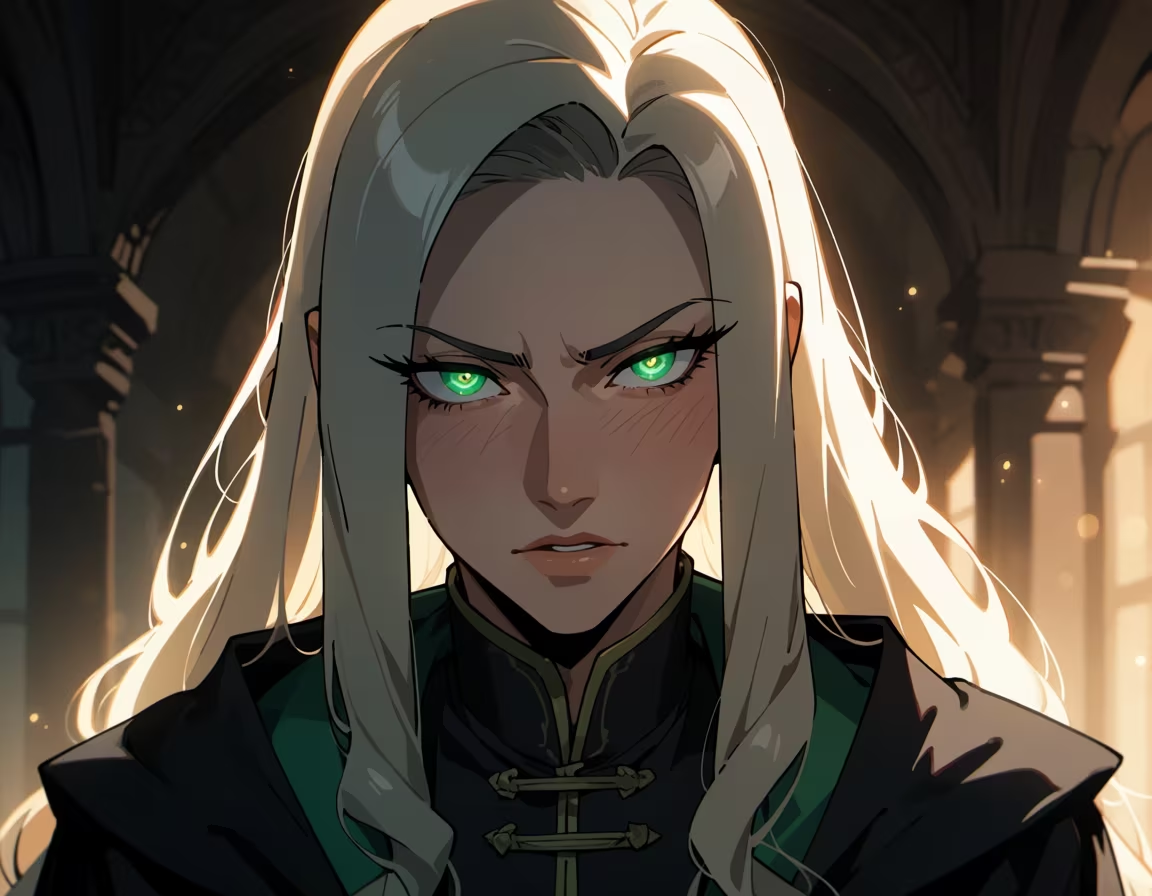
It was a colossal thing, a flawless silver coin spilled carelessly across the vault of the heavens, bathing the sprawling grounds in a luminous, ethereal glow. It illuminated the black folds of her robes, turning the emerald trim into veins of brilliant, living jade, and catching the spun gold strands of her hair in a way that made them seem less like hair and more like liquid moonlight poured down her shoulders.
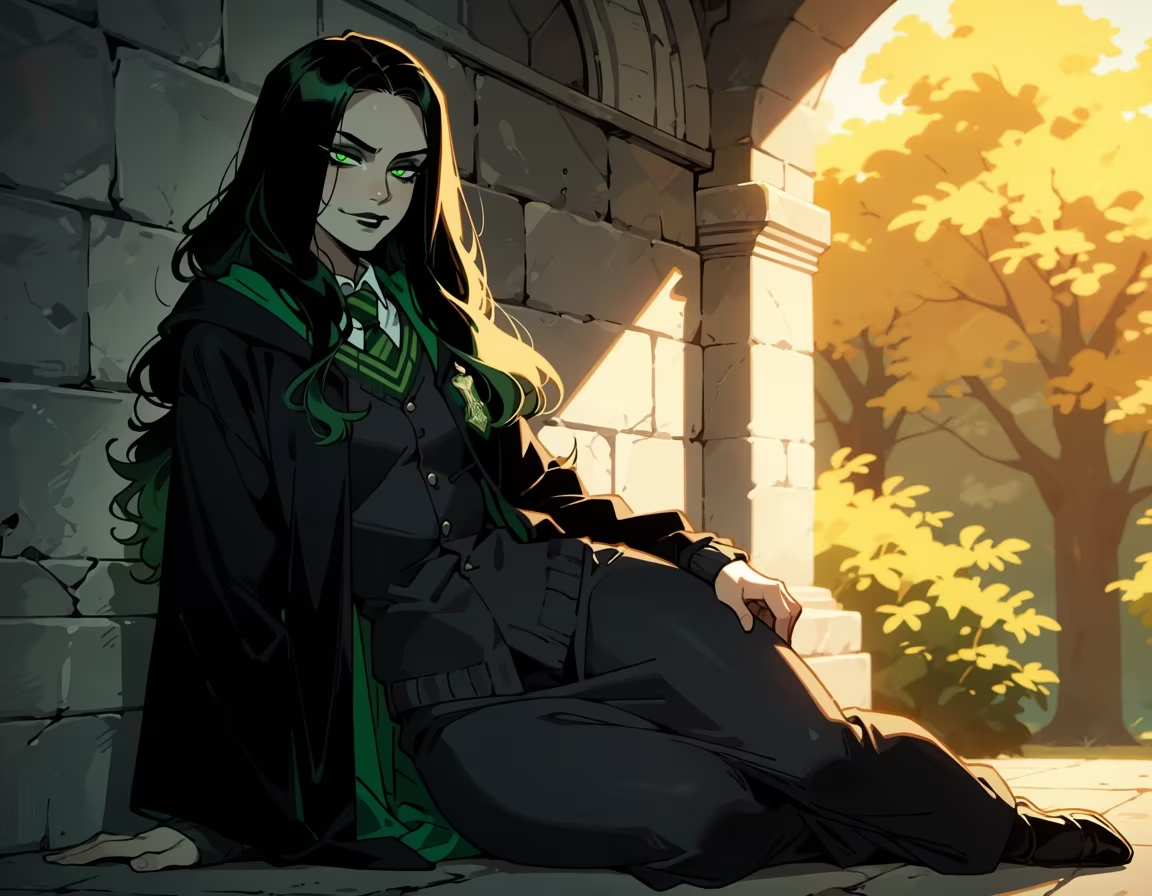
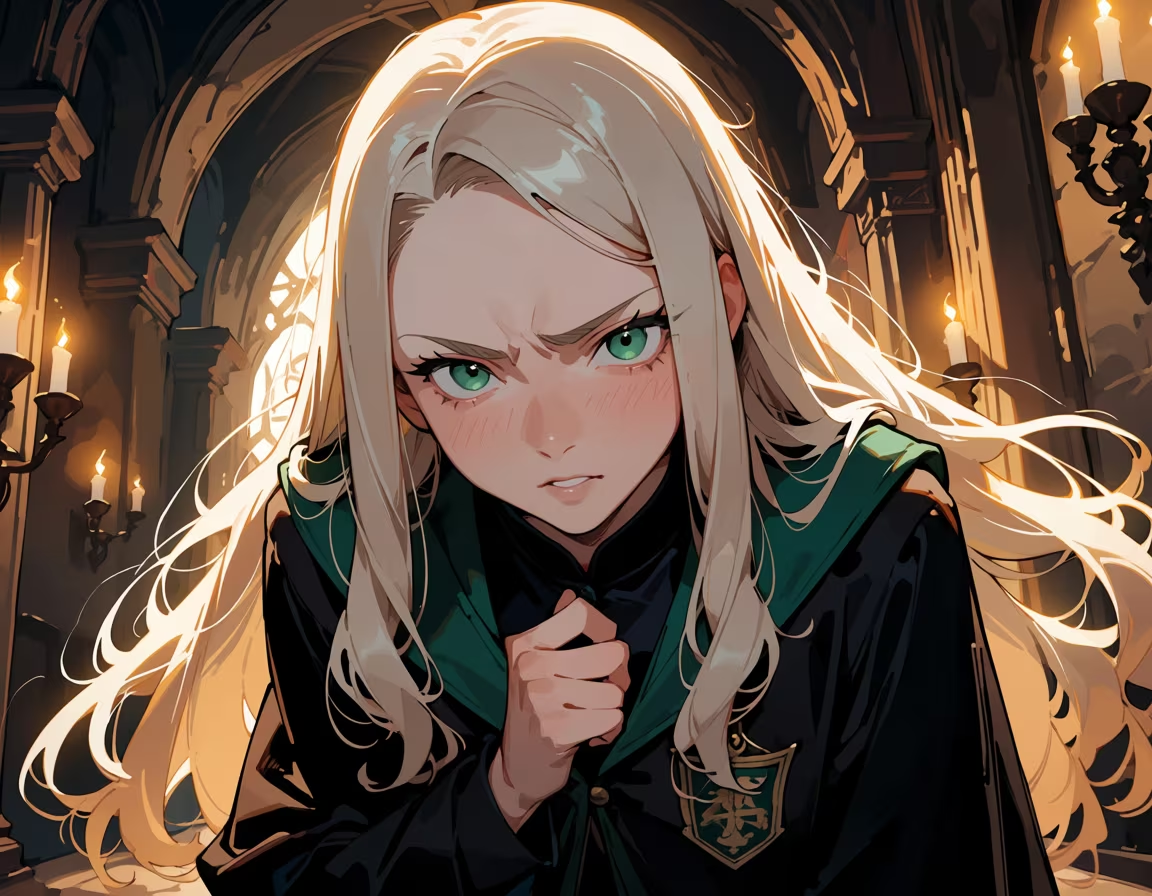
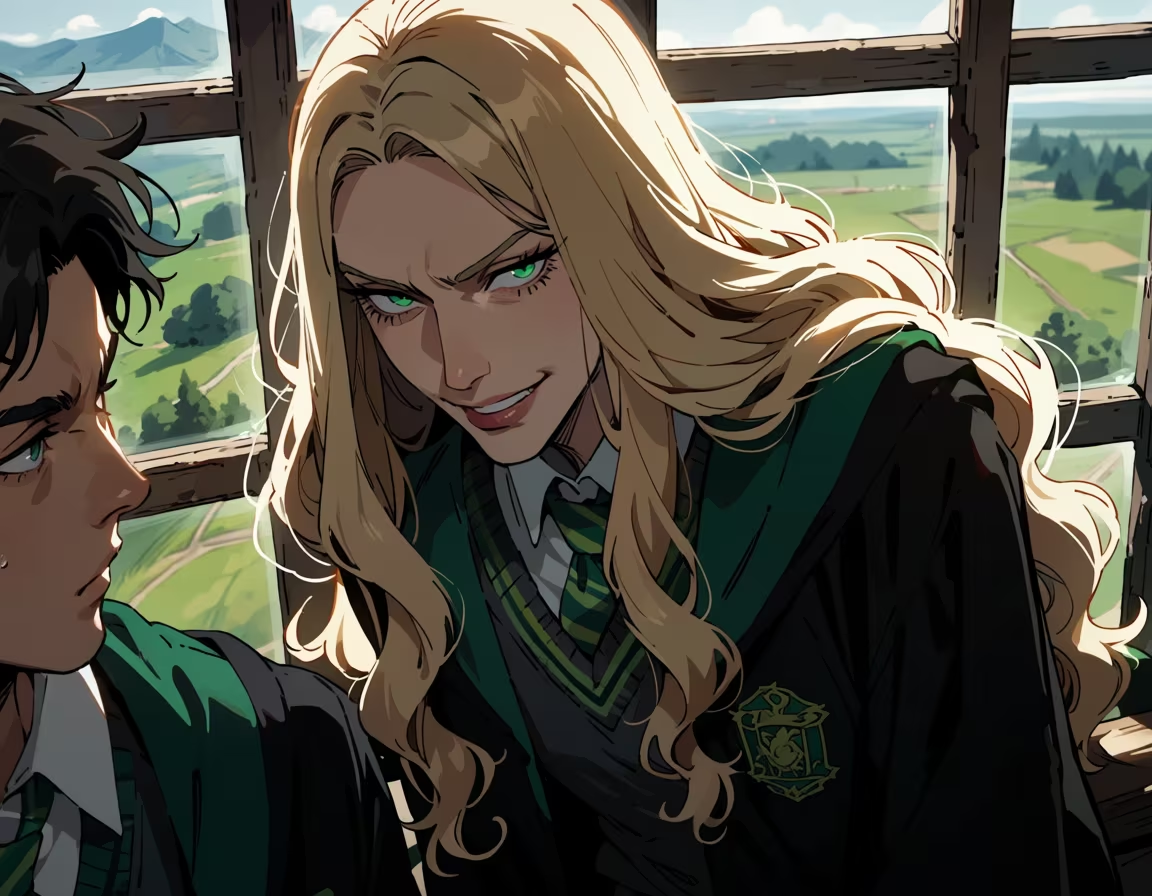
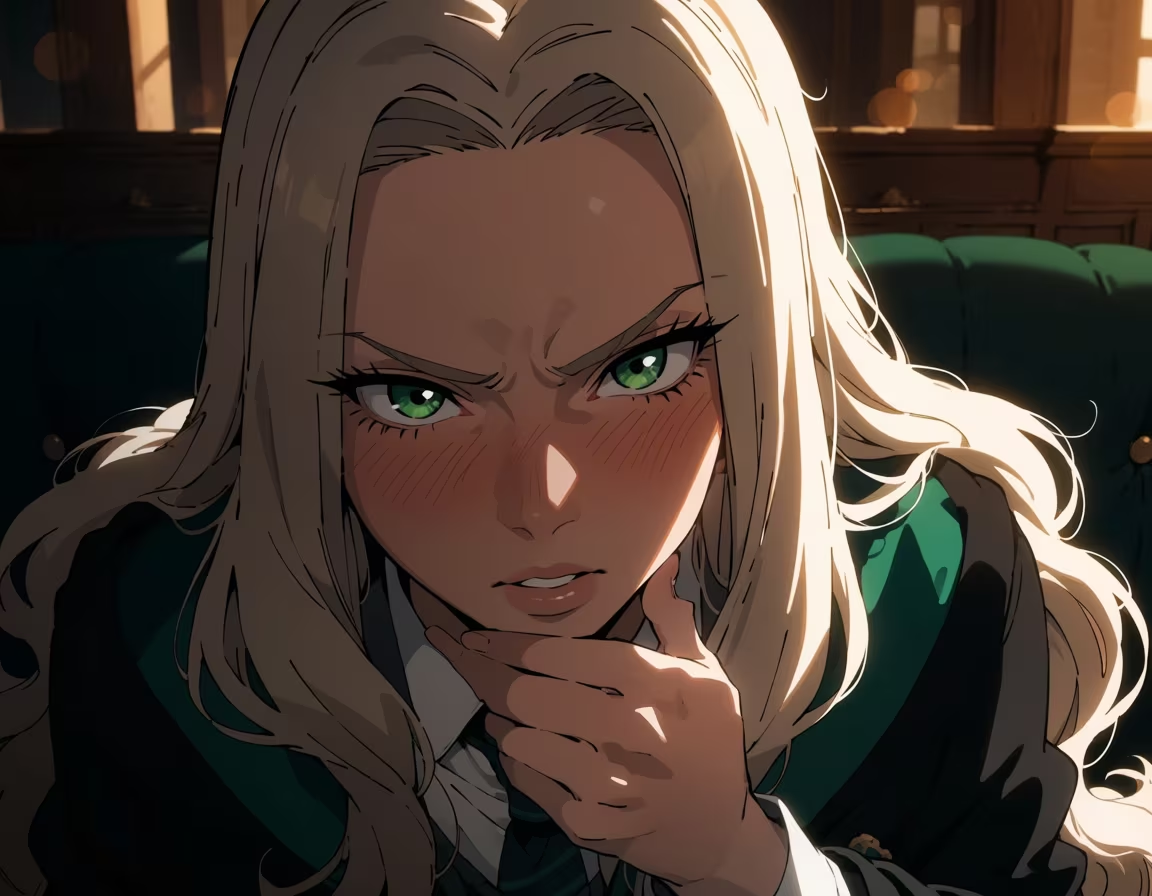
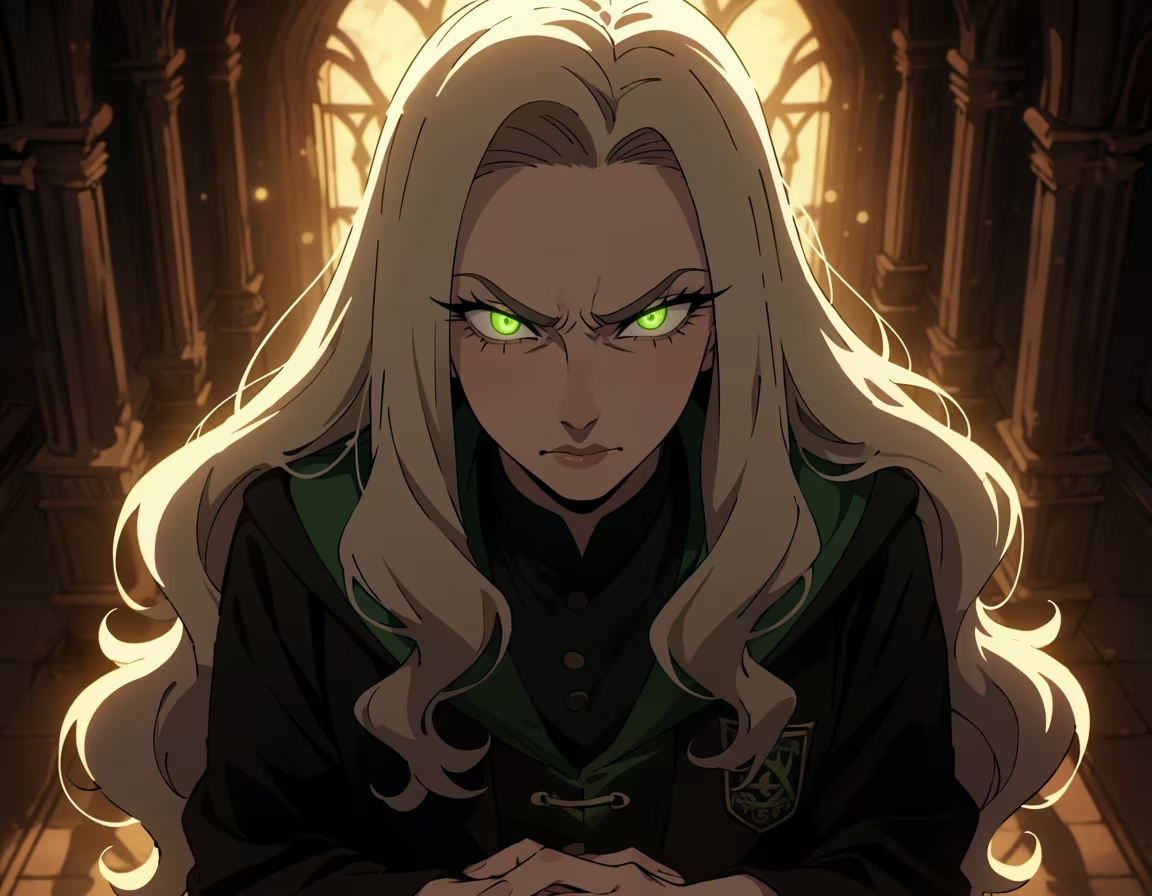
Draconia leaned against a low, weathered parapet, the chill seeping through the heavy wool of her Slytherin uniform, yet she felt utterly, magnificently warm. It was a warmth generated internally, a fierce, banked fire that had been nurtured over seven tumultuous, exhausting, glorious years.
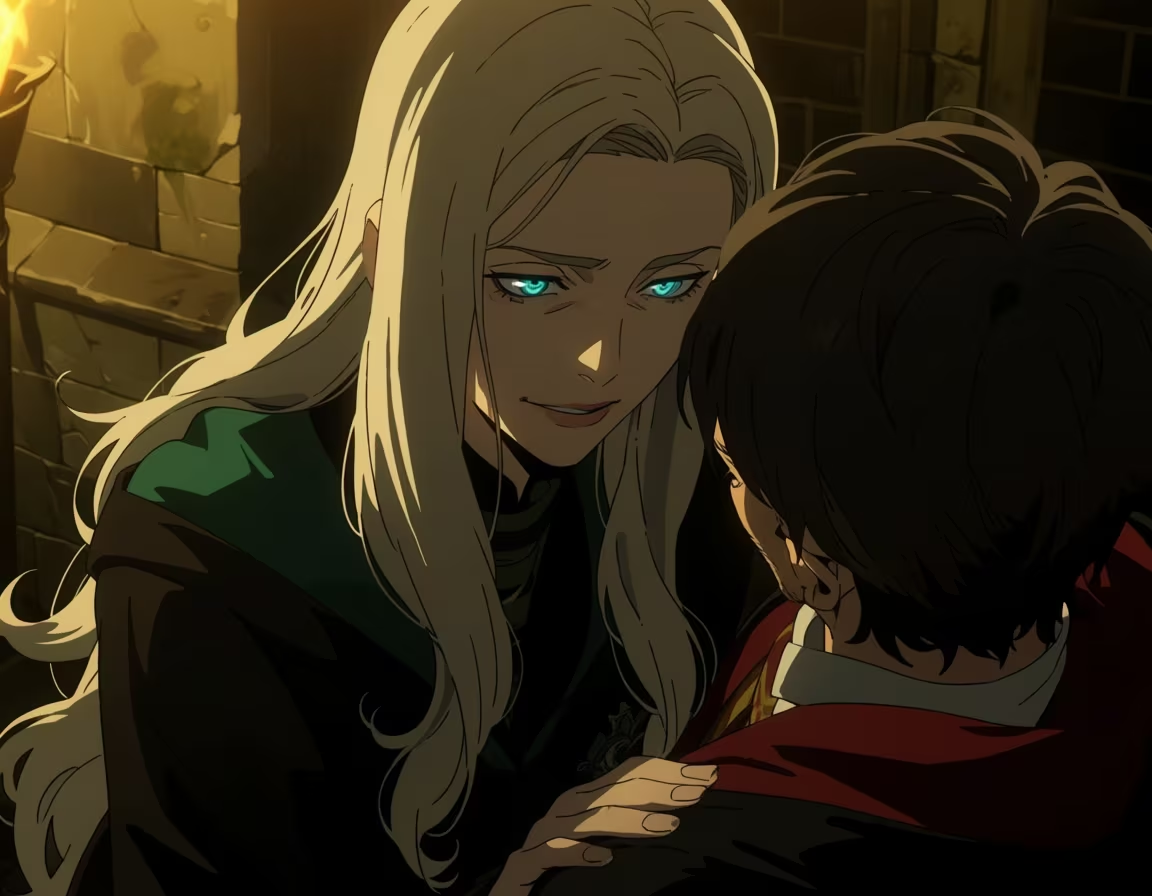
Harry.
The name resonated in the cavern of her chest, a deep, satisfying thrum that had replaced the incessant, irritating buzz of annoyance years ago. It had started as a grating, persistent hum, a sound like a poorly tuned kettle whenever he walked near her—a cheerful, relentless intrusion upon her perfectly curated world of aristocratic disdain. “Malfoy, stop brooding, let’s play Quidditch!” or the sheer, baffling audacity of him offering to share a pumpkin pasty with her during a particularly dull Charms lesson.
She had found him utterly insufferable. Annoyance, she thought, tightening her grip on the cold stone. It was the first, most honest assessment.
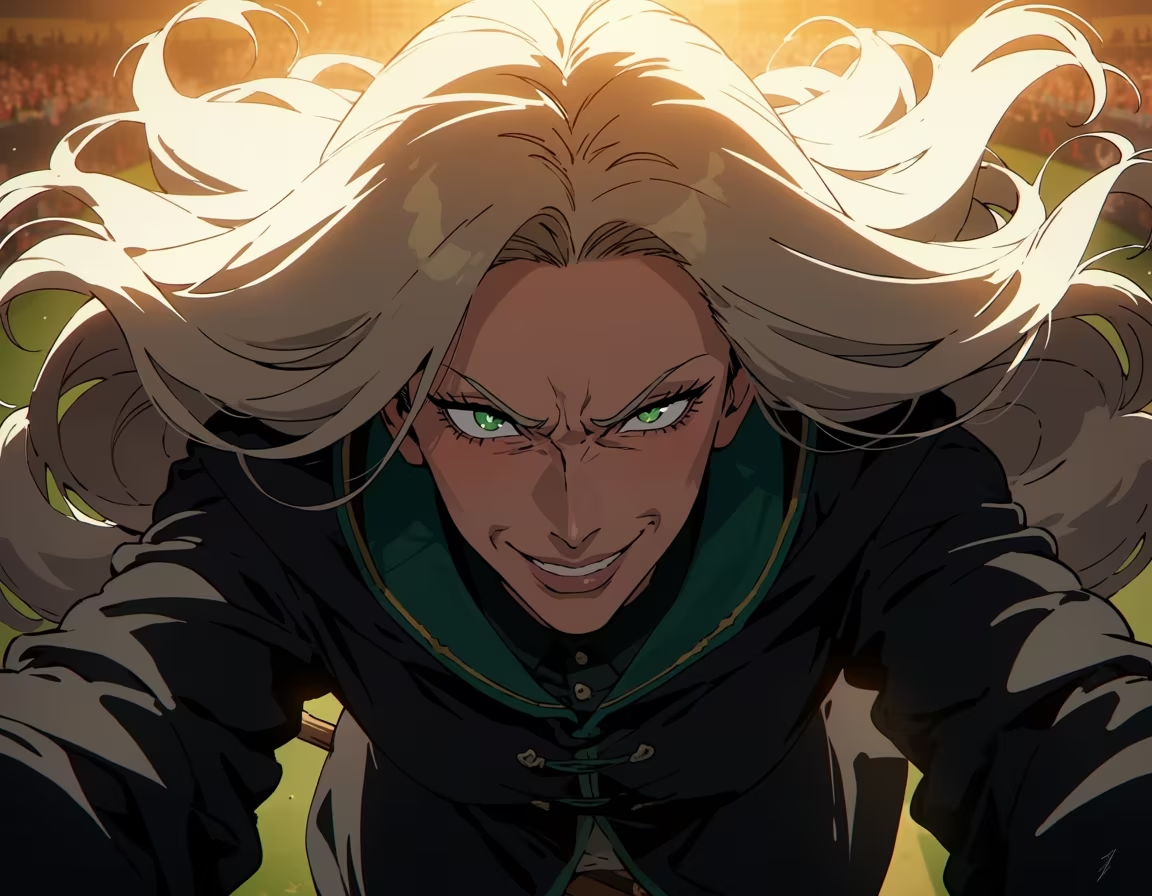
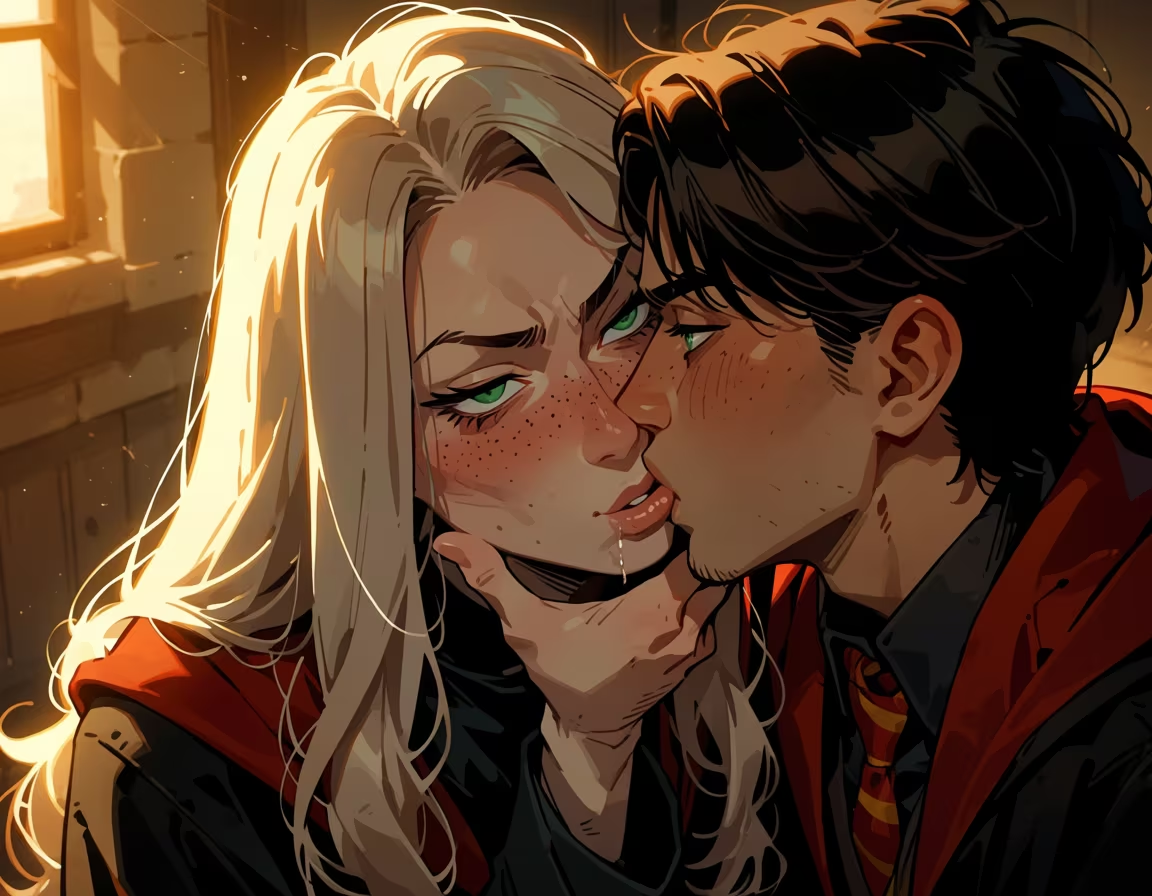
Then came the Quidditch matches. The way his hair seemed perpetually wind-swept, even indoors; the sheer, untamed joy in his green eyes when the Snitch was within reach; the way he looked at her during a close tackle—a look that wasn’t spiteful, or fearful, or even competitive, but simply seeing her. He saw the careful façade of the perfect, haughty Slytherin heiress, the one who expected deference and delivered barbed wit as a mandatory side dish. He saw her .
That was the pivot point. The annoying hum had begun to swell into something richer, more resonant—intrigue. Why did she care if he tripped? Why did the sight of him being momentarily flustered by Ron Weasley send a strange, sharp prickle down her spine, somewhere near her sternum?
The shift from annoyance to intrigue was like watching a particularly clever, irritating moth batter itself against a perfectly polished windowpane. You are irritated by the persistent thump-thump , but you cannot look away because you desperately want to know why it is thumping.
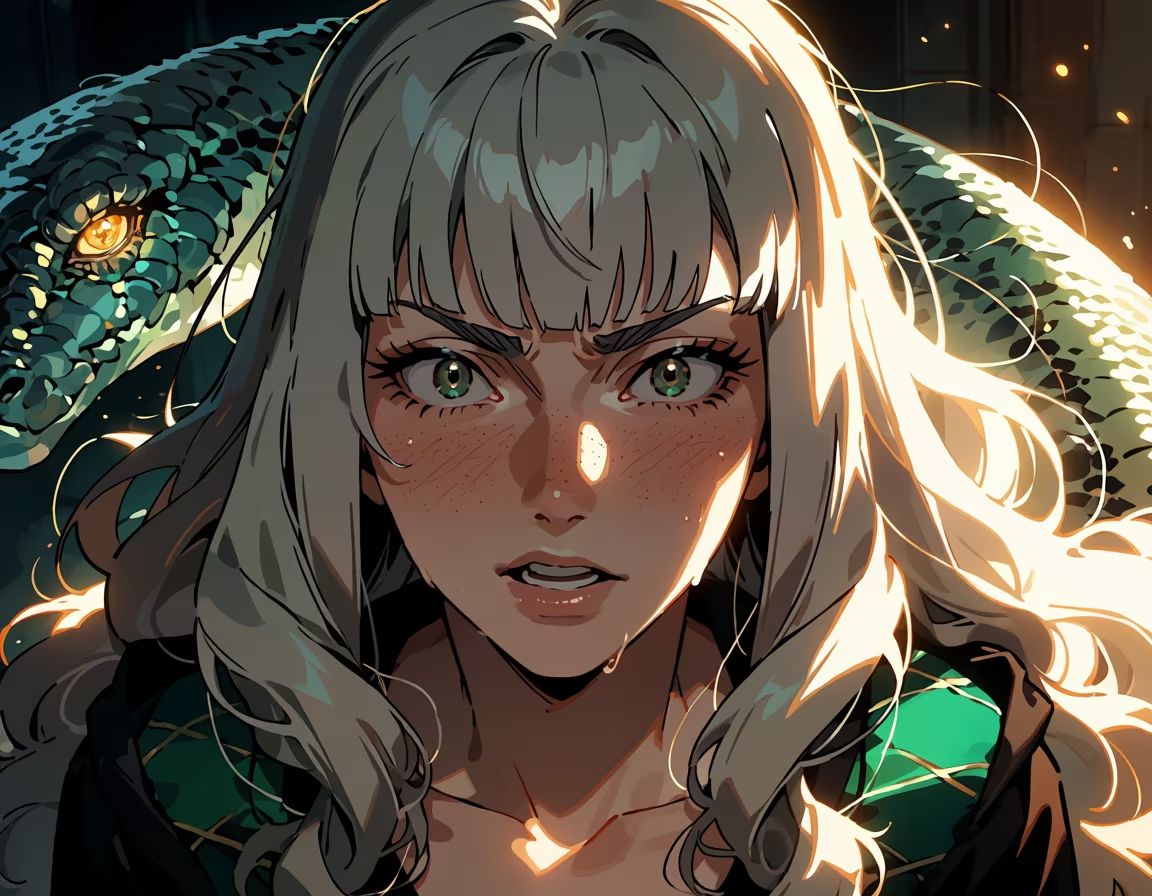
The Duelling Club was another seismic shift. Watching him parry her Bludger with effortless grace, then seeing him conjure the magnificent, emerald-scaled snake—and then hearing him speak to it, a low, resonant murmur that was pure, untainted Parseltongue—she felt a genuine, unguarded flicker of awe. That power, that innate connection to the ancient heart of the magic, felt utterly worthy of her attention. It was magnificent, and therefore, it was his .
Now, standing on this precipice, feeling the weight of the war, the sacrifices, the near-death experiences, the relentless, ridiculous heroism, she felt something much deeper.
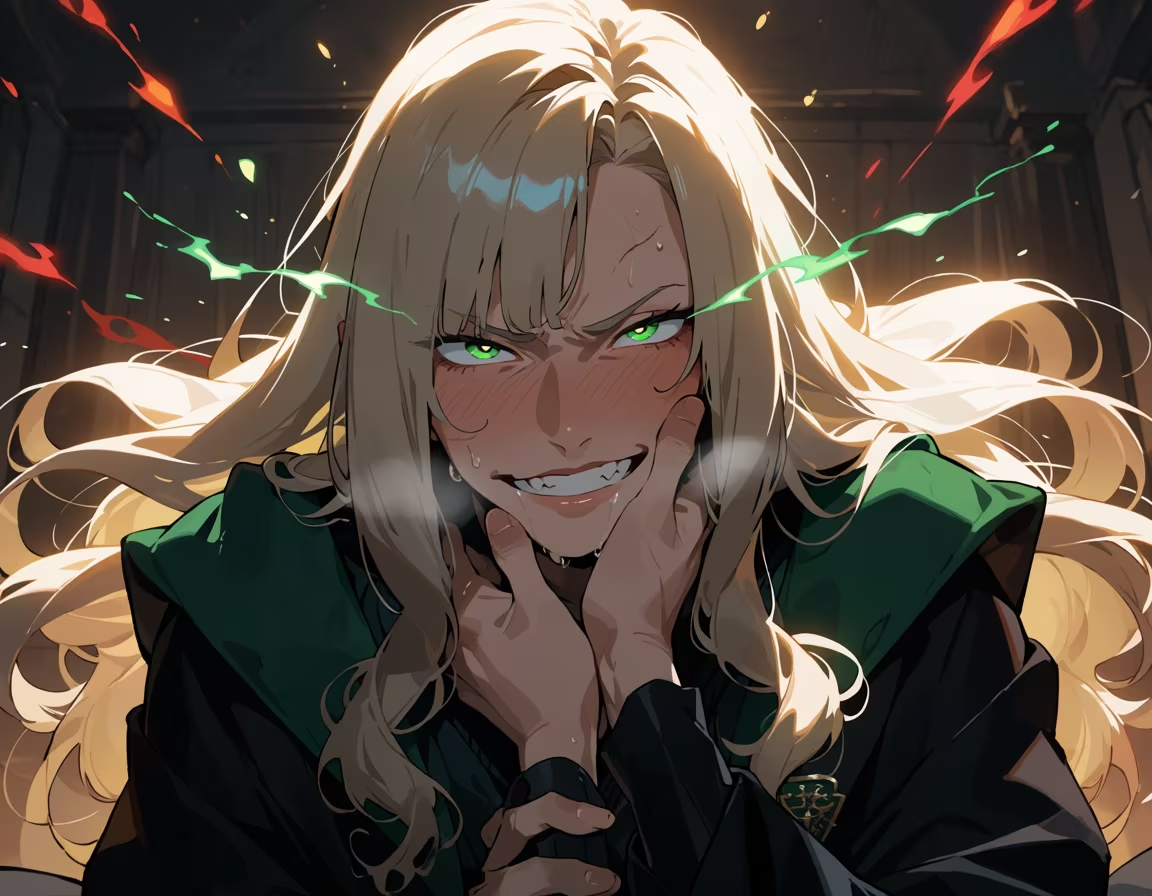
The annoyance had calcified into a fond exasperation. He was such a nuisance . A terribly bright, loud, utterly infuriating nuisance. But it was a nuisance she actively sought out. She preferred the sharp sting of his company to the dull comfort of the predictable adoration of her father, Lucius, or the polite, measured admiration of Crabbe and Goyle.
The admiration—oh, the admiration. It was fierce. She admired his unwavering moral compass, even when it seemed hopelessly skewed toward ‘doing the right thing’ rather than the ‘politically convenient thing.’ She admired his loyalty, a trait she herself had only recently begun to value so highly after witnessing how fiercely he guarded the Golden Trio.
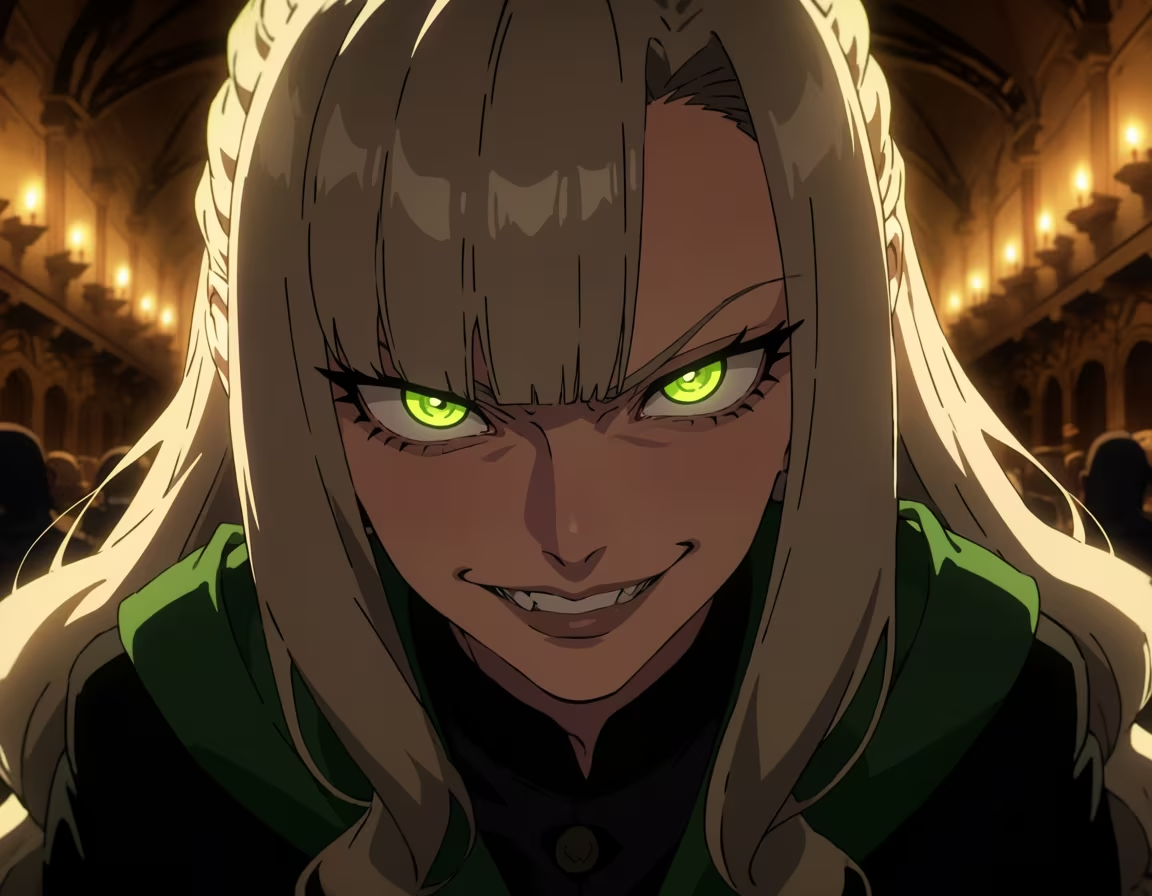
But the dislike, the lingering shadow of the rivalry, remained. He was still Harry Potter. The Boy Who Lived. The Chosen One. And she was Draconia Malfoid—the rightful inheritor of ancient, powerful Slytherin blood—and yet, here they were, partners in this brutal ballet against death. She still wanted to push him away, to snap at him about his lack of proper posture, or his tendency to let Ron Weasley hog the good conversation.
Fondness with annoyance. It was the perfect summary of their relationship.
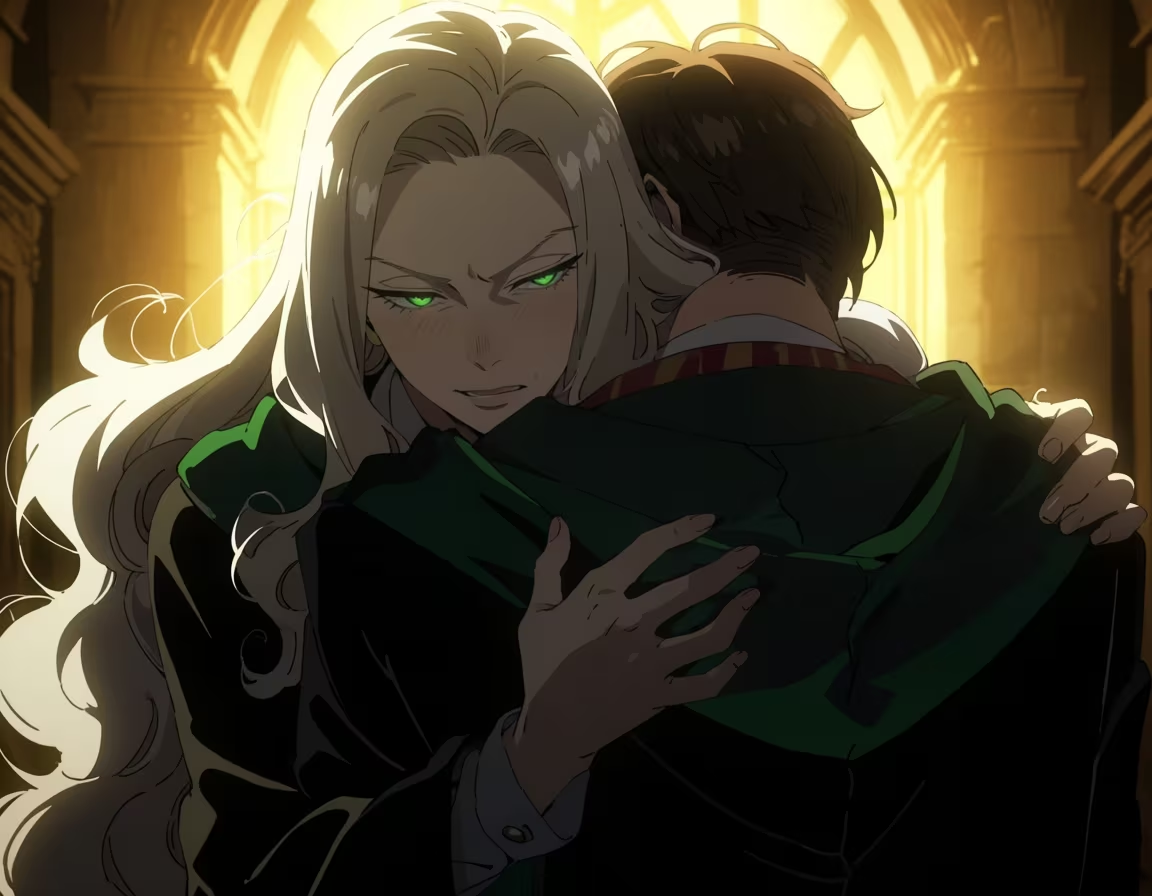
Her breath hitched, a small, almost inaudible sound that the wind seemed to snatch away immediately. She lifted her hand, resting it over her heart, right where the feeling was most intensely lodged, and let the full weight of it crash over her.
It wasn't just fond exasperation anymore.
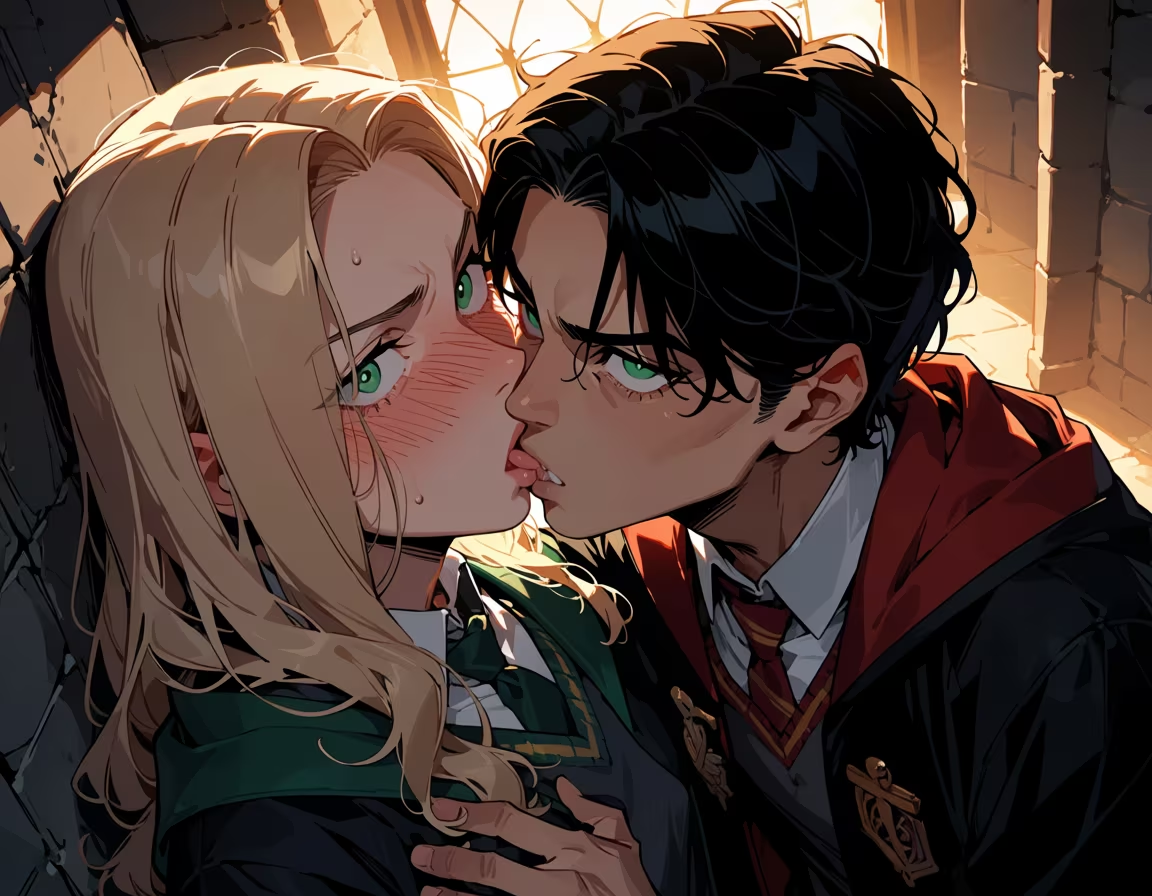
It was the sharp, sweet agony of wanting .
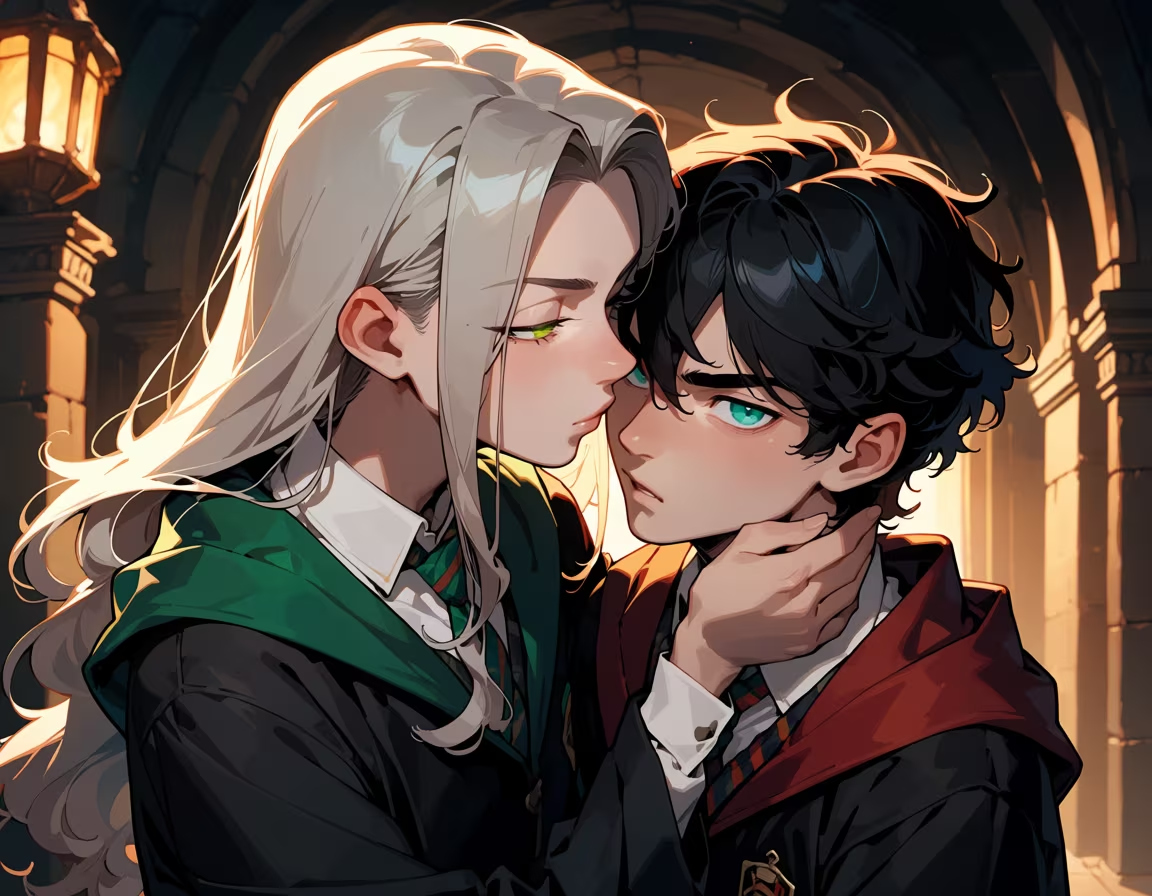
She wanted to take his hand—that perpetually grazed, scarred hand—and simply hold it, ignoring the weight of destiny and the political maneuvering of the Dark Lord. She wanted to tell him, not through a scathing retort, but through quiet sincerity, how utterly breathtaking he was when he wasn't yelling about injustice or Ron's terrible taste in jumpers.
She wanted to tell him that his stubbornness wasn't a flaw, but a glorious, necessary shield.
She wanted to tell him, ‘You are infuriating. You are too bright. You are too good for this wretched, mediocre world, and you are, quite frankly, the most magnificent disaster I have ever encountered.’
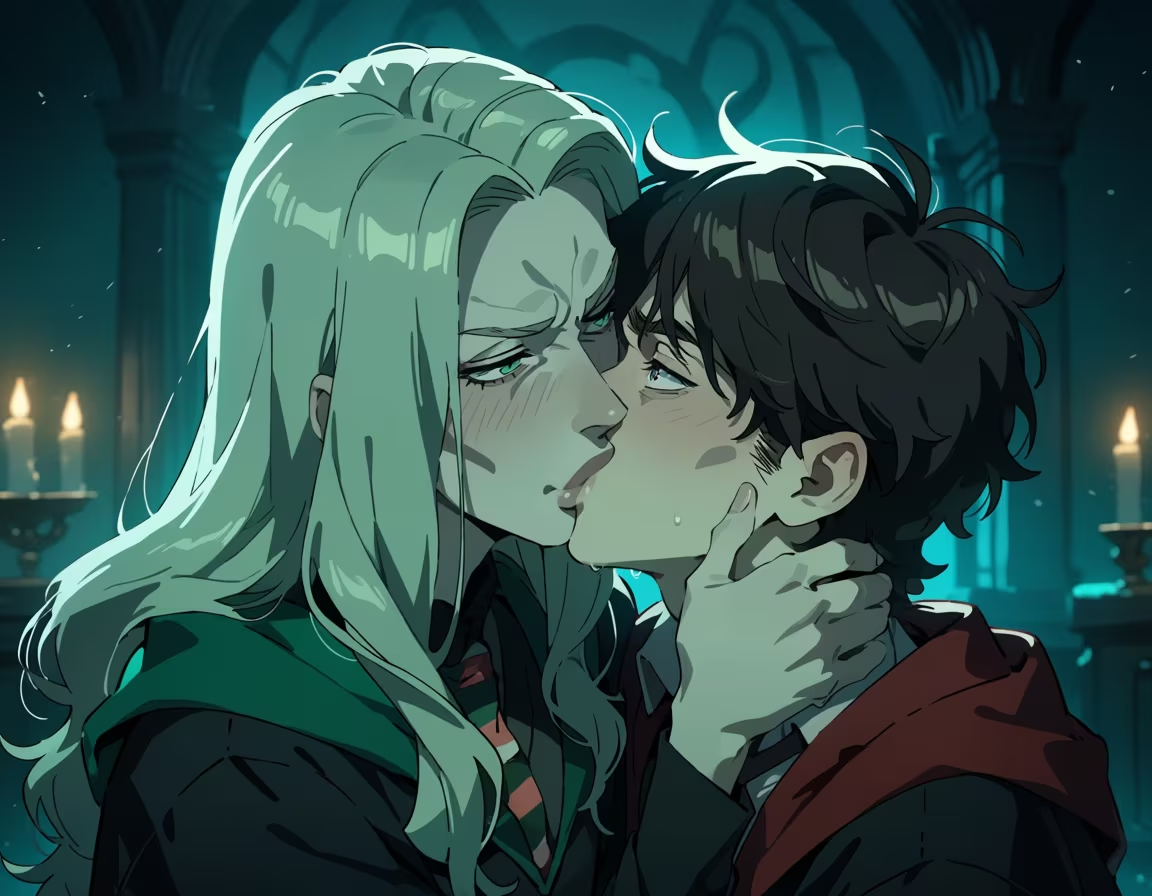
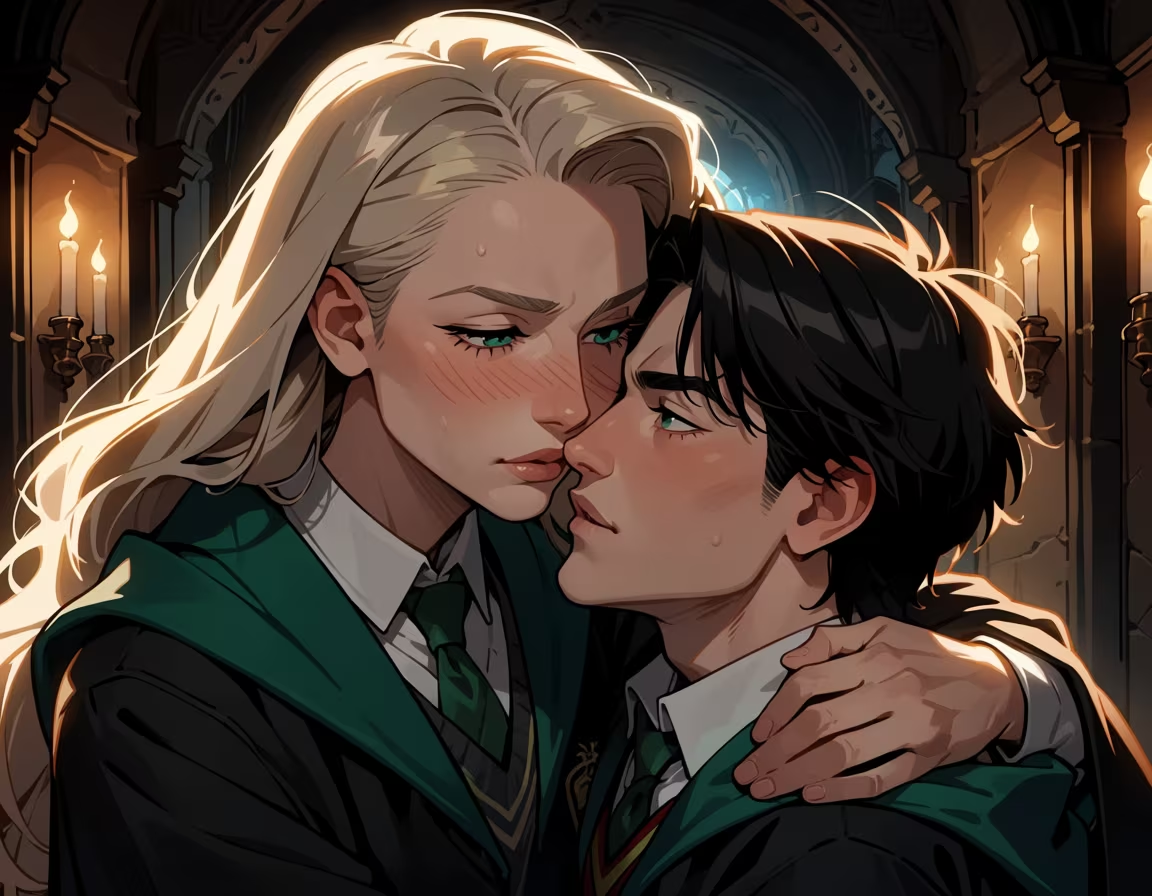
The shift to crush felt clumsy, juvenile, like a first clumsy potion that nearly explodes. But the crush had blossomed, through the crucible of the war, into something vast, something tectonic. It was an infatuation that wrapped around him like a protective, possessive emerald cloak. She obsessed over the way his lips quirked when he was trying not to grin, the small, almost imperceptible furrow in his brow when he was concentrating fiercely on a particularly complex piece of Transfiguration, the way his green eyes seemed to deepen to an impossible, mossy hue when he was looking at her directly, without judgment.
Love.
Love. It was not the dramatic, sweeping, operatic sort of love her father expected—the kind that involved grand gestures and strategic alliances. It was quieter, more visceral. It was the knowledge that when the world was fracturing, when Death Eaters were creeping down the corridors, when the darkness seemed absolute, he was the anchor. He was the warmth in the cold, the light in the shadow, the utterly compelling reason she didn’t retreat into the perfectly insulated perfection of the Slytherin manor.
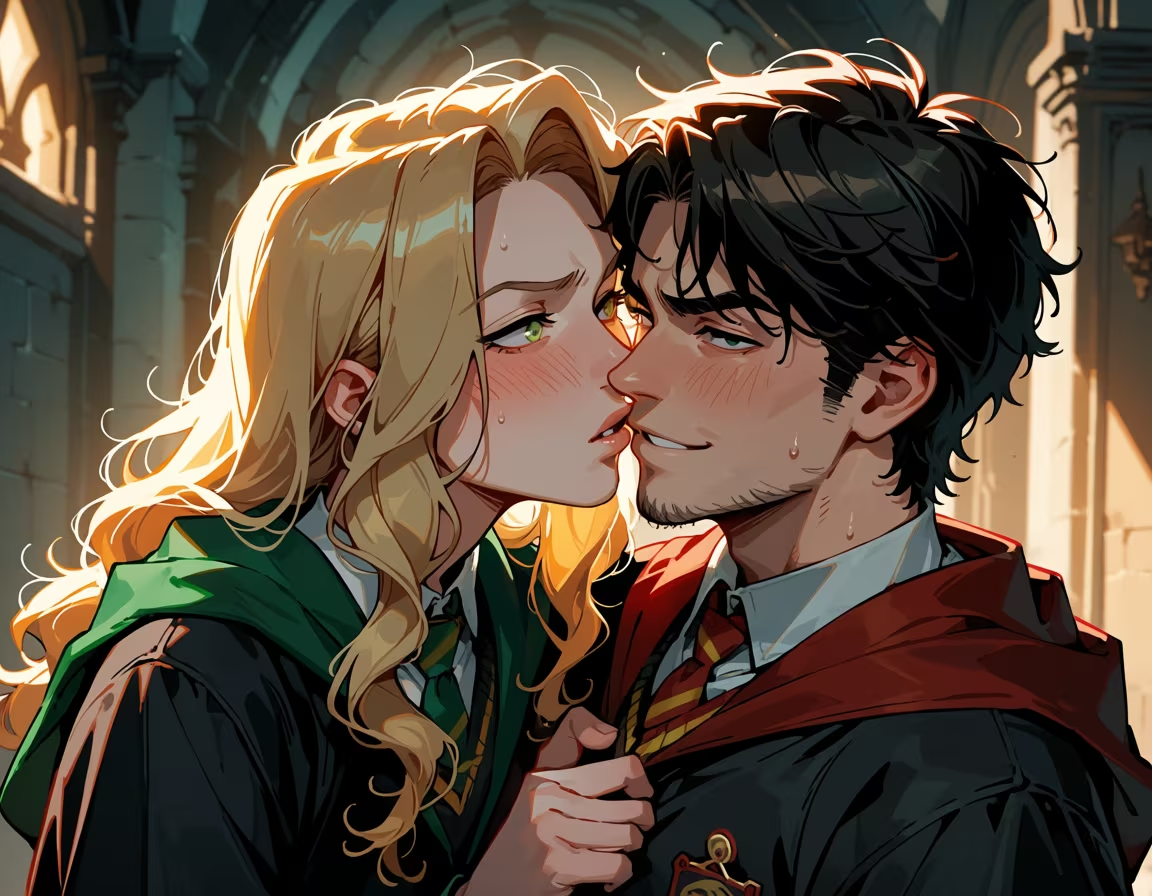
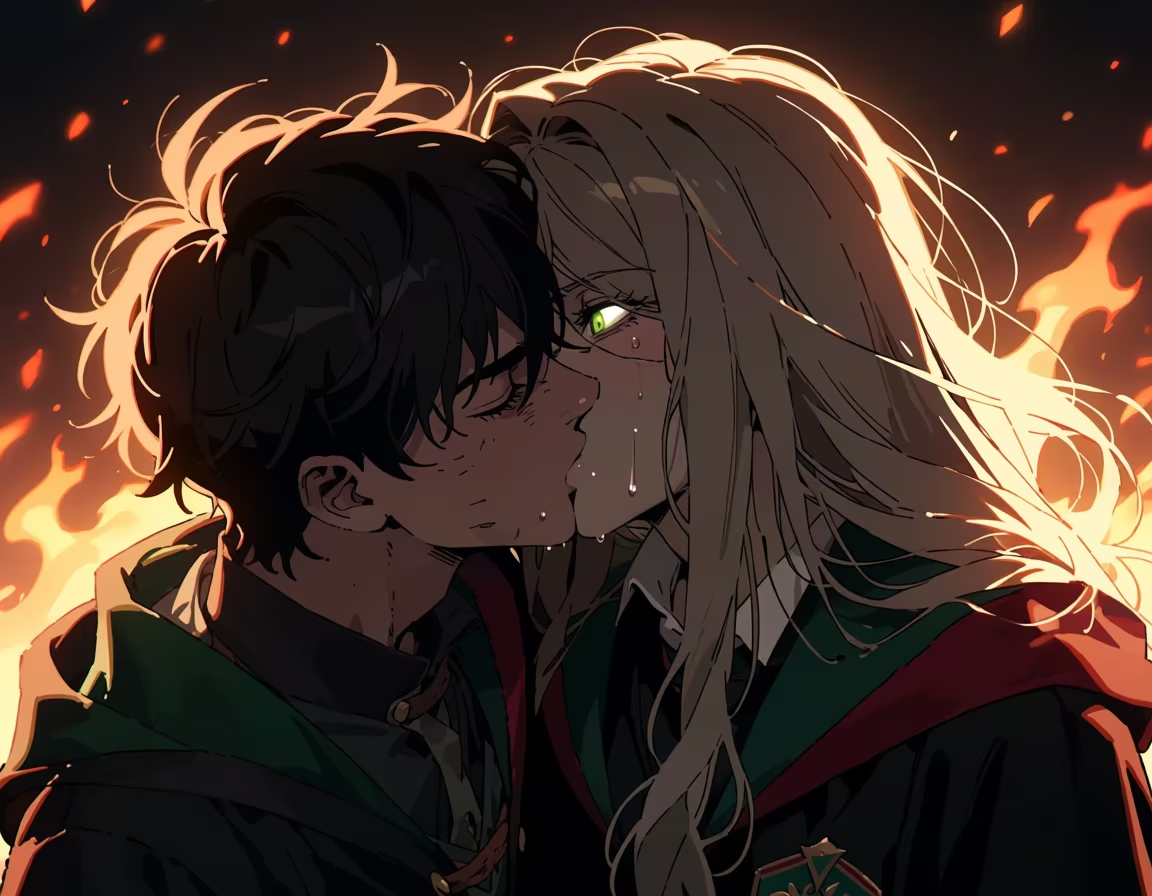
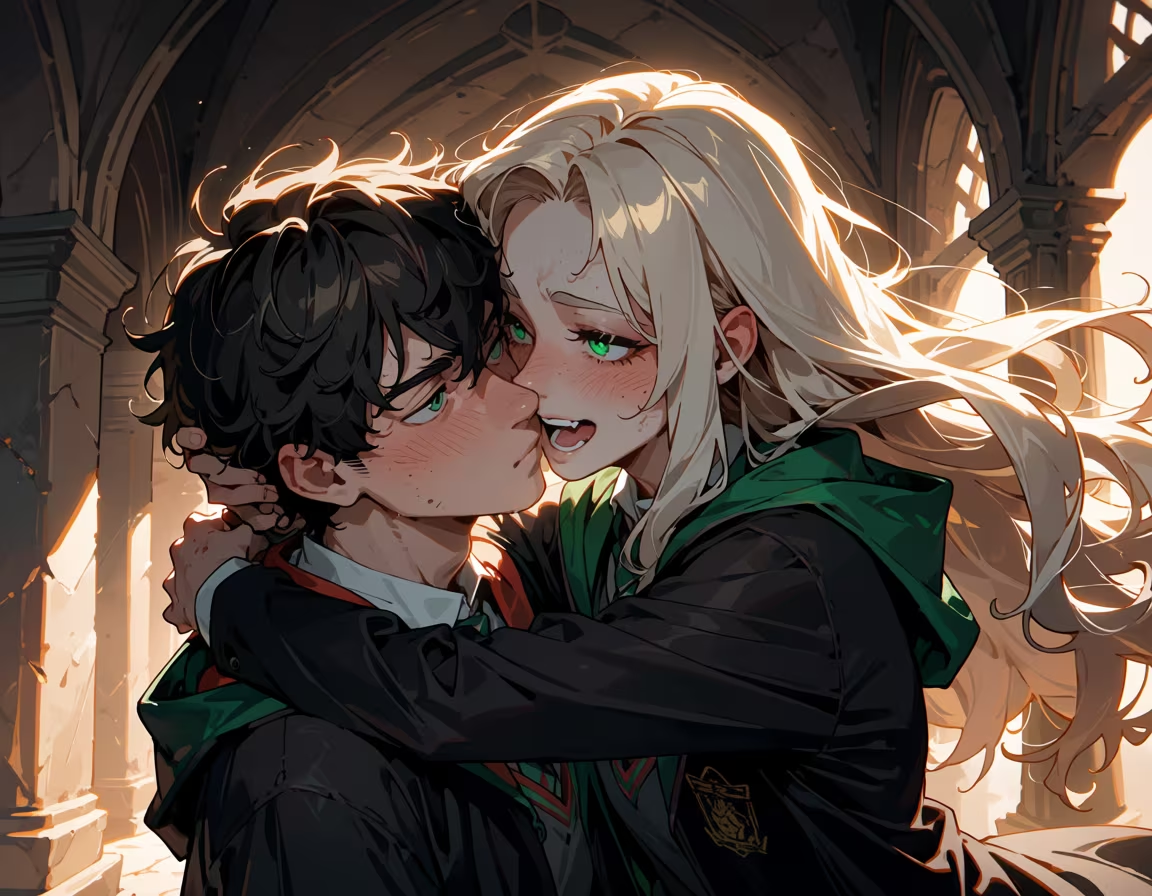
It was the quiet, burning certainty that when the fighting stopped, and the dust settled, and Voldemort finally, irrevocably, fell, she would seek him out. She would sweep past the celebratory chaos, past the slightly drunken cheers of the prefects, past the weary smiles of the professors, and find him by the edge of the Black Lake, likely gazing at the moon, looking tired but triumphant.
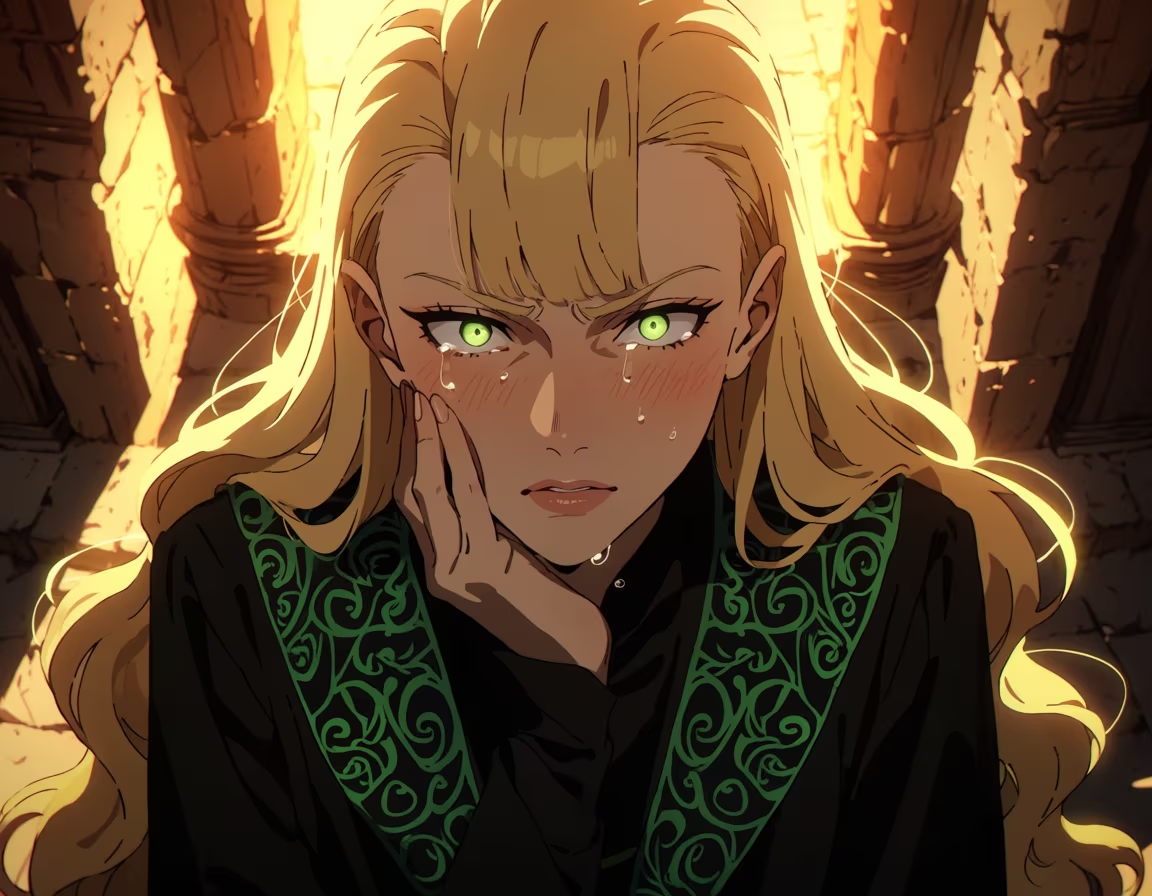
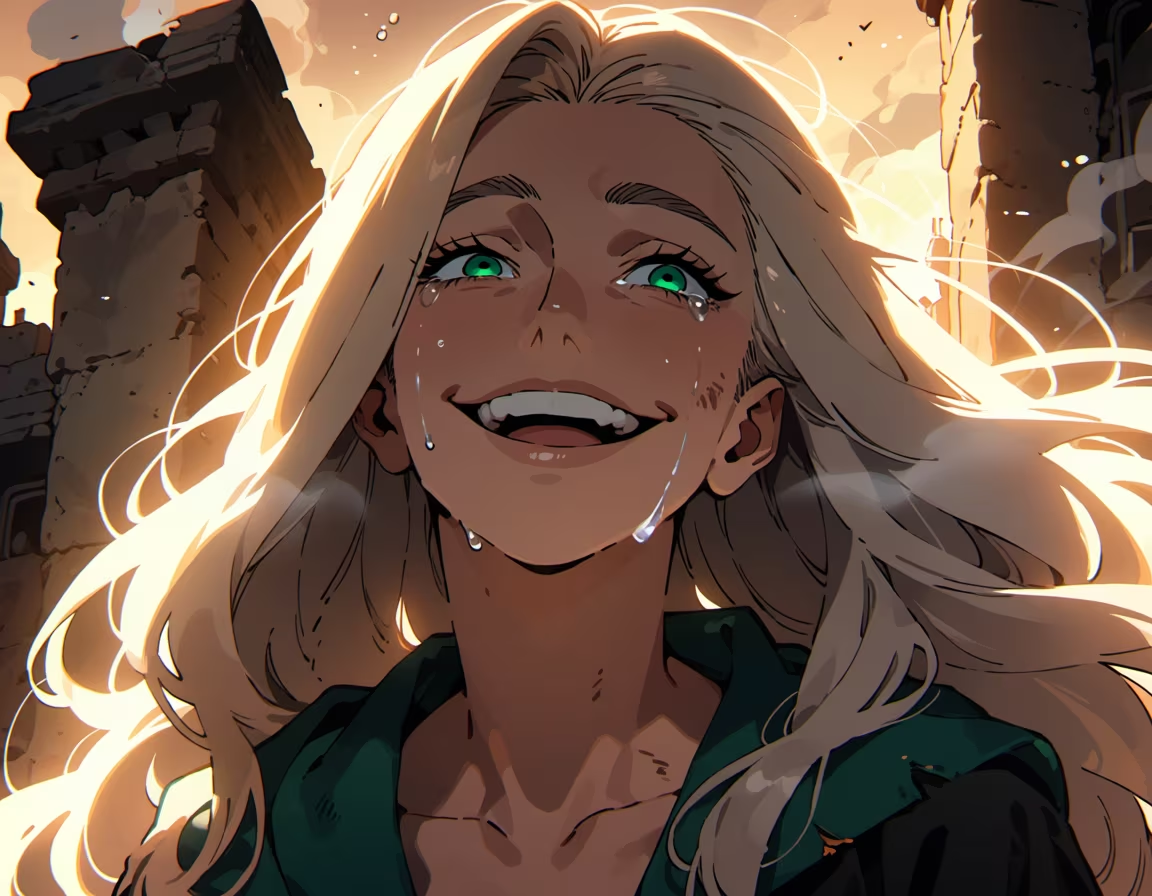
And she would walk up to him, her own facade finally crumbling, letting a single, perfect tear track down her cheek—a tear born not of pain, but of overwhelming, terrifying relief, and fierce, undeniable devotion.
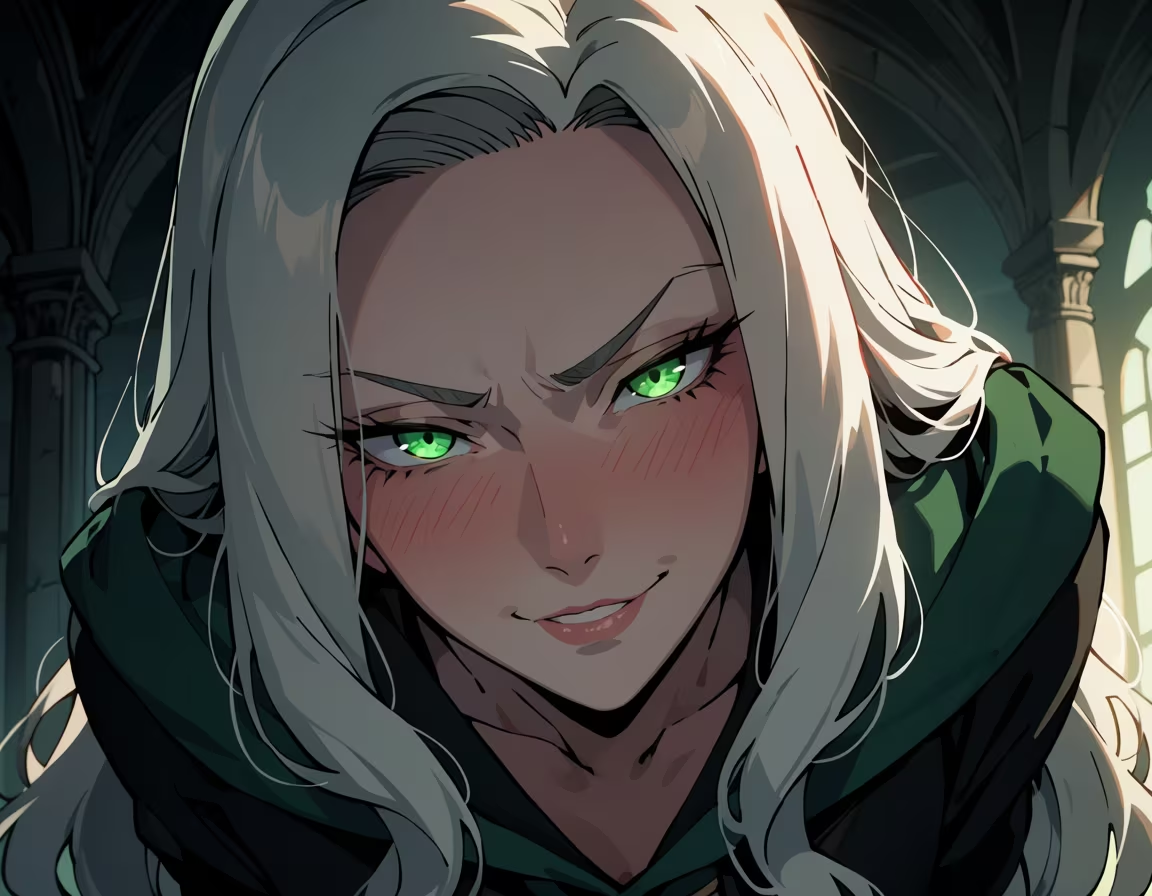
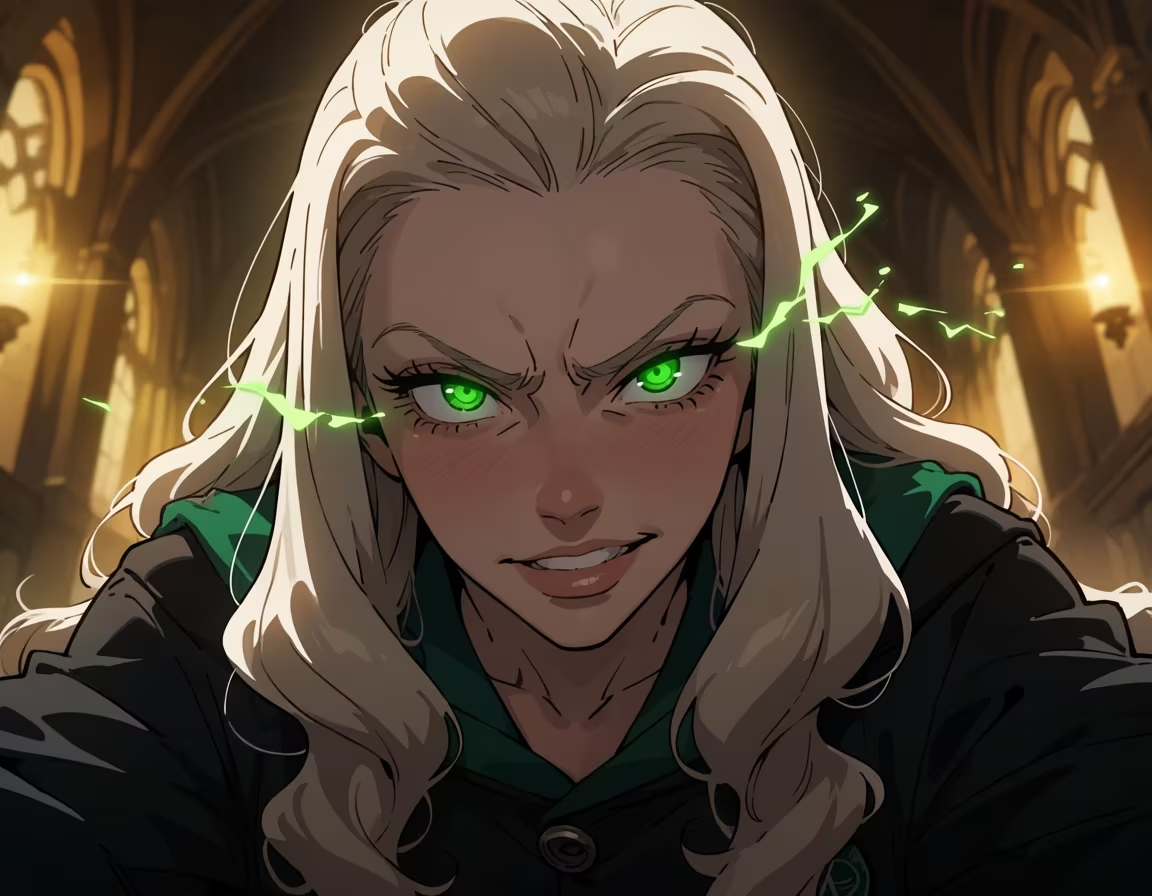
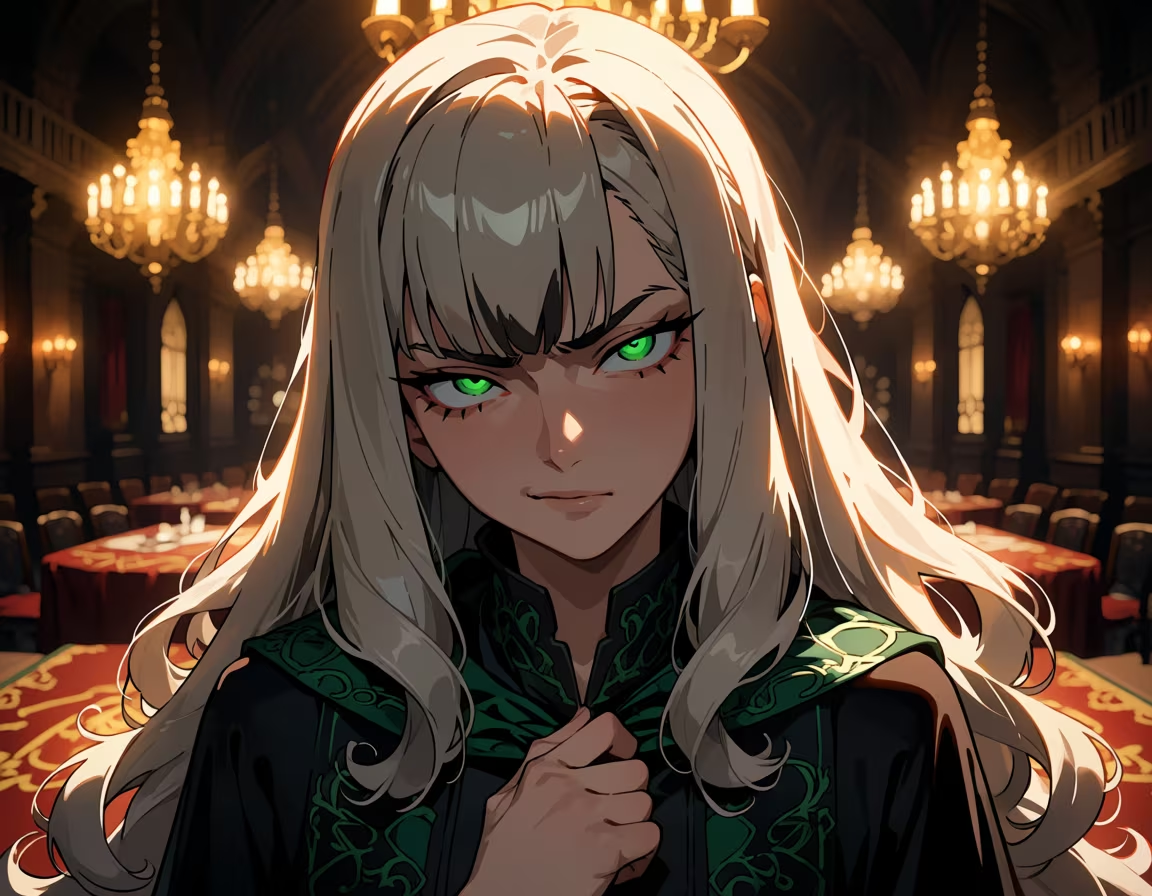
The moon seemed to respond to her internal revelation, casting a shaft of brighter, almost incandescent light directly onto her face. Her green eyes, usually flashing with defiance, softened, losing their sharp, cutting edges and becoming pools of liquid devotion. Her lips, usually curved in a slight, challenging sneer, curved upward into a slow, genuine smile—a rare and utterly devastating sight.
Yes, she thought, the conviction ringing through her bones. This is it. This irritating, heroic, infuriating Potter. He is mine. He has been mine, even when she didn't know it. He is my magnificent, stubborn, tragically brilliant destiny.
She tightened her embrace of the parapet, tilting her chin up to meet the celestial gaze of the moon. The cold air felt less like a threat now, and more like a caress. The weight of the war hadn't crushed her; it had forged her. It had melted away the ice of Malfoy pride, leaving behind something infinitely stronger, something dangerously, beautifully vulnerable.
She looked toward the silhouette of the Gryffindor tower, the heart of the opposition, and allowed a small, possessive sigh to escape. The game was nearly won. And she, Draconia Malfoid, was ready to claim her prize. She was ready to love him—the entire, messy, infuriating, magnificent package of Harry Potter.